

Blogs
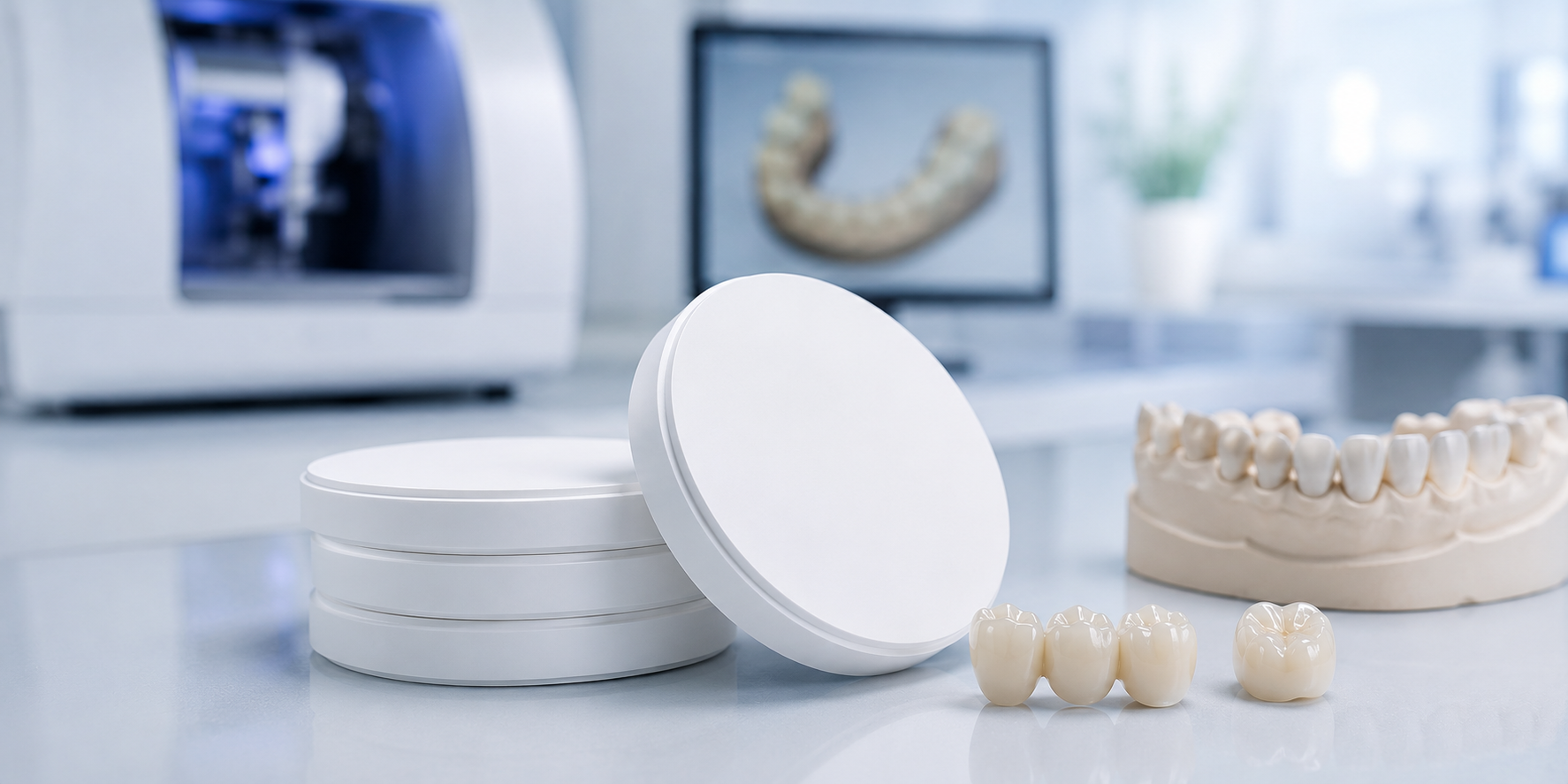

All About Acrylic Resin: Uses, Benefits, and More
Acrylic resin is one of the most widely used materials in dentistry yet most discussions about it either stay surface-level or focus on industrial applications that have little relevance to dental lab workflows. For dental professionals and lab technicians, acrylic resin is not an abstract chemistry concept. It is the material inside every denture base, every temporary crown, every occlusal splint, and every 3D-printed dental appliance in daily production. Understanding what it is, why it performs the way it does, and how to select the right formulation for each application directly affects the clinical quality and efficiency of everything a dental lab produces. This guide covers acrylic resin specifically through the lens of dental laboratory use what differentiates CAD/CAM-grade PMMA from bench-mixed acrylic, where each formulation fits in the clinical workflow, how acrylic resin compares to dental zirconia discs and ceramic alternatives, and how to build a rational acrylic resin inventory for a full-service dental lab. What Is Acrylic Resin? The Chemistry Behind the Material Acrylic resin is the collective name for a family of polymers derived from acrylic acid, methacrylic acid, or their derivatives. In dentistry, the most clinically relevant member of this family is polymethyl methacrylate PMMA formed by polymerizing methyl methacrylate (MMA) monomer into long polymer chains. The properties of the final material depend primarily on how that polymerization is carried out: the temperature, pressure, initiator system, and degree of conversion all affect the mechanical and biological characteristics of the finished product. The distinction that matters most in a dental lab context is the difference between bench-polymerized acrylic and industrially pre-polymerized acrylic. Conventional acryclic resin denta applications bench-mixed denture acrylic, cold-cure temporary material, chairside repair resin are polymerized at atmospheric pressure with chemical or heat initiation. Industrial pre-polymerized PMMA, used in CAD/CAM disc form, is polymerized under 50–200 bar of pressure at elevated temperature. That pressure difference is what fundamentally separates the two material classes in terms of residual monomer content, porosity, mechanical consistency, and clinical performance. Bench-polymerized acrylic typically retains 3–5% residual monomer unreacted MMA that can leach into oral tissue, causing sensitivity responses in susceptible patients. Industrial pre-polymerized PMMA achieves residual monomer below 0.5%, well within ISO 20795-1 biocompatibility thresholds. The higher-pressure polymerization also eliminates most porosity, producing a denser, more homogeneous polymer matrix that mills more cleanly, polishes more easily, and maintains its surface quality longer under intraoral conditions. Types of Acrylic Resin Used in Dental Labs Acrylic resin in dentistry is not a single product it is a material class with distinct formulations for distinct clinical applications. Using the wrong formulation for an application is one of the most avoidable sources of suboptimal clinical outcomes in dental laboratory production. PMMA denture base resin is formulated with gingival-tone pigmentation and optimized for tissue contact. Its primary requirements are biocompatibility (low residual monomer), dimensional stability after milling and polishing, and shade accuracy that matches natural gingival tissue across patient demographics. The key denture base resin is the standard for digital denture workflows pre-polymerized to industrial standards, compatible with all major open-system mills, and documented to meet ISO 20795-1 denture base polymer requirements. Multilayer PMMA for crown and bridge provisionals is formulated with a dentine-to-incisal shade gradient. This gradient architecture replicates the optical zonation of natural tooth anatomy warmer, more saturated chroma at the cervical transitioning to cooler, more translucent appearance at the incisal edge within a single pre-shaded disc. Labs using multilayer PMMA for anterior temporaries eliminate the external staining step on standard A-D shade cases, reducing finishing time significantly per unit. Hard splint acrylic is a high-hardness PMMA formulation used for occlusal splints, night guards, and bruxism appliances. This formulation prioritizes surface hardness and dimensional accuracy over translucency or shade matching. Milled hard splint acrylic delivers superior occlusal accuracy compared to pressure-formed thermoplastics because the restoration is designed from a digital model and milled to a precise occlusal scheme rather than vacuum-formed over an analog cast. Cold-cure and auto-polymerizing acrylic remains in use for chairside repairs, denture relines, and custom impression trays. This bench-mixed format is not a CAD/CAM material it is a manual chairside material that serves repair and adjustment functions that pre-polymerized discs cannot address. Understanding where cold-cure acrylic fits relative to milled PMMA prevents labs from inappropriately substituting one for the other. Dental Resin 3D Printing: Where Acrylic Chemistry Meets Digital Production The fastest-growing segment of acrylic resin use in dental labs is photopolymer resin for 3D printing a category that has expanded dramatically alongside the adoption of desktop and professional dental 3D printers. Dental resin 3d printing products are formulations of acrylic-based monomers and oligomers that cure rapidly under ultraviolet or visible light, layer by layer, to produce dental appliances, models, surgical guides, and provisional restorations. While the chemistry shares the same acrylic monomer foundation as PMMA, 3D printing resins are distinct products with distinct formulation requirements. Photopolymer resins must cure at specific wavelengths (typically 385 nm or 405 nm) within defined layer thickness parameters for the printer's build platform. They must also meet biocompatibility requirements appropriate to their specific application a model resin used only for diagnostic casts has different requirements than a splint resin or a try-in restoration that contacts oral tissue. The key clinical categories of dental 3D printing resin in current lab use include model resins for study casts and implant planning models, surgical guide resins for implant placement guides, splint and night guard resins, try-in restorations for checking shade and fit before final fabrication, orthodontic model resins, and temporary crown and bridge resins for direct printing of provisionals. Each category requires a specifically formulated resin cross-category substitution produces unreliable results and potential biocompatibility issues. The zirconia blocks dental workflow and the 3D printing resin workflow are increasingly complementary rather than competing. Labs run milled zirconia for permanent fixed restorations and 3D-printed resin for the surrounding workflow infrastructure diagnostic models, surgical guides, provisional restorations, and custom trays creating a fully digital production pipeline where both material categories contribute at their respective strength points. Key Benefits of Acrylic Resin in Dental Applications Understanding why acryclic resin dental formulations remain the standard for specific applications despite the expansion of dental zirconia discs, ceramic, and composite alternatives comes down to a set of clinically relevant properties that no other material class combines at acrylic's cost and accessibility. Repairability Acrylic resin is the only dental restoration material that can be chairside-repaired using the same material class as the original restoration. A fractured denture base, a broken provisional crown, a cracked splint all can be repaired with cold-cure acrylic at the chairside without fabricating a new restoration. Zirconia blank and ceramic restorations, by contrast, cannot be repaired when fractured they must be remade. This repairability is clinically significant in removable prosthetics, long-term provisionals, and any application where chairside modification is expected. Adjustability Acrylic resin can be ground, added to, and polished at the chairside with conventional laboratory burs and acrylic instruments. Occlusal adjustments, margin refinements, contact point modifications all are straightforward with acrylic in ways that ceramic and zirconia dental blanks are not. For provisional restorations that serve as the clinical template for the final restoration design, this adjustability is a core functional requirement. Biocompatibility in Tissue-Contact Applications Pre-polymerized, industrial-grade PMMA with residual monomer below ISO 20795-1 thresholds is biocompatible for long-term tissue contact the standard for denture bases that sit against oral mucosa all day. This biocompatibility profile, combined with the material's light weight and tissue-like esthetic character, makes PMMA the correct material for removable prosthetics regardless of the increasing strength of ceramic alternatives. Cost Efficiency Acrylic resin discs and 3D printing resins are significantly lower in per-unit material cost than ceramic or dental zirconia discs. For temporary restorations with defined functional lifespans typically 2–12 weeks for provisionals, 3–12 months for long-term temporaries material cost per unit is a legitimate procurement factor. The lower material cost of acrylic supports competitive pricing on provisional workflows without sacrificing material quality when the correct formulation is sourced from a reliable supplier. CAD/CAM Machinability PMMA is one of the most machinable materials in the CAD/CAM portfolio. Its pre-sintered softness relative to zirconia produces clean chip formation, minimal tool wear, fast milling cycles, and smooth surfaces that require minimal post-processing. A milled PMMA provisional crown takes a fraction of the milling time required for a zirconia blank of equivalent size a workflow efficiency that matters significantly in high-volume lab production. Acrylic Resin vs. Zirconia: A Clear Division of Indications The most important framework for dental labs working with both materials is understanding that acrylic resin and dental zirconia are not competing materials they are complementary materials with clearly separated primary indications. Dental bonding resin and other acrylic-based materials cover the temporary and removable spectrum: provisionals, denture bases, splints, orthodontic appliances, surgical guides, and diagnostic models. Zirconia blocks whether zirconia blank format for chairside mills or disc format for lab mills cover the permanent fixed restoration spectrum: crowns, bridges, implant-supported frameworks, and full-arch reconstructions. The two material categories serve different points in the same treatment workflow, and labs that stock and use both correctly are more efficient and produce better outcomes than labs that attempt to use one material class across all applications. As a zirconia materials distributor usa, ZirconiaGuys stocks the full range of both material categories acrylic resin formulations including Keystone's dental resin range and the complete Upcera and Aidite zirconia dental blanks and disc lineup from US inventory. Labs sourcing both CAD/CAM material categories from a single US supplier reduce ordering overhead, maintain consistent batch documentation, and access technical support across the full workflow from provisional to permanent. How to Select the Right Acrylic Resin Formulation? The most common acrylic resin selection error in dental labs is treating it as a single product category. The following framework maps clinical applications to the correct formulation: For full and partial denture bases — use industrial pre-polymerized PMMA denture base discs in gingival shades. Confirm ISO 20795-1 compliance and documented residual monomer levels below 0.5%. For anterior temporary crowns — use multilayer pre-shaded PMMA discs that match your shade system. Pre-shaded multilayer eliminates staining on standard A-D shade cases and is the most time-efficient format for high-volume anterior provisional production. For posterior temporary crowns — use single-shade PMMA in the appropriate tooth shade. Multilayer gradient adds cost without esthetic benefit in posterior cases where shade precision is secondary to fit and occlusal accuracy. For occlusal splints and night guards — use hard splint PMMA specifically formulated for this application. Standard crown-and-bridge PMMA is not hard enough for long-term splint applications under bruxism loading. For surgical guides — use biocompatible surgical guide resin formulated for the appropriate printer wavelength. Guide resin must meet biocompatibility requirements for tissue contact during surgical procedures. For orthodontic models — use dimensional-accuracy model resin. Model resins are not biocompatible for intraoral use and should not be substituted for splint or provisional resins. Acrylic resin remains one of the most clinically indispensable material categories in dental laboratory production not because it is the strongest or most durable material available, but because it is the right material for a specific and large set of clinical applications where repairability, adjustability, biocompatibility, and cost efficiency are the determining requirements. Understanding the distinction between formulations, matching each to its correct indication, and sourcing from suppliers who document batch quality and meet ISO standards is what separates labs that use acrylic resin effectively from those that compensate for material selection errors through extra labor and remakes.
Learn more
Top 8 Materials Used in Modern Dental Labs
The materials a dental lab stocks define what it can produce, how fast it can produce it, and how consistently it can deliver clinical-quality outcomes. Material selection is not a procurement decision that happens once it is an ongoing operational choice that directly determines case quality, remake rates, bench time per unit, and ultimately, the lab's competitive position in an increasingly demanding market. Modern dental laboratories run on a core set of materials that have been refined over decades of clinical use and CAD/CAM development. Some are ceramic. Some are polymer. Some are metal. Each has a clearly defined role, a specific set of clinical indications, and performance characteristics that make it the right choice for some cases and the wrong choice for others. Understanding all eight gives any dental professional lab technician, prosthodontist, or practice owner a complete picture of what the modern dental lab production floor actually runs on. 1. Zirconia — The Dominant CAD/CAM Ceramic Zirconia is the highest-volume CAD/CAM milling material in the modern dental lab and has been since it displaced PFM as the standard for fixed restorations in the 2010s. No other material combines the flexural strength range (500–1200+ MPa depending on grade), biocompatibility, chemical stability, and esthetic versatility of the current zirconia family. It covers every fixed restoration indication from high-load posterior bridges to translucent anterior veneers with distinct grades engineered for each point on that spectrum. The material is available as dental lab materials in three primary grade classifications. 3Y-TZP (three mole percent yttria) delivers 900–1200+ MPa flexural strength for posterior bridge and high-load applications. 4Y zirconia provides 600–800 MPa with significantly higher translucency the daily production standard for anterior and premolar cases. 5Y zirconia pushes translucency to its maximum at 500–650 MPa reserved for anterior esthetic cases where shade matching to highly translucent natural dentition is the overriding clinical priority. Disc formats: Zirconia blocks dental labs rely on come in two primary formats: flat single-composition (white unshaded or pre-shaded) and multilayer gradient. Flat white zirconia blank discs give full manual shade control through external staining. Pre-shaded multilayer discs embed the VITA-compatible shade gradient internally, eliminating the staining step for standard A–D shade cases and reducing bench time significantly at volume. For labs running the full range of anterior and posterior cases, stocking both formats is the correct strategy. Disc formats and sourcing: The standard diameter for dental lab milling is 98mm, compatible with all major open-system mills. As a trusted zirconia materials distributor usa, ZirconiaGuys stocks aidite zirconia discs for dental labs including the full Aidite multilayer and pre-shaded range, as well as upcera dental zirconia across 3Y, 4Y, and 5Y grades — all from US inventory with no international lead times. Clinical indications: Posterior bridges (3Y), anterior crowns (4Y/5Y multilayer), premolar crowns (4Y), implant-supported restorations (grade by zone), full-mouth rehabilitation frameworks. 2. PMMA — The Provisional and Removable Standard PMMA (polymethyl methacrylate) is the second-highest-volume CAD/CAM milling material in most dental labs and the exclusive material class for temporary restorations, denture bases, and occlusal appliances in digital workflows. It is not a competitor to dental zirconia discs it is the provisional phase that precedes the final zirconia restoration in every full treatment workflow. Pre-polymerized CAD/CAM PMMA discs are manufactured under industrial pressure and temperature conditions that produce a denser, more homogeneous polymer matrix than anything bench-mixed acrylic can deliver. Residual monomer content drops below 0.5% — well within ISO 20795-1 biocompatibility thresholds and dimensional stability improves significantly over conventional flask-and-pack processing. Formulation types: Denture base PMMA carries gingival tissue pigmentation for full and partial denture bases. Multilayer PMMA incorporates a dentine-to-incisal shade gradient for temporary crown and bridge provisionals. Clear PMMA formulations serve occlusal splints, night guards, and clear appliances. Each formulation is optimized for its specific application using denture base PMMA for crown provisionals or clear PMMA for denture bases are both material selection errors that produce poor clinical results. Clinical indications: Temporary crowns and bridges (2–8 weeks), long-term provisionals (3–12 months), CAD/CAM full and partial denture bases, implant-supported temporaries during osseointegration, occlusal splints and night guards. 3. Lithium Disilicate — Precision Esthetics for Single Units Lithium disilicate (most commonly encountered as IPS e.max) occupies a specific, well-defined position in the dental lab materials ecosystem: maximum esthetic integration for single-unit anterior restorations where the clinical priority is optical matching to highly translucent natural dentition. Its flexural strength of approximately 400 MPa is lower than all zirconia grades but higher than feldspathic porcelain, making it appropriate for single-unit crowns and veneers under moderate occlusal load. The material's optical properties are its defining clinical advantage. Lithium disilicate transmits and scatters light in a way that produces exceptional depth of color and natural-looking translucency the standard against which esthetic zirconia grades are benchmarked. For anterior single crowns adjacent to natural teeth with high translucency, lithium disilicate and 5Y zirconia are the two materials worth evaluating, with the final choice depending on preparation design and bonding requirements. Clinical indications: Anterior single crowns, veneers, inlays, onlays. Not appropriate for posterior bridges of 3+ units or high-load posterior single crowns where 3Y or 4Y zirconia is the structurally safer choice. 4. PEEK — High-Performance Polymer for Framework Applications PEEK (polyether ether ketone) has entered dental lab production as a metal-free alternative for removable partial denture frameworks, implant-supported bars, and orthodontic appliances. Its flexural strength of 80–170 MPa, combined with its tooth-like elastic modulus and excellent biocompatibility, makes it uniquely suited for applications where metal frameworks have traditionally been used but metal-free solutions are clinically preferred. PEEK does not corrode, does not generate allergic responses in metal-sensitive patients, and can be milled from pre-fabricated discs in standard CAD/CAM equipment. The material's tooth-like color also eliminates the greyish translucency problem associated with metal frameworks under thin tissue or mucosa. Labs that handle patients with documented metal allergies or who specify metal-free full workflows should stock PEEK alongside their standard dental zirconia and PMMA inventory. Clinical indications: Removable partial denture frameworks, implant-supported bars and telescopic crowns, long-term provisional frameworks, orthodontic retention appliances. 5. Cobalt-Chrome (Co-Cr) Alloy — The Metal Framework Standard Despite the growth of PEEK and milled titanium, cobalt-chrome alloy remains the dominant material for cast and sintered removable partial denture frameworks in labs that handle high volume removable prosthetics. Its mechanical properties flexural strength of 600–900 MPa, high hardness, and excellent fatigue resistance make it the benchmark for metal frameworks that must remain dimensionally stable under repeated loading across years of clinical service. In modern labs, Co-Cr frameworks are produced by one of three methods conventional lost-wax casting, selective laser sintering (SLS) from Co-Cr powder, or milling from pre-fabricated Co-Cr blanks. The SLS and milling routes integrate directly into digital lab workflows, eliminating the manual casting steps that introduce the most variability in conventional framework production. Zirconia dental blanks and Co-Cr discs can both be processed in the same digital design workflow the material and fabrication route diverge only at the manufacturing stage. Clinical indications: Removable partial denture frameworks, metal-ceramic crown and bridge substructures, implant bars and custom abutments requiring high fatigue resistance. 6. Composite Resin Chairside and CAD/CAM Versatility Composite resin serves dual roles in modern dental production: as a chairside direct restorative material placed by the clinician, and as a pre-fabricated CAD/CAM block for indirect lab-milled restorations. The CAD/CAM composite category represented by products like Vita Enamic (polymer-infiltrated ceramic network) and resin nano-ceramic blocks occupies the gap between pure PMMA provisionals and full ceramic crowns. CAD/CAM composite blocks deliver flexural strength in the 150–200 MPa range with an elastic modulus closer to natural dentin than either zirconia or lithium disilicate. This elastic compliance is clinically advantageous in cases where stress absorption at the restoration-tooth interface is a design priority full-coverage crowns on structurally compromised teeth, for example, where the flex of the restoration reduces fracture risk at the margin. Clinical indications: Single-unit crowns and onlays in moderate-load cases, inlays, veneers, implant crowns where elastic modulus matching to surrounding bone and tissue is clinically preferred. 7. 3D Printing Resins — The Fastest-Growing Material Category 3D printing resins have become a significant share of modern dental lab materials inventories in labs that have adopted digital light processing (DLP) or stereolithography (SLA) printing workflows. The category covers a wide range of formulations: model resins for diagnostic casts, surgical guide resins for implant placement guides, splint resins for hard and soft night guards, tray resins for custom impression trays, and most recently permanent crown resins with mechanical properties approaching composite blocks. Keystone dental products represent one of the most complete 3D printing resin ranges available to US labs, covering model, splint, tray, ortho, guide, and denture base applications within a single brand ecosystem. Labs running DLP or SLA printing workflows benefit from consistent brand compatibility matching resin formulations to print profiles validated for the same manufacturer reduces the calibration and troubleshooting overhead that comes with mixing resin brands across applications. The material's throughput advantage over milling is most significant for high-volume model and guide production a DLP printer can produce multiple models simultaneously overnight, with no operator intervention, at a per-unit material cost below any comparable milled alternative. Clinical indications: Diagnostic models, surgical guides, custom impression trays, orthodontic models, hard and soft splints, provisional crowns (permanent resin grades), denture bases (printable PMMA grades). 8. Titanium The Implant and Framework Metal Titanium — primarily Grade 4 commercially pure and Grade 5 (Ti-6Al-4V alloy) — is the implant material and the metal substructure choice for implant-supported restorations where maximum biocompatibility is the clinical requirement. Its combination of low density, high strength-to-weight ratio, corrosion resistance in oral fluids, and exceptional osseointegration performance makes it the universal standard for implant fixtures and a preferred material for implant bars and custom abutments. In dental lab production, titanium is processed as pre-milled blanks for custom abutments and implant bars, or as a received component (the implant fixture itself) onto which lab-fabricated crowns and superstructures are mounted. Milled titanium abutments from pre-fabricated blanks are standard in labs handling implant-level work the precision of CAD/CAM milling produces abutment margins and platform geometries that casting cannot consistently replicate. Clinical indications: Implant fixtures (placed surgically), custom abutments, implant bars for full-arch restorations, metal-ceramic substructures requiring maximum biocompatibility. How to Build a Complete Material Inventory for Your Dental Lab? A well-stocked modern dental lab doesn't require every material on this list it requires the right materials for its case mix. The following framework guides inventory decisions based on production focus: Full-service lab (fixed + removable + implant): 3Y and 4Y/5Y zirconia in flat and multilayer formats, PMMA in denture base and multilayer crown formulations, lithium disilicate for anterior esthetic cases, Co-Cr for removable frameworks, titanium components for implant work, and 3D printing resins for models and guides. Fixed-only CAD/CAM lab: Zirconia as the primary milling material across 3Y, 4Y, and 5Y grades. PMMA multilayer for temporaries. Composite or lithium disilicate for select anterior cases. 3D resin for models and surgical guides. Removable-focused lab: PMMA denture base as the primary material. Co-Cr or PEEK for partial denture frameworks. 3D model resin for diagnostic casts and articulation. Sourcing all zirconia dental blanks, PMMA, and 3D resins from a US-based zirconia materials distributor usa eliminates international lead time uncertainty and ensures consistent batch documentation the foundation of reproducible quality across production runs. The eight materials covered in this guide represent the complete production palette of a modern dental laboratory. Zirconia anchors the fixed restoration workflow. PMMA handles provisionals and removables. Lithium disilicate serves the esthetic anterior niche. PEEK and Co-Cr cover metal-free and traditional framework applications. Composite resin bridges the gap between temporaries and ceramics. 3D printing resins are transforming model, guide, and appliance production. Titanium is the implant and custom abutment standard. Understanding each material at the level of its mechanical properties, clinical indications, and production workflow requirements is what separates labs that consistently hit quality targets from labs that compensate for material selection errors through extra labor and remakes. The right material in the right application is the foundation of every efficient, consistent dental lab.
Learn more
Top Tips for Using Dental PMMA Discs in Milling Machines
PMMA is one of the most forgiving CAD/CAM materials to mill until it isn't. Labs that are new to PMMA milling typically discover the same problems in the same sequence: rough tissue surfaces that take longer to polish than expected, micro-chipping at margins on thinner restorations, bur wear that outpaces what the material's softness would suggest, and occasional warping on full-arch cases that exit the mill dimensionally inaccurate. None of these are material failures. They are workflow failures problems that trace back to incorrect parameters, wrong tooling selection, or skipped setup steps that experienced PMMA labs have long since standardized. This guide covers the practical techniques, parameter decisions, and quality checks that produce clean, accurate, ready-to-finish PMMA restorations consistently from every production run. Whether you are milling temporary crowns, denture bases, occlusal splints, or full-arch provisionals, the same core principles apply and getting them right from the start eliminates the most common sources of rework in PMMA production. Understand the PMMA Disc You Are Using Before You Mill The single most common source of PMMA milling problems is running a disc on parameters calibrated for a different PMMA formulation. PMMA is not one material it is a class of acrylic polymer that encompasses meaningfully different formulations depending on the application. Denture base PMMA, multilayer crown and bridge PMMA, clear splint PMMA, and high-impact PMMA for full-arch cases all have different hardness values, chip formation behavior, and optimal cutting parameters. A multilayer pmma disc for temporary crowns has gradient hardness built into its architecture — the cervical zone is formulated to a different composition than the incisal zone. Running uniform cutting parameters that are calibrated for a monolayer disc can produce inconsistent surface quality across the gradient layers, particularly at the layer transition zones where chip formation behavior changes slightly. Most CAM software handles this automatically when the disc type is correctly specified, but manual parameter entry should reflect the specific disc formulation, not a generic PMMA default. Always confirm the following before milling a batch: The disc formulation matches what is specified in the CAM file. Swapping a multilayer disc for a monolayer without updating the software causes toolpath depth and speed errors that are not always immediately obvious but consistently degrade surface quality. Check that the disc is mounted in the correct orientation. Multilayer discs are directionally coded cervical-to-incisal orientation must match the CAD design's expectation, or the shade gradient will be reversed in the finished restoration. Verify the disc has been stored correctly. PMMA absorbs moisture from the air. A disc that has been left unsealed in a humid lab environment mills differently chipping more readily and producing a rougher milled surface than a disc stored in its sealed packaging until use. Set Milling Parameters for PMMA Specifically Not by Default Most milling machines arrive with preset material libraries that include a PMMA profile. These presets are a reasonable starting point, but they are rarely optimized for the specific disc product you are running. The three parameters that most directly affect PMMA milling quality are spindle speed, feed rate, and step-over distance. Spindle speed for PMMA should typically run in the range of 20,000–30,000 RPM for finishing passes. PMMA is a thermoplastic it melts rather than fractures under heat. Running spindle speeds too low generates heat at the tool tip through friction rather than dissipating it through chip formation. The result is a smeared, slightly translucent surface in the milled area material that has partially melted and re-solidified rather than cutting cleanly. If your milled PMMA surfaces look waxy or slightly glazed, spindle speed is the first parameter to check. Feed rate directly controls chip load per tooth and determines whether the material is cut cleanly or torn. Too slow a feed rate on PMMA produces built-up edge on the bur — material adhesion that degrades surface finish progressively through the milling cycle. Too fast a feed rate increases the risk of vibration-induced chipping on thin margins. The optimal range varies by bur diameter and disc hardness, but a good starting point for 2 mm finishing burs on standard PMMA is 800–1200 mm/min. Adjust in 10% increments and evaluate surface quality with each change. Step-over distance on finishing passes determines how visible the scalloping pattern is on curved surfaces. For tissue surfaces of denture bases and the axial walls of crown temporaries, a step-over of 0.05–0.08 mm typically produces a surface finish that requires minimal polishing. Step-over above 0.15 mm leaves visible machining marks that add significant polishing time particularly on concave tissue surfaces where access is limited. Use the Right Burs and Replace Them on Schedule PMMA is soft relative to zirconia blocks dental ceramics, but it is abrasive in a different way. The continuous chip formation in PMMA production loads bur flutes with acrylic debris that builds up and causes the same degradation in cut quality as a worn cutting edge. Labs that track bur life by unit count and replace on schedule consistently produce better PMMA surface quality than labs that run burs until visible failure. For aidite pmma dental discs, the recommended tooling is standard two-flute PMMA burs in 2 mm roughing and 1 mm finishing diameters for most crown and bridge temporaries. Denture base cases with large tissue surface areas benefit from a 2 mm ball-nose finishing pass that covers more surface area per pass and reduces total milling time without sacrificing finish quality. Replace PMMA burs every 20–25 disc units for standard crown and bridge work. For full-arch denture base cases which subject burs to significantly longer continuous cutting paths reduce the interval to 10–15 full-arch cases. Running worn burs on PMMA produces the characteristic rough, fibrous milled surface that requires extensive polishing to resolve. The bur cost per case is a fraction of the additional polishing labor cost it avoids. A few tooling rules that consistently improve results: Never use zirconia burs for PMMA milling. The geometry differs zirconia blank cutting tools are designed for the different chip formation mechanism of ceramic. Running ceramic-optimized burs on PMMA produces poor chip evacuation, heat buildup, and rapid bur loading. Keep separate bur sets for PMMA and ceramic milling and do not cross-use them. Check bur runout before milling critical cases. A bur with even 0.01 mm runout produces a visible vibration artifact on the milled surface of thin-walled PMMA temporaries. Runout check takes 30 seconds and eliminates a common source of unexplained surface quality variation. Control the Milling Environment: Dust, Temperature, and Fixturing PMMA generates fine acrylic dust during milling that accumulates rapidly in the milling chamber. Unlike dental zirconia discs and zirconia ceramic dust, PMMA dust is lightweight and electrostatically charged it adheres to chamber walls, sensors, and spindle housings, and migrates further through the machine than ceramic dust in the same conditions. Clean the milling chamber after every PMMA session, not at end-of-day. Acrylic dust that sits in the chamber between sessions is picked up by air circulation during the next milling cycle and redeposited on the disc surface during cutting — producing contamination artifacts on the milled surface that look like smearing or micro-inclusions. A 2-minute chamber clean between cases costs less than the polishing time required to remove contamination artifacts. Temperature affects PMMA milling quality more than most labs account for. In cold lab environments below 18°C, PMMA becomes more brittle and chips more readily at thin margins. In warm environments above 28°C, the material's thermoplastic behavior is more pronounced and smearing is more likely. Keep lab temperature stable in the 20–24°C range for consistent PMMA milling results. If your lab runs warm in summer months, this one environmental adjustment often resolves milling quality variation that technicians have been attributing to disc quality or machine calibration. Fixturing security is critical for full-arch PMMA cases. A denture base disc held in an adapter that has even slight play will vibrate during the long cutting paths of a full-arch milling cycle. The vibration produces consistent surface irregularities across the tissue surface that are difficult to distinguish from parameter-related issues. Before any full-arch PMMA case, confirm the adapter fit is secure and that the disc seating is fully engaged. Post-Milling: Separation, Cleanup, and Polishing Sequence How you handle PMMA restorations after they exit the mill affects final quality as much as the milling parameters themselves. The separation step is where most of the edge chipping in PMMA cases occurs not during milling. Separate PMMA restorations from sprues using a fine disc or oscillating saw rather than bending or snapping. PMMA is more brittle at sprue attachment points than its bulk flexibility suggests, and mechanical separation by flexing almost always produces a fracture that propagates unpredictably. Cut the sprue cleanly, then trim the attachment point with a tungsten carbide bur at low speed. For labs sourcing aidite dental materials including the full Aidite PMMA range the post-milling polishing sequence consistently recommended by Aidite is: coarse pumice slurry at low lathe speed to address machining marks, followed by fine pumice, followed by acrylic polishing compound to final gloss. Rag wheel at medium speed for final polish. This three-step sequence produces clinical-grade surface finish in approximately 10–15 minutes per unit when the milled surface is clean from a correctly parameterized milling cycle. For multilayer PMMA crown cases, avoid aggressive grinding of the tissue surface during cleanup. Grinding through the incisal layer into the body layer of a multilayer disc reverses the shade gradient at that point producing a visible shade anomaly that requires a remake to correct. Confine any post-milling surface work to the margin areas and leave the main anatomical surfaces as-milled. Stocking PMMA and Zirconia Together: The Full CAD/CAM Material Strategy PMMA milling efficiency is not just about individual case parameters it is about how PMMA fits into your broader material workflow. Labs running both PMMA temporaries and permanent dental zirconia discs for fixed restorations benefit from a coordinated stocking strategy that treats both material classes as part of the same production system. For US dental labs looking to consolidate their CAD/CAM material supply, ZirconiaGuys stocks the complete Aidite PMMA range multilayer, denture base, and clear formulations alongside zirconia dental blanks, zirconia blocks from Upcera and Aidite, and accessories from US inventory. Labs can also buy aidite zirconia blocks wholesale usa directly through ZirconiaGuys with no international lead times, consistent batch documentation, and full technical support for both PMMA and zirconia milling parameters. The key material stocking principle for labs running both workflows: treat PMMA as your temporary production standard and zirconia as your permanent production standard, and stock both with the same quality discipline. A zirconia materials distributor usa relationship that also covers your PMMA supply consolidates vendor management, simplifies inventory tracking, and ensures that both material classes are supported by the same technical documentation chain.
Learn more
How 3D Printed Dental Resins Are Expanding Modern Lab Services?
The dental laboratory has always been defined by its materials. For decades, the workflow was built around subtractive processes milling zirconia blocks, pressing ceramic, pouring plaster. The tools were precise and the outcomes were reliable, but the range of what a lab could produce was constrained by what those subtractive systems could achieve. 3D printing with dental-grade resins has changed that constraint fundamentally. It has added a parallel production pathway that handles applications that milling cannot serve efficiently and in doing so, has expanded what modern dental labs can offer their referring dentists. This is not a speculative shift. Dental 3D printing is already a standard workflow component in labs across the US, producing surgical guides, diagnostic models, occlusal splints, orthodontic appliances, and temporary restorations at speeds and accuracy levels that were not possible five years ago. The question is no longer whether to adopt dental resin for 3d printing it is which resins to use, for which applications, and how to integrate them into a workflow that also runs zirconia milling, PMMA production, and the full range of traditional lab services. That is what this guide addresses. What 3D Printing Actually Changes in a Dental Lab Workflow? To understand why 3D printed resins are expanding lab services, it helps to understand exactly what the technology changes and what it does not change in daily production. Subtractive CAD/CAM milling milling zirconia blocks dental and PMMA discs — is the correct process for permanent restorations requiring high material density, excellent surface finish from the mill, and the mechanical properties that only a pre-polymerized or pre-sintered disc can deliver. A milled zirconia blank exits the process as a dimensionally accurate, dense restoration ready for sintering or polishing. Milling is not going away. It is the right process for permanent fixed restorations. Where milling is inefficient is in applications that require complex internal geometries, hollow structures, or very thin walls and where the material does not need to be a dense pre-sintered ceramic or fully polymerized acrylic. Surgical guides need thin walls, precise internal channels, and biocompatible surfaces. Diagnostic models need accurate occlusal anatomy across a full arch. Orthodontic retainers need to flex slightly. These applications are poorly served by subtractive milling and well served by additive 3D printing. The labs that are expanding their service range most effectively are the ones running both systems in parallel milling dental zirconia discs and zirconia dental blanks for permanent fixed restorations, and printing dental resins for surgical guides, models, splints, and appliances. Each system does what it does best. The result is a lab that can handle a broader range of referring dentist requests from a single facility, without outsourcing categories of work that printing now makes achievable in-house. This is the core reason dental resin 3d printing has become standard in modern labs not because it replaces milling, but because it adds production capability that milling cannot provide and that referring dentists increasingly expect their lab partners to offer. The Application Map: What Each Resin Category Covers Not all dental 3D printing resins are the same material. The resin category determines the mechanical properties, biocompatibility classification, and clinical application of the printed part. Using the wrong resin for an application a soft splint resin for a surgical guide, or a model resin for a temporary crown produces clinical failures. Understanding the application map is the prerequisite for any resin procurement decision. Keystone dental products cover the full range of dental 3D printing resin categories required for comprehensive lab service from diagnostic models and surgical guides to occlusal splints and temporary restorations. The product line is organized by application, which is the correct way to approach resin selection: start with the clinical application and work backward to the material specification. Diagnostic and study models Model resins are formulated for dimensional accuracy and surface detail reproduction the two properties that determine whether a printed model is clinically useful for case planning, shade matching, or occlusal analysis. Model resins are not biocompatible for intraoral use. They are for out-of-mouth diagnostic purposes only. The material priority is accuracy, not strength or flexibility. Surgical and implant guides Guide resins are biocompatible, rigid, and optically clear or translucent clarity allows the clinician to verify tissue contact and guide seating visually. They are classified as Class II medical devices in most regulatory frameworks, requiring documented biocompatibility testing. Labs producing surgical guides must use resins with ISO 10993 biocompatibility certification. Occlusal splints and night guards Splint resins come in hard and soft formulations. Hard splint resins produce rigid occlusal splints for bruxism management and TMD treatment requiring high surface hardness to resist wear, smooth polish, and dimensional stability under repeated thermal cycling in the mouth. Soft/clear splint resins produce flexible night guards and sports guards where material compliance is part of the therapeutic effect. Temporary crowns and bridges Temporary resin formulations for 3D printing are tooth-shaded, biocompatible for short-term intraoral use, and formulated for smooth surface finish after post-processing. They differ from PMMA milling discs in application range printed temporaries are typically used for short-term provisional periods rather than long-term extended provisional wear, where milled PMMA's denser polymerization matrix offers better durability. Orthodontic models and appliances Ortho model resins are high-accuracy formulations designed for the dimensional tolerance required in aligners and retainer fabrication. Ortho IBT (indirect bonding tray) resins are formulated for the specific combination of rigidity and bond release behavior needed in bracket placement trays. Custom impression trays Tray resins are rigid, biocompatible for short-term mucosal contact, and formulated for the stiffness that impression materials require for accurate registration. Printed custom trays have largely replaced vacuum-formed tray systems in labs that have adopted 3D printing workflows because of their superior fit accuracy and faster production per unit. Model Resins: The Entry Point for Most Labs For dental labs adding 3D printing to an existing milling workflow, diagnostic model production is typically the first and most immediately valuable application. Every milling lab already produces models from plaster pours, vacuum-formed duplications, or outsourced printing. Bringing model printing in-house eliminates outsourcing cost and turnaround time on one of the highest-volume production items in the lab. The key model resin is one of the most widely used diagnostic model formulations for open-system dental 3D printers. It delivers the dimensional accuracy required for crown and bridge case planning, the surface smoothness needed for accurate shade matching and die work, and the color contrast that makes occlusal anatomy readable under lab lighting conditions. Compatible with standard 385 nm and 405 nm cure wavelengths across the major open-system printer platforms. Model resin selection should be evaluated on three criteria dimensional accuracy (deviation from the digital design file), surface resolution (ability to reproduce fine occlusal anatomy and margin detail), and color/contrast (ability to distinguish occlusal features under standard lab lighting). Labs should run a minimum of five test prints from different positions across the build platform before committing a model resin to clinical production build platform position affects cure uniformity, and edge-printed models may deviate from center-printed models on printers with lower-quality light engines. For labs also managing zirconia dental blanks and milled restoration production, printed models serve as the verification step before the final restoration is delivered allowing the technician to check occlusal contacts, margin accuracy, and proximal contacts on a printed model before committing to the final case. Splint Resins: The High-Margin Application Occlusal splints are one of the highest-margin applications in dental 3D printing, and one of the strongest arguments for labs to add printing capability. A night guard or occlusal splint milled from PMMA requires a full disc and generates significant milling waste. A 3D printed splint uses only the material in the part itself waste is minimal, and multiple splints can be printed simultaneously on a single build plate. Key splint hard resin is formulated for rigid occlusal splint production on open-system 3D printers. The material delivers the surface hardness needed to resist occlusal wear from bruxing patients, polishes to a smooth, biocompatible intraoral surface, and maintains dimensional stability across the thermal cycling of daily intraoral use and cleaning. Compatible with standard 385 nm and 405 nm cure printers. The lab workflow for printed splints is significantly faster than for milled splints in most cases. Digital design of the splint from the scan takes 15–20 minutes. Print time for a single splint is 30–60 minutes depending on printer speed and layer height settings. Post-processing support removal, washing, and final cure — adds 20–30 minutes. Total production time from scan to finished splint: 90–120 minutes per unit in a typical workflow. That time comparison against conventional vacuum-form or milled splint production, at a fraction of the material cost, is what makes splint printing the application with the fastest ROI for labs adding printing capability. Hard vs. soft splint resins when to use each: Hard splint resins (like Key Splint Hard) are the correct choice for therapeutic occlusal splints for bruxism and TMD cases applications where the rigidity of the material is part of the therapeutic mechanism and where the surface must resist wear from opposing dentition over months of nightly use. Soft/clear splint resins are the correct choice for sports guards, bleaching trays, and appliances where material compliance is the clinical requirement. The flexible character of soft resin allows the appliance to adapt slightly under pressure appropriate for impact protection, not for occlusal therapy where rigidity is needed. How 3D Printing Fits Into a Full-Service Lab's Material Portfolio? The most practically important point for labs evaluating 3D printing resins is how the technology integrates with, rather than replaces, the milling-based material portfolio. A full-service dental lab in 2025 runs both systems because they serve different clinical applications and the labs that run both are the ones that can say yes to every case type a referring dentist sends. The material portfolio for a full-service lab today includes: Milling materials: Zirconia blocks: (3Y for posterior bridges, 4Y/5Y multilayer for anterior esthetic cases), PMMA discs (multilayer for temporaries, denture base for removables), and any additional ceramic or composite milling blocks for specific indications. 3D printing resins: Model resin for diagnostic cases, guide resin for surgical and implant cases, hard and soft splint resins for occlusal appliances, tray resin for custom impressions, and ortho model and IBT resin for orthodontic case support. For US labs building this dual-material portfolio, sourcing from a single domestic zirconia materials distributor usa that stocks both milling materials and 3D printing resins eliminates the multi-vendor complexity that managing separate supply chains creates. ZirconiaGuys stocks the full Keystone dental resin range alongside zirconia blocks dental and dental zirconia discs from Upcera and Aidite all from US inventory with no international lead times. The referring dentist relationship benefits directly from this expanded capability. A lab that can handle a surgical guide request on the same case as a zirconia bridge order, without outsourcing either component, is a more valuable lab partner than one that handles only the milling work and farms out the printing. That is the commercial case for 3D printing integration in a full-service dental lab and it is why resin capability is no longer optional for labs that want to grow their referring dentist relationships. Dental resin for 3d printing is not a replacement for zirconia blank milling or for any other established lab production method. It is an additive capability one that covers applications milling cannot serve and that referring dentists increasingly request from their lab partners. The labs expanding fastest in the current market are the ones that have added printing alongside milling, built a resin inventory mapped to clinical applications, and positioned themselves as single-source partners for the full range of their referring dentists' production needs. Getting the resin selection right using guide-grade material for guides, hard splint resin for therapeutic splints, high-accuracy model resin for diagnostic cases is the foundation of a reliable 3D printing workflow. The material determines the outcome just as directly in printing as in milling. Invest in quality resin from a documented, consistent source, run your printer qualification correctly before committing to clinical production, and integrate printing into your existing milling workflow as the complementary system it is designed to be.
Learn more
What Are the Main Applications of PMMA Disc in Dental Labs?
PMMA polymethyl methacrylate is the most widely used CAD/CAM milling material in dental laboratories outside of zirconia. It machines quickly, finishes cleanly, costs a fraction of ceramic per disc, and covers a broad range of applications that no other single material class can match. Yet despite its ubiquity, most discussions of PMMA reduce it to "temporary crowns" and leave the rest of the story untold. The full picture is significantly more useful than that. PMMA discs serve at least six distinct clinical applications in a modern dental lab workflow, each with its own formulation requirements, processing protocols, and performance expectations. Understanding each application and which PMMA format is correct for each is the difference between a material you stock generically and a material you deploy strategically. This guide covers all of it. What Makes PMMA Suitable for Dental Lab Applications? Before examining the applications individually, it is worth understanding why PMMA is well-suited to dental use in the first place. Not all PMMA is the same the industrial pre-polymerized PMMA used in CAD/CAM dental discs is a fundamentally different material from bench-mixed acrylic, and the distinction matters clinically. CAD/CAM PMMA discs are manufactured by polymerizing the monomer under high industrial pressure typically 50 to 200 bar at elevated temperature in controlled autoclaves. This process eliminates most residual monomer from the polymer matrix, reducing residual monomer content to below 0.5% compared to 3–5% in bench-mixed acrylic. The result is a denser, more homogeneous material that is safer for tissue contact, more predictable to mill, and more consistent in mechanical performance than anything produced at the lab bench. The properties that make pre-polymerized CAD/CAM PMMA suitable for dental applications are: biocompatibility within ISO 20795-1 thresholds, flexural strength in the 80–120 MPa range, ease of milling with standard tooling at production speed, polishability to a high-gloss surface finish, repairability using conventional chairside acrylic techniques, and shade formulation flexibility across gingival tissue tones, tooth shades, and optical clarity. No single material delivers all of these properties together PMMA covers temporary and removable applications in the same way that dental zirconia discs cover permanent fixed restorations. They are complementary materials, not competing ones. Application 1: Temporary Crowns and Bridge Provisionals Temporary fixed restorations are the highest-volume PMMA application in most dental labs. Every prepared tooth requires a provisional while the permanent restoration typically a zirconia blank or ceramic crown is being fabricated. The temporary must protect the preparation, maintain the patient's occlusion, and preview the esthetic outcome of the final restoration. Material quality at the PMMA disc level directly determines how well the temporary fulfills all three functions. For standard anterior and posterior single-unit temporaries, single-shade PMMA discs in tooth shades (A1, A2, A3) cover the majority of cases efficiently. For anterior cases where shade gradient matters particularly in the anterior esthetic zone where the temporary will be visible and evaluated by the patient before the permanent crown is placed multilayer PMMA discs that transition from a dentin-like cervical zone to a more translucent incisal zone deliver significantly better optical results without requiring post-milling staining. The aidite pmma dental discs range covers both formats offering a consistent, well-documented PMMA formulation that machines cleanly, polishes efficiently, and delivers predictable shade accuracy across production batches. For labs that produce anterior temporaries at volume, the batch-to-batch shade consistency of a branded, well-sourced PMMA is not a luxury it is the difference between a reproducible standard and an unpredictable result on every case. For multi-unit bridge provisionals, PMMA's repairability is a critical workflow advantage. If a 4-unit bridge temporary fractures at a connector during the provisional phase which is not uncommon, especially in cases with limited preparation height the lab or clinician can repair it with chairside cold-cure acrylic without fabricating a new restoration from scratch. No ceramic material offers this option. This repairability is one of the strongest arguments for PMMA in complex provisional workflows. Application 2: Long-Term Provisionals in Complex Treatment Cases Not all PMMA temporaries are worn for two to six weeks. In full-mouth rehabilitation cases, implant-supported reconstructions, cases requiring occlusal vertical dimension changes, or orthodontic-restorative combination treatments, provisionals may be in place for three to twelve months or longer. This extended service demand changes the material requirements significantly. The aidite pmma multilayer disc format is engineered for exactly this application combining the gradient shade architecture needed for esthetic anterior cases with a pre-polymerization quality that maintains surface integrity over extended intraoral service. Lower-quality PMMA with higher residual porosity will absorb stain, accumulate biofilm, and roughen in surface texture over a multi-month provisional period. The patient notices. The lab gets the call. Long-term provisionals also serve as diagnostic restorations. The patient wears the provisional for weeks or months and provides feedback on shape, length, phonetics, lip support, and esthetics before the permanent restorations are fabricated. In this workflow, the PMMA temporary is not a placeholder it is a clinical tool for refining the final design. The quality of the PMMA disc used determines whether that tool produces reliable diagnostic information or introduces its own variables through material inconsistency. For labs working with restorative dentists on complex full-arch cases, stocking a high-quality long-term PMMA format alongside the standard single-shade provisional disc is a direct investment in case quality. The material cost difference between a standard provisional disc and a premium long-term PMMA format is trivial compared to the value of a diagnostic provisional that performs correctly for six months. Application 3: Full and Partial Denture Bases PMMA denture base production is the application where CAD/CAM milling has most dramatically improved both quality and efficiency compared to conventional techniques. Traditional flask-and-pack denture base processing is a multi-step, highly operator-dependent workflow that introduces dimensional variability at every stage: mixing, packing, curing, and deflasking. CAD/CAM denture base PMMA eliminates all of those variables. The lab scans the patient's master model, designs the denture base digitally in exocad or equivalent software, mills the base from a pre-polymerized PMMA disc, polishes it, and delivers a dimensionally accurate, fit-confirmed result. The dimensional accuracy of the milled base is determined by the scan, the design, and the milling parameters not by flask compression or mixing ratio. This is a fundamental quality improvement. The aidite denture resin blocks are specifically formulated for this application pigmented in gingival tissue shades that match natural oral mucosa across the patient demographic range, with pre-polymerization quality that delivers low residual monomer content for long-term tissue contact biocompatibility. For labs that produce high volumes of CAD/CAM dentures, the polishing behavior of the PMMA disc is as important as the milling behavior Aidite's denture base formulation polishes to clinical-grade gloss in significantly less time than generic alternatives, which translates directly into throughput improvement on a per-case basis. Partial denture base frameworks in PMMA rather than traditional cobalt-chromium cast metal are also becoming more common in labs that run fully digital workflows. All-acrylic partial frameworks sacrifice some rigidity compared to cast metal, but for patients who require metal-free prosthetics or for cases where a transitional partial is needed before a definitive solution, PMMA partial frameworks milled from denture base discs provide a functional, esthetic, and biocompatible solution. Application 4: Occlusal Splints and Night Guards Hard PMMA is the standard material for CAD/CAM-milled occlusal splints and for good reason. Conventional pressure-formed splints are fabricated by heating a thermoplastic sheet over a plaster model under vacuum. The result is a splint of variable thickness, questionable occlusal accuracy, and limited adjustability. Milled PMMA splints are designed digitally from a scanned model to a precise thickness and occlusal scheme, milled to that specification, and delivered with a level of accuracy that vacuum-forming cannot replicate. The aidite clear dental pmma discs are formulated specifically for this application optimized for optical clarity, smooth milled surface finish, and the hardness required for occlusal splint service. A night guard needs to be hard enough to resist wear from bruxism forces while remaining adjustable with standard acrylic instruments for occlusal equilibration at the delivery appointment. Clear PMMA meets both requirements. The optical clarity also matters clinically patients are more accepting of clear splints than opaque ones, particularly for daytime wear. Splint applications also extend to sports guards, bite registration devices, and orthodontic retainers all of which are produced more accurately and efficiently from milled clear PMMA than from conventional thermoforming. As dental practices increasingly adopt intraoral scanners and send digital impressions directly to labs, the demand for digitally designed and milled PMMA appliances in this category will continue to grow. Application 5: Diagnostic Models and Study Casts PMMA discs in appropriate formulations are used for milling diagnostic models and study casts a less commonly discussed application but one that is growing in labs that have adopted fully digital workflows for complex case planning. In a digital-first workflow, the lab receives a digital scan rather than a physical impression, designs and mills a diagnostic model in PMMA or resin, and uses that model for wax-up verification, articulation, or patient communication. PMMA models are more durable than conventional plaster casts, do not chip or fracture during handling, and can be archived without degradation. For complex restorative cases involving multiple quadrants, the ability to mill an accurate PMMA model from a digital file and use it as the physical basis for case planning is a significant workflow advantage. This application uses a different PMMA formulation than crown and bridge or denture base work typically a neutral ivory or beige shade that reproduces model detail clearly under lab lighting. The formulation priority is dimensional accuracy and surface detail reproduction, not shade matching or tissue color accuracy. PMMA Discs and Zirconia: How They Work Together in a Full-Service Lab Understanding PMMA applications is incomplete without understanding how PMMA and zirconia divide clinical responsibilities in a full-service CAD/CAM dental lab. PMMA covers every temporary, removable, and appliance application. Zirconia blocks dental and ceramic materials cover every permanent fixed restoration. These material classes are not interchangeable they are designed for different phases of treatment and different performance requirements. For every case that moves from provisional to permanent, there is a PMMA phase and a zirconia phase. The temporary crown is PMMA. The final crown is milled from zirconia dental blanks 3Y for posterior strength priority, 4Y or 5Y multilayer for anterior esthetic priority. Labs that stock both material classes and use each in its correct application run more efficient workflows, produce better clinical outcomes, and have fewer remakes than labs that try to extend either material beyond its intended indication. ZirconiaGuys stocks the full Aidite PMMA range denture base, multilayer, and clear formulations alongside Aidite and Upcera zirconia blocks in all grades and formats, from US inventory. As a dedicated zirconia materials distributor USA with no international shipping lead times, ZirconiaGuys provides full batch documentation, technical support for milling and sintering parameters, and consistent supply for labs that need to run both PMMA and zirconia workflows from a single trusted source.
Learn more
Exploring the Benefits of 3D Pro Multilayer Zirconia Blocks in Dentistry
Dental labs in the United States are under more production pressure than ever. Case volumes are rising, turnaround expectations are shortening, and referring dentists are becoming increasingly specific about esthetic outcomes particularly for anterior cases where shade accuracy and translucency directly determine whether a case passes or comes back for adjustment. The material you mill from is the single most controllable variable in that equation. Get the disc right, and the downstream workflow becomes faster, more predictable, and more consistent. Get it wrong, and you spend that time compensating through extra staining, extra polishing, and eventual remakes. Multilayer dental zirconia discs have shifted the baseline for what dental labs should expect from a production disc. Not all multilayer products deliver on that promise equally, however. This guide focuses on what sets Aidite's 3D Pro multilayer zirconia apart from standard multilayer alternatives covering the material architecture, the clinical performance data, the workflow benefits, and the practical reasons US dental labs are standardizing on it. What Makes a Multilayer Zirconia Block Different from Standard Zirconia? To understand the 3D Pro advantage, it helps to first understand what multilayer architecture actually means in a zirconia disc — because the term is used loosely across the industry, and not all multilayer products are engineered the same way. A standard (monolithic) zirconia blank is manufactured with uniform composition throughout. The yttria content, crystal phase ratio, translucency, and shade are identical from the cervical end of the disc to the incisal end. When you mill a crown from a standard disc, every zone of the crown has the same optical character — which means the cervical, body, and incisal all look the same before any staining is applied. A multilayer zirconia blank is manufactured with a gradient of composition built into the disc during pressing and sintering. The cervical zone contains more opaque, higher-chroma material that replicates the saturated dentin at the base of a natural tooth. The body zone transitions to a balanced translucency. The incisal zone contains the highest-translucency formulation, replicating the opalescent quality of natural enamel. This gradient is not painted on or applied — it is part of the disc's physical structure, distributed across its depth in distinct layers that are fused during manufacturing. The clinical difference is significant. When a multilayer disc is correctly oriented in the milling machine and the CAD toolpath is aligned with the internal zones, the milled crown exits the sintering furnace already carrying a natural shade gradient — cervical warmth, body balance, incisal translucency — without any external stain application. For standard A-shade cases, this eliminates the staining step entirely and reduces post-sintering bench time dramatically. The Aidite 3D Pro Architecture: What Sets It Apart The 3d pro zirconia disc from Aidite uses a proprietary three-dimensional multilayer gradient — the "3D" designation refers to the fact that the gradient is distributed across three dimensions within the disc, not simply as a two-layer top-bottom transition as in lower-tier multilayer products. Most entry-level multilayer zirconia discs operate on a simple two-zone model: a cervical zone and an incisal zone, with a single transition between them. This two-zone architecture produces visible demarcation when the crown is milled at an angle to the disc axis a common issue in posterior cases where tooth orientation in the arch does not align cleanly with the disc's vertical gradient. Aidite's 3D Pro architecture addresses this by engineering the gradient to transition gradually across multiple zones typically four to five distinct compositional layers with smooth, controlled transitions between each. The result is a disc where shade and translucency change predictably regardless of milling orientation, and where the gradient remains visually coherent even when the toolpath cuts across layer boundaries at an angle. This engineering directly reduces one of the most common complaints about multilayer discs: inconsistent gradient appearance across a multi-unit case where different units are milled from different positions in the disc. With the 3D Pro architecture, labs report consistent shade gradients from the first blank to the last across the full disc. Clinical Performance: Strength and Translucency Data The aidite 3d pro zirconia blocks are engineered to a 4Y-equivalent mixed tetragonal-cubic formulation in the body and cervical zones, transitioning toward 5Y-equivalent cubic-dominant phase in the incisal zone. This phase gradient produces the following typical performance range: Flexural strength by zone: Cervical zone: 700–800 MPa within 3Y/4Y structural range, suitable for connector regions in short-span anterior bridges Body zone: 600–750 MPa standard 4Y range, covers the majority of crown occlusal surface demand Incisal zone: 500–650 MPa 5Y-equivalent, appropriate for incisal edges where esthetic priority outweighs structural requirement Translucency by zone: Cervical: Low-moderate replicates dentin opacity and warm chroma Body: Moderate-high balanced esthetic-structural zone Incisal: Very high approaches 5Y flat disc translucency in the top layer This performance profile makes the 3D Pro disc appropriate for anterior single crowns, anterior 3-unit bridges, premolar single crowns, and anterior implant crowns. It is not designed for posterior bridges of 3 or more units, where a monolithic 3Y disc is the structurally correct choice. Sintering parameters: Peak temperature 1480–1530°C, ramp rate ≤5°C/min, hold time per manufacturer specification. Deviating from these parameters — particularly running accelerated sintering cycles reduces incisal zone translucency and risks microcracking at interlayer interfaces. Workflow Benefits: Where Labs Save Time with 3D Pro Multilayer The production efficiency case for multilayer zirconia blocks dental labs rely on is measurable, not theoretical. Here is where the 3D Pro format delivers tangible time savings in daily lab workflow. Elimination of staining on standard A-shade cases. Pre-shaded 3D Pro discs are calibrated to VITA Classic A-D shade values from the factory. For the majority of anterior single-crown cases in standard A shades — which represent 70–80% of most labs' anterior production volume — the restoration exits sintering with the correct shade gradient without any external stain application. The only post-sintering step required is glaze firing for surface finish. Reduced shade matching variability across multi-unit cases. When a 3-unit anterior bridge is milled from a pre-shaded multilayer disc, all three units carry the same internal gradient from the same disc batch. External stain protocols introduce unit-to-unit variability that even skilled technicians struggle to eliminate perfectly. The pre-shaded multilayer format standardizes the shade baseline before any bench work begins. Faster case communication with prescribing dentists. Because the shade gradient of the 3D Pro format is consistent and documented, labs can communicate expected shade outcomes to prescribing dentists with greater confidence. Shade prescription documentation from the disc manufacturer supports the communication rather than relying entirely on the technician's interpretation of a shade tab match. Lower bur wear versus higher-hardness monolithic discs. The mixed-phase composition of the 3D Pro disc produces a pre-sintered blank that machines with lower cutting resistance than dense 3Y monolithic discs. Labs running high anterior case volumes report meaningfully lower bur replacement frequency on the 3D Pro format compared to standard single-grade 3Y discs. Why US Labs Specifically Benefit from Aidite 3D Pro The aidite 3d pro multilayer zirconia blocks usa supply through ZirconiaGuys addresses a specific challenge that US dental labs face when sourcing multilayer zirconia: consistency between the product spec and what arrives on the production floor. Direct import purchasing from overseas manufacturers introduces batch variation risk that is difficult to manage when the lab has no direct relationship with the supplier's QC process. A disc batch that performs correctly in one shipment may shift in shade calibration, sintering behavior, or layer transition definition in the next — without any visible change to the product packaging or documentation. ZirconiaGuys sources Aidite 3D Pro from authenticated supply channels and holds US inventory, which means labs receive the same product specification that the manufacturer documents — not a parallel market equivalent. Batch certificates are available on request, enabling labs to verify specification compliance for each production run. For labs that have experienced shade drift or inconsistent translucency with previous multilayer sources, this documentation chain is the practical solution. Additionally, US inventory eliminates the lead time uncertainty of direct import. Most dental labs cannot afford to hold 6–8 weeks of disc inventory as a buffer against international shipping delays. Same-day or next-day shipping from US stock means labs can maintain lean inventory without risking production interruptions. Choosing the Right Format: Pre-Shaded vs. White 3D Pro The 3D Pro multilayer disc is available in both pre-shaded and white formats, and understanding which format serves each application is essential for getting the most out of the disc. For labs sourcing aidite zirconia discs for dental labs in high-volume anterior production, the pre-shaded format is the correct default. It eliminates the staining step on standard cases, reduces per-case bench time, and produces consistent gradient quality across the full disc without operator-dependent variation. The pre-shaded format is the reason multilayer zirconia dental blanks have become the default anterior disc format in high-throughput labs — it standardizes the single most variable step in the anterior crown production workflow. The white 3D Pro format is the right choice when: The case requires a shade outside the standard VITA A-D range The prescribing dentist has specified a custom characterization effect (craze lines, hypocalcification, fluorosis replication) The lab technician prefers full manual shade control for complex esthetic cases where the natural gradient architecture of the disc provides the structural foundation but the shade outcome requires custom built-up staining Practical stocking guidance for US labs: Stock pre-shaded 3D Pro in A1, A2, A3, and A3.5 as your anterior production standard — these four shades cover the overwhelming majority of anterior crown cases. Stock white 3D Pro in a single size as your custom case and complex esthetic fallback. This two-format approach gives the lab full esthetic flexibility while standardizing the high-volume workflow on the pre-shaded format. What to Look for in a Zirconia Materials Distributor USA Sourcing multilayer zirconia from the right zirconia materials distributor usa matters as much as the product specification itself. The key criteria are not complicated, but they are frequently overlooked when labs prioritize price over supply reliability. Authenticated supply chain. Confirm that the distributor sources directly from the manufacturer or through an authorized distribution channel — not through parallel market or gray market imports where product specification cannot be guaranteed. US inventory. Distributors that hold US stock eliminate international lead times and give labs the ability to maintain lean inventory without production risk. Same-day or next-day shipping capability is the practical standard for a functional lab supply relationship. Batch documentation. Reliable distributors provide batch certificates on request, enabling labs to track specification compliance across orders and identify any drift before it affects clinical production. Technical support. Sintering profile guidance, milling parameter recommendations, and troubleshooting support for shade consistency issues are the difference between a transactional supplier and a supply partner that contributes to lab production quality. Consistent pricing on the full Aidite range. Labs that produce both fixed and removable restorations benefit from sourcing zirconia blocks alongside PMMA, stain and glaze, and other Aidite CAD/CAM materials from a single US supplier. The consolidation reduces ordering overhead and ensures consistent batch documentation across the full material range. The Aidite 3D Pro multilayer zirconia block is not a marginal upgrade over standard multilayer alternatives — it is a fundamentally better-engineered disc that delivers measurable workflow improvements on every anterior case it produces. The three-dimensional gradient architecture, the pre-shaded format that eliminates staining on standard cases, the consistent shade performance across the full disc, and the authenticated US supply chain through ZirconiaGuys combine to make it the most practical choice for US dental labs serious about anterior esthetic production quality. For labs evaluating their current anterior disc stock, the question is straightforward: how much time per case is your current disc costing you in post-sintering staining, shade correction, and gradient inconsistency between units? The answer to that question is the value of switching to the 3D Pro format.
Learn more
PMMA Discs for Dental Labs: A Comprehensive Guide
Dental labs running CAD/CAM workflows go through PMMA every day. It mills fast, finishes cleanly, and covers a wider range of applications than any single alternative. Yet most labs stock PMMA the same way they stock paper towels by habit, without fully evaluating whether the formulation matches the application or whether a better product exists at the same price point. That gap between routine purchasing and informed material selection is where avoidable production problems originate. This guide covers everything a dental lab needs to know about PMMA discs: what the material actually is, how the different formulation types differ from each other, which applications each format is designed for, what to look for in a supplier, and how PMMA fits into a broader material workflow alongside dental zirconia discs and zirconia restorations. If your lab uses PMMA, this is the reference you should have had from day one. What Is CAD/CAM PMMA and Why Does It Outperform Conventional Acrylic? PMMA polymethyl methacrylate is a thermoplastic acrylic polymer that has been used in dentistry for over 80 years. The critical distinction for modern dental labs is between conventional bench-mixed acrylic and CAD/CAM-grade pre-polymerized PMMA discs. These are not the same material despite sharing the same polymer chemistry. Conventional acrylic is mixed from powder and liquid monomer at the bench, packed into a flask, and cured under atmospheric pressure. The result is a material with residual monomer content of 3–5% or higher, significant internal porosity from trapped air, and dimensional variability dependent on technician skill and curing conditions. Residual monomer is both a biocompatibility concern it is associated with tissue irritation and allergic response in sensitive patients and a mechanical liability, as it acts as a plasticizer that reduces hardness and increases the material's susceptibility to staining. CAD/CAM PMMA discs are manufactured by polymerizing the monomer under industrial high-pressure conditions typically 50 to 200 bar at elevated temperature. This process drives polymerization to near-completion, producing a material with residual monomer below 0.5%, near-zero internal porosity, and consistent mechanical properties throughout the disc. The dense, homogeneous polymer matrix that results is what gives CAD/CAM PMMA its superior machinability, lower staining tendency, better surface finish, and more reliable dimensional accuracy compared to anything produced by bench mixing. For a lab running a digital workflow, this distinction translates directly into production outcomes. CAD/CAM PMMA mills to tighter tolerances, polishes to a higher gloss in fewer steps, maintains its surface quality over longer provisional wear periods, and produces fewer fit complications than equivalent applications in conventional acrylic. It is not simply a more convenient format it is a meaningfully better material. PMMA Disc Formulation Types: Matching the Material to the Application PMMA is a material class, not a single product. The four primary formulation types serve distinct clinical applications with different optical, mechanical, and biological requirements. Using the wrong formulation for the application is the most common and most avoidable PMMA selection error in dental labs. Denture base PMMA is formulated for tissue-contact applications — full dentures, partial denture bases, and removable prosthetics. The key properties are gingival shade accuracy, biocompatibility, and dimensional stability under long-term tissue contact. Denture base discs are pigmented to replicate the pink-red tones of gingival anatomy across a range of patient tissue colors. The residual monomer content of quality denture base PMMA must meet ISO 20795-1 biocompatibility requirements, as the material sits against oral mucosa all day. The aidite denture base pmma disc is formulated specifically for this application — engineered for low residual monomer, consistent gingival shade accuracy across batches, and the polishability that long-term removable prosthetics require. Multilayer tooth-shade PMMA is formulated for temporary crown and bridge provisionals — the highest-volume PMMA application in most dental labs. These discs are manufactured with a gradient of shade and translucency from the cervical end (higher chroma, more opaque, dentin-like) to the incisal end (lower chroma, more translucent, enamel-like). This gradient replicates the natural optical zonation of a tooth within a single blank, enabling temporaries that look natural directly from the mill without post-milling staining in standard A–D shade cases. Clear PMMA is formulated for applications where optical clarity is the primary requirement — occlusal splints, night guards, clear retainers, and orthodontic appliances. Clear PMMA discs must deliver high light transmission with minimal internal haze or color. They are not suitable for crown and bridge provisionals, where tooth-shade coloration is required, and should not be used as a substitute for tooth-shade PMMA in those applications. Single-shade opaque PMMA covers posterior single-unit provisionals and diagnostic models where shade precision is secondary to fit accuracy and occlusal stability. These discs offer the fastest milling cycle and lowest per-unit material cost in the PMMA range. How to Select the Right Denture Base PMMA Disc For labs producing full and partial dentures in a CAD/CAM workflow, denture base PMMA selection involves three evaluation criteria that generic or unbranded discs frequently fail to satisfy consistently. Shade Consistency Across Batches The gingival shade of a denture base is one of the most visible esthetic elements a patient evaluates. If the shade of the "standard pink" disc drifts between your current order and the next, you are re-shade-matching every case rather than trusting a production standard. Quality denture base PMMA comes with batch documentation that verifies shade specification consistency. Labs that do not request and review this documentation are accepting avoidable variability into their production workflow. Residual Monomer Documentation Biocompatibility documentation confirming ISO 20795-1 compliance should be available for every denture base PMMA product you stock. For patients with documented acrylic sensitivity, this documentation is not optional — it is the basis of the clinical decision to use the material. Suppliers who cannot provide it are not supplying lab-grade material. Milling and Polishing Behavior The best indicator of denture base PMMA quality in a production environment is how much polishing time it requires to reach clinical-grade surface finish. Quality pre-polymerized PMMA reaches high gloss in 10–15 minutes with standard pumice and polishing compound. Generic PMMA commonly requires 20–30 minutes and still produces a less consistent result. This difference compounds across every denture in a production run. Multilayer PMMA Discs for Temporary Crown and Bridge Production The multilayer pmma disc is the highest-value format in the PMMA range for most full-service dental labs. Its gradient architecture — cervical to incisal shade and translucency gradient — enables natural-looking temporary crowns without any post-milling staining in standard A–D shade cases, delivering a direct reduction in finishing labor that compounds significantly across anterior provisional volume. The clinical workflow advantage is straightforward: the technician designs the crown, orients the blank correctly in the mill to align the CAD design with the disc's internal gradient zones, mills, separates, polishes, and delivers. No stain mixing, no firing cycle, no waiting. For a lab producing 15–20 anterior temporaries per week, eliminating the staining step across those cases saves meaningful bench time every production cycle. Correct blank orientation is essential. Every multilayer PMMA disc is directionally coded — an arrow or marking indicates the gingival-to-incisal axis. Mounting the blank backwards places incisal-grade translucent material at the cervical margin and opaque dentin-like material at the incisal edge, producing a temporary that looks artificial regardless of how well the margins fit. This orientation check takes ten seconds and eliminates the most common multilayer PMMA production error. For longer-wear provisionals three to six months in implant or full-mouth rehabilitation cases specify multilayer PMMA from a manufacturer whose pre-polymerization quality produces low internal porosity. Low-porosity PMMA maintains its surface finish and resists staining accumulation over extended provisional periods. High-porosity generic PMMA visibly roughens and discolors in the first few months of long-term provisional wear, generating patient complaints and early remake requests. Provisional Application Recommended Format Typical Wear Period Key Requirement Single anterior crown Multilayer pre-shaded 2–6 weeks Shade gradient, fast finish Multi-unit bridge provisional Multilayer or single-shade 2–8 weeks Fit accuracy, shade uniformity Long-term provisional High-quality pre-polymerized multilayer 3–12 months Low porosity, stain resistance Posterior single crown Single-shade or multilayer 2–6 weeks Occlusal accuracy, cost efficiency Full-arch provisional Multilayer full-arch disc 3–12 months Shade uniformity, structural integrity Aidite PMMA in a Full-Service Lab Workflow For labs that run both provisional fixed restorations and removable prosthetics, the aidite pmma multilayer and denture base formats together cover the complete PMMA application range within a single consistent supplier relationship. This consolidation matters more than it might seem: when your multilayer tooth-shade disc and your denture base disc come from the same manufacturer with the same batch documentation standards, quality control becomes a single workflow rather than two parallel processes. Aidite's PMMA range is engineered for open-system CAD/CAM compatibility — standard 98 mm disc diameter with adapter compatibility for Roland, Amann Girrbach, Zirkonzahn, VHF, and all major open-system mills. No proprietary locking. No system-specific disc codes. The same disc works in whatever mill your lab runs. As a dedicated zirconia materials distributor usa serving US dental labs, ZirconiaGuys stocks the full Aidite PMMA range from domestic inventory no international shipping lead times, no import uncertainty. Labs that consolidate both their PMMA and their zirconia blocks supply through ZirconiaGuys also benefit from consistent batch documentation across the full material range, simplified ordering, and technical support from a team that works with dental labs daily. Clear PMMA: Applications, Selection Criteria, and Common Mistakes The aidite clear pmma disc covers the optical clarity applications occlusal splints, night guards, clear retainers, and diagnostic study models where transparency is the primary material requirement. The key selection criterion for clear PMMA is optical consistency: the disc must deliver uniform clarity from center to edge with no internal haze, cloudiness, or color cast that would be visible in a 2–3 mm thick milled splint. Generic clear PMMA discs frequently show internal optical inconsistency visible as localized cloudiness or slight tinting that produces splints that look lower quality than the patient expects and the lab intends. The most common clear PMMA mistake is using it as a substitute for tooth-shade PMMA in crown and bridge provisionals. Clear PMMA produces restorations that transmit ambient light without coloration, making the preparation visible through the temporary not acceptable clinically for any anterior provisional. Always specify the correct formulation for the application, regardless of what is currently in stock. For milled splints and night guards, clear PMMA consistently outperforms vacuum-formed thermoplastics in dimensional accuracy and surface finish. The milled product is designed from a digital model to a precise occlusal scheme. The vacuum-formed alternative reproduces model geometry passively. For labs running digital workflows, milled clear PMMA is the correct material for this application. PMMA and Zirconia: How They Work Together in a CAD/CAM Workflow PMMA and zirconia are not competing materials they are complementary, with clearly defined non-overlapping primary indications. Understanding this division of labor is what separates labs that run efficient dual-material workflows from labs that misapply one material in the other's indication. PMMA covers every temporary and removable application. Dental zirconia discs cover every permanent fixed application. The parallel workflow is: mill the temporary in PMMA while the permanent zirconia restoration is being produced, deliver the temporary, then deliver the final zirconia blank-based crown or bridge when it exits sintering. The temporary's esthetic outcome informs the shade and shape specification for the final restoration making the PMMA provisional not just a placeholder but a clinical evaluation tool. Labs that also stock zirconia dental blanks from Upcera or Aidite benefit from having both material streams under one supplier relationship. The same ordering process, the same documentation standards, and the same technical support covers both the PMMA provisional and the zirconia blocks dental production that follows it. For zirconia blocks procurement alongside PMMA, ZirconiaGuys stocks the full Upcera and Aidite zirconia range 3Y, 4Y, and 5Y grades in flat white, pre-shaded, and multilayer formats from US inventory at production-volume pricing. Getting PMMA right in a dental lab is not complicated but it does require treating it as a material class with distinct formulations for distinct applications, rather than a single commodity product. Denture base PMMA for removable prosthetics. Multilayer tooth-shade PMMA for anterior temporary fixed restorations. Clear PMMA for splints and clear appliances. Each formulation optimized for its application, sourced from a supplier whose batch consistency means your production standard is reliable order after order. ZirconiaGuys stocks the full Aidite PMMA range from US inventory, alongside the complete Upcera and Aidite zirconia range serving as a single-source US supplier for both material streams in a full-service dental lab workflow.
Learn more
What Is a Surgical Guide for Dental Implants?
Dental implant placement looks deceptively straightforward in a diagram. A titanium fixture goes into the jaw at a specific angle, in a specific position, to a specific depth and a crown follows. In practice, the bone beneath the gingiva is invisible to the naked eye, the anatomy varies significantly between patients, and a placement error of even one or two millimeters can compromise the final restoration, damage adjacent structures, or require revision surgery. Precision matters in implant dentistry more than in almost any other restorative procedure. The surgical guide exists to solve this problem. It is a patient-specific device that constrains the drill path during implant surgery physically guiding the clinician's instrumentation to the position, angle, and depth determined during digital planning. This guide does not replace clinical skill. It transfers the precision of digital planning into the surgical environment, where biological and anatomical complexity makes freehand placement inherently less accurate. Understanding what surgical guides are, how they are made, and what materials they require is essential knowledge for any dental lab operating in the implant workflow. What Is a Dental Implant Surgical Guide? A dental implant surgical guide is a custom-fabricated appliance that fits over the patient's teeth, soft tissue, or bone and contains one or more metal sleeves called drill bushings or guide tubes positioned at the planned implant site. During surgery, the clinician inserts the drill through the bushing, which constrains the drilling angle and positions the drill at the precise location determined during preoperative digital planning. The guide is fabricated from a digital workflow that begins with intraoral scanning or impression-taking to capture the soft tissue anatomy, combined with a cone beam CT scan (CBCT) that captures the underlying bone volume, density, and structure. These two data sets the surface scan and the volumetric CBCT are merged in implant planning software. The clinician then plans the virtual implant position within this merged dataset, optimizing placement for bone volume, emergence profile, proximity to anatomical structures, and the planned restorative outcome. Once the implant positions are finalized and approved, the surgical guide design is exported from the planning software and sent to the dental lab or in-office fabrication unit for manufacturing. The guide is either 3D printed from biocompatible resin or milled from a PMMA blank, depending on the lab's equipment and the clinical requirements of the case. The guide fits over the patient's existing dentition, residual ridge, or bone surface providing a stable, indexed reference that makes the planned implant position physically reproducible in the surgical field. Types of Dental Implant Surgical Guides Surgical guides are classified by their support mechanism how the guide is stabilized in the mouth during surgery. Each support type has distinct clinical indications and fabrication requirements. Tooth-supported guides rest on the remaining natural dentition adjacent to the implant site. They are the most accurate guide type because natural teeth provide stable, rigid support with precise positional indexing. Tooth-supported guides are the standard choice for partially edentulous patients with adequate adjacent dentition. They are straightforward to design, require no additional fixation hardware, and are well-suited to single-implant and short-span multiple-implant cases. Mucosa-supported guides rest on the soft tissue of the edentulous ridge. They are used when no adjacent teeth are available for support typically in fully edentulous patients who are not yet in final dentures, or in cases where the existing denture is used as the guide foundation. Mucosa-supported guides carry inherent accuracy risk because soft tissue can compress and shift under load, introducing positional variability during drilling. Fixation pins are commonly used with this guide type to stabilize the guide against tissue movement during surgery. Bone-supported guides are placed directly on the exposed cortical bone after full-thickness flap elevation. They eliminate the variable of soft tissue compression entirely and are therefore used in cases where maximum positional accuracy is required — typically full-arch immediate-load cases, complex multi-implant reconstructions, or patients with severely resorbed ridges. Bone-supported guides require surgical exposure to place and are more technically demanding to fabricate accurately from imaging data alone. Static vs. dynamic guidance is a separate classification that cuts across support type. Static guides physically constrain the drill through a fixed bushing once fabricated, the implant position is locked into the guide. Dynamic navigation systems use real-time tracking to guide freehand drilling with visual feedback on a monitor. Static guides are the dominant format in dental lab production because they integrate directly into existing CAD/CAM fabrication workflows. Materials Used for Surgical Guide Fabrication The material selection for surgical guide fabrication directly affects fit accuracy, biocompatibility, sterilizability, and dimensional stability during the surgical procedure. Two primary fabrication methods are in widespread use: 3D printing from photopolymer resin and CAD/CAM milling from PMMA blanks. 3D-printed surgical guides are the most common format in modern digital implant workflows. The guide is designed digitally and printed from a biocompatible, light-curing resin using SLA (stereolithography), DLP (digital light processing), or MSLA (masked SLA) printing technology. The primary advantage of 3D printing for surgical guides is geometric freedom the printing process can produce the undercuts, tissue-contact contours, and complex indexing geometries that milling cannot achieve. Print accuracy has improved substantially with modern desktop printers, making 3D-printed guides clinically reliable for standard implant cases. The surgical guide dental resin used for 3D-printed guides must meet specific clinical requirements: biocompatibility for intraoral use, sufficient rigidity to resist deformation under drilling forces, dimensional stability through autoclave sterilization cycles, and adequate translucency to allow visual verification of seating during placement. Not all 3D printing resins meet these requirements. Dedicated surgical guide resins are formulated specifically for this application with higher modulus of elasticity than standard model resins and biocompatibility certification for temporary intraoral contact. Milled PMMA surgical guides are produced by CAD/CAM milling from pre-polymerized PMMA discs. Milling produces excellent fit accuracy from the smooth, homogeneous PMMA matrix and is well-suited for tooth-supported guides where the indexing surfaces can be milled precisely from a digital model. Milled guides are slightly less geometrically flexible than printed guides but deliver outstanding dimensional stability and are easier to polish to a smooth, tissue-compatible surface finish. How the Lab Produces a Surgical Guide: Step by Step For dental labs in the implant workflow, surgical guide production is a digital fabrication process that begins with receiving the finalized guide design file from the clinician or planning bureau. The key guide resin used in printed surgical guide production is classified as a dedicated implant guide material distinct from model resins, splint resins, and tray resins in its mechanical and biocompatibility requirements. Labs that stock a range of Keystone dental resins for different 3D printing applications should maintain surgical guide resin as a separate SKU from their model and splint materials. Step 1 — Receive and verify the design file. The implant planning software exports an STL or similar file representing the surgical guide geometry with drill tube positions. Verify that bushing diameters match the implant system specified and that the guide design includes adequate indexing surfaces for the support type. Step 2 — Orient and support for printing. Surgical guides require careful support placement to maintain accuracy at the drill tube locations. Tube orientations should be supported to prevent Z-axis deflection during printing. Most guide resins have recommended layer thicknesses and exposure settings — always print per the resin manufacturer's validated parameters. Step 3 — Post-process correctly. Surgical guide resins require thorough post-cure at specified wavelength and duration to achieve full mechanical properties. Under-cured guides will deform under drilling forces. Wash cycles in IPA or dedicated cleaning solution must be completed before post-curing to remove uncured resin from internal surfaces, particularly inside the drill tube recesses. Step 4 — Insert metal guide sleeves. After printing and post-cure, metal drill bushings are press-fit or bonded into the guide tube recesses. Bushing dimensions must match the implant system's drill protocol — confirm compatibility with the specific implant brand before fabricating. Step 5 — Check fit on the model. Seat the guide on the printed or physical model before delivery and verify complete, passive seating. Any rocking, gap, or resistance indicates a fabrication issue that must be resolved before the guide goes to surgery. For tooth-supported guides, use the key model resinl resin printed working model as the verification reference the accuracy of guide fit evaluation is only as good as the accuracy of the model it is verified against. Step 6 — Package for sterilization. Surgical guides must be sterilized before clinical use. Confirm that your guide resin is rated for the sterilization method specified by the clinician most surgical guide resins support chemical (Cidex) sterilization, but not all support autoclave cycles. Provide the clinician with the resin's sterilization protocol documentation. Accuracy in Guided Implant Surgery: What the Evidence Shows The clinical rationale for using surgical guides is supported by a consistent body of published literature. Studies measuring the deviation between planned and actual implant positions in guided versus freehand surgery show meaningful accuracy advantages for guided placement across both angular deviation (the tilt difference between planned and placed implant axis) and positional deviation at the implant shoulder and apex. Angular deviation in freehand implant placement is typically reported in the range of 4–6 degrees. Guided placement using tooth-supported static guides reduces this to 1.5–3 degrees in most published series. Coronal positional deviation — the distance between the planned and actual implant shoulder position — is typically 1–2 mm freehand and 0.5–1 mm with guided placement. These accuracy differences translate directly into restorative outcomes. Angular deviation of more than 3–4 degrees from the planned position can require restorative compensations angled abutments, non-standard components, or emergence profile compromises that add cost and complexity to the prosthetic phase. In the anterior zone, where implant angulation directly determines crown emergence and esthetic integration, the difference between guided and freehand placement accuracy is clinically significant. Surgical Guides in the Context of the Full Implant Workflow The surgical guide is one component of the implant workflow — not the entire workflow. For dental labs that supply implant-related materials and services, understanding the surrounding workflow helps identify where material selection decisions connect. For labs that serve as a zirconia materials distributor USA supplying both implant guide materials and final restoration materials, the workflow connection is direct: the surgical guide determines implant position, and implant position determines the restorative challenge for the final crown. Accurate guided placement reduces the complexity of the prosthetic phase, which reduces remake risk on the final zirconia crown. The final implant crown is typically fabricated from one of two materials depending on the esthetic zone. For posterior implant crowns, high-strength monolithic zirconia blocks dental grade material (3Y-TZP) is the standard choice — delivering the flexural strength and wear resistance that posterior implant-supported restorations require under functional load. For anterior implant crowns, zirconia dental blanks in 4Y or 5Y multilayer format provide the translucency needed to match adjacent natural dentition in the esthetic zone. Labs that stock both surgical guide resins and a full range of zirconia blank and dental zirconia discs from a single US supplier are positioned to serve the complete implant case from the planning-phase guide through to the final delivered crown without the supply chain fragmentation that comes from managing multiple vendors for adjacent material categories. Surgical guides represent one of the clearest examples of digital dentistry delivering measurable clinical improvement over conventional freehand technique. The accuracy advantage is documented, the fabrication workflow is well-established, and the material requirements are specific enough that correct resin selection matters as much as correct design. For dental labs building out or expanding their implant service offering, stocking the right surgical guide dental resin alongside high-quality zirconia blocks for final restoration fabrication positions the lab to serve the complete implant case from planning through permanent delivery.
Learn more
Choosing the Right Composite Instruments for Restorative Dentistry
The outcome of a composite restoration is determined by two things: the quality of the material and the precision of the instruments used to place, shape, and finish it. Most clinicians invest significant time selecting the right composite resin shade, opacity, filler particle size, viscosity, and then pick up whatever instruments are available in the tray without applying the same level of thought. That mismatch is one of the most common sources of avoidable finishing problems, surface irregularities, and restorations that require more chair time than they should. This guide covers the full instrument workflow for composite restorations from initial placement through final polish with practical guidance on how to match instrument selection to the specific requirements of the material being used and the clinical situation being treated. Understanding the logic behind instrument selection produces better restorations in less time, with less rework. Why Instrument Selection Matters as Much as Material Selection Every composite restoration moves through three phases: placement and adaptation, contouring and shaping, and finishing and polishing. Each phase has distinct instrument requirements, and using instruments designed for one phase in another introduces problems that compound through the rest of the workflow. A placement instrument used for finishing leaves drag marks in the surface. A finishing bur used too early on uncured composite removes material rather than shaping it. A brush that is too wide for the area being worked creates surface streaking that requires additional finishing steps to correct. The instrument is not just a handle for moving material it is a precision tool whose geometry, surface coating, stiffness, and tip design all affect the clinical outcome. The selection of the right composite resin for teeth is the starting point but instrument selection is what determines whether the material performs to its potential. A high-quality nanofilled composite placed with poorly matched instruments will produce a worse surface outcome than a standard hybrid composite placed and finished with the correct tool sequence. Instrument investment is as important as material investment in restorative dentistry. Phase 1: Placement and Condensation Instruments Placement instruments serve two functions: carrying composite from the dispensing tip to the preparation, and adapting the material to the cavity walls without voids. The geometry of the working tip determines how well it performs both functions. Flat-bladed placement instruments are the standard for initial composite placement in both anterior and posterior cases. The flat, paddle-like working end allows the operator to press the composite against the preparation walls and eliminate air voids at the composite-tooth interface. Non-flexible blades are preferred for this application a stiff blade transmits placement pressure accurately to the composite, ensuring adaptation at cavity margins where bonding failure begins if air entrapment is not eliminated. Surface coating on the blade is critical. Uncoated stainless steel instruments cause composite to stick and pull back when the instrument is withdrawn, dragging material away from margins and creating voids. Titanium-nitride-coated or PTFE-coated instruments prevent this tug-back, enabling clean separation between the instrument and the composite surface after each placement pass. Condensers feature blunt or rounded working ends for compacting composite in posterior preparations. In occlusal preparations with internal line angles and narrow boxes, the rounded condenser tip reaches areas that a flat paddle cannot access. Condensers are particularly important in proximal box preparations where composite must be adapted against the matrix band before the contact area can be built. Using a flat placement instrument in this zone consistently leaves marginal gaps at the gingival floor of the proximal box the most common failure point in posterior composite restorations. Key placement instrument checklist: Non-stick surface coating (titanium nitride, PTFE, or resin-coated) Non-flexible blade for accurate pressure transmission Flat-ended paddle for occlusal and facial surfaces Rounded condenser tip for proximal boxes and internal angles Keep blades clean during placement wipe with alcohol gauze between increments Phase 2: Contouring and Shaping Instruments After each composite increment is placed and cured, contouring instruments shape the material to match the natural tooth anatomy. The working end geometry required varies significantly between anterior and posterior cases, and between different zones within the same restoration. Composite carvers are the primary shaping instruments. Thin-bladed carvers with pointed or chisel-shaped tips are essential for anterior work they access the interproximal embrasures, define incisal edge anatomy, and create the facial-lingual line angles that give anterior restorations their natural appearance. Without thin-bladed access to these zones, interproximal composite will be over-contoured and the restoration will look bulky from the facial view. For posterior composites, carvers with rounded or ball-shaped tips recreate occlusal anatomy. The key functional requirement here is that the instrument must be able to form cusp tips and developmental grooves without dragging material away from the surrounding surface. A tip that is too large for the groove being formed will displace material from adjacent cusp slopes. Match the carver tip size to the anatomical feature being created. Brushes are the most versatile contouring tools and the most commonly misused. The correct application of artist brushes in composite contouring involves two distinct uses: smoothing layer interfaces during incremental placement, and surface blending on the final increment before final cure. Both applications require the brush to be pre-wetted with a resin modeling agent not adhesive, not bond to prevent dry bristles from drawing composite material off the surface through capillary action. Brush size selection matters. A fine-tip brush for embrasure work and tinting. A medium-width flat brush for facial surface blending. A wide flat brush for full-surface smoothing on large anterior restorations. Using a wide brush in a narrow embrasure leaves streaking that requires additional finishing. Using a fine brush across a large facial surface leaves parallel tracks in the composite that mirror the brush stroke direction. Burnishers smooth and blend composite layer transitions and surface contours. Despite the name, composite cannot be burnished in the same sense as metal the instrument is used to flatten surface irregularities, close surface porosity, and blend the transition between composite and enamel margins. Ball-burnishers are the standard format for this application. The rounded tip follows surface contours without catching at margin transitions the way angular instruments do. For labs procuring zirconia dental blanks alongside composite materials, the same principle of format-specific tool matching applies just as a wrong instrument phase disrupts composite placement, using the wrong disc grade for the restoration type disrupts the zirconia workflow. Phase 3: Finishing and Polishing Instruments Finishing removes gross surface irregularities and shapes the final anatomy. Polishing refines the surface to clinical gloss. These are distinct phases requiring different instruments treating them as a single step is the most common cause of composite restorations that look clinically acceptable in the operatory but develop early staining and surface roughness in service. Finishing diamonds and carbide burs perform the initial surface refinement at low speed under water cooling. Coarse finishing diamonds (25–40 micron) remove bulk irregularities and gross flash at margins. Fine finishing diamonds (8–15 micron) refine surface contour without removing significant tooth structure. The critical rule: finish before polishing. Attempting to polish a surface that still has machining scratches from the placement and contouring phase produces a glossy surface with visible micro-scratches that stain rapidly. Flexible finishing discs (aluminum oxide or silicon carbide) are the standard for facial surface finishing on anterior restorations. The flexibility of the disc backing enables it to follow natural tooth contours without creating flat spots. Work through the grit sequence coarse to fine to extra-fine without skipping steps. Each step removes the scratches from the previous step. Skipping a grit level leaves the scratch pattern of the coarser step visible under the final polish. Polishing points and cups are the final step. Silicone-impregnated rubber points and cups loaded with diamond or aluminum oxide polishing paste produce the high-gloss surface that characterizes a well-finished composite. The polishing instrument should be used with light, sweeping pressure at low speed high pressure generates frictional heat that softens the composite surface and creates smear rather than polish. Interproximal finishing strips are required for any proximal surface that contacts adjacent teeth. A restoration that is perfectly finished on the facial and occlusal surfaces but has unfinished proximal flash or rough proximal margins will accumulate biofilm and irritate the interproximal papilla regardless of how polished the visible surfaces are. Include interproximal strips as a standard step in every posterior composite finishing sequence. Matching Instrument Choice to Composite Material Type Not all composite resin for teeth behaves the same way under instruments, and instrument selection should account for the specific material being used. The filler particle size, filler loading, viscosity, and matrix chemistry all affect how the material responds to placement, contouring, and finishing instruments. Microhybrid composites (filler particles 0.4–1 micron) are the most forgiving under instruments. They adapt well to placement instruments, carve cleanly, and polish readily with standard finishing and polishing sequences. The broad filler particle range provides surface smoothness adequate for most clinical applications. Nanofilled composites (filler particles 20–75 nanometers) deliver the highest achievable surface polish but require more careful instrument management during placement. The low viscosity of some nanofilled formulations makes them prone to tug-back on uncoated instruments non-stick coatings are more critical with these materials than with microhybrids. During finishing, nanofilled composites reach higher gloss with fewer polishing steps, but over-finishing removes the surface layer that contains the finest filler particles and exposes a rougher subsurface. Bulk-fill composites have higher viscosity and require stiffer, more robust condensers for posterior placement. The material's self-leveling behavior reduces the adaptation effort required at cavity walls but does not eliminate the need for careful marginal adaptation at the gingival floor of proximal boxes. Carving bulk-fill material requires less pressure than conventional composites the material is softer before curing and responds to lighter instrument contact. As a dedicated zirconia materials distributor USA, ZirconiaGuys understands that the full restorative workflow from zirconia blocks dental for permanent fixed restorations to composite instruments and materials for direct restorative cases depends on matching the right material to the right tool at every step. The same precision that determines which zirconia blank grade is appropriate for a posterior bridge determines which instrument geometry is appropriate for a specific composite placement scenario. Instrument Maintenance: The Factor Most Clinicians Underestimate Composite instruments degrade in performance faster than most clinicians recognize. Scratched or pitted blade surfaces cause composite sticking regardless of the original coating. Bent or deformed tips change the pressure distribution geometry. Worn polishing instruments lose their abrasive particle loading and produce diminishing results that the operator often compensates for by applying more pressure which generates heat and damages the composite surface. Establish a regular inspection and replacement schedule for composite instruments. Placement instruments and carvers should be inspected for surface damage after every autoclave cycle the heat cycling of sterilization accelerates coating degradation. Replace instruments when the surface coating shows visible pitting or when composite begins sticking during use. For labs and clinicians sourcing both dental zirconia discs for CAD/CAM fixed restorations and direct composite materials and instruments from a single supplier, ZirconiaGuys stocks Keystone composite resins alongside the full range of Upcera and Aidite zirconia products all from US inventory, with consistent batch documentation and technical support. Composite instrument selection is not a secondary decision in restorative dentistry — it is as clinically significant as the material selection itself. A placement instrument that causes tug-back wastes the adaptation work done at the preparation margins. A carver that is too large for the anatomy being created over-contours the restoration. A polishing sequence that skips a grit step leaves surface scratches that stain in the first six months of clinical service. Match placement instruments to the material viscosity and preparation geometry. Match contouring instruments to the specific anatomical features being created. Work through the full finishing and polishing sequence without skipping steps. Keep instruments clean and replace them when surface condition degrades. These four principles, applied consistently, are what separate composite restorations that last from those that require early replacement.
Learn more