

Blogs

Milling Burs & Sintering Settings for Zirconia: Tool Life, Chipping, Shade Accuracy
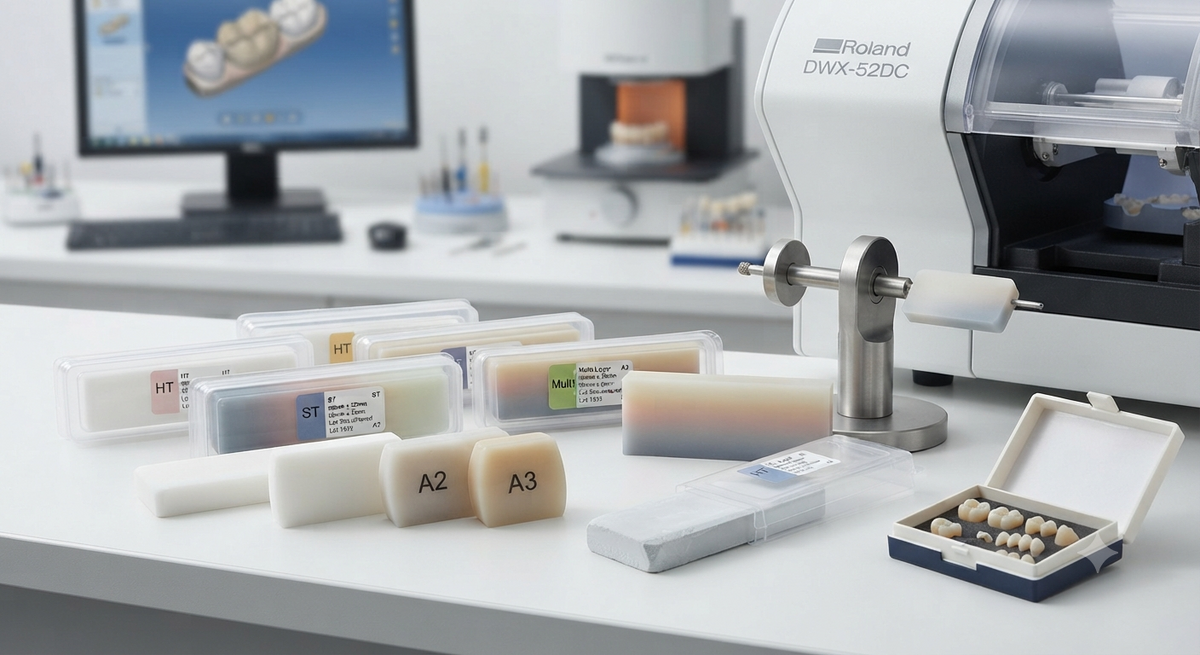
Most milling and sintering problems do not come from one big mistake. They build up from small settings that drift over time: a tired bur, a feed rate set too high, a furnace program copied from another brand. The good news is that these are easy to control once you know where to look. This guide covers tool life, edge chipping and shade accuracy, using gradient materials like ST multilayer zirconia as the example because they show errors quickly. Why Milling and Sintering Have to Work as a Pair Milling shapes the restoration while it is soft, and sintering locks that shape in. If the milled crown has micro-cracks or rough margins, sintering will not repair them, and it can make them more visible. If the furnace program is wrong, even a perfectly milled crown can warp or turn out the wrong color. Treat the two stages as one process and troubleshoot them together. Spindle Speed, Feed Rate and Tool Life Every mill and every bur has a recommended speed and feed range. Running faster saves a few minutes per disc, but it increases heat and wear, and a dull bur is the number one cause of rough surfaces. Start with the settings recommended for your machine and block, then adjust only one variable at a time so you can see what changed. Many labs track tool life by milling hours or units instead of waiting for visible damage. A simple log taped to the mill is enough. When quality starts to slip, a fresh bur is the cheapest fix you can try first. Stopping Edge Chipping Before It Starts Chipping usually shows up at margins, thin cusps and connectors. Common causes are worn burs, aggressive toolpaths, thin unsupported edges and dust packed around the disc holder. Here is what helps: • Replace burs on a schedule instead of running them to failure. • Keep margins and thin areas supported with sensible sprue placement. • Clean the holder and mill chamber so the disc sits true. • Handle milled crowns gently, since pre-sintered zirconia is fragile. Sintering Curves That Protect Shade Each zirconia has its own recommended sintering curve: how fast it heats, the peak temperature, how long it holds and how it cools. Gradient discs like ST multilayer zirconia are especially sensitive, because the color and translucency layers develop during the cycle. Using the manufacturer's program for that exact disc keeps the gradient intact. Furnace condition matters too. Worn heating elements, uneven loading and contamination from dust or metal can all cause blotchy color or lower translucency. Have the furnace calibrated regularly and keep the sintering tray clean. Furnace Loading and Cooling Habits How you load the furnace affects the result as much as the program does. Place crowns on the tray or in the beads as the manufacturer recommends, leave space between units so heat spreads evenly, and avoid stacking restorations unless the material allows it. Long-span bridges need more support than single crowns, otherwise gravity and heat can combine to distort the arch. Equally important is the cooling phase. Opening the furnace too early exposes the restoration to sudden temperature change, which can cause stress or cracks that only show later. Wait until the furnace reaches the temperature your program specifies before taking restorations out. If you share the furnace between materials, use separate trays or run a cleaning cycle so stray colorants do not transfer. Keeping Shade Consistent from Batch to Batch Shade surprises often come from the material, not the technician. Working with pre-shaded zirconia blocks Aidite makes shade accuracy easier, because the color is built into the block and you are not relying on liquid shading technique. If you prefer to color your own restorations, a white disc gives more control. Labs that use Aidite zirconia for staining & coloring can customize shades, then finish with Aidite stain and glaze for surface character. In both cases, give shading liquids time to dry before sintering, and sinter similar cases together so results stay comparable. Quick Fixes for Three Common Problems • Rough surface after milling: check bur wear and feed rate first. • Warped long-span bridge: confirm the sintering program and support the bridge properly in the furnace. • Dull or cloudy color: look at furnace cleanliness, program accuracy and shading liquid contamination. Keep a short written record of your settings for each material. When a problem appears, you will know exactly what changed, and a documented routine, whether you mill ST multilayer zirconia or a single-shade grade, is the fastest way to protect both quality and tool budget.
Learn more
How to Choose Zirconia for Anterior vs Posterior Crowns
Choosing zirconia for a crown is not simply about selecting the strongest or most translucent material available. The position of the tooth, functional load, esthetic expectations, available space and restoration design all influence the right material. An anterior crown generally requires greater attention to shade and light transmission, while a posterior crown often needs a stronger focus on durability and functional performance. For dental laboratories, understanding these differences can make material selection more predictable and help avoid unnecessary adjustments later in the workflow. Start With the Tooth Position The first question is whether the restoration is being fabricated for the anterior or posterior region. Front teeth are highly visible, so optical properties can have a major influence on the final result. Posterior teeth experience greater chewing forces, making strength and restoration design particularly important. This does not mean that one zirconia formulation should automatically be used for every anterior or posterior case. Instead, the material should be selected based on the complete clinical and laboratory requirements. What Matters When Fabricating Anterior Crowns Anterior restorations generally require careful attention to translucency, shade and natural-looking light transmission. High translucency zirconia may be suitable when the preparation provides favorable conditions and the restoration requires a more lifelike appearance. Multilayered zirconia can also be useful because the material incorporates different shade and translucency zones. When positioned correctly in the disc, these transitions can help reproduce the visual characteristics of a natural tooth. For laboratories looking for a simpler shade workflow, pre shaded zirconia can reduce some of the manual coloring steps. However, final staining, glazing or characterization may still be required depending on the case. When Strength Becomes the Priority Posterior restorations are exposed to greater functional forces, particularly in patients with heavy occlusion or parafunctional habits. In these situations, strength becomes an important factor when selecting zirconia. 3Y zirconia is commonly associated with higher strength, while 4Y zirconia provides a balance between strength and improved optical properties. The exact performance depends on the formulation and manufacturer, so technicians should always review the specifications and indications for the selected product. Understanding 3Y, 4Y and Multilayer Options A practical way to compare zirconia materials is to consider the balance between mechanical performance and optical characteristics. 3Y zirconia is often considered when strength is the main requirement. 4Y zirconia can be considered when the laboratory needs a compromise between strength and translucency. Multilayer materials introduce an additional optical gradient that can support more natural-looking restorations. Products designed for functional crown applications, such as explore functional zirconia for crowns, should still be evaluated according to the manufacturer's stated indications rather than selected purely by product category. Do Not Forget Preparation and Thickness Material selection cannot be separated from preparation design. Limited occlusal or axial space may affect whether a particular zirconia system is suitable. Before beginning production, check the manufacturer's minimum thickness requirements, recommended indications and sintering instructions. A highly translucent material cannot compensate for insufficient space or an unfavorable underlying shade. A Practical Selection Process for Dental Labs A simple workflow can make zirconia selection easier. First, identify the tooth position and expected functional demand. Next, consider the desired esthetic result, available space, preparation shade and restoration design. Then compare the strength, translucency, shade system and thickness requirements of the available materials. For an anterior case, optical properties may carry more weight. For a posterior case, strength, thickness and functional loading may become more important. Final Takeaway The right zirconia depends on the complete case rather than one material specification. Anterior crowns often require greater attention to translucency and shade, while posterior restorations may place greater emphasis on strength and functional requirements. By considering tooth position, material composition, restoration design and laboratory workflow together, technicians can make more informed zirconia selections.
Learn more
Zirconia Milling: CAD/CAM Workflow, Tool Selection & Common Milling Errors
A smooth zirconia workflow feels almost boring: the case goes in, the crown comes out, and it fits. Getting there takes a few habits that are easy to adopt and easy to forget. Whether you run a small in-house lab or a busy production floor, this guide covers how to set up your Aidite CAD CAM workflow, choose tools and avoid the errors behind most remakes. Mapping the Digital Workflow End to End Think of the process as a chain: scan, design, nesting, milling, sintering and finishing. A weak link anywhere shows up at the end. The most helpful step is to write your chain down, with the person responsible and the settings used at each stage. When something goes wrong, you can trace it instead of guessing. That applies to every Aidite CAD CAM job, whether it is a single crown or a bridge. Even a one-page flowchart pinned near the mill is enough to keep everyone aligned. Choosing the Right Tools for Zirconia Your tool list includes the mill, the CAM software, the burs, the furnace and the material. They should be chosen to work together. Check that your CAM library supports the discs you plan to use, that the burs are validated for your machine, and that the furnace can run the programs the manufacturer recommends. If you work with several brands such as Upcera zirconia, make sure each disc's data is loaded correctly, since mismatched data leads to size errors. Nesting and Sprue Strategy Nesting means placing restorations within the disc so they can be cut safely. Keep units away from the disc's outer edge, avoid placing thin parts where the bur must reach awkwardly, and position restorations so the sprue attaches to a non-critical area. For multilayer discs, nest according to where you want the gradient to fall. Connectors on bridges should be strong enough to survive milling. A sprue that is too thin can break during cutting, while one that is too thick leaves a mark that takes longer to finish. Where Milling Errors Usually Begin Most problems come from a short list of causes. Here is what to check first: • Wrong shrinkage data: entering the wrong disc batch information can make every crown too large or small. • Worn or unmatched burs: these cause rough margins and chipped edges. • Loose disc or dirty holder: a disc that does not sit true leads to uneven cuts. • Rushed toolpaths: speed saved on the mill is often lost in rework. Fit complaints are often blamed on the scan or design, but a check of the data entered into the CAM software and the condition of the mill usually finds the answer faster. Quality Checks Between Each Stage Do not wait until the crown is finished to look for problems. After design, check thickness and contacts on screen. After milling, inspect margins and the surface before sintering, since a flawed crown is cheaper to remake at this stage. After sintering, try it on the model and compare it with the design. A short checklist at each point takes a minute and prevents wasted furnace cycles. Calibration and Maintenance Habits That Pay Off Schedule routine calibration according to the machine maker's instructions, and keep the spindle, collet and dust extraction clean. A mill that is cleaned on a schedule needs fewer surprise repairs. Record every calibration, bur change and material batch, so you can link a change in results to a change in routine. Building One Standard Routine for Your Team A workflow works best when everyone follows the same steps. Write your settings and checks in a short guide, train new team members on it, and review it when you change materials or machines. When two technicians do the same task two different ways, results vary, and the cause becomes hard to find. A single documented routine keeps quality steady and makes training easier. Bringing Your Blocks and Process Together Consistent material makes everything above easier. Working with a dependable zirconia blocks supplier USA labs rely on means each batch behaves like the last, which gives you the predictability a digital workflow depends on. Pair that with a documented routine for nesting, milling and sintering, and you will see fewer remakes and steadier turnaround. A well-run Aidite CAD CAM workflow is not about complicated technology. It is about clear steps, matched tools and records that help you improve.
Learn more
Zirconia Crown Preparation: Reduction, Margins & Occlusal Clearance Guide
A great zirconia crown starts long before the scan, and long before the mill. It starts at the chair. How the tooth is prepared decides how much space the lab has to work with, how strong the crown will be, and how well the margin seals. Here is a straightforward guide to getting preparation right. Why Preparation Matters More With Zirconia Once sintered, zirconia is hard to adjust, and it does not forgive tight spaces. If there is not enough room, the technician either makes the crown too thin or leaves it high in the bite. Neither outcome is good. A thoughtful preparation gives the lab room to design a crown that is strong, well shaped and comfortable. How Much Occlusal Reduction Is Enough As a general guide, many manufacturers suggest roughly 1.0 to 1.5 mm of occlusal clearance for monolithic zirconia, although some materials permit less. Strength is the reason many dentists and labs favor 3Y zirconia for posterior crowns, because it can tolerate thinner sections than more translucent grades. Even so, thinner is not always better, so follow the specific guidance for the material you are using. Reduce following the natural anatomy of the tooth, instead of flattening the occlusal surface. Even reduction across cusps and fossae supports uniform thickness and keeps the crown from having thin spots. Axial Walls and Taper Axial reduction commonly falls between about 0.6 and 1.0 mm. Aim for smooth, gently tapered walls with roughly six degrees of total convergence. Too much taper reduces retention, while walls that are too parallel make the crown hard to seat. Retention improves when walls have enough height, so avoid over-shortening short teeth. Choosing and Finishing the Margin A well-defined chamfer or rounded shoulder around 0.5 to 1.0 mm deep is a dependable choice for zirconia. These margins give the lab a clear endpoint and give the crown enough material at the edge. Knife-edge or feather-edge margins are harder to reproduce cleanly because the milling tool cannot cut an infinitely thin edge. Place the margin where it can be scanned and cleaned. Subgingival margins are sometimes necessary, but they should be clear, dry and visible in the scan, because blood or saliva can hide detail. Smoothing Internal Angles for the Mill Milling burs have a physical radius, so they cannot cut a sharp internal corner. When the preparation has sharp line angles, the crown design either gets a gap or the lab has to compensate. Rounded internal angles and smooth transitions let the crown seat accurately and reduce the risk of stress points. Temporary Crowns and Soft Tissue Care Healthy gums make for a better scan and a better-fitting crown. After preparation, a well-fitting temporary protects the tooth and helps the tissue stay calm while the lab works. If the margin area looks inflamed at the time of scanning, consider waiting or using a retraction method, since bleeding can hide the margin. A few extra minutes here can save a remake later. Material Choice and Prep Design Go Hand in Hand The preparation you plan should match the material the lab will use. If you are conservative with reduction, tell the lab so they can choose a strong grade such as 3Y zirconia. For example, options such as TT White zirconia for crowns can be considered when you want a dependable material for everyday single units. Share the tooth position, bite pattern and preparation depth in your prescription so the lab can recommend the best fit. Sharing Your Prep Details With the Lab The lab can only design what it can see and understand. Along with the scan, mention the tooth number, the material you prefer, the amount of reduction you achieved, and anything unusual such as a short clinical crown or a heavy bite. Photos of the preparation and a short note on the patient's bite habits can help the technician choose the right thickness and connector design. A Pre-Prep Checklist • Check the opposing tooth position and bite load. • Plan reduction by material guidance, not habit. • Round all internal angles and finish the margin clearly. • Scan with clean, dry margins and include the opposing arch. With even reduction, a clear margin and the right material choice, whether that is 3Y zirconia in the back of the mouth or a more translucent grade up front, your lab can deliver a crown that fits well and lasts. When in doubt, a quick call to the lab before preparing is one of the best habits you can build.
Learn more
Zirconia Disc Thickness: How to Choose the Right Thickness for Each Restoration
When you order a zirconia disk, the diameter usually gets sorted out quickly because it has to fit your mill. Thickness is where people hesitate. Go too thin and a bridge may not fit. Go too thick and you pay for material that ends up as dust. This guide helps you match disc height to the work you actually do. What Disc Thickness Really Means Thickness, sometimes called height, is the distance from the bottom of the disc to the top. Most discs share a standard diameter, commonly 98 mm, but heights range from about 10 mm up to 20 mm or more. The height decides how tall a restoration can be nested inside the disc, and how much room is left for the holder ring and the support structure. Single Units: Why Shorter Can Be Smarter A single crown is not very tall, so a lower-height disc often has plenty of room. Shorter discs generally cost less and mill a little faster because the bur does not need to reach as deep. Labs that mostly produce single crowns and short bridges often find that a 10 mm or 12 mm disc covers the majority of their work. Product lines such as ST pre shaded zirconia discs are listed in 10 mm, while Explore Functional zirconia discs are available in 12 mm. As a rule, choose the lowest height that safely covers your tallest regular case. Long Bridges and Tall Abutments Need Height Tall restorations need more vertical room. Think of full-arch frameworks, multi-unit bridges and implant abutments with long emergence profiles. A taller zirconia disk lets you place the restoration without cutting into the edge area or forcing an awkward angle. If a design barely fits, move up a size, because squeezing a case in can compromise accuracy. Thickness, Nesting and Machine Limits Before ordering, check what your mill can physically hold. Some machines have a maximum disc height, and the holder system has to fit the ring size. Nesting software also needs a margin around each unit, so allow a little more height than the bare restoration measurements suggest. • Confirm your mill's supported diameter and height range. • Compare the tallest case you regularly make against the disc height. • Leave room for the support connector and a safety margin. • Make sure the disc ring matches your holder. How Height Affects Milling Time and Tool Wear Disc height changes how the mill works. Deeper cuts mean longer toolpaths and more stress on the bur, especially with tall discs where the tool has to reach farther down. If most of your cases are small, a very tall disc may slow you down without adding value. On the other hand, a disc that is only just tall enough leaves little room for the toolpath to work comfortably. Aim for a height that gives you a modest margin without wasting depth. Cost, Waste and Stock Planning Taller discs generally cost more, and unused height is wasted material. On the other hand, running out of the right height at a busy moment is costly too. Many labs stock one everyday height for crowns, plus a taller option for the occasional bridge or implant job. Buying in volume can help balance this. Labs that buy through zirconia wholesale USA programs often stock several heights, which makes it easier to choose the best fit for each case instead of using one size for everything. Reading the Disc Label and Batch Data Each disc carries information about its height, density and shrinkage factor, often printed on the packaging or encoded in a code. Enter this data accurately into your CAM software, because it controls how much the design is enlarged. A disc of the right thickness but with the wrong batch data will still produce a crown that does not fit. Also check the shade and translucency type before milling, since discs of different grades can look similar in the box. A Short Rule of Thumb Before You Order List your last 20 cases, find the tallest, and choose a disc that comfortably covers it. Then add a second height for exceptions. If you are comparing brands, look through Aidite zirconia discs and note which grades come in the heights you use most. The right zirconia disk thickness saves material, speeds up milling and prevents last-minute surprises. A small bit of planning at the ordering stage pays off on every case.
Learn more
Dental Wax Types: Casting, Modeling and Milling Wax, and When Labs Use Each
Digital dentistry has changed a lot of lab routines, yet wax is still sitting on almost every bench. It is cheap, easy to shape and burns out cleanly, which makes it hard to replace. But not every wax does the same job. This guide breaks down the main types so you can pick the right wax dental material for each task. Why Wax Still Earns Its Place on the Bench Wax lets a technician build, adjust and test a shape before committing to the final material. It melts at low temperatures, can be carved in seconds and holds detail well. For patterns that will be cast or pressed, it vanishes during burnout and leaves a precise cavity behind. In a busy lab that speed matters, particularly for single-unit cases that need a quick try-in before the final material. Casting Wax: Built for Clean Burnout Casting wax, often called inlay or pattern wax, is used to create the pattern for crowns, inlays and frameworks that will be cast or pressed. Its key quality is clean burnout: it should leave little or no residue so the final restoration comes out smooth and accurate. It also needs to hold its shape while being carved, without chipping or smearing. Modeling Wax: For Setups, Trays and Try-Ins Modeling wax covers a range of everyday tasks. Baseplate wax is used for denture setups and bite registration, utility wax helps with temporary adjustments, and sticky wax holds parts together during soldering or repairs. Modeling waxes are usually softer and more flexible than casting wax, because they need to be adapted by hand rather than burned out with precision. Milling Wax: The CAD/CAM Option Milling wax comes as discs or blocks for CAD/CAM machines. The mill cuts the pattern from the disc, which is then invested and cast or pressed just like a hand-made pattern. It saves carving time, improves consistency and pairs well with a digital design. Milling wax is a wax dental material made to cut cleanly without melting, so avoid mixing it with other tools or settings meant for different materials. Storing and Handling Milling Wax Discs Milling wax discs should be stored flat in a cool, dry place away from heat sources so they do not warp. Keep them in their packaging until needed, since dust can clog the mill and affect surface quality. After milling, handle the pattern gently by its base and invest it as soon as possible. Because wax shavings can build up in the chamber, clean the extraction system regularly. A Note on Dental Wax for Filling One search that comes up often is dental wax for filling. It is worth clearing up: lab wax is not a permanent tooth filling. Casting and modeling waxes are used to create patterns and setups, not to replace tooth structure. Orthodontic wax, sold for braces, only covers sharp edges temporarily. If a patient has a cavity, they need a dentist and a restorative material such as composite or glass ionomer. Hard, Medium and Soft: Reading a Wax's Working Behavior Waxes are often described by hardness, which tells you how they behave in the hand. Harder waxes hold fine edges and margins well but can be brittle when cold. Softer waxes are easy to adapt but may flow or slump if the room is warm. Many casting waxes are color-coded to help technicians choose quickly, though shades vary between manufacturers. Test any new wax on a scrap pattern first, and check its melting range and burnout notes on the product sheet. Handling Tips That Prevent Distorted Patterns • Store wax at a stable, cool temperature away from sunlight. • Heat gently and avoid overheating, which changes how the wax flows. • Let patterns cool fully before removing them from the model. • Invest patterns promptly, since wax can distort over time. When Resin Replaces Wax Some labs now print or mill patterns in resin instead of wax. A castable resin for dental labs burns out like wax but can capture finer detail and handle more reliably. Options such as burnout resin Whip Mix VeriCAST are designed for this purpose. Check your investment and burnout schedule first, since resin and wax do not always follow the same cycle. The best choice depends on the case, your equipment and how much detail you need. Keeping a mix of waxes on hand, plus a good understanding of each wax dental material, lets you move between hand work and digital workflows.
Learn more
Zirconia Crown Manufacturing Process: From Digital Scan to Final Restoration
A zirconia crown looks simple when it arrives in the box, but a lot happens between the patient's mouth and that finished restoration. Whether you are a dentist wondering why a case takes the time it does, or a technician fine-tuning your own routine, knowing each step helps you catch problems early. Here is how a typical zirconia dental lab takes a case from digital scan to final crown. What Happens Before the Mill Starts Everything begins with the scan. Most cases now arrive as an intraoral scan, though some labs still scan a traditional impression or stone model. Either way, the lab needs a clean record of the prepared tooth, the margin, the neighboring teeth and the opposing arch. The quality of that file sets the ceiling for everything that follows. Bubbles, missing margin areas or a blurry contact point cannot be fixed at the milling stage, so a careful technician reviews the scan first and contacts the dentist if something looks unclear. A quick message at this point costs far less than a remake. Designing the Crown on Screen Next, the technician designs the crown in CAD software. They mark the margin line, set the cement gap, shape the anatomy, and adjust contacts and occlusion against the opposing teeth. Wall thickness is checked here too, because zirconia needs enough material to stay strong in function. Material choice is decided at this stage as well. Back teeth under heavy bite load usually call for a stronger, more opaque grade, while front teeth often use a more translucent one. Labs that stock Aidite dental zirconia in several grades can match the material to the tooth instead of using one disc for every case. Milling the Pre-Sintered Disc Once the design is approved, CAM software nests the crown inside a zirconia disc and generates the toolpaths. The disc is still in its pre-sintered state, which is chalky and soft enough to mill quickly. The design is also enlarged on purpose, by roughly 20 to 25 percent depending on the material, because the zirconia will shrink during sintering. The mill cuts the crown out of the disc and leaves it attached by a thin sprue. The technician then removes it, brushes away the dust and smooths the sprue mark. At this point the crown looks like an oversized, chalky version of the final restoration. Sintering: Where the Crown Gets Its Strength Sintering is the furnace stage that turns the soft crown into dense, hard ceramic. The furnace heats the crown to somewhere around 1,450 to 1,550 degrees Celsius, depending on the material, and holds it there following the manufacturer's program. During this time the crown shrinks to its true size and reaches its full strength and translucency. Two things matter most: using the right program for that specific disc, and letting the furnace cool as directed. Rushing a cycle or borrowing settings from a different brand can cause warping, cloudiness or weak spots. Pre-shaded discs come out of the furnace already colored, while white discs may be shaded with liquids before sintering. Staining, Glazing and Final Checks After sintering, the technician tries the crown on the model, checks the margins under magnification and adjusts the contacts. Then comes the aesthetic work. Some crowns are fully monolithic and need only a light stain and glaze to add character, while others are cut back and layered with porcelain for a more custom look. A glaze firing seals the surface, and a last quality check confirms fit, contacts, occlusion and finish. Before shipping, many labs also compare the case against the prescription: tooth number, shade, material and any special notes from the dentist. Why Material Quality Shows Up in the Final Crown Every step above depends on consistent material. A disc with uneven density can mill unpredictably or shrink unevenly, and no amount of skill fully hides that. This is why a good zirconia dental lab tends to stick with brands it trusts. If you are building or refreshing your crown range, it is worth exploring how Aidite zirconia crowns perform in your own workflow, including multilayer and pre-shaded options, to see which grades suit your typical case mix. A Quick Checklist for Dentists Sending Cases • Send a complete scan with clear margins and the opposing arch. • Specify the shade, including the stump shade if the prepared tooth is discolored. • Mention special requests such as tight contacts or matching a neighboring crown. • Include a photo of the adjacent teeth for shade reference. A clear case from the start is the easiest way to get a crown that fits the first time, and it helps your zirconia dental lab deliver faster.
Learn more
Zirconia Milling Burs: Types, Selection & Maintenance Guide
If your zirconia restorations are coming off the mill with rough margins or inconsistent fit, the cutting tool is one of the first things to look at. Dental milling burs are small, but they do the actual work, and choosing and caring for them well can improve quality and lower your running costs. This guide explains the types, how to choose, and how to look after them. What a Milling Bur Actually Does A milling bur removes material from the disc in controlled passes. Roughing passes remove bulk quickly, while finishing passes refine the surface, margins and fine anatomy. Most mills use several bur sizes in one job, swapping between them automatically. The sharper and truer the tip, the cleaner the cut, which is why quality dental milling burs matter. Flat, Ball and Torus: Picking the Right Shape • Flat end burs remove material quickly and leave flat surfaces, so they suit roughing and flatter areas. • Ball end burs have a rounded tip that follows curves, making them the choice for fine anatomy, fissures and detailed surfaces. • Torus burs have a slightly rounded corner and balance speed with detail, working well for margins and transitions. Many machines pair these shapes by default, so check which combination your milling strategy actually calls for before ordering. Diameter and Coating Choices Explained Thicker burs are stronger and cut faster. Thinner ones reach into tight spaces and capture detail, but they wear and break more easily. Smaller diameters also limit how sharp an internal corner can be, which is why designs need rounded internal angles. Coatings protect the cutting edge. Tungsten carbide burs with a hard coating are common for pre-sintered zirconia, while other materials such as glass ceramics may call for diamond-coated tools. Always match the coating to the material, since the wrong pairing wears out burs quickly. Matching Burs to Your Machine and Material Not every bur fits every mill. Shank size, length and tolerance vary between systems, and a poorly fitting bur can run out of true, which shows up as rough surfaces and chipped edges. Start with the burs your machine maker validates, then test alternatives on non-critical cases. Also remember that dry and wet milling use different tools. Most zirconia is milled dry, but some machines are built for wet milling, so follow your machine's guidance. Safe Handling During Tool Changes Most bur damage happens away from the mill. Dropping a bur on a hard surface can chip the tip invisibly, and touching the cutting edge with fingers or tools can dull it. Use tweezers or a holder when changing tools, keep the work area uncluttered, and make sure the collet is fully tightened before you start a job. If a bur falls, treat it as suspect and inspect it before use. Daily and Weekly Care That Extends Bur Life • Remove dust from the tool changer and collets after each run. • Inspect bur tips under magnification for chips or rounding. • Store spare burs in their holders so tips do not knock together. • Keep a usage log so replacement is based on hours, not guesses. Knowing When to Retire a Bur Warning signs include rough or streaky surfaces, margins that need extra hand finishing, unusual noise, and visible wear on the tip. When you see two or more together, replace the bur. A used bur left in service can cost more in remakes than a new one costs to buy. Spotting a Quality Bur Before You Buy Look for consistent, clean cutting edges, accurate shank dimensions and clear labeling that states the diameter, shape and intended material. Poor-quality burs may have uneven coatings or tips that sit slightly off center, and you will only notice once they are mounted and running. Buy a small quantity of any new type first, run it on a model case, and compare the result with your standard bur before ordering in bulk. Buying Burs Without the Guesswork Ordering is easier when your bur supply, blocks and finishing materials come from one place. Working with a reliable zirconia dental products distributor saves time, keeps spares in stock and gives you someone to ask when a setting does not behave. Keep a small reserve of your most-used sizes, and review your tool log every month so you reorder before you run out. Good dental milling burs are an investment in consistency, and a few minutes of weekly care keeps that investment working.
Learn more
Zirconia Translucency Explained: How to Choose the Right Translucency Level
Ask five technicians how to pick a zirconia and you will hear five opinions, but most will start with the same word: translucency. It decides whether a crown blends into the smile or looks like a flat white cap, and it also affects how strong the restoration is. Whether you work with multilayered zirconia or single-shade discs, this guide explains what translucency really means and how to choose the right level for each case. Why Zirconia Is Not Just One Material Early dental zirconia was very strong but fairly opaque, which was fine for frameworks hidden under porcelain. As monolithic restorations took off, manufacturers changed the formula to let more light pass through. The main lever is yttria, a stabilizing oxide added to the zirconia. More yttria creates more of the cubic crystal phase, which lets light through but gives up some strength. That trade-off is at the heart of every decision you make. The more translucent the material, the lower its flexural strength. Neither end of the scale is better, they simply suit different jobs. Reading the Yttria Numbers: 3Y, 4Y and 5Y • 3Y (about 3 mol% yttria): the strongest and most opaque. A reliable pick for long-span bridges, molars and cases with discolored stumps. • 4Y: a middle path. 4Y zirconia offers noticeably better translucency than 3Y while keeping enough strength for most single crowns and short bridges. • 5Y: the most translucent of the three, ideal for anterior crowns, but with lower strength, so keep it away from long spans and heavy-load areas. Exact strength values vary by brand and sintering protocol, so check the manufacturer's data sheet instead of relying on a general number. Matching Translucency to the Tooth Three questions usually settle the choice: where is the tooth, how hard will it work, and what color is the prepared tooth underneath? • Location: front teeth are seen up close, so they benefit from higher translucency. Back teeth are seen from a distance, so strength wins. • Load: patients who grind or clench need extra strength, even on visible teeth. • Background: a dark stump will show through a very translucent crown. A more opaque material, or a thicker layer, hides it better. How Multilayer Discs Shape the Final Color A multilayered zirconia disc changes both shade and translucency from one end of the block to the other, so a single crown can move from a deeper cervical color to a brighter, clearer incisal edge. That gradient saves staining time and gives a lifelike result straight out of the furnace. Some designs even combine different yttria levels in the same block, such as a 4Y 5Y multilayered disc with a stronger base and a more translucent top. Where you nest the crown within the disc decides where that gradient lands, so placement matters. Aidite has several lines built on this idea. Labs chasing lifelike depth often look for natural look zirconia Aidite grades, and for single front teeth a super translucent zirconia Aidite option is worth a closer look. If you would like a ready-made gradient, the translucent multilayer zirconia Aidite range is a good place to start. Does Higher Translucency Always Look Better? Not always. A highly translucent crown placed on a dark or discolored abutment can look gray, because the underlying color shows through instead of being masked. Very translucent material can also look too glassy next to older, more opaque natural teeth. The goal is not maximum translucency but a crown that matches its neighbors. In many cases, a mid-level material with careful staining looks more natural than the most translucent option available. Photos of the adjacent teeth, taken in natural light, help your lab judge how much translucency the case really needs. Common Translucency Mistakes Labs Make • Using a highly translucent disc over a dark stump without adjusting the plan. • Choosing translucency by shade alone and ignoring bite load. • Skipping the manufacturer's sintering program, which can reduce translucency. • Over-thinning a translucent crown, which risks chipping or fracture. A Simple Way to Make the Final Call When you are unsure, ask yourself three things. How strong does this restoration need to be? How visible will it be? How dark is the prepared tooth? Answer those and the right material usually becomes obvious. Keep a few grades on your shelf so you are never forced to compromise: a strong base grade, a mid-range option for everyday crowns, and multilayered zirconia for front teeth where aesthetics come first.
Learn more