

Blogs
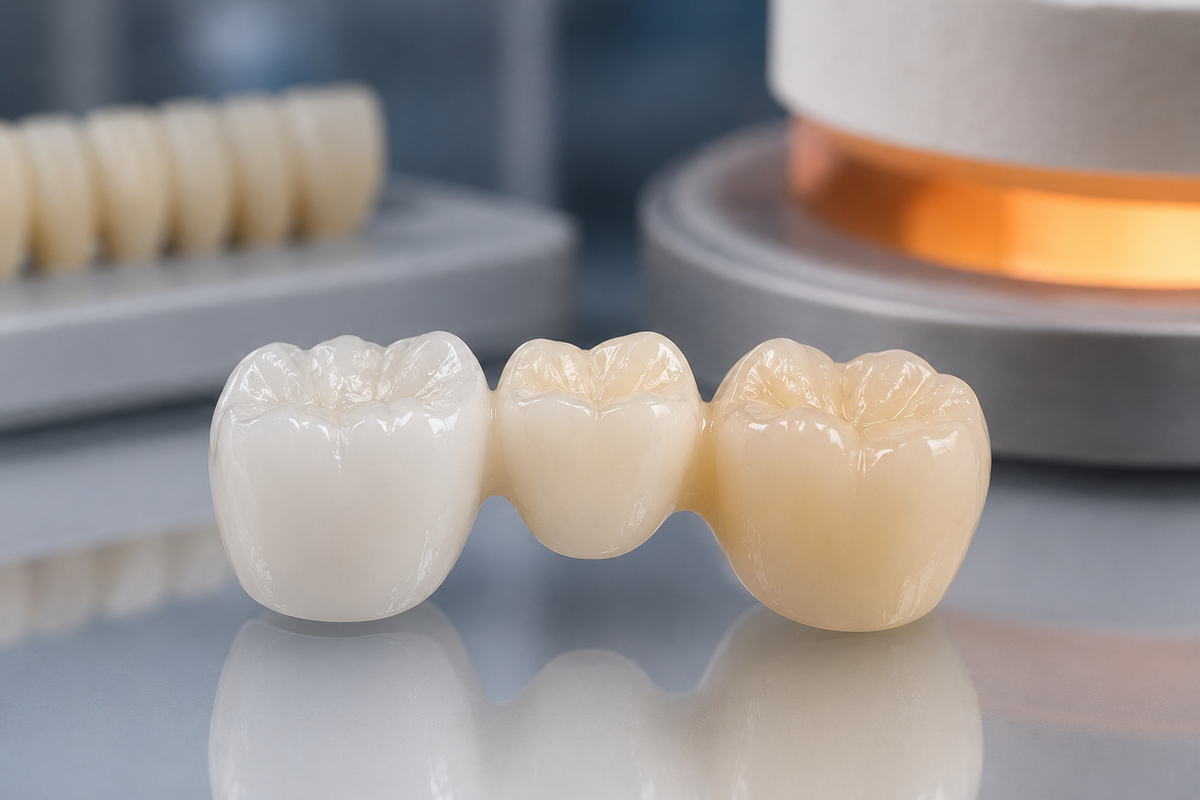

How to Choose Between Aidite HonorZir SHT and Superfect Zir SHT for Anterior Cases?
Aidite produces two super-high-translucency zirconia lines that both target anterior esthetic cases HonorZir SHT and Superfect Zir SHT. On the surface, they appear nearly interchangeable: both are pre-shaded multilayer discs, both are marketed for esthetic zone restorations, both carry Aidite's manufacturing quality standards. Labs that stock one and encounter a case where the other would have been more appropriate often don't realize the mismatch until the restoration is on the model and the shade relationship isn't quite right. The difference between these two products is real, and it matters clinically. Understanding exactly what separates HonorZir SHT from Superfect Zir SHT at the level of gradient architecture, translucency specification, shade range, and clinical indication is what allows labs to stock and specify both correctly rather than defaulting to one for all anterior cases and accepting suboptimal results on the cases that needed the other. This guide gives you a complete, practical comparison with a clear decision framework at the end. Why the SHT Classification Matters for Anterior Cases? Before comparing the two products, it helps to understand what the SHT designation actually means and why it is clinically significant for anterior work. SHT stands for Super High Translucency a classification that places these discs at the upper end of the zirconia translucency spectrum, in the 4Y to 5Y crystal phase range. The elevated yttria content shifts the crystal microstructure toward a higher cubic phase fraction, increasing light transmission through the material to levels that approximate natural enamel optical behavior far more closely than standard HT or ST grades. For anterior cases, this translucency level is not a cosmetic upgrade it is often a clinical necessity. When the adjacent teeth are young, naturally translucent, or have been restored with lithium disilicate veneers, a standard HT zirconia crown in the same arch can appear flat and opaque by comparison regardless of how well the shade is matched. SHT-grade material is what brings the restoration into the optical range of the surrounding dentition. The tradeoff is predictable: higher translucency means lower flexural strength. SHT grades typically deliver 500–700 MPa, which is adequate for single anterior crowns and anterior bridges under normal occlusal loading, but requires connector dimension verification for multi-unit spans. For a full analysis of where SHT-grade materials fit within the complete anterior material selection framework, the guide to Which Materials Best Balance Esthetics and Durability for Anterior Cases covers the full decision matrix including lithium disilicate and PMMA comparisons. HonorZir SHT: What It Is and What It Does Well? HonorZir SHT is Aidite's pre-shaded multilayer disc in the super-high-translucency classification, specifically designed for natural-looking anterior restorations where the shade gradient architecture of the disc needs to do most of the optical work without extensive post-sintering staining. The defining characteristic of HonorZir SHT is its natural gradient design — the transition from cervical to incisal is formulated to replicate the optical behavior of a natural tooth that has aged into a fully developed shade. The cervical zone carries warm, saturated dentin character. The body zone transitions into balanced translucency. The incisal zone delivers the cooler, more opalescent quality of mature enamel. This gradient is particularly well-suited to cases involving adult patients in the 30–60 age range where the natural dentition has developed full chromatic depth and the restoration needs to match that optical maturity. Shade range and coverage: HonorZir SHT is available in VITA Classic A–D shades across the standard range. The pre-shaded pigmentation is calibrated to produce accurate VITA shade matches post-sintering without staining in the majority of A and B shade cases. C and D shade cases may require supplementary cervical staining to reach full saturation. Disc availability and thickness: Available in 10mm thickness, making it compatible with milling systems that require thinner disc stock for full-contour anterior crown production. The 10mm format is particularly relevant for labs running single-unit anterior cases where structural reserve beyond the minimum is not a design priority. Where HonorZir SHT performs best: Single anterior crowns in A1–B3 shade range on adult patients Cases where the adjacent natural teeth have moderate to full chromatic development Multi-unit anterior cases where shade consistency across units is the priority Labs that run standard A-shade volume and want pre-shaded multilayer performance without the cost of higher-specification discs The aidite honorzir sht pre-shaded disc is available at ZirconiaGuys from US inventory in standard 98mm diameter with batch documentation available on request. Superfect Zir SHT: What It Is and What It Does Well? Superfect Zir SHT is Aidite's higher-specification multilayer disc in the super-high-translucency classification the product Aidite positions at the top of its anterior esthetic range for cases where maximum optical performance is the clinical priority. Where HonorZir SHT is engineered for natural, mature shade gradient replication, Superfect Zir SHT is engineered for maximum translucency in the incisal zone with a more dramatic cervical-to-incisal gradient transition. The incisal halo effect is more pronounced, the opalescence more visible under lateral lighting, and the overall optical character more aligned with young, highly translucent natural dentition. This makes Superfect Zir SHT the correct choice when the clinical challenge is matching to teeth with exceptional natural translucency a situation where HonorZir SHT's more conservative gradient would leave the restoration looking slightly opaque by comparison. Shade range and coverage: Superfect Zir SHT covers the standard VITA shade range with pre-shaded pigmentation calibrated to the gradient architecture the cervical zone is more intensely saturated relative to the incisal than in HonorZir SHT, making the shade transition more visible and more dramatic. This is clinically correct for younger patients with high natural chroma and high natural translucency, but can appear overdone on older patients where natural teeth have less dramatic optical zonation. Disc availability and thickness: Available in 12mm thickness, providing additional structural material for cases requiring slightly more depth in the milling process anterior crowns with deeper preparation, longer clinical crowns, or multi-unit bridge designs where the additional disc thickness supports connector geometry. Where Superfect Zir SHT performs best: Single anterior crowns on younger patients (18–35) with high natural translucency Cases adjacent to lithium disilicate veneers where maximum incisal translucency is required for optical blending Lateral incisor and central incisor restorations where incisal halo effects are visible and important to the esthetic outcome Complex anterior esthetic cases where the referring dentist has specified maximum translucency as a clinical requirement The aidite superfect zir pre-shaded disc is available at ZirconiaGuys from US inventory in 98mm diameter with the 12mm thickness format. Side-by-Side Comparison Property HonorZir SHT Superfect Zir SHT Translucency classification Super High (SHT) Super High (SHT) — higher incisal zone Gradient character Natural, mature tooth optical profile Dramatic, high-contrast cervical-to-incisal Best patient age group 30–60+ 18–35 Incisal opalescence Moderate natural enamel character High pronounced halo effect Cervical saturation Warm, balanced Intensely saturated for gradient contrast Available thickness 10mm 12mm VITA shade coverage Full A–D range Full A–D range Post-sintering staining needed Minimal for A–B shades Minimal for standard shades Adjacent to e.max veneers Acceptable in most cases Preferred choice Multi-unit anterior bridge Suitable Suitable verify connector dims Posterior bridge Verify strength Verify strength Anterior Bridges: Which Product Applies and How? Both HonorZir SHT and Superfect Zir SHT are appropriate for anterior bridge indications 3-unit spans in the anterior zone where esthetic priority is high and structural demands are within the flexural strength range of SHT-grade material. The selection between them follows the same logic as single-unit cases: patient age, adjacent translucency, and the required gradient character determine which disc produces the better optical outcome. For aidite zirconia bridges in the anterior zone, the complete Aidite range at ZirconiaGuys covers both HonorZir and Superfect formats alongside white unshaded versions of each for labs that prefer manual shade control on complex bridge cases. The connector dimension requirement for anterior bridges in SHT-grade material deserves specific attention. At 500–700 MPa flexural strength, the minimum connector cross-section for a 3-unit anterior bridge is typically 7–9 mm² depending on the specific disc specification and the manufacturer's published data. Confirm connector area against the specific product's technical sheet before finalizing the bridge design do not assume that SHT-grade material connector requirements are equivalent to 3Y-TZP requirements, which are significantly more generous. For posterior bridge indications where a patient also requires anterior SHT restorations in the same case, the material plan should split by quadrant: SHT-grade for anterior units, standard 3Y or 4Y for posterior spans. Do not extend SHT material into posterior bridge connectors under full occlusal load. What the GSC Data Tells Us About How Labs Search for These Products? Two search patterns from GSC data are relevant to understanding how labs currently find and evaluate these products. aidite honorzir sht pre-shaded appears with consistent impression volume at position 4 meaning ZirconiaGuys is already near the top of search results for this query, but the lab searching it is typically looking for specific product information: availability, pricing, thickness options, and shade range. Labs at this search stage have already decided on the product category and are evaluating suppliers. The content that converts this search is product-specific detail, not general anterior zirconia education. superfect sht multilayer zirconia reflects labs in an earlier evaluation stage comparing the Superfect Zir SHT against alternatives, looking for a reason to choose it or rule it out. This is where a direct comparison guide like this one adds the most value: it surfaces at the research stage and provides the specific differentiation information the lab needs to make a stocking decision. Together, these two search patterns tell the same story: labs searching for these products know what SHT zirconia is and have a patient case driving the search. The question they are asking is not "what is SHT?" it is "which SHT disc is right for this case, and where do I buy it?" A Note on White Unshaded Versions Both HonorZir SHT and Superfect Zir SHT are available in white (unshaded) formats alongside the pre-shaded versions. The white versions serve a different workflow function: they are the correct choice for cases where the shade complexity exceeds the pre-shaded gradient's capability strong C or D shades, unusual hue requests, or cases requiring characterization effects that a pre-shaded baseline complicates. For most standard A–B shade anterior cases, the pre-shaded multilayer format is the more efficient choice the shade is built into the material, the staining step is eliminated or minimal, and batch-to-batch consistency is higher than manual staining protocols allow. Reserve the white format for the cases where shade control requirements genuinely exceed what the pre-shaded disc delivers. When evaluating the full anterior esthetic disc range beyond the HonorZir and Superfect lines, high translucency aizir zirconia is Aidite's single-shade high-translucency option for labs that prefer a flat-composition disc with full manual shade control — relevant for labs running complex characterization workflows where gradient architecture in the disc is a constraint rather than an advantage. Decision Framework: Which Product for Which Case? Choose HonorZir SHT pre-shaded when: The patient is 35 or older with naturally moderate translucency The adjacent teeth have standard A–B shade with developed but not exceptional translucency The case is a single anterior crown or 3-unit anterior bridge in the standard A–B shade range Production efficiency is a priority and the standard gradient will deliver a correct result without supplementary staining Choose Superfect Zir SHT pre-shaded when: The patient is under 35 with highly translucent natural dentition The case is adjacent to e.max veneers or other high-translucency restorations that set an optical standard the restoration must match The incisal zone of the restoration is prominently visible and the referring dentist has specified maximum translucency The 12mm thickness provides a structural advantage for the specific preparation depth Choose the white version of either product when: The shade is outside the standard A–D range The case requires custom characterization that a pre-shaded gradient would complicate The lab's standard workflow includes full manual shade control and the technician's staining protocol is validated for SHT-grade material Stocking Both Products Correctly The most effective inventory approach for a full-service dental lab handling a range of anterior esthetic cases is to stock both HonorZir SHT and Superfect Zir SHT with a clear internal protocol for which patient profile routes to which disc. Default anterior stock: HonorZir SHT pre-shaded covers the majority of adult anterior crown and bridge cases efficiently. Its natural gradient character and 10mm thickness make it the production workhorse for standard A–B shade anterior work. Selective upgrade: Superfect Zir SHT pre-shaded is the upgrade specification for young-patient cases, e.max-adjacent restorations, and any case where the clinical notes or shade prescription specifically call out maximum translucency as a requirement. Avoid: Using a single product for all anterior SHT cases without distinguishing between mature and young patient optical requirements. This is the most common source of anterior esthetic mismatches in labs that have transitioned to SHT-grade material but have not differentiated between the two available gradient architectures. Both zirconia dental blanks formats are available from ZirconiaGuys as a dedicated dental zirconia discs supplier with US inventory including white and pre-shaded versions of HonorZir and Superfect, zirconia blank stock in standard 98mm diameter, and the full Aidite range of zirconia blocks and zirconia blocks dental products for labs consolidating their Aidite supply through a single domestic source with same-day shipping on in-stock items.
Learn more
How Much VeriMODEL Ortho White Resin Does One Orthodontic Model Use?
Material cost per case is one of the most undertracked numbers in dental lab production and in orthodontic model printing specifically, it is the number that determines whether your 3D printing workflow is genuinely more cost-efficient than plaster or stone models, or whether resin consumption is eroding the margin you assumed digital production would deliver. VeriMODEL Ortho White from Whip Mix is one of the most widely adopted orthodontic model resins in US dental labs. But when labs are asked exactly how much resin a single model uses, the answer is almost always a guess. This guide gives you a real answer. It covers the variables that determine resin consumption per model, how to calculate your actual per-model volume, what a single bottle of VeriMODEL Ortho White typically yields in practice, and how to use that data to manage your resin inventory and case economics accurately. Why Resin Volume Per Model Is Not a Simple Number? Before getting to the calculation, it is worth explaining why resin consumption per orthodontic model is variable rather than fixed because understanding the variables is what allows labs to control them. Model geometry. A full-arch orthodontic model with standard base height and complete arch coverage uses significantly more resin than a partial-arch model or a trimmed diagnostic model. The volume of material in the final part is the primary driver of resin consumption, and that volume is determined by how the model is designed in the digital workflow. Hollow vs solid printing. Most orthodontic model printing software gives labs the option to print models hollow with a defined wall thickness, rather than printing them as solid blocks. A solid full-arch model uses roughly 3–4x more resin than a hollowed model with a 2–3 mm wall and drain holes. Hollow printing is standard practice for production efficiency but the wall thickness setting is directly adjustable and has a proportional effect on both print time and resin consumption. Support material. Supports consume resin in addition to the model itself. The support volume depends on model orientation, the density of the support structure, and whether the slicer is set to minimize supports for resin efficiency or maximize supports for print reliability. Labs optimizing for resin cost should use the lightest support structure that their printer can reliably print without failure. Resin remaining in the vat. Every print cycle leaves a layer of resin coating the FEP film and vat surfaces that does not transfer into the model. This loss is small per print but accumulates over time particularly when a vat is emptied and residual resin is filtered out rather than returned to the bottle. Labs that track this loss accurately include it in their per-model cost calculations. Waste from failed prints. Failed prints consume resin without producing a usable model. A 3% print failure rate means every 33rd model's worth of resin is lost. This is relevant to per-model cost but is separate from the consumption calculation for a successful print. VeriMODEL Ortho White: What the Resin Is Designed For Before calculating consumption, it helps to understand what VeriMODEL Ortho White is optimized for because that optimization affects how the resin behaves during printing and why it is specified for orthodontic model applications rather than general model or splint production. VeriMODEL Ortho White is a photopolymer resin formulated specifically for orthodontic study and working models. Its key properties are dimensional accuracy for tight-tolerance aligner and bracket workflows, a bright white color that reads clearly under clinical and scanning lighting, surface hardness sufficient for thermoforming appliance production directly on the printed model, and biocompatibility appropriate for the incidental contact that occurs during clinical use of orthodontic appliances fabricated on the model. The white ortho resin whip mix formulation is calibrated for 385 nm and 405 nm light sources, making it compatible with the majority of dental 3D printing systems used in US labs. Batch-to-batch color consistency a practical requirement for labs that match models to cases by visual reference is one of the product's consistently cited advantages among labs that have standardized on it for orthodontic production. The Volume Calculation: Step by Step To calculate actual resin consumption per model, you need three pieces of data from your slicer software: the model volume, the support volume, and the layer count. Most dental slicers exocad, 3Shape, Asiga Composer, Chitubox, and others display the estimated resin volume for each print job before you commit to printing. Use that number as your baseline. Step 1: Get the estimated volume from your slicer.Before printing, note the resin volume displayed in the slicer. This figure represents the combined volume of the model and its supports in milliliters. Step 2: Add a vat waste factor.Add approximately 3–5% to the slicer estimate to account for resin that remains coating the vat and FEP film after the print. For labs running high print volumes daily, this figure can be measured directly by weighing the resin bottle before and after a series of prints and comparing the difference to the cumulative slicer estimates. Step 3: Calculate your adjusted per-model volume.Add the vat waste factor to the slicer estimate. This is your adjusted per-model resin consumption. Typical volume ranges for VeriMODEL Ortho White by model type: Model Type Wall Setting Estimated Volume Full-arch solid model N/A (solid) 35–50 ml Full-arch hollow, 3 mm wall 3 mm 12–18 ml Full-arch hollow, 2 mm wall 2 mm 9–13 ml Partial arch / quadrant model 2–3 mm wall 5–9 ml Trimmed diagnostic model 2 mm wall 8–12 ml These are representative estimates based on standard full-arch arch form geometry. Your actual volumes will vary based on arch width, base height, and whether you include anatomical bases or flat bases in your design standard. Run your own measurement series on your first 10 prints and use that data not generic estimates as your production baseline. For labs that have not yet built a complete orthodontic model resin workflow and want to compare options, our guide to Resin for Dental 3D Printing: Uses, Types, and Tips covers the full category of dental photopolymer resins and their clinical applications in detail. Bottle Yield: How Many Models Per Bottle? VeriMODEL Ortho White is available in standard bottle sizes. Using the volume estimates above and a standard hollow full-arch model at a 2.5 mm average wall thickness consuming approximately 14 ml per model including vat waste factor: 500 ml bottle: Approximately 35 full-arch hollow models per bottle.1000 ml bottle: Approximately 70 full-arch hollow models per bottle. These figures assume single-arch models. Dual-arch cases (upper and lower printed in the same batch) effectively double the resin consumption per patient case so a dual-arch case at 14 ml per arch uses approximately 28 ml total, yielding roughly 35 patient cases per 1000 ml bottle. For labs running mixed print beds printing multiple model types in a single session the yield calculation should be done at the print session level rather than per individual model. Sum the slicer-estimated volumes for all models in a session, add the vat waste factor once per session (not per model), and use that as your session consumption figure. Cost Per Model: Running the Numbers For labs that need a comparison point against an alternative orthodontic model resin option particularly for labs considering whether to standardize on one resin system for both orthodontic models and general diagnostic models the orthodontic model printing resin from Keystone offers a comparable workflow at a different price point, with its own batch documentation and ISO compliance profile for labs that require multi-supplier qualification. The important principle in any cost-per-model analysis is to include all resin costs the model volume, the support volume, and the vat waste factor not just the slicer's model volume estimate. Labs that calculate cost only on the model volume understate true resin cost by 15–25% depending on support density and vat management practices. Optimizing Resin Consumption in Your Orthodontic Model Workflow Once you have an accurate per-model consumption baseline, the following workflow adjustments have the most direct impact on resin cost per case. Hollow printing as the default. If your lab is still printing solid orthodontic models, switching to hollow printing with drain holes is the single highest-impact change available. The reduction in resin per model is 60–75% compared to solid, with no clinical impact on model function for aligner or bracket workflows. Wall thickness optimization. A 2 mm wall is structurally adequate for most orthodontic model applications thermoforming pressure, clinical handling, and bracket placement. A 3 mm wall uses approximately 30% more resin than a 2 mm wall for no additional clinical benefit on most cases. Set 2 mm as your lab standard and test for structural adequacy before moving to thinner walls. Print bed utilization. Resin efficiency improves with fuller print beds the vat waste factor is fixed per session regardless of how many models are in the batch. A session printing 4 models uses the same vat waste as a session printing 8 models. Batch your orthodontic model prints to maximize bed utilization before starting a print run. Vat management. Filter resin back into its bottle after every session using a mesh filter. Resin left in the vat between sessions is exposed to ambient light and oxidation, reducing its usable shelf life. Proper vat management extends the effective shelf life of your open resin and reduces disposal waste. Support optimization. Review your support settings specifically for orthodontic models. Standard dental model geometry a relatively flat tissue surface and a blocky base requires fewer supports than complex anatomical or prosthetic parts. Reducing support density from a default setting to an optimized orthodontic model setting can reduce support volume by 20–40% per model. For labs building out their full range of dental key model 3d printing resin options alongside VeriMODEL Ortho White particularly labs that produce both orthodontic models and diagnostic study models stocking both a white orthodontic formulation and a stone-colored general model resin gives you material-appropriate options for each case type without using premium ortho resin for non-orthodontic applications where a lower-cost diagnostic model resin is sufficient. Inventory Management: How Much Resin to Keep in Stock For a lab producing 20 orthodontic cases per week (40 full-arch models), the monthly resin consumption is approximately: 40 models/week × 4.3 weeks × 14 ml/model = 2,408 ml per month At 1000 ml per bottle, this equates to approximately 2.4 bottles per month. A practical stock level for this volume is 4–6 bottles on hand two to three months of production providing a buffer against supplier lead time variability while avoiding excessive shelf stock that ties up capital and risks resin expiry. For dental resin 3d printing products including VeriMODEL Ortho White and the full Keystone and Whip Mix resin ranges, ZirconiaGuys stocks from US inventory with same-day shipping on in-stock items enabling labs to run leaner inventory levels than international sourcing allows, since lead time uncertainty is eliminated. The answer to how much VeriMODEL Ortho White resin one orthodontic model uses is: approximately 9–18 ml for a standard hollow full-arch model, depending on wall thickness, arch geometry, and support volume plus a 3–5% vat waste factor on top. Knowing that number accurately, rather than estimating it, is what allows labs to price orthodontic model production correctly, manage resin inventory efficiently, and evaluate material cost as a real line item in their CAD/CAM production economics. The same calculation discipline that applies to white ortho resin whip mix consumption applies across every material your lab uses zirconia blocks dental inventory, dental zirconia discs stock levels, zirconia blank and zirconia dental blanks procurement quantities the labs that track material consumption per case across their full workflow are the ones that identify where margins are being lost before the losses compound.
Learn more
How Does VeriCAST Red Compare to Traditional Wax Patterns for Casting Accuracy?
The lost-wax casting process has been the backbone of metal dental restorations for over a century. Its logic is elegant: carve or press a pattern in wax, invest it in refractory material, burn out the wax to leave a precise void, and cast molten metal into that void. The accuracy of the final casting depends entirely on how faithfully the burnout void reproduces the original pattern geometry which means the accuracy of the casting is only as good as the accuracy of the pattern. Traditional wax patterns have served this process reliably, but they carry limitations that every experienced dental casting technician knows: dimensional distortion from handling and temperature, wax-to-wax attachment inconsistencies in complex frameworks, variable burnout residue if firing profiles are not precise, and the fundamental limitation that wax patterns are fabricated by hand making their accuracy dependent on technician skill and the quality of the dies they are carved on. The question facing dental labs evaluating digital workflows is whether 3D printed castable resin can improve on these limitations and specifically, whether VeriCAST Red from Whip Mix delivers the casting accuracy that clinical restorations demand. What VeriCAST Red Is and How It Works? VeriCAST Red is a photopolymer resin formulated by Whip Mix specifically for the lost-wax casting workflow in dental laboratories. It is designed to be printed on MSLA or DLP 3D printers at 385 nm or 405 nm wavelength, then invested and burned out using the same phosphate-bonded investments and furnace cycles used for conventional wax patterns with modifications to the burnout profile to accommodate the different thermal decomposition characteristics of photopolymer resin versus carving wax. The resin is colored red specifically to distinguish it visually from other dental resins in the lab a practical design decision that prevents confusion between castable resin and model, splint, or guide resins that are not suitable for investing and casting. The red coloration also makes the sprued pattern easy to inspect against the white investment surface during the investing step. The vericast red resin is available from ZirconiaGuys from US inventory same-day shipping on in-stock items, with no international lead times for US dental labs. Dimensional Accuracy: Printed Resin vs Hand-Carved Wax This is the central comparison for any lab evaluating the switch from wax to printed castable resin. Dimensional accuracy in the final casting depends on three sequential variables: pattern accuracy, investment expansion, and casting shrinkage. VeriCAST Red affects the first variable pattern accuracy and is neutral on the second and third, which are determined by investment selection and alloy characteristics. Pattern accuracy from wax: A hand-carved wax pattern on a die reproduces the preparation geometry through the skill of the technician. An experienced waxer working on a well-articulated model produces patterns with excellent marginal adaptation. The limitation is consistency wax patterns vary between technicians, between sessions, and in response to handling temperature. Wax softens at room temperature when handled for extended periods. Reattachment of wax sprues creates joints that are mechanically weaker than the pattern itself. In complex multi-unit frameworks, the dimensional accumulation of small wax-handling distortions across a long-span bridge can produce measurable discrepancy at the terminal abutment. Pattern accuracy from VeriCAST Red: A digitally designed and printed pattern derives its geometry from the CAD file which is dimensionally fixed regardless of who prints it, when it is printed, or how it is handled after printing. The CAD design applies consistent offsets for casting shrinkage, investment expansion, and marginal gap specification across every unit in the case. The printed pattern does not soften at room temperature. Sprue attachment is designed in CAD and printed as an integral part of the pattern rather than attached manually. In multi-unit frameworks, the terminal abutment pattern has the same geometric accuracy as the first abutment pattern there is no accumulation of handling distortion. The marginal accuracy of printed castable resin patterns, when the printer is properly calibrated and the resin is printed at validated parameters, consistently matches or exceeds hand-carved wax for marginal gap at the critical casting margin the area where fit accuracy most directly affects clinical outcome. Burnout Behavior: The Critical Difference Wax and photopolymer resin do not behave identically during the investment burnout cycle, and this difference is where most casting failures occur when labs transition from wax to printed resin without adjusting their burnout protocol. Traditional carving wax begins flowing and evaporating at 60–70°C and is completely eliminated from the investment by 400–450°C in a conventional burnout. The residue from wax burnout is minimal primarily carbon that oxidizes cleanly in a well-vented furnace. Photopolymer resin has a different thermal decomposition profile. It does not flow like wax it pyrolyzes, decomposing into volatile organic compounds that must evacuate through the investment. If the burnout cycle ramps too quickly through the pyrolysis temperature range, the resin decomposes faster than the gases can escape, creating internal pressure that fractures the investment or leaves residue in the mold that contaminates the casting. The validated burnout protocol for burnout resin whip mix vericast requires a slow ramp through the pyrolysis zone typically holding at an intermediate temperature of 250–350°C before continuing to peak burnout temperature. The specific protocol is published by Whip Mix and should be followed exactly. Labs that attempt to run VeriCAST Red on a standard wax burnout cycle without the intermediate hold produce consistently inferior castings porosity, incomplete burnout residue, or investment fracture. Labs that follow the validated protocol produce clean investment molds that cast as reliably as wax. Investment Compatibility VeriCAST Red is compatible with standard phosphate-bonded investment systems used for metal dental casting the same investments used for conventional wax pattern casting. This is a significant practical advantage: labs do not need to purchase new investment materials or recalibrate their expansion compensation systems when transitioning from wax to printed resin. The investment expansion required to compensate for casting shrinkage is the same whether the pattern is wax or resin it is determined by the alloy, not the pattern material. Labs calibrated for a specific alloy-investment combination can continue using the same liquid-to-powder ratio and mixing technique with VeriCAST Red patterns. For more context on how printed resins fit into the broader dental lab material workflow including biocompatibility, application categories, and production tips the guide to Resin for Dental 3D Printing: Uses, Types, and Tips covers the full photopolymer selection framework across dental lab applications. Workflow Efficiency: Where Printed Resin Gains the Most The accuracy comparison is close both methods, done correctly, produce castings with clinically acceptable fit. The efficiency comparison is where printed castable resin creates the clearest workflow advantage for most dental labs. Design time vs carving time: Wax carving requires direct manual labor on every pattern. A full-arch framework waxed by hand requires a skilled technician's time at the bench for the full duration of the waxup. A CAD-designed framework is designed once on-screen and reproduced exactly across any number of cases. For multi-unit cases, digital design is consistently faster than wax carving once the lab's digital workflow is established. Consistency across cases: Every printed pattern is geometrically identical to the CAD design. There is no session-to-session variation in how a technician's hands felt that day, how the wax temperature varied, or how long the pattern sat before investing. This consistency translates directly into more predictable fit and reduced try-in adjustment time at delivery. Complex geometry: Printed resin excels in geometrically complex restorations full-arch frameworks, precision attachment housings, complex substructures where hand carving is time-intensive and error-prone. The printer does not get tired and does not make mistakes from manual fatigue. Remake risk: Wax pattern distortion during handling the most common source of remakes in traditional casting workflows is eliminated with printed patterns. A dropped wax pattern is potentially deformed. A dropped printed resin pattern is structurally unchanged. For dental resin 3d printing workflows, the efficiency gains from printed castable resin compound significantly across a month's production particularly for labs producing multi-unit cases where wax carving time is the primary labor cost in the casting workflow. Labs running Keystone splint resins, model resins, and VeriCAST Red from a single supplier simplify procurement without splitting their resin inventory across multiple vendor relationships. Where Traditional Wax Retains Advantages? A complete comparison requires honesty about where wax still has a legitimate edge. Rapid chairside modification. If a framework is returned from casting and requires minor adjustment before soldering or finishing, a wax addition is faster than reprinting a revised pattern. For labs where iterative clinical feedback during framework try-in drives modifications before final casting, wax remains more flexible for rapid design changes. Low investment in equipment. A wax carving workflow requires no printer, no post-cure unit, and no digital design software. For small labs producing low volumes of cast restorations, the capital investment in a digital casting workflow may not be justified by the volume of cases produced. Established technician skill. Labs with highly experienced waxers who produce consistent, accurate patterns do not have an obvious quality problem that digital printing solves. The efficiency gains are real, but they are gained incrementally rather than dramatically in a lab already running a smooth wax carving operation. For labs already familiar with whip mix dental products across their casting and investment workflows, the transition to VeriCAST Red printed patterns is a natural extension of an existing supplier relationship rather than an entirely new procurement decision. The investment system compatibility means no new materials need to be qualified before the first printed casting case. Practical Transition Guidance for Labs Moving from Wax to VeriCAST Red If your lab is evaluating the transition from traditional wax patterns to printed castable resin, the following sequence produces the most reliable validation results. Start with single-unit cases before transitioning multi-unit frameworks. Single crowns are the lowest-complexity validation print, invest, cast, evaluate fit on the model and at try-in. Validate the burnout protocol using the Whip Mix published cycle before your first case. Run the first five printed cases alongside your standard wax workflow cast both for the same case type and compare fit outcomes. This parallel validation gives you direct comparison data from your specific lab setup rather than relying on published specifications alone. Document the printer parameters, post-cure protocol, and burnout cycle that produced acceptable results, and lock those parameters as your validated protocol before scaling to full production volume. Parameter drift changing exposure time, post-cure duration, or burnout hold temperatures without formal revalidation is the most common cause of inconsistent results after an initially successful validation. VeriCAST Red does not replace traditional wax pattern casting as a clinical outcome the final casting accuracy, when both methods are executed correctly, is comparable. What it replaces is the variability, labor intensity, and geometric limitation of hand carving. For dental labs producing complex restorations at production volume, the consistency and efficiency gains of printed castable resin patterns represent a meaningful operational improvement over traditional wax workflows. The transition requires investment in equipment, protocol validation, and technician training but it is a one-time investment that pays across every casting case the lab produces thereafter. Sourcing vericast red resin, dental zirconia discs, zirconia dental blanks, and zirconia blocks from a single US distributor means consistent batch documentation and no supply chain uncertainty across your full production material range. Zirconia blocks dental and zirconia blank stock alongside castable resin from the same supplier eliminates the multi-vendor ordering complexity that most full-service labs deal with when running both digital casting and CAD/CAM milled restoration workflows.
Learn more
How to Choose the Right Aidite Biomic Stain for Different Zirconia Shades?
Staining zirconia is one of those lab skills that looks straightforward until the results come back inconsistent. The fired shade reads too orange under the operatory light. The cervical characterization is too heavy on the A2 case but too light on the A3. The incisal halo disappears entirely after the second firing. These are not random failures they are the predictable result of applying stain without a systematic understanding of how zirconia grade, disc format, stain concentration, and firing temperature interact to produce the final optical outcome. Aidite's Biomic stain and glaze system is one of the most widely used surface finishing systems for Aidite zirconia in US dental labs. It is designed to work specifically with Aidite's zirconia formulations Aizir, HonorZir, Superfect Zir, and the 3D Pro multilayer range and produces predictable results when the application protocol is matched to the specific disc grade and shade target. Getting that matching right is what this guide covers. Why Zirconia Grade Changes Everything About Stain Selection? The first variable that determines your stain protocol is the zirconia grade not the shade. A technician who uses the same stain concentration on a 3Y white disc that they use on a 5Y pre-shaded multilayer disc will produce two completely different results, even if the target shade is identical. Understanding why requires understanding what each disc is bringing to the table before any stain is applied. A 3Y white zirconia blank enters the staining workflow with zero pre-existing chroma. It is a neutral, bright white starting point. The full shade all chroma, all value, all characterization must come from the stain. This means higher stain concentrations, more layering passes, and more aggressive firing protocols to build the shade from nothing. A pre-shaded 4Y or 5Y dental zirconia discs format has the primary shade gradient already embedded in the material. The incisal translucency is built in. The cervical warmth is built in. Staining on this format is supplementary you are refining and characterizing, not building from scratch. Applying 3Y-level stain concentrations to a pre-shaded disc produces over-saturation that pushes the shade dark and makes the restoration look muddy under indirect lighting. The stain selection decision therefore starts with one question: is this a white disc case or a pre-shaded disc case? The answer determines your entire application protocol before you open a single stain pot. The full aidite stain and glaze range is available at ZirconiaGuys from US inventory covering shade stains, cervical characterization stains, incisal effect stains, and compatible glaze across all Aidite zirconia product lines. Shade Mapping: Matching Biomic Stain Colors to VITA Targets Aidite Biomic stain is a ceramic-based surface stain system with a range of base shades, modifiers, and effect stains. For technicians new to the system, the shade mapping below provides a practical starting framework. These are starting points your specific furnace, layer thickness, and dilution ratio will require calibration against a test piece before clinical production. A-shade range (A1–A4): A shades require yellow-brown chroma building with a warm modifier at the cervical. For A1 targets on white zirconia blocks, begin with a diluted body stain at 30–40% of standard concentration and build in two light layers rather than one heavy application. For A3–A4 on white discs, body stain concentration increases to 60–70% with a cervical orange modifier at the gingival third. On pre-shaded A-shade discs, body stain reduces to 15–25% for standard A cases the disc is already carrying most of the chroma. B-shade range (B1–B4): B shades require a yellow-dominant mix. Biomic's yellow modifier is the primary tool here. B1 is among the most technically demanding shades in the VITA range the yellow warmth must be present without tipping into the orange register of A shades. Test firing is strongly recommended before committing B-shade cases to a production protocol. C-shade range (C1–C4): C shades require gray-green desaturation. Biomic's gray modifier reduces the warmth of the base stain to produce the cool, slightly grayish character of natural C-shade dentition. Over-application of gray modifier produces restorations that look flat and lifeless use it in 10–15% additions to your base mix and evaluate at each layer. D-shade range: D shades require the strongest brown modifier. D4 in particular is one of the most stain-intensive targets in the standard VITA range. For D-shade cases on white zirconia blocks dental, plan for three staining-and-firing cycles rather than attempting to achieve the shade in one or two passes. For white disc cases where staining flexibility is the primary requirement, aidite zirconia for staining & coloring the HonorZir SHT White disc is specifically formulated to accept external stain evenly and predictably, with a high-translucency composition that produces natural optical depth after firing. It is the correct white disc format for demanding shade-matching cases in the anterior zone. Understanding which zirconia grade to specify before staining begins is covered in full detail in the Guide to Materials & Strengths of Zirconia Dental Restorations the grade selection decision (3Y, 4Y, 5Y) is the upstream decision that determines how aggressively you need to stain. Cervical Characterization: The Most Common Application Error Cervical over-staining is the most frequently reported stain application error in zirconia production and the most visible one at delivery. A cervical zone that is too dark, too orange, or too abrupt in its transition from body shade creates a restoration that reads as artificial even when the overall shade is technically correct. The cause is almost always the same: applying cervical characterization stain at full concentration, or extending the cervical stain zone too far incisally, or failing to blend the cervical-body transition with a diluted intermediate layer. Correct cervical application protocol: Apply cervical stain at 20–30% of standard concentration for the first pass. Fire. Evaluate under mixed lighting not just the dental operatory light. The cervical zone should appear warmer and slightly more saturated than the body, but the transition should be gradual rather than a hard demarcation line. If the cervical requires more depth after the first firing, add a second application at the same diluted concentration rather than increasing concentration on the first pass. Building shade in controlled layers produces a smoother gradient than one heavy application, and it is correctable an over-stained cervical after a single heavy application requires grinding and re-firing, which adds significant bench time. Incisal Effects: Translucency, Halo, and Opalescence The incisal zone is where stain technique most directly affects how natural a restoration looks under social and outdoor lighting. Biomic's incisal effect stains include translucency enhancers, blue-white incisal stains for halo effects, and opalescence modifiers that mimic the light scattering of natural enamel. The most common incisal stain error is applying these effects on pre-shaded multilayer discs that already carry incisal translucency in the material. Adding incisal translucency stain on top of a 5Y incisal zone produces excessive translucency that reads as grey or washed-out under direct overhead lighting. On pre-shaded multilayer discs, incisal effect stains should be applied at 10–20% of standard concentration just enough to enhance the material's existing gradient without overwriting it. On white disc cases, incisal effect stains work differently the white starting composition of the disc means the incisal zone needs translucency built from the stain rather than supplemented. For white disc anterior cases, apply incisal stain at 40–50% concentration in a thin, feathered application that covers the incisal 20–25% of the crown. The aidite surface finishing solutions including the Superfect Zir SHT White disc designed for the highest-translucency anterior cases work with Biomic's incisal stains to deliver a controlled optical baseline for staining. When maximum incisal translucency is required and white disc flexibility is needed simultaneously, the Superfect Zir SHT White is the disc format where Biomic's incisal effects perform most predictably. Firing Protocols: Temperature, Atmosphere, and Cycle Count Stain firing parameters are as important as application technique. The same stain application produces different results at different firing temperatures a variable that is often overlooked when labs troubleshoot inconsistent shade outcomes. Standard firing range for Aidite Biomic stain: 750–850°C peak hold, depending on the specific stain pot and furnace type. Biomic stains are ceramic oxide-based and require adequate firing temperature to develop their full color and bond to the zirconia surface. Under-fired stain (below 740°C peak) produces a matte, slightly powdery surface that wipes off under polishing. Over-fired stain (above 870°C on most furnaces) causes color shift reds and oranges shift warmer, blues flatten, and the overall shade can read 0.5–1 VITA step darker than intended. Firing cycle count: Each stain-and-fire cycle produces cumulative changes in surface texture and optical character. Most Biomic stain protocols require 1–3 firing cycles for standard cases and up to 4–5 cycles for complex full-characterization anterior cases. After 5 firings, most zirconia surfaces show measurable changes in surface hardness and glaze adhesion plan your characterization in as few cycles as the case allows. Furnace calibration: If your stain results are consistently off-shade despite correct application technique, the first variable to check is furnace temperature calibration. Dental furnaces drift over time a furnace reading 800°C may be firing at 770°C or 820°C if it has not been calibrated against a reference thermocouple within the past 6 months. A 30°C furnace error produces significant shade shift in ceramic stains. Building a Stain Reference System for Your Lab The most efficient improvement a dental lab can make to its staining consistency is building a physical stain reference a set of fired test pieces on known disc formats at known stain concentrations that document exactly what each Biomic stain produces at your furnace's actual parameters. How to build one: Cut uniform test tiles from your most-used disc formats one set from your standard white disc, one set from your most-used pre-shaded format. Apply each body shade, modifier, and effect stain at three concentrations: 25%, 50%, and 75% of your working dilution. Fire at your standard protocol. Label each tile with the stain identity, concentration, disc format, and firing parameters. Store in a reference binder at the staining bench. This reference system eliminates the guesswork from shade correction decisions and dramatically reduces the back-and-forth with the prescribing clinician that results from inconsistent shade outcomes. Once built, it takes 15 minutes to update when Biomic releases a new stain formulation or when you switch to a new disc batch. For aidite zirconia discs for dental labs across the full Aidite range HonorZir, Superfect Zir, Aizir, and 3D Pro multilayer ZirconiaGuys stocks consistent US inventory with full batch documentation, enabling labs to build stain references against a reliable material baseline rather than compensating for batch variation. Common Problems and Fixes Shade fires too dark overall: Reduce body stain concentration by 15–20% and check furnace calibration against a reference thermocouple. Cervical-body transition too abrupt: Add a blending layer at 10% concentration between the cervical and body zones. Fire before adding body stain on the next pass. Incisal effect disappears after glaze firing: Incisal stain was applied too thin or at too low a concentration for the disc format. Increase incisal stain concentration by 10–15% and apply before glaze firing rather than under it. Glaze surface crazes after firing: Over-fired glaze or furnace temperature too high. Reduce peak temperature by 20°C and extend the hold time at the lower temperature rather than spiking to the higher temperature. Stain chips or flakes in the mouth: Under-fired stain peak temperature not reached. Check furnace thermocouple calibration and increase peak hold time by 1–2 minutes. Consistent stain results on zirconia dental blanks and dental zirconia discs require systematic application not guesswork. The right Aidite Biomic stain for a given case is determined by the disc grade, the shade target, and a calibrated firing protocol, applied through a documented technique that your lab can reproduce across technicians and across batches of zirconia blank stock. Zirconia blocks and zirconia blocks dental format decisions upstream of the staining bench directly determine how aggressively you need to stain and building that connection between disc selection and stain protocol into your lab's standard operating procedure is what produces consistent clinical outcomes at production volume. The zirconia glaze and stain aidite system performs best when it is used systematically, not intuitively.
Learn more
VeriMODEL Golden Brown for Full-Arch Models: Accuracy, Detail, and Handling
Full-arch dental models must accurately reproduce the patient's anatomy with clear visibility of tooth contours, margins, contact points, gingiva, and occlusal surfaces after printing. The choice of model resin affects how easily labs can inspect and work with the model. A suitable resin should provide consistent detail, stability, a good surface finish, and easy handling. Color matters too, as strong contrast helps identify margins and features during inspection. Zirconia Guys offers dental lab materials designed to support different stages of digital dental production. Its range includes Whip Mix VeriMODEL Golden Brown, a model resin intended for dental model applications where accuracy, detail, and visual definition are important. What Should a Dental Model Resin Deliver in Full-Arch Cases? A full-arch model should accurately depict the entire arch, not just individual teeth. Loss of detail or inconsistency hampers inspection and lab work. When evaluating a dental model resin, laboratories should consider several practical factors: Dimensional accuracy: The printed model should closely reproduce digital design. Fine detail: Margins, contacts, anatomy, and preparation of surfaces should remain clearly defined. Surface quality: A clean surface makes inspection easier and can reduce unnecessary finishing. Consistency: The material should produce predictable results across repeated cases. Handling: Full-arch models need enough toughness for routine laboratory use. Printer compatibility: The resin should match the laboratory's printer and validated processing workflow. These traits are important when choosing dental lab materials for models across multiple production stages. A model isn't just a visual copy of a scan; it acts as a reference for design verification, restoration, occlusal evaluation, and communication. Its quality affects how confidently technicians interpret its information. How Does VeriMODEL Golden Brown Support Full-Arch Model Accuracy? The VeriMODEL All-Purpose range provides high-quality surface finish and precision for dental models, ideal for accurate working and presentation in crown, bridge, prosthetics, and orthodontics. For full-arch applications, this precision is crucial because the model has multiple areas aligning with the digital design. A useful dental model resin should help reproduce: Preparation finish lines Tooth morphology Gingival contours Occlusal anatomy Interproximal areas Arch form Contact relationships For a technician, accurate reproduction provides reliable references. Poorly defined margins or distorted areas may need extra interpretation before production. This is why high-contrast dental model resin should not be evaluated solely on color. The resin must first provide the underlying dimensional and surface accuracy required for the model's intended use. Why Does Model Color Matter for Dental Model Inspection? Color is often overlooked when labs compare model materials, but it affects how easily surface features are read. The Golden-Brown variant has a darker, warm color that creates visual contrast against restorative materials. Whip Mix describes it as providing bold contrast that aids detailed viewing of margins and anatomy. This makes high-contrast dental model resin useful for technicians inspecting small or closely spaced features. The contrast can help make areas such as: Preparation margins Gingival anatomy Occlusal surfaces Contact areas Tooth contours Easier to distinguish. The benefit is especially relevant to full-arch models as multiple teeth and structures are viewed together. Clear separation between the model and other materials simplifies inspection. VeriMODEL Golden Brown vs VeriMODEL Grey: Which Model Resin Fits Your Workflow? The VeriMODEL range includes Golden Brown, Grey, and Ivory variants. The manufacturer lists the same 385/405nm DLP and LCD compatibility for the All-Purpose range. The primary difference between Whip Mix VeriMODEL Golden Brown and Whip Mix VeriMODEL Grey is the visual presentation of the finished model. Consideration VeriMODEL Golden Brown VeriMODEL Grey Color Golden brown Grey Visual character Warm, darker appearance Neutral appearance Contrast Strong contrast with lighter restorative materials Neutral contrast Margin inspection Well suited to contrast-focused inspection Suitable for general model inspection Main consideration Visibility of margins and anatomy Preference for a neutral model appearance Choosing between Whip Mix VeriMODEL Golden Brown and Grey depends on the lab's inspection environment and model type. How Should Technicians Handle and Post-Process Full-Arch Models? Even high-quality resin needs proper printing and post-processing. Full-arch models are large, so support for placement, orientation, cleaning, and curing are important. A practical workflow includes: Confirm printer compatibility: Verify that the printer and resin are compatible with the required wavelength. Prepare the digital file: Check the arch, margins, bases, and other model features before slicing. Choose the printing orientation: Position the model to support the required detail while managing supports appropriately. Print using validated parameters: Follow the resin and printer manufacturer's recommended settings. Wash the model correctly: Remove uncured resin according to the established laboratory procedure. Post-cure as specified: Follow the recommended curing process to achieve the intended material properties. Inspect the finished model: Check margins, anatomy, surface quality, and any areas affected by support. Handling after post-processing is important. Full-arch models can be transferred or reused, so avoid unnecessary force. Good processing practices are as vital as choosing the right dental lab materials. A good resin can't be made up for incorrect exposure, washing, curing, or support of placement. How Does Model Resin Differ from Other Dental Printing Resins? Different dental printing materials are developed for different applications. A model resin should not be selected simply because another resin works successfully on the same printer. For example, Whip Mix VeriSplint Clear is intended for rigid dental splints and protective appliances rather than model production. The product information specifically distinguishes VeriSPLINT from dedicated model resins. For a full comparison of VeriSPLINT Clear against other rigid splint resins, see VeriSPLINT Clear vs KeySplint Hard Clear: What Is the Difference? This distinction is important when evaluating a dental splint printing resin. Splint materials need properties appropriate for their intended appliance application, while model materials need to reproduce anatomy and dimensions accurately. Similarly, clear night guard resin is selected to produce night guards and should be assessed according to its specific intended application. It should not automatically be substituted for a model resin. Where Does Model Resin Fit in a Digital Dental Laboratory Workflow? A printed model is one part of a wider digital production process. A laboratory may move from scanning and CAD design to model printing, restoration design, milling, finishing, and quality control. This means dental lab materials need to be selected according to the role they perform at each stage. For example, resin supports physical model production, while zirconia blocks are used for milling restorations. Zirconia blocks dental must meet specific strength, translucency, shade, and milling needs. A zirconia blank is therefore evaluated differently from a printed model material. The same applies to zirconia dental blanks, which are intended for restorative manufacturing rather than model fabrication. Dental zirconia discs are another part of the CAD/CAM restorative workflow. They may be used to mill crowns, bridges, or other restorations, while model resin supports physical model production, zirconia blocks dental laboratories use are generally part of the restorative milling stage. Separating these material categories helps labs select suitable dental materials for each stage and reduces the risk of using products outside their intended application. How Should Laboratories Choose a Resin for Full-Arch Models? Laboratories comparing Whip Mix Verimodel Grey with other model resins should also consider color preference alongside accuracy, detail, and printer compatibility. Before selecting a material, technicians can review: Printer compatibility: Confirm the required DLP or LCD system and wavelength. Accuracy: Check whether the material is designed for precise model production. Detail: Look for clear reproduction of margins and anatomy. Surface finish: Consider how easily the finished model can be inspected. Colour: Determine whether greater contrast would benefit the workflow. Handling: Consider how the model will be used and moved after printing. Post-processing: Review the washing and curing requirements. Application: Make sure the resin is intended for the type of model being produced. For full-arch work, a high-contrast dental model resin can be particularly useful when visual inspection of margins and anatomy is an important part of the workflow. Making Full-Arch Model Production More Predictable Full-arch models need to provide a reliable physical representation of the digital case. Accuracy, surface detail, visual contrast, and appropriate handling all contribute to the usefulness of the finished model. Whip Mix VeriMODEL Golden Brown is designed specifically for dental model production, with the manufacturer highlighting precision, detailed surfaces, sharp margins, and strong visual contrast with restorative materials. It is compatible with DLP and LCD printers using 385/405nm wavelengths. For laboratories, the choice of dental lab materials should always follow the intended application. Model resins, splint materials, night guard materials, and restorative products such as dental zirconia each serve different purposes. Zirconia Guys supplies dental lab materials for digital dental workflows, including VeriMODEL Golden Brown and other CAD/CAM materials. Its range includes model resins, zirconia blocks, zirconia dental blanks, and dental zirconia discs, giving laboratories access to materials used at different stages of production.
Learn more
VeriSPLINT Clear vs KeySplint Hard Clear: What Is the Difference?
Choosing the right resin for a 3D-printed dental splint involves more than looking at color or clarity. The material needs to match the appliance indication, printer, post-processing workflow, mechanical requirements, and expected clinical use. For dental laboratories producing rigid night guards and splints, these factors can affect production consistency and the final appliance. Whip Mix VeriSPLINT Clear and KeySplint Hard Clear are both designed for rigid dental appliances, but they come from different material platforms and have different documented characteristics. Comparing their intended applications, workflow requirements, and material properties can help laboratories make a more informed choice. Zirconia Guys supplies dental lab materials, including Whip Mix VeriSPLINT Clear, for laboratories working with digital dental production. As a dental lab material supplier, Zirconia Guys also offers materials across other CAD/CAM categories for different laboratory applications. What Are VeriSPLINT Clear and KeySplint Hard Clear? Whip Mix VeriSPLINT Clear is a biocompatible 3D printing resin developed for bite guards, dental splints, and occlusal night guards. The product page lists it as an FDA 510(k)-cleared medical-device resin and specifies compatibility with DLP printers using 385 nm technology. KeySplint Hard Clear is the clear version of KeySplint Hard from Keystone Industries. It is intended for rigid dental splints and night guards. The manufacturer lists applications including retainers and post-trauma tooth immobilization, along with characteristics such as strength, abrasion resistance, stain resistance, and ease of polishing. Both are therefore purpose-specific dental resins rather than general-purpose printing materials. That distinction matters when choosing a dental splint printing resin for an intraoral appliance. VeriSPLINT Clear vs KeySplint Hard Clear: Key Differences Feature VeriSPLINT Clear KeySplint Hard Clear Material type Biocompatible 3D printing resin Biocompatible 3D printing resin Main applications Bite guards, dental splints and occlusal night guards Rigid splints, night guards, retainers and tooth immobilization Appearance Clear Clear Regulatory information FDA 510(k)-cleared FDA 510(k)-cleared Printer information DLP printers featuring 385 nm, according to the product listing Validated printer workflows should be followed Flexural strength Refer to current manufacturer specifications for the validated workflow 60–65 MPa under ISO 20795-2 Flexural modulus Refer to current manufacturer specifications 1510–1600 MPa under ISO 20795-2 Key characteristics Rapid printing, rigidity and clear appearance Rigidity, abrasion resistance and polish ability KeySplint Hard's manufacturer-published specifications report a flexural strength of 60–65 MPa and flexural modulus of 1510–1600 MPa under ISO 20795-2. For either clear night guard resin, laboratories should follow the manufacturer's current instructions for printing, washing, curing, and finishing rather than assuming settings can be transferred between materials. Where Does VeriSPLINT Clear Fit in a Dental Lab Workflow? VeriSPLINT Clear is designed specifically for rigid intraoral appliances. Its product information identifies bite guards, dental splints, and occlusal night guards as intended applications. The product listing also highlights rapid printing, with up to four splints on a full build platform within an hour under the stated workflow. For a laboratory looking for a whip mix verisplint clear option, the main advantages are its dedicated splint application, clear appearance, and integration into a digital printing workflow. It can be considered when a laboratory needs: A rigid material for occlusal appliances A clear finish for discreet appliances A purpose-formulated intraoral resin A material compatible with the laboratory's validated printer setup A streamlined printing and finishing workflow The whip mix verisplint clear formulation is therefore different from a model resin that might otherwise be used for temporary experimentation. A dedicated dental splint printing resin is formulated around the requirements of the finished appliance. What Makes KeySplint Hard Clear Different? KeySplint Hard Clear is also intended for rigid dental appliances, but its published specifications place particular emphasis on rigidity, durability, and abrasion resistance. Keystone lists rigid dental splints and night guards and identifies retainers and post-trauma tooth immobilization among its applications. The manufacturer reports: Flexural strength of 60–65 MPa Flexural modulus of 1510–1600 MPa 18 μg/mm³ water sorption 9% elongation at break Passing biocompatibility results under ISO 10993-1 These specifications can be useful when a laboratory evaluates a dental splint printing resin based on more than just appearance. KeySplint Hard is also described by the manufacturer as abrasion-resistant, stain-resistant, and easy to polish. Which Resin Is Better for Clear Night Guards? Neither material should automatically be considered the better choice for every laboratory. The appropriate clear night guard resin depends on the appliance, printer, validated workflow, and production priorities. VeriSPLINT Clear may be worth considering when: The laboratory already uses a compatible Whip Mix workflow Clear rigid night guards and occlusal splints are regularly produced Rapid production is important The laboratory wants a dedicated splint resin KeySplint Hard Clear may be worth considering when: Rigid appliances are the main application Abrasion resistance is an important consideration The laboratory values detailed published mechanical specifications The existing printer workflow supports the material The key point is that a clear night guard resin should be evaluated according to its complete production and clinical workflow rather than transparency alone. What Should Labs Check Before Selecting a Splint Resin? Before purchasing a dental splint printing resin, laboratories should review several practical factors. 1. Intended indication Confirm that the material is specifically indicated for the appliance being fabricated. A model resin should not automatically be treated as an intraoral splint material. 2. Printer compatibility Check the manufacturer's validated printer list, wavelength requirements, exposure settings, and recommended layer thickness. 3. Post-processing Washing and post-curing are part of the material workflow. For intraoral applications, following the specified curing protocol is especially important. 4. Mechanical properties Compare available data for strength, modulus, wear, and other relevant characteristics based on the intended appliance. 5. Finishing requirements A material that can be polished efficiently may help reduce finishing time while supporting a smoother appliance surface. 6. Supply and consistency The dental lab material supplier should provide genuine material with appropriate storage, documentation, and batch information. 7. Total production cost Consider material consumption, printing time, post-processing, finishing, and potential remakes rather than focusing solely on the bottle price. This approach also applies when evaluating other dental lab materials. The lowest purchase price does not necessarily provide the lowest overall production cost. How Is Splint Resin Different from Zirconia Materials? Splint resins and zirconia products belong to different material categories and should not be selected for the same purpose. A zirconia dental material is a ceramic CAD/CAM material commonly used for dental restorations. A zirconium block or zirconia blank is processed through a milling and sintering workflow rather than a resin 3D printing process. Similarly, zirconia multilayer products are designed with graded optical properties for applications where shade and translucency transitions are important. Laboratories may also research zirconia blocks price when comparing the cost of different restorative CAD/CAM materials. For a closer look at how labs compare multilayer zirconia options by strength and translucency, see How Does TT One Multilayer Compare to Explore Esthetic for Esthetic Zone Cases? These materials have different indications from printed splint resin. For example: Dental splint printing resin: Used to fabricate suitable 3D printed intraoral appliances. Zirconia blank: Used as the starting form for milled zirconia restorations. Zirconium block: Used in specific CAD/CAM milling workflows. Zirconia multilayer: Designed to provide graded color and optical characteristics. Zirconia dental material: A broader category covering zirconia materials used in restorative dentistry. Understanding the difference prevents laboratories from comparing materials solely because they are all used in digital dentistry. A search for zirconium dental products can lead to restorative materials, while a search for a dental splint printing resin points toward additive manufacturing materials. How Do Material Costs Fit into the Decision? Cost is relevant, but it should be considered alongside workflow performance. The price of a dental splint printing resin is only one part of the final cost of producing an appliance. Laboratories can evaluate: Resin cost per appliance Printing capacity Failed-print rate Post-processing time Finishing requirements Printer compatibility Appliance consistency The same principle applies when comparing zirconia blocks price. A lower-cost zirconium block may not necessarily deliver better value if it requires a different workflow, additional finishing, or produces more waste. For laboratories managing multiple types of dental lab materials, calculating the cost per finished appliance or restoration provides a more useful comparison than looking at material price alone. Which One Should Your Laboratory Choose? The choice between VeriSPLINT Clear and KeySplint Hard Clear should begin with the appliance and then move to the laboratory workflow. Laboratory priority Material to consider Clear rigid occlusal splints VeriSPLINT Clear Dedicated Whip Mix splint workflow VeriSPLINT Clear Rigid splints with published mechanical specifications KeySplint Hard Clear Strong focus on abrasion resistance KeySplint Hard Clear Existing validated printer workflow Follow the compatible manufacturer's material Multiple digital dental applications Evaluate each resin according to its indication For a laboratory already using Whip Mix products, Whip Mix Verisplint Clear can be a practical addition for rigid splint production. For a laboratory already working within the KeyPrint ecosystem, KeySplint Hard Clear may fit more naturally into its existing workflow. The important point is to avoid selecting a dental splint printing resin based on a single specification. Printer compatibility, intended use, post-processing, mechanical performance, and finishing should all be considered. Making the Right Choice for Your Digital Dental Workflow VeriSPLINT Clear and KeySplint Hard Clear are both designed for rigid dental appliances, but the better choice depends on the laboratory equipment, production needs, and intended applications. VeriSPLINT Clear is positioned for bite guards, dental splints, and occlusal night guards, while KeySplint Hard Clear offers a rigid option with published mechanical specifications. For laboratories, the decision should focus on printer compatibility, equipment requirements, post-processing and finishing, and the consistency of the overall workflow. Reviewing these factors before purchasing can help reduce workflow issues and support predictable appliance production. Zirconia Guys supplies dental lab materials, including VeriSPLINT Clear, for dental laboratories working with digital appliance production. Its range can help laboratories find materials suited to different CAD/CAM requirements while keeping the focus on application-specific material selection.
Learn more
Can Whip Mix VeriMODEL Grey Be Used for Both Diagnostic and Working Models?
Digital dentistry has made 3D-printed models an important part of modern dental laboratory workflows. These models can support diagnosis, treatment planning, restoration design, and laboratory procedures. The resin selected for model production should therefore provide the detail and accuracy required for its intended application. A common question is whether one model resin can be used for both diagnostic and working models. Whip Mix VeriMODEL Grey is designed for dental model production and is intended for working and presentation models. Its suitability for a specific case still depends on printer compatibility, validated settings, post-processing, and the purpose of the model. Zirconia Guys supplies Whip Mix VeriMODEL Grey for dental laboratories and professionals looking for suitable materials for digital model production. Understanding its intended applications can help laboratories make more informed material decisions. What Is Whip Mix VeriMODEL Grey Designed For? Whip Mix VeriMODEL Grey is an all-purpose 3D-print resin designed for producing dental models. It is intended for working and presentation models used in crown and bridge, prosthetic, and orthodontic workflows. The material is compatible with DLP and LCD printers using 385 nm and 405 nm light sources. This makes printer compatibility an important consideration before adding it to a laboratory workflow. Key points include: Designed for dental model production Suitable for working and presentation models Compatible with appropriate DLP and LCD printing systems Designed to reproduce detailed model surfaces Available in different colours within the VeriMODEL range These characteristics make Whip Mix VeriMODEL Grey relevant to laboratories that need a model resin for more than simple presentation purposes. Can Whip Mix VeriMODEL Grey Be Used for Diagnostic Dental Models? Yes. Whip Mix VeriMODEL Grey can be considered for diagnostic models when it is printed and processed according to the manufacturer's requirements. A dental diagnostic model resin should reproduce relevant anatomy clearly enough for examination and treatment planning. Depending on the case, this can include tooth contours, occlusal surfaces, gingival anatomy, and the relationship between opposing arches. For diagnostic applications, laboratories should pay attention to: Dimensional accuracy Surface detail Anatomical reproduction Model orientation Printing accuracy Proper post-processing A suitable dental diagnostic model resin can convert a digital scan into a physical model that clinicians and technicians can examine directly. However, a printed model should be used according to its intended purpose. The clinician remains responsible for determining whether the available diagnostic records are sufficient for a particular case. Is Whip Mix VeriMODEL Grey Suitable for Working Models? Yes. Working models are another intended application for Whip Mix VeriMODEL Grey. A working model needs to reproduce important areas accurately enough for laboratory procedures. Depending on the case, technicians may use it to inspect preparations, margins, contacts, occlusion, or restoration of positioning. The material can be considered for workflows involving: Crown and bridge procedures Prosthetic work Orthodontic models Restoration verification Laboratory design and fabrication A dental diagnostic model resin and a working model resin do not necessarily have to be different materials. When a resin is intended for both applications and the laboratory's validated workflow provides the required accuracy, the same material can support both purposes. The key consideration is the quality and accuracy required for the specific working procedure. What Is the Difference Between Diagnostic and Working Dental Models? Diagnostic and working models can look similar, but they serve different purposes. Understanding this distinction helps laboratories determine what level of detail and accuracy is required. Model Type Primary Purpose Important Requirements Diagnostic model Examination and treatment planning Clear anatomy and dimensional consistency Working model Laboratory procedures Accurate margins, contacts, occlusion, and surface detail Presentation model Communication and visual reference Clean appearance and visible anatomy A dental diagnostic model resin should reproduce the anatomy needed for examination. A working model may require greater attention to specific areas, such as preparation of margins and interproximal contacts. Therefore, the same resin may be suitable for both applications, but the laboratory should still assess the accuracy and quality of each printed model before using. What Should Laboratories Check Before Printing a Dental Model? Choosing a suitable resin is only one part of producing an accurate model. Printer settings, model design, orientation, and post-processing can all influence the result. Before using Whip Mix VeriMODEL Grey, laboratories should check: Printer compatibility: Confirm that the printer is compatible with the resin and required wavelength. Material profile: Use the appropriate validated printer settings. Model orientation: Position the model to support accurate printing and reduce potential distortion. Support placement: Avoid placing supports where they may affect important anatomical or working surfaces. Washing: Follow the recommended cleaning procedure after printing. Post-curing: Use the appropriate curing process for the material and printer workflow. Final inspection: Check for incomplete areas, distortion, surface defects, or other printing issues. These factors are particularly important when a dental diagnostic model resin is being used for detailed models. A material can have suitable properties, but incorrect printing or post-processing can still affect the finished model. How Does Whip Mix VeriMODEL Grey Compare with Golden Brown? Whip Mix VeriMODEL Golden Brown is another color option in the VeriMODEL range. Like the grey version, it is intended for working and presentation models. The main difference is visual appearance. Golden Brown provides a warmer shade that may offer useful contrast when examining restorative materials and model details. A laboratory may consider Whip Mix VeriMODEL Golden Brown when: A warmer model color is preferred Additional visual contrast is useful Models are used for presentation The laboratory already has a workflow built around the Golden-Brown shade Whip Mix VeriMODEL Golden Brown is not necessarily better than Grey. The choice should depend on the laboratory's visual preferences and the intended model application. For routine diagnostic and working models, the most important factors remain in dimensional accuracy, surface detail, printer compatibility, and proper processing rather than color alone. How Is Dental Model Resin Different from Zirconia? Dental model resin and zirconia serve different purposes within a digital dental workflow. Model resin is used to create physical representations of dental anatomy, while zirconia is used to manufacture dental restorations. For example, zirconia blocks dental laboratories use are intended for milling restorations rather than producing diagnostic models. A zirconia blank is also selected according to the requirements of the restoration being fabricated. The same distinction applies to zirconia dental blanks and dental zirconia discs. These materials belong to the restorative side of CAD/CAM production, while model resin belongs to the model-production stage. Understanding this difference helps laboratories select materials according to their intended application: Dental diagnostic model resin: Used for producing physical dental models Zirconia blank: Used as a starting material for milling restorations Zirconia dental blanks: Used for CAD/CAM restorative fabrication Dental zirconia discs: Used for milling dental restorations Zirconia blocks dental: Selected according to restorative requirements This means dental zirconia should not be treated as an alternative to model resin, even though both materials can be part of the same digital workflow. Choosing the Right Material for Each Digital Workflow Whip Mix VeriMODEL Grey can be suitable for both diagnostic and working models when it is used within its intended applications and processed according to the appropriate printing workflow. Its ability to support different model applications can make it a practical option for laboratories looking for consistency across routine digital workflows. The final model quality still depends on more than the resin itself. Printer compatibility, validated settings, model design, orientation, washing, curing, and quality inspection all play a role in producing accurate and usable models. Choosing the right dental diagnostic model resin should therefore be based on the requirements of the specific application. Zirconia Guys supplies Whip Mix VeriMODEL Grey along with other dental laboratory materials for dental professionals and laboratories. Its range can help laboratories explore suitable materials for digital model production and other CAD/CAM workflows based on their specific production requirements.
Learn more
VeriTRAY vs Key Tray Resin: Which Dental Impression Tray Resin Is Right for Your Lab?
Choosing the right dental impression tray resin is important for laboratories to move custom tray fabrication into a digital workflow. The material must produce a rigid, accurate tray that supports the impression procedure without unnecessary adjustments. Whip Mix VeriTRAY and Key Tray Resin are two options designed for custom impression tray production. Comparing their intended use, printer compatibility, workflow requirements, and material characteristics can help laboratories make a more informed choice. Zirconia Guys is a dental lab material supplier serving dental professionals and laboratories with dental lab materials for modern digital workflows. Its product range includes impression tray resins and other CAD/CAM materials used in modern dental workflows. What Is Dental Impression Tray Resin? A dental impression tray resin is a 3D printing material designed to produce custom impression trays. Instead of manually fabricating a tray, technicians can design it digitally and print it with a compatible 3D printer. A good dental impression tray resin should provide: Adequate rigidity Dimensional stability Reliable print quality Suitable surface characteristics Compatibility with the laboratory's printer A manageable washing and curing process The resin should also be selected according to the intended impression procedure and the manufacturer's validated instructions. This differs from restorative materials such as zirconia multilayer, which are selected according to the requirements of the final restoration. Whip Mix VeriTRAY: Key Features Whip Mix VeriTRAY is a rigid, durable, biocompatible Class I medical device resin designed for 3D printing custom dental impression trays. It is listed for use with DLP and LCD printers operating at 385 nm and 405 nm wavelengths. The manufacturer also highlights print speed and precision as important features. Under specified conditions, VeriTRAY can be printed at a layer thickness of 500 microns, with a reported print time of approximately 25 minutes. Actual results can vary depending on the printer, design, and validated settings. For laboratories, notable considerations include: Rigid tray production Compatibility with selected DLP and LCD systems 385/405 nm wavelength support High-speed printing capability Transparent turquoise color Validated printer profiles A laboratory should always follow the manufacturer's current printer settings rather than transferring parameters from another resin. Key Tray Resin: What Does It Offer? Key Tray Resin is a 3D printing resin intended for producing customized individual impression trays. Product information describes it as a strong, biocompatible material designed to withstand the forces associated with taking and removing impressions. For laboratories searching specifically for key tray resin for dental labs, the material's intended application is an important starting point. Key Tray Resin is available in 500 g and 1 kg sizes, offering laboratories options based on their expected production volume. When evaluating key tray resin for dental labs, technicians should consider: Printer compatibility Required print settings Tray design Post-processing requirements Production volume Impression material compatibility Manufacturer instructions These factors can have a greater impact on workflow efficiency than the resin name alone. VeriTRAY vs Key Tray Resin: At a Glance Both products are intended for custom impression tray production, but their published specifications and workflow considerations differ. Feature Whip Mix VeriTRAY Key Tray Resin Primary application Custom dental impression trays Custom individual impression trays Material type Dedicated tray printing resin Dedicated tray printing resin Biocompatibility Class I medical device Biocompatible Printer requirements DLP/LCD, 385/405 nm Follow validated manufacturer settings Color Transparent turquoise Product-specific Available quantity 1 kg 500 g and 1 kg Key consideration Printing speed and precision Strength and custom tray production This comparison does not mean one dental impression tray resin is universally better. The right option depends on the laboratory's equipment, production volume, workflow, and material requirements. Which Resin May Suit a High-Volume Lab? Production speed can become important when a laboratory prints a large number of custom trays. Whip Mix highlights fast printing for VeriTRAY, including a reported 25-minute print time under specified conditions. This can make VeriTRAY worth considering laboratories that prioritize printing efficiency. However, speed should not be the only consideration. A dental impression tray resin still needs to produce trays that meet the requirements of the intended impression procedure. For a high-volume laboratory, compare: Print time Number of trays per print Printer capacity Resin consumption Post-processing time Failed-print frequency Material availability This type of production planning is different from restorative workflows involving materials such as zirconia multilayer, where milling and sintering requirements also need to be considered. Why Printer Compatibility Matters? A resin performance depends on the processing method using the 3D printer. Factors such as exposure settings, layer thickness, support structures, washing, and post-curing affect the final tray. Whip Mix provides printer qualification details for VeriTRAY on specific systems and wavelengths. The same principle applies when choosing key tray resin for dental labs. Laboratories should confirm the manufacturer's recommended printer settings before production. This is the same validation process labs go through when comparing other Keystone and Whip Mix resins see Key Ortho Model vs VeriModel Ortho White: How to Choose the Right Ortho Model Resin for a similar side-by-side breakdown. Before adopting a new dental impression tray resin, check: Printer model Supported wavelength Validated layer thickness Exposure settings Washing procedure Post-curing requirements Recommended storage conditions Using validated settings can help reduce inconsistent prints and unnecessary material waste. Similar attention to processing parameters is required when a laboratory works with a zirconium block for restorative production. How Do Restorative Materials Differ from Tray Resins? Impression of tray resins and restorative materials serve different purposes in a dental laboratory. Tray resin is designed for custom impression tray fabrication, while zirconia dental material is used for producing dental restorations. When evaluating restorative materials, laboratories may consider: Strength and fracture resistance Translucency and shade Restoration indications Milling requirements Sintering protocols Overall material consistency Cost can also influence purchasing decisions. When comparing different products, zirconia blocks price may be considered alongside material properties, expected yield, and the types of restorations the laboratory produces. A zirconium block follows a different production process from a printed impression tray. Laboratories working with zirconium dental materials should also follow the recommended milling and sintering parameters for the selected product. For cases requiring a gradual change in shade and translucency, zirconia multilayer materials can offer a useful option. Their layered structure allows technicians to work with different optical characteristics across the restoration. Laboratories may also compare zirconia blanks based on: Strength Translucency Shade availability Restoration indications Milling compatibility Sintering requirements These considerations are separate from those used to select a dental impression tray resin. A dental lab material supplier can also help laboratories compare restorative and digital fabrication materials according to their intended applications. Keeping the two applications distinct helps technicians choose materials according to the requirements of each laboratory process. How Should Labs Choose Between VeriTRAY and Key Tray Resin? There is no one-size-fits-all answer for every laboratory. The optimal choice depends on the lab's current equipment and production needs. The same principle applies to other products, including zirconia dental material, where the intended restoration and processing requirements should guide selection. Before selecting a dental impression tray resin, consider: Printer compatibility: Is the resin validated for the laboratory printer? Production volume: How many trays does the lab produce? Print speed: Is faster production important? Post-processing: How much washing and curing does the workflow require? Package size: Does the available quantity suit the lab's usage? Tray requirements: Does the material provide the desired rigidity and handling characteristics? Workflow consistency: Can technicians easily maintain the same validated process? These factors can also help laboratories maintain consistency when selecting other CAD/CAM materials, including zirconia blanks, for restorative workflows. These same workflow considerations are important when laboratories handle zirconium dental products alongside printed materials. For labs seeking key tray resin, evaluate Key Tray Resin for strength, package sizes, printer needs, and use. Final choice should rely on product info and lab workflow. Finding the Right Fit for Your Lab VeriTRAY and Key Tray Resin are both designed for custom impression tray production, but the better choice depends on the laboratory printer, production volume, processing workflow, and specific requirements. A laboratory should compare printer compatibility, print performance, post-processing, material consumption, and manufacturer guidance before deciding. Similar checks can help technicians evaluate zirconia blanks according to their intended restoration and processing requirements. This approach can help technicians choose a dental impression tray resin that fits their workflow rather than selecting a material based on a single feature. Purchasing considerations can vary across materials, so factors such as zirconia blocks price should be evaluated according to the restoration type and overall laboratory workflow. Zirconia Guys is a dental lab material supplier offering dental lab materials, including digital impression tray resins and CAD/CAM products, to support different stages of modern dental production.
Learn more
How Does TT One Multilayer Compare to Explore Esthetic for Esthetic Zone Cases?
Selecting zirconia for an esthetic zone requires careful consideration because anterior teeth are highly visible. Small differences in shade, translucency, masking, or color transition can affect the final appearance. A material that works well for posterior restorations may not provide the optical properties needed for highly visible anterior cases. Multilayer zirconia can make the process more practical by combining different shades and translucency levels within a single disc. However, not all multilayer materials are designed in the same way. TT One Multilayer Zirconia and Explore Esthetic take different approaches to balancing strength, translucency, masking, and natural color transitions. The right choice also depends on the preparation of shade, restoration thickness, desired final shade, functional load, and the technician's finishing process. Zirconia Guys provides dental lab materials for dental professionals and laboratories looking for suitable CAD/CAM materials for different restoration workflows. TT One Multilayer and Explore Esthetic at a Glance Both materials are multilayer zirconia, but their material profiles differ. TT One Multilayer Zirconia is a 4Y-PSZ material with a reported strength of around 1000 MPa and translucency of approximately 47%. Its multilayer structure provides a gradual chroma transition, making it suitable for laboratories looking for a balance between mechanical performance and esthetics. Explore Esthetic places greater emphasis on optical performance. Its design provides a gradient of strength and translucency, with higher translucency toward the incisal area and greater masking toward the cervical region. Feature TT One Multilayer Zirconia Explore Esthetic Material 4Y-PSZ multilayer zirconia Multilayer zirconia Main focus Strength, esthetics and versatility Esthetics and translucency Reported strength Around 1000 MPa About 727–1000 MPa Translucency Around 47% Up to about 48.8% at the incisal area Gradient Chroma transition Strength, chroma and translucency Primary advantage Balanced performance Strong optical focus Potential applications Anterior and posterior workflows Esthetic-focused restorations These differences are useful when comparing zirconia blocks dental laboratories may use for anterior and other restoration types. The selection should be based on the clinical indication rather than one specification alone. Where Explore Esthetic Can Be Useful Explore Esthetic emphasizes optical properties, with increased translucency in the incisal area and greater masking toward the cervical region. This gradient can help create a more natural transition in highly visible restorations. The material may be considered for: Anterior crowns Highly visible restorations Cases where natural incisal translucency is a priority Restorations requiring a gradual cervical-to-incisal effect Cases where optical properties are a major consideration For technicians working with zirconia dental blanks, the built-in gradient can simplify some aspects of color development. Instead of creating the entire transition manually, the technician can use the different layers within the material as part of the restoration design. However, the result still depends on preparation of shade, restoration thickness, sintering, staining, glazing, and the position of the restoration within the disc. These factors should be considered alongside the material's optical properties. Where TT One Multilayer Can Be Useful TT One Multilayer Zirconia focuses on balancing strength and esthetics, with reported strength of around 1000 MPa and a multilayer structure that provides a natural chroma transition. This makes it a consideration for laboratories that handle different restoration types and want versatile zirconia blocks within their CAD/CAM workflow. A zirconia blank with a suitable strength and translucency profile can help laboratories manage different restoration requirements within the same workflow. A laboratory may consider TT One Multilayer Zirconia when: Strength is an important requirement The case needs a balance of strength and esthetics The laboratory handles both anterior and posterior restorations A multilayer color transition is preferred The technician wants to reduce extensive manual staining Consistency across different restoration types is important For laboratories using zirconia blocks, having a material that can support a broader range of indications may simplify inventory and production planning. The final selection should always follow the restoration indication and the manufacturer's recommended use. Material specifications should be evaluated together rather than selecting a zirconia solely because it has a higher strength or translucency value. TT One Pre-Shaded vs TT One White Zirconia Shade management is an important part of dental laboratory production. The choice between TT One Pre-Shaded Zirconia and TT One White Zirconia depends largely on how much control the technician wants over color development. For a broader look at how this same pre-shaded-vs-white decision plays out across the CAD/CAM workflow from nesting and milling through sintering and finishing see Pre-Shaded vs White Zirconia Blocks: Impact on CAD/CAM Workflow and Aesthetics. Feature TT One Pre-Shaded Zirconia TT One White Zirconia Base color Shade is incorporated into the zirconia White base without a final shade Coloring process Requires less manual shade development Allows more control through coloring Workflow More straightforward for routine cases Gives technicians greater flexibility Shade consistency Provides a consistent starting shade Depends more on the technician's coloring process Customization Suitable when the available shade is close to the desired result Better suited when detailed shade adjustment is needed Best suited for Efficient and predictable production Cases requiring greater shade characterization TT One Pre-Shaded Zirconia can be a practical option when the required shade is available, and the laboratory wants to simplify its workflow. Because the base color is already incorporated, less manual color development may be required before final staining and glazing. On the other hand, TT One White Zirconia provides greater freedom to build the desired shade. This can be useful when detailed characterization is required or when the technician prefers to control the coloring process. The choice between TT One Pre-Shaded Zirconia and TT One White Zirconia should therefore depend on the case requirements, available shade, laboratory workflow, and desired level of customization. What Should You Check Before Selecting the Material? A material should be selected according to the case rather than simply because it has higher strength or translucency. This is especially important when choosing zirconia dental blanks for anterior restorations. Before selecting between multilayer zirconia options, consider: Restoration location: Anterior cases generally require greater attention to optical properties. Preparation shade: Dark preparations may require greater masking. Restoration thickness: Available space can influence translucency, shade, and masking. Functional load: Expected forces should be compatible with the material's strength. Desired shade: Check the available shades before production. Finishing methods: Staining, glazing, and polishing can influence the final appearance. Laboratory workflow: Milling and sintering requirements should fit existing processes. Case volume: Laboratories producing larger numbers of restorations may priorities consistency and availability. These factors also matter when selecting zirconia dental blanks for regular CAD/CAM production. A zirconia material should fit both the clinical requirements and the laboratory's manufacturing process. How Multilayer Zirconia Can Simplify the Lab Workflow Multilayer zirconia can reduce some of the manual work required to create a natural color transition. Selecting the right zirconia blank is still important because the technician needs to match the material's gradient and optical properties to the restoration. The position of restoration within the disc therefore becomes important. Placing the restoration incorrectly can change the amount of cervical, body, or incisal material used and may affect the final shade and translucency. This applies to different dental zirconia discs, where the technician must understand the direction and characteristics of the material gradient before milling. For laboratories using dental zirconia discs, workflow consistency can also depend on: Disc dimensions Shade availability Milling compatibility Sintering cycle Staining requirements Glazing and polishing methods Restoration positioning Choosing suitable dental lab materials can therefore support both production efficiency and consistent results. The material should work with the laboratory's existing equipment and finishing process rather than requiring unnecessary workflow changes. Which One Is Better for Esthetic Zone Cases? There is no universal answer because esthetic zone cases can have different requirements. Explore Esthetic may be the stronger consideration when the primary priority is anterior optical performance. Its gradient is designed to provide higher translucency toward the incisal region while maintaining greater masking toward the cervical area. TT One Multilayer Zirconia, on the other hand, may be considered when the laboratory wants a broader balance of strength and esthetics across different restoration types. The decision can be simplified by identifying the main case priority: Case Priority Material to Consider Higher focus on anterior translucency Explore Esthetic Natural incisal transition Explore Esthetic Balance of strength and esthetics TT One Multilayer Zirconia Broader laboratory applications TT One Multilayer Zirconia Greater shade customization TT One White Zirconia Convenient base shade TT One Pre-Shaded Zirconia This comparison does not mean that one material is automatically better for every patient or restoration. The final decision should consider the preparation, restoration design, thickness, shade requirements, functional demands, and manufacturer's indications. A Practical Approach to Zirconia Selection The best zirconia blank is not necessarily the strongest or most translucent option. It is the one that matches the restoration's clinical and esthetic requirements. For anterior cases, technicians should assess: The shade of the preparation The required restoration thickness The desired translucency The level of masking needed The expected functional load The finishing and staining process The position of the restoration within the multilayer disc This approach makes material selection more predictable and allows laboratories to use zirconia blocks more effectively. It also reduces the risk of selecting a material based on a single specification without considering the complete restoration workflow. For laboratories comparing different zirconia blocks dental options, reviewing the material's strength, translucency, gradient, shade availability, and processing requirements together provides a more useful basis for selection. Making the Right Choice for Your Laboratory TT One Multilayer Zirconia and Explore Esthetic can both be considered for esthetic zone restorations, but they place emphasis on slightly different priorities. Explore Esthetic focuses strongly on optical performance, while TT One Multilayer Zirconia provides a broader balance of strength, esthetics, and versatility. For laboratories, the decision should come down to the restoration type, preparation, desired appearance, workflow, and material requirements. TT One Pre-Shaded Zirconia can support a more convenient shade workflow when the available shade is suitable. Zirconia Guys supplies dental lab materials, including zirconia solutions for dental professionals and laboratories. As a specialized dental lab material supplier, Zirconia Guys can help laboratories explore zirconia options that fit their restoration workflows. Contact Zirconia Guys to discuss suitable dental zirconia discs, zirconia blocks, and other CAD/CAM materials for your next case.
Learn more