

Blogs
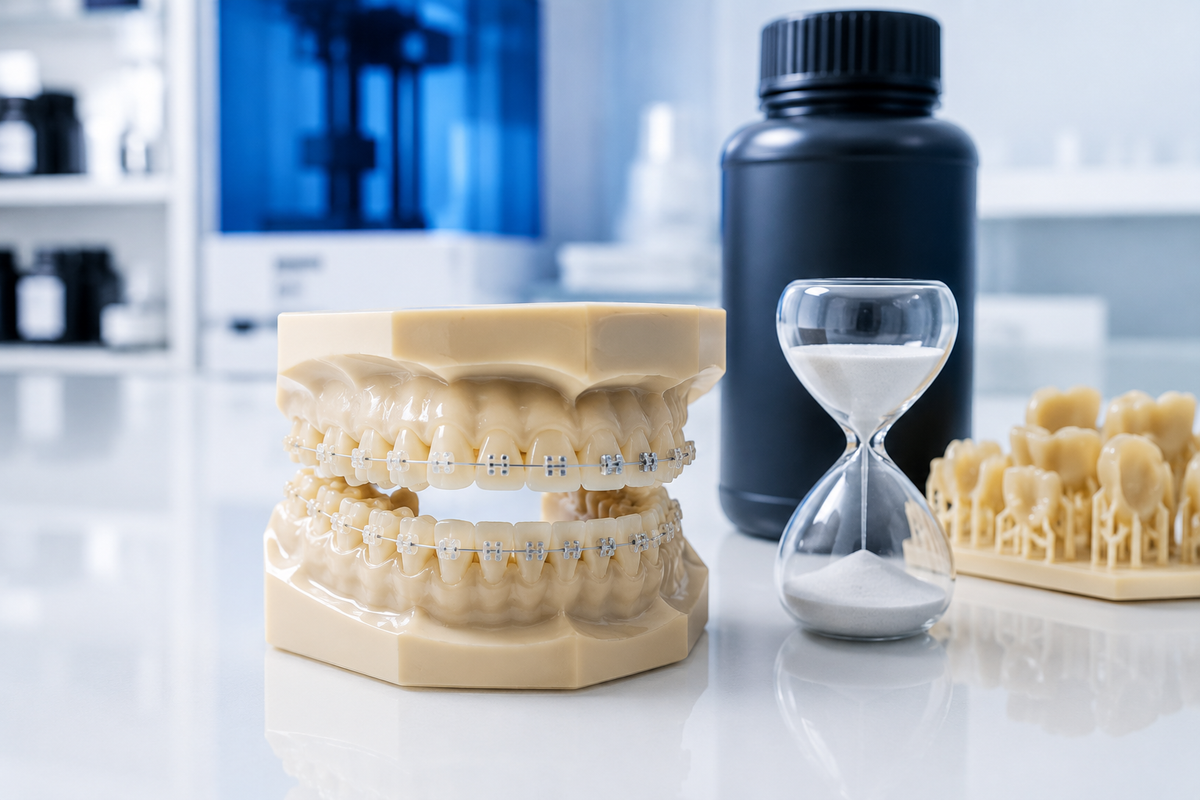

KeySplint Hard Clear vs. VeriSPLINT Clear: Which Clear Night Guard Resin Should Your Lab Stock?
Choosing a clear night guard resin is crucial for dental labs shifting to digital workflows. The resin needs to balance rigidity, durability, clarity, biocompatibility, print compatibility, and post-processing efficiency. Since formulations and printer systems vary, it's better to compare materials based on their intended use than a single specification. KeySplint Hard Clear and VeriSPLINT Clear are both for rigid dental splints and night guards, but they differ in printer compatibility and workflow. Knowing these helps labs choose the right material for their equipment, case volume, and needs. Zirconia Guys supplies dental lab materials for dental professionals and laboratories in the U.S., including digital materials for modern CAD/CAM workflows. Its selection provides laboratories with access to products such as KeySplint Hard Clear for their appliance production requirements. KeySplint Hard Clear vs. VeriSPLINT Clear at a Glance Both materials are intended for rigid intraoral appliances, but their specifications and validated workflows should be reviewed before stocking either resin. KeySplint Hard Clear is a biocompatible photopolymer for rigid dental splints and night guards, suitable for bite planes, mouthguards, night guards, splints, repositions, and retainers, designed for DLP printing at 385-405 nm. VeriSPLINT Clear is also designed specifically for bite guards, dental splints, and occlusal night guards. Whip Mix states that it is FDA 510(k)- cleared, fully transparent, polishable, and compatible with DLP printers at 385 nm. Feature KeySplint Hard Clear VeriSPLINT Clear Primary use Rigid splints and night guards Bite guards, splints and occlusal night guards Material type Biocompatible photopolymer resin Biocompatible 3D-printing resin Appearance Clear Clear Printer compatibility Selected 385/405 nm systems DLP printers featuring 385 nm Post-processing Requires validated washing and post-curing Requires validated post-processing Main workflow consideration Broad printer validation Splint-focused workflow What Makes KeySplint Hard Clear Suitable for Night Guards? KeySplint Hard Clear is designed for rigid dental devices such as splints and night guards, emphasizing strength, durability, and shape stability. It is biocompatible, abrasion-resistant, and easy to polish. For a laboratory evaluating a clear night guard resin , important considerations include: Rigidity for occlusal applications Resistance to wear Clear appearance Ability to polish the finished appliance Validated printer compatibility Required post-curing workflow Biocompatibility documentation The material is available in a clear 1 kg bottle, with the manufacturer identifying product code 4220011 for the 1 kg clear formulation. Its printer validation is broad. Manufacturer resources list KeySplint Hard Clear for systems from Asiga, SprintRay, Nexa, Phrozen, Anycubic, and others, though validated settings vary by model. What Makes VeriSPLINT Clear Different? Whip Mix designs VeriSPLINT Clear for digital production of bite guards, dental splints, and occlusal night guards, emphasizing rigidity, durability, transparency, polish ability, and biocompatibility. For labs with compatible equipment, the material enables efficient splint production. Whip Mix says its full-build platform can produce up to four splints in under an hour. When evaluating Whip Mix Verisplint Clear , labs should therefore consider: Existing printer wavelength Validated printer settings Expected number of splints per build Post-processing requirements Appliance design and indication Material availability Cost per finished appliance This makes Whip Mix Verisplint clear particularly relevant for laboratories that already use compatible Whip Mix workflows or want a resin specifically positioned around efficient splint production. How Do Their Printer Workflows Compare? Check printer compatibility before stocking clear night guard resin. Even if the resin suits the application, it may be unsuitable for a specific printer if the wavelength, settings, build platform, or curing system aren't validated. KeySplint Hard Clear is compatible with several 385 nm and 405 nm systems, such as Asiga MAX at 385 nm and SprintRay Pro at 405 nm, with specific settings on printer pages. VeriSPLINT Clear is listed by Whip Mix for DLP printers featuring 385 nm technology. Before purchasing either material, laboratories should confirm: Printer model Wavelength Layer height Validated exposure settings Wash system Post-cure equipment Manufacturer-approved workflow This step is more important than simply choosing a clear night guard resin based on price or appearance. Which Resin Fits a High-Volume Dental Lab? For high-volume labs, material choice involves more than resin prices. Factors such as throughput, compatibility, post-processing, consistency, and remakes affect actual costs. VeriSPLINT Clear enables rapid production, with Whip Mix reporting up to four splints in under an hour. KeySplint Hard Clear appeals to labs with multiple validated printers, offering flexibility across digital equipment. Its manufacturer provides validation info for various systems. A laboratory should compare: Cost per printed appliance Build capacity Print time Post-processing time Printer availability Resin shelf life Remake frequency The best clear night guard resin supports the entire production process, not just the lowest material cost. Does Clear Appearance Matter Patient-Facing Appliances? Yes. Transparency can influence how patients perceive a night guard, especially when they want an appliance that is less noticeable during wear. Both materials are designed as clear formulations. KeySplint Hard Clear is the clear version of the KeySplint Hard family, while VeriSPLINT is marketed as fully transparent. Final appearance depends on more than the liquid resin; printing parameters, orientation, washing, curing, surface finishing, and polishing also affect the finished appliance. A properly processed clear night guard resin can therefore provide a more consistent appearance than a poorly processed resin, regardless of the formulation selected. How Should Labs Compare Material Costs? Stocking decisions should be based on total workflow cost rather than the purchase price of a resin alone. The same principle applies when laboratories compare other dental lab materials. A lower upfront cost may not translate to lower production costs if the material requires more bench time, results in more failures, or has limited printer compatibility. Labs should evaluate: Resin cost per gram Resin used per appliance Printer throughput Labor required for finishing Post-cure requirements Material waste Remake rate Storage and shelf-life considerations This approach is crucial for labs buying zirconia material, blanks, or CAD/CAM consumables. Although zirconia block prices aid budgeting, purchase cost alone doesn't reflect the true restoration production cost. When reviewing zirconium dental products, laboratories should consider the intended indication, processing requirements, and overall workflow rather than comparing purchase prices alone. Should Night Guard Resin Be Compared with Zirconia Materials? Zirconia dental material is used for indirect restorations, while splint resin is designed for digitally fabricated intraoral appliances. A zirconium block or zirconia blanks should not be treated as an alternative to a dedicated splint resin. The same distinction applies to zirconia multilayer materials. A multilayer zirconia disc is designed to provide different optical and strength characteristics across a restoration, not to replace a flexible or rigid printed appliance material. For a closer look at how labs evaluate multilayer zirconia by strength, translucency, and shade, see How Does TT One Multilayer Compare to Explore Esthetic for Esthetic Zone Cases? Labs may stock both categories because their workflows serve different clinical needs. A laboratory could use a clear night guard resin for digitally printed occlusal appliances while maintaining zirconia blocks for crown-and-bridge production. What Should Your Lab Stock? The choice between KeySplint Hard Clear Resin and VeriSPLINT Clear depends on the laboratory's current equipment and production needs. Consider KeySplint Hard Clear Resin when: The laboratory uses compatible 385- or 405-nm printers. Multiple printer platforms are part of the workflow. Rigid splints and night guards are regular indications. Clear, polishable appliances are required. The laboratory values broad printer validation. Consider VeriSPLINT Clear when: The laboratory uses a compatible 385 nm DLP printer. Fast splint production is a major priority. The lab regularly produces bite guards and occlusal splints. Transparent, polishable material is preferred. The existing workflow aligns with Whip Mix specifications. Neither choice should be based on the product name alone. Always verify the latest manufacturer-approved printer, wash, cure, and processing requirements before production. A Practical Stocking Strategy for Dental Labs For laboratories deciding which dental lab materials to keep in inventory, application-specific stocking can prevent unnecessary material overlap. A practical approach is to review: Current printer fleet Primary appliance types Monthly splint volume Validated resin options Production time per appliance Post-processing capacity Material cost per finished case Supplier availability The same inventory principle applies to other CAD/CAM materials. For laboratories that also handle zirconium dental restorations, keeping restorative materials separate from appliance resins can make inventory planning and case allocation more straightforward. Laboratories may track zirconia block prices, zirconia blanks, zirconium block inventory, and zirconia multilayer options separately because each serves a different production purpose. A dental lab material supplier with a broad digital portfolio can also simplify inventory planning by enabling laboratories to source different categories of consumables from a single supplier. Choosing the Right Clear Night Guard Resin KeySplint Hard Clear and VeriSPLINT Clear are both purpose-designed options for digitally fabricated rigid splints and night guards. The better choice depends on printer compatibility, production volume, post-processing requirements, material availability, and the laboratory's preferred workflow. For laboratories comparing Whip Mix VeriSplint Clear with KeySplint Hard Clear, the most useful question is not which resin is universally better. It is which resin fits the laboratory's validated equipment and production goals. Zirconia Guys supplies dental lab materials, including KeySplint Hard Clear for digital splints. It supports labs with CAD/CAM materials and zirconia products, enabling diverse digital workflows.
Learn more
Can You Use Upcera HT White Zirconia for a Screw-Retained Implant Crown?
Screw-retained implant crowns require careful material selection because the restoration must meet both functional and esthetic requirements. The zirconia needs to work with the restoration design, implant connection, available space, and expected functional load. HT White zirconia can be considered for certain implant crown applications, but suitability should not be determined solely by translucency or strength. The restoration design, material indication, thickness, milling process, and sintering protocol all need to be evaluated before fabrication. Zirconia Guys supplies HT white dental zirconia blocks and other CAD/CAM materials for dental laboratories and professionals. Its range gives laboratories options to consider when selecting dental zirconia for different restoration workflows. What Is a Screw-Retained Implant Crown? A screw-retained implant crown is attached to an implant with a screw rather than cemented onto an abutment. The restoration includes a screw access channel that allows the clinician to secure and, when necessary, remove the crown. This design makes several factors particularly important: Accurate implant connection Correct screw-channel positioning Adequate material thickness Proper crown contour Resistance to functional forces Appropriate occlusal design Because the restoration is directly connected to the implant system, both the material and the CAD/CAM design need to be suitable for the intended application. What Should Zirconia Provide for a Screw-Retained Implant Crown? The zirconia selected for an implant crown should offer an appropriate combination of mechanical and optical properties. Key considerations include: Strength: The material should be suitable for the expected functional load. Fracture resistance: Adequate material thickness and proper design help reduce the risk of complications. Optical properties: Translucency and shade should match the esthetic requirements of the case. Fit: Accurate milling and appropriate sintering are essential for achieving a well-fitting restoration. Machinability: The material should be compatible with the laboratory's CAD/CAM system. Finishing: Staining, glazing, and polishing should follow the material manufacturer's recommendations. Not all zirconia blocks have the same combination of strength and translucency. Therefore, laboratories should review the material's technical specifications and indications before using it for an implant-supported restoration. Is HT White Dental Zirconia Suitable for This Application? HT White zirconia is a higher-translucency zirconia option that may be considered when the restoration requires a balance between mechanical performance and improved light transmission. For a screw-retained implant crown, HT white dental zirconia blocks may be appropriate when their specified indications match the clinical and laboratory requirements of the case. However, the term "HT" should not be treated as sufficient evidence that a material is suitable for every implant application. Before milling, technicians should confirm: The manufacturer's approved indications Flexural strength and other relevant material specifications Recommended restoration thickness Sintering requirements CAD/CAM compatibility Recommended finishing procedures The final suitability of dental zirconia depends on the complete restoration design and clinical situation. HT White vs ST White Zirconia for Implant Crowns Different types of zirconia can offer different optical and mechanical characteristics. The choice should depend on the requirements of the individual restoration rather than simply selecting the more translucent material. Consideration HT White Zirconia ST White Zirconia Optical profile Higher-translucency option Different balance of translucency and strength Esthetic priority Useful when greater light transmission is desired Useful when a different optical balance is required Masking May provide less masking than more opaque materials Depends on the material formulation and thickness Potential application Esthetic-focused restorations where indicated Cases requiring a different balance of properties Selection factors Shade, thickness, design and functional load Shade, thickness, design and functional load ST white dental zirconia blocks may be considered when their material characteristics better match the restoration requirements. The choice between HT white dental zirconia blocks and ST white dental zirconia blocks should always be based on the manufacturer's technical information, restoration design, and clinical indication. How to Evaluate Zirconia Blocks for Screw-Retained Crowns Choosing suitable zirconia blocks involves more than comparing strength values. Laboratories should review the following factors before production: Material Strength The expected functional load should be compatible with the material's strength. This is particularly important for implant-supported restorations exposed to repeated occlusal forces. Restoration Design The crown design must provide sufficient material around the screw access channel and other areas where geometry may create stress concentrations. Material Thickness Available restorative space can influence the choice of material. Excessive reduction in thickness may affect both strength and optical performance. Implant Connection The CAD design and milling process must account for the specific implant connection and screw-channel geometry. Sintering Following the recommended sintering cycle helps the restoration achieve the intended material properties and dimensional accuracy. These factors should be considered when comparing different zirconia blocks dental laboratories may use for implant-supported restorations. How Do Zirconia Blank and Disc Selection Affect Implant Crowns? The choice of zirconia blank affects the milling workflow, the available dimensions, the shade, and the material characteristics of the final restoration. A laboratory should check the following before selecting a blank: Disc diameter and thickness Available shades Translucency level Strength specifications CAD/CAM compatibility Sintering requirements Recommended indications Different zirconia dental blanks can be designed for different restoration requirements. Selecting a blank that matches the restoration dimensions can also help reduce unnecessary material waste during milling. Similarly, dental zirconia discs should be selected according to the laboratory's milling equipment and the manufacturer's processing recommendations. A technician should also consider whether the selected zirconia blank provides the required combination of strength, translucency, and shade for the implant crown. When Should You Consider a Different Zirconia? HT White may not be the ideal choice for every screw-retained implant crown. A different zirconia formulation may deserve consideration when: The case has particularly high functional demands. Greater masking is required. The available restorative space is limited. A different strength-translucency balance is needed. The restoration falls outside the material's recommended indications. The required shade cannot be achieved effectively with the selected material. The goal is not to select the most translucent or strongest material available. Instead, the laboratory should identify the material that best matches the clinical indication and restoration design. This is especially important when comparing dental zirconia materials intended for different applications. Final Checklist Before Milling a Screw-Retained Implant Crown Before milling, laboratories can review these key points: Confirm the material's recommended indication. Verify the implant system and connection design. Check minimum material thickness requirements. Assess the expected functional load. Review shade and translucency requirements. Confirm milling compatibility. Follow the manufacturer's sintering parameters. Use the recommended staining, glazing, or polishing process. Check the final restoration for proper fit and design. This process helps ensure that the selected zirconia dental blanks are appropriate for the planned restoration, rather than being chosen solely based on a single material specification. Choosing the Right Zirconia for Implant Crown Work HT White zirconia can be considered for a screw-retained implant crown when its material properties and the manufacturer's recommended indications align with the case requirements. Its higher-translucency profile may be useful when optical performance is important, but strength, thickness, restoration design, and functional load also need to be evaluated. A suitable zirconia blank should support the complete CAD/CAM workflow, from milling and sintering to final finishing. Comparing zirconia blocks, zirconia blocks dental options, and different dental zirconia discs based on their intended indications can help laboratories make a more informed selection. Zirconia Guys offers HT white dental zirconia blocks, along with other dental zirconia options for dental laboratories and professionals. Its selection of zirconia dental blanks can support laboratories looking for CAD/CAM materials suited to different restoration requirements and workflows. Contact Zirconia Guys to explore suitable zirconia options for your screw-retained implant crown workflow and discuss the material specifications for your next case.
Learn more
How Does Crown Thickness Affect Translucency in Pre-Shaded Zirconia?
Crown thickness plays an important role in how zirconia interacts with light and how the finished restoration appears. Even when the selected material has the desired shade and translucency, changes in crown thickness can affect brightness, masking, depth, and overall color perception. For technicians, understanding this relationship is important when planning restorations with pre-shaded zirconia. Material selection should consider not only the shade built into the zirconia but also the preparation, restoration design, thickness, and finishing process. Zirconia Guys offers zirconia solutions for dental laboratories and professionals, including materials designed for different CAD/CAM workflows. Its range can help laboratories explore suitable options based on restoration requirements. Why Crown Thickness Matters for Zirconia Translucency Translucency describes how much light passes through a material and how much is scattered within it. In zirconia restorations, this optical behavior influences how the crown appears under different lighting conditions. Crown thickness can influence this effect because a thicker layer of zirconia gives light more material to travel through. In practical terms: Thinner areas may allow more light to pass through. Thicker areas may appear opaquer or masking. Increased thickness can influence perceived brightness and color. The preparation underneath can become less visible as thickness increases. Different areas of the same crown may show different optical effects. This means technicians cannot evaluate dental zirconia based only on the material's stated translucency. The thickness of the final restoration also needs to be considered. Translucency is only one part of zirconia selection. Our guide to the different types of zirconia explains how strength, translucency, and indications can vary between materials. How Thickness Changes the Appearance of Pre-Shaded Zirconia A crown is rarely the same thickness throughout its entire structure. Cusp areas, axial walls, margins, and incisal regions can vary in thickness depending on the preparation of design and restoration requirements. With pre-shaded zirconia, the built-in shade provides a consistent starting point, but thickness still influences how that shade is perceived. For example, a relatively thin restoration may allow more influence from the underlying preparation. A thicker area may provide greater masking and make the material appear more saturated or less translucent. This is particularly important in visible restorations where small optical differences can affect the final result. Technicians should therefore assess: Where the restoration will be thinnest Where additional masking may be required How much space is available for the restoration Whether the preparation color could influence the final appearance How staining and glazing will affect the finished crown The goal is not simply to achieve a specific thickness. It is to achieve an appropriate thickness while maintaining the required strength and optical results. The Relationship Between Preparation Shade and Crown Thickness The color of the underlying preparation can influence the final appearance of a zirconia crown, especially when the restoration is relatively thin. Darker preparation may reveal more through a translucent restoration. Thicker material offers more masking but can cause issues with design, occlusion, or contours. This is why shade and thickness should be considered together. Before milling zirconia dental blanks, technicians should review the preparation and determine whether the selected material provides enough masking for the case. Factors to consider include: Preparation color Cement or luting material Required final shade Available restorative space Desired translucency Location of the restoration For highly visible cases, this assessment can help prevent unexpected changes in the final appearance. What Is the Role of Pre-Shaded Zirconia in Shade Management? Pre-shaded zirconia has color incorporated into the material before milling. This can simplify shade management because the technician starts with a material that already has a base shade rather than coloring completely white zirconia from the beginning. The main advantages can include: A more consistent starting shade Reduced manual coloring A simpler production workflow More predictable routine shade development Less dependence on extensive coloring steps St pre-shaded zirconia can be considered when a laboratory wants to streamline its workflow while maintaining control over the final appearance through finishing. However, pre-shading does not eliminate the need to evaluate crown thickness. The incorporated color and the thickness of the restoration work together to influence how the final crown appears. A technician should therefore avoid selecting ST pre-shaded zirconia based only on its available shade. The material should also be suitable for the restoration's thickness, indication, preparation shade, and functional requirements. How Should Technicians Evaluate Crown Thickness Before Milling? Thickness should be considered during case planning rather than only after milling. The technician can review the digital design and determine whether the planned restoration provides sufficient material to achieve the intended result. Before selecting a zirconia blank, consider: Planned thickness: Identify areas where the restoration may become very thin. Preparation shade: Determine whether additional masking is necessary. Required translucency: Decide how much light transmission is desirable. Final shade: Check whether the available material shade matches the case. Restoration location: Anterior cases may require greater optical control. Functional demands: Ensure the selected material suits the expected load. Finishing process: Consider the effect of staining, glazing, and polishing. These considerations are also useful when choosing zirconia dental blanks for different CAD/CAM cases. Choosing Zirconia Blocks for Different Crown Thicknesses Not every zirconia material responds to thickness in exactly the same way. Differences in formulation, composition, strength, translucency, and shade can influence optical performance. When comparing zirconia blocks, technicians should look beyond a single translucency or strength value. The selection should account for: Restoration indication Required thickness Desired translucency Masking requirements Preparation shade Final shade Milling and sintering workflow This is particularly relevant when comparing zirconia blocks dental laboratories to use for different types of crowns and bridges. A highly translucent material suits some cases but may lack masking, while a highly masking material might not achieve the desired optical effect for a thin anterior restoration. The right choice depends on how the material properties work with the actual restoration design. Can Different Zirconia Materials Behave Differently at the Same Thickness? Yes. Two zirconia materials with similar thicknesses can produce different visual results because their formulations and optical properties may differ. Some materials place greater emphasis on translucency, while others focus on strength and masking. There can also be differences in how shades are incorporated and how the material responds to sintering and finishing. For example, explore functional zirconia may be considered as part of a broader materials comparison when technicians evaluate functional and optical requirements. The important point is that thickness should not be viewed independently from the material itself. When comparing dental zirconia, technicians should review: Strength Translucency Shade system Masking ability Indications Recommended thickness Sintering requirements Finishing recommendations This provides a more complete basis for material selection. Practical Tips for Managing Translucency in Dental Zirconia Managing translucency starts with consistent planning and continues through milling, sintering, and finishing. Technicians can consider the following practices: Maintain an appropriate and consistent preparation design. Check restoration thickness before milling. Evaluate the preparation shade before selecting the material. Position restorations correctly within the material when using graded or multilayer options. Follow the manufacturer's recommended sintering cycle. Avoid excessive or uncontrolled staining. Apply glazing and polishing consistently. Evaluate the finished restoration under suitable lighting. When working with dental zirconia discs, technicians should also understand the disc shade distribution and material characteristics before positioning the restoration for milling. Proper planning helps laboratories make better use of their dental zirconia discs and reduces unnecessary adjustments after sintering. Making Crown Thickness Work with Zirconia Selection Crown thickness influences how translucent or masking a zirconia restoration appears, but it doesn't determine the final look alone. Preparation shade, zirconia formulation, restoration location, shade, and finishing also contribute. For technicians handling pre-shaded zirconia, the built-in shade eases color management, but careful thickness planning is vital. Thin restorations reveal more of the preparation, while thicker ones offer better masking, affecting color and translucency. Selecting the right zirconia blank therefore requires consideration of the complete case rather than a single material specification. The same principle applies when evaluating zirconia dental blanks, dental zirconia discs, and other CAD/CAM materials. Zirconia Guys supplies zirconia products for dental labs and professionals, including pre-shaded zirconia for CAD/CAM. Its range lets labs choose materials based on their restoration and production needs. For suitable zirconia options for your laboratory workflow, explore the available materials from Zirconia Guys.
Learn more
How Accurate Does a Dental Diagnostic Model Resin Need to Be for Crown and Bridge Work?
Crown and bridge planning depends on a clear, reliable representation of the patient's teeth. Diagnostic models help dental professionals and technicians examine tooth anatomy, preparation areas, occlusion, and available restorative space before fabrication begins. If a model contains distortion or loses important details, it may affect how the case is evaluated. The right dental diagnostic model resin should clearly reproduce dental anatomy while maintaining dimensional stability during printing and post-processing. A suitable study model dental resin can also make physical models easier to inspect, handle, and use during laboratory communication. Zirconia Guys provides dental lab materials for dental professionals and laboratories working with digital dental workflows. Its range includes materials such as VeriModel Ivory for model-printing applications, giving laboratories another option when selecting a suitable dental lab material supplier. Why Model Accuracy Matters in Crown and Bridge Work A diagnostic model is not simply a physical copy of a digital scan. It provides a reference that can help the dental team understand the case before restorative fabrication. For crown and bridge work, a model should reproduce: Tooth anatomy and contours Preparation areas Occlusal surfaces Interproximal relationships Gingival contours Arch relationships Available restorative space A distorted model can make these features harder to assess. Even when a model is used only for diagnosis, unclear margins or altered tooth positions can reduce its usefulness. This is why a dental diagnostic model resin should be evaluated for its intended application. A study model dental resin should provide the level of detail and stability needed for the laboratory's specific workflow. What Makes a Dental Diagnostic Model Resin Accurate? Model accuracy depends on both the resin and the complete printing process. Important characteristics include: Dimensional Stability The printed model should maintain its intended shape and dimensions after printing, washing, and curing. Excessive dimensional changes can reduce its value for diagnostic assessment. A stable study model dental resin can support more consistent results across repeated model production. Detail Reproduction Fine dental anatomy should remain clearly visible after printing. Defined tooth surfaces and contours make models easier to examine. A good dental diagnostic model resin should therefore provide suitable detail reproduction for the intended diagnostic application. Surface Quality A clean surface helps technicians and clinicians inspect tooth anatomy. Excessive roughness, support marks, or printing defects can make certain areas harder to evaluate. Post-Curing Stability Post-curing is part of the normal workflow for many printed resins. The material should remain sufficiently stable when processed according to the manufacturer's instructions. How Accurate Should a Model Be for Crown and Bridge Planning? There is no single accuracy level that applies to every dental model. The required level depends on what the model is being used for. A diagnostic model is generally intended for evaluation, planning, communication, or study rather than direct fabrication of the final restoration. For crown and bridge cases, it should provide a dependable representation of: Tooth positions Occlusal relationships Preparation geometry Interproximal spaces Gingival contours Restorative clearance The greater the planning detail required, the more important model accuracy becomes. Choosing an appropriate dental diagnostic model resin is therefore part of maintaining a reliable digital-to-physical workflow. A study model dental resin should be selected based on its intended use rather than simply its appearance or printing speed. What Can Affect Printed Model Accuracy? Even a suitable dental diagnostic model resin can produce inconsistent results if the printing process is not controlled. Several factors can affect the final model. Printer calibration: Incorrect calibration can introduce dimensional errors. Layer thickness: Settings can influence fine-detail reproduction and surface quality. Model orientation: Orientation affects support, surfaces, and detail of reproduction. Support placement: Poorly positioned supports can leave marks on important areas. Washing: Incorrect washing can affect the model's final characteristics. Curing: The recommended curing process should be followed carefully. Storage: Excessive heat or unsuitable conditions may affect some printed models. These factors should be considered alongside the properties of the study model dental resin, especially when the laboratory also works with zirconium dental materials in its broader digital workflow. Diagnostic Model Resin vs Restorative Zirconia Diagnostic model resin and restorative materials serve different purposes. A dental diagnostic model resin is used to create a physical representation of the patient's dentition for evaluation and planning. In contrast, zirconia dental material is used for specific restorative applications, while zirconium dental materials are selected based on their intended restorative use and processing requirements. A zirconium block is processed through a CAD/CAM workflow to produce a dental restoration, while zirconia blanks are manufactured for restorative milling. Similarly, zirconia multilayer materials contain variations across the blank that can support specific shade and translucency requirements. These properties are important when selecting restorative materials but are not the primary criteria for choosing a model resin. Therefore, a zirconium block should not be compared directly with a dental diagnostic model resin simply because both may be used in a digital dental laboratory. How Does Model Resin Differ from Restorative Zirconia? Laboratories researching restorative materials may also compare zirconia blocks price when planning their material purchases. However, the price of zirconia blanks should not be used to evaluate the value of a model resin. A zirconium block is selected according to factors such as strength, shade, translucency, indications, and processing requirements. A dental diagnostic model resin is evaluated according to print accuracy, detail, stability, workflow compatibility, and intended application. When comparing dental lab materials, laboratories should therefore consider what role each material plays. This is particularly important when a laboratory uses both model resins and zirconia dental material as part of its digital workflow. What Should Labs Check Before Choosing a Model Resin? Before selecting a study model dental resin, laboratories should review the complete workflow. Key factors include: Application: Confirm that the resin is intended for diagnostic or study models. Dimensional stability: Review the manufacturer's technical information. Detail reproduction: Check how clearly dental anatomy can be reproduced. Printer compatibility: Confirm compatibility with the laboratory's equipment. Post-processing: Review washing and curing requirements. Surface quality: Consider how easily the finished model can be examined. Color: A suitable color can improve visibility of anatomical details. Consistency: Look for predictable results across repeated prints. A suitable dental diagnostic model resin can support a more consistent workflow and reduce avoidable reprints or finishing adjustments. Choosing a model resin also involves looking at printer compatibility, dimensional accuracy, surface finish, and the specific requirements of the intended application. For laboratories purchasing multiple dental lab materials, compatibility with existing equipment and processes should also be considered. How Does Whip Mix VeriModel Ivory Fit Model Workflows? Whip Mix VeriModel Ivory is designed for digital dental model applications. Its ivory appearance can make dental anatomy and surface details easier to distinguish during model evaluation. When considering whip mix verimodel ivory, laboratories should review printer compatibility, recommended processing settings, and the intended application. Resin performance depends on the complete printing and post-processing workflow. For laboratories producing physical diagnostic models from digital impressions, whip mix verimodel ivory can be considered as part of a model-printing workflow. The suitability of whip mix verimodel ivory should always be assessed against the laboratory's equipment and the manufacturer's processing recommendations. A Practical Accuracy Checklist for Crown and Bridge Models Factor What to Check Why It Matters Dimensional stability Consistent model dimensions Supports reliable evaluation Detail reproduction Clear anatomy and contours Improves visual assessment Surface quality Defined, clean surfaces Makes features easier to inspect Printer compatibility Suitable equipment and settings Supports consistent production Post-processing Controlled washing and curing Helps preserve model properties This checklist can help laboratories compare dental diagnostic model resin options based on practical requirements rather than a single specification. A study model dental resin should ultimately fit the laboratory's printer, workflow, intended application, and quality expectations. Choosing a Reliable Resin for Diagnostic Models Accuracy matters because crown-and-bridge diagnostic models need to represent the patient's dentition clearly and consistently. A suitable dental diagnostic model resin should provide appropriate dimensional stability, detail reproduction, surface quality, and post-processing performance. Restorative materials such as zirconia dental material, zirconium block, zirconia blanks, and zirconia multilayer serve different purposes and should be evaluated according to their specific applications. Similarly, zirconia blocks price is a separate purchasing consideration when laboratories select restorative materials. Zirconia Guys supplies dental lab materials, including digital workflow options. They help labs explore options such as VeriModel Ivory for model printing. Explore the VeriModel Ivory product and review its specifications to determine whether it fits your laboratory's workflow.
Learn more
Aidite Zirconia Disc Thickness Guide: How to Choose the Right Size for Your Case
Disc thickness is one of the most consequential material decisions in a zirconia milling workflow and one of the least systematically documented in most dental labs. The grade gets the attention. The shade gets the conversation. Thickness gets selected by habit, by what happens to be in stock, or by a vague sense that thicker is safer. None of those are sound production strategies, and the consequences show up in two ways: over-milled restorations that lack the structural reserve the case requires, or unnecessarily thick restorations that compromise occlusal space, require excessive reduction adjustments, and waste disc material on every case. Aidite's zirconia disc range spans multiple thickness options across their product lines 10 mm, 12 mm, 14 mm, and 16 mm and each thickness is not just a measurement but a clinical specification. Matching the correct thickness to the case type is what allows the restoration to exit the sintering furnace with appropriate occlusal anatomy, adequate structural cross-section, and the fit accuracy that the patient model demands. This guide provides the complete reference framework for making that selection correctly across the full range of Aidite zirconia indications. Why Disc Thickness Matters More Than Most Labs Realize? The relationship between disc thickness and clinical outcome is not linear, and it operates differently than most technicians initially expect. The intuitive assumption is that thicker always means more material and therefore stronger. In practice, the correct thickness is the one that allows the CAD/CAM design to be milled with adequate occlusal wall thickness and connector cross-section and those values are determined by the restoration design, not by the disc. What disc thickness actually controls is the milling envelope the maximum anatomical height of the restoration that can be milled from a given blank. A 10 mm disc limits the maximum restoration height to approximately 7–8 mm post-sintering (accounting for 20–25% sintering shrinkage). A 14 mm disc expands that envelope to approximately 10–11 mm. For most anterior crowns, 10–12 mm is sufficient. For posterior crowns with significant occlusal height, or for cases requiring large-format bridge pontics, inadequate disc thickness means the design cannot be accurately milled without compromisingocclusal anatomy. The secondary consideration is toolpath efficiency. Milling a thin restoration from a thick disc wastes material and increases milling time. A well-matched disc thickness reduces material waste per case and optimizes production economics across the disc's usable area. The Aidite Disc Range: Products, Grades, and Available Thicknesses Aidite produces one of the most comprehensive zirconia disc ranges available to US dental labs, covering high-strength, esthetic, multilayer, pre-shaded, and white formats across multiple thicknesses. Understanding the product line structure is the foundation of correct thickness selection because each product within the Aidite range has distinct thickness availability that reflects its clinical design intent. The full range of aidite zirconia discs for dental labs at ZirconiaGuys covers the complete Aidite lineup from US inventory including Aizir, HonorZir SHT, Superfect Zir SHT, and 3D Pro multilayer formats across all available thicknesses. Aizir — Aidite's high-translucency single-layer disc, available in 12 mm and 14 mm. Formulated for maximum translucency in the esthetic zone. The 12 mm format is the daily anterior production standard; the 14 mm covers cases with larger occlusal height requirements or posterior esthetic single crowns where additional milling clearance is needed. HonorZir SHT — Super high-translucency pre-shaded multilayer disc, available in 10 mm and 14 mm. The 10 mm format targets standard anterior crown height cases where pre-shaded shade accuracy is the production priority. The 14 mm format extends coverage to larger anterior cases and selected premolar indications. Superfect Zir SHT — Super high-translucency white and pre-shaded discs, available in 12 mm. The single thickness offering reflects a targeted design for standard esthetic cases where custom shade control (white format) or pre-shaded efficiency is the primary requirement. 3D Pro Zir — Aidite's multilayer gradient disc for advanced esthetic applications, available in 12 mm. Designed for anterior cases requiring the most natural gradient architecture, the 12 mm format covers the range of standard anterior crown heights. Aidite High-Strength (standard 3Y-TZP) — Available in 14 mm and 16 mm for posterior bridge and high-load single crown applications where structural reserve is the primary requirement and esthetic grading is secondary. This product-to-thickness mapping is the first filter in disc selection: identify which Aidite product line is appropriate for the case indication, then select within the available thickness options for that product. The Clinical Framework: Matching Thickness to Case Type Thickness selection follows from three clinical variables: the anatomical height of the restoration, the structural demands of the indication, and the specific Aidite product line required for the grade and shade specification. Understanding how to choose correctly for your case requires understanding your guide to the Guide to Materials & Strengths of Zirconia Dental Restorations because thickness selection and grade selection are interdependent decisions for bridge and high-load cases. Anterior single crowns (central and lateral incisors, canines): The standard anatomical crown height for anterior teeth falls between 8–11 mm clinical crown length. After accounting for sintering shrinkage of approximately 20–25%, the pre-sintered blank must be at minimum 10–14 mm in height. For most standard anterior cases, a 12 mm disc provides adequate milling envelope with a small safety margin. For cases with longer clinical crowns longer upper centrals, or cases where the preparation leaves more supragingival height than average a 14 mm disc prevents design compromise at the incisal edge. The 10 mm format is appropriate for anterior crowns only when the clinical crown height is confirmed to be on the shorter end of the range (below 8 mm post-sintering) and the case design has been verified in the CAM software before committing the disc to production. Premolar single crowns: Premolar crowns have standard clinical heights that fall within the same 8–11 mm range as anterior teeth but carry higher occlusal loads particularly first premolars in lateral guidance function. The 12 mm disc covers standard premolar crown cases comfortably. For cases requiring additional occlusal thickness to meet a minimum recommended wall thickness of 1.5 mm after milling, a 14 mm disc provides the reserve. Posterior single crowns (first and second molars): Molar crowns represent the most demanding thickness selection scenario in the Aidite range. Clinical crown heights in the molar region vary significantly based on patient anatomy and preparation design, but standard molar crown heights frequently approach or exceed 10 mm post-sintering requiring a pre-sintered blank of 12.5–13.5 mm. This places standard molar cases at the upper limit of a 12 mm disc and comfortably within a 14 mm disc. For posterior single crowns where adequate occlusal wall thickness (minimum 1.5 mm at the thinnest point) is a confirmed design requirement, the 14 mm disc is the correct default. Using a 12 mm disc for molar cases risks insufficient occlusal material at the cusp tips when the crown height approaches the milling envelope limit. Posterior bridges (3-unit and extended span): Posterior bridges require the 14 mm or 16 mm thickness format without exception. The pontic body of a 3-unit posterior bridge frequently exceeds the milling envelope of a 12 mm disc, and more importantly, the connector cross-section must meet minimum dimensional requirements for the span length and occlusal load typically 9 mm² minimum cross-sectional area for a standard 3-unit posterior bridge. Insufficient disc thickness limits the connector height available in the design, forcing the lab to choose between inadequate connector dimensions and compromised occlusal anatomy. The 16 mm disc eliminates this constraint entirely for extended span posterior bridges. Anterior bridges (3-unit): Anterior bridge pontics, particularly in the upper anterior region, can have significant ridge lap depth that adds to the overall milling height. While a 12 mm disc covers many anterior bridge cases, labs should verify pontic depth in the CAM design before committing. Where the pontic plus the connector depth approaches the milling envelope, a 14 mm disc prevents design compromise. Product-Specific Thickness Guidance: Aidite Aizir The Aidite Aizir line Aidite's flagship high-translucency single-layer disc is available in both 12 mm and 14 mm. The 12 mm format covers standard anterior single crowns and premolar cases without issue. The 14 mm format is the correct specification for: Anterior crowns with confirmed clinical height above 9 mm post-sintering Premolar single crowns in high-load lateral guidance function Posterior single crowns in the esthetic zone where the Aizir's translucency properties are clinically preferred over a higher-strength 3Y-TZP grade The aizir zirconia 12 mm disc is the most widely stocked format and appropriate for the majority of cases in the Aizir range. The 14 mm format should be stocked as a secondary option for the case scenarios above rather than as a default replacement for the 12 mm. Product-Specific Thickness Guidance: Aidite HonorZir SHT Pre-Shaded HonorZir SHT is Aidite's pre-shaded super high-translucency multilayer disc — designed for labs that want pre-built VITA-compatible shade gradients with maximum translucency for anterior esthetic production without staining labor. The 10 mm format of the aidite honorzir sht pre-shaded disc is appropriate for: Short to medium anterior crown cases where clinical crown height is below 8 mm post-sintering Cases where the referring dentist has specified a pre-shaded shade value that falls within the HonorZir color range High-volume anterior production where the smaller disc format allows more efficient disc utilization per case The 14 mm format extends coverage to anterior cases with longer clinical crowns and adds premolar single crown capacity to the HonorZir line. Labs running significant anterior bridge volumes should confirm that their design's pontic height falls within the 14 mm milling envelope before committing HonorZir SHT to a bridge case HonorZir's primary indication is single unit anterior work. Product-Specific Thickness Guidance: Superfect Zir SHT White The Superfect Zir SHT white disc format is Aidite's choice for anterior cases requiring full manual shade control from a high-translucency white starting point. The superfect zir sht white is available in 12 mm making it the straightforward choice for standard anterior single crown and short premolar cases where custom staining is part of the lab workflow. The single thickness offering in the Superfect Zir SHT white format reflects its targeted indication. For cases requiring more milling envelope than 12 mm provides, the Aizir 14 mm in white format is the appropriate alternative. Practical Thickness Selection Decision Guide Use this framework for every Aidite zirconia case at disc selection: Step 1 — Identify the indication: Single unit anterior, single unit posterior, or bridge? This determines which Aidite product line is appropriate and immediately constrains the available thickness options. Step 2 — Measure the crown height in the CAD design: Before pulling a disc from stock, open the CAD file and confirm the maximum restoration height (pontic or crown body, whichever is greater). Multiply by 1.25 to account for sintering shrinkage this is the minimum disc thickness required. Step 3 — Add milling clearance: Add 1–2 mm to the calculated minimum for toolpath clearance and design margin. This is your target disc thickness. Step 4 — Match to available Aidite format: Select the closest Aidite product thickness equal to or greater than your target. Never use a disc thinner than the calculated minimum. Step 5 — Document the selection: Record the disc product, thickness, and batch number in the work order. This traceability data supports remake analysis when needed and is part of a compliant production record. Connector Dimensions and Thickness: The Bridge Calculation For bridge cases, thickness selection has a direct structural implication beyond the milling envelope. Connector cross-section area the minimum connector dimension that ensures structural integrity across the span is constrained by disc thickness when the connector height is limited by the available blank. For a standard 3-unit posterior bridge, most manufacturer recommendations specify a minimum connector cross-section of 9 mm² (typically 3 mm × 3 mm). If the disc is 12 mm and the bridge design requires a pontic that uses 10 mm of the disc height, the remaining material for the connector is insufficient to meet the 9 mm² minimum without design compromise. The 14 mm disc or 16 mm for extended spans provides the height reserve to meet connector minimums without sacrificing pontic anatomy. This calculation should be performed in the CAM software before milling begins on every bridge case. Most CAM systems include connector cross-section measurement tools use them. The structural integrity of the bridge depends on it. Stocking Strategy for US Dental Labs For US dental labs building or rationalizing their Aidite disc inventory, the following stocking framework covers the majority of clinical production without excessive inventory complexity: Primary stock — 12 mm discs across the Aidite product lines covering your most common anterior and premolar indications. For most labs, this means Aizir 12 mm, HonorZir SHT pre-shaded (in both 10 mm and 12 mm where available), and Superfect Zir SHT white 12 mm as the daily anterior production standard. Secondary stock — 14 mm discs in the Aizir format for posterior single crowns and larger anterior cases, plus Aidite high-strength 3Y-TZP in 14 mm for posterior bridge production. Extended capability — 16 mm discs in the Aidite high-strength format for labs running extended-span posterior bridges or implant-supported bridge frameworks where maximum structural reserve is required. All Aidite disc formats listed above are available from ZirconiaGuys from US inventory covering aidite zirconia discs, dental zirconia discs, and the complete zirconia blocks dental range for labs that also run block-format milling for chairside or compact mill applications. Zirconia dental blanks in both disc and block format, including zirconia blank options across standard and high-impact grades, ship same day or next day from domestic stock with no international lead times. Disc thickness selection is not a default decision it is a clinical specification that directly affects restoration anatomy, structural integrity, and production efficiency on every zirconia case your lab mills. The Aidite product range provides the thickness options to cover every standard clinical indication from thin anterior veneers to extended-span posterior bridges, and the selection framework is straightforward once the relationship between disc thickness, milling envelope, sintering shrinkage, and connector geometry is clearly understood. Build the thickness calculation step into your lab's pre-milling checklist for every case. Verify crown height in the CAD file. Confirm connector cross-section on every bridge. Document the disc product, thickness, and batch for every work order. These three habits implemented consistently eliminate the avoidable thickness-related production errors that most labs attribute to other causes. The material is rarely the problem. The thickness selection decision that precedes the mill run usually is.
Learn more
How Does Translucency vs. Opacity Affect Aidite Multilayer Zirconia Crown Selection?
The most consequential decision in zirconia crown production is not which mill to use, which sintering furnace to run, or which stain brand to apply. It is the disc selection decision made before any of those steps begin. And the single property that most determines whether that decision is correct for the case is translucency specifically, where the restoration being produced sits on the translucency-to-opacity spectrum, and whether the disc selected can deliver that optical behavior from the mill. Dental labs that treat zirconia as a single material category choosing discs based on price, availability, or habit rather than optical specification consistently produce restorations that either look flat and artificial in the anterior zone or waste expensive high-translucency material on posterior cases that don't require it. Understanding exactly how translucency and opacity behave in multilayer zirconia, what drives those properties at the material level, and how Aidite's product range maps to specific clinical requirements is the foundation of consistent zirconia crown quality across every case type. What Translucency and Opacity Actually Mean in Zirconia? In everyday language, translucent means "lets light through" and opaque means "blocks light." In the context of dental zirconia, both of these descriptions are correct but insufficient because the clinical question is not simply whether light passes through the material, but how it interacts with the material on its way through, and what that interaction looks like to the human eye under varying lighting conditions. Natural tooth structure is not uniformly translucent or uniformly opaque. It is a complex optical structure with distinct zones: the dentin core is relatively opaque and highly chromatic, scattering light in a warm, yellow-orange wavelength range. The enamel layer over that dentin is semi-translucent, transmitting some light while also scattering it in cooler, bluish wavelength ranges a property called opalescence. The incisal edge in anterior teeth, where enamel is at its thickest and no dentin is present, is the most translucent zone, often appearing blue-grey in young patients with high natural translucency. A zirconia crown that looks natural replicates this optical architecture as closely as possible. A crown that looks artificial does not and the most common reason a zirconia crown looks artificial is not shade error. It is optical mismatch: a material that is too opaque to transmit the light that adjacent natural teeth transmit, producing a restoration that appears flat, bright, and dead under clinical and social lighting conditions. The yttria content of zirconia controls translucency through its effect on crystal phase composition. Higher yttria content increases the cubic crystal phase fraction, which reduces light scattering and increases light transmission. Lower yttria content maintains predominantly tetragonal phase, which scatters light more and produces a more opaque, stronger material. This is the fundamental tradeoff that governs every zirconia disc selection decision and the one covered in depth in the guide to Guide to Materials & Strengths of Zirconia Dental Restorations, which details how 3Y, 4Y, and 5Y grades map to strength and optical performance across all clinical indications. Why Multilayer Architecture Changes the Decision Framework? Single-composition zirconia discs place the lab in a forced tradeoff: choose a higher-translucency grade and accept reduced strength, or choose a higher-strength grade and accept reduced translucency. For single-unit anterior crowns, this tradeoff is managed by specifying 5Y or 4Y high-translucency material. For posterior bridges, it is managed by specifying 3Y-TZP for structural priority. But many clinical cases do not sit neatly at either end of this spectrum. Multilayer zirconia discs resolve this tradeoff by building gradient optical properties into the disc architecture itself. Rather than a single composition throughout the disc, multilayer discs are manufactured with a progressive change in yttria content from the cervical end to the incisal end. The cervical zone designed to correspond to the root-third of the crown contains a composition closer to 3Y-TZP: more opaque, higher chroma, warmer undertone. The incisal zone designed to correspond to the enamel-third of the crown contains a composition closer to 4Y or 5Y: more translucent, lower chroma, cooler optical character. When the CAD/CAM toolpath correctly aligns the restoration with these zones, the milled crown already contains the optical gradient of a natural tooth without staining. The technician mills, sinters, and delivers. The shade gradient is in the material. The clinical significance of this architecture is not just esthetic efficiency. It is accuracy. A stain applied to the surface of a white zirconia blank can approximate a shade gradient, but it sits on top of the material rather than within it. Surface stain can fire unevenly, vary between technicians, and fade at micro-crack sites over time. A gradient built into the multilayer architecture is chemically stable, batch-consistent, and technician-independent in a way that surface staining can never be. The translucent multilayer zirconia aidite 3D Pro Zir disc format from Aidite is specifically engineered around this multilayer gradient principle delivering a cervical-to-incisal optical transition within a single disc that matches the optical zonation of natural dentition in the standard VITA shade range. For labs producing high-volume anterior cases where shade accuracy and workflow efficiency must both be maintained, this disc architecture reduces the staining step on the majority of standard A-shade cases to a glaze-only workflow. The Clinical Spectrum: Matching Optical Requirements to Crown Location Every crown location in the mouth has a different optical requirement. The anterior zone demands maximum natural appearance. The posterior zone demands structural reliability. The premolar zone sits between both demands. Understanding where each Aidite multilayer product sits in this spectrum is what enables correct disc selection for every case type. Maxillary central and lateral incisors are the most demanding esthetic cases in the mouth. Adjacent natural teeth particularly in young patients have high incisal translucency and distinct dentin-to-enamel gradient. A crown in this zone that is too opaque stands out immediately under natural light. Maximum-translucency multilayer material with strong incisal zone optical character is the correct specification. Canines bear lateral guidance forces that make them moderately load-sensitive. They also have significant esthetic visibility. A high-translucency 4Y multilayer disc that balances esthetic performance with adequate flexural strength is the typical correct choice maximum 5Y translucency is reserved for centrals and laterals where the esthetic demand is highest. Premolars receive partial esthetic scrutiny and partial occlusal load. A 4Y multilayer pre-shaded disc covers most premolar single-crown cases. Where the premolar is adjacent to highly translucent anterior teeth in a case involving multiple units, matching the translucency level across the full span takes priority. Posterior molars are the least esthetically demanding and most structurally demanding position. A white 3Y-TZP disc, either monolithic or with basic multilayer architecture, is structurally appropriate. High-translucency multilayer material is neither required nor recommended here the strength tradeoff in 5Y esthetic grades is not clinically justified in a zone where esthetic visibility is minimal and occlusal load is maximum. Posterior bridges of 3 or more units require 3Y-TZP grade regardless of esthetic zone position. Connector strength is the governing criterion, and no multilayer esthetic disc in the 4Y or 5Y range should be specified for a posterior 3-unit bridge without verifying the connector cross-section against the manufacturer's minimum strength data. Aidite's Multilayer Zirconia Range: Product-Level Selection Guide Aidite produces multiple multilayer zirconia disc formats, each positioned at a different point on the translucency-opacity spectrum and calibrated for different clinical applications. Understanding each product's optical specification prevents the most common selection error: treating the entire Aidite multilayer range as interchangeable. HonorZir SHT Pre-Shaded: The HonorZir SHT format is Aidite's pre-shaded multilayer disc for standard anterior and premolar cases. The SHT designation indicates super-high translucency the disc is calibrated for cases where significant incisal translucency is clinically required but the case does not represent an extreme esthetic challenge. Pre-shaded format means the VITA-compatible shade gradient is already embedded in the material no liquid shade immersion is required for standard A-shade cases. The aidite multilayer shaded zirconia disc in this format is the correct default for daily anterior and premolar production at most dental labs. The pre-shaded gradient covers the A1–D4 shade range reliably, reducing finishing time significantly on standard cases without sacrificing the esthetic quality that anterior zone restorations require. Superfect Zir SHT White: The Superfect Zir SHT White format sits at the maximum-translucency end of the Aidite multilayer range. The white (unshaded) format gives labs complete shade control through liquid immersion or brush-on staining essential for complex cases, unusual shade requests, or cases requiring characterization effects that a pre-shaded disc cannot deliver. The SHT optical specification delivers high incisal translucency that approaches the optical character of natural enamel in the incisal zone. The aidite superfect zir sht white disc is the correct specification for labs handling demanding anterior esthetic cases, cosmetic dentistry workflows where adjacent restorations are being matched to existing e.max veneers, or any case where the pre-shaded gradient format is insufficient for the specific shade requirement. The added staining labor is justified by the esthetic control this format provides. 3D Pro Zir Multilayer: The 3D Pro Zir is Aidite's premium multilayer disc with the most refined internal gradient architecture. Designed for cases where the clinical expectation is the highest optical quality cases adjacent to highly translucent natural dentition, full-arch anterior restorations, or cases where esthetic outcome is the primary clinical success criterion the 3D Pro Zir delivers the most natural optical gradient in the Aidite range. White vs. Pre-Shaded: How Format Affects the Translucency Decision The translucency specification and the disc format white or pre-shaded are two separate decisions that interact with each other in production. A pre-shaded multilayer disc has its optical gradient embedded in the material. For standard cases, this eliminates staining labor entirely. The limitation is that the pre-shaded gradient is fixed it cannot be adjusted for unusual shade values, strong B or C chroma cases, or cases requiring surface characterization beyond what a glaze application provides. A white multilayer disc has the same internal gradient architecture as its pre-shaded counterpart, but without pigmentation. The technician controls the final shade entirely through liquid immersion or surface staining. This format is the correct choice for complex cases, but adds staining labor and inter-technician variability to every standard case it is used for. The practical stocking rule: Pre-shaded multilayer as the default for 70–80% of standard A-shade anterior production. White multilayer as the secondary stock for complex cases requiring custom shade control. Labs that run all cases through white discs are creating unnecessary staining labor on cases that a pre-shaded disc handles correctly and labs that run all cases through pre-shaded discs are forcing compensation on complex cases where shade flexibility is genuinely required. For the full range of aidite zirconia discs for dental labs including white, pre-shaded, multilayer, and monolithic formats across the complete strength range ZirconiaGuys stocks the Aidite lineup from US inventory with same-day shipping on in-stock items. Sintering and Its Effect on Translucency One of the most underappreciated sources of translucency variation in zirconia crown production is not the disc it is the sintering protocol. The final translucency of a sintered zirconia crown is a product of both the disc's inherent optical specification and the sintering conditions that develop it. High-translucency multilayer discs require controlled sintering to achieve their specified optical properties. The key variables are ramp rate and peak hold temperature. Most Aidite multilayer products specify a ramp rate of ≤5°C per minute and a peak hold between 1480–1550°C for the specified dwell time. Accelerated sintering running a fast-fire profile to save furnace time disrupts grain growth and produces a cloudier, less translucent result than the disc specification. A 5Y disc sintered on an aggressive profile will look more like a 4Y or even 3Y disc in its final translucency. The sintering protocol must be treated as a material specification, not a furnace convenience setting. Validate the profile once against the manufacturer's data, document the validated settings, and apply them consistently across every case. Translucency variation that appears to be a disc quality problem frequently traces to sintering protocol inconsistency. Practical Selection Summary Crown Location Optical Priority Recommended Aidite Format Maxillary central/lateral incisors Maximum translucency 3D Pro Zir Multilayer or Superfect Zir SHT White Canines High translucency + adequate strength HonorZir SHT Pre-Shaded or Superfect SHT White Premolars Balanced esthetics/strength HonorZir SHT Pre-Shaded Posterior single crowns Strength priority, basic esthetics 3Y monolithic or HonorZir white Posterior 3+ unit bridges Structural — connector strength governs 3Y-TZP monolithic Complex/unusual shade cases Full shade control White format (Superfect or HonorZir white) Standard A-shade anterior volume Workflow efficiency Pre-shaded format (HonorZir SHT Pre-Shaded) Translucency vs. opacity in multilayer zirconia crown selection is not a binary choice between two options it is a continuous spectrum that must be matched to the specific optical requirements of every case location. Aidite's multilayer range provides distinct products at different points on that spectrum, and the clinical value of those products is only realized when they are selected correctly for the indication. The zirconia blank selection decision for anterior crowns, the dental zirconia discs format decision between white and pre-shaded, the sintering protocol that develops the disc's optical specification all of these decisions compound. A correct disc on the wrong sintering profile produces the wrong result. A correct sintering profile on the wrong disc produces the wrong result. Zirconia dental blanks in multilayer format only deliver their designed optical performance when every elment of the workflow is aligned with the material specification. For zirconia blocks dental procurement across the full Aidite multilayer range 3D Pro Zir, HonorZir SHT, Superfect Zir, and the complete white and pre-shaded lineup ZirconiaGuys stocks the full Aidite zirconia blocks range from US inventory with batch documentation, technical support on sintering profiles, and same-day shipping on in-stock items.
Learn more
How to Choose Aidite Multilayer PMMA for Different Provisional Restoration Cases?
Provisional restorations are not a commodity step in the dental workflow they are a clinical tool that protects the preparation, previews the final esthetic outcome, maintains occlusal relationships during treatment, and gives the patient and clinician time to evaluate shade and form before permanent materials are committed. The quality of the provisional directly influences the quality of the final restoration. A provisional that does not accurately represent the target shade, fails to maintain marginal seal, or fractures under occlusal load creates downstream problems that even the most carefully milled zirconia cannot fully correct. The material that drives provisional quality in a CAD/CAM dental lab is the PMMA disc and not all PMMA discs are equivalent. Aidite multilayer PMMA discs have become a widely specified choice in US dental labs for provisional production, but "multilayer PMMA" is not a single product. It is a format category covering multiple formulations, shade systems, and thickness ranges each suited to different provisional applications. Selecting the wrong format for the case type wastes the material's capabilities and forces compensation through extra finishing steps. Selecting correctly makes provisionals faster, more accurate, and more clinically useful. This guide gives labs a clear, case-by-case framework for choosing the right multilayer pmma blocks aidite format for every provisional indication they encounter in daily production. What Multilayer PMMA Actually Means and Why It Matters for Provisionals? A multilayer PMMA disc is manufactured with a gradient of shade and translucency built into the disc itself transitioning from a warmer, more saturated, more opaque zone at the cervical end to a cooler, more translucent zone at the incisal end. This gradient architecture replicates the natural optical zonation of human dentition: the dentin-dominated, higher-chroma cervical third transitioning through the body to the enamel-dominated, translucent incisal third. For provisional restorations, this gradient matters clinically because a provisional is the esthetic preview the patient and clinician evaluate before the permanent restoration is finalized. A provisional produced from a single-shade, flat PMMA disc even a correctly matched shade looks flat and monochromatic under natural lighting. It lacks the internal light play that makes natural teeth look alive. A well-designed multilayer provisional, by contrast, transmits and reflects light in a way that approximates natural dentition convincingly enough for patients to assess the esthetic outcome with confidence. The aidite pmma multilayer disc is manufactured with Aidite's gradient pigmentation system across multiple internal layers each zone calibrated to VITA Classic shade standards, enabling the milled provisional to exit the mill with the full cervical-to-incisal gradient already present in the material. For standard A-shade cases, this eliminates the staining step entirely. For complex cases, it provides a gradient baseline that significantly reduces the characterization required to achieve a natural result. Case Type 1: Single-Unit Anterior Provisional Crowns Single anterior crown provisionals are where multilayer PMMA delivers its most visible advantage and where material selection matters most. The anterior zone is where shade mismatch, translucency gaps, and flat optical character are immediately apparent to patients and clinicians under mixed lighting conditions. Key selection criteria for single anterior provisionals: The disc shade should correspond to the target VITA shade within one A-D step. Multilayer PMMA provides a gradient, not a precise point match so a disc specified at A2 will produce a provisional that reads naturally as A2 in the body zone with appropriate translucency toward the incisal. If the target shade is an unusual strong chroma (B4, C3, D4), a pre-shaded multilayer disc will require supplementary staining to reach the target, but still provides a better starting point than a white PMMA blank. Disc thickness: For full-coverage single unit anterior crowns, 12 mm disc thickness provides adequate material depth for correct gradient zone capture. The design software's blank orientation tool should position the incisal edge of the crown in the incisal zone of the disc and the preparation margin in the body-to-cervical transition zone. Wear period consideration: For provisionals worn 2–6 weeks while the final restoration is being fabricated, standard multilayer PMMA formulation is appropriate. For cases requiring extended provisional wear of 3–6 months orthodontic alignment cases, implant osseointegration phases, or complex occlusal rehabilitation cases specify a higher-quality pre-polymerized disc with documented low porosity. Porosity determines how quickly the provisional surface absorbs staining agents and degrades in surface quality over extended wear. For a full breakdown of where provisional PMMA fits within the broader CAD/CAM material ecosystem and when to transition from provisional to definitive materials the guide to Role of Dental PMMA in Temporary and Long-Term Restorations covers the complete clinical decision framework. Case Type 2: Multi-Unit Anterior Bridge Provisionals Three-unit and four-unit anterior bridge provisionals introduce two additional selection considerations that single-unit cases do not: inter-unit shade consistency and connector strength. Inter-unit shade consistency is where multilayer PMMA has a significant workflow advantage over stained single-shade discs. In a three-unit anterior bridge provisional, all three units must shade-match each other and approximate the adjacent natural teeth. When provisionals are produced from a single-shade disc with external staining, the consistency of the result across three units depends entirely on how uniformly the stain is applied and fired a technician-dependent variable that creates unit-to-unit variation in multi-unit cases. When the same three units are milled from a multilayer pre-shaded disc, the gradient is consistent across all three units because it is in the material, not in the application. Unit-to-unit consistency is built into the disc rather than dependent on staining technique. Connector strength in PMMA bridge provisionals is a structural consideration that disc selection cannot fully address it must be addressed in the design. PMMA at 80–120 MPa flexural strength is adequate for single units and short-span provisionals, but minimum connector cross-section dimensions must be respected in the CAD design regardless of disc quality. A minimum 9 mm² connector cross-section for a 3-unit anterior bridge is the general guidance confirm with the specific disc manufacturer's published data. Disc selection for anterior bridge provisionals: Same multilayer pre-shaded format as single anterior crowns, but prioritize batch consistency all units in the bridge must be milled from the same disc batch to guarantee shade matching across the span. Case Type 3: Posterior Single Crown and Short-Span Bridge Provisionals Posterior provisional cases have different priorities than anterior cases. Shade accuracy is secondary to occlusal accuracy, marginal seal, and structural integrity under posterior occlusal forces. A posterior provisional that looks natural but fractures at the connector or loses marginal seal over a 6-week provisional period is a clinical problem regardless of its esthetic quality. For posterior provisionals, the multilayer gradient architecture is still useful it reduces post-milling work and produces a more natural-looking restoration than single-shade opaque PMMA but the primary selection criteria shift toward mechanical properties and machinability. Disc thickness for posterior provisionals: 14 mm discs provide the additional material depth needed for full-contour posterior crowns with adequate occlusal thickness. Posterior cusps in full-contour design require sufficient material in the occlusal zone under-thickness provisionals fracture at the cusp tips under first occlusal contact. Posterior bridge provisionals (3–4 unit): For posterior bridge provisionals in high-load cases molar-region spans or cases with known bruxism the structural demands may exceed what standard multilayer PMMA reliably delivers over a 4–8 week provisional period. In these cases, consider a higher-strength PMMA formulation or reinforce the provisional with a fiber framework if the case permits. Case Type 4: Clear and Transparent Provisional Applications Not all provisional cases require tooth-shade PMMA. Clear provisional applications occlusal splints, clear retainers, diagnostic overlays, and some orthodontic transitional appliances require a transparent or near-transparent PMMA formulation, not a tooth-shade gradient. Using multilayer tooth-shade PMMA for clear provisional applications produces an opaque, tooth-colored result where transparency is the clinical requirement. This is a material selection error that requires remaking the case from the correct formulation. The aidite clear pmma disc is formulated for these transparent provisional applications optically clear, with the same pre-polymerized machinability and biocompatibility as the tooth-shade multilayer range but without pigmentation. Labs running both tooth-shade and transparent provisional workflows should stock both formats and build internal protocols that specify which goes to which case type. Case Type 5: Full-Arch and Implant-Supported Provisional Restorations Full-arch provisional restorations immediate loading implant-supported fixed prostheses, full-arch rehabilitation provisionals, and PMMA hybrid frameworks represent the most demanding provisional application in terms of material volume, structural requirements, and esthetic expectation. For full-arch provisionals, the disc selection must account for the full-arch span length that will be milled from a single disc. Standard 98 mm diameter discs accommodate most quadrant-based cases, but full-arch hybrid provisionals may require larger format discs or a segmented production approach where the arch is fabricated in sections. Implant-supported provisionals during the osseointegration phase require particular attention to residual monomer content. A PMMA provisional in extended contact with peri-implant tissue for 3–6 months must meet biocompatibility standards for long-term mucosal contact, not just short-term provisional contact. The pre-polymerized Aidite formulation meets this standard conventional bench-mixed acrylic with higher residual monomer does not reliably meet the same threshold for extended implant-site contact. For labs that also produce removable denture bases alongside fixed provisionals, the aidite denture base pmma is the correct disc format for the tissue-contact denture base application not the tooth-shade multilayer disc, which is formulated for crown and bridge optical properties rather than gingival shade accuracy and tissue-contact biocompatibility. Practical Disc Selection Framework Case Type Recommended Format Thickness Primary Selection Criteria Single anterior crown Multilayer pre-shaded 12 mm Shade gradient accuracy, translucency Multi-unit anterior bridge Multilayer pre-shaded, same batch 12 mm Inter-unit consistency, batch match Posterior single crown Multilayer pre-shaded or single-shade 14 mm Occlusal thickness, machinability Posterior bridge (3–4 unit) Higher-strength multilayer 14 mm Connector strength, wear resistance Long-term provisional (3–12 months) Pre-polymerized, low porosity 12–14 mm Surface durability, stain resistance Clear/transparent application Clear PMMA (no pigment) 10–12 mm Optical clarity Full-arch implant provisional Pre-polymerized, biocompatibility documented 14–20 mm Residual monomer, long-term contact Milling and Workflow Parameters for Aidite Multilayer PMMA Getting the material selection right is half the workflow. The other half is correct milling and finishing parameters that preserve the gradient architecture the disc was manufactured to deliver. Blank orientation is critical.The multilayer gradient is directional the cervical zone and the incisal zone are specific ends of the disc. Mounting the disc in the wrong orientation reverses the gradient, producing a provisional with incisal-grade translucency at the cervical margin and opaque dentin character at the incisal edge. Always verify the disc's directional marking before milling. CAD zone mapping.In your design software (exocad, 3Shape, or equivalent), use the blank orientation/layer mapping tool to align the preparation margin with the body-to-cervical zone of the disc and the incisal edge or cusp tips with the incisal zone. Most software systems handle this automatically when the disc parameters are loaded correctly but verify the layer assignment visually in the software before committing the toolpath. Milling speed.PMMA machines at significantly higher speeds than pre-sintered zirconia. Standard PMMA milling parameters produce clean, low-roughness surfaces on Aidite multilayer PMMA without special tool path modifications. If your milling system produces rough, fibrous surfaces on PMMA, verify bur condition worn PMMA burs produce surface quality degradation that requires excessive polishing to correct. Polishing.Aidite multilayer PMMA polishes to a high gloss in a standard pumice-then-compound sequence. The pre-polymerized matrix produces a smooth milled surface that reaches clinical-grade polish quickly. Labs reporting excessive polishing time on PMMA provisionals are typically compensating for worn burs or incorrect milling speed rather than a material limitation. Stocking Strategy for Labs Running Multiple Provisional Types Most full-service dental labs produce more than one provisional type anterior crowns, posterior bridges, long-term implant provisionals, and occasional clear appliances. Building a stocking strategy that covers all indications without overcomplicating inventory is a practical management decision. The multilayer pmma disc range from Aidite available at ZirconiaGuys covers all shade ranges, multiple thicknesses, and both tooth-shade and clear formulations from US inventory enabling labs to standardize on a single supplier for their entire provisional PMMA requirement alongside their zirconia blocks and milling material inventory. Recommended minimum Aidite multilayer PMMA inventory for a full-service dental lab: A2 multilayer pre-shaded in 12 mm — the highest-volume anterior provisional shade for most US demographics A3 multilayer pre-shaded in 12 mm — second highest volume anterior and posterior provisional shade 14 mm multilayer in A2 or A3 — for posterior full-contour and bridge provisionals Clear PMMA in 10 mm or 12 mm — for occlusal splints and transparent appliance cases This four-SKU minimum covers the significant majority of provisional cases in most general dental lab workflows. Dental zirconia discs, zirconia dental blanks, and zirconia blocks dental stock can be ordered from the same supplier consolidating delivery, documentation, and technical support for the full milling material inventory through a single US-based relationship. Choosing the right Aidite multilayer PMMA for each provisional case type is not a complicated decision once the selection criteria are clear shade gradient for anterior esthetics, structural performance for posterior high-load cases, transparent formulation for clear appliances, and biocompatibility-documented pre-polymerized discs for long-term implant contact. What makes the decision complex is attempting to use one disc format for all cases or defaulting to material selection by habit rather than by indication. The aidite pmma multilayer range exists precisely because different provisional applications have genuinely different material requirements. The pmma dental material selection decision made at the disc procurement stage matching formulation to indication is what determines whether provisionals are a production strength or a source of rework in your lab's daily workflow. A zirconia blank of the right grade for the right case, alongside the right PMMA disc for the right provisional, sourced consistently from a reliable US supplier, is the foundation of a dental lab workflow that produces correct outcomes the first time.
Learn more
How Does Key Model Ultra Resin Compare to VeriMODEL Ivory for Crown and Bridge Working Models?
The working model is where the zirconia crown either fits or it doesn't. Every downstream decision in a crown and bridge case margin seating, proximal contact tightness, occlusal clearance verification, shade confirmation under indirect light depends on the accuracy and surface quality of the model the lab is working from. In a digital production workflow, the model is 3D printed, and the resin that model is printed from is not a minor procurement detail. It is a clinical accuracy variable. Two resins are consistently evaluated against each other by US dental labs running crown and bridge working model workflows: Key Model Ultra from Keystone Industries and VeriMODEL Ivory from Whip Mix. Both are engineered specifically for dental model production. Both are compatible with standard 385/405 nm MSLA and DLP printer systems. Both are stocked by US dental lab material suppliers for same-day delivery. The question is not whether both work they do but which one works better for the specific demands of crown and bridge working model production, and under what conditions each earns its place in a lab's standard inventory. What Crown and Bridge Working Models Actually Require? Before comparing the two products, it is worth being precise about what a crown and bridge working model must deliver. The requirements are more demanding than diagnostic models or orthodontic study models, and a resin that performs adequately for model printing in general may underperform in the specific crown and bridge context. Margin clarity at the microscale. Crown margins are typically 0.5–1.0 mm wide and carry the clinical accuracy of the restoration's fit. A working model resin must reproduce margin geometry at this scale without chipping, smearing, or surface artifacts that misrepresent the preparation boundary. Technicians cutting dies from printed models need clean, defined margins that read clearly under magnification a rough or poorly resolved surface at the margin makes accurate die trimming guesswork. Dimensional accuracy across the full arch. Interproximal contact tightness and occlusal clearance are evaluated across multiple teeth simultaneously. Dimensional drift in the printed model from resin shrinkage, incomplete cure, or thermal expansion during post-cure translates directly into contacts that are too tight, too loose, or an occlusal scheme that doesn't represent the actual preparation. For single-unit cases the tolerance window is wider. For full-arch cases and long-span bridges, dimensional accuracy across the entire model becomes critical. Surface hardness for die trimming and articulation. Working models are handled repeatedly seated and removed from articulators, trimmed under magnification, used as reference during wax-up and framework design. The model surface must resist scuffing, scratching, and wear from repeated handling without losing the surface detail that makes it clinically useful. Color contrast for margin and preparation reading. The shade of the model affects how clearly technicians can read preparation margins, interproximal contacts, and tissue contours under the range of lighting conditions used in lab work direct overhead light, loupe magnification, and indirect oblique light. A model color that provides strong visual contrast reads better across all conditions. Compatibility with die spacer and die lubricant. Standard die spacer and die lubricant products must adhere and release cleanly from the model surface without absorption into the resin or surface degradation that alters the die geometry. Key Model Ultra Resin: What It Delivers Key Model Ultra is Keystone's highest-specification model resin the top tier of their Key Model range, positioned above the standard Key Model formulation for applications where dimensional precision and surface resolution are the primary requirements. The "Ultra" designation reflects the tighter manufacturing tolerances on the photopolymer formulation, optimized for fine detail reproduction in demanding dental applications including crown and bridge working models. The key model ultra resin for dental labs is formulated for use at 385/405 nm wavelengths with layer thicknesses from 0.05–0.1 mm, covering the range of print parameters most dental labs use for model production. At 0.05 mm layer thickness, Key Model Ultra produces model surfaces with fine enough resolution to clearly represent margin details at the preparation boundary the level of detail that determines whether die trimming is accurate or approximate. Surface hardness is where Key Model Ultra consistently performs strongly in lab evaluation. The post-cured material resists the light abrasion of repeated handling better than most competing model resins, and die spacer products adhere cleanly without surface absorption. This durability is particularly valuable in multi-unit bridge cases where the model is handled extensively during framework and pontic design. Color: Key Model Ultra is available in tooth-like shades that provide reasonable margin contrast under direct light. The color is intentionally tooth-like rather than stone-like, which some technicians prefer for its visual similarity to clinical preparation color. Under magnification, margin definition is clear on correctly printed and post-cured models. Post-cure sensitivity is the main workflow consideration with Key Model Ultra. Like most high-precision dental model resins, the dimensional accuracy and surface hardness of the post-cured part are sensitive to the completeness of the post-cure cycle. Under-cured Key Model Ultra shows measurable surface softness and reduced dimensional stability compared to correctly post-cured material. Labs should validate their post-cure protocol with a test model before committing Key Model Ultra to production crown and bridge cases. VeriMODEL Ivory: What It Delivers? VeriMODEL Ivory is Whip Mix's premium dental model resin, formulated specifically for diagnostic and working model production across a range of dental laboratory applications. The ivory shade is the defining characteristic of the VeriMODEL product a warm, off-white color that provides strong visual contrast for margin reading and is widely preferred by technicians who have worked with traditional stone models for most of their career. The whip mix verimodel ivory is formulated for 385/405 nm dual-wavelength compatibility, making it one of the most printer-agnostic model resins in the market. Labs running multiple printer models common in full-service labs that have accumulated equipment across different purchase cycles can standardize on VeriMODEL Ivory across all printers without maintaining separate resin inventories for each wavelength system. Dimensional accuracy is the headline specification for VeriMODEL Ivory. Whip Mix's formulation prioritizes low polymerization shrinkage and thermal stability during post-cure, which translates into models that maintain their dimensional specifications from the first unit printed to the last unit in a large batch. For full-arch cases and long-span bridges where dimensional consistency across the model matters most, VeriMODEL Ivory's accuracy profile is a clinical advantage. Surface detail at the margin is excellent. The ivory color provides the high contrast background that makes margin reading under loupe and microscope magnification clear and unambiguous a practical advantage in crown and bridge working model production where margin accuracy determines restoration fit. Die spacer adheres and releases cleanly, and the surface is compatible with standard die lubricant products. Surface hardness is comparable to Key Model Ultra in correctly post-cured parts, though some labs report VeriMODEL Ivory is slightly more forgiving of minor post-cure variation the hardness and surface quality are less sensitive to small deviations in post-cure duration compared to higher-specification model resins. For a broader understanding of how VeriMODEL Ivory fits into the full range of dental photopolymer applications and how to select the right resin format for each lab workflow the guide to Resin for Dental 3D Printing: Uses, Types, and Tips covers the complete resin selection framework across all dental lab production scenarios. Head-to-Head Comparison: Crown and Bridge Working Models Property Key Model Ultra VeriMODEL Ivory Wavelength compatibility 385/405 nm 385/405 nm Surface hardness (post-cured) High High slightly more forgiving Margin resolution Excellent at 0.05 mm layers Excellent strong contrast advantage Dimensional accuracy High Very high lower shrinkage Color / contrast Tooth-like moderate contrast Ivory high contrast for margin reading Post-cure sensitivity Higher sensitivity Moderate sensitivity Die spacer compatibility Clean adhesion and release Clean adhesion and release Full-arch dimensional stability Good Excellent Multi-printer compatibility Good Excellent dual wavelength Batch consistency Consistent Consistent The practical conclusion: For single-unit and short-span crown cases where surface hardness and detail resolution are the primary requirements, Key Model Ultra and VeriMODEL Ivory deliver equivalent clinical results the choice comes down to color preference and printer compatibility. For full-arch cases and long-span bridges where dimensional accuracy across the model is the critical variable, VeriMODEL Ivory's lower shrinkage specification gives it a measurable advantage. For labs running multiple printer wavelength systems, VeriMODEL Ivory's dual-wavelength compatibility eliminates inventory complexity. Where the Standard Key Model Resin Fits? The comparison between Key Model Ultra and VeriMODEL Ivory addresses the premium tier of crown and bridge working model production. Not every case in a dental lab's production volume requires the highest-specification model resin. For diagnostic models, orthodontic study models, and working models for removable prosthetics where margin accuracy at the 0.5 mm scale is not the governing requirement, a standard-tier model resin delivers the necessary performance at a lower material cost per unit. The key model resin for dental labs covers this application the same Keystone model resin architecture as Key Model Ultra, formulated for general dental model production where the ultra-precision specifications are not clinically required. Labs that stock both Key Model Ultra and Key Model standard can route cases to the appropriate product based on clinical complexity rather than defaulting to the premium product for every print job. The Color Question: Why VeriMODEL Golden Brown Has Its Own Role? Neither Key Model Ultra nor VeriMODEL Ivory in its standard ivory shade is the optimal choice for all model applications. For specific diagnostic and treatment planning scenarios, a darker, higher-contrast model color is preferred particularly for implant planning models where soft tissue contours and emergence profiles need to be read clearly, or for occlusal analysis where contact marking with articulating paper requires a contrasting base color to show marks clearly. The golden brown dental model resin from Whip Mix's VeriMODEL range fills this role the same dimensional accuracy and surface quality as VeriMODEL Ivory in a high-contrast golden-brown shade that reads exceptionally well under a range of lighting conditions and against articulating paper marking. For labs that want the full VeriMODEL range covering both implant and crown and bridge model applications, stocking both ivory and golden brown covers the full clinical color requirement. Practical Stocking and Workflow Recommendations For US dental labs building or rationalizing their model resin inventory, the comparison between Key Model Ultra and VeriMODEL Ivory does not produce a single universal winner it produces a clear decision framework: Choose Key Model Ultra when: Your lab runs a single printer wavelength system, your crown and bridge case mix is predominantly single-unit or short-span, and your technicians prefer a tooth-like model color for margin reading. Choose VeriMODEL Ivory when: Your lab runs multiple printer systems at different wavelengths, your case mix includes frequent full-arch and long-span bridge cases, or your technicians specifically value the ivory color for margin contrast under magnification. Stock both when: Your lab serves a diverse case mix where single-unit precision and full-arch dimensional accuracy both matter across different cases on the same production floor. Both products are available from ZirconiaGuys from US inventory alongside the full Keystone and Whip Mix dental resin ranges, dental zirconia discs, zirconia blocks dental, and zirconia dental blanks meaning labs can source their complete model resin and zirconia blank inventory from a single domestic supplier with consistent documentation and same-day shipping on in-stock items. Key model ultra resin and VeriMODEL Ivory are both credible choices for crown and bridge working model production in a digital dental lab workflow. The selection decision is not about which product is categorically better it is about which product's specific performance profile matches your lab's printer setup, case mix, and technician preferences. For dental key model 3d printing resin applications requiring maximum surface hardness and tooth-like color, Key Model Ultra delivers. For applications requiring maximum dimensional accuracy across full-arch cases and multi-wavelength printer compatibility, VeriMODEL Ivory holds the advantage. The highest-performing labs stock the right product for each case type not a single default product for everything and source both from a dental lab material supplier whose US inventory and batch documentation they can build a production workflow around.
Learn more
How to Maintain the Natural Gradient Across an ST Multilayer Zirconia Bridge?
A single-unit multilayer crown is a manageable esthetic challenge. The restoration occupies one position, the gradient runs from cervical to incisal within a single milled blank, and the technician has one toolpath to align with the disc's internal zone structure. A multi-unit bridge in the same material is a fundamentally different problem. The gradient must read consistently across three, four, or five units simultaneously each unit occupying a different position in the disc, each influenced differently by the span geometry, connector placement, and milling toolpath. When it works, a well-executed ST multilayer bridge is indistinguishable from natural dentition. When it goes wrong, the gradient inconsistency is visible from across the room. The difference between those two outcomes is not luck. It is a set of specific, controllable decisions made at the design stage, during milling setup, at sintering, and through the finishing protocol. Each decision either preserves the gradient architecture the disc manufacturer engineered into the material or undermines it. This guide covers every decision point in detail giving dental labs a technically grounded workflow for producing ST multilayer zirconia bridges that maintain their natural shade gradient consistently, case after case. Understanding What the ST Multilayer Gradient Actually Is Before troubleshooting or optimizing a multilayer bridge workflow, it is worth being precise about what the gradient in an ST multilayer disc consists of because vague understanding of the gradient architecture leads to vague decisions that produce inconsistent outcomes. ST stands for super-translucent. In the context of Upcera's product range, ST multilayer discs are manufactured with a progressive gradient of yttria content and pigmentation through the depth of the disc. The cervical end of the disc contains a formulation with higher chroma, warmer undertone, and slightly reduced translucency replicating the optical character of dentin. Moving toward the incisal end, the yttria content increases, the pigmentation shifts toward cooler, less saturated values, and the translucency increases replicating the optical character of enamel. This gradient is not a surface coating. It is not a staining applied after disc manufacture. It is a compositional gradient built into the material through the manufacturing process itself which means it can only be preserved or destroyed during the milling workflow. It cannot be corrected after sintering. A restoration milled with the gradient misaligned will exit the sintering furnace with a misaligned gradient, and no amount of staining will reconstruct the internal optical architecture that was lost at the milling stage. This is the fundamental principle that governs every workflow decision that follows: the gradient is preserved or destroyed before sintering, not after. Disc Orientation: The Single Most Important Setup Decision For a single-unit crown, disc orientation errors are a recoverable problem — the technician mills a second blank and adjusts. For a multi-unit bridge, a disc orientation error wastes the entire bridge span and often a significant portion of an expensive disc. Getting orientation right before milling is not optional. The st multilayer zirconia disc from Upcera carries a directional marking typically an engraved arrow or a color-coded edge marking that indicates which direction is gingival and which is incisal. This marking is the reference for every orientation decision in the workflow that follows. Before mounting any disc, confirm that you understand and can see the marking clearly. If the marking is ambiguous or not visible, consult the product documentation before proceeding. Mount the disc in the milling machine chuck with the gingival direction aligned according to the manufacturer's specification. For most systems, the gingival end of the disc corresponds to the bottom of the milling chamber but confirm this for your specific mill-disc combination. A disc mounted in the correct overall orientation but 180 degrees rotated in the wrong axis will still produce a gradient-reversed bridge. For bridge cases specifically, there is an additional orientation consideration that single-unit cases do not present: the bridge span extends across a wider portion of the disc than a single crown, and the gradient must be consistent not only from cervical to incisal in each unit but also laterally consistent across the full span. This means the bridge should be positioned so that all units share the same position in the gingival-to-incisal axis of the disc — not staggered at different heights, which would give different units access to different gradient zones. Practical rule: in a 3-unit bridge, all three pontic and retainer units should occupy the same band of the disc in the gingival-to-incisal dimension. Their lateral position within that band is flexible. Their position in the gradient axis should be identical. CAD Toolpath Alignment: Mapping the Design to the Disc Zones Disc orientation sets the physical relationship between the disc and the milling chamber. CAD toolpath alignment sets the relationship between your digital design and the disc's internal gradient zones and this is where most gradient failures in bridge cases actually originate. In exocad, 3Shape, or any CAD software with blank orientation mapping functionality, the layer-mapping tool displays a representation of the disc's gradient zones and allows the technician to position the digital restoration design within those zones before generating the toolpath. For a single crown, the standard guideline is straightforward: margin at the gingival zone, cusp tips reaching into the enamel zone. For a bridge, the same principle applies per unit, with the added requirement that the zone alignment is consistent across all units in the span. The st pre shaded zirconia product range includes pre-shaded formulations where the shade gradient is calibrated to specific VITA shade values meaning the layer-mapping decision determines not just translucency distribution but also the specific shade zone each unit accesses. A unit whose margin falls in the body zone rather than the dentin zone will produce a different cervical shade value than its neighbors, even if the same disc is used and the milling was otherwise identical. For bridge cases, build a standard zone mapping template in your CAD software that positions the bridge span correctly within the disc gradient for the most common bridge lengths you produce 3-unit, 4-unit, and 5-unit spans. Applying a validated template consistently is more reliable than making individual zone mapping decisions on each case. For a deeper understanding of how zirconia grade and disc architecture interact with shade outcome across different bridge indications, the Guide to Materials & Strengths of Zirconia Dental Restorations covers the full material selection framework including when ST multilayer is and is not the appropriate grade for a given span length and occlusal load requirement. Connector Placement and Its Effect on Gradient Continuity Bridge connectors are structural necessities and esthetic liabilities in multilayer zirconia work. In a well-designed bridge, the connector is positioned in the interproximal space where it is visually recessive. In a poorly designed bridge, the connector cross-section interrupts the gradient zone transition between units particularly when the connector requires material from both the dentin zone and the body zone to meet minimum cross-section requirements. Minimum connector cross-section for a 3-unit anterior ST multilayer bridge should be at a minimum 9 mm² to provide adequate structural safety margin. For posterior spans where occlusal load is higher, this rises to 12 mm² or more depending on the span and the patient's bite force profile. These are not aesthetic recommendations they are structural requirements, and reducing connector size to improve esthetic gradient continuity at the connector is a clinical mistake that risks fracture at the connector under functional load. The practical approach to connector placement in gradient-critical bridges is to position the connector as far incisally as the esthetic zone permits keeping it out of the high-chroma dentin zone at the cervical, where gradient interruption is most visible. A connector that spans the middle and incisal thirds of the proximal surface is visually recessive and structurally adequate for most anterior spans. A connector that drops into the cervical third creates a visible shade interruption at the most visible part of the restoration. For zirconia bridge dental cases specifically, mapping connector position in the design phase against the gradient zone visualization in your CAD software is the most reliable way to confirm that connector placement is not interrupting a zone transition before the bridge goes to the mill. Milling Parameters: Speed and Tool Management Through Gradient Transitions The hardness of ST multilayer zirconia varies slightly between gradient zones. The dentin zone with its higher chroma pigmentation and slightly lower yttria content is marginally denser than the incisal zone. This hardness variation is small enough to be clinically irrelevant in terms of the finished restoration but significant enough to affect milling behavior at the interlayer boundary. In a single-unit crown, the toolpath passes through the gradient transition once per occlusal surface pass. In a bridge, the toolpath makes repeated passes through gradient transitions across the full span, and the accumulated effect of those transitions on bur wear is more significant than it appears on a per-pass basis. Two practical milling adjustments preserve surface quality at gradient transitions in bridge cases: Reduce feed rate by 10–15% at the gradient transition zone. In most CAD/CAM software, you can identify the approximate position of the gradient transition in the disc and set a feed rate reduction flag at that depth. The slightly reduced feed rate preserves surface integrity at the transition point. Replace milling burs more frequently for long-span bridges. A bur that is 70% worn is adequate for a single-unit crown. The same bur on a 4-unit bridge will produce progressively rougher surface quality across the span as wear accumulates during the longer milling cycle. For st multilayer dental blocks cases involving spans of three or more units, fresh burs at the start of each bridge milling job are the correct protocol. Sintering: The Protocol That Determines Whether the Gradient Survives The optical properties of ST multilayer zirconia and particularly the gradient's translucency distribution are determined during sintering. The controlled grain growth that produces translucency in the incisal zone depends on a specific sintering temperature profile: a slow, controlled ramp rate and a precise peak hold temperature and duration. For ST multilayer zirconia, the sintering profile should specify: Ramp rate: ≤5°C per minute from 900°C to peak temperature Peak temperature: 1480–1520°C depending on the specific product (always confirm with the manufacturer's published profile) Hold time at peak: 2 hours minimum for most formulations Cool-down rate: ≤10°C per minute from peak to 900°C rapid cool-down causes thermal stress that can produce micro-cracking at gradient zone boundaries in bridge spans For bridge cases specifically, the increased mass of a multi-unit span compared to a single crown means the sintering furnace must distribute heat evenly across a longer object. Bridge supports are critical here use manufacturer-recommended zirconia pins or a support tray that provides even support under all units without contact on occlusal surfaces or margins. Uneven support creates differential stress during sintering that produces warping, and warped bridges show gradient inconsistency across units because different parts of the restoration experienced different thermal histories. Do not run accelerated sintering cycles on ST multilayer bridge cases. The time savings of an accelerated cycle on a single crown are marginal. The risk on a multi-unit bridge gradient degradation, micro-cracking at connectors, and reduced translucency in the incisal zones is disproportionate to that saving. Standard sintering profiles are non-negotiable for gradient-critical multilayer bridge work. Post-Sintering Evaluation: Checking Gradient Consistency Before Delivery After sintering, evaluate the bridge gradient under three different light sources before proceeding to glazing or delivery: standard fluorescent lab lighting, natural daylight, and incandescent light. A gradient that appears consistent under fluorescent light may show visible zone discontinuities under natural daylight particularly at the connector areas and at the transitions between adjacent units. Specifically check for: Visible chroma banding — a distinct line between the dentin and body zones that should read as a smooth transition. Banding indicates a zone alignment error in the toolpath that placed two units at different positions in the gradient axis. Lateral shade inconsistency between units — one retainer appearing warmer or darker than the pontic or the opposing retainer. This indicates the bridge was positioned at an angle to the gradient axis during milling, so different units accessed different shade values within the same gradient zone. Connector opacity — a connector area that appears more opaque than adjacent tooth surfaces. This is usually a design issue the connector cross-section extends into a zone with lower translucency, or the connector wall thickness is sufficient to block light transmission at that point. If any of these issues are present, the bridge requires remilling. Post-sintering staining can add characterization and surface color, but it cannot reconstruct an internal gradient that was misaligned before sintering. Attempting to correct gradient failures with heavy staining produces restorations that look painted rather than natural, and the stain is less stable long-term than the internal gradient. For US dental labs evaluating whether to buy st multilayer zirconia online for bridge production, ZirconiaGuys stocks the full ST multilayer range from Upcera from US inventory including multiple thicknesses for different bridge span requirements with consistent batch documentation and same-day shipping on in-stock items. Finishing Protocol: Glazing That Enhances Rather Than Masks The finishing protocol for an ST multilayer bridge should enhance the natural gradient, not attempt to compensate for it. If the workflow has been executed correctly through milling and sintering, the gradient is present in the material and requires only surface refinement. Glaze application: Apply a thin, even glaze layer across all units using a brush. Avoid pooling at connector areas, which creates optically dense zones that interrupt gradient continuity at exactly the points where consistency matters most. Fire the glaze at the manufacturer's specified temperature typically 750–780°C for most compatible glazes with a hold time of 1–2 minutes. Stain application: For standard pre-shaded ST multilayer bridges in A–D shade range, staining should be minimal or absent. If the referring clinician requires specific shade characterization a slightly higher A2 chroma at the cervical of one retainer to match an adjacent natural tooth, for example apply a targeted cervical stain to that unit only. Do not apply blanket staining across all units of a bridge that does not require it. The st multilayer zirconia discs are calibrated to deliver consistent VITA shade values across the gradient with minimal finishing intervention on standard cases. The workflow investment is at the design and milling stage not at the staining bench. Labs that find themselves routinely applying heavy staining to correct ST multilayer bridge shade outcomes are usually dealing with a disc orientation or zone alignment problem upstream, not a finishing problem. Maintaining the natural gradient across an ST multilayer zirconia bridge dental case is not a matter of technique at the finishing bench it is a matter of precision at every stage upstream. Correct disc orientation before mounting. Accurate zone mapping in the CAD toolpath. Thoughtful connector placement that respects both structural requirements and gradient zone boundaries. Controlled sintering profiles that allow the material's optical properties to develop correctly. Post-sintering evaluation under multiple light sources before delivery. Each of these steps is individually straightforward. Executed consistently together, they produce multi-unit bridges that pass shade evaluation without heavy staining correction, deliver predictable esthetic outcomes that referring dentists can specify with confidence, and demonstrate the level of material control that distinguishes a technically capable dental laboratory from one producing acceptable but unpredictable results. Stocking dental zirconia discs and zirconia dental blanks from a consistent, well-documented source is the last link in that chain because gradient consistency across batches begins with material consistency from the supplier. Zirconia blank and zirconia blocks dental procurement from a reliable US-stocked source ensures the material you validated your protocol on is the same material in every subsequent production run.
Learn more