

Blogs
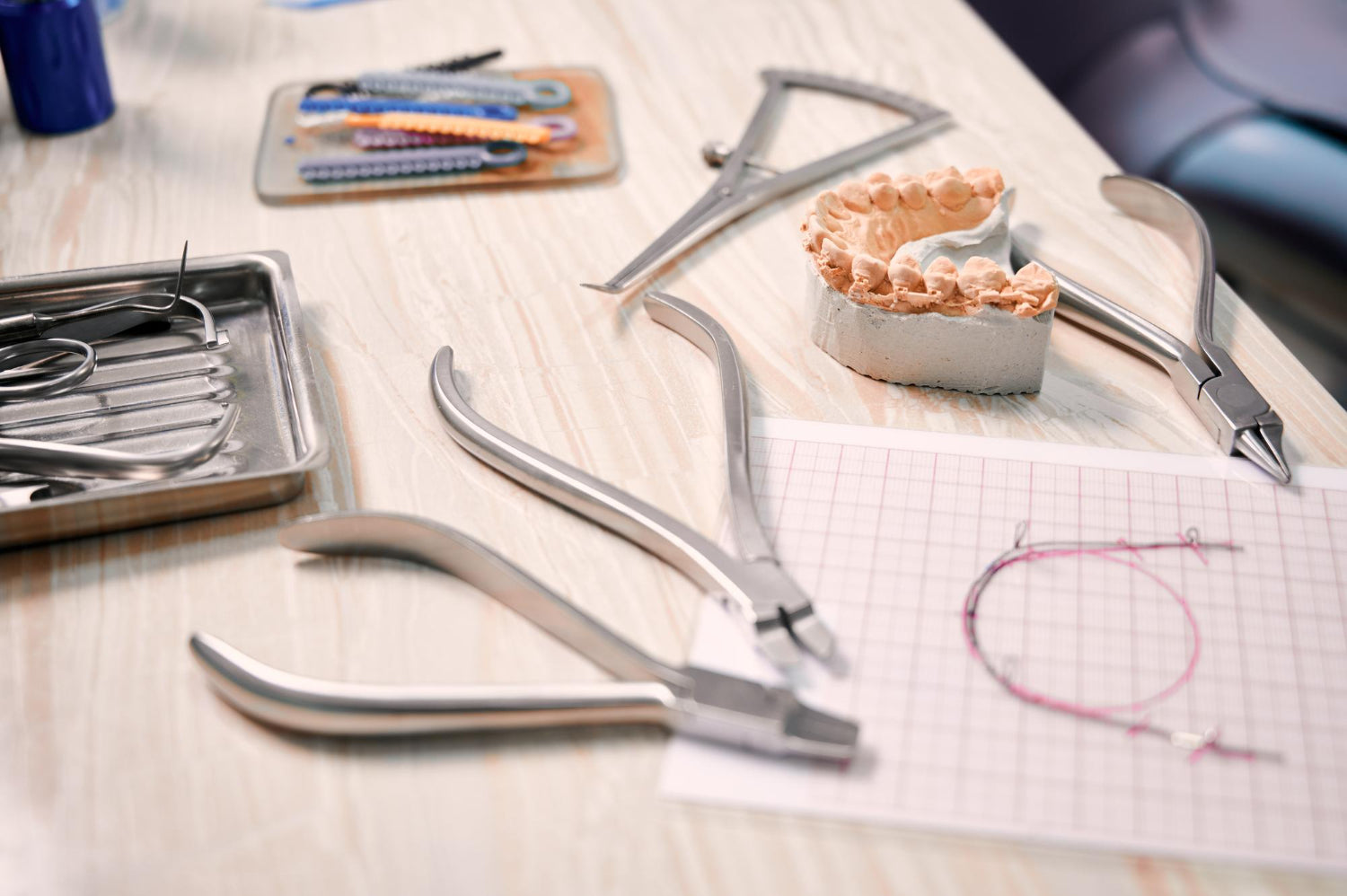

Why the Aidite Clear Dental PMMA Disc Is a Game-Changer for Modern Dental Labs?
Modern dental labs are under continuous pressure to produce more, faster, with fewer remakes and lower material cost per case. The tools and materials that meet that pressure are not always the most technically complex sometimes the most impactful upgrade in a lab's workflow is a better disc in a category the lab already uses every day. Aidite's Clear Dental PMMA Disc is exactly that kind of upgrade. It is not a new material category. It is a dramatically better execution of a material category that every full-service dental lab already depends on. Clear PMMA is used across multiple high-value lab applications: occlusal splints, night guards, orthodontic retainers, diagnostic models, and clear appliances. In every one of these applications, the optical and mechanical quality of the PMMA disc determines the clinical outcome. Poor clarity, poor surface finish, or inconsistent dimensional behavior across a batch translates directly into patient complaints, adjustment time, and remakes. Aidite's Clear PMMA Disc addresses all three failure points in a single product and this guide explains exactly how. What Is Aidite Clear PMMA and What Makes It Different? PMMA polymethyl methacrylate is the base polymer for virtually all CAD/CAM clear dental appliances. It has been used in dentistry for decades, and the conventional understanding is that clear PMMA is a commodity: one disc is much like another. That assumption is wrong, and understanding why requires looking at how PMMA discs are manufactured and where the quality variation actually lives. All CAD/CAM PMMA discs start with the same polymer chemistry. The meaningful differences between products come from three manufacturing variables: polymerization pressure, optical additive formulation, and pigment exclusion precision. aidite clear pmma discs are manufactured under high-pressure industrial conditions typically 100 bar or higher which eliminates the internal porosity that lower-pressure processes leave behind. Porosity in a clear disc does not just affect clarity. It creates stress concentration points that reduce impact resistance, produces micro-voids that accumulate staining agents over time, and results in rougher milled surfaces that require more finishing labor to achieve clinical polish. The optical clarity of Aidite Clear PMMA is a direct product of that high-pressure manufacturing. The disc is formulated to maximize light transmission without optical haze the cloudy, slightly milky appearance that characterizes lower-quality clear PMMA discs and that patients notice immediately, particularly in full-coverage splints visible during speech. Aidite's formulation achieves glass-like clarity in the sintered disc that distinguishes high-quality CAD/CAM clear appliances from products that look like they were made from generic plastic. The second distinguishing property is milling behavior. Clear PMMA requires clean, chip-free milling to produce the smooth surface finish that clear appliances demand. A disc with inconsistent density — typical of lower-pressure-manufactured products produces surface tearing and micro-chipping during milling, particularly at thin sections like splint edges and retainer clasps. Aidite Clear PMMA mills cleanly at standard PMMA cutting parameters with minimal surface defects, reducing the post-milling polishing workload significantly. The Clinical Applications Where Aidite Clear PMMA Delivers the Most Value Understanding where Aidite Clear PMMA creates measurable workflow improvement requires looking at each application on its own terms. The disc is not a universal material — it is specifically formulated for applications where optical clarity is the primary material requirement. These are the four applications where it delivers the greatest value. Occlusal Splints and Night Guards The aidite denture pmma discs range covers tissue-contact applications, but clear PMMA is the correct formulation for hard occlusal splints and night guards where transparency is the patient-facing esthetic priority. Patients who wear full-coverage hard splints for bruxism management are acutely aware of the appliance's appearance a cloudy or yellowish splint communicates cheap material even when the fit and function are excellent. Aidite Clear PMMA produces splints with glass-like transparency that patients consistently receive more positively than appliances made from generic clear material. The dimensional accuracy of Aidite Clear PMMA in splint applications is equally important. Occlusal splints are precision restorations the occlusal surface must accurately reproduce the prescribed contacts, and the fitting surface must maintain close adaptation to the model. Dimensional drift during milling or post-milling warping compromises both. Aidite's pre-polymerized disc format delivers consistent dimensional behavior from the mill, with minimal stress-release warping after separation from the blank. Orthodontic Retainers Milled PMMA retainers from digital models are increasingly replacing pressure-formed thermoplastic retainers in labs running full digital workflows. The accuracy advantage of milled retainers over pressure-formed alternatives is significant particularly at interproximal and subgingival areas where pressure forming cannot faithfully reproduce model detail. Aidite Clear PMMA mills these fine detail areas cleanly, producing retainer fits that are measurably more accurate than pressure-formed equivalents. The clarity of the retainer also affects patient compliance. Patients are significantly more likely to wear a retainer consistently when it is optically clear and visually unobtrusive. A cloudy retainer draws more attention and generates more compliance-related complaints. This is a patient experience variable, but it is a real one that labs can address through material selection. Diagnostic Models and Study Casts Clear PMMA diagnostic models provide a visibility advantage that opaque models do not internal anatomy, tooth contours, and prepared margin details are visible through the model in clear PMMA, enabling more accurate assessment during case planning. For complex restorative cases, implant planning, or orthodontic evaluation, clear diagnostic models reduce the number of cases where anatomy ambiguity causes planning errors downstream. Clear Removable Appliances Clear PMMA is also used for removable partial denture frameworks in cases where metal is contraindicated or the patient requests an all-clear esthetic result. The material's combination of clarity, biocompatibility, and milling accuracy makes it well-suited for this application though labs should note that PMMA's flexural strength (80–120 MPa) does not match metal framework strength, and the application should be selected accordingly. How Aidite Clear PMMA Fits Into a Full CAD/CAM Material Workflow? The efficiency case for Aidite Clear PMMA is strongest when it is evaluated as part of a complete Aidite material ecosystem rather than as a standalone product. Labs that stock the full range of aidite dental materials clear PMMA, denture base PMMA, multilayer PMMA, zirconia discs, stain and glaze eliminate multi-vendor ordering complexity and gain access to a coherent set of materials with documented compatibility across applications. This matters in practice because labs frequently produce multiple material types on the same case. A full-mouth rehabilitation case might require a multilayer zirconia disc for permanent anterior crowns, a monolithic zirconia disc for posterior bridges, a multilayer PMMA disc for temporaries, and a clear PMMA disc for the accompanying occlusal splint. When those materials come from a single supplier with consistent batch documentation and compatible sintering and milling parameters, the production workflow is simpler and the quality control process is more straightforward. The contrast with generic clear PMMA from unverified sources is significant. Zirconia blocks dental labs that have standardized their zirconia supply on documented, batch-certified products often undermine that quality discipline by sourcing clear PMMA from the cheapest available option. The result is a material quality mismatch precision zirconia restorations delivered alongside clear appliances made from material with inconsistent clarity and unpredictable milling behavior. Standardizing the full material range through a single reliable source closes that gap. Aidite Clear PMMA vs. Competing Clear PMMA Products: What Labs Actually Report Labs that have compared Aidite Clear PMMA directly against generic clear PMMA alternatives consistently report three specific advantages that show up in production metrics rather than on spec sheets. Post-milling polishing time- Aidite Clear PMMA achieves clinical-grade surface polish in approximately 30–40% less time than generic clear PMMA alternatives in the same milling parameters. The cleaner milling surface requires fewer polishing steps to achieve the high-gloss finish that clear appliances require. For labs producing 10–20 splints or retainers per week, this time reduction is meaningful at the scale of monthly production. Clarity retention over time- Clear PMMA appliances that patients wear for extended periods splints worn nightly for bruxism management, retainers worn indefinitely are subject to thermal cycling, chemical exposure from oral fluids, and mechanical stress from cleaning. Aidite's formulation resists yellowing and surface hazing under these conditions more effectively than generic alternatives, which often show visible clarity degradation within six months of delivery. Labs that use Aidite report fewer patient complaints about appliance discoloration over time. Batch consistency- The most disruptive quality problem in clear PMMA production is batch-to-batch variation where the same disc format from the same supplier produces visibly different clarity or milling behavior across different production runs. Aidite's industrial manufacturing process and batch documentation eliminate this variable, enabling labs to build production standards around consistent material behavior rather than compensating for variability on every case. Sourcing Aidite Clear PMMA in the US: What Labs Need to Know For US dental labs, the sourcing question is straightforward. As a leading zirconia materials distributor usa and full-range Aidite stocking partner, ZirconiaGuys carries Aidite Clear PMMA from US inventory no international shipping, no unpredictable lead times, no import documentation complexity. Labs that are evaluating aidite cad cam products for the first time can source clear PMMA alongside the full Aidite zirconia range including zirconia blank formats in 3Y, 4Y, and 5Y grades, dental zirconia discs in flat and multilayer configurations, and zirconia dental blanks in pre-shaded and white formats from a single US inventory point. This consolidation simplifies ordering, reduces minimum order complexity, and ensures that all products arrive with the batch documentation needed for quality management workflows. The zirconia blocks price relationship is also worth noting for labs tracking per-case material cost across their full portfolio. Aidite Clear PMMA discs are priced competitively relative to comparable clear PMMA products from other suppliers and when the total cost calculation accounts for reduced polishing time and lower remake rates, the per-case economics consistently favor the higher-quality product over nominal-cost alternatives. Aidite Clear PMMA is not a revolutionary new material it is a superior execution of a material category that dental labs already depend on daily. The difference between a generic clear PMMA disc and Aidite's formulation shows up in every single appliance produced from it: in the glass-like clarity patients see when they first receive the appliance, in the polishing time technicians save on every unit, and in the absence of discoloration complaints at the six-month follow-up. For labs that have accepted generic clear PMMA as a commodity purchase, switching to Aidite's formulation is one of the lowest-friction, highest-return material upgrades available in a modern CAD/CAM workflow.
Learn more
5 Reasons Why the Best Multilayer Zirconia Block Is Essential for Dental Labs
The material you mill from determines the outcome of every restoration your lab produces. That statement sounds obvious, but it is violated constantly in dental labs that evaluate zirconia blocks on price alone, stock whatever is available at short notice, or default to the same monolithic grade for every indication regardless of the clinical requirements of the case. The result is predictable: remakes, staining corrections, chair time spent compensating for what the material didn't deliver on its own. Multilayer zirconia blocks represent the most significant advancement in dental zirconia discs technology of the past decade. They are not simply a premium version of standard monolithic blocks they are a fundamentally different approach to how color, translucency, and shade gradient are built into a restoration. For dental labs that produce anterior crowns and bridges at any meaningful volume, understanding why multilayer blocks outperform monolithic alternatives is not optional knowledge. It is the foundation of a material selection strategy that produces better clinical outcomes with less finishing labor. Here are five specific reasons why the best multilayer zirconia block has become essential to modern dental lab production. Reason 1: The Shade Gradient Is Built Into the Material Not Applied After Milling The single most important advantage of multilayer zirconia over standard monolithic blocks is the internal shade gradient. In a multilayer disc, the manufacturer builds distinct chromatic and translucency zones into the material during production transitioning from a warmer, more opaque dentin-like zone at the cervical end to a cooler, more translucent enamel-like zone at the incisal end. This gradient is present in every blank milled from the disc before any staining or glazing takes place. In a monolithic zirconia blank, no such internal structure exists. The disc is uniform in shade and translucency from edge to edge. Every anterior crown milled from a monolithic disc exits sintering as a single-shade, single-translucency restoration that must then be corrected through external staining to look like a natural tooth. That correction process adds bench time, introduces operator variability, and creates batch-to-batch inconsistency when stain concentrations vary between technicians or firing cycles. With a multilayer block, the correction step is largely eliminated for standard A–D shade cases. The crown exits sintering with the dentin zone at the cervical margin and the enamel zone at the incisal edge already present in the material. For labs processing anterior cases at volume, this difference translates directly into reduced staining labor on every single unit. At ten units per day, the time saving is material. At fifty units per day, it is transformational. The clinical outcome is also more consistent. When the gradient is in the material rather than applied by a technician, the result is the same regardless of who milled the case, which shift produced it, or how the stain batch was mixed. Process consistency at that level is difficult to achieve through manual staining regardless of technician skill. Reason 2: Multilayer Blocks Reduce Post-Sintering Finishing Time Without Sacrificing Shade Accuracy Labs that transition from monolithic to multilayer zirconia blocks dental production consistently report the same thing: the staining step is no longer a bottleneck. For standard anterior cases, the multilayer block delivers a result that requires glaze and polish but not shade reconstruction. The difference between glazing a restoration and staining one is not trivial — staining requires multiple firing cycles, evaluation under multiple light sources, potential re-firing, and the kind of experienced judgment that cannot be easily delegated or standardized. Zirconia dental blanks in multilayer format eliminate this bottleneck by moving the shade work from the lab bench to the manufacturing process. The disc producer has already done the shade gradient calibration at an industrial level with controlled yttrium oxide gradients, precisely pigmented slurry layers, and quality-controlled batch testing across thousands of discs. That is a level of shade engineering that no bench staining protocol can replicate at the case level. The practical implications for lab workflow are significant. When post-sintering finishing is reduced to glazing and polishing, technicians can be deployed on higher-value tasks. Throughput increases without adding headcount. Remake rates drop because staining errors wrong concentration, uneven application, over-firing are simply removed from the process for standard cases. Multilayer blocks do not eliminate the staining step for every case, but they eliminate it for the majority: typically 70–80% of standard anterior A–D shade cases. For the remaining 20–30% of complex cases unusual shade requests, high-chroma B or C shades, characterization cases white monolithic blanks remain the appropriate choice. A well-run lab stocks both and uses each for what it does best. Reason 3: Super-Translucency Grades Deliver Anterior Esthetics That Monolithic 3Y Cannot Match The translucency ceiling of standard 3Y monolithic zirconia is a clinical limitation. In younger patients, patients with naturally highly translucent teeth, or cases adjacent to e.max veneers and feldspathic porcelain work, a 3Y monolithic crown will look flat and artificial regardless of the staining effort applied. The material's tetragonal crystal phase scatters light in a way that produces the characteristic opaque appearance of early-generation zirconia — an appearance that no surface treatment fully corrects. The st multilayer zirconia disc format addresses this limitation directly. Super-translucency (ST) grade multilayer discs are formulated with higher yttria content in the incisal zone increasing the cubic phase fraction and therefore the light transmission through the material in exactly the zone where translucency matters most for anterior esthetics. The result is an incisal edge that transmits light in a manner much closer to natural enamel than any 3Y monolithic format can produce. This optical difference is not subtle. Under mixed lighting conditions the combination of fluorescent, natural, and incandescent light that patients encounter daily — the translucency of the incisal zone is one of the most visible differentiators between a restoration that looks natural and one that looks artificial. Labs that still produce high-volume anterior work on 3Y monolithic blanks are consistently visible to observant patients and referring dentists. The strength tradeoff in ST-grade multilayer discs is real but manageable. Super-translucency grades typically deliver 600–750 MPa flexural strength adequate for single units and short-span anterior bridges, but not appropriate for posterior bridges of 3+ units where 3Y-TZP structural grades are required. The clinical rule is straightforward: use ST-grade multilayer for anterior esthetic cases, use high-strength monolithic 3Y for posterior bridge structural cases. Reason 4: CAD/CAM Orientation Alignment Enables Consistent Shade Placement Across Every Unit A multilayer block delivers its shade gradient correctly only when the CAD/CAM toolpath is aligned with the disc's internal zone architecture. This sounds technical, but it is a simple workflow step that, once standardized, produces consistent shade placement across every restoration milled from the disc. Dental zirconia discs in multilayer format are directionally marked an engraved arrow or printed indicator on the disc identifies the gingival-to-incisal axis. When the disc is mounted with this axis correctly oriented in the milling chuck, and when the CAD design aligns preparation margins and cusp tips with the corresponding disc zones, the milled crown will automatically carry the cervical dentin shade at the margin and the incisal enamel shade at the edge. This orientation-dependent shade placement is the mechanism that gives multilayer blocks their consistency advantage. It is also the source of the most common error labs make with multilayer discs: reversed orientation. A disc mounted backwards places the incisal-grade high-translucency material at the cervical margin, producing a crown that looks bright white at the gum line. Identifying this error requires only one test piece from each new batch a minor process step that eliminates the most disruptive multilayer workflow problem. Modern CAM software including exocad and 3Shape includes disc layer visualization tools that display the crown position relative to the disc's internal zones before committing to the toolpath. For labs running any multilayer format, these tools should be used on every anterior case as a standard quality step, not only on cases where shade problems are anticipated. The disc orientation workflow also applies to zirconia dental blanks in pre-shaded multilayer format. Pre-shaded blanks carry VITA-compatible shade gradients that are directionally dependent in the same way. Standardizing orientation verification across all multilayer disc formats regardless of grade or brand takes one step but eliminates the most common source of multilayer shade errors. Reason 5: Sourcing Multilayer Blocks From a Reliable US Distributor Eliminates Lead Time and Batch Variability Risk For US dental labs, material sourcing decisions have supply chain implications that go beyond per-disc cost. A multilayer disc ordered from an overseas supplier at a lower per-unit price carries risks that are invisible until they materialize: delayed shipments that create production gaps, batch documentation that is unavailable or not aligned with US quality standards, and shade drift between batches that is difficult to trace or resolve without supplier proximity. As a reliable zirconia materials distributor usa, ZirconiaGuys stocks the full multilayer zirconia range including upcera dental zirconia in multilayer formats and Aidite multilayer grades from US inventory. Same-day and next-day shipping on in-stock items means labs can maintain leaner inventory without exposure to production gaps from international lead times. Batch documentation is available for every order, enabling shade tracking across production runs and rapid issue resolution when questions arise. The consistency of multilayer disc production is particularly dependent on batch-to-batch manufacturing quality. Unlike monolithic white discs where shade is applied externally and batch-level shade drift has limited impact, multilayer discs carry their shade gradient internally. If a batch is manufactured with a shifted cervical shade or a different gradient transition point, every blank milled from that batch will produce the same shift in every crown. Identifying and resolving that kind of systemic batch issue requires direct communication with a supplier who can pull batch certificates, trace production records, and resolve discrepancies in real time not a 48-hour support ticket cycle across time zones. The real value of a US-based zirconia blocks supplier relationship for multilayer material is not in any single order. It is in the confidence that every batch will perform to the same standard, every shipment will arrive when the production schedule requires it, and every technical question will be resolved by someone who understands the production context. The shift to multilayer zirconia blank formats is not a luxury upgrade for labs with premium workflows it is a production efficiency decision that pays for itself in reduced finishing labor on every anterior case. The internal shade gradient eliminates the staining step for the majority of standard cases. The super-translucency grade options deliver esthetic outcomes that 3Y monolithic material cannot match. The CAD/CAM orientation workflow standardizes shade placement across every technician and every shift. Sourcing the right dental zirconia discs from a consistent, US-based supply chain protects those efficiency gains by ensuring batch consistency and production continuity. For dental labs producing anterior crowns and bridges at any meaningful volume, these five reasons are not abstract arguments they are measurable workflow improvements that show up in case time, remake rates, and clinical outcomes on every production day.
Learn more
7 Things You Must Know About Zirconia Blocks
Every dental lab that mills restorations works with zirconia. But working with a material and understanding it are two different things. Most labs know that zirconia is strong and that it comes in different grades but the decisions that actually determine clinical outcomes go deeper than that. The right blank for the wrong indication produces remakes. The wrong sintering profile on the right disc produces cloudier, weaker restorations. Choosing a supplier based on price per disc without understanding batch consistency leads to shade drift that costs more in rework than the savings were worth. This guide covers the seven things that genuinely matter about zirconia blocks the information that separates labs that make consistently correct material decisions from labs that compensate for avoidable errors case by case. 1. "Zirconia Block" and "Zirconia Disc" Are Not the Same Thing and the Difference Matters for Your Equipment The most persistent source of confusion in zirconia blocks dental procurement is the terminology. "Block" and "disc" are used interchangeably in casual conversation, but they refer to distinct physical formats that are compatible with different milling equipment. Ordering the wrong format means the material cannot be mounted in your milling system. Zirconia blocks are rectangular blanks typically in formats like 14 mm × 18 mm × 20 mm or similar dimensions designed for chaiside CAD/CAM mills. CEREC by Dentsply Sirona is the most widely used chairside system that accepts block format material. Blocks are the correct format for in-office milling workflows and for lab mills specifically engineered for rectangular blanks. They produce a limited number of units per blank typically one to two single units per block depending on size making them less economical for high-volume lab production. Zirconia discs also called pucks or zirconia dental blanks in disc format are round blanks typically 98 mm in diameter and available in multiple thicknesses (10 mm, 12 mm, 14 mm, 18 mm). They are designed for full-arch lab milling systems: Roland DWX, Amann Girrbach Ceramill, Zirkonzahn, VHF, Sirona inLab, and other open-system lab mills. A single 98 mm disc can produce 10–20 or more individual units depending on the case size and thickness, making discs dramatically more economical for lab production volume. Dental zirconia discs in the 98 mm format are the standard for professional dental lab workflows. Blocks are relevant for chairside or small-volume use cases. If you are running a full-service dental lab, you are almost certainly in the disc market, not the block market and the material specifications, pricing, and supplier relationships are structured accordingly. Key action: Before evaluating any zirconia product, confirm whether your milling system accepts block, disc, or both formats. Purchasing disc material for a block-only milling system or vice versa is a procurement error that no amount of technical performance justifies. 2. The Yttria Grade Determines Everything: Strength, Translucency, and Indication Range The single most important specification in any zirconia blank is the yttria (Y₂O₃) content expressed as 3Y, 4Y, or 5Y. This number controls the ratio of crystal phases present in the sintered material, which directly determines flexural strength and optical translucency. Every other performance characteristic of a zirconia product is secondary to this fundamental material variable. 3Y zirconia contains approximately 3 mol% yttria, producing a predominantly tetragonal crystal microstructure. Transformation toughening the mechanism where tetragonal phase transforms to monoclinic under stress, absorbing fracture energy gives 3Y its exceptional flexural strength of 900–1200+ MPa. This is the correct grade for posterior bridges of 3 or more units, high-load posterior crowns, and any application where structural performance is the primary clinical requirement. Translucency is moderate sufficient for posterior esthetic zones but not for demanding anterior esthetic work without significant staining effort. 4Y zirconia produces a mixed tetragonal-cubic microstructure. Flexural strength of 600–800 MPa adequate for single units and short-span bridges. Translucency is meaningfully higher than 3Y, enabling natural-looking anterior restorations with minimal or no external staining. 4Y is the most versatile daily-production grade and the most widely stocked format in professional dental labs worldwide. 5Y zirconia is predominantly cubic phase. Flexural strength of 500–650 MPa. Translucency is very high the closest any zirconia formulation gets to natural enamel optical behavior. 5Y is the correct choice for anterior single crowns and cases where shade matching to highly translucent natural dentition is the overriding clinical priority. It is not appropriate for posterior bridges where connector strength requirements cannot be met at this flexural strength level. Sourcing aidite zirconia blocks across the full 3Y, 4Y, and 5Y range allows labs to maintain a clinically complete inventory covering every indication from high-load posterior bridges to demanding anterior esthetic cases without switching suppliers for different grade requirements. Grade Flexural Strength Translucency Best Indication 3Y-TZP 900–1200+ MPa Moderate Posterior bridges, high-load crowns 4Y 600–800 MPa High Anterior/premolar daily production 5Y 500–650 MPa Very high Anterior esthetic priority cases 3. Pre-Sintered vs. Sintered: Understanding Why You Mill Chalk, Not Ceramic One of the most important and least explained facts about dental zirconia discs is that they are never milled in their final state. Every zirconia blank you receive and mill is in a pre-sintered condition: a chalk-like, partially processed form that is deliberately soft to enable precision machining. Pre-sintered zirconia is manufactured by pressing and partially sintering zirconia powder to create a stable, machinable form at approximately 20–25% larger than the final restoration dimensions. The material at this stage has a consistency similar to compressed chalk hard enough to hold its shape, soft enough to mill with standard carbide burs at practical speeds without destroying tooling. This is why zirconia milling burs have reasonable service lives they are cutting pre-sintered ceramic, not the 1200+ MPa final material. After milling, the oversized pre-sintered restoration is placed in a sintering furnace and fired to its final temperature typically 1480–1550°C depending on the specific product. During sintering, the material undergoes controlled densification: it shrinks by approximately 20–25% in linear dimension, the crystal microstructure matures to its final phase composition, and the material achieves its final mechanical and optical properties. The pre-sintered chalk becomes the dense, hard, translucent ceramic that enters the patient's mouth. The explore functional zirconia disc format is one of the most widely used pre-sintered open-system blanks for labs running mixed anterior and posterior workflows delivering consistent pre-sintered density that enables clean milling across the full disc surface, with reliable shrinkage behavior that maintains restoration dimensions within CAD/CAM design tolerances after sintering. Critical implication: The pre-sintered state means that disc quality is invisible at the procurement stage. You cannot evaluate the final mechanical and optical properties of a zirconia disc by looking at it, touching it, or milling from it before sintering. The sintered result is what matters and batch-to-batch consistency in the sintered result is what distinguishes reliable suppliers fom unreliable ones. This is why zirconia materials distributor USA relationships built on documented batch quality matter more than price-per-disc comparisons between unverified products. 4. Sintering Is Not a Generic Process Every Disc Has a Specific Profile That Must Be Followed This is one of the most commonly violated rules in dental lab zirconia workflows, and the violations consistently produce worse clinical outcomes. Every zirconia disc has a manufacturer-specified sintering profile ramp rate, peak temperature, hold time, and cool-down rate that is engineered to produce the disc's specified mechanical and optical properties. Deviating from this profile, in either direction, changes what the sintered material actually is. Ramp rate controls how quickly the material heats to peak temperature. Esthetic-grade 4Y and 5Y discs require slow ramp rates typically ≤5°C/min through the critical temperature range to allow controlled grain growth that produces the cubic phase fraction responsible for translucency. Rapid ramp rates produce uncontrolled grain growth that creates a cloudier, more opaque result and potentially introduces internal stress and microcracking at the interlayer interfaces of multilayer discs. Peak temperature and hold time determine the final density and crystal phase composition of the sintered material. Too low a peak temperature or too short a hold produces an under-sintered material with lower than specified strength. Too high a peak temperature in 5Y grades can drive excessive grain growth that actually reduces strength below specification. The manufacturer's published profile is the result of materials science optimization not a suggestion. Cool-down rate affects residual stress in the sintered material. Rapid quench cooling can introduce thermal stress that compromises long-term fracture resistance. Most premium disc manufacturers specify controlled cool-down rates to room temperature for the same reason they specify controlled ramp-up. Accelerated sintering programs are available on most modern dental furnaces and are appropriate for some zirconia products specifically engineered for fast sintering. They are not appropriate for standard esthetic-grade discs unless the manufacturer explicitly validates the accelerated profile for that specific product. Using an accelerated program on a disc designed for standard sintering produces a materially different result than the manufacturer's specification — and the difference is optical and mechanical degradation that the lab cannot reverse. Practical rule: When you add a new zirconia product to your inventory, obtain the manufacturer's sintering profile before milling a single restoration. Input the correct profile into your furnace's memory under a product-specific program name. Never run a new disc on a generic or copied profile from a different product. 5. Batch Consistency Is the Real Performance Metric Not the Spec Sheet Every zirconia manufacturer produces a technical data sheet with impressive strength numbers. 3Y-TZP at 1100 MPa. 5Y at 650 MPa. Shade-matched to VITA Classic within ΔE < 1. These specifications describe the best-case performance of the material under controlled conditions. What they do not describe is how consistently the product delivers that performance across 10, 20, or 50 consecutive batches in real production conditions. Batch consistency is the performance metric that determines whether a zirconia product is usable at production scale. The specific failures that batch inconsistency causes are: Shade drift - The same shade designation produces visibly different color from one batch to the next. This forces labs to re-shade-match every case rather than trusting a standard. In a multi-unit case where some units are milled from one batch and others from a second batch, shade drift can produce visible shade mismatch within the same case. Pre-sintered density variation - If the pre-sintered disc density is inconsistent between batches, the milling behavior changes bur wear rates, surface finish quality, and edge integrity vary unexpectedly. Labs set their milling parameters for a specific disc density; when that density varies, the optimized parameters no longer produce optimal results. Sintering shrinkage variation - The CAD/CAM design compensates for a specific sintering shrinkage factor. If shrinkage varies between batches, the restoration dimensions after sintering drift from the design producing fit issues that require additional chairside adjustment. The upcera dental zirconia range is one of the most consistently documented product lines available to US dental labs with batch certificates that specify shade compliance, mechanical property verification, and sintering shrinkage factor for each production batch. This documentation transforms batch consistency from a promise into a verifiable, traceable quality standard. What to ask any supplier: Request batch documentation before committing to a new product. A supplier that cannot provide batch-level quality certificates is asking you to accept undocumented material quality in a clinical production process. That is an unnecessary risk when documented alternatives are available. 6. White vs. Pre-Shaded: The Format Decision That Drives Lab Workflow Efficiency Every zirconia blank is available in two fundamental formats: white (unshaded) and pre-shaded. The format decision determines how much post-sintering finishing work the restoration requires — and choosing the wrong format for a given case type is one of the most reliably avoidable sources of unnecessary lab labor. White zirconia blanks are uncolored at manufacture. The lab applies shade through external liquid staining either by immersion in shade solution or by surface painting with stain after milling and before sintering. White blanks give the technician complete manual control over shade, characterization, and optical effects. They are the correct choice for: unusual shade requests outside the standard VITA A-D range, cases requiring specific characterization effects (craze lines, fluorosis simulation, hypocalcification), and complex anterior cases where the technician's shade artistry is the primary esthetic driver. The st white zirconia disc format super-translucency grade, white is the standard stocking format for labs that handle complex custom anterior cases where manual shade control is the production priority. The super-translucency base formula gives the technician a starting point with higher light transmission than standard white discs, enabling stain layering to build shade depth without fighting the opacity of a lower-grade white blank. Pre-shaded zirconia blanks are pigmented to match specific VITA shade values during manufacturing. The shade gradient from cervical chroma to incisal translucency in multilayer formats is built into the material. For standard A1–D4 shade cases, which represent the large majority of daily anterior production, pre-shaded discs eliminate the external staining step entirely. The restoration exits the sintering furnace with its shade already developed, requiring only glaze application for surface finish. The workflow efficiency advantage of pre-shaded discs at production scale is substantial. A lab producing 20 anterior crowns per day on white blanks spends 10–15 minutes per unit on staining, staging, and stain firing. The same volume on pre-shaded multilayer discs requires glaze application only reducing finishing time by 60–70% on standard shade cases. At production volume, that time difference compounds directly into either higher output or lower labor cost per unit. Practical stocking strategy for most labs: Pre-shaded multilayer discs as the production default for standard A-D shade anterior cases. White discs in the appropriate grade as the secondary stock for custom and complex cases. The ratio in most labs runs approximately 70-80% pre-shaded, 20-30% white. 7. Sourcing from a Verified US Distributor Is Not Just Convenience It Is Quality Control The final thing dental labs must know about zirconia dental blanks is that where you source them from is as important as which product you select. The zirconia disc market includes a significant volume of unverified, undocumented material from sources that do not provide batch certification, cannot confirm product specifications against claimed values, and offer no supply chain transparency between the manufacturing facility and the lab's milling machine. Sourcing from a verified zirconia materials distributor USA provides specific, measurable protections that unverified channels cannot match: Documented supply chain - US distributors sourcing from verified manufacturers maintain traceable purchase records that link every batch of discs to a specific manufacturing lot with associated quality documentation. When a quality issue appears, the affected batch can be identified and isolated without uncertainty. US inventory availability - International procurement introduces lead time variability, import process delays, and customs unpredictability that US-stocked inventory eliminates. For labs running production schedules that depend on material availability within days rather than weeks, domestic stock is not a preference it is an operational requirement. Regulatory compliance - Dental materials sold for clinical use in the US are subject to FDA regulatory requirements. Verified US distributors work with products that meet applicable FDA requirements for dental devices. Unverified offshore sources may not be able to document FDA compliance status creating potential regulatory exposure for labs using those materials in clinical production. Technical support - Sintering profile guidance, milling parameter recommendations, troubleshooting support for unexpected results these services are available from established US distributors and absent from transactional offshore sources. When a new disc is producing unexpected shade outcomes or unusual milling behavior, having direct access to technical support from a distributor who knows the product resolves problems faster and at lower cost than trial-and-error. Consistent reorder availability - Zirconia zirconia blocks dental procurement works on a reorder schedule labs build workflows around specific products and need those products to be consistently available. US distributors with reliable domestic inventory eliminate the supply uncertainty that forces labs to substitute materials mid-production run. ZirconiaGuys operates as a dedicated zirconia materials distributor USA stocking Aidite, Upcera, and other leading zirconia brands from US inventory with full batch documentation, technical support, and consistent reorder availability for labs building reliable CAD/CAM production workflows. Zirconia blocks and discs are not commodity materials — they are engineered products whose clinical performance depends on correct grade selection, correct format for your milling system, correct sintering protocol, and consistent supply chain documentation. The seven things covered in this guide are not advanced technical knowledge reserved for materials scientists. They are the practical baseline that every dental lab running a CAD/CAM zirconia workflow should operate from. Labs that understand their zirconia dental blanks at this level make better procurement decisions, produce fewer remakes, run more efficient production workflows, and deliver more consistent clinical outcomes than labs that treat zirconia as a generic input where the lowest price wins.
Learn more
How Dental Labs Choose Hard Resin for Bite Splints?
Bite splints represent one of the highest-stakes applications in dental lab production. A poorly selected material fails in ways that are immediately apparent to the patient a splint that cracks under nocturnal bruxism forces, one that warps during post-cure, or one that produces surface roughness that irritates soft tissue and those failures reflect directly on the lab that made it. The material selection decision for hard resin bite splints is not a minor procurement choice. It determines clinical performance, patient comfort, production efficiency, and remake rate in a single decision. The shift from milled PMMA to 3D printed resin for bite splint production has accelerated significantly over the past five years. Modern 3D printing workflows offer faster production cycles, less material waste, and the ability to produce complex occlusal geometries that milling struggles to execute cleanly. But 3D printing introduces its own material selection complexity not all resins that print well also perform well clinically, and the properties that determine print quality are not the same properties that determine long-term splint performance. Understanding both sets of requirements is what separates labs that produce reliable bite splints from labs that manage recurring remake requests. What a Bite Splint Actually Demands from Its Material? Before evaluating any specific resin, labs need clarity on exactly what a hard bite splint requires from its material. The clinical function of the splint determines the material specification and the clinical demands of bite splint applications are more rigorous than most temporary restoration or model applications. Hardness and wear resistance. A bite splint works by providing a controlled occlusal surface against which the opposing arch functions. If the splint material is too soft, it develops wear facets that alter the occlusal scheme over weeks of use, defeating the therapeutic purpose of the appliance. Hard resin for splints must resist wear under repeated occlusal contact typically through a combination of surface hardness and flexural resistance. Dimensional accuracy. The splint must seat accurately on the model it was designed for and fit the patient's dentition without adjustment-intensive rework. Dimensional accuracy is controlled by the resin's post-cure shrinkage characteristics and the stability of the material during and after light curing. Resins with high post-cure shrinkage produce splints that require significant occlusal adjustment after fitting adding chairside time and undermining the precision advantage of the digital workflow. Biocompatibility. A bite splint sits in direct tissue contact for 6–10 hours per night. The material must be ISO 10993-compliant for long-term oral contact. Residual monomer content, photoinitiator leaching, and colorant stability all affect biocompatibility compliance. Labs should verify ISO 10993 certification from the manufacturer for any resin specified for overnight tissue-contact applications. Polishability. Hard resin bite splints must be polished to a smooth, high-gloss surface before delivery. Surface roughness on the tissue side causes soft tissue irritation. Surface roughness on the occlusal surface causes elevated friction and a sensation patients describe as uncomfortable or gritty. The resin's polymer chemistry determines how easily it polishes and what surface finish is achievable some formulations achieve high gloss with minimal effort, while others require extensive polishing sequences. Optical clarity (for clear splints). Many patients and practitioners prefer clear or transparent splints for esthetic reasons. A resin formulated for clear splint production must maintain optical clarity through the full print, post-wash, and post-cure workflow avoiding the yellowing, haziness, or whitish opacity that affects resins not designed for this requirement. Fracture resistance under impact. Splints are removed and reinserted daily, flexed during function, and periodically dropped. The material must tolerate both cyclic fatigue stress and impact stress without brittle fracture. Highly crosslinked resins that optimize surface hardness can become brittle a high flexural modulus without adequate fracture toughness produces splints that survive occlusal contact but fracture when dropped on a hard floor. The Key Properties Labs Use to Evaluate Splint Resins When a dental lab evaluates a hard resin for bite splint production, experienced technicians and lab managers assess five core material properties. Understanding these properties and where to find them in manufacturer documentation enables systematic comparison rather than trial-and-error purchasing. Flexural strength is the property most directly correlated with splint durability. Measured in MPa, flexural strength determines the force required to fracture the material under bending load. For bite splints, flexural strength values above 80 MPa are generally considered clinically acceptable for standard bruxism cases. Heavy bruxers patients who fracture conventional PMMA splints regularly benefit from resins in the 100–130+ MPa range. Flexural modulus (stiffness) complements flexural strength. A high flexural modulus produces a rigid splint that maintains its occlusal scheme under load. A lower modulus produces a more flexible appliance appropriate for some therapeutic applications but not for full-coverage hard bite splints where occlusal rigidity is the clinical goal. Shore D hardness is the surface hardness measurement most commonly reported for dental resins. For hard bite splints, Shore D values in the 80–90 range are typical. Values below 75 indicate a material that will develop occlusal wear facets with extended use. Post-cure shrinkage should be as low as possible for dimensional accuracy. Manufacturer-reported values below 2% post-cure shrinkage are acceptable for most splint applications. Values above 3–4% will produce measurable dimensional distortion that requires occlusal adjustment at fitting. Biocompatibility certification. The only reliable indicator of biocompatibility compliance is independent third-party certification specifically ISO 10993 Part 5 (cytotoxicity) and Part 10 (sensitization) testing from a recognized testing body. Self-reported claims from manufacturers without independent certification documentation should not be accepted for tissue-contact applications. How 3D Printing Has Changed Bite Splint Production? The transition to 3D printed bite splints has fundamentally altered material requirements compared to milled PMMA. Understanding the differences helps labs avoid applying PMMA-based evaluation criteria to 3D printed resin products a common mistake that leads to incorrect material selection and poor clinical outcomes. Milled PMMA splints are produced from pre-polymerized industrial discs the polymerization is complete before the material ever enters the lab workflow. The lab's job is to mill accurately and polish efficiently. The material properties are fixed at the manufacturing stage and essentially identical across every disc in a batch from a reputable supplier. 3D printed resins undergo polymerization during and after the printing process. The final material properties of a 3D printed splint are a function of the resin chemistry, the print parameters (layer thickness, exposure time, light intensity), the wash protocol, and the post-cure parameters (light intensity, temperature, duration). This means the same resin can produce dramatically different mechanical properties depending on how it is processed a reality that has no equivalent in milled PMMA workflows. The practical implication: for splint resin for 3d printing, labs must treat the resin and the processing protocol as a single system. Validating a new resin product means validating it through your specific printer, wash unit, and post-cure unit using the manufacturer's recommended parameters not assuming that the published mechanical properties will transfer to your workflow without process-specific testing. Labs that validate systematically produce consistent results. Labs that assume print parameters from previous resins transfer directly to new products encounter fit and fracture problems that are difficult to diagnose without understanding this dependency. Print layer adhesion is an additional consideration unique to 3D printed materials. The layer-by-layer build process creates potential delamination planes between print layers a failure mode that does not exist in milled materials. High-quality splint resins are formulated to maximize interlayer bonding, minimizing the risk of layer separation under the cyclic stress of occlusal function. When evaluating a 3D printed resin for bite splints, ask the manufacturer specifically about interlayer adhesion testing data. Hard vs. Clear Hard Resin: Choosing the Right Formulation for the Case Not all hard splint resins are identical in their optical properties, and the choice between an opaque hard formulation and a clear hard formulation should be driven by clinical and patient factors not just material availability. Opaque hard resin formulations prioritize mechanical properties hardness, flexural strength, dimensional accuracy over optical clarity. These are the correct choice for posterior bite splints, NTI-style anterior splints for heavy bruxers, and any case where therapeutic function takes priority over esthetics. Opaque formulations typically achieve higher Shore D hardness values and better wear resistance than clear formulations because the pigmentation additives in opaque resins can contribute to polymer crosslinking density. The key splint hard clear resin formulation addresses the significant patient demand for clear or transparent bite splints without sacrificing the hardness and dimensional stability that splint applications require. Clear formulations use photoinitiator and monomer systems selected specifically for their ability to maintain optical transparency through deep-section curing a technical challenge in light-activated systems where opacity can develop when light penetration is insufficient in thicker sections. For anterior full-coverage or thinner splint designs where patient esthetic preference is a factor, clear hard resin is the clinically appropriate choice. Key considerations when choosing between opaque and clear: The patient's esthetic preference matters patients who are self-conscious about wearing a visible appliance accept treatment more consistently when the appliance is less noticeable. Patient compliance with splint therapy directly affects therapeutic outcomes, and material selection that improves compliance has clinical value. Splint thickness affects clear resin performance in sections thicker than 4–5 mm, some clear formulations develop internal haziness due to incomplete light penetration during post-cure. Verify that the clear resin you specify has been tested and validated at the thickness range your typical splint designs require. Color stability over time is a consideration for clear formulations some clear resins yellow with prolonged UV exposure or stain from food and beverages. Ask for accelerated aging data from the manufacturer if long-term clarity is a patient expectation. Sport Guards and Protective Appliances: When to Use a Different Resin Bite splints and sport mouthguards share some functional requirements occlusal coverage, tissue contact, patient compliance but their material requirements diverge significantly in the impact resistance dimension. Understanding this distinction prevents labs from specifying the same resin for both applications. Hard bite splints are designed to resist the cyclic, sustained forces of nocturnal bruxism relatively slow force application, high frequency, low peak force per contact. The material response required is hardness and fatigue resistance under moderate cyclic loading. Sport mouthguards must resist the sudden, high-peak-force impact of contact sports the brief but intense force of a direct blow or collision. The material response required for this application is energy absorption and impact resistance properties that favor a lower modulus, more flexible material rather than the high rigidity of a bite splint. For labs producing both bite splints and sport guards in a single digital workflow, the key guard sportguard resin is specifically formulated for the impact resistance requirements of athletic protection applications distinct from the hardness-optimized formulation of dedicated bite splint resins. Stocking both formulations and using each in its correct clinical application is the production standard for full-service appliance labs. The failure mode of using bite splint resin for sport guards is brittle fracture on impact the hard, highly crosslinked polymer that makes bite splints durable under occlusal cycling becomes a brittle fracture risk when subjected to the sudden force of a sports impact. The failure mode of using sport guard resin for bite splints is excessive wear and occlusal scheme deterioration the softer, more impact-absorbent material wears too quickly under the sustained friction of nocturnal bruxism. The Splint Resin Workflow: From Digital Design to Delivery Material selection is only one part of producing high-quality 3D printed bite splints. The full workflow from design parameters through post-processing determines the clinical outcome as much as the resin chemistry itself. Digital design considerations. Uniform wall thickness throughout the splint body produces more consistent mechanical properties and more predictable print results than variable-thickness designs. Avoid abrupt thickness transitions that create stress concentrations. Occlusal coverage geometry should be designed to distribute occlusal load across the full arch rather than concentrating contact at specific points. Print orientation. Splint orientation on the build platform affects both mechanical properties and dimensional accuracy. Printing at 45° to the build platform is the most commonly recommended orientation for splint applications it distributes layer boundaries away from areas of highest clinical stress and minimizes support mark artifacts on the tissue surface. Always orient the tissue surface to minimize support contact, as support marks on the tissue side require additional polishing effort. Wash protocol. Thorough removal of uncured resin from all surfaces particularly the tissue surface and any occlusal anatomy features is essential before post-cure. Residual uncured resin on the surface inhibits the post-cure reaction at that surface and leaves biocompatibility-compromising monomer available for tissue contact. Use fresh IPA at the correct concentration and follow the manufacturer's recommended wash duration and agitation protocol. Post-cure parameters. Post-cure duration and light intensity directly determine the final mechanical properties of the splint. Under-curing leaves residual monomer and produces lower hardness and strength than the material is capable of. Over-curing can produce surface brittleness and discoloration in some resin formulations. Use the manufacturer's published post-cure parameters validated for your specific post-cure unit do not assume parameters from a previous resin transfer to a new product. Polishing sequence. Hard resin bite splints polish best with a graduated sequence: start with a medium pumice slurry on a rag wheel to remove layer lines and surface irregularities, follow with a fine pumice or acrylic polishing compound, finish with a high-gloss polish on a clean cotton buff. The tissue surface should achieve a mirror-like finish before delivery. The occlusal surface should be smooth and free of rough areas that will concentrate friction during function. Sourcing Splint Resins and Zirconia Materials in the US: Consolidating Your Supply For full-service dental labs that produce both digital appliances (splints, guards, trays) and fixed ceramic restorations, supply consolidation through a single reliable US distributor reduces ordering complexity, simplifies inventory management, and ensures consistent batch documentation across the full material range. ZirconiaGuys operates as a zirconia materials distributor usa stocking Keystone splint and guard resins alongside a full range of dental zirconia discs, zirconia blocks, and related CAD/CAM ceramic materials from US inventory. For labs sourcing both appliance resins and ceramic milling blanks, this consolidated stocking model eliminates the need to manage multiple supplier relationships and international shipping timelines. For labs that also want to expand into fixed zirconia blank and ceramic production, ZirconiaGuys stocks the full Aidite zirconia blocks dental range including multilayer, pre-shaded, and white formats alongside Upcera's esthetic disc lineup. For labs looking to evaluate or purchase buy aidite zirconia blocks wholesale usa, the full range is available from US inventory with no international lead times. The zirconia dental blanks range covers 3Y structural grades for posterior bridges through 5Y esthetic grades for anterior crowns the full spectrum of fixed restoration material requirements under one roof. This consolidated supply approach means a full-service lab running both a resin printer for appliances and a CAD/CAM mill for fixed dental zirconia restorations can manage its entire material supply through a single US-based order consistent lead times, consistent documentation, and technical support for both material categories from a team that works with dental labs daily. Common Mistakes Labs Make When Selecting Splint Resin Choosing on price alone without validating properties. The lowest-cost hard resin on the market may not meet biocompatibility certification requirements for overnight tissue contact, may have inadequate published mechanical data, or may perform inconsistently across batches. The cost of a single remake material, labor, patient inconvenience, and potential loss of referral exceeds the price difference between a budget resin and a quality-validated product on dozens of cases. Using the same resin for splints and sport guards. As detailed above, hardness-optimized bite splint resin is a brittle fracture risk for sport guard applications. Flexibility-optimized sport guard resin produces poor wear resistance in bite splint applications. These are distinct products for distinct clinical requirements. Not validating post-cure parameters for each new resin. Mechanical properties reported by manufacturers are achieved under specific, controlled post-cure conditions. If your post-cure unit delivers different light intensity or spectral output than the conditions used in manufacturer testing, your results will differ. Validate each new resin product through your specific post-cure equipment before committing it to clinical production. Skipping the wash step or using contaminated IPA. Uncured resin left on the splint surface after printing inhibits post-cure at that surface and presents a biocompatibility risk. IPA wash solution becomes saturated with dissolved resin over time contaminated wash solution cleans poorly and leaves resin film on the surface. Replace wash IPA regularly and use a two-stage wash protocol (rough wash then finish wash in fresh IPA) for reliable surface preparation. Not checking batch documentation. Resin batches can vary in photoinitiator concentration, monomer ratio, and pigment formulation. A new batch of the same product can produce different print results if batch composition has shifted. Reputable suppliers provide batch certificates that enable labs to track and respond to material variation across orders. Selecting the right hard resin for bite splint production is a decision that compounds across every appliance in a lab's production schedule. A material that meets biocompatibility requirements, delivers consistent dimensional accuracy, polishes efficiently, and survives the mechanical demands of nocturnal bruxism reduces remakes, improves patient outcomes, and builds the referral reputation that drives long-term lab growth. The shift to 3D printed splint resin for 3d printing workflows has expanded material options significantly but it has also expanded the number of ways a material selection decision can go wrong. Validating resin products systematically, matching formulations to clinical applications, and sourcing from a US-based distributor that provides batch documentation and technical support are the practical steps that separate consistent splint production from avoidable variation. As a zirconia materials distributor usa stocking both digital appliance resins and the full range of zirconia blocks, zirconia dental blanks, and dental zirconia discs, ZirconiaGuys provides the consolidated supply infrastructure that full-service dental labs need to run both workflows from a single, reliable source.
Learn more
Top Materials Used in Modern Dental Labs
The quality of a dental restoration is determined before any milling begins it is determined at the point of material selection. A crown milled from the wrong zirconia grade, a provisional fabricated from a poorly formulated PMMA disc, or a denture base produced from a material with inadequate biocompatibility documentation will create clinical problems that no amount of skill at the bench can fully correct. Material selection is the highest-leverage decision in any dental lab production workflow. Modern dental labs work with a wider range of materials than at any previous point in the industry's history. CAD/CAM technology has enabled precision fabrication from materials that were either impractical or inaccessible to lab workflows a decade ago. Understanding what each material does, where it performs best, and where its limits are is the foundation of producing consistent, predictable clinical outcomes at production volume. 1. Zirconia The Dominant CAD/CAM Ceramic Zirconia is the defining material of the modern dental lab. No other material combines clinical-grade strength, long-term biocompatibility, esthetic versatility, and CAD/CAM machinability in the way that zirconia does. It has displaced porcelain-fused-to-metal as the default choice for crowns and bridges and is now the standard for implant-supported restorations, full-arch fixed prostheses, and any application where long-term mechanical performance is the clinical priority. The material's dominance is not based on a single property but on a combination that no competitor matches: flexural strength of 500–1200+ MPa depending on grade, chemical inertness in oral environments, ISO 6872 biocompatibility, and an optical character that can be formulated — through yttria content manipulation — to deliver anything from opaque high-strength posterior material to translucent anterior esthetic grades that closely approximate natural enamel. Sourcing quality dental lab materials from a reliable US-based supplier is the first step in building a zirconia workflow that delivers consistent clinical results. Batch documentation, sintering profile support, and verified shade consistency across orders are non-negotiable when zirconia is your primary production material. Zirconia grades every lab should understand: 3Y-TZP (3 mol% yttria): Predominantly tetragonal crystal phase. Flexural strength 900–1200+ MPa. The correct choice for posterior bridges of 3+ units, high-load posterior single crowns, and implant-supported posterior frameworks. Moderate translucency — requires staining for anterior esthetic applications. The zirconia blocks dental labs specify for posterior structural work are almost universally 3Y-TZP, because no other grade reliably meets the structural demands of multi-unit posterior spans under full occlusal loading. 4Y zirconia (4 mol% yttria): Mixed tetragonal-cubic microstructure. Flexural strength 600–800 MPa. The most versatile daily-use grade adequate strength for anterior crowns and short-span bridges, with meaningfully higher translucency than 3Y. Pre-shaded multilayer 4Y formats are the default production standard for anterior crown volume in high-throughput labs because they eliminate post-sintering staining on standard A-D shade cases. 5Y zirconia (5 mol% yttria): Predominantly cubic crystal phase. Flexural strength 500–650 MPa. Maximum translucency the optical behavior closest to natural enamel in the zirconia family. The correct choice for anterior single crowns and veneers where shade matching to highly translucent natural dentition is the overriding clinical priority. Not suitable for posterior bridges. When evaluating zirconia dental blanks for anterior esthetic work, the format decision — white unshaded vs. pre-shaded, monolithic vs. multilayer — is as important as the grade decision. White blanks give full manual shade control for complex custom cases. Pre-shaded multilayer blanks deliver reproducible results on standard cases without the staining step, reducing bench time significantly at production volume. Zirconia Grade Strength Best For Limitation 3Y-TZP 900–1200 MPa Posterior bridges, high-load crowns Moderate translucency 4Y multilayer 600–800 MPa Daily anterior/premolar production Not for 4+ unit posterior bridges 5Y high-translucency 500–650 MPa Anterior esthetic priority cases Not for posterior bridges 2. PMMA — The Temporary and Removable Restoration Standard PMMA (polymethyl methacrylate) is the second most important material in a modern dental lab's inventory. It handles everything temporary and removable — provisional crowns and bridges, full and partial denture bases, occlusal splints, night guards, and clear orthodontic appliances. No other material class matches PMMA's combination of machinability, biocompatibility, repairability, and cost efficiency for these applications. The distinction between modern CAD/CAM PMMA and conventional bench-mixed acrylic is significant and clinically important. CAD/CAM PMMA discs are pre-polymerized under industrial conditions high pressure (50–200 bar) and elevated temperature producing a material with near-zero porosity, residual monomer below 0.5% (well within ISO 20795-1 biocompatibility thresholds), and consistent mechanical properties throughout the disc. Conventional bench-mixed acrylic cannot match any of these properties, which is why it has been displaced in labs running digital workflows. Key PMMA formats for dental lab production: Multilayer PMMA — Pre-shaded with a dentine-to-incisal gradient. The standard format for anterior temporary crowns and bridge provisionals. Eliminates post-milling staining on standard A-D shade cases. Reduces finishing time per unit significantly at production volume. Denture base PMMA — Pigmented to simulate gingival tissue tones. Engineered for full and partial denture bases biocompatibility, dimensional stability, and polishability are the priority properties. Not interchangeable with crown and bridge PMMA. Clear PMMA — Formulated for maximum optical clarity. Used in occlusal splints, night guards, orthodontic retainers, and clear appliances where transparency is the functional requirement. PMMA's clinical role is explicitly temporary. At 80–120 MPa flexural strength, it is not a replacement for zirconia in permanent fixed restorations. Its value is in the provisional phase — protecting the prepared tooth, previewing esthetic outcomes, and giving the patient time to evaluate shape and function before the permanent restoration is placed. 3. Lithium Disilicate (IPS e.max) Lithium disilicate marketed primarily as IPS e.max by Ivoclar — occupies a specific niche in the dental lab material ecosystem: single-unit anterior crowns and veneers where maximum esthetic integration is the clinical priority and occlusal load is not heavy. The material delivers approximately 400 MPa flexural strength with excellent translucency and a bond-to-tooth-structure characteristic that makes it particularly suitable for minimally invasive preparation protocols. In cases where the preparation is thin and bonding to enamel provides meaningful support to the restoration, lithium disilicate has a genuine clinical advantage over zirconia which relies primarily on cementation rather than bonding for retention. The material is available in both pressable (hot-press) and CAD/CAM millable formats. The CAD/CAM format (e.max CAD) mills from a partially crystallized blue block, then undergoes a crystallization firing that produces the final translucency and strength. The pressable format is used in labs with press furnaces for layering and pressed restorations. Where lithium disilicate falls short: it should not be used for posterior bridges of 3 or more units, for high-load posterior single crowns in patients with bruxism, or for any application where flexural strength below 500 MPa creates fracture risk. For those indications, 3Y or 4Y zirconia is the correct choice. 4. Titanium — The Implant Framework Standard Titanium is the foundational material for dental implant components implant fixtures, abutments, and implant-supported framework bars. Its clinical dominance in implant dentistry traces to three properties: exceptional biocompatibility with osseointegration support, high strength-to-weight ratio, and corrosion resistance in oral environments. Grade 4 commercially pure titanium and Grade 5 titanium alloy (Ti-6Al-4V) are the two most commonly used implant-grade titanium classifications. Grade 5 alloy is stronger and preferred for framework applications where structural demands are highest. Grade 4 is used in components where maximum biocompatibility is the priority. In modern dental labs, titanium appears primarily in two contexts: pre-fabricated implant abutments and components supplied by the implant manufacturer, and CAD/CAM-milled titanium frameworks for implant-supported full-arch prostheses. The full-arch titanium bar framework milled from a solid titanium disc is the structural backbone of screw-retained full-arch zirconia prostheses, where its combination of strength, precise milling accuracy, and osseointegration compatibility makes it the correct choice for the substructure. 5. Porcelain and Feldspathic Ceramic — The Layering Material Feldspathic porcelain remains in use in modern dental labs as a layering material applied over zirconia or metal substructures to add surface esthetic detail, characterization, and occlusal anatomy. In fully monolithic zirconia workflows which represent the majority of modern crown and bridge production feldspathic layering is largely unnecessary because the zirconia itself provides the esthetic outcome. But in cases requiring maximum anterior esthetic precision, selective porcelain layering over a zirconia coping remains the highest esthetic workflow available. The material's primary limitation is its flexural strength of 60–100 MPa far below zirconia which makes chipping risk the central clinical challenge in porcelain-layered zirconia restorations. This is why monolithic zirconia has displaced layered porcelain-on-zirconia in most lab workflows: eliminating the layering step eliminates the chipping risk entirely, while modern translucent zirconia grades deliver esthetic results that approach the quality of layered porcelain. 6. Composite Resin — The Direct and CAD/CAM Indirect Material Composite resin in the dental lab context means primarily CAD/CAM composite blocks used for milled indirect restorations inlays, onlays, veneers, and single-unit crowns. These differ significantly from chairside direct composite in their degree of polymerization: CAD/CAM composite blocks are fully or near-fully pre-polymerized under controlled conditions, producing superior mechanical properties compared to chairside-cured composite. Hybrid composite ceramics materials that blend composite polymer matrix with ceramic fillers represent the most advanced formulations in this category. They deliver flexural strength of 150–200 MPa, improved machinability compared to glass ceramics, and a degree of esthetic flexibility that makes them useful for thin veneers and minimally invasive indirect restorations. The primary advantage of composite over full ceramic or zirconia in specific applications is its lower hardness — it wears at a rate closer to natural tooth enamel than zirconia does, which is clinically relevant in patients where wear matching between the restoration and opposing dentition is a concern. 7. Dental Zirconia Discs — Format Matters as Much as Material Understanding zirconia as a material is only half the production decision. The disc format diameter, thickness, shade format, and architecture determines how that material performs in an actual milling workflow. A high-quality 5Y zirconia in the wrong disc format, mounted incorrectly in the milling chuck, produces a worse clinical result than a mid-range 4Y disc used correctly. The full range of available to US labs today covers standard 98 mm diameter formats in thicknesses from 10 mm to 20 mm, in white unshaded, single-shade pre-shaded, and multilayer pre-shaded configurations, across 3Y, 4Y, and 5Y grade designations. The combinations are not interchangeable — each combination of grade, thickness, shade format, and architecture serves a specific indication range. Standard 98 mm disc — the production format. Compatible with all major open-system mills. The format used for the significant majority of crown, bridge, and framework production in full-service dental labs. Thickness selection. 10–12 mm for anterior single units and short-span bridges. 14–16 mm for posterior single units with adequate occlusal clearance. 18–20 mm for full-contour posterior cases with maximum material reserve or full-arch framework applications. White vs. pre-shaded. White for custom characterization and unusual shade cases. Pre-shaded for standard A-D shade daily production — eliminates the staining step on the majority of cases. Multilayer vs. monolithic. Multilayer for anterior esthetic cases where the gradient architecture delivers natural shade gradation from cervical to incisal. Monolithic for posterior structural cases where uniform composition through the disc is the priority. 8. Wax and Resin Diagnostic and Casting Materials Dental waxes and resins remain in use in specific lab applications despite the widespread adoption of digital workflows. Casting wax is used in traditional lost-wax casting workflows for metal frameworks, clasps, and partial denture components. Bite registration wax provides a physical record of occlusal relationships for cases where digital bite registration is not available. In modern labs running primarily digital workflows, wax has been largely displaced by CAD/CAM design software for framework planning and diagnostic wax-up simulation. However, for labs that produce metal partial dentures, precision attachments, and cast metal components, wax-working skills and quality wax materials remain part of the production toolkit. 3D printing resins have entered this space as a partial replacement photopolymer resins used in dental 3D printers can produce diagnostic models, surgical guides, temporary crowns, occlusal splints, and try-in restorations with accuracy that approaches or matches milled PMMA for many applications at lower material and tooling cost. 9. Glass Ionomer and Resin-Modified Glass Ionomer Glass ionomer cement occupies a specific and limited role in dental lab production primarily as a luting cement for definitive cementation of crown and bridge restorations and as a base or liner material in restorative workflows. Its clinical value lies in its chemical adhesion to tooth structure (no separate bonding agent required), fluoride release, and coefficient of thermal expansion close to that of natural tooth structure. Resin-modified glass ionomer adds a resin component that improves mechanical properties and reduces moisture sensitivity during setting. For luting zirconia or metal-ceramic restorations where bonding is not the primary retention mechanism, resin-modified glass ionomer is a clinically appropriate and technically simpler cementation choice than adhesive resin cement systems. 10. Metal Alloys Still Present in Specific Applications Metal alloys have been substantially displaced in modern dental lab production by zirconia, lithium disilicate, and other ceramics for crown and bridge work. However, they remain in use in specific applications where no other material provides equivalent clinical performance. Cobalt-chromium alloy is the standard for removable partial denture frameworks, precision attachments, and implant-supported bar frameworks where thin cross-sections must carry significant structural load. Its combination of high strength (yield strength 500–600 MPa), excellent castability, and established clinical track record makes it the default choice for metal removable frameworks. Precious metal alloys (gold-based, high-noble, noble) are still used in specific clinical scenarios typically in practices where the clinician or patient specifies metal substructures for full-coverage restorations, or in posterior areas where maximum ductility and minimal preparation depth are prioritized. How to Evaluate a Zirconia Materials Distributor in the USA For US dental labs, the sourcing relationship matters as much as the product. A zirconia materials distributor USA relationship should deliver more than a transaction it should deliver consistent batch documentation, reliable inventory without international lead times, verified shade consistency across orders, and technical support for sintering profiles and milling parameters. The criteria for evaluating a distributor: US inventory. Not drop-shipped from overseas. Not subject to international lead times or import variability. In-stock product that ships same day or next day means production schedules are not held hostage to shipping uncertainty. Batch documentation. Every order should include or provide access to batch certificates documenting shade specification, mechanical property verification, and biocompatibility compliance. Labs that track quality across orders need this data to identify material drift before it reaches clinical production. Product range depth. A distributor that stocks only one or two products in each category forces labs to manage multiple supplier relationships. A distributor covering zirconia across grades (3Y, 4Y, 5Y), formats (white, pre-shaded, multilayer), thicknesses, and brands alongside PMMA, stain and glaze, and CAD/CAM accessories enables consolidated ordering that reduces overhead. Technical support. Labs switching to a new zirconia product need sintering profile guidance, milling parameter recommendations, and access to someone who understands the material technically not just a fulfillment operation. Why Material Selection Compounds Across Every Case? Every material decision made at the procurement level multiplies across the entire production schedule. A multilayer zirconia disc that eliminates staining on 80% of anterior cases reduces finishing labor cost by that percentage on every one of those cases. A PMMA formulation that polishes in 12 minutes instead of 25 delivers that time saving on every denture in the production run. A zirconia blank that maintains shade specification across batches prevents the shade-drift remakes that disrupt scheduling and consume material cost. The inverse is equally true. Poor batch consistency in zirconia blocks causes shade-matching variability that forces labs to re-evaluate every case instead of trusting a standard. Low-quality PMMA that machines with fibrous, rough surfaces adds manual polishing time to every unit. Materials without biocompatibility documentation expose labs to liability in cases involving sensitive patients. Dental zirconia selection is not a single decision it is a procurement policy. The policy you set determines the quality floor for every restoration your lab produces until you change it. Modern dental labs operate with a material toolkit that has no historical precedent in the industry. The combination of CAD/CAM technology with materials like multilayer zirconia, pre-polymerized PMMA, and lithium disilicate has made it possible to produce restorations of consistently higher quality, more predictably, and at greater production volume than any previous generation of lab technology allowed. The labs that consistently produce the best clinical outcomes are not necessarily the ones with the most advanced equipment they are the ones who understand their materials at a level that enables correct selection, correct processing, and correct quality evaluation. That understanding starts with knowing what each material does, where its performance limits are, and how to source it from a supply chain that delivers consistency rather than variability.
Learn more
Understanding the Different Zirconia Restorations
Dental restorations cover a wide range of clinical needs from a single damaged molar to a full arch of missing teeth. What they share is a common requirement: the material must perform reliably under the specific mechanical, biological, and esthetic demands of the application. For the past two decades, dental zirconia has become the dominant material across almost every restoration category, not because it is the only option, but because it is the most clinically versatile one available. Understanding what makes zirconia the preferred choice and equally important, understanding how it differs across restoration types is the foundation of sound material selection. Whether you are a dental lab technician specifying dental lab materials for a production workflow, or a referring dentist evaluating what your lab is producing, this guide covers the full scope of zirconia restorations: what each type is, how it works, which zirconia grade it requires, and how to choose the right material for each indication. What Is Zirconia and Why Does It Work Across So Many Restoration Types? Zirconia is zirconium dioxide (ZrO₂) a ceramic oxide stabilized with yttrium oxide to prevent phase transformation at room temperature. The material was adopted in dentistry because of a combination of properties that no alternative delivers simultaneously: flexural strength ranging from 500 to 1200+ MPa depending on the grade, chemical inertness in oral fluids, biocompatibility that meets ISO 6872 requirements, and an optical character that can be formulated across a wide translucency range from opaque structural grades to near-enamel-translucency esthetic grades. The reason zirconium dental ceramic performs across such a wide range of restoration types is that it is not a single material it is a family of materials differentiated by yttria content, manufacturing architecture, and disc format. 3Y-grade zirconia (3 mol% yttria) provides maximum strength for structural applications. 4Y and 5Y grades trade some strength for significantly higher translucency, enabling natural-looking anterior esthetic restorations. Multilayer disc formats add a gradient of shade and optical properties within a single blank, eliminating the need for external staining on the majority of standard cases. This material range is what allows dental zirconia discs to cover every restoration category crowns, bridges, implants, inlays, onlays, and full-arch prostheses with a single material family. No other CAD/CAM material offers equivalent coverage of the full clinical indication range. Zirconia Crowns: The Highest-Volume Restoration in Modern Dental Labs Zirconia crowns represent the largest single category of dental zirconia production in most labs, and for good reason. A crown covers the entire visible portion of a prepared tooth, which means it must perform simultaneously on two demanding dimensions: it must be strong enough to survive years of occlusal loading, and it must look natural enough to be accepted by the patient and the prescribing dentist. For dental labs sourcing aidite zirconia discs for crown production, the grade selection determines the outcome on both dimensions. 3Y-TZP provides 900–1200 MPa flexural strength appropriate for posterior single crowns in heavy-load cases, bruxism patients, and any crown where fracture risk is the primary clinical concern. 4Y multilayer pre-shaded delivers 600–800 MPa with a built-in shade gradient, covering the majority of anterior and premolar crown cases without requiring external staining. 5Y high-translucency formulations provide the best optical esthetics for anterior crowns where shade matching to highly translucent natural dentition is the clinical priority. Anterior zirconia crowns require esthetic-grade material. The front teeth are subject to direct visual inspection under varied lighting conditions, and the crown must match the optical character of adjacent natural teeth including translucency, chroma gradient, and any characterization effects like craze lines or opalescence. 4Y or 5Y multilayer pre-shaded discs are the standard format for anterior crown production in modern labs. White discs with manual staining are used for unusual shade requests or complex characterization work. Posterior zirconia crowns allow more latitude on esthetic grade and significantly more structural demand. For standard posterior single crowns in non-bruxism patients, 4Y material provides adequate strength with acceptable esthetics. For bruxism patients, heavy occluders, or cases with documented parafunctional habits, 3Y-TZP is the appropriate specification the higher strength reserve provides meaningful fracture risk reduction that the esthetic advantage of higher-yttria grades does not justify overriding. Full-contour vs. cut-back crowns: Full-contour monolithic zirconia crowns are milled from a single disc without any porcelain layering. Cut-back designs reduce the zirconia coping to create space for hand-layered feldspathic porcelain at the incisal third. Full-contour is the production standard faster, more consistent, and stronger than layered designs. Cut-back remains an option for extreme esthetic demands in anterior cases where the clinical team specifies maximum characterization flexibility. Zirconia Bridges: Material Selection Where Strength and Esthetics Intersect Bridges extend the restoration from a single unit to a multi-unit span and this extension fundamentally changes the material selection calculus. A bridge connector is the most mechanically demanding point in any fixed restoration. The connector must transmit occlusal forces from the pontic to the abutments across a cross-section that is typically 9–16 mm² depending on the span length and location. Flexural strength at the connector, not average disc strength, determines whether the bridge survives clinical function. For anterior and premolar three-unit bridges, explore functional zirconia provides the performance balance that these cases require adequate strength for the connector demands of a three-unit anterior span while delivering the translucency and shade accuracy that anterior esthetic cases need. The explore functional formulation covers the 4Y-grade range, providing 600–800 MPa flexural strength in a format that compatible with both anterior esthetic requirements and standard bridge span demands. For posterior three-unit and longer-span bridges, the structural demand at the connector overrides esthetic considerations. 3Y-TZP is the material specification for posterior bridges of three or more units as a default. The minimum connector cross-section for a three-unit posterior bridge is 9 mm² a threshold that 5Y esthetic-grade material cannot reliably support under heavy occlusal loading. Using esthetic-grade 5Y zirconia in a posterior bridge connector is one of the most clinically consequential material selection errors a lab can make, as it creates fracture risk that does not manifest until the restoration is in clinical function. Zirconia bridge design rules that apply regardless of grade: The pontic tissue surface should be slightly convex and highly polished to minimize plaque accumulation. Connector dimensions should be calculated from the manufacturer's published minimum cross-section data, not estimated. The occlusal contacts on pontics should be verified to ensure forces are not concentrated at the connector. CAD software should flag connector dimensions below minimum thresholds before the design is committed to milling. Cantilever bridges are a special case. Cantilever designs place significant bending stress on the connector due to the unsupported distal end of the span. 3Y-TZP is the appropriate specification for cantilever bridges regardless of location in the arch. High-translucency esthetic grades should not be used in cantilever designs. Zirconia Veneers: High-Translucency Material in a Demanding Application Zirconia veneers are among the most technically demanding restorations in the CAD/CAM workflow combining extremely thin material sections, maximum esthetic requirements, and preparation geometries that challenge both digital design and milling precision. They are not appropriate for every case or every lab workflow, but in the right clinical situation, zirconia veneers offer a combination of durability and esthetics that porcelain veneers cannot match. Traditional feldspathic porcelain veneers fracture at significantly higher rates than zirconia porcelain's low flexural strength (60–80 MPa) makes it vulnerable to fracture from occlusal contact, adhesive failure, or flexural stress from the underlying tooth. 5Y zirconia at 500–650 MPa is significantly more resistant to these failure modes while delivering equivalent or superior translucency in a thinner material section. The preparation for a zirconia veneer requires a minimum material thickness of approximately 0.3–0.5 mm depending on the specific disc and manufacturer recommendations thinner than traditional porcelain veneer preparations in most cases. The bonding protocol for zirconia veneers requires surface treatment of the zirconia (tribochemical silica coating and MDP-based primer, or equivalent) to achieve adequate bond strength standard silane protocols used for glass-ceramic veneers are not appropriate for zirconia. 5Y high-translucency grade is the standard specification for zirconia veneers. Any grade with lower translucency will be optically detectable at the thin sections used in veneer preparations, particularly in the incisal third where the underlying tooth structure should be visible through the veneer material. Implant-Supported Zirconia Restorations: Material Demands at the Prosthetic Interface Implant-supported restorations place unique demands on the restoration material demands that go beyond the mechanical requirements of tooth-supported crowns and bridges. The absence of the periodontal ligament in implant cases means that occlusal forces are transmitted directly to the implant fixture without the shock-absorbing compliance that natural tooth roots provide. This changes both the load profile on the restoration and the clinical consequences of any material failure. The upcera zirconia range covering 3Y, 4Y, and 5Y grades in multiple disc formats — is a widely used material choice for implant-supported single crowns and bridge frameworks in labs that prioritize consistent batch quality and full technical documentation. For implant cases where shade matching to adjacent natural teeth is the critical challenge, 4Y or 5Y multilayer pre-shaded formats provide the esthetic performance needed without requiring manual staining on standard A-shade cases. Implant-supported single crowns follow the same grade selection logic as tooth-supported single crowns, adjusted for the higher effective load transfer in implant cases. For anterior implant single crowns, 4Y or 5Y multilayer is the standard format shade matching is the clinical priority, and single-unit anterior implant loads are within the strength range of esthetic grades. For posterior implant single crowns, 4Y is the preferred specification providing meaningful strength reserve above what 5Y delivers while maintaining adequate esthetics for most posterior shade requirements. Implant-supported bridges of three or more units in the posterior zone should be specified in 3Y-TZP as a default. The load conditions on posterior implant bridges are typically more demanding than on tooth-supported bridges, because the absence of proprioception in osseointegrated implants means patients can generate higher bite forces without the protective sensory feedback that natural tooth roots provide. Full-arch implant-supported prostheses (All-on-4 / All-on-6 frameworks) represent the most structurally complex zirconia application. Full-arch zirconia frameworks are typically produced in monolithic 3Y-TZP or a hybrid zirconia-titanium design. The design requires extensive connector analysis across the full arch span, and the milling and sintering must be performed to tight dimensional tolerances to ensure accurate passive fit to the implant abutments. Passive fit the absence of any stress in the framework when seated on the implants is the single most critical quality criterion in full-arch implant prosthetics. Choosing the Right Zirconia for Each Restoration: A Practical Framework As a dental lab material supplier and dental lab materials resource for US labs, ZirconiaGuys stocks the full range of zirconia grades, formats, and brands. Understanding which grade, format, and architecture matches each restoration type is what converts that inventory into predictable clinical outcomes. For labs and dentists looking for a trusted zirconia crown supplier dentists can rely on, the selection framework below covers the core decision for each restoration category. Restoration Type Grade Format Primary Criterion Anterior single crown 4Y or 5Y Multilayer pre-shaded Shade match, translucency Posterior single crown 4Y Pre-shaded or white Strength + esthetics balance Posterior single crown (bruxism) 3Y White or pre-shaded Maximum strength Anterior 3-unit bridge 4Y Multilayer pre-shaded Esthetics + connector strength Posterior 3–4 unit bridge 3Y White Connector strength Inlay / onlay 4Y Pre-shaded Conservative fit, strength Veneer 5Y White Maximum translucency Anterior implant crown 4Y or 5Y Multilayer pre-shaded Shade match to adjacent teeth Posterior implant crown 4Y Pre-shaded Strength + esthetics Posterior implant bridge 3Y White Maximum connector strength Full-arch implant framework 3Y White monolithic Passive fit, structural integrity On zirconia blocks price: the correct approach to material cost in zirconia selection is cost per case, not cost per disc. A higher-quality pre-shaded multilayer disc that eliminates external staining on 80% of anterior cases costs less per case than a cheaper white disc that requires full manual staining on every unit. Factor in lab time, remake rate, and batch consistency when evaluating total material economics not just the per-disc acquisition cost. Zirconia vs. Competing Restoration Materials: Where Each Fits Dental zirconia discs do not operate in isolation from other restoration materials. Understanding how zirconia compares to its primary alternatives clarifies the indications where each material excels and where substitution is not appropriate. PFM (porcelain-fused-to-metal) was the production standard before zirconia. PFM crowns offer proven long-term clinical performance, but the metal substructure creates a dark margin at the gumline as gum tissue recedes over time, and metal ion leaching is a documented biocompatibility concern. Zirconia has displaced PFM as the default specification in most modern labs for all-ceramic esthetic cases particularly in the anterior zone where the absence of a metal margin is clinically significant. Lithium disilicate competes with 4Y and 5Y zirconia for anterior single-crown and veneer applications. Lithium disilicate at ~400 MPa is stronger than porcelain but weaker than any zirconia grade. Its advantage is bonding lithium disilicate bonds to tooth structure via standard silane and resin cement protocols without special surface treatment. For anterior single crowns in low-load cases where bond strength to the prepared tooth is a design priority, lithium disilicate is a legitimate alternative to 5Y zirconia. For everything else multi-unit bridges, posterior cases, implant-supported restorations zirconia is the stronger clinical choice. PMMA provisionals are not a zirconia alternative they are the temporary phase that precedes the permanent zirconia restoration. Every complex case involving zirconia fixed restorations benefits from a well-fitted PMMA provisional that allows the patient to evaluate shape, shade, and function before the final restoration is placed. The full range of zirconia restorations from a single anterior crown to a full-arch implant-supported prosthesis shares a common foundation: the right grade, the right format, and the right design for the specific clinical indication. A posterior bridge that fractures at the connector is not a zirconia failure it is a material selection failure. An anterior crown that looks opaque next to natural teeth is not a lab craftsmanship failure it is a grade selection failure. Every restoration type covered in this guide has a clear material specification logic. The clinical outcomes that result from following that logic consistently low fracture rates, high patient acceptance, minimal remakes are what distinguish labs that understand their dental zirconia materials from labs that treat all zirconia discs as interchangeable commodities. Getting the selection right from the disc stage is the most efficient investment a dental lab can make in the quality of every restoration it produces.
Learn more
Monolithic Multilayer Zirconia Crowns in the Esthetic Zone
The esthetic zone has long been the most challenging test for any dental restoration material. Patients and clinicians judge anterior restorations by a standard that permits no visible material artifact no flat opacity, no grey margins, no incisal edges that look like porcelain rather than enamel. For most of zirconia's clinical history, that standard was considered beyond what the material could meet without hand-layering feldspathic ceramic over a zirconia substructure. That assumption is now outdated. Modern zirconia multilayer technology has changed the clinical calculus for esthetic-zone work. Highly translucent multilayer blanks engineered with precise yttria gradients now produce monolithic restorations no layered ceramic, no veneering porcelain that deliver optical outcomes in the anterior zone that were simply not achievable from zirconia a decade ago. The question for dental labs is no longer whether monolithic multilayer zirconia can work in the esthetic zone. The question is how to select the right disc, design the right toolpath, and manage the sintering protocol to extract that performance consistently. Why Monolithic Zirconia Became the Standard for Esthetic-Zone Cases? The traditional approach to anterior zirconia restorations was bi-layered: a high-strength 3Y zirconia coping providing structural support, veneered with feldspathic porcelain for optical character. This approach delivered excellent esthetics when executed well but it had two significant clinical liabilities. First, the feldspathic veneer could chip. Veneer fracture is the most commonly reported complication in bi-layered zirconia restorations, with 10-year chipping rates reported in clinical studies at 15–25% for anterior fixed dental prostheses. Second, the layering workflow required significant technician skill and time hand application, multiple firings, and careful contour management on every unit. Monolithic zirconia eliminates the veneer entirely. The restoration is milled and sintered as a single material no layering interface, no chip risk at that interface, no multi-firing workflow. The structural and workflow advantages were recognized immediately when 3Y monolithic zirconia became practical, and it was adopted rapidly for posterior cases where strength was the primary requirement. The limitation was anterior esthetics: 3Y monolithic zirconia in the anterior zone looked opaque, flat, and obviously artificial under lateral lighting. The development of 4Y and 5Y formulations and particularly their multilayer implementation resolved this limitation. By engineering a gradient from a dentin-like zone at the cervical to an enamel-like zone at the incisal, dental zirconia manufacturers produced monolithic discs that replicate the optical zonation of natural tooth anatomy across the depth of the crown. Today, monolithic multilayer dental zirconia discs are the default production format for anterior crowns in high-throughput dental labs worldwide. The Material Science Behind Multilayer Translucency in the Esthetic Zone Understanding why multilayer zirconia works in the esthetic zone requires understanding the relationship between yttria content, crystal phase, and light behavior in the material. Zirconium dental ceramic is optically complex in a way that glass-ceramics are not. In 3Y-TZP, the predominantly tetragonal crystal microstructure creates optical scattering — light entering the material is scattered at crystal grain boundaries rather than transmitted through. This scattering is what produces the characteristic opacity of early-generation zirconia. The material absorbed and scattered light rather than transmitting it, making it look flat and bright rather than translucent and layered like natural dentition. Increasing yttria content to 4Y and 5Y shifts the crystal microstructure toward the cubic phase. Cubic zirconia has lower refractive index anisotropy meaning grain boundaries scatter less light, allowing more transmission. At 5Y yttria content, the material transmits light in a way that begins to approximate natural enamel: some light penetrates, some reflects from within, producing a depth and luminosity that 3Y could never achieve from a single composition. In a multilayer disc, these optical properties are stratified across the disc thickness: Cervical zone (dentin layer): Higher chroma, lower translucency. This zone provides the warm, saturated coloration of natural dentin at the root-third of the crown. In a well-designed multilayer disc, this zone typically uses a 3Y or mixed 3Y/4Y composition strength is retained where the crown preparation margin sits. Body zone (transition layer): Balanced chroma and translucency. The intermediate zone provides the natural transition between warm cervical saturation and cooler incisal translucency. This is the layer that determines whether the gradient looks natural or abrupt. Incisal zone (enamel layer): Lower chroma, highest translucency. The incisal zone uses 4Y or 5Y composition maximum cubic phase content, maximum light transmission. This is what produces the opalescent, slightly cool incisal character that makes a crown blend with natural dentition under varied lighting conditions. The clinical performance of a monolithic multilayer crown in the esthetic zone depends entirely on whether this gradient is correctly aligned with the anatomy of the restoration during milling. A correctly oriented disc produces a crown where the enamel-like incisal zone corresponds to the incisal third of the crown. An incorrectly oriented disc produces the inverse or a random relationship between crown anatomy and disc gradient that can only be corrected through heavy staining. Disc Selection for Esthetic-Zone Monolithic Crowns Selecting the right disc for anterior monolithic multilayer work involves three decisions: grade, format, and thickness. Each decision has a direct impact on the clinical outcome. Grade selection (3Y/4Y/5Y) For single-unit anterior crowns in the esthetic zone, 4Y and 5Y grades are the correct choices. The translucency delivered by 4Y multilayer is sufficient for most anterior cases blending naturally with adjacent natural dentition in the A1–C4 VITA shade range. For patients with highly translucent natural dentition younger patients, cases adjacent to e.max veneers, cases where the adjacent natural teeth show significant incisal translucency 5Y multilayer provides the closest approximation to natural enamel optical behavior. 3Y multilayer, while available, delivers limited translucency in the incisal zone due to its predominantly tetragonal microstructure. It is an acceptable choice for premolar esthetic-zone cases where strength requirement is higher, but for central and lateral incisor work where shade matching to highly translucent adjacent teeth is the priority, 3Y multilayer underperforms relative to 4Y or 5Y. The tt multilayer zirconia disc format total-translucency multilayer represents the higher end of the 4Y/5Y gradient range, delivering the incisal opalescence that demanding anterior esthetic cases require. Labs that handle both standard and demanding anterior cases benefit from stocking TT multilayer as their primary esthetic-zone disc. Format selection (white vs. pre-shaded) White multilayer discs give the technician complete shade control through external staining. Pre-shaded multilayer discs carry VITA-compatible shade gradients built into the material from cervical to incisal. For production-volume anterior work in standard A–D shades, pre-shaded multilayer eliminates the staining step on the majority of cases — significantly reducing bench time per unit. Thickness selection For anterior esthetic crowns, 12 mm disc thickness is the standard for most cases. The 12 mm format provides adequate milling depth for full-contour anterior crowns without excessive material waste. For thinner restorations veneers, minimal-prep crowns 10 mm discs may be appropriate depending on the design and the specific mill's capabilities. Milling Protocol for Monolithic Multilayer Anterior Crowns The mechanical accuracy of the milling process determines how precisely the disc's gradient architecture maps onto the finished crown. Errors in orientation or toolpath alignment are the most common causes of gradient mismatch and gradient mismatch is the most common reason a monolithic multilayer crown fails to meet the esthetic standard in the anterior zone. Disc orientation — the single most critical step Every multilayer disc is directionally coded an engraved directional marking or colored end-cap indicates the gingival axis of the disc. Mounting the disc with the gingival end oriented correctly ensures that the cervical zone of the disc aligns with the cervical margin of the crown, and the incisal zone aligns with the incisal edge. The st multilayer zirconia disc uses the same directional architecture super-translucency multilayer with a precisely defined cervical-to-incisal gradient that requires correct orientation to deliver its optical design. Verify the orientation marking before the first case from any new batch and again if the disc has been removed from the mill and remounted. CAD design positioning within the disc In exocad, 3Shape, or your CAM software, use the blank orientation or layer-mapping tool to align the crown design with the disc's internal zones. The margin should sit in or just above the cervical zone. The incisal edge should extend into the enamel zone. The buccal surface the most optically prominent surface should be positioned to capture the widest range of the gradient from cervical to incisal. For multi-unit cases, position all units with consistent gingival-axis alignment. Shade drift across units in the same case is most commonly caused by inconsistent disc orientation during nesting one crown correctly aligned, another rotated or positioned in the wrong zone. Toolpath parameters for multilayer discs Multilayer zirconia discs vary in hardness across their depth as a function of the changing crystal phase composition. The cervical zone of a 4Y/5Y gradient disc is slightly softer than the incisal zone. An aggressive, uniform toolpath can cause micro-chipping at the layer transitions particularly at the body-to-enamel zone interface where the composition change is most abrupt. Reduce finishing pass speed by 10–15% compared to standard 3Y toolpath settings. This is not necessary on every mill or with every disc but it is the correct precaution when working with a new disc format for the first time. Sintering protocol Esthetic-grade multilayer zirconia is the most sintering-sensitive format in the dental lab. The translucency of 4Y and 5Y material depends on controlled grain growth during the sintering hold phase. Accelerated sintering profiles either fast ramp rates above 5°C/min or shortened hold times at peak temperature produce a coarser microstructure with more grain-boundary scattering, yielding a cloudier, less translucent result. Follow the manufacturer's published profile exactly: ramp rate ≤5°C/min, peak hold temperature 1480–1550°C (confirm the specific disc specification), hold time as specified. Do not run esthetic-grade multilayer discs on the same accelerated program used for posterior 3Y cases. Indications and Contraindications for Monolithic Multilayer Esthetic-Zone Crowns Monolithic multilayer zirconia is not the correct material for every esthetic-zone case. A clear indication framework prevents the clinical errors that result from applying the material to cases it cannot serve. Strong indications: For anterior single-unit implant crowns in the esthetic zone, the tt one multilayer zirconia disc format is specifically engineered for this application a total-translucency multilayer in a 10 mm format that delivers the incisal optical character required to match adjacent natural teeth in the implant restoration context. Implant crowns in the esthetic zone are among the most demanding shade-matching cases in clinical practice, and the optical performance of TT-grade multilayer zirconia makes it the preferred format. Single-unit anterior crowns replacing teeth with moderate-to-high natural translucency. Cases where the adjacent natural dentition shows visible incisal translucency under clinical lighting — typical of younger patients, maxillary laterals adjacent to highly translucent centrals, or any case involving shade A1 or lighter. Multi-unit anterior cases where shade matching across units is the priority. Pre-shaded multilayer eliminates inter-unit shade variation caused by manual staining differences between technicians or across sessions. Premolar crowns in the visible esthetic zone. The first premolar is frequently visible in a full smile particularly in cases where the patient has a broad smile arc. 4Y multilayer in premolar cases delivers the shade matching to adjacent canines and laterals that monolithic 3Y cannot provide without significant staining effort. Limited indications (evaluate case-by-case): Anterior 3-unit bridges. Monolithic multilayer zirconia at 4Y grade (600–800 MPa) has sufficient flexural strength for short-span anterior bridges when connector cross-section dimensions are correctly sized. Labs must verify minimum connector area against the manufacturer's published strength data. Do not extrapolate from single-unit strength data bridge connectors have different stress distributions and the connector is where failure occurs. Contraindications: Cases with severely discolored abutment teeth or metal substructures. High-translucency monolithic zirconia transmits light through the crown from the preparation surface. Dark, stained, or metallic abutments will read through a translucent monolithic crown particularly at the cervical third. In these cases, use a less translucent grade or specify an opaque liner as part of the cementation protocol. Patients with bruxism. Monolithic multilayer esthetic-grade zirconia at 4Y and 5Y grades has lower flexural strength than 3Y-TZP. For patients with documented parafunctional habits, the standard clinical precaution is to use 3Y or 4Y-grade material in its stronger formulation and supplement with night guard therapy. Posterior bridges of 3+ units. This contraindication applies to all esthetic-grade multilayer formats. 5Y and high-translucency 5Y grades do not meet minimum connector strength requirements for multi-unit posterior bridges. 3Y-TZP is the mandatory choice for this indication. The Lab Workflow Advantage: Why Monolithic Outperforms Bi-Layered in Production The clinical performance argument for monolithic multilayer zirconia in the esthetic zone is matched by an equally compelling production efficiency argument. Bi-layered ceramic restorations — zirconia copings with feldspathic or pressed ceramic veneers require a fundamentally different and more labor-intensive workflow than monolithic production. Bi-layered workflow: Design coping → Mill coping → Sinter coping → Layer porcelain (multiple applications and firings) → Contour and adjust → Final glaze. Minimum 3–4 furnace cycles per case. Significant skilled hand time on every unit. Monolithic multilayer workflow: Design full-contour crown → Mill → Sinter → Glaze (optional stain for custom cases). One or two furnace cycles per case. Minimal hand time for standard pre-shaded cases. For dental lab materials procurement, this workflow difference has direct cost implications. The consumable cost of feldspathic layering materials porcelain powders, layering liquids, multiple firing cycles — adds meaningful cost per unit to bi-layered production. Monolithic multilayer production reduces consumable cost to the disc, the sintering firing, and a glaze material. As a dental lab material supplier to US labs, ZirconiaGuys consistently finds that labs transitioning from bi-layered anterior workflows to monolithic multilayer reduce per-case time on standard anterior cases by 40–60%. For a lab producing 20+ anterior cases per week, that reduction compounds into a significant operational improvement across the production year. Product Spotlight: Upcera Explore Esthetics for Esthetic-Zone Production For US dental labs standardizing on monolithic multilayer zirconia for anterior production, the explore esthetics zirconia discs by Upcera represent a proven, well-documented format for this application. The Explore Esthetics disc uses Upcera's TT-GT gradient technology four distinct chromatic zones calibrated to VITA Classic and 3D-Master shade guides in a 98 mm disc format compatible with all major open-system mills. The disc delivers the shade consistency across the full disc that esthetic-zone production demands. Shade drift from center to edge is one of the most common quality failures in multilayer discs from lower-quality manufacturers it forces labs to re-shade-match every case rather than trusting a production standard. Explore Esthetics maintains specification from the first blank to the last in each disc, batch to batch. The foundation of that performance is correct material selection: the right yttria grade for the case's optical demands, the right disc format for the shade protocol, and the right sintering compliance for the material's optical requirements. Dental lab materials decisions at the disc level determine clinical outcomes at the chair level. In the esthetic zone, that relationship is direct and unforgiving the right disc, correctly processed, delivers; the wrong disc, or the right disc incorrectly handled, does not.
Learn more
How to Choose the Right Sports Mouth Guard for Dental Protection?
Sports-related dental injuries account for a significant proportion of emergency dental presentations estimates suggest between 13 and 39% of dental trauma is sports-related, with the majority occurring in contact and collision sports where mouth protection is either absent or inadequate. A well-fitted, correctly specified custom sports mouth guard is one of the most effective preventive interventions available in dental practice. Most guides on this topic are written for athletes or parents making purchasing decisions. This one is written for dental labs and clinicians who fabricate and prescribe mouth guards covering the fabrication materials, protection levels, digital workflow options, and resin selection decisions that determine whether the guard actually does its job. Why Custom Mouth Guards Outperform Over-the-Counter Options? The clinical superiority of custom-fabricated mouth guards over stock and boil-and-bite alternatives is well-established. Custom guards provide better retention, more even force distribution, and greater labial thickness all of which directly affect their ability to absorb and dissipate impact forces before they reach the teeth, periodontal structures, and temporomandibular joint. Stock guards come in predetermined sizes and typically fit poorly the patient must hold them in place by biting down, which restricts breathing, impairs communication, and reduces compliance. A guard that isn't worn provides no protection. Boil-and-bite guards produce a closer fit but lack the controlled thickness and material consistency of a lab-fabricated appliance. Neither achieves the marginal seal, occlusal coverage, and labial thickness that a properly made custom guard delivers. From a lab perspective, this distinction is the clinical argument for offering custom sports guard fabrication as a service. The fabrication workflow is straightforward, the materials are well-established, and the clinical outcome difference is significant enough that it's a defensible recommendation for any patient engaged in contact or collision sports. The Three Factors That Determine the Right Mouth Guard Specification Choosing the right custom mouth guard for a patient isn't a single decision it's three: sport type, impact level, and patient-specific factors. Getting all three right is what separates a guard that works clinically from one that technically fits but fails under the loads it's designed for. Sport type and impact pattern Different sports create different dental injury patterns, and mouth guard specifications should reflect this. Contact sports football, rugby, ice hockey, lacrosse involve high-velocity impacts from players, equipment, or surfaces. These require guards with substantial labial and occlusal thickness, typically 4–5mm, to distribute and absorb force across the arch. Combat sports boxing, MMA, wrestling, judo involve intentional, repeated impacts to the face and jaw. Guards for combat sport athletes must maintain structural integrity under repeated loading. Multi-layer guard construction with reinforced zones is the standard approach. Lower-contact sports basketball, soccer, cycling, skateboarding involve incidental rather than intentional impacts, typically from falls or accidental collisions. A 3–3.5mm guard with good retention is usually adequate, and the thinner profile matters for compliance athletes who find a guard too bulky simply don't wear it. Impact level and guard thickness Guard thickness is the primary variable that determines protection level. Published research shows that labial thickness of at least 3mm is the minimum for meaningful impact attenuation, with 4–5mm providing substantially better force reduction for high-impact applications. Sport Category Recommended Thickness Construction Examples Low-contact recreational 3mm Single layer Cycling, skateboarding, volleyball Contact sports 3.5–4mm Dual layer, soft/hard Soccer, basketball, field hockey High-contact sports 4–5mm Multi-layer with reinforcement Rugby, football, ice hockey Combat sports 5mm+ Multi-layer, full coverage Boxing, MMA, wrestling Patient-specific factors Several patient factors modify the standard specification. Athletes with orthodontic appliances require a guard that accommodates brackets and archwires without pressure points, and that can be adjusted as tooth movement progresses. Athletes with existing implant restorations or Aidite zirconia crowns and bridges need a guard that protects the restorative work alongside natural dentition. While zirconia is highly fracture-resistant under occlusal loading, direct lateral impact from sports contact is a different load vector entirely one that a custom guard addresses regardless of what the underlying restoration is made from. Patients with TMJ dysfunction or bruxism present a dual indication where both a sports guard and night guard may be clinically needed, and distinguishing between them in the prescription matters for material selection. Fabrication Methods: Thermoforming vs. 3D Printing Two fabrication methods are in routine use for custom sports mouth guards: vacuum-forming/pressure-forming (thermoforming) and 3D printing. Thermoformed mouth guards Thermoforming is the established method a thermoplastic blank (most commonly EVA, ethylene-vinyl acetate) is heated and formed under vacuum or pressure directly over the patient's stone model. Multiple layers can be built up sequentially to achieve the target thickness. The advantages are simplicity and familiarity most labs with a vacuum-forming unit can produce thermoformed guards without capital investment. 3D-printed mouth guards 3D printing produces mouth guards directly from a digital scan, eliminating stone models and manual forming steps. The dimensional accuracy of a well-calibrated DLP or SLA printer produces consistent wall thickness across the arch a clinical improvement over thermoforming where labial thickness can vary with technique. Material selection matters critically in printed guards. The sport guard dental resin from Keystone the KeyGuard Sportguard resin available through Zirconia Guys is an FDA-cleared, biocompatible photopolymer designed specifically for custom sports guard fabrication. It combines the impact resistance and flexibility needed for sports protection with the biocompatibility and dimensional stability required for a long-term intraoral appliance. Unlike general-purpose resins adapted for guard use, a purpose-formulated sport guard resin is validated for this specific application important both clinically and for regulatory compliance. Resin Selection for 3D-Printed Sports Guards: What Matters Key specifications to evaluate when selecting a sport guard dental resin: Flexural strength and modulus A guard resin needs adequate flexural strength to maintain its form under repeated loading, but not so high a modulus that it becomes brittle the material needs to absorb energy, not simply resist it. Most well-formulated sport guard resins target 80–120 MPa flexural strength with controlled elasticity. Impact resistance Charpy or Izod impact resistance values in the product datasheet indicate how the material performs under sudden load. Higher values indicate better energy absorption before fracture. Biocompatibility and regulatory status FDA 510(k) clearance for intraoral use is the minimum regulatory requirement for any resin used in sports guard fabrication in the US market. Verify the specific clearance covers sports guard fabrication clearance for one application does not automatically extend to others. Post-processing requirements Sport guard resins require washing and post-curing after printing. Adequate post-curing is critical an undercured guard is softer, more permeable, and more prone to early wear than a properly cured equivalent. The Complete Digital Workflow for Custom Sports Guards In a fully digital lab, the custom sports guard workflow runs scan-to-delivery without stone models or manual forming steps. The workflow: digital intraoral scan → design software → digital guard design with controlled wall thickness → export for 3D printing → print in validated sport guard resin → wash → post-cure → finish and deliver. Total bench time is typically 90–120 minutes including print and cure time. Labs that have transitioned to digital guard fabrication report better consistency, easier design modification for reorders, and the ability to batch multiple guards per print cycle — which compounds efficiency for practices with team athletes requiring multiple guards simultaneously. Where Sports Guards Fit in the Complete Dental Lab Workflow? For dental labs running a complete digital workflow permanent restorations milled from UPCERA zirconia dental zirconia discs, temporary work in PMMA, and appliances in specialised resins sports guards represent a natural extension of existing 3D printing capability. Labs already running a printer for surgical guides or splints can add sports guard fabrication with appropriate resin and design software configuration, without additional hardware investment. From a dental lab material supplier perspective, the complete inventory dental zirconia multilayer discs and zirconium dental blocks for permanent restorations, PMMA for temporaries, sport guard dental resin for protective appliances should ideally come from a supplier who can provide technical support across all categories. Zirconia Guys supplies both zirconia and specialist dental lab materials to labs across North America, covering the full production scope of a modern digital lab. Get in touch with the team to discuss which materials suit your lab's case mix and equipment.
Learn more
Role of Dental PMMA in Temporary and Long-Term Restorations
Every modern dental lab handles PMMA daily. It mills cleanly, finishes quickly, and produces restorations that patients accept without hesitation. Yet despite its widespread use, PMMA is rarely explained in depth most labs stock it, use it, and move on without fully understanding why it performs the way it does, where its limits are, and how to select the right formulation for each application. That gap in understanding leads to avoidable material selection errors that show up as remakes, poor patient outcomes, and unnecessary lab time. This guide covers the full role of PMMA in both temporary and long-term dental restorations the material science behind it, the specific clinical applications where it excels, how it compares to dental zirconia and other restoration materials, and how to choose the right PMMA format for each production scenario. Whether you are managing a high-volume dental lab, evaluating new dental lab materials, or building out a CAD/CAM workflow from scratch, this is the PMMA reference you have been missing. What Is Dental PMMA? The Material Science Explained Simply PMMA polymethyl methacrylate is a thermoplastic acrylic polymer that has been used in dentistry since the 1940s. In modern dental labs, PMMA means something more specific: pre-polymerized, CAD/CAM-grade acrylic discs manufactured under controlled industrial conditions for use in digital milling workflows. The distinction between old-school bench-mixed acrylic and modern CAD/CAM PMMA is significant and clinically important. Conventional denture acrylic is mixed from powder and liquid monomer at the bench, then packed into a flask and cured under atmospheric pressure or in a water bath. This process produces a material with: Residual monomer content of 3–5% or higher a known irritant and allergen Porosity from trapped air during mixing and packing Dimensional variability dependent on technician skill and curing conditions Unpredictable polymerization shrinkage affecting fit accuracy CAD/CAM PMMA discs are manufactured by polymerizing the monomer under high pressure typically 50–200 bar and elevated temperature in industrial autoclaves. This industrial process produces a material with: Residual monomer below 0.5% well within ISO 20795-1 biocompatibility thresholds Near-zero porosity dense, homogeneous polymer matrix throughout the disc Consistent mechanical properties from the center of the disc to the edge Predictable, controlled dimensional characteristics that enable accurate digital milling The result is a material that is safer, more accurate, more consistent, and more machinable than anything produced by bench mixing. This is why CAD/CAM PMMA has displaced conventional acrylic as the default material for temporary and removable restoration production in modern dental labs. PMMA in Temporary Restorations: Where It Performs Best Temporary restorations serve a critical but often underappreciated clinical function. They protect the prepared tooth, maintain occlusal relationships, preview the final esthetic outcome, and allow the patient to evaluate shape, shade, and function before the permanent restoration is placed. The temporary is not a placeholder it is a clinical tool, and its material quality directly affects the success of the final restoration. PMMA is the dominant material for CAD/CAM temporary restorations for three reasons: it mills with precision from digital designs, it produces a surface finish that closely approximates natural tooth appearance, and it can be adjusted, repaired, and modified at the chairside with conventional acrylic instruments. No other material for temporaries combines all three of these properties at PMMA’s price point and accessibility. Temporary crown and bridge provisionals Single-unit and multi-unit temporary crowns and bridges represent the highest-volume PMMA application in most dental labs. dental lab material supplier workflows for temporaries are almost entirely built around PMMA either in multilayer disc format for esthetic anterior cases or in single-shade disc format for posterior cases where shade matching is less critical than fit and occlusal accuracy. PMMA temporaries in this application are typically worn for two to six weeks while final restorations are being fabricated. Long-term provisionals (3–12 months) In complex treatment cases full-mouth rehabilitations, implant-supported reconstructions, or cases requiring occlusal vertical dimension changes PMMA provisionals may be worn for months rather than weeks. In these cases, the material properties of the PMMA disc matter significantly. Poor-quality PMMA with high residual porosity will absorb staining agents, accumulate plaque biofilm, and degrade in surface quality over the treatment period. High-quality pre-polymerized PMMA maintains its surface finish and shade stability across extended provisional periods. Implant-supported temporaries PMMA is the standard material for implant-supported temporary restorations during the osseointegration phase. Its low modulus of elasticity relative to dental zirconia discs and ceramics makes it a preferred choice for loading protocols where some flexibility is clinically desirable. The material’s repairability is also an advantage in implant temporaries if a temporary is damaged or requires modification during the osseointegration period, it can be adjusted or repaired without fabricating a new restoration from scratch. Temporary Application Recommended PMMA Format Typical Wear Period Key Material Requirement Single crown provisional Multilayer pre-shaded 2–6 weeks Shade accuracy, fast finish Multi-unit bridge provisional Single-shade or multilayer 2–8 weeks Strength, fit accuracy Long-term provisional High-quality pre-polymerized 3–12 months Stain resistance, surface durability Implant temporary Pre-polymerized single-shade 3–6 months Low porosity, repairability Full-arch provisional Multilayer disc full-arch 3–12 months Occlusal stability, shade uniformity PMMA in Long-Term and Removable Restorations PMMA’s role extends beyond temporary fixed restorations into long-term applications particularly in removable prosthetics, where it has been the standard denture base material for decades and continues to hold that position in the CAD/CAM era. The properties that make PMMA excellent for temporaries biocompatibility, light weight, repairability, and tissue-like esthetic character are precisely the properties that make it the correct material choice for removable denture bases. For dental labs producing CAD/CAM full and partial dentures, aidite denture base pmma is the benchmark formulation for this application. Its pre-polymerized matrix delivers the low residual monomer content, dimensional stability, and polishability that long-term tissue-contact applications require properties that generic or low-cost PMMA alternatives routinely fail to maintain batch to batch. Full and partial denture bases The denture base sits in direct contact with oral mucosa for extended periods — often all day, every day. The biocompatibility requirements are therefore more stringent than for fixed temporary restorations. Pre-polymerized CAD/CAM PMMA meets ISO 20795-1 requirements for denture base polymers, with residual monomer levels well below the threshold associated with tissue sensitivity. For patients with documented acrylic sensitivity, this distinction is clinically significant. Occlusal splints and night guards Hard PMMA is also the material of choice for CAD/CAM-milled occlusal splints and night guards. The material’s hardness, dimensional accuracy, and ability to be adjusted and polished to a smooth occlusal surface make it superior to pressure-formed thermoplastics for this application in labs running digital workflows. Unlike pressure-formed splints, milled PMMA splints are designed from a digital model and milled to a precise occlusal scheme delivering a result that no vacuum-forming process can replicate. Orthodontic retainers and study models Clear PMMA formulations extend the material’s application into orthodontic retainers, clear appliances, and diagnostic study models. These applications require different PMMA formulations than denture base or crown and bridge specifically, formulations optimized for optical clarity, precise dimensional reproduction, and smooth surface finish rather than gingival shade accuracy. The dental lab materials selection for these applications should treat PMMA as a material class with multiple distinct formulations, not a single product. Choosing the Right PMMA Formulation for Each Application PMMA is not a single product it is a material class with distinct formulations for distinct clinical applications. Labs that source aidite clear pmma for orthodontic and clear appliance applications versus denture base PMMA for removable prosthetics are making the correct distinction using formulations optimized for the specific optical, mechanical, and processing requirements of each application. PMMA Formulation Primary Application Key Property Example Aidite Product Denture base PMMA Full & partial denture bases Gingival shade accuracy, biocompatibility Aidite Denture Base PMMA Multilayer PMMA Temporary crowns & bridges Dentine-to-incisal shade gradient Aidite Multilayer PMMA Clear/transparent PMMA Splints, retainers, clear appliances Optical clarity, smooth surface Aidite Clear PMMA Single-shade opaque PMMA Posterior provisionals, diagnostic models Milling efficiency, opacity Standard single-shade disc Denture base PMMA: Formulated with pigmentation that mimics gingival tissue coloring. Optimized for tissue contact low residual monomer, high biocompatibility, smooth polished surface. Not appropriate for crown and bridge provisionals where tooth-like translucency is required. Multilayer PMMA: Manufactured with a gradient of shade and translucency from the cervical (dentin-like) end to the incisal (enamel-like) end. This gradient architecture enables realistic-looking temporary crowns without post-milling staining, reducing lab time significantly on anterior provisional cases. Clear PMMA: Formulated for maximum optical clarity. Used in splints, retainers, and clear appliances where transparency is the primary material requirement. Not appropriate for crown and bridge provisionals where shade matching is needed. PMMA vs. Dental Zirconia: Understanding When to Use Each Material PMMA and dental zirconia are the two dominant CAD/CAM milling materials in modern dental labs, and understanding when each is the correct choice eliminates a significant source of clinical decision errors. They are not competing materials for the same application they are complementary materials with clearly defined, non-overlapping primary indications. For temporary crowns aidite pmma, the clinical rationale is clear: PMMA’s repairability, adjustability, and lower material cost make it the correct choice for restorations that will be replaced by a definitive restoration within weeks or months. dental zirconia discs are the correct choice when the restoration is permanent, load-bearing, and requires the long-term mechanical and chemical stability that only ceramic can provide. Property PMMA Dental Zirconia Flexural strength 80–120 MPa 500–1200+ MPa (grade dependent) Hardness Low–moderate Very high Wear resistance Moderate — wears over time Excellent — highly wear resistant Translucency Moderate to high Moderate to very high (grade dependent) Repairability Excellent — conventional acrylic repair Not repairable — must be remade Adjustability Easy — trim, grind, add acrylic Difficult — grinding only, no addition Milling time Fast — softer material Slower — harder pre-sintered material Material cost per disc Low Moderate to high Primary indication Temporaries, denture bases, splints Permanent crowns, bridges, implants Long-term in-mouth stability Limited — degrades over years Excellent — permanent restoration life The comparison between PMMA and zirconium dental ceramic is not a competition a lab that stocks both and uses each in its correct application is more efficient and produces better outcomes than a lab that tries to use one material for everything. PMMA handles everything temporary. Zirconia handles everything permanent. This division of labor is the foundation of an efficient CAD/CAM material workflow. Stocking PMMA Correctly: A Practical Guide for Dental Labs For US dental labs building or rationalizing their material inventory, the full range of pmma denture base materials from Aidite is available from ZirconiaGuys’ US inventory alongside Aidite’s full zirconia range, stain and glaze products, and CAD/CAM accessories. Consolidating supply through a single US dental lab material supplier eliminates the multi-vendor ordering complexity that most full-service labs deal with when running both PMMA and zirconia workflows. Recommended minimum PMMA inventory for a full-service dental lab: Denture base PMMA (2–3 gingival shades): For full and partial denture production. Stock the gingival shades that cover your patient demographic typically a standard pink, a medium reddish-pink, and a deeper reddish-brown Multilayer PMMA (A–D shade range): For anterior temporary crown and bridge provisionals. Pre-shaded multilayer eliminates the staining step on standard cases significant time saving at volume Clear PMMA: For occlusal splints, night guards, and clear appliances. One standard clear formulation covers the majority of these cases Single-shade PMMA (1–2 tooth shades): For posterior single-unit temporaries where shade precision is secondary to fit and occlusal accuracy. Lower cost per unit than multilayer On zirconia blocks price relative to PMMA: for labs that track material cost per case, PMMA cases are consistently the most cost-efficient in the CAD/CAM portfolio. A single PMMA disc produces multiple temporary crowns at a material cost well below any comparable zirconia disc. This cost efficiency is part of why temporary workflows built on PMMA allow labs to offer competitive pricing on provisionals without sacrificing material quality. Labs that also produce fixed zirconia restorations benefit from the zirconia multilayer disc range alongside PMMA using multilayer zirconia for esthetic anterior permanent cases and multilayer PMMA for the corresponding temporaries in the same case. This parallel material architecture gradient PMMA for the temporary, gradient zirconia for the permanent produces the most accurate treatment workflow, as the temporary’s esthetic outcome can directly guide the shade and shape specification for the final zirconia restoration. Common PMMA Workflow Mistakes and How to Avoid Them 1. Using denture base PMMA for crown and bridge temporaries Denture base PMMA is pigmented to simulate gingival tissue pink, reddish, and tissue-toned. Using it for temporary crowns produces restorations that look nothing like natural teeth. Always use tooth-shade PMMA (single-shade or multilayer) for crown and bridge provisional applications and reserve denture base formulations for tissue-contact applications. 2. Not accounting for PMMA’s wear rate in long-term provisionals Standard PMMA temporaries are designed for weeks, not years. In long-term provisional cases six months or longer specify high-quality pre-polymerized PMMA with documented low porosity and high surface hardness. Lower-quality PMMA discs absorb staining, accumulate biofilm, and roughen in surface texture over extended wear, leading to patient complaints and early remake requests. 3. Comparing PMMA strength to zirconia for permanent restorations PMMA at 80–120 MPa flexural strength is not an alternative to dental zirconia at 500–1200 MPa for permanent restorations. Labs that attempt to use PMMA provisionals as long-term permanent restorations to avoid the cost of zirconia are setting patients up for material failure. PMMA wears, stains, and structurally degrades over the years of service life that zirconium dental ceramic is designed to handle. Use each material in its correct indication. 4. Ignoring batch documentation when switching PMMA suppliers Shade drift between PMMA batches is one of the most disruptive quality problems in temporary restoration production. As a dental lab material supplier, ZirconiaGuys provides full batch documentation for Aidite PMMA products enabling labs to track and verify shade consistency across orders and maintain a reliable standard across production runs. PMMA’s role in dental restorations is both broader and more nuanced than most labs fully appreciate. It is the default material for temporary fixed restorations, the standard for CAD/CAM denture bases, the preferred material for occlusal splints and clear appliances, and a critical workflow partner to dental zirconia in every case that moves from provisional to permanent. Getting PMMA selection right matching the formulation to the application, sourcing from a consistent and well-documented supplier, and understanding where its performance limits are is one of the highest-leverage improvements a dental lab can make to its production quality and efficiency. The right PMMA disc for the right application, milled correctly, finished efficiently, and sourced from a reliable US dental lab material supplier, is one of the most cost-effective investments in clinical outcome quality available to any dental lab running a CAD/CAM workflow today.
Learn more