

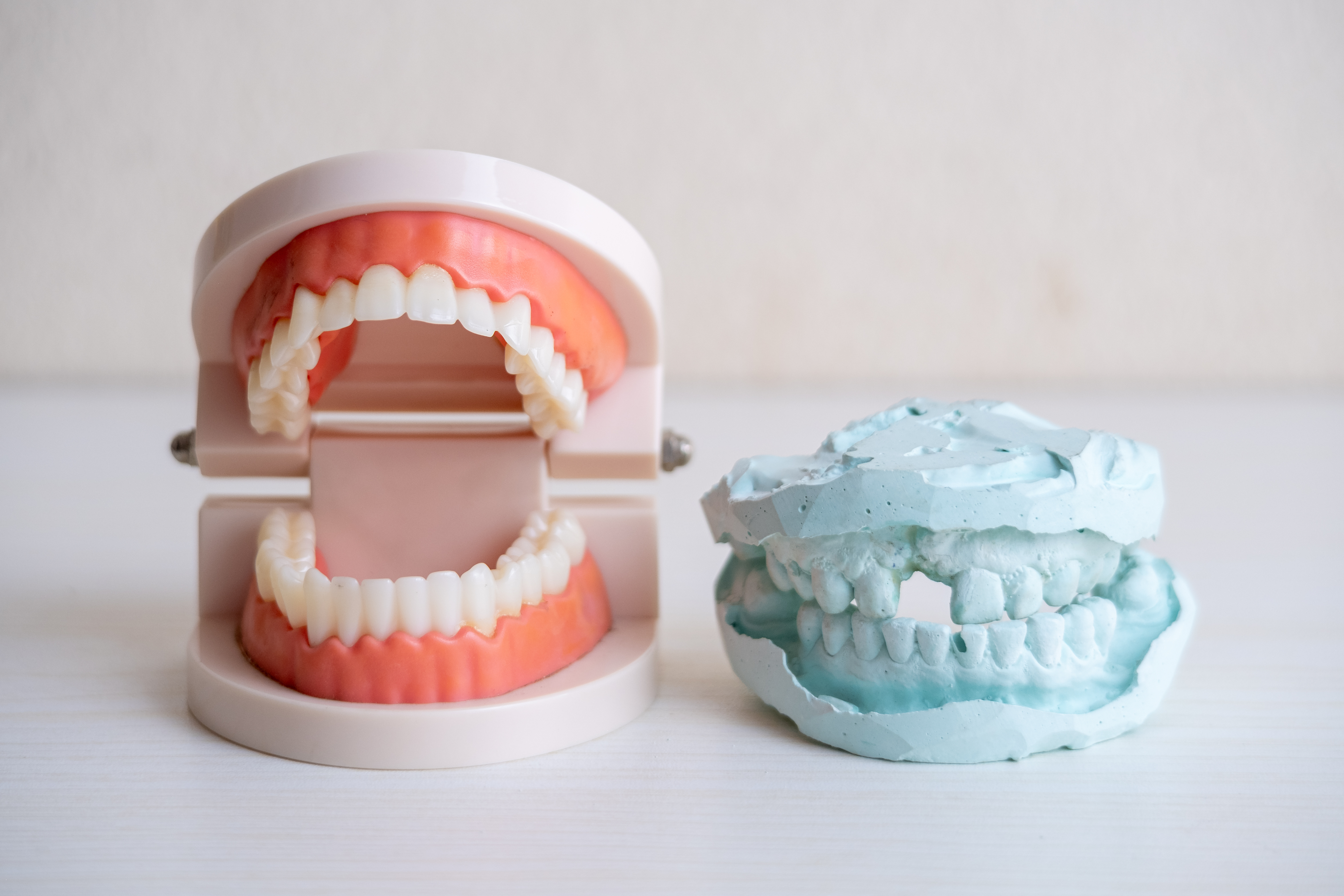
Dental restorations cover a wide range of clinical needs from a single damaged molar to a full arch of missing teeth. What they share is a common requirement: the material must perform reliably under the specific mechanical, biological, and esthetic demands of the application. For the past two decades, dental zirconia has become the dominant material across almost every restoration category, not because it is the only option, but because it is the most clinically versatile one available.
Understanding what makes zirconia the preferred choice and equally important, understanding how it differs across restoration types is the foundation of sound material selection. Whether you are a dental lab technician specifying dental lab materials for a production workflow, or a referring dentist evaluating what your lab is producing, this guide covers the full scope of zirconia restorations: what each type is, how it works, which zirconia grade it requires, and how to choose the right material for each indication.
What Is Zirconia and Why Does It Work Across So Many Restoration Types?
Zirconia is zirconium dioxide (ZrO₂) a ceramic oxide stabilized with yttrium oxide to prevent phase transformation at room temperature. The material was adopted in dentistry because of a combination of properties that no alternative delivers simultaneously: flexural strength ranging from 500 to 1200+ MPa depending on the grade, chemical inertness in oral fluids, biocompatibility that meets ISO 6872 requirements, and an optical character that can be formulated across a wide translucency range from opaque structural grades to near-enamel-translucency esthetic grades.
The reason zirconium dental ceramic performs across such a wide range of restoration types is that it is not a single material it is a family of materials differentiated by yttria content, manufacturing architecture, and disc format. 3Y-grade zirconia (3 mol% yttria) provides maximum strength for structural applications. 4Y and 5Y grades trade some strength for significantly higher translucency, enabling natural-looking anterior esthetic restorations. Multilayer disc formats add a gradient of shade and optical properties within a single blank, eliminating the need for external staining on the majority of standard cases.
This material range is what allows dental zirconia discs to cover every restoration category crowns, bridges, implants, inlays, onlays, and full-arch prostheses with a single material family. No other CAD/CAM material offers equivalent coverage of the full clinical indication range.
Zirconia Crowns: The Highest-Volume Restoration in Modern Dental Labs
Zirconia crowns represent the largest single category of dental zirconia production in most labs, and for good reason. A crown covers the entire visible portion of a prepared tooth, which means it must perform simultaneously on two demanding dimensions: it must be strong enough to survive years of occlusal loading, and it must look natural enough to be accepted by the patient and the prescribing dentist.
For dental labs sourcing aidite zirconia discs for crown production, the grade selection determines the outcome on both dimensions. 3Y-TZP provides 900–1200 MPa flexural strength appropriate for posterior single crowns in heavy-load cases, bruxism patients, and any crown where fracture risk is the primary clinical concern. 4Y multilayer pre-shaded delivers 600–800 MPa with a built-in shade gradient, covering the majority of anterior and premolar crown cases without requiring external staining. 5Y high-translucency formulations provide the best optical esthetics for anterior crowns where shade matching to highly translucent natural dentition is the clinical priority.
Anterior zirconia crowns require esthetic-grade material. The front teeth are subject to direct visual inspection under varied lighting conditions, and the crown must match the optical character of adjacent natural teeth including translucency, chroma gradient, and any characterization effects like craze lines or opalescence. 4Y or 5Y multilayer pre-shaded discs are the standard format for anterior crown production in modern labs. White discs with manual staining are used for unusual shade requests or complex characterization work.
Posterior zirconia crowns allow more latitude on esthetic grade and significantly more structural demand. For standard posterior single crowns in non-bruxism patients, 4Y material provides adequate strength with acceptable esthetics. For bruxism patients, heavy occluders, or cases with documented parafunctional habits, 3Y-TZP is the appropriate specification the higher strength reserve provides meaningful fracture risk reduction that the esthetic advantage of higher-yttria grades does not justify overriding.
Full-contour vs. cut-back crowns: Full-contour monolithic zirconia crowns are milled from a single disc without any porcelain layering. Cut-back designs reduce the zirconia coping to create space for hand-layered feldspathic porcelain at the incisal third. Full-contour is the production standard faster, more consistent, and stronger than layered designs. Cut-back remains an option for extreme esthetic demands in anterior cases where the clinical team specifies maximum characterization flexibility.
Zirconia Bridges: Material Selection Where Strength and Esthetics Intersect
Bridges extend the restoration from a single unit to a multi-unit span and this extension fundamentally changes the material selection calculus. A bridge connector is the most mechanically demanding point in any fixed restoration. The connector must transmit occlusal forces from the pontic to the abutments across a cross-section that is typically 9–16 mm² depending on the span length and location. Flexural strength at the connector, not average disc strength, determines whether the bridge survives clinical function.
For anterior and premolar three-unit bridges, explore functional zirconia provides the performance balance that these cases require adequate strength for the connector demands of a three-unit anterior span while delivering the translucency and shade accuracy that anterior esthetic cases need. The explore functional formulation covers the 4Y-grade range, providing 600–800 MPa flexural strength in a format that compatible with both anterior esthetic requirements and standard bridge span demands.
For posterior three-unit and longer-span bridges, the structural demand at the connector overrides esthetic considerations. 3Y-TZP is the material specification for posterior bridges of three or more units as a default. The minimum connector cross-section for a three-unit posterior bridge is 9 mm² a threshold that 5Y esthetic-grade material cannot reliably support under heavy occlusal loading. Using esthetic-grade 5Y zirconia in a posterior bridge connector is one of the most clinically consequential material selection errors a lab can make, as it creates fracture risk that does not manifest until the restoration is in clinical function.
Zirconia bridge design rules that apply regardless of grade:
The pontic tissue surface should be slightly convex and highly polished to minimize plaque accumulation. Connector dimensions should be calculated from the manufacturer's published minimum cross-section data, not estimated. The occlusal contacts on pontics should be verified to ensure forces are not concentrated at the connector. CAD software should flag connector dimensions below minimum thresholds before the design is committed to milling.
Cantilever bridges are a special case. Cantilever designs place significant bending stress on the connector due to the unsupported distal end of the span. 3Y-TZP is the appropriate specification for cantilever bridges regardless of location in the arch. High-translucency esthetic grades should not be used in cantilever designs.
Zirconia Veneers: High-Translucency Material in a Demanding Application
Zirconia veneers are among the most technically demanding restorations in the CAD/CAM workflow combining extremely thin material sections, maximum esthetic requirements, and preparation geometries that challenge both digital design and milling precision. They are not appropriate for every case or every lab workflow, but in the right clinical situation, zirconia veneers offer a combination of durability and esthetics that porcelain veneers cannot match.
Traditional feldspathic porcelain veneers fracture at significantly higher rates than zirconia porcelain's low flexural strength (60–80 MPa) makes it vulnerable to fracture from occlusal contact, adhesive failure, or flexural stress from the underlying tooth. 5Y zirconia at 500–650 MPa is significantly more resistant to these failure modes while delivering equivalent or superior translucency in a thinner material section.
The preparation for a zirconia veneer requires a minimum material thickness of approximately 0.3–0.5 mm depending on the specific disc and manufacturer recommendations thinner than traditional porcelain veneer preparations in most cases. The bonding protocol for zirconia veneers requires surface treatment of the zirconia (tribochemical silica coating and MDP-based primer, or equivalent) to achieve adequate bond strength standard silane protocols used for glass-ceramic veneers are not appropriate for zirconia.
5Y high-translucency grade is the standard specification for zirconia veneers. Any grade with lower translucency will be optically detectable at the thin sections used in veneer preparations, particularly in the incisal third where the underlying tooth structure should be visible through the veneer material.
Implant-Supported Zirconia Restorations: Material Demands at the Prosthetic Interface
Implant-supported restorations place unique demands on the restoration material demands that go beyond the mechanical requirements of tooth-supported crowns and bridges. The absence of the periodontal ligament in implant cases means that occlusal forces are transmitted directly to the implant fixture without the shock-absorbing compliance that natural tooth roots provide. This changes both the load profile on the restoration and the clinical consequences of any material failure.
The upcera zirconia range covering 3Y, 4Y, and 5Y grades in multiple disc formats — is a widely used material choice for implant-supported single crowns and bridge frameworks in labs that prioritize consistent batch quality and full technical documentation. For implant cases where shade matching to adjacent natural teeth is the critical challenge, 4Y or 5Y multilayer pre-shaded formats provide the esthetic performance needed without requiring manual staining on standard A-shade cases.
Implant-supported single crowns follow the same grade selection logic as tooth-supported single crowns, adjusted for the higher effective load transfer in implant cases. For anterior implant single crowns, 4Y or 5Y multilayer is the standard format shade matching is the clinical priority, and single-unit anterior implant loads are within the strength range of esthetic grades. For posterior implant single crowns, 4Y is the preferred specification providing meaningful strength reserve above what 5Y delivers while maintaining adequate esthetics for most posterior shade requirements.
Implant-supported bridges of three or more units in the posterior zone should be specified in 3Y-TZP as a default. The load conditions on posterior implant bridges are typically more demanding than on tooth-supported bridges, because the absence of proprioception in osseointegrated implants means patients can generate higher bite forces without the protective sensory feedback that natural tooth roots provide.
Full-arch implant-supported prostheses (All-on-4 / All-on-6 frameworks) represent the most structurally complex zirconia application. Full-arch zirconia frameworks are typically produced in monolithic 3Y-TZP or a hybrid zirconia-titanium design. The design requires extensive connector analysis across the full arch span, and the milling and sintering must be performed to tight dimensional tolerances to ensure accurate passive fit to the implant abutments. Passive fit the absence of any stress in the framework when seated on the implants is the single most critical quality criterion in full-arch implant prosthetics.
Choosing the Right Zirconia for Each Restoration: A Practical Framework
As a dental lab material supplier and dental lab materials resource for US labs, ZirconiaGuys stocks the full range of zirconia grades, formats, and brands. Understanding which grade, format, and architecture matches each restoration type is what converts that inventory into predictable clinical outcomes.
For labs and dentists looking for a trusted zirconia crown supplier dentists can rely on, the selection framework below covers the core decision for each restoration category.
| Restoration Type | Grade | Format | Primary Criterion |
|---|---|---|---|
| Anterior single crown | 4Y or 5Y | Multilayer pre-shaded | Shade match, translucency |
| Posterior single crown | 4Y | Pre-shaded or white | Strength + esthetics balance |
| Posterior single crown (bruxism) | 3Y | White or pre-shaded | Maximum strength |
| Anterior 3-unit bridge | 4Y | Multilayer pre-shaded | Esthetics + connector strength |
| Posterior 3–4 unit bridge | 3Y | White | Connector strength |
| Inlay / onlay | 4Y | Pre-shaded | Conservative fit, strength |
| Veneer | 5Y | White | Maximum translucency |
| Anterior implant crown | 4Y or 5Y | Multilayer pre-shaded | Shade match to adjacent teeth |
| Posterior implant crown | 4Y | Pre-shaded | Strength + esthetics |
| Posterior implant bridge | 3Y | White | Maximum connector strength |
| Full-arch implant framework | 3Y | White monolithic | Passive fit, structural integrity |
On zirconia blocks price: the correct approach to material cost in zirconia selection is cost per case, not cost per disc. A higher-quality pre-shaded multilayer disc that eliminates external staining on 80% of anterior cases costs less per case than a cheaper white disc that requires full manual staining on every unit. Factor in lab time, remake rate, and batch consistency when evaluating total material economics not just the per-disc acquisition cost.
Zirconia vs. Competing Restoration Materials: Where Each Fits
Dental zirconia discs do not operate in isolation from other restoration materials. Understanding how zirconia compares to its primary alternatives clarifies the indications where each material excels and where substitution is not appropriate.
PFM (porcelain-fused-to-metal) was the production standard before zirconia. PFM crowns offer proven long-term clinical performance, but the metal substructure creates a dark margin at the gumline as gum tissue recedes over time, and metal ion leaching is a documented biocompatibility concern. Zirconia has displaced PFM as the default specification in most modern labs for all-ceramic esthetic cases particularly in the anterior zone where the absence of a metal margin is clinically significant.
Lithium disilicate competes with 4Y and 5Y zirconia for anterior single-crown and veneer applications. Lithium disilicate at ~400 MPa is stronger than porcelain but weaker than any zirconia grade. Its advantage is bonding lithium disilicate bonds to tooth structure via standard silane and resin cement protocols without special surface treatment. For anterior single crowns in low-load cases where bond strength to the prepared tooth is a design priority, lithium disilicate is a legitimate alternative to 5Y zirconia. For everything else multi-unit bridges, posterior cases, implant-supported restorations zirconia is the stronger clinical choice.
PMMA provisionals are not a zirconia alternative they are the temporary phase that precedes the permanent zirconia restoration. Every complex case involving zirconia fixed restorations benefits from a well-fitted PMMA provisional that allows the patient to evaluate shape, shade, and function before the final restoration is placed.
The full range of zirconia restorations from a single anterior crown to a full-arch implant-supported prosthesis shares a common foundation: the right grade, the right format, and the right design for the specific clinical indication. A posterior bridge that fractures at the connector is not a zirconia failure it is a material selection failure. An anterior crown that looks opaque next to natural teeth is not a lab craftsmanship failure it is a grade selection failure.
Every restoration type covered in this guide has a clear material specification logic. The clinical outcomes that result from following that logic consistently low fracture rates, high patient acceptance, minimal remakes are what distinguish labs that understand their dental zirconia materials from labs that treat all zirconia discs as interchangeable commodities. Getting the selection right from the disc stage is the most efficient investment a dental lab can make in the quality of every restoration it produces.


