

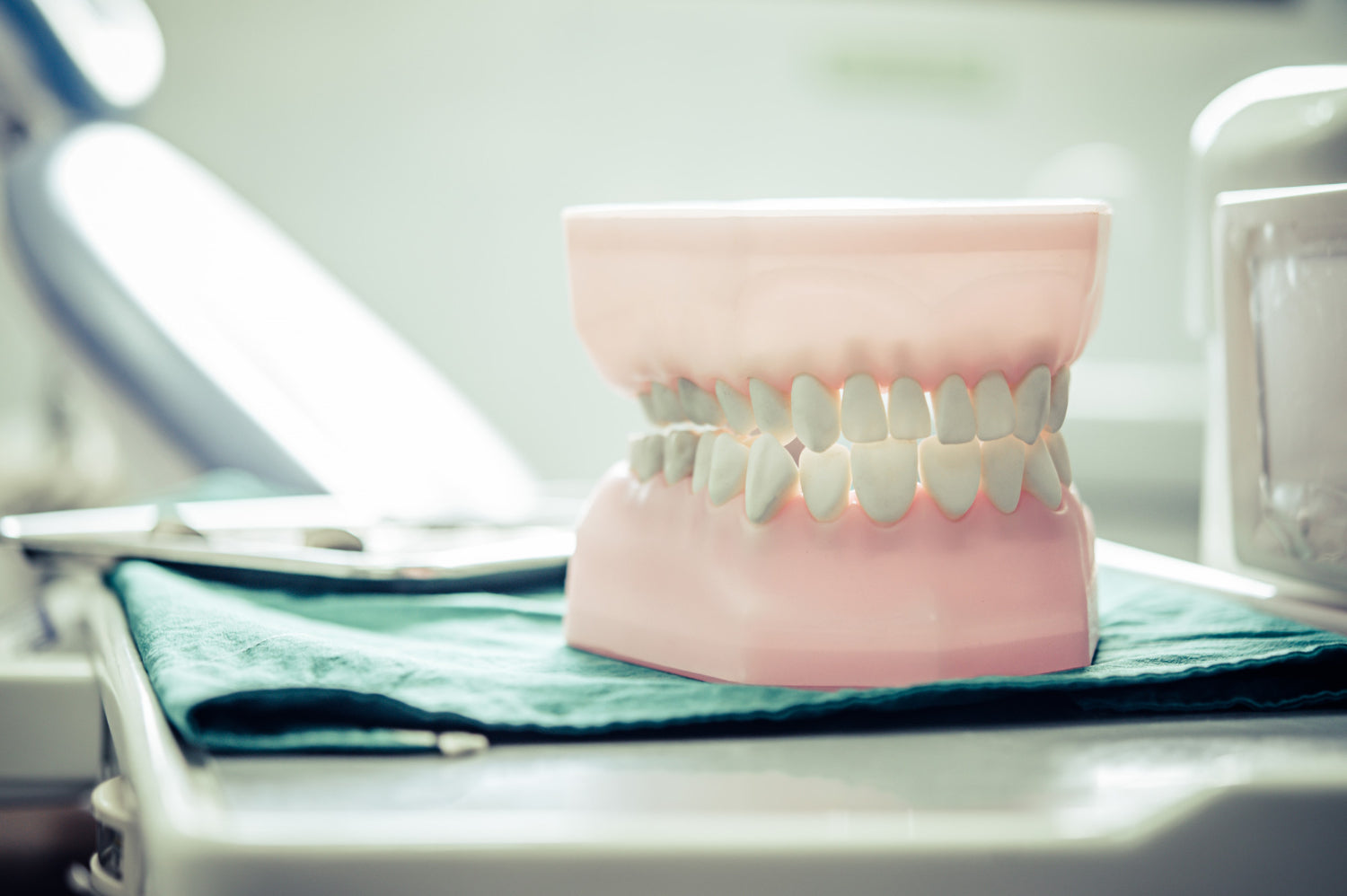
The material you mill from determines the outcome of every restoration your lab produces. That statement sounds obvious, but it is violated constantly in dental labs that evaluate zirconia blocks on price alone, stock whatever is available at short notice, or default to the same monolithic grade for every indication regardless of the clinical requirements of the case. The result is predictable: remakes, staining corrections, chair time spent compensating for what the material didn't deliver on its own.
Multilayer zirconia blocks represent the most significant advancement in dental zirconia discs technology of the past decade. They are not simply a premium version of standard monolithic blocks they are a fundamentally different approach to how color, translucency, and shade gradient are built into a restoration. For dental labs that produce anterior crowns and bridges at any meaningful volume, understanding why multilayer blocks outperform monolithic alternatives is not optional knowledge. It is the foundation of a material selection strategy that produces better clinical outcomes with less finishing labor.
Here are five specific reasons why the best multilayer zirconia block has become essential to modern dental lab production.
Reason 1: The Shade Gradient Is Built Into the Material Not Applied After Milling
The single most important advantage of multilayer zirconia over standard monolithic blocks is the internal shade gradient. In a multilayer disc, the manufacturer builds distinct chromatic and translucency zones into the material during production transitioning from a warmer, more opaque dentin-like zone at the cervical end to a cooler, more translucent enamel-like zone at the incisal end. This gradient is present in every blank milled from the disc before any staining or glazing takes place.
In a monolithic zirconia blank, no such internal structure exists. The disc is uniform in shade and translucency from edge to edge. Every anterior crown milled from a monolithic disc exits sintering as a single-shade, single-translucency restoration that must then be corrected through external staining to look like a natural tooth. That correction process adds bench time, introduces operator variability, and creates batch-to-batch inconsistency when stain concentrations vary between technicians or firing cycles.
With a multilayer block, the correction step is largely eliminated for standard A–D shade cases. The crown exits sintering with the dentin zone at the cervical margin and the enamel zone at the incisal edge already present in the material. For labs processing anterior cases at volume, this difference translates directly into reduced staining labor on every single unit. At ten units per day, the time saving is material. At fifty units per day, it is transformational.
The clinical outcome is also more consistent. When the gradient is in the material rather than applied by a technician, the result is the same regardless of who milled the case, which shift produced it, or how the stain batch was mixed. Process consistency at that level is difficult to achieve through manual staining regardless of technician skill.
Reason 2: Multilayer Blocks Reduce Post-Sintering Finishing Time Without Sacrificing Shade Accuracy
Labs that transition from monolithic to multilayer zirconia blocks dental production consistently report the same thing: the staining step is no longer a bottleneck. For standard anterior cases, the multilayer block delivers a result that requires glaze and polish but not shade reconstruction. The difference between glazing a restoration and staining one is not trivial — staining requires multiple firing cycles, evaluation under multiple light sources, potential re-firing, and the kind of experienced judgment that cannot be easily delegated or standardized.
Zirconia dental blanks in multilayer format eliminate this bottleneck by moving the shade work from the lab bench to the manufacturing process. The disc producer has already done the shade gradient calibration at an industrial level with controlled yttrium oxide gradients, precisely pigmented slurry layers, and quality-controlled batch testing across thousands of discs. That is a level of shade engineering that no bench staining protocol can replicate at the case level.
The practical implications for lab workflow are significant. When post-sintering finishing is reduced to glazing and polishing, technicians can be deployed on higher-value tasks. Throughput increases without adding headcount. Remake rates drop because staining errors wrong concentration, uneven application, over-firing are simply removed from the process for standard cases. Multilayer blocks do not eliminate the staining step for every case, but they eliminate it for the majority: typically 70–80% of standard anterior A–D shade cases.
For the remaining 20–30% of complex cases unusual shade requests, high-chroma B or C shades, characterization cases white monolithic blanks remain the appropriate choice. A well-run lab stocks both and uses each for what it does best.
Reason 3: Super-Translucency Grades Deliver Anterior Esthetics That Monolithic 3Y Cannot Match
The translucency ceiling of standard 3Y monolithic zirconia is a clinical limitation. In younger patients, patients with naturally highly translucent teeth, or cases adjacent to e.max veneers and feldspathic porcelain work, a 3Y monolithic crown will look flat and artificial regardless of the staining effort applied. The material's tetragonal crystal phase scatters light in a way that produces the characteristic opaque appearance of early-generation zirconia — an appearance that no surface treatment fully corrects.
The st multilayer zirconia disc format addresses this limitation directly. Super-translucency (ST) grade multilayer discs are formulated with higher yttria content in the incisal zone increasing the cubic phase fraction and therefore the light transmission through the material in exactly the zone where translucency matters most for anterior esthetics. The result is an incisal edge that transmits light in a manner much closer to natural enamel than any 3Y monolithic format can produce.
This optical difference is not subtle. Under mixed lighting conditions the combination of fluorescent, natural, and incandescent light that patients encounter daily — the translucency of the incisal zone is one of the most visible differentiators between a restoration that looks natural and one that looks artificial. Labs that still produce high-volume anterior work on 3Y monolithic blanks are consistently visible to observant patients and referring dentists.
The strength tradeoff in ST-grade multilayer discs is real but manageable. Super-translucency grades typically deliver 600–750 MPa flexural strength adequate for single units and short-span anterior bridges, but not appropriate for posterior bridges of 3+ units where 3Y-TZP structural grades are required. The clinical rule is straightforward: use ST-grade multilayer for anterior esthetic cases, use high-strength monolithic 3Y for posterior bridge structural cases.
Reason 4: CAD/CAM Orientation Alignment Enables Consistent Shade Placement Across Every Unit
A multilayer block delivers its shade gradient correctly only when the CAD/CAM toolpath is aligned with the disc's internal zone architecture. This sounds technical, but it is a simple workflow step that, once standardized, produces consistent shade placement across every restoration milled from the disc.
Dental zirconia discs in multilayer format are directionally marked an engraved arrow or printed indicator on the disc identifies the gingival-to-incisal axis. When the disc is mounted with this axis correctly oriented in the milling chuck, and when the CAD design aligns preparation margins and cusp tips with the corresponding disc zones, the milled crown will automatically carry the cervical dentin shade at the margin and the incisal enamel shade at the edge.
This orientation-dependent shade placement is the mechanism that gives multilayer blocks their consistency advantage. It is also the source of the most common error labs make with multilayer discs: reversed orientation. A disc mounted backwards places the incisal-grade high-translucency material at the cervical margin, producing a crown that looks bright white at the gum line. Identifying this error requires only one test piece from each new batch a minor process step that eliminates the most disruptive multilayer workflow problem.
Modern CAM software including exocad and 3Shape includes disc layer visualization tools that display the crown position relative to the disc's internal zones before committing to the toolpath. For labs running any multilayer format, these tools should be used on every anterior case as a standard quality step, not only on cases where shade problems are anticipated.
The disc orientation workflow also applies to zirconia dental blanks in pre-shaded multilayer format. Pre-shaded blanks carry VITA-compatible shade gradients that are directionally dependent in the same way. Standardizing orientation verification across all multilayer disc formats regardless of grade or brand takes one step but eliminates the most common source of multilayer shade errors.
Reason 5: Sourcing Multilayer Blocks From a Reliable US Distributor Eliminates Lead Time and Batch Variability Risk
For US dental labs, material sourcing decisions have supply chain implications that go beyond per-disc cost. A multilayer disc ordered from an overseas supplier at a lower per-unit price carries risks that are invisible until they materialize: delayed shipments that create production gaps, batch documentation that is unavailable or not aligned with US quality standards, and shade drift between batches that is difficult to trace or resolve without supplier proximity.
As a reliable zirconia materials distributor usa, ZirconiaGuys stocks the full multilayer zirconia range including upcera dental zirconia in multilayer formats and Aidite multilayer grades from US inventory. Same-day and next-day shipping on in-stock items means labs can maintain leaner inventory without exposure to production gaps from international lead times. Batch documentation is available for every order, enabling shade tracking across production runs and rapid issue resolution when questions arise.
The consistency of multilayer disc production is particularly dependent on batch-to-batch manufacturing quality. Unlike monolithic white discs where shade is applied externally and batch-level shade drift has limited impact, multilayer discs carry their shade gradient internally. If a batch is manufactured with a shifted cervical shade or a different gradient transition point, every blank milled from that batch will produce the same shift in every crown. Identifying and resolving that kind of systemic batch issue requires direct communication with a supplier who can pull batch certificates, trace production records, and resolve discrepancies in real time not a 48-hour support ticket cycle across time zones.
The real value of a US-based zirconia blocks supplier relationship for multilayer material is not in any single order. It is in the confidence that every batch will perform to the same standard, every shipment will arrive when the production schedule requires it, and every technical question will be resolved by someone who understands the production context.
The shift to multilayer zirconia blank formats is not a luxury upgrade for labs with premium workflows it is a production efficiency decision that pays for itself in reduced finishing labor on every anterior case. The internal shade gradient eliminates the staining step for the majority of standard cases. The super-translucency grade options deliver esthetic outcomes that 3Y monolithic material cannot match. The CAD/CAM orientation workflow standardizes shade placement across every technician and every shift.
Sourcing the right dental zirconia discs from a consistent, US-based supply chain protects those efficiency gains by ensuring batch consistency and production continuity. For dental labs producing anterior crowns and bridges at any meaningful volume, these five reasons are not abstract arguments they are measurable workflow improvements that show up in case time, remake rates, and clinical outcomes on every production day.


