

Modern dental labs are under continuous pressure to produce more, faster, with fewer remakes and lower material cost per case. The tools and materials that meet that pressure are not always the most technically complex sometimes the most impactful upgrade in a lab's workflow is a better disc in a category the lab already uses every day. Aidite's Clear Dental PMMA Disc is exactly that kind of upgrade. It is not a new material category. It is a dramatically better execution of a material category that every full-service dental lab already depends on.
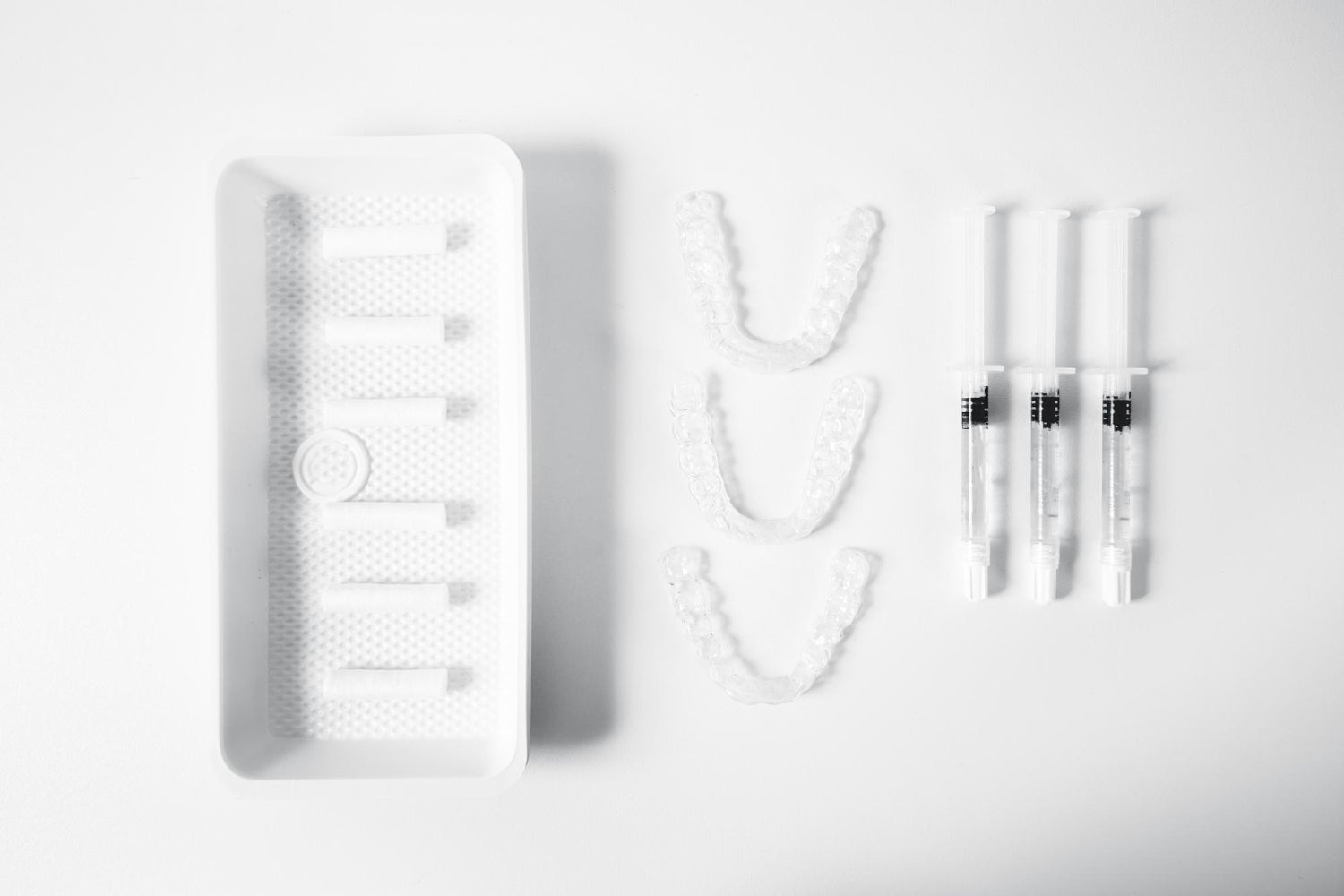
Clear PMMA is used across multiple high-value lab applications: occlusal splints, night guards, orthodontic retainers, diagnostic models, and clear appliances. In every one of these applications, the optical and mechanical quality of the PMMA disc determines the clinical outcome. Poor clarity, poor surface finish, or inconsistent dimensional behavior across a batch translates directly into patient complaints, adjustment time, and remakes. Aidite's Clear PMMA Disc addresses all three failure points in a single product and this guide explains exactly how.
What Is Aidite Clear PMMA and What Makes It Different?
PMMA polymethyl methacrylate is the base polymer for virtually all CAD/CAM clear dental appliances. It has been used in dentistry for decades, and the conventional understanding is that clear PMMA is a commodity: one disc is much like another. That assumption is wrong, and understanding why requires looking at how PMMA discs are manufactured and where the quality variation actually lives.
All CAD/CAM PMMA discs start with the same polymer chemistry. The meaningful differences between products come from three manufacturing variables: polymerization pressure, optical additive formulation, and pigment exclusion precision. aidite clear pmma discs are manufactured under high-pressure industrial conditions typically 100 bar or higher which eliminates the internal porosity that lower-pressure processes leave behind. Porosity in a clear disc does not just affect clarity. It creates stress concentration points that reduce impact resistance, produces micro-voids that accumulate staining agents over time, and results in rougher milled surfaces that require more finishing labor to achieve clinical polish.
The optical clarity of Aidite Clear PMMA is a direct product of that high-pressure manufacturing. The disc is formulated to maximize light transmission without optical haze the cloudy, slightly milky appearance that characterizes lower-quality clear PMMA discs and that patients notice immediately, particularly in full-coverage splints visible during speech. Aidite's formulation achieves glass-like clarity in the sintered disc that distinguishes high-quality CAD/CAM clear appliances from products that look like they were made from generic plastic.
The second distinguishing property is milling behavior. Clear PMMA requires clean, chip-free milling to produce the smooth surface finish that clear appliances demand. A disc with inconsistent density — typical of lower-pressure-manufactured products produces surface tearing and micro-chipping during milling, particularly at thin sections like splint edges and retainer clasps. Aidite Clear PMMA mills cleanly at standard PMMA cutting parameters with minimal surface defects, reducing the post-milling polishing workload significantly.
The Clinical Applications Where Aidite Clear PMMA Delivers the Most Value
Understanding where Aidite Clear PMMA creates measurable workflow improvement requires looking at each application on its own terms. The disc is not a universal material — it is specifically formulated for applications where optical clarity is the primary material requirement. These are the four applications where it delivers the greatest value.
Occlusal Splints and Night Guards
The aidite denture pmma discs range covers tissue-contact applications, but clear PMMA is the correct formulation for hard occlusal splints and night guards where transparency is the patient-facing esthetic priority. Patients who wear full-coverage hard splints for bruxism management are acutely aware of the appliance's appearance a cloudy or yellowish splint communicates cheap material even when the fit and function are excellent. Aidite Clear PMMA produces splints with glass-like transparency that patients consistently receive more positively than appliances made from generic clear material.
The dimensional accuracy of Aidite Clear PMMA in splint applications is equally important. Occlusal splints are precision restorations the occlusal surface must accurately reproduce the prescribed contacts, and the fitting surface must maintain close adaptation to the model. Dimensional drift during milling or post-milling warping compromises both. Aidite's pre-polymerized disc format delivers consistent dimensional behavior from the mill, with minimal stress-release warping after separation from the blank.
Orthodontic Retainers
Milled PMMA retainers from digital models are increasingly replacing pressure-formed thermoplastic retainers in labs running full digital workflows. The accuracy advantage of milled retainers over pressure-formed alternatives is significant particularly at interproximal and subgingival areas where pressure forming cannot faithfully reproduce model detail. Aidite Clear PMMA mills these fine detail areas cleanly, producing retainer fits that are measurably more accurate than pressure-formed equivalents.
The clarity of the retainer also affects patient compliance. Patients are significantly more likely to wear a retainer consistently when it is optically clear and visually unobtrusive. A cloudy retainer draws more attention and generates more compliance-related complaints. This is a patient experience variable, but it is a real one that labs can address through material selection.
Diagnostic Models and Study Casts
Clear PMMA diagnostic models provide a visibility advantage that opaque models do not internal anatomy, tooth contours, and prepared margin details are visible through the model in clear PMMA, enabling more accurate assessment during case planning. For complex restorative cases, implant planning, or orthodontic evaluation, clear diagnostic models reduce the number of cases where anatomy ambiguity causes planning errors downstream.
Clear Removable Appliances
Clear PMMA is also used for removable partial denture frameworks in cases where metal is contraindicated or the patient requests an all-clear esthetic result. The material's combination of clarity, biocompatibility, and milling accuracy makes it well-suited for this application though labs should note that PMMA's flexural strength (80–120 MPa) does not match metal framework strength, and the application should be selected accordingly.
How Aidite Clear PMMA Fits Into a Full CAD/CAM Material Workflow?
The efficiency case for Aidite Clear PMMA is strongest when it is evaluated as part of a complete Aidite material ecosystem rather than as a standalone product. Labs that stock the full range of aidite dental materials clear PMMA, denture base PMMA, multilayer PMMA, zirconia discs, stain and glaze eliminate multi-vendor ordering complexity and gain access to a coherent set of materials with documented compatibility across applications.
This matters in practice because labs frequently produce multiple material types on the same case. A full-mouth rehabilitation case might require a multilayer zirconia disc for permanent anterior crowns, a monolithic zirconia disc for posterior bridges, a multilayer PMMA disc for temporaries, and a clear PMMA disc for the accompanying occlusal splint. When those materials come from a single supplier with consistent batch documentation and compatible sintering and milling parameters, the production workflow is simpler and the quality control process is more straightforward.
The contrast with generic clear PMMA from unverified sources is significant. Zirconia blocks dental labs that have standardized their zirconia supply on documented, batch-certified products often undermine that quality discipline by sourcing clear PMMA from the cheapest available option. The result is a material quality mismatch precision zirconia restorations delivered alongside clear appliances made from material with inconsistent clarity and unpredictable milling behavior. Standardizing the full material range through a single reliable source closes that gap.
Aidite Clear PMMA vs. Competing Clear PMMA Products: What Labs Actually Report
Labs that have compared Aidite Clear PMMA directly against generic clear PMMA alternatives consistently report three specific advantages that show up in production metrics rather than on spec sheets.
Post-milling polishing time- Aidite Clear PMMA achieves clinical-grade surface polish in approximately 30–40% less time than generic clear PMMA alternatives in the same milling parameters. The cleaner milling surface requires fewer polishing steps to achieve the high-gloss finish that clear appliances require. For labs producing 10–20 splints or retainers per week, this time reduction is meaningful at the scale of monthly production.
Clarity retention over time- Clear PMMA appliances that patients wear for extended periods splints worn nightly for bruxism management, retainers worn indefinitely are subject to thermal cycling, chemical exposure from oral fluids, and mechanical stress from cleaning. Aidite's formulation resists yellowing and surface hazing under these conditions more effectively than generic alternatives, which often show visible clarity degradation within six months of delivery. Labs that use Aidite report fewer patient complaints about appliance discoloration over time.
Batch consistency- The most disruptive quality problem in clear PMMA production is batch-to-batch variation where the same disc format from the same supplier produces visibly different clarity or milling behavior across different production runs. Aidite's industrial manufacturing process and batch documentation eliminate this variable, enabling labs to build production standards around consistent material behavior rather than compensating for variability on every case.
Sourcing Aidite Clear PMMA in the US: What Labs Need to Know
For US dental labs, the sourcing question is straightforward. As a leading zirconia materials distributor usa and full-range Aidite stocking partner, ZirconiaGuys carries Aidite Clear PMMA from US inventory no international shipping, no unpredictable lead times, no import documentation complexity.
Labs that are evaluating aidite cad cam products for the first time can source clear PMMA alongside the full Aidite zirconia range including zirconia blank formats in 3Y, 4Y, and 5Y grades, dental zirconia discs in flat and multilayer configurations, and zirconia dental blanks in pre-shaded and white formats from a single US inventory point. This consolidation simplifies ordering, reduces minimum order complexity, and ensures that all products arrive with the batch documentation needed for quality management workflows.
The zirconia blocks price relationship is also worth noting for labs tracking per-case material cost across their full portfolio. Aidite Clear PMMA discs are priced competitively relative to comparable clear PMMA products from other suppliers and when the total cost calculation accounts for reduced polishing time and lower remake rates, the per-case economics consistently favor the higher-quality product over nominal-cost alternatives.
Aidite Clear PMMA is not a revolutionary new material it is a superior execution of a material category that dental labs already depend on daily. The difference between a generic clear PMMA disc and Aidite's formulation shows up in every single appliance produced from it: in the glass-like clarity patients see when they first receive the appliance, in the polishing time technicians save on every unit, and in the absence of discoloration complaints at the six-month follow-up. For labs that have accepted generic clear PMMA as a commodity purchase, switching to Aidite's formulation is one of the lowest-friction, highest-return material upgrades available in a modern CAD/CAM workflow.


