

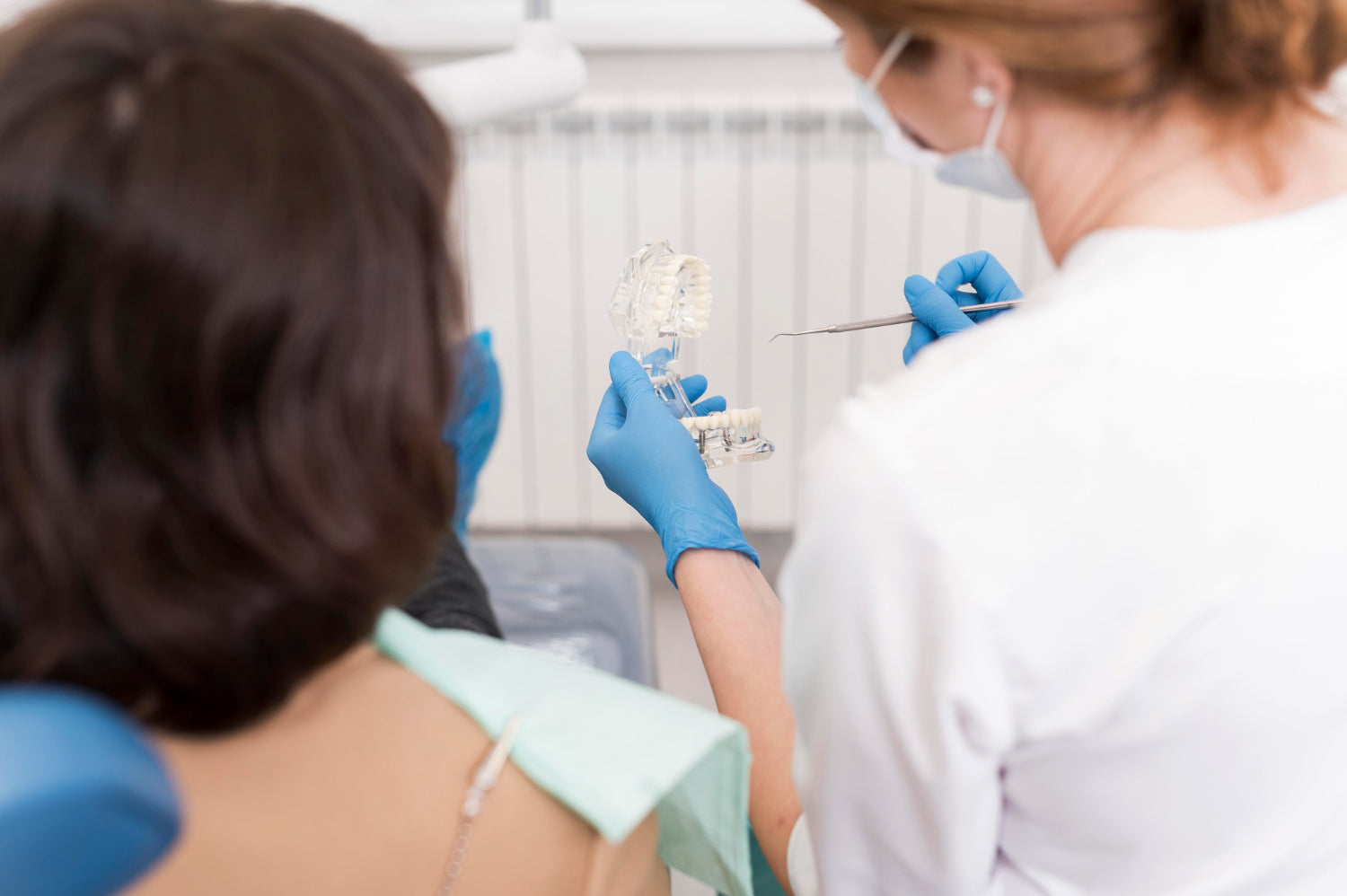
Bite splints represent one of the highest-stakes applications in dental lab production. A poorly selected material fails in ways that are immediately apparent to the patient a splint that cracks under nocturnal bruxism forces, one that warps during post-cure, or one that produces surface roughness that irritates soft tissue and those failures reflect directly on the lab that made it. The material selection decision for hard resin bite splints is not a minor procurement choice. It determines clinical performance, patient comfort, production efficiency, and remake rate in a single decision.
The shift from milled PMMA to 3D printed resin for bite splint production has accelerated significantly over the past five years. Modern 3D printing workflows offer faster production cycles, less material waste, and the ability to produce complex occlusal geometries that milling struggles to execute cleanly. But 3D printing introduces its own material selection complexity not all resins that print well also perform well clinically, and the properties that determine print quality are not the same properties that determine long-term splint performance. Understanding both sets of requirements is what separates labs that produce reliable bite splints from labs that manage recurring remake requests.
What a Bite Splint Actually Demands from Its Material?
Before evaluating any specific resin, labs need clarity on exactly what a hard bite splint requires from its material. The clinical function of the splint determines the material specification and the clinical demands of bite splint applications are more rigorous than most temporary restoration or model applications.
Hardness and wear resistance. A bite splint works by providing a controlled occlusal surface against which the opposing arch functions. If the splint material is too soft, it develops wear facets that alter the occlusal scheme over weeks of use, defeating the therapeutic purpose of the appliance. Hard resin for splints must resist wear under repeated occlusal contact typically through a combination of surface hardness and flexural resistance.
Dimensional accuracy. The splint must seat accurately on the model it was designed for and fit the patient's dentition without adjustment-intensive rework. Dimensional accuracy is controlled by the resin's post-cure shrinkage characteristics and the stability of the material during and after light curing. Resins with high post-cure shrinkage produce splints that require significant occlusal adjustment after fitting adding chairside time and undermining the precision advantage of the digital workflow.
Biocompatibility. A bite splint sits in direct tissue contact for 6–10 hours per night. The material must be ISO 10993-compliant for long-term oral contact. Residual monomer content, photoinitiator leaching, and colorant stability all affect biocompatibility compliance. Labs should verify ISO 10993 certification from the manufacturer for any resin specified for overnight tissue-contact applications.
Polishability. Hard resin bite splints must be polished to a smooth, high-gloss surface before delivery. Surface roughness on the tissue side causes soft tissue irritation. Surface roughness on the occlusal surface causes elevated friction and a sensation patients describe as uncomfortable or gritty. The resin's polymer chemistry determines how easily it polishes and what surface finish is achievable some formulations achieve high gloss with minimal effort, while others require extensive polishing sequences.
Optical clarity (for clear splints). Many patients and practitioners prefer clear or transparent splints for esthetic reasons. A resin formulated for clear splint production must maintain optical clarity through the full print, post-wash, and post-cure workflow avoiding the yellowing, haziness, or whitish opacity that affects resins not designed for this requirement.
Fracture resistance under impact. Splints are removed and reinserted daily, flexed during function, and periodically dropped. The material must tolerate both cyclic fatigue stress and impact stress without brittle fracture. Highly crosslinked resins that optimize surface hardness can become brittle a high flexural modulus without adequate fracture toughness produces splints that survive occlusal contact but fracture when dropped on a hard floor.
The Key Properties Labs Use to Evaluate Splint Resins
When a dental lab evaluates a hard resin for bite splint production, experienced technicians and lab managers assess five core material properties. Understanding these properties and where to find them in manufacturer documentation enables systematic comparison rather than trial-and-error purchasing.
Flexural strength is the property most directly correlated with splint durability. Measured in MPa, flexural strength determines the force required to fracture the material under bending load. For bite splints, flexural strength values above 80 MPa are generally considered clinically acceptable for standard bruxism cases. Heavy bruxers patients who fracture conventional PMMA splints regularly benefit from resins in the 100–130+ MPa range.
Flexural modulus (stiffness) complements flexural strength. A high flexural modulus produces a rigid splint that maintains its occlusal scheme under load. A lower modulus produces a more flexible appliance appropriate for some therapeutic applications but not for full-coverage hard bite splints where occlusal rigidity is the clinical goal.
Shore D hardness is the surface hardness measurement most commonly reported for dental resins. For hard bite splints, Shore D values in the 80–90 range are typical. Values below 75 indicate a material that will develop occlusal wear facets with extended use.
Post-cure shrinkage should be as low as possible for dimensional accuracy. Manufacturer-reported values below 2% post-cure shrinkage are acceptable for most splint applications. Values above 3–4% will produce measurable dimensional distortion that requires occlusal adjustment at fitting.
Biocompatibility certification. The only reliable indicator of biocompatibility compliance is independent third-party certification specifically ISO 10993 Part 5 (cytotoxicity) and Part 10 (sensitization) testing from a recognized testing body. Self-reported claims from manufacturers without independent certification documentation should not be accepted for tissue-contact applications.
How 3D Printing Has Changed Bite Splint Production?
The transition to 3D printed bite splints has fundamentally altered material requirements compared to milled PMMA. Understanding the differences helps labs avoid applying PMMA-based evaluation criteria to 3D printed resin products a common mistake that leads to incorrect material selection and poor clinical outcomes.
Milled PMMA splints are produced from pre-polymerized industrial discs the polymerization is complete before the material ever enters the lab workflow. The lab's job is to mill accurately and polish efficiently. The material properties are fixed at the manufacturing stage and essentially identical across every disc in a batch from a reputable supplier.
3D printed resins undergo polymerization during and after the printing process. The final material properties of a 3D printed splint are a function of the resin chemistry, the print parameters (layer thickness, exposure time, light intensity), the wash protocol, and the post-cure parameters (light intensity, temperature, duration). This means the same resin can produce dramatically different mechanical properties depending on how it is processed a reality that has no equivalent in milled PMMA workflows.
The practical implication: for splint resin for 3d printing, labs must treat the resin and the processing protocol as a single system. Validating a new resin product means validating it through your specific printer, wash unit, and post-cure unit using the manufacturer's recommended parameters not assuming that the published mechanical properties will transfer to your workflow without process-specific testing. Labs that validate systematically produce consistent results. Labs that assume print parameters from previous resins transfer directly to new products encounter fit and fracture problems that are difficult to diagnose without understanding this dependency.
Print layer adhesion is an additional consideration unique to 3D printed materials. The layer-by-layer build process creates potential delamination planes between print layers a failure mode that does not exist in milled materials. High-quality splint resins are formulated to maximize interlayer bonding, minimizing the risk of layer separation under the cyclic stress of occlusal function. When evaluating a 3D printed resin for bite splints, ask the manufacturer specifically about interlayer adhesion testing data.
Hard vs. Clear Hard Resin: Choosing the Right Formulation for the Case
Not all hard splint resins are identical in their optical properties, and the choice between an opaque hard formulation and a clear hard formulation should be driven by clinical and patient factors not just material availability.
Opaque hard resin formulations prioritize mechanical properties hardness, flexural strength, dimensional accuracy over optical clarity. These are the correct choice for posterior bite splints, NTI-style anterior splints for heavy bruxers, and any case where therapeutic function takes priority over esthetics. Opaque formulations typically achieve higher Shore D hardness values and better wear resistance than clear formulations because the pigmentation additives in opaque resins can contribute to polymer crosslinking density.
The key splint hard clear resin formulation addresses the significant patient demand for clear or transparent bite splints without sacrificing the hardness and dimensional stability that splint applications require. Clear formulations use photoinitiator and monomer systems selected specifically for their ability to maintain optical transparency through deep-section curing a technical challenge in light-activated systems where opacity can develop when light penetration is insufficient in thicker sections. For anterior full-coverage or thinner splint designs where patient esthetic preference is a factor, clear hard resin is the clinically appropriate choice.
Key considerations when choosing between opaque and clear:
- The patient's esthetic preference matters patients who are self-conscious about wearing a visible appliance accept treatment more consistently when the appliance is less noticeable. Patient compliance with splint therapy directly affects therapeutic outcomes, and material selection that improves compliance has clinical value.
- Splint thickness affects clear resin performance in sections thicker than 4–5 mm, some clear formulations develop internal haziness due to incomplete light penetration during post-cure. Verify that the clear resin you specify has been tested and validated at the thickness range your typical splint designs require.
- Color stability over time is a consideration for clear formulations some clear resins yellow with prolonged UV exposure or stain from food and beverages. Ask for accelerated aging data from the manufacturer if long-term clarity is a patient expectation.
Sport Guards and Protective Appliances: When to Use a Different Resin
Bite splints and sport mouthguards share some functional requirements occlusal coverage, tissue contact, patient compliance but their material requirements diverge significantly in the impact resistance dimension. Understanding this distinction prevents labs from specifying the same resin for both applications.
Hard bite splints are designed to resist the cyclic, sustained forces of nocturnal bruxism relatively slow force application, high frequency, low peak force per contact. The material response required is hardness and fatigue resistance under moderate cyclic loading.
Sport mouthguards must resist the sudden, high-peak-force impact of contact sports the brief but intense force of a direct blow or collision. The material response required for this application is energy absorption and impact resistance properties that favor a lower modulus, more flexible material rather than the high rigidity of a bite splint.
For labs producing both bite splints and sport guards in a single digital workflow, the key guard sportguard resin is specifically formulated for the impact resistance requirements of athletic protection applications distinct from the hardness-optimized formulation of dedicated bite splint resins. Stocking both formulations and using each in its correct clinical application is the production standard for full-service appliance labs.
The failure mode of using bite splint resin for sport guards is brittle fracture on impact the hard, highly crosslinked polymer that makes bite splints durable under occlusal cycling becomes a brittle fracture risk when subjected to the sudden force of a sports impact. The failure mode of using sport guard resin for bite splints is excessive wear and occlusal scheme deterioration the softer, more impact-absorbent material wears too quickly under the sustained friction of nocturnal bruxism.
The Splint Resin Workflow: From Digital Design to Delivery
Material selection is only one part of producing high-quality 3D printed bite splints. The full workflow from design parameters through post-processing determines the clinical outcome as much as the resin chemistry itself.
Digital design considerations. Uniform wall thickness throughout the splint body produces more consistent mechanical properties and more predictable print results than variable-thickness designs. Avoid abrupt thickness transitions that create stress concentrations. Occlusal coverage geometry should be designed to distribute occlusal load across the full arch rather than concentrating contact at specific points.
Print orientation. Splint orientation on the build platform affects both mechanical properties and dimensional accuracy. Printing at 45° to the build platform is the most commonly recommended orientation for splint applications it distributes layer boundaries away from areas of highest clinical stress and minimizes support mark artifacts on the tissue surface. Always orient the tissue surface to minimize support contact, as support marks on the tissue side require additional polishing effort.
Wash protocol. Thorough removal of uncured resin from all surfaces particularly the tissue surface and any occlusal anatomy features is essential before post-cure. Residual uncured resin on the surface inhibits the post-cure reaction at that surface and leaves biocompatibility-compromising monomer available for tissue contact. Use fresh IPA at the correct concentration and follow the manufacturer's recommended wash duration and agitation protocol.
Post-cure parameters. Post-cure duration and light intensity directly determine the final mechanical properties of the splint. Under-curing leaves residual monomer and produces lower hardness and strength than the material is capable of. Over-curing can produce surface brittleness and discoloration in some resin formulations. Use the manufacturer's published post-cure parameters validated for your specific post-cure unit do not assume parameters from a previous resin transfer to a new product.
Polishing sequence. Hard resin bite splints polish best with a graduated sequence: start with a medium pumice slurry on a rag wheel to remove layer lines and surface irregularities, follow with a fine pumice or acrylic polishing compound, finish with a high-gloss polish on a clean cotton buff. The tissue surface should achieve a mirror-like finish before delivery. The occlusal surface should be smooth and free of rough areas that will concentrate friction during function.
Sourcing Splint Resins and Zirconia Materials in the US: Consolidating Your Supply
For full-service dental labs that produce both digital appliances (splints, guards, trays) and fixed ceramic restorations, supply consolidation through a single reliable US distributor reduces ordering complexity, simplifies inventory management, and ensures consistent batch documentation across the full material range.
ZirconiaGuys operates as a zirconia materials distributor usa stocking Keystone splint and guard resins alongside a full range of dental zirconia discs, zirconia blocks, and related CAD/CAM ceramic materials from US inventory. For labs sourcing both appliance resins and ceramic milling blanks, this consolidated stocking model eliminates the need to manage multiple supplier relationships and international shipping timelines.
For labs that also want to expand into fixed zirconia blank and ceramic production, ZirconiaGuys stocks the full Aidite zirconia blocks dental range including multilayer, pre-shaded, and white formats alongside Upcera's esthetic disc lineup. For labs looking to evaluate or purchase buy aidite zirconia blocks wholesale usa, the full range is available from US inventory with no international lead times. The zirconia dental blanks range covers 3Y structural grades for posterior bridges through 5Y esthetic grades for anterior crowns the full spectrum of fixed restoration material requirements under one roof.
This consolidated supply approach means a full-service lab running both a resin printer for appliances and a CAD/CAM mill for fixed dental zirconia restorations can manage its entire material supply through a single US-based order consistent lead times, consistent documentation, and technical support for both material categories from a team that works with dental labs daily.
Common Mistakes Labs Make When Selecting Splint Resin
Choosing on price alone without validating properties. The lowest-cost hard resin on the market may not meet biocompatibility certification requirements for overnight tissue contact, may have inadequate published mechanical data, or may perform inconsistently across batches. The cost of a single remake material, labor, patient inconvenience, and potential loss of referral exceeds the price difference between a budget resin and a quality-validated product on dozens of cases.
Using the same resin for splints and sport guards. As detailed above, hardness-optimized bite splint resin is a brittle fracture risk for sport guard applications. Flexibility-optimized sport guard resin produces poor wear resistance in bite splint applications. These are distinct products for distinct clinical requirements.
Not validating post-cure parameters for each new resin. Mechanical properties reported by manufacturers are achieved under specific, controlled post-cure conditions. If your post-cure unit delivers different light intensity or spectral output than the conditions used in manufacturer testing, your results will differ. Validate each new resin product through your specific post-cure equipment before committing it to clinical production.
Skipping the wash step or using contaminated IPA. Uncured resin left on the splint surface after printing inhibits post-cure at that surface and presents a biocompatibility risk. IPA wash solution becomes saturated with dissolved resin over time contaminated wash solution cleans poorly and leaves resin film on the surface. Replace wash IPA regularly and use a two-stage wash protocol (rough wash then finish wash in fresh IPA) for reliable surface preparation.
Not checking batch documentation. Resin batches can vary in photoinitiator concentration, monomer ratio, and pigment formulation. A new batch of the same product can produce different print results if batch composition has shifted. Reputable suppliers provide batch certificates that enable labs to track and respond to material variation across orders.
Selecting the right hard resin for bite splint production is a decision that compounds across every appliance in a lab's production schedule. A material that meets biocompatibility requirements, delivers consistent dimensional accuracy, polishes efficiently, and survives the mechanical demands of nocturnal bruxism reduces remakes, improves patient outcomes, and builds the referral reputation that drives long-term lab growth.
The shift to 3D printed splint resin for 3d printing workflows has expanded material options significantly but it has also expanded the number of ways a material selection decision can go wrong. Validating resin products systematically, matching formulations to clinical applications, and sourcing from a US-based distributor that provides batch documentation and technical support are the practical steps that separate consistent splint production from avoidable variation. As a zirconia materials distributor usa stocking both digital appliance resins and the full range of zirconia blocks, zirconia dental blanks, and dental zirconia discs, ZirconiaGuys provides the consolidated supply infrastructure that full-service dental labs need to run both workflows from a single, reliable source.


