

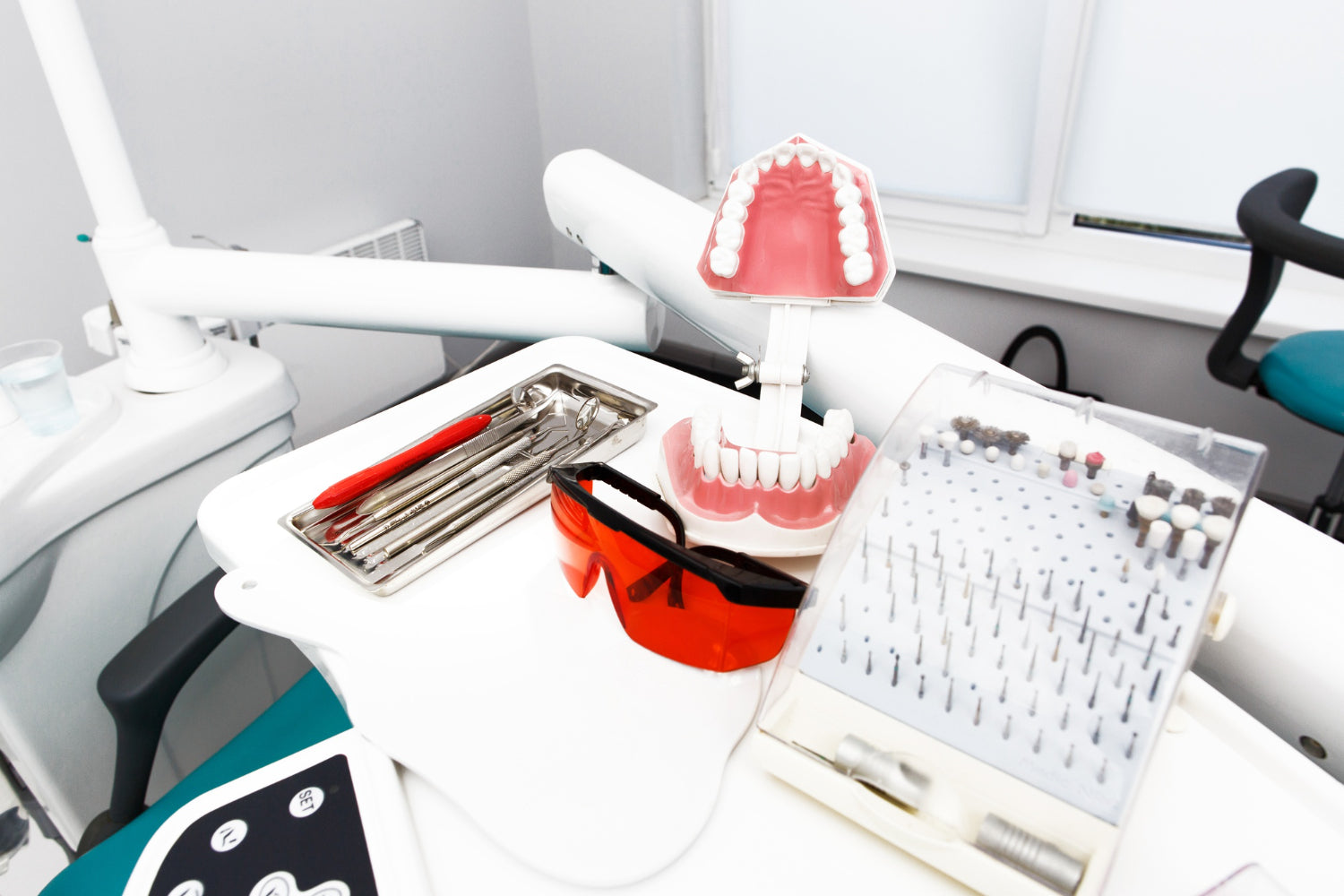
The quality of a dental restoration is determined before any milling begins it is determined at the point of material selection. A crown milled from the wrong zirconia grade, a provisional fabricated from a poorly formulated PMMA disc, or a denture base produced from a material with inadequate biocompatibility documentation will create clinical problems that no amount of skill at the bench can fully correct. Material selection is the highest-leverage decision in any dental lab production workflow.
Modern dental labs work with a wider range of materials than at any previous point in the industry's history. CAD/CAM technology has enabled precision fabrication from materials that were either impractical or inaccessible to lab workflows a decade ago. Understanding what each material does, where it performs best, and where its limits are is the foundation of producing consistent, predictable clinical outcomes at production volume.
1. Zirconia The Dominant CAD/CAM Ceramic
Zirconia is the defining material of the modern dental lab. No other material combines clinical-grade strength, long-term biocompatibility, esthetic versatility, and CAD/CAM machinability in the way that zirconia does. It has displaced porcelain-fused-to-metal as the default choice for crowns and bridges and is now the standard for implant-supported restorations, full-arch fixed prostheses, and any application where long-term mechanical performance is the clinical priority.
The material's dominance is not based on a single property but on a combination that no competitor matches: flexural strength of 500–1200+ MPa depending on grade, chemical inertness in oral environments, ISO 6872 biocompatibility, and an optical character that can be formulated — through yttria content manipulation — to deliver anything from opaque high-strength posterior material to translucent anterior esthetic grades that closely approximate natural enamel.
Sourcing quality dental lab materials from a reliable US-based supplier is the first step in building a zirconia workflow that delivers consistent clinical results. Batch documentation, sintering profile support, and verified shade consistency across orders are non-negotiable when zirconia is your primary production material.
Zirconia grades every lab should understand:
3Y-TZP (3 mol% yttria): Predominantly tetragonal crystal phase. Flexural strength 900–1200+ MPa. The correct choice for posterior bridges of 3+ units, high-load posterior single crowns, and implant-supported posterior frameworks. Moderate translucency — requires staining for anterior esthetic applications. The zirconia blocks dental labs specify for posterior structural work are almost universally 3Y-TZP, because no other grade reliably meets the structural demands of multi-unit posterior spans under full occlusal loading.
4Y zirconia (4 mol% yttria): Mixed tetragonal-cubic microstructure. Flexural strength 600–800 MPa. The most versatile daily-use grade adequate strength for anterior crowns and short-span bridges, with meaningfully higher translucency than 3Y. Pre-shaded multilayer 4Y formats are the default production standard for anterior crown volume in high-throughput labs because they eliminate post-sintering staining on standard A-D shade cases.
5Y zirconia (5 mol% yttria): Predominantly cubic crystal phase. Flexural strength 500–650 MPa. Maximum translucency the optical behavior closest to natural enamel in the zirconia family. The correct choice for anterior single crowns and veneers where shade matching to highly translucent natural dentition is the overriding clinical priority. Not suitable for posterior bridges.
When evaluating zirconia dental blanks for anterior esthetic work, the format decision — white unshaded vs. pre-shaded, monolithic vs. multilayer — is as important as the grade decision. White blanks give full manual shade control for complex custom cases. Pre-shaded multilayer blanks deliver reproducible results on standard cases without the staining step, reducing bench time significantly at production volume.
| Zirconia Grade | Strength | Best For | Limitation |
|---|---|---|---|
| 3Y-TZP | 900–1200 MPa | Posterior bridges, high-load crowns | Moderate translucency |
| 4Y multilayer | 600–800 MPa | Daily anterior/premolar production | Not for 4+ unit posterior bridges |
| 5Y high-translucency | 500–650 MPa | Anterior esthetic priority cases | Not for posterior bridges |
2. PMMA — The Temporary and Removable Restoration Standard
PMMA (polymethyl methacrylate) is the second most important material in a modern dental lab's inventory. It handles everything temporary and removable — provisional crowns and bridges, full and partial denture bases, occlusal splints, night guards, and clear orthodontic appliances. No other material class matches PMMA's combination of machinability, biocompatibility, repairability, and cost efficiency for these applications.
The distinction between modern CAD/CAM PMMA and conventional bench-mixed acrylic is significant and clinically important. CAD/CAM PMMA discs are pre-polymerized under industrial conditions high pressure (50–200 bar) and elevated temperature producing a material with near-zero porosity, residual monomer below 0.5% (well within ISO 20795-1 biocompatibility thresholds), and consistent mechanical properties throughout the disc. Conventional bench-mixed acrylic cannot match any of these properties, which is why it has been displaced in labs running digital workflows.
Key PMMA formats for dental lab production:
Multilayer PMMA — Pre-shaded with a dentine-to-incisal gradient. The standard format for anterior temporary crowns and bridge provisionals. Eliminates post-milling staining on standard A-D shade cases. Reduces finishing time per unit significantly at production volume.
Denture base PMMA — Pigmented to simulate gingival tissue tones. Engineered for full and partial denture bases biocompatibility, dimensional stability, and polishability are the priority properties. Not interchangeable with crown and bridge PMMA.
Clear PMMA — Formulated for maximum optical clarity. Used in occlusal splints, night guards, orthodontic retainers, and clear appliances where transparency is the functional requirement.
PMMA's clinical role is explicitly temporary. At 80–120 MPa flexural strength, it is not a replacement for zirconia in permanent fixed restorations. Its value is in the provisional phase — protecting the prepared tooth, previewing esthetic outcomes, and giving the patient time to evaluate shape and function before the permanent restoration is placed.
3. Lithium Disilicate (IPS e.max)
Lithium disilicate marketed primarily as IPS e.max by Ivoclar — occupies a specific niche in the dental lab material ecosystem: single-unit anterior crowns and veneers where maximum esthetic integration is the clinical priority and occlusal load is not heavy.
The material delivers approximately 400 MPa flexural strength with excellent translucency and a bond-to-tooth-structure characteristic that makes it particularly suitable for minimally invasive preparation protocols. In cases where the preparation is thin and bonding to enamel provides meaningful support to the restoration, lithium disilicate has a genuine clinical advantage over zirconia which relies primarily on cementation rather than bonding for retention.
The material is available in both pressable (hot-press) and CAD/CAM millable formats. The CAD/CAM format (e.max CAD) mills from a partially crystallized blue block, then undergoes a crystallization firing that produces the final translucency and strength. The pressable format is used in labs with press furnaces for layering and pressed restorations.
Where lithium disilicate falls short: it should not be used for posterior bridges of 3 or more units, for high-load posterior single crowns in patients with bruxism, or for any application where flexural strength below 500 MPa creates fracture risk. For those indications, 3Y or 4Y zirconia is the correct choice.
4. Titanium — The Implant Framework Standard
Titanium is the foundational material for dental implant components implant fixtures, abutments, and implant-supported framework bars. Its clinical dominance in implant dentistry traces to three properties: exceptional biocompatibility with osseointegration support, high strength-to-weight ratio, and corrosion resistance in oral environments.
Grade 4 commercially pure titanium and Grade 5 titanium alloy (Ti-6Al-4V) are the two most commonly used implant-grade titanium classifications. Grade 5 alloy is stronger and preferred for framework applications where structural demands are highest. Grade 4 is used in components where maximum biocompatibility is the priority.
In modern dental labs, titanium appears primarily in two contexts: pre-fabricated implant abutments and components supplied by the implant manufacturer, and CAD/CAM-milled titanium frameworks for implant-supported full-arch prostheses. The full-arch titanium bar framework milled from a solid titanium disc is the structural backbone of screw-retained full-arch zirconia prostheses, where its combination of strength, precise milling accuracy, and osseointegration compatibility makes it the correct choice for the substructure.
5. Porcelain and Feldspathic Ceramic — The Layering Material
Feldspathic porcelain remains in use in modern dental labs as a layering material applied over zirconia or metal substructures to add surface esthetic detail, characterization, and occlusal anatomy. In fully monolithic zirconia workflows which represent the majority of modern crown and bridge production feldspathic layering is largely unnecessary because the zirconia itself provides the esthetic outcome. But in cases requiring maximum anterior esthetic precision, selective porcelain layering over a zirconia coping remains the highest esthetic workflow available.
The material's primary limitation is its flexural strength of 60–100 MPa far below zirconia which makes chipping risk the central clinical challenge in porcelain-layered zirconia restorations. This is why monolithic zirconia has displaced layered porcelain-on-zirconia in most lab workflows: eliminating the layering step eliminates the chipping risk entirely, while modern translucent zirconia grades deliver esthetic results that approach the quality of layered porcelain.
6. Composite Resin — The Direct and CAD/CAM Indirect Material
Composite resin in the dental lab context means primarily CAD/CAM composite blocks used for milled indirect restorations inlays, onlays, veneers, and single-unit crowns. These differ significantly from chairside direct composite in their degree of polymerization: CAD/CAM composite blocks are fully or near-fully pre-polymerized under controlled conditions, producing superior mechanical properties compared to chairside-cured composite.
Hybrid composite ceramics materials that blend composite polymer matrix with ceramic fillers represent the most advanced formulations in this category. They deliver flexural strength of 150–200 MPa, improved machinability compared to glass ceramics, and a degree of esthetic flexibility that makes them useful for thin veneers and minimally invasive indirect restorations.
The primary advantage of composite over full ceramic or zirconia in specific applications is its lower hardness — it wears at a rate closer to natural tooth enamel than zirconia does, which is clinically relevant in patients where wear matching between the restoration and opposing dentition is a concern.
7. Dental Zirconia Discs — Format Matters as Much as Material
Understanding zirconia as a material is only half the production decision. The disc format diameter, thickness, shade format, and architecture determines how that material performs in an actual milling workflow. A high-quality 5Y zirconia in the wrong disc format, mounted incorrectly in the milling chuck, produces a worse clinical result than a mid-range 4Y disc used correctly.
The full range of available to US labs today covers standard 98 mm diameter formats in thicknesses from 10 mm to 20 mm, in white unshaded, single-shade pre-shaded, and multilayer pre-shaded configurations, across 3Y, 4Y, and 5Y grade designations. The combinations are not interchangeable — each combination of grade, thickness, shade format, and architecture serves a specific indication range.
Standard 98 mm disc — the production format. Compatible with all major open-system mills. The format used for the significant majority of crown, bridge, and framework production in full-service dental labs.
Thickness selection. 10–12 mm for anterior single units and short-span bridges. 14–16 mm for posterior single units with adequate occlusal clearance. 18–20 mm for full-contour posterior cases with maximum material reserve or full-arch framework applications.
White vs. pre-shaded. White for custom characterization and unusual shade cases. Pre-shaded for standard A-D shade daily production — eliminates the staining step on the majority of cases.
Multilayer vs. monolithic. Multilayer for anterior esthetic cases where the gradient architecture delivers natural shade gradation from cervical to incisal. Monolithic for posterior structural cases where uniform composition through the disc is the priority.
8. Wax and Resin Diagnostic and Casting Materials
Dental waxes and resins remain in use in specific lab applications despite the widespread adoption of digital workflows. Casting wax is used in traditional lost-wax casting workflows for metal frameworks, clasps, and partial denture components. Bite registration wax provides a physical record of occlusal relationships for cases where digital bite registration is not available.
In modern labs running primarily digital workflows, wax has been largely displaced by CAD/CAM design software for framework planning and diagnostic wax-up simulation. However, for labs that produce metal partial dentures, precision attachments, and cast metal components, wax-working skills and quality wax materials remain part of the production toolkit.
3D printing resins have entered this space as a partial replacement photopolymer resins used in dental 3D printers can produce diagnostic models, surgical guides, temporary crowns, occlusal splints, and try-in restorations with accuracy that approaches or matches milled PMMA for many applications at lower material and tooling cost.
9. Glass Ionomer and Resin-Modified Glass Ionomer
Glass ionomer cement occupies a specific and limited role in dental lab production primarily as a luting cement for definitive cementation of crown and bridge restorations and as a base or liner material in restorative workflows. Its clinical value lies in its chemical adhesion to tooth structure (no separate bonding agent required), fluoride release, and coefficient of thermal expansion close to that of natural tooth structure.
Resin-modified glass ionomer adds a resin component that improves mechanical properties and reduces moisture sensitivity during setting. For luting zirconia or metal-ceramic restorations where bonding is not the primary retention mechanism, resin-modified glass ionomer is a clinically appropriate and technically simpler cementation choice than adhesive resin cement systems.
10. Metal Alloys Still Present in Specific Applications
Metal alloys have been substantially displaced in modern dental lab production by zirconia, lithium disilicate, and other ceramics for crown and bridge work. However, they remain in use in specific applications where no other material provides equivalent clinical performance.
Cobalt-chromium alloy is the standard for removable partial denture frameworks, precision attachments, and implant-supported bar frameworks where thin cross-sections must carry significant structural load. Its combination of high strength (yield strength 500–600 MPa), excellent castability, and established clinical track record makes it the default choice for metal removable frameworks.
Precious metal alloys (gold-based, high-noble, noble) are still used in specific clinical scenarios typically in practices where the clinician or patient specifies metal substructures for full-coverage restorations, or in posterior areas where maximum ductility and minimal preparation depth are prioritized.
How to Evaluate a Zirconia Materials Distributor in the USA
For US dental labs, the sourcing relationship matters as much as the product. A zirconia materials distributor USA relationship should deliver more than a transaction it should deliver consistent batch documentation, reliable inventory without international lead times, verified shade consistency across orders, and technical support for sintering profiles and milling parameters.
The criteria for evaluating a distributor:
US inventory. Not drop-shipped from overseas. Not subject to international lead times or import variability. In-stock product that ships same day or next day means production schedules are not held hostage to shipping uncertainty.
Batch documentation. Every order should include or provide access to batch certificates documenting shade specification, mechanical property verification, and biocompatibility compliance. Labs that track quality across orders need this data to identify material drift before it reaches clinical production.
Product range depth. A distributor that stocks only one or two products in each category forces labs to manage multiple supplier relationships. A distributor covering zirconia across grades (3Y, 4Y, 5Y), formats (white, pre-shaded, multilayer), thicknesses, and brands alongside PMMA, stain and glaze, and CAD/CAM accessories enables consolidated ordering that reduces overhead.
Technical support. Labs switching to a new zirconia product need sintering profile guidance, milling parameter recommendations, and access to someone who understands the material technically not just a fulfillment operation.
Why Material Selection Compounds Across Every Case?
Every material decision made at the procurement level multiplies across the entire production schedule. A multilayer zirconia disc that eliminates staining on 80% of anterior cases reduces finishing labor cost by that percentage on every one of those cases. A PMMA formulation that polishes in 12 minutes instead of 25 delivers that time saving on every denture in the production run. A zirconia blank that maintains shade specification across batches prevents the shade-drift remakes that disrupt scheduling and consume material cost.
The inverse is equally true. Poor batch consistency in zirconia blocks causes shade-matching variability that forces labs to re-evaluate every case instead of trusting a standard. Low-quality PMMA that machines with fibrous, rough surfaces adds manual polishing time to every unit. Materials without biocompatibility documentation expose labs to liability in cases involving sensitive patients.
Dental zirconia selection is not a single decision it is a procurement policy. The policy you set determines the quality floor for every restoration your lab produces until you change it.
Modern dental labs operate with a material toolkit that has no historical precedent in the industry. The combination of CAD/CAM technology with materials like multilayer zirconia, pre-polymerized PMMA, and lithium disilicate has made it possible to produce restorations of consistently higher quality, more predictably, and at greater production volume than any previous generation of lab technology allowed.
The labs that consistently produce the best clinical outcomes are not necessarily the ones with the most advanced equipment they are the ones who understand their materials at a level that enables correct selection, correct processing, and correct quality evaluation. That understanding starts with knowing what each material does, where its performance limits are, and how to source it from a supply chain that delivers consistency rather than variability.


