

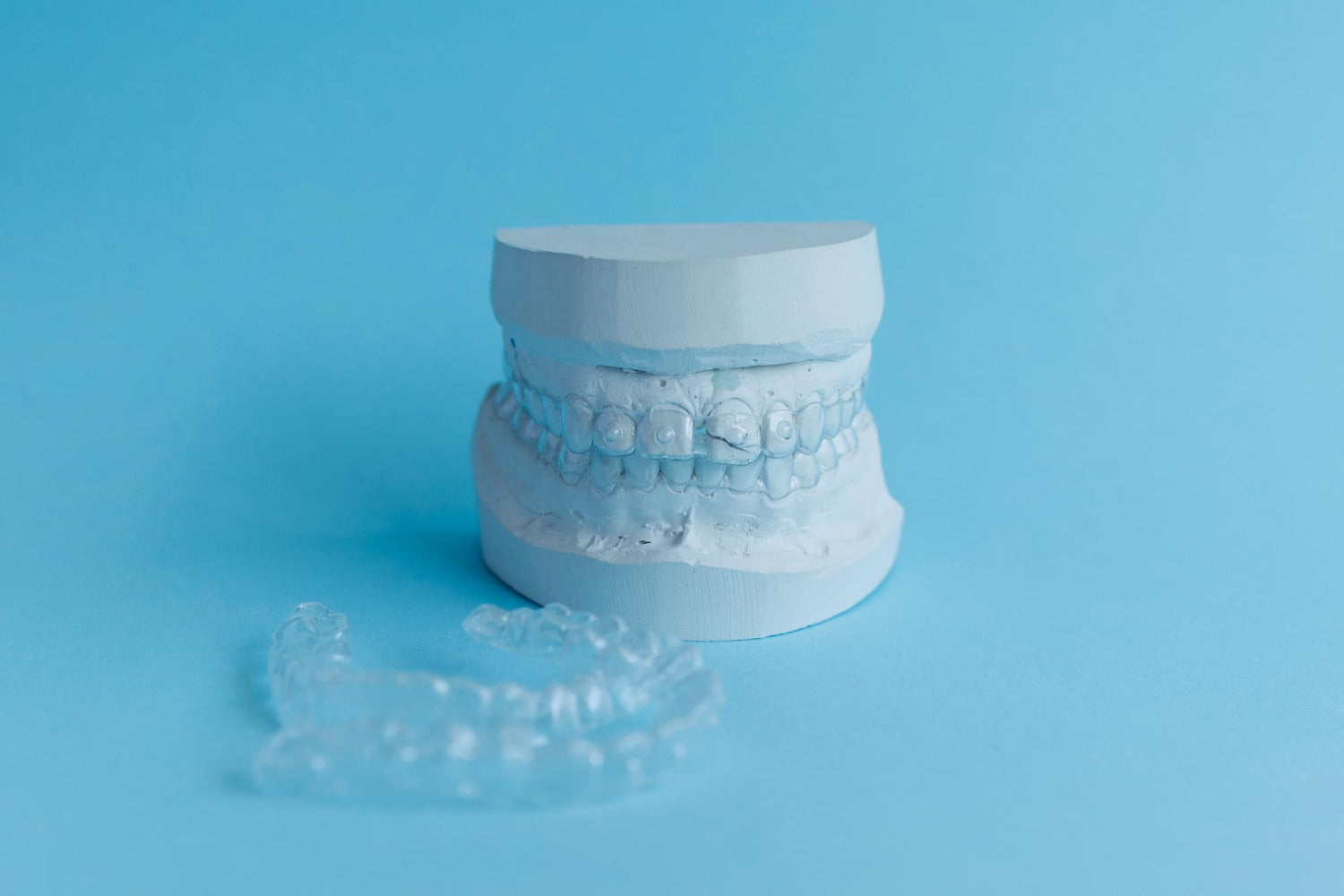
Sports-related dental injuries account for a significant proportion of emergency dental presentations estimates suggest between 13 and 39% of dental trauma is sports-related, with the majority occurring in contact and collision sports where mouth protection is either absent or inadequate. A well-fitted, correctly specified custom sports mouth guard is one of the most effective preventive interventions available in dental practice.
Most guides on this topic are written for athletes or parents making purchasing decisions. This one is written for dental labs and clinicians who fabricate and prescribe mouth guards covering the fabrication materials, protection levels, digital workflow options, and resin selection decisions that determine whether the guard actually does its job.
Why Custom Mouth Guards Outperform Over-the-Counter Options?
The clinical superiority of custom-fabricated mouth guards over stock and boil-and-bite alternatives is well-established. Custom guards provide better retention, more even force distribution, and greater labial thickness all of which directly affect their ability to absorb and dissipate impact forces before they reach the teeth, periodontal structures, and temporomandibular joint.
Stock guards come in predetermined sizes and typically fit poorly the patient must hold them in place by biting down, which restricts breathing, impairs communication, and reduces compliance. A guard that isn't worn provides no protection. Boil-and-bite guards produce a closer fit but lack the controlled thickness and material consistency of a lab-fabricated appliance. Neither achieves the marginal seal, occlusal coverage, and labial thickness that a properly made custom guard delivers.
From a lab perspective, this distinction is the clinical argument for offering custom sports guard fabrication as a service. The fabrication workflow is straightforward, the materials are well-established, and the clinical outcome difference is significant enough that it's a defensible recommendation for any patient engaged in contact or collision sports.
The Three Factors That Determine the Right Mouth Guard Specification
Choosing the right custom mouth guard for a patient isn't a single decision it's three: sport type, impact level, and patient-specific factors. Getting all three right is what separates a guard that works clinically from one that technically fits but fails under the loads it's designed for.
Sport type and impact pattern
Different sports create different dental injury patterns, and mouth guard specifications should reflect this. Contact sports football, rugby, ice hockey, lacrosse involve high-velocity impacts from players, equipment, or surfaces. These require guards with substantial labial and occlusal thickness, typically 4–5mm, to distribute and absorb force across the arch.
Combat sports boxing, MMA, wrestling, judo involve intentional, repeated impacts to the face and jaw. Guards for combat sport athletes must maintain structural integrity under repeated loading. Multi-layer guard construction with reinforced zones is the standard approach.
Lower-contact sports basketball, soccer, cycling, skateboarding involve incidental rather than intentional impacts, typically from falls or accidental collisions. A 3–3.5mm guard with good retention is usually adequate, and the thinner profile matters for compliance athletes who find a guard too bulky simply don't wear it.
Impact level and guard thickness
Guard thickness is the primary variable that determines protection level. Published research shows that labial thickness of at least 3mm is the minimum for meaningful impact attenuation, with 4–5mm providing substantially better force reduction for high-impact applications.
| Sport Category | Recommended Thickness | Construction | Examples |
|---|---|---|---|
| Low-contact recreational | 3mm | Single layer | Cycling, skateboarding, volleyball |
| Contact sports | 3.5–4mm | Dual layer, soft/hard | Soccer, basketball, field hockey |
| High-contact sports | 4–5mm | Multi-layer with reinforcement | Rugby, football, ice hockey |
| Combat sports | 5mm+ | Multi-layer, full coverage | Boxing, MMA, wrestling |
Patient-specific factors
Several patient factors modify the standard specification. Athletes with orthodontic appliances require a guard that accommodates brackets and archwires without pressure points, and that can be adjusted as tooth movement progresses.
Athletes with existing implant restorations or Aidite zirconia crowns and bridges need a guard that protects the restorative work alongside natural dentition. While zirconia is highly fracture-resistant under occlusal loading, direct lateral impact from sports contact is a different load vector entirely one that a custom guard addresses regardless of what the underlying restoration is made from. Patients with TMJ dysfunction or bruxism present a dual indication where both a sports guard and night guard may be clinically needed, and distinguishing between them in the prescription matters for material selection.
Fabrication Methods: Thermoforming vs. 3D Printing
Two fabrication methods are in routine use for custom sports mouth guards: vacuum-forming/pressure-forming (thermoforming) and 3D printing.
Thermoformed mouth guards
Thermoforming is the established method a thermoplastic blank (most commonly EVA, ethylene-vinyl acetate) is heated and formed under vacuum or pressure directly over the patient's stone model. Multiple layers can be built up sequentially to achieve the target thickness. The advantages are simplicity and familiarity most labs with a vacuum-forming unit can produce thermoformed guards without capital investment.
3D-printed mouth guards
3D printing produces mouth guards directly from a digital scan, eliminating stone models and manual forming steps. The dimensional accuracy of a well-calibrated DLP or SLA printer produces consistent wall thickness across the arch a clinical improvement over thermoforming where labial thickness can vary with technique.
Material selection matters critically in printed guards. The sport guard dental resin from Keystone the KeyGuard Sportguard resin available through Zirconia Guys is an FDA-cleared, biocompatible photopolymer designed specifically for custom sports guard fabrication. It combines the impact resistance and flexibility needed for sports protection with the biocompatibility and dimensional stability required for a long-term intraoral appliance. Unlike general-purpose resins adapted for guard use, a purpose-formulated sport guard resin is validated for this specific application important both clinically and for regulatory compliance.
Resin Selection for 3D-Printed Sports Guards: What Matters
Key specifications to evaluate when selecting a sport guard dental resin:
Flexural strength and modulus
A guard resin needs adequate flexural strength to maintain its form under repeated loading, but not so high a modulus that it becomes brittle the material needs to absorb energy, not simply resist it. Most well-formulated sport guard resins target 80–120 MPa flexural strength with controlled elasticity.
Impact resistance
Charpy or Izod impact resistance values in the product datasheet indicate how the material performs under sudden load. Higher values indicate better energy absorption before fracture.
Biocompatibility and regulatory status
FDA 510(k) clearance for intraoral use is the minimum regulatory requirement for any resin used in sports guard fabrication in the US market. Verify the specific clearance covers sports guard fabrication clearance for one application does not automatically extend to others.
Post-processing requirements
Sport guard resins require washing and post-curing after printing. Adequate post-curing is critical an undercured guard is softer, more permeable, and more prone to early wear than a properly cured equivalent.
The Complete Digital Workflow for Custom Sports Guards
In a fully digital lab, the custom sports guard workflow runs scan-to-delivery without stone models or manual forming steps. The workflow: digital intraoral scan → design software → digital guard design with controlled wall thickness → export for 3D printing → print in validated sport guard resin → wash → post-cure → finish and deliver. Total bench time is typically 90–120 minutes including print and cure time.
Labs that have transitioned to digital guard fabrication report better consistency, easier design modification for reorders, and the ability to batch multiple guards per print cycle — which compounds efficiency for practices with team athletes requiring multiple guards simultaneously.
Where Sports Guards Fit in the Complete Dental Lab Workflow?
For dental labs running a complete digital workflow permanent restorations milled from UPCERA zirconia dental zirconia discs, temporary work in PMMA, and appliances in specialised resins sports guards represent a natural extension of existing 3D printing capability. Labs already running a printer for surgical guides or splints can add sports guard fabrication with appropriate resin and design software configuration, without additional hardware investment.
From a dental lab material supplier perspective, the complete inventory dental zirconia multilayer discs and zirconium dental blocks for permanent restorations, PMMA for temporaries, sport guard dental resin for protective appliances should ideally come from a supplier who can provide technical support across all categories. Zirconia Guys supplies both zirconia and specialist dental lab materials to labs across North America, covering the full production scope of a modern digital lab. Get in touch with the team to discuss which materials suit your lab's case mix and equipment.


