

Blogs
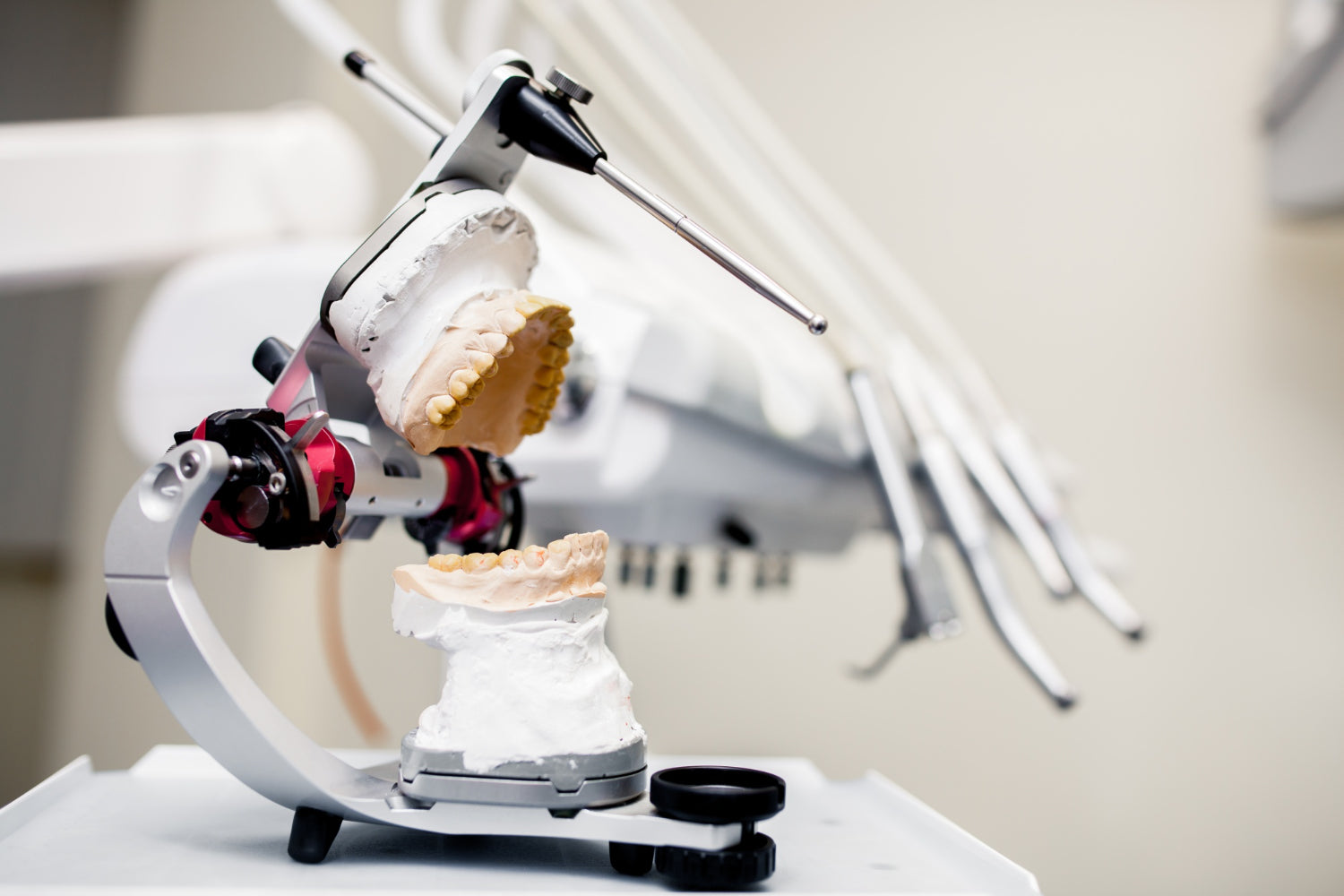

Why High-Strength PMMA Blocks Are Used for Temporary Restorations?
A temporary restoration has a specific job: protect the prepared tooth or implant site, maintain occlusion, preserve aesthetics, and condition the soft tissue emergence profile all while the permanent restoration is being fabricated or while an implant integrates with bone. It's a functional role that can span a few days or several months, and the material it's made from needs to be appropriate to that role. High-strength PMMA blocks have become the standard for milled temporary restorations in digital dental labs because they serve that role better than the alternatives not because they're the strongest material available, but because their combination of properties fits the clinical requirement precisely. This guide explains why, with the technical context that sourcing and clinical decisions need to be grounded in. For labs specifying PMMA teeth and temporary restorations alongside dental zirconia permanent cases, the distinction between what PMMA does and what zirconia does is the most important framework to understand. What "high-strength" means for PMMA blocks and what it doesn't? The term "high-strength" in PMMA blocks refers to the improvement in mechanical properties achieved by milling from industrially pre-polymerised blanks rather than processing conventional powder-liquid acrylic. It does not mean the material approaches the strength of ceramic or zirconia and understanding that distinction prevents misspecification. Industrial-grade milled PMMA blocks achieve flexural strength of 80–120 MPa, with lower variance and better consistency than conventionally processed acrylic. That strength range is adequate for: Temporary crowns and bridges worn days to weeks while a permanent restoration is fabricated Implant temporaries worn during osseointegration (3–6 months) Long-term provisionals in complex full-mouth rehabilitation cases Diagnostic wax-up equivalents for patient evaluation It is not adequate for permanent posterior crowns, bruxism patients under heavy parafunctional load, or any case where the restoration is expected to function permanently without replacement. For those cases, dental zirconia in zirconia blocks or dental zirconia discs is the correct specification. The two materials are complementary, not interchangeable. Why milled PMMA blocks outperform conventional acrylic for temporaries? Most labs running digital workflows have already made the switch from conventional acrylic temporaries to milled PMMA, but it's worth being explicit about why particularly for labs evaluating the transition. Residual monomer is substantially lower. Conventional powder-liquid acrylic retains residual methyl methacrylate monomer from incomplete polymerisation. Residual monomer leaches into the oral environment and is the primary cause of tissue sensitivity reactions associated with acrylic temporaries. Industrial PMMA blocks are fully polymerised before machining the monomer has already reacted, and there is essentially none left to leach. For implant temporaries placed adjacent to healing tissue, this is a meaningful clinical advantage. Porosity is significantly reduced. Conventionally processed acrylic develops microporosity during the polymerisation and curing process. This porosity provides sites for bacterial colonisation and stain absorption. Milled PMMA from dense industrial blanks has a non-porous, smooth surface that resists both directly relevant for temporaries placed adjacent to soft tissue during a healing period where microbial load management matters. Dimensional accuracy is better. Conventional acrylic processing introduces polymerisation shrinkage that complicates fit. The restoration has to be adjusted chairside to compensate. Milled PMMA is cut from a dimensionally stable blank to CAD specifications the restoration comes off the machine at the intended dimensions. Initial fit is better, chairside adjustment time is lower, and the tissue-conditioning profile of an implant temporary is more precisely maintained. Mechanical consistency is higher. Conventional processing produces variation in polymerisation completeness across the restoration. Pre-polymerised PMMA blocks have homogeneous properties throughout the flexural strength measured at any point across the blank is consistent. That consistency translates to more predictable clinical performance over the service life of the temporary. Why PMMA is chosen over zirconia for temporary restorations? The question of why labs use PMMA instead of zirconia for temporaries has a simple answer: the clinical role of a temporary restoration doesn't require zirconia's properties, and zirconia's properties are actually disadvantageous for a temporary. Adjustability. A sintered dental zirconia crown whether milled from zirconia blocks dental labs run for permanent work or from dental zirconia discs cannot be meaningfully adjusted chairside. It can be spot-ground to a limited degree, but the hardness that makes zirconia clinically valuable as a permanent material makes it impractical for a temporary that needs to be modified as tissue heals, as the patient's bite settles, or as the clinician refines the emergence profile of an implant case. PMMA trims and polishes with standard chairside instruments in minutes. Cost proportionality. A permanent zirconia crown from a zirconia blank is designed for 10–15 years of clinical service. A temporary restoration is designed to be replaced after weeks or months. Specifying a permanent-grade dental zirconia material for a case that will be followed by a permanent restoration uses a high-cost material for a temporary purpose. PMMA at significantly lower cost per unit than any zirconia dental material is economically correct for the clinical role. Shock absorption during healing. PMMA's lower stiffness compared to sintered zirconia dental blanks provides a degree of force dampening during the osseointegration period. While occlusal design is the primary protection for a healing implant, the material's compliance contributes to a more forgiving mechanical environment during the period of greatest vulnerability. Turnaround speed. PMMA mills in a fraction of the time required for zirconia, with no sintering step. A temporary crown can be designed, milled, finished, and delivered in a single clinical session. Dental zirconia even with fast-fire sintering requires a furnace cycle of at least 90 minutes. For same-day temporary delivery, PMMA is the practical choice. Clinical applications that require high-strength PMMA blocks specifically Implant temporization during osseointegration The clinical case for high-quality PMMA blocks is strongest in implant temporization. During the three-to-six-month osseointegration period, the temporary crown worn by the patient actively shapes the soft tissue emergence profile that the permanent crown will inherit. A poorly fitting or incorrectly contoured temporary creates a soft tissue environment that complicates the permanent restoration tissue that hasn't been correctly conditioned requires additional procedures to correct. A milled PMMA temporary from a digital design file replicates the planned permanent restoration geometry precisely. The soft tissue emergence, interproximal contacts, and occlusal design established by the temporary are the same as what the permanent dental zirconia restoration will occupy. This eliminates one of the most common sources of difficulty at permanent crown delivery: a tissue environment that doesn't match the planned restoration because the temporary was made differently. Full-mouth rehabilitation provisionals Complex full-arch cases whether implant-supported or tooth-supported often require long-term provisionals while the occlusal scheme is verified and the patient adapts to the new vertical dimension. These provisionals can be worn for months. High-strength PMMA blocks provide the durability needed for extended provisional service, and the material can be repaired or modified in the lab if changes are needed during the verification period. Anterior aesthetic provisionals For anterior cases where the temporary will be worn in a visible position for weeks or months, single-shade PMMA looks flat next to natural teeth. Multilayer PMMA blocks address this by building a colour gradient into the blank itself the cervical is deeper and more saturated, the incisal lighter and more translucent. The result is an anterior temporary that satisfies patient expectations during the provisional period without requiring additional chairside characterisation work. The temporary crowns Aidite PMMA multilayer disc is designed for exactly this indication pre-shaded across standard VITA shades with a gradient built in, milling on standard open-system CAD/CAM platforms. Denture try-ins and diagnostic bases Before committing to a final milled denture base, many complete denture workflows include a diagnostic trial a full-contour PMMA try-in that allows the clinician and patient to verify aesthetics, occlusion, and phonetics in the mouth before the definitive prosthesis is processed. High-strength PMMA blocks produce these try-ins accurately from a digital design, and the same blank type used for the try-in can transition directly to the final denture base in the same workflow. The Aidite Denture Base PMMA covers this application a high-density milling disc formulated for denture base workflows with consistent gingival shade matching across batches. Choosing the right PMMA block: key specifications to evaluate Not all PMMA blocks in the dental lab materials market perform consistently. The specifications that matter most for clinical reliability are: Flexural strength. The meaningful range for a temporary restoration is 80–120 MPa. Within that range, variance across the blank is more important than the peak figure a block with consistent 90 MPa throughout is more clinically reliable than one with a peak of 120 MPa and significant variation. Ask for batch data, not just headline specs. Residual monomer content. For any PMMA in contact with oral tissue particularly implant temporaries adjacent to healing bone and mucosa residual monomer should be as low as possible. Industrial-grade pre-polymerised blanks from established manufacturers meet this requirement. Cheaper blanks may not disclose residual monomer data. Shade stability across batches. Pre-shaded PMMA should produce the same shade outcome after milling on batch 50 as it did on batch 1. Shade drift between deliveries forces labs to reverify every new shipment eliminating the efficiency benefit of pre-shaded material. CAD/CAM compatibility. PMMA blocks need to fit the milling system's chuck dimensions and match the cutting parameters for carbide tooling. All Aidite PMMA products are open-system compatible with major platforms including Roland, vhf, and Imes-icore the same platforms most labs already use for their dental zirconia discs and zirconia blocks dental workflows. How PMMA blocks fit into the complete digital lab workflow? In a complete digital dental lab, PMMA and dental zirconia operate in sequence: PMMA for temporaries and diagnostic work, zirconia dental blanks for the permanent restorations that follow. The two materials run on the same CAD/CAM equipment, from the same digital design files, requiring only a material and tooling change between temporary and permanent production runs. Labs that have integrated this workflow report cleaner handoffs between provisional and permanent phases, fewer surprises at permanent crown delivery, and less chairside adjustment time overall. The PMMA temporary establishes and verifies the clinical parameters; the dental zirconia permanent restoration inherits an environment that's been correctly prepared. Zirconia Guys stocks the complete Aidite PMMA range multilayer, denture base, and clear variants alongside Aidite and UPCERA dental zirconia in blocks and disc formats, covering the full digital workflow from provisional to permanent from a single dental lab material supplier. Get in touch with the team to discuss which PMMA formats and zirconia dental materials suit your milling system and case mix.
Learn more
PMMA Dental Prosthetics: Benefits and Considerations
Polymethyl methacrylate has been a foundational dental prosthetics material since the 1940s introduced as a replacement for vulcanite rubber denture bases, it quickly became the standard because it offered biocompatibility, processability, and acceptable aesthetics in a single material. In the decades since, every major shift in dental technology has been accompanied by an updated role for PMMA: from conventional heat-cured processing to CAD/CAM milling to 3D printing. The material has adapted rather than been replaced, and for good clinical reason. This guide covers what makes PMMA dental prosthetics clinically valuable its genuine benefits, the applications where it performs best, the considerations that limit its use, and how it integrates with dental zirconia and other dental lab materials in a complete digital workflow. For labs and clinicians specifying PMMA teeth and prosthetics, this is the practical context that sourcing decisions need to be grounded in. What makes PMMA well-suited for dental prosthetics? PMMA's sustained presence in dental prosthetics isn't inertia it reflects a genuine fit between the material's properties and the clinical demands of the applications it covers. Published prosthodontic research identifies five properties as the foundation of PMMA's clinical utility: Low density.PMMA is considerably lighter than ceramic, metal, or composite alternatives. For full-arch dentures where the patient wears the prosthesis continuously the weight difference directly affects comfort, retention, and the muscular effort required for daily use. A full upper denture in milled PMMA is noticeably more comfortable to wear than a heavier alternative, and patient-reported satisfaction with denture weight is consistently linked to prosthesis retention. Aesthetic quality.PMMA's optical properties allow it to be manufactured in shades that closely replicate tooth enamel and gingival tissue. In multilayer formats, the colour gradient built into the blank produces natural-looking PMMA teeth and denture bases without extensive manual characterisation. For prosthetics that patients wear visibly and interact with socially, this aesthetic competence is clinically essential. Biocompatibility.Properly polymerised PMMA is well-tolerated by oral mucosa. Residual monomer in incompletely processed conventional acrylic can cause tissue sensitivity, but milled PMMA from pre-polymerised industrial blanks where polymerisation is complete before the blank is machined essentially eliminates this concern. The residual monomer content of milled PMMA is substantially lower than conventionally processed acrylic. Ease of fabrication and adjustment.PMMA machines on standard CAD/CAM equipment, adjusts chairside with standard instruments, and repairs with additional acrylic. No sintering furnace, no press cycle, no specialist equipment beyond what a modern digital lab already owns. That fabrication simplicity translates directly into workflow efficiency and lower per-unit production cost. Cost-effectiveness.Across the dental lab materials spectrum, PMMA is one of the most economical options per unit of finished prosthetic surface. For applications where the material's mechanical limitations aren't clinically constraining temporaries, dentures, provisionals this cost profile makes PMMA the correct specification economically as well as clinically. Clinical applications: where PMMA prosthetics perform best Complete and partial dentures Full and partial dentures represent PMMA's longest-standing clinical role and remain the application where its properties align most comprehensively with the clinical requirement. The combination of low weight, gingival shade availability, adjustability, and reparability makes PMMA the standard denture base material in most labs globally. Milled PMMA denture bases from high-density industrial blanks offer meaningful improvements over conventionally processed acrylic: lower porosity, better dimensional accuracy, and more consistent mechanical properties across the base. Lower porosity reduces bacterial infiltration into the denture material over time an important hygiene consideration for patients who wear the prosthesis continuously. The Aidite Denture Base PMMA is formulated specifically for milled denture workflows a high-density disc producing dimensionally accurate bases with consistent gingival shade matching across batches. Temporary crowns and bridges PMMA temporary crowns and bridges cover two clinical scenarios: short-term temporaries placed for days or weeks while a permanent restoration is being fabricated, and longer-term implant temporaries worn during osseointegration. The clinical demands differ between these two uses, and the PMMA product specification should reflect that. Short-term temporaries can be fabricated from standard single-shade PMMA the aesthetic requirement is low, the duration is short, and chairside adjustability matters more than shade precision. Implant temporaries worn for three to six months require more attention: the right emergence profile to condition soft tissue, adequate strength for the healing period, and acceptable aesthetics particularly in anterior positions. Multilayer PMMA is the appropriate specification for visible anterior implant temporaries the colour gradient built into the blank produces a result that satisfies patient expectations without additional chairside characterisation. Anterior PMMA teeth for dentures and prosthetics PMMA teeth the individual tooth-shaped components set into denture bases are a distinct product category from PMMA denture bases. Pre-fabricated PMMA teeth offer shade-matched, anatomically accurate tooth forms that are bonded to the base material. In digital denture workflows, PMMA teeth can also be milled directly from multilayer blanks as part of the denture unit eliminating the separate tooth-setting step and producing a monolithic prosthesis with better interfacial bond strength. For labs producing milled anterior sections, the Aidite Multilayer PMMA disc covers both temporary crown and anterior denture tooth applications the gradient shading produces natural colour transitions from cervical to incisal in a single milling operation, appropriate for both aesthetic provisionals and visible anterior denture sections. Orthodontic appliances and splints PMMA's rigidity and dimensional stability make it suitable for removable orthodontic appliances, retainers, and occlusal splints where rigidity is the clinical requirement. It adjusts easily for activation and trimming, and the material's history in these applications is well-established across decades of clinical use. Benefits of milled PMMA over conventionally processed acrylic The transition from conventionally processed acrylic to milled PMMA from pre-polymerised blanks represents a genuine clinical improvement rather than a workflow preference. The differences are measurable: Residual monomer content — conventional acrylic processed in powder-liquid systems retains residual methyl methacrylate monomer that can leach into the oral environment. Milled PMMA from industrial blanks has essentially completed polymerisation before machining, substantially reducing residual monomer and the tissue sensitivity risk it carries. Porosity — conventionally processed acrylic develops microporosity during processing that provides sites for bacterial colonisation and stain absorption over time. Milled PMMA from dense industrial blanks has a non-porous surface that resists both relevant for dentures worn continuously and for temporaries in implant sites where soft tissue health is the priority. Dimensional accuracy — conventional heat-curing introduces processing shrinkage that affects fit. Milled PMMA is cut to CAD specifications from a dimensionally stable blank, producing restorations that fit the digital model accurately without the shrinkage compensation required for processed acrylic. Fewer chairside adjustments and better initial fit are consistent outcomes of the milled workflow. Mechanical consistency — milled PMMA has homogeneous mechanical properties throughout the blank, whereas conventionally processed acrylic can vary in polymerisation completeness and therefore in strength across the restoration. Flexural strength of properly milled industrial PMMA averages 80–120 MPa with lower variance than conventional processing. Key considerations: where PMMA has limitations Honest clinical use of PMMA requires understanding where its properties are insufficient as well as where they're appropriate. Flexural strength is not adequate for permanent posterior crowns.At 80–120 MPa, PMMA cannot withstand permanent posterior occlusal loading. Dental zirconia whether as zirconia blocks dental labs use for single units or dental zirconia discs for multi-unit production provides the 900–1,200 MPa needed for permanent posterior restorations. Using PMMA as a permanent crown material in posterior positions is a clinical error, not an economy. Wear resistance is lower than ceramic.PMMA abrades faster than zirconia dental blanks or lithium disilicate under occlusal contact. For temporary restorations this is acceptable the material is designed to be replaced. For long-term denture bases where the opposing dentition is ceramic, wear management through occlusal design is important. Long-term colour stability requires quality material.PMMA can absorb water and stain over time if the base material quality is poor. Industrial-grade milled PMMA from established manufacturers shows better colour stability than lower-grade alternatives, which is one of the strongest arguments for sourcing from a reliable dental lab material supplier rather than optimising purely on unit price. Temporary doesn't mean indefinite.Implant temporaries are designed for the osseointegration period typically three to six months. Extended wear beyond the clinical indication reduces both aesthetic and mechanical performance. Labs should communicate the intended service life in crown delivery documentation. PMMA prosthetics alongside dental zirconia: the complete workflow In a complete digital dental lab, PMMA and zirconia dental lab materials aren't alternatives they're sequential. PMMA handles the prosthetic and temporary phases: dentures, implant temporaries, diagnostic provisionals, orthodontic appliances. Dental zirconia in zirconia blocks for single units or dental zirconia discs for multi-unit production handles the permanent crown and bridge work that follows the provisional phase. Labs that run both from the same digital workflow same scan, same design file, different material at milling produce cleaner handoffs between temporary and permanent phases. The PMMA temporary establishes the occlusion and emergence profile; the zirconia dental restoration inherits a tissue environment that's been correctly conditioned. This sequencing produces better permanent restoration outcomes than skipping the PMMA provisional phase entirely. Zirconia Guys stocks the full Aidite PMMA rang multilayer discs, denture base PMMA, and clear variants alongside Aidite and UPCERA zirconia blanks and zirconia dental discs, covering the complete digital workflow from provisional to permanent from a single supplier. Get in touch with the team to discuss which PMMA products and zirconia grades suit your lab's case mix and milling system.
Learn more
Why Implant Patients May Need a Night Guard After Restoration?
Getting a dental implant is one of the most significant investments a patient can make in their oral health. The procedure takes months, the restoration takes precision, and the materials from the titanium post in the bone to the crown seated on top are chosen specifically to last. So when a patient gets their implant restored and walks out of the clinic, the expectation is simple: this should hold. For many patients, it does. But for a surprisingly large number particularly those who clench or grind their teeth at night the restoration remains at risk even after successful osseointegration. The culprit is bruxism, and the most effective clinical tool to protect against it is a well-fitted night guard. This is why an increasing number of dentists and prosthodontists are recommending occlusal protection as a standard part of implant aftercare, not just for patients who already know they grind, but for anyone whose bite history suggests parafunctional risk. Why Implants Are More Vulnerable Than Natural Teeth? Before understanding why night guards matter for implant patients specifically, it helps to understand what makes implants different from the natural dentition they replace. Natural teeth sit in the jawbone via the periodontal ligament a thin, flexible tissue that acts as a shock absorber between root and bone. When you bite down hard, the periodontal ligament compresses slightly, distributing force and providing the tooth with a degree of proprioceptive feedback. Your nervous system senses that force, and the jaw muscles modulate accordingly. Dental implants have no periodontal ligament. They integrate directly into bone a process called osseointegration which is what gives them their stability and longevity. But the trade-off is that there is no natural cushion between the crown and the bone. Force applied to an implant crown transfers directly to the bone-implant interface. In patients who grind or clench at night, this means the same forces that wear down enamel are instead concentrating at the junction between titanium post and jaw repeatedly, for hours at a time, while the patient is asleep and completely unaware. Clinical research supports this concern. A study published in the International Journal of Implant Dentistry found that parafunctional habits are a recognised risk factor for peri-implant bone loss and implant prosthesis fracture. The forces generated during nocturnal grinding can be two to three times higher than those produced during normal chewing and unlike chewing, bruxism is not a controlled, purposeful movement that stops when the job is done. What Happens to the Implant Restoration Without Protection? The crown or prosthetic component sitting on top of the implant is the most directly exposed element when a bruxing patient has no occlusal protection. Depending on the restoration material, the outcomes of prolonged unprotected grinding vary: Porcelain and ceramic crowns are susceptible to chipping and fracture under repeated lateral loading the exact type of force that bruxism generates. A restoration that looks perfect at the six-month check may show significant wear or even a fracture line at the twelve-month mark if the patient has been grinding unprotected every night. Zirconia restorations, including crowns milled from zirconia blocks or cut from zirconia blank material, fare significantly better due to zirconia's exceptional flexural strength. This is one reason why zirconia has become the dominant restorative material for implant crowns — its resistance to fracture under load is far superior to feldspathic porcelain. However, even the toughest restoration is not immune to the cumulative effect of nightly grinding without any force distribution. Screw loosening, abutment wear, and accelerated wear on opposing dentition are all documented complications in unprotected bruxing patients regardless of the crown material used. The bone around the implant is also at risk. Excessive lateral forces particularly the non-axial loading that bruxism produces have been associated with crestal bone loss in the peri-implant region. Once bone recedes around an implant, the structural foundation that keeps the entire restoration stable is compromised. Protecting the restoration from bruxism is, in this sense, also protecting the bone. The Role of a Night Guard in Implant Aftercare A night guard also called an occlusal splint or bite guard is a custom-fitted appliance worn over the upper or lower arch during sleep. Its function is to create a protective barrier between upper and lower teeth, redistribute occlusal forces more evenly across the arch, and prevent the concentrated lateral loads that bruxism generates from focusing on any single tooth or implant. For implant patients, the night guard serves several specific purposes: Force redistribution — instead of grinding forces bearing down on the implant crown and bone interface, the guard spreads those forces across the entire arch, reducing peak stress at any single point. Prevention of screw loosening — abutment screws in implant restorations are the first thing to show signs of mechanical fatigue in bruxing patients. A well-fitted night guard reduces the frequency and severity of the torsional forces that gradually work screws loose. Protection of the crown surface — whether the restoration is zirconia or ceramic, the night guard absorbs the abrasive contact that would otherwise occur between upper and lower restorations during grinding episodes. Peri-implant tissue preservation — by reducing the abnormal loading at the bone-implant interface, the guard helps preserve the crestal bone that supports long-term implant stability. Who Needs One and How Labs Play a Role? The clinical recommendation for a night guard is typically straightforward when a patient presents with obvious signs of bruxism wear facets on existing teeth, fractured restorations in their history, muscle hypertrophy, or a sleep partner who confirms nocturnal grinding. But the reality is that many patients with parafunctional habits are unaware of them. Bruxism during sleep is involuntary, and without a bed partner to observe it, it often goes unreported until physical evidence accumulates. This is why many clinicians now recommend night guard fabrication as a standard protocol for all implant patients, not only those with a confirmed bruxism diagnosis. The cost of fabricating a guard is significantly lower than the cost of repairing or replacing a failed restoration or managing peri-implant bone loss. For dental labs, this represents both a clinical responsibility and a workflow consideration. The guard needs to be fabricated from a material that is durable enough to withstand grinding forces, comfortable enough that the patient actually wears it every night, and accurate enough in its fit that it does not itself introduce occlusal problems. Modern digital fabrication has made this significantly more achievable — guards designed from intraoral scans and printed or milled from high-performance resins offer consistency and precision that traditional thermoforming methods cannot always match. Labs stocking dental zirconia discs and dental zirconia blanks for their implant crown production are already working in the digital workflow environment where guard fabrication fits naturally. The same digital models used to design the implant restoration can be used to design the protective appliance reducing turnaround time and eliminating the need for additional impressions. Choosing the Right Guard Material for Implant Cases Not all night guards are appropriate for implant patients. Over-the-counter boil-and-bite guards are generally inadequate they don't fit precisely enough to distribute forces correctly and can in some cases worsen occlusal loading rather than reduce it. For implant patients specifically, a custom-fabricated guard is the standard of care. In terms of material, hard acrylic guards remain the clinical standard for heavy bruxers because of their durability and their ability to maintain a stable occlusal surface over time. Softer materials are more comfortable for mild grinders but may not offer adequate protection for patients with significant parafunctional habits. For labs and clinicians looking for a digitally fabricated option, the Key Guard Sportguard Resin by Keystone represents a purpose-built solution for 3D printed mouthguards and protective appliances. Designed for precise digital fabrication from DLP and LCD printers, it delivers the custom fit and protective durability that implant patients need without the manual labour and variability of traditional thermoforming. After the Implant: The Complete Picture A successful implant outcome is not just about what happens in the operating chair or at the lab bench. It is about what happens every night for the following years. A patient who grinds their teeth and has no occlusal protection is exposing a significant clinical investment and all the upcera dental zirconia materials and precision lab work that went into it to forces that accumulate silently until something fails. The recommendation to wear a night guard after implant restoration is not overcautious. It is practical, preventive, and increasingly considered best practice across the implant community. For the clinician, it is an easy conversation to have at the delivery appointment. For the lab, it is a natural extension of the same digital workflow already in use. And for the patient, it is one of the most cost-effective ways to protect one of the more significant investments they have made in their own health. The implant and its restoration deserve to last. A night guard helps make sure they do.
Learn more
What Matters Most When Choosing Zirconia Discs for Dental Restorations?
Not all zirconia discs perform the same way and the difference shows up not at the ordering stage, but months later in remake rates, sintering surprises, and shade mismatches that are difficult to trace back to their source. Labs that evaluate discs carefully at the procurement stage avoid most of these problems. Labs that choose on price alone tend to discover the limitations at the most inconvenient moment. This guide covers the factors that actually determine disc performance in a real lab environment grade, multilayer construction, thickness, shade configuration, sintering behaviour, batch consistency, and system compatibility. These are the questions worth asking before committing to a disc product, not after the first problematic batch arrives. Grade selection: the foundational decision The first and most important choice when selecting a zirconia disk is grade the yttria content that determines where the disc sits on the strength-to-translucency spectrum. This decision should follow the clinical indications the lab runs, not personal preference or marketing language. 3Y-TZP (3 mol% yttria) is the high-strength formulation: 900–1,200 MPa flexural strength, low translucency, and transformation toughening that resists crack propagation under direct implant loading. This is the correct grade for posterior implant crowns, multi-unit bridges, and full-arch prostheses. Any disc marketed for these indications at 5Y translucency is misspecified aesthetics don't compensate for inadequate strength in high-load posterior cases. 4Y-PSZ sits in the middle: 700–900 MPa with moderate translucency. A practical specification for premolar crowns and moderate-span bridges where both strength and aesthetics are relevant. Labs running high volumes of premolar cases often find 4Y an efficient single-grade solution for that position range. 5Y-PSZ reaches 500–700 MPa with high translucency appropriate for anterior single-unit crowns where optical quality is the primary requirement and bite load is genuinely light. Specifying 5Y for posterior implant work is a clinical error, not just a materials preference. Most labs that run a mixed case type posterior crowns, anterior aesthetic work, implants should stock across grades rather than trying to use a single disc for every indication. The efficiency temptation of one-disc-fits-all is outweighed by the clinical risk of under-specifying strength for high-load cases or over-specifying opacity for aesthetic cases. Multilayer construction: what it actually does Multilayer zirconia discs are now the standard choice for anterior and premolar work in most digital labs. The principle is straightforward: rather than stocking separate 3Y and 5Y zirconia blanks and choosing between them by case, a multilayer disc builds the gradient into the blank itself 3Y-equivalent strength at the cervical margin, graduating to 5Y-equivalent translucency at the incisal edge. The quality of the multilayer construction varies significantly between manufacturers, and this is where careful evaluation matters. The key questions are whether the gradient is continuous or stepped, how many distinct layers exist, and whether the disc uses a ratio-based design or fixed-thickness layers. A ratio-based multilayer design where the translucent incisal zone consistently represents a fixed percentage of the disc regardless of thickness is clinically superior to fixed-layer designs for one practical reason: it performs the same across disc thicknesses. A 12mm disc and a 20mm disc from a ratio-designed multilayer line produce equivalent incisal translucency. A fixed-layer design at 20mm may have a proportionally smaller incisal zone, which changes the aesthetic outcome. The TT Multilayer zirconia from UPCERA is a well-established option in this category a graduated multilayer disc that covers both anterior and premolar indications in a single product, available in pre-shaded and white configurations across standard VITA shades. Disc thickness: matching to case type Disc thickness is a practical constraint that many labs underestimate when building initial inventory. A 12mm disc handles single-unit crowns and short-span bridges efficiently for the majority of standard cases this thickness is adequate and minimises material cost per unit. Full-arch prostheses and long-span bridges change the calculation entirely. A full-arch zirconia dental material restoration requires 18–25mm of disc depth to accommodate the vertical dimension of a complete arch, depending on the clinical design. Attempting to nest a full arch into a 12mm disc is not viable — it's one of the most common sourcing errors labs make when entering the full-arch market. For multi-unit bridges in the 3–6 unit range, 14–18mm is typically required depending on pontic span and vertical dimension. Labs that run bridge work should stock both 12mm for single units and at least one thicker format for multi-span cases. The zirconia blanks inventory a lab holds should reflect its actual case mix. Over-stocking thick discs for a lab that primarily runs single-unit posterior crowns is a capital allocation problem. Under-stocking them for a lab running full-arch implant work creates production delays. Pre-shaded vs. white: the shade configuration decision The choice between pre-shaded and white zirconia disc configuration is a workflow decision that compounds across the week. Pre-shaded discs where the VITA shade gradient is built into the blank before sintering exit the furnace with natural colour already established. For standard A2 and A3 prescriptions, which cover the majority of posterior cases in most labs, this eliminates most or all external staining time per unit. At ten units per day, eliminating five minutes of staining per unit is fifty minutes of recovered bench time daily roughly four hours per week. That adds up to meaningful capacity gains for high-volume labs that standardise on pre-shaded material for their regular posterior workflow. White discs preserve full characterisation control. For complex or unusual shade prescriptions, cases requiring precise shade matching to adjacent natural teeth, or labs where custom staining is a service differentiator, white blanks are the right choice. Most labs run both: pre-shaded for standard production, white for custom cases. Shade stability across batches is where pre-shaded performance varies most between suppliers. A pre-shaded disc that produces different post-sintering shade outcomes between batch deliveries eliminates the efficiency advantage entirely the lab ends up verifying each new batch, which takes longer than liquid staining from white would have. Batch-to-batch shade consistency should be verified before committing to a pre-shaded product line. Sintering behaviour: the variable labs overlook Every zirconia disc has a manufacturer-specified sintering curve a precise ramp rate, hold temperature, and cool-down profile. Deviating from that curve, even modestly, reduces the final flexural strength of the restoration by 20–30% with no visible sign of failure at delivery. The crown seats correctly, looks fine, and fails under load months later. When evaluating a new zirconia disc product, the sintering curve documentation should be one of the first things requested not as a formality, but as a genuine workflow compatibility check. The disc's curve must be compatible with your specific furnace brand and model. Sintering program settings that work precisely for one furnace may diverge meaningfully for another due to thermocouple calibration differences and heating element behaviour. Fast-fire programs sintering cycles completed in under 90 minutes are now available for several product lines and enable same-day sintering cycles completed in under 90 minutes are now available for several product lines and enable same-day crown delivery in digital workflows. Fast-fire compatibility should be verified per disc product, not assumed. Some discs that perform correctly on standard programs show strength reduction on fast-fire programs due to different crystal development kinetics at accelerated temperature profiles. Batch consistency: the most underrated evaluation criterion Spec sheet numbers describe potential performance under controlled conditions. Batch-to-batch consistency determines whether that performance is reproducible in your lab across a full year of production. The variables that matter most are pre-sintered density uniformity, shade stability in pre-shaded products, and hardness consistency. Pre-sintered density variation causes uneven shrinkage during sintering the same CAD file produces different marginal gaps from batch to batch, which manifests as variable fit that's difficult to diagnose without raw material traceability. Labs evaluating a new disc supplier should request batch test reports, not just product brochures. A supplier who can provide ISO 6872 test results per lot rather than "typical values" based on single-batch testing is demonstrating manufacturing accountability that translates directly into production predictability. Zirconia blocks price comparisons should account for this consistency factor. A disc that costs 15% more per unit but delivers consistent fit, shade, and sintering outcomes across twelve months of production costs less in total than a cheaper disc that generates two remakes per month each remake representing material cost, milling time, and sintering time that exceeds the price differential many times over. Open-system compatibility: a non-negotiable for most labs Most dental labs operate milling systems from a range of manufacturers Roland, vhf, Zirkonzahn, Imes-icore, and others. Open-system zirconia discs are compatible with any platform that accepts standard disc dimensions, without proprietary software keys or machine-specific restrictions. This matters practically when labs upgrade milling equipment, when a second machine is added to the production line, or when a disc product is being evaluated before full commitment. A disc that only mills on the manufacturer's own equipment creates long-term dependency that's worth understanding before purchase. All Aidite zirconia discs and UPCERA products available through Zirconia Guys are open-system compatible with standard 98mm disc holders across major milling platforms. No proprietary restrictions apply. Disc vs. block: when format matters Discs and zirconia blocks (also called zirconium blocks or pucks) contain the same zirconia dental material. The format choice is entirely about workflow and volume. A zirconia disc typically 95–98mm in diameter allows multiple restorations to be nested in a single milling cycle using nesting software. High-volume labs running ten or more units daily find discs substantially more efficient than blocks: fewer machine setups, lower cost per unit, better throughput. For a full-arch case requiring the full disc dimension, a disc is the only viable format. Zirconia blocks are the right format for lower-volume labs, atypical cases, or shades and grades not currently stocked in disc format. Many labs maintain a small inventory of blocks across different grades as flexible backup a specific 3Y white block for a posterior implant case when the regular pre-shaded disc is temporarily out of stock, for example. The per-unit material cost is higher than disc milling, but the flexibility is worth it as a secondary inventory. Choosing a supplier: what to evaluate beyond the product The zirconia disc itself is only part of the supplier relationship. What the supplier provides around the product technical documentation, sintering support, batch traceability, response time when issues arise determines whether a disc specification can be implemented consistently in production. A domestic supplier who can answer technical questions about sintering curves for your specific furnace, confirm milling parameters for your machine, and provide batch documentation on request is operationally more valuable than an imported product with equivalent specs and no accessible support. For North American labs, this is often the decisive practical factor in supplier selection when two products are otherwise comparable. Zirconia Guys supplies both Aidite and UPCERA zirconia disc and block ranges to dental labs across North America covering high-strength, multilayer, pre-shaded, and white configurations across standard thicknesses. Get in touch with the team to discuss which disc grade, thickness, and shade configuration suits your milling system and case mix and to get current pricing across the range.
Learn more
Why PMMA Remains a Popular Material for Dental Restorations?
It's a reasonable question to ask: in an era where dental zirconia has become extraordinarily strong and aesthetically sophisticated, why is PMMA dental material still so widely used? Zirconia reaches 900–1,200 MPa. Lithium disilicate produces anterior aesthetics that rival natural enamel. Composite resins have improved significantly. And yet, polymethyl methacrylate first used in dentistry in the 1930s remains a standard dental lab material in almost every modern digital workflow. The answer isn't inertia. It's that PMMA does specific things that no stronger material does better and those things are clinically essential. This guide explains what keeps PMMA relevant, why it resists replacement, and how it fits into a contemporary digital dental lab alongside ceramic and zirconium dental materials. PMMA didn't survive by accident — it survived by being irreplaceable The reason PMMA has remained central to dental restorations despite the availability of far stronger materials is that the cases where it's used don't require high strength they require something different. They require a material that can be milled and delivered the same day, adjusted chairside without specialist equipment, and replaced at a cost that's proportionate to a temporary role. No ceramic does this. A zirconia crown sintered to 900 MPa cannot be trimmed with a handpiece and a carbide bur at the chair. A lithium disilicate provisional that fractures during the healing period creates a clinical problem. PMMA at 80–120 MPa flexural strength is precisely what an implant temporary needs: strong enough to function during osseointegration, weak enough to be adjusted and repaired without sending it back to the lab. The persistence of PMMA is, in that sense, a sign of good clinical reasoning in the profession not a failure to upgrade. The material hasn't been replaced because it hasn't been bettered for its actual role. The workflow argument: PMMA fits digital dentistry perfectly One of the reasons PMMA dental material has grown in use rather than declined since the arrival of digital workflows is that it integrates into CAD/CAM milling seamlessly. The same machine, the same software, the same scan just a different blank loaded into the spindle. A digital lab that mills zirconia all day can produce a PMMA temporary from the same case file without any additional equipment, any additional training, or any additional workflow step beyond swapping the disc. This matters operationally. Labs that couldn't previously offer same-day temporaries with consistent fit because conventional acrylic mixing and forming was slow and variable can now produce PMMA provisionals that emerge from the milling machine already at the right dimensions and shade. The chairside adjustment that used to take ten minutes is now two minutes of polishing. That's a genuine clinical service improvement driven by digital workflow, and PMMA is at the centre of it. The economic argument: PMMA keeps costs proportionate to clinical purpose Dental lab materials need to be costed appropriately for their clinical role. A temporary crown worn for three to six months while an implant integrates with bone should not cost the same as a permanent zirconia crown designed to last fifteen years. The economics of clinical care require that temporary restorations are priced as temporaries and PMMA makes that possible. Zirconia blocks price is significantly higher than equivalent PMMA discs per unit. Running a permanent zirconia restoration as a temporary which some labs do produces a higher-quality temporary than the clinical situation requires, at a cost that doesn't reflect the temporary nature of the restoration. PMMA, priced correctly as a temporary dental lab material, keeps the economics of implant workflows sensible for both the lab and the patient. This isn't a compromise on quality it's appropriate material specification. The right material for the clinical indication, at the right cost, is better clinical and commercial practice than using premium materials indiscriminately. The clinical argument: PMMA enables better permanent restorations Perhaps the most underappreciated clinical argument for PMMA is that a well-designed temporary enables a better permanent restoration. This is particularly true in implant cases, where the temporary PMMA crown worn during osseointegration actively shapes the soft tissue emergence profile that the permanent crown inherits. A temporary that doesn't maintain the correct emergence geometry, or that applies inappropriate pressure to healing tissue, creates a soft tissue environment that compromises the final result. The permanent zirconia dental restoration however well it's milled and sintered seats into a tissue environment shaped entirely by the temporary. This is why the quality of the PMMA temporary matters clinically, even though it will be replaced. The practical implication is that labs should invest in appropriate PMMA products multilayer discs for anterior aesthetics, correct shade matching, good surface finish rather than treating the temporary as a throw-away step. A well-executed PMMA temporary reduces chairside adjustment at permanent crown delivery, reduces the risk of soft tissue complications, and produces a better final outcome for the patient and clinician. Multilayer PMMA: aesthetics that matter for longer-term temporaries Standard single-shade PMMA looks flat in anterior positions next to natural teeth with colour gradients and incisal translucency. For a temporary worn for a week before a simple crown replacement, this rarely matters. For an implant temporary worn for three to six months in a visible aesthetic zone, a single-shade result is noticeably suboptimal for the patient. Multilayer PMMA discs resolve this by building a shade gradient into the blank itself deeper and more saturated at the cervical, lighter and more translucent at the incisal. The multilayer PMMA disc from Aidite covers this indication in VITA classical shades, producing anterior temporaries with natural-looking colour depth from the same milling workflow used for standard single-shade work. No additional characterisation is needed for most prescriptions, which keeps the per-unit bench time low while delivering a significantly better aesthetic result than single-shade alternatives. PMMA for dentures: a long-term application, not just a temporary one It's worth clarifying that not all PMMA use is temporary. For full and partial dentures, milled PMMA from high-density blanks serves as a permanent prosthesis one that a patient may wear for years. Here, PMMA's low weight is the primary clinical advantage over alternatives: a full-arch denture in PMMA is comfortable to wear in a way that heavier prosthetic materials can't match. Milled PMMA denture bases also produce lower porosity than conventionally processed acrylic. Lower porosity means less bacterial infiltration into the base material over years of use a tissue health and hygiene advantage that accumulates over the life of the prosthesis. The Aidite Denture Base PMMA is formulated specifically for this application a milling-grade disc that produces dimensionally accurate bases with good surface finish and tissue-matching gingival shades. PMMA alongside zirconia: the complete digital lab picture In a complete digital dental lab workflow, PMMA and zirconia aren't competing they're sequenced. PMMA handles the provisional phase: the same-day temporary, the implant temporary during integration, the diagnostic trial. Zirconia handles the permanent phase: the crown, the bridge, the implant restoration that replaces the PMMA provisional after healing is confirmed. For labs building this workflow, working with a single dental lab material supplier who carries both PMMA and zirconia simplifies inventory management, technical support, and material compatibility across the sintering and milling program. Zirconia Guys is a North American dental lab material supplier stocking both Aidite PMMA multilayer, denture base, and clear variants alongside Aidite and UPCERA zirconium dental and ceramic ranges, covering the complete digital workflow from provisional to permanent.
Learn more
Transformative Benefits of Lithium Disilicate Dental Crowns
The lithium disilicate crown changed expectations for what an all-ceramic restoration could do. Before its clinical introduction in the late 1990s, achieving genuinely lifelike anterior aesthetics in a ceramic crown required hand-built feldspathic porcelain a labour-intensive process with an inherent chipping risk. Lithium disilicate offered a more efficient path to the same aesthetic outcome, with better strength than feldspathic porcelain and the ability to produce full-contour monolithic restorations that didn't depend on a veneering layer that could fracture. Two decades of clinical use have confirmed that promise. This guide covers what actually makes lithium disilicate crowns clinically transformative for the patients who receive them and the dental labs that fabricate them and where the material's limits require a different specification. The optical benefit: why lithium disilicate looks like a natural tooth The defining characteristic of a lithium disilicate crown is its optical behaviour. Unlike opaque zirconia dental material or metal-ceramic restorations that block light at the substructure, lithium disilicate is a glass ceramic a partially crystalline material with a residual glassy phase that transmits and diffuses light in a way that closely resembles natural enamel. The microstructure is what makes this possible. After heat treatment, approximately 70% of the material consists of interlocking needle-like lithium disilicate crystals, 3–5 µm in length, embedded in the glass matrix. The crystals scatter light similarly to the hydroxyapatite prisms in natural enamel producing the characteristic warmth, translucency, and depth that distinguishes high-aesthetic ceramic crowns from their more opaque alternatives. For a dental lab, this means that a well-selected lithium disilicate crown can pass aesthetic scrutiny in anterior positions that other materials can't. The incisal translucency, the way colour shifts subtly from cervical to incisal, the surface texture and gloss all of these derive from the material's optical properties rather than from extensive manual characterisation work. That's clinically significant and operationally efficient. The strength benefit: better than porcelain, appropriate for its range Lithium disilicate's flexural strength of 360–500 MPa positions it in the middle of the ceramic spectrum far stronger than feldspathic porcelain at 60–100 MPa, and substantially weaker than high-strength 3Y-TZP zirconia at 900–1,200 MPa. Understanding what that means clinically is more important than the number itself. For anterior single-unit crowns on natural teeth, 360–500 MPa is clinically adequate under normal bite forces. The fracture toughening mechanism where interlocking crystals deflect crack propagation rather than allowing it to travel directly through the material means the restoration resists crack initiation well under the loading patterns typical of anterior function. Clinical survival rates confirm this: published studies report 92–97% survival at five years for lithium disilicate crowns in appropriate anterior indications. The transformation from ceramic crowns that chipped regularly to crowns that survive five and ten years of clinical use is what earns the word "transformative." Feldspathic veneered restorations chip at rates of 5–15% over five years. A well-placed lithium disilicate crown in an appropriate indication chips at a fraction of that rate a genuine clinical improvement that changed what restorative dentistry could reliably offer patients. The conservation benefit: less tooth preparation One of the most clinically meaningful but least discussed advantages of lithium disilicate is the reduction in tooth preparation it allows. Because the material can be adhesively bonded to tooth structure through hydrofluoric acid etching and silanation, it doesn't require the retentive preparation geometry that conventional cementation demands. A lithium disilicate veneer requires as little as 0.3 mm of preparation. A full-coverage crown requires 1.0–1.5 mm of axial reduction. Compared to the 1.5–2.0 mm required for metal-ceramic or zirconia restorations relying on conventional cementation, this is a substantial difference in the amount of tooth structure removed. Over a lifetime of dental care, preserving more natural tooth structure produces better long-term prognosis for the restored tooth. This conservative preparation profile is what makes lithium disilicate the preferred material for minimally invasive restorative dentistry cases where the clinical goal is to restore function and aesthetics with the smallest possible intervention into the remaining tooth structure. The workflow benefit: pressed and milled options for different labs Lithium disilicate is available in two fabrication forms, and the right choice depends on the lab's equipment and workflow preferences. Pressed lithium disilicate uses ingots processed through a heat press furnace via the lost-wax technique. The resulting restoration is fully crystallised, with flexural strength of approximately 400 MPa and fracture toughness of 2.75 MPa·m½. Multiple restorations can be pressed in a single cycle, and the technician has direct morphological control through the wax-up process. For labs with existing press furnace capability, this workflow remains clinically excellent and cost-effective. Milled lithium disilicate (IPS e.max CAD) is supplied in a partially crystallised "blue" state soft enough to mill cleanly on CAD/CAM equipment without the diamond tooling that fully crystallised ceramic requires. After milling, a crystallisation firing at approximately 840°C develops final strength (~360 MPa) and the characteristic optical properties. For labs running full digital workflows on CAD/CAM systems already used for zirconia blanks, adding lithium disilicate in the milled format requires no additional hardware. The adhesive bonding benefit: how cementation strengthens the restoration Unlike zirconia dental material, which cannot be etched with hydrofluoric acid, lithium disilicate's glassy phase is highly receptive to HF etching. A 20-second application of 5% HF creates a micromechanical retention pattern on the ceramic surface that, combined with silanation and resin cement, produces bond strengths that reinforce the restoration against fracture under load. The clinical implication is that adhesive bonding doesn't just hold the crown in place it meaningfully increases the load-bearing capacity of the restoration in situ. A lithium disilicate crown cemented with resin adhesive after proper surface treatment performs significantly better under clinical loading than the same crown placed with conventional glass ionomer cement. This is why cementation protocol is inseparable from material specification when prescribing lithium disilicate. Labs should include the recommended etching protocol in the crown delivery documentation for every lithium disilicate case. Clinicians who are unfamiliar with HF etching and silanation for ceramic crowns should be guided through the protocol restorations placed without it are mechanically compromised at delivery regardless of how well they were fabricated. Where lithium disilicate crowns genuinely transform outcomes The clinical situations where lithium disilicate delivers its most transformative results are consistent across the published literature and experienced lab practice: High-aesthetic anterior crowns — particularly for patients with high expectations or complex shade matching requirements. The optical properties that lithium disilicate produces in these cases are genuinely difficult to achieve with any other single material. Patients who receive a well-placed lithium disilicate anterior crown in a correct indication rarely report aesthetic dissatisfaction. Veneers — the combination of minimal preparation, adhesive bonding, and exceptional translucency makes lithium disilicate the gold standard for porcelain veneers. The clinical survival data for lithium disilicate veneers in appropriate patients is among the best in restorative dentistry. Inlays and onlays — conservative posterior restorations where full crown preparation isn't indicated. The adhesive bonding mechanism produces a restoration that strengthens the remaining tooth structure rather than relying on it for mechanical retention. Three-unit anterior bridges — pressed lithium disilicate spans up to the second premolar with adequate connector cross-section (minimum 16 mm²). Patient selection matters here bruxism and heavy posterior loading are contraindications. Where the limits are: when to specify zirconia instead The transformative benefits of lithium disilicate are real and well-documented but they apply within a defined clinical range. Outside that range, zirconia dental material is the appropriate specification. Posterior implant crowns — the absence of a periodontal ligament means bite force transfers directly to the restoration. At 360–400 MPa, lithium disilicate fracture risk in posterior implant positions is clinically unacceptable. High-strength 3Y-TZP zirconia whether from a zirconium block or a zirconia disc is the appropriate material without exception. Bruxism patients — cyclic parafunctional loading accelerates crack propagation in glass ceramics faster than in polycrystalline zirconia, which has a crack-arrest mechanism lithium disilicate lacks. Full-arch cases and long-span bridges — zirconia blanks in high-strength formulations handle full-arch loading. Lithium disilicate isn't indicated for spans beyond three units or posterior positions. For anterior cases where the aesthetic benchmark is high but the clinician wants to avoid lithium disilicate's fracture risk particularly in implant cases multilayer zirconia is the practical middle ground. The Explore Esthetics zirconia multilayer from UPCERA delivers translucency levels that satisfy most anterior aesthetic requirements at zirconia's strength covering the overlap zone between the two materials for labs and clinicians who want aesthetic depth without the limitations of a glass ceramic. Clinical survival: what the evidence says The long-term clinical evidence for lithium disilicate crowns in appropriate indications is strong. Published systematic reviews report survival rates of 95–98% at five years for single-unit anterior crowns, with ten-year data approaching 90% in well-selected cases with correct cementation. Failures when they occur are typically cohesive fractures or debonding both of which trace back to either incorrect indication selection or improper cementation protocol rather than material failure per se. This survival data is what justifies the clinical confidence that both dentists and patients place in lithium disilicate crowns. It's not theoretical performance it's verified outcomes across millions of restorations placed globally since the material's introduction. Sourcing lithium disilicate and zirconia for your lab For dental labs building a complete ceramic material inventory, the relationship between lithium disilicate and zirconia defines how cases get allocated. Lithium disilicate handles the aesthetic-priority anterior band. Zirconia in zirconium block or zirconia disc format, from 3Y high-strength to multilayer formulations handles everything else. Stocking both and using each in its correct indication produces better clinical outcomes than defaulting to one material for all cases. The Aidite zirconia range covering high-strength, multilayer, pre-shaded, and white options in both disc and block formats is available through Zirconia Guys alongside the UPCERA range for labs that need a complete zirconia material inventory to complement their lithium disilicate workflow.
Learn more
PMMA Dental Materials: Uses and Benefits
Ask most dental lab technicians what material keeps their workflow running smoothly, and after zirconia and lithium disilicate, the honest answer is PMMA dental material. Polymethyl methacrylate doesn't get discussed much because it isn't glamorous it's not the permanent restoration, it's not the aesthetic showpiece. But it's the material that temporises implants during osseointegration, fabricates denture bases, produces same-day provisionals in digital workflows, and keeps patients functional through some of the longest treatment sequences in restorative dentistry. This guide covers PMMA dental materials from a lab perspective what they are, the specific uses where they perform best, the clinical benefits that make them irreplaceable in certain workflows, and the different product types a lab should understand before building out a PMMA inventory. What PMMA dental material is? Polymethyl methacrylate is a thermoplastic acrylic polymer a long-chain molecule formed when methyl methacrylate monomers link under thermal or chemical initiation. In its dental form, it's supplied as a pre-polymerised, pigmented disc or block that mills on standard CAD/CAM equipment, or as a liquid/powder system for conventional processing. Its defining mechanical characteristic is a flexural strength of 80–120 MPa too low for permanent crowns under functional occlusal load, but entirely appropriate for temporaries, provisionals, and denture bases where adjustability and patient comfort matter more than fracture resistance. That mechanical profile, combined with easy machinability and low cost, is what makes PMMA the right material for a specific and important band of dental lab work. Uses of PMMA dental material in the lab Temporary crowns and bridges The most common use of milled PMMA in a modern digital lab is fabricating temporary crowns and bridges restorations worn by patients while a permanent restoration is being made or while an implant is integrating. In a fully digital workflow, the temporary is designed from the same digital scan as the permanent restoration, milled from a PMMA disc or block on the same CAD/CAM equipment, and delivered at the same appointment as the impression. The clinical benefits here go beyond convenience. A PMMA temporary that exactly mirrors the planned permanent restoration allows the clinician to verify occlusion, aesthetics, and patient comfort before committing to the permanent material. Adjustments to the temporary translate directly into adjustments to the final design which reduces chairside time at permanent crown delivery significantly. Implant temporization PMMA's role in implant workflows is clinically more significant than it typically gets credit for. During the three-to-six-month osseointegration period, the temporary restoration worn by the patient actively shapes the soft tissue emergence profile that the permanent crown will inherit. A temporary that doesn't maintain the correct emergence geometry or that applies excessive force to the healing tissue creates a tissue environment that complicates the permanent restoration. PMMA is the appropriate material for this role because it can be adjusted, relined, and modified chairside as tissue heals. Unlike a zirconia block or a ceramic temporary that can't be easily modified after sintering, a PMMA provisional can be adapted incrementally as the site evolves over the healing period. Denture bases PMMA has been the dominant denture base material for decades, and milled PMMA from high-density blanks has substantially improved on conventionally processed acrylic in terms of dimensional accuracy, surface finish, and porosity. Lower porosity means less bacterial infiltration into the denture base a hygiene and tissue health advantage that compounds over years of daily use. Milled PMMA denture bases also eliminate the processing shrinkage and distortion that affects conventionally polymerised acrylic, producing a base that fits the model more accurately from the first try. For patients who have struggled with ill-fitting conventional dentures, a milled PMMA base is often a meaningful clinical improvement. Diagnostic and trial restorations Before committing to a final zirconia dental blanks milling run or a pressed ceramic restoration, some clinicians request a diagnostic PMMA trial a full-contour restoration in PMMA that allows the patient to evaluate aesthetics and occlusion in the mouth before the permanent material is processed. This is particularly useful in complex anterior cases where shade and morphology are critical. Clear PMMA is also used for thermoforming applications whitening trays, bleaching matrices, and retention appliances where optical clarity is required alongside the dimensional stability of an acrylic base. Orthodontic appliances PMMA's rigidity, dimensional stability, and ease of adjustment make it suitable for removable orthodontic appliances, retainers, and some functional appliance components. It doesn't have the flexibility of soft acrylic materials, but for appliances where rigidity is the clinical requirement, PMMA performs well and adjusts easily with standard laboratory instruments. The key benefits of PMMA in a dental lab workflow Mills on existing CAD/CAM equipment. PMMA discs and zirconia blocks dental labs already use run on the same milling platforms. No additional hardware investment is required to add PMMA to an existing digital workflow just a different blank and compatible burs. This makes PMMA the lowest-friction material addition available to a lab already running CAD/CAM. Fast turnaround. PMMA mills significantly faster than zirconia dental blanks and requires no sintering step. A temporary crown can be milled, finished, and delivered in a single clinical session a workflow that no permanent ceramic material supports. For practices running same-day dentistry, this is a genuine operational advantage. Chairside adjustability. Unlike sintered ceramic or milled zirconia which can't be meaningfully modified after processing PMMA can be trimmed, relined, and repaired chairside with standard equipment. For implant temporaries that need adjustment as tissue heals, and for dentures that need rebasing as ridge anatomy changes, this adjustability is clinically essential. Biocompatibility. Properly polymerised PMMA is biocompatible and well-tolerated by gingival tissue. Residual monomer in incompletely polymerised material can cause sensitivity reactions, which is why milled PMMA from industrial-grade pre-polymerised blanks is clinically preferable to chairside-mixed acrylic for most applications. Cost efficiency. PMMA disc and block costs are substantially lower than any permanent restorative ceramic. For temporary restorations that will be replaced by a permanent zirconia crown after a defined period, the economics of PMMA are straightforwardly correct high performance for the indication, at the right price point. Types of PMMA dental material: choosing the right product Not all PMMA products serve the same purpose. Understanding the main categories helps labs stock the right materials without unnecessary overlap. Multilayer PMMA for anterior temporaries and aesthetic provisionals Standard single-shade PMMA produces flat, uniform colour adequate for most posterior temporaries but visually unconvincing in anterior positions where the restoration sits alongside natural teeth with colour gradients and incisal translucency. Multilayer PMMA addresses this by building a shade gradient into the disc itself, similar in principle to multilayer dental zirconia discs. The cervical region carries a deeper, more saturated shade; the incisal region is lighter and more translucent. A temporary milled from a multilayer disc produces significantly better anterior aesthetics without additional chairside characterisation. The aidite pmma multilayer disc covers this indication across standard VITA shades pre-shaded, open-system compatible, 12mm thickness suited to both single units and short-span bridges. Denture base PMMA for full and partial denture frameworks Denture base PMMA is formulated at higher density than crown and bridge PMMA, with colour matching for gingival tissue rather than tooth shade. It produces the base onto which denture teeth are set or bonded, and its dimensional stability through processing and wear is the primary quality criterion. The Aidite Denture Base PMMA is a milling-grade disc formulated specifically for full and partial denture frameworks producing accurate bases with good surface finish and tissue-matching gingival colour across standard shades. Clear PMMA for diagnostic and thermoforming applications Clear or transparent PMMA serves a different category of applications diagnostic trial restorations, whitening trays, thermoformed appliances, and some orthodontic work where optical clarity is the requirement. The Aidite Clear PMMA covers this indication a transparent milling disc compatible with standard open-system CAD/CAM platforms, suited for clear appliance fabrication and diagnostic workflows. PMMA and zirconia: how they work together In a modern digital dental lab, PMMA and zirconia occupy complementary roles. Zirconia whether sourced as zirconia blocks for single units or dental zirconia discs for multi-unit production handles permanent crowns, bridges, and implant restorations where strength and long-term performance are the requirements. PMMA handles everything before that: the provisional that temporises the case, the temporary that shapes the tissue during healing, the diagnostic that confirms the final design before the permanent material is committed. Labs that run both materials from the same digital design file same scan, same CAD software, different material at milling report cleaner case handoffs and fewer surprises at permanent crown delivery. The patient's bite and soft tissue profile are established and verified through the PMMA temporary; the final zirconia dental blanks restoration inherits that environment rather than trying to establish it at seating. Sourcing both materials from a single dental lab material supplier simplifies ordering, technical support, and workflow management. Zirconia Guys carries the full Aidite PMMA range multilayer, denture base, and clear alongside Aidite and UPCERA zirconia, covering the complete material spectrum for a digital zirconia and PMMA workflow.
Learn more
How Strong Are Advanced Lithium Disilicate Crowns?
The question of how strong lithium disilicate crowns are comes up constantly from clinicians evaluating anterior cases, to labs deciding which material to specify, to patients asking why their dentist recommended one ceramic over another. The short answer is that standard lithium disilicate reaches 360–400 MPa, advanced formulations push toward 700 MPa, and high-strength zirconia reaches 900–1,200 MPa. The more useful answer is understanding what those numbers mean for specific clinical situations because strength alone doesn't determine whether a material is right for a case. This guide covers the mechanics of lithium disilicate strength, how advanced formulations differ from traditional ones, where the material holds up under clinical demands, and where its limits create real risk that a stronger material resolves. How lithium disilicate gets its strength? Lithium disilicate's mechanical properties come from its microstructure. During manufacturing and subsequent heat treatment, lithium oxide and silicon dioxide react to form needle-like lithium disilicate crystals approximately 5 µm long and 0.8 µm in diameter that account for about 70% of the material's volume. These crystals are embedded in and interlocked within a residual glass matrix. The strength contribution of this structure comes from crack deflection. When a fracture attempts to propagate through the ceramic, it encounters the interlocking crystal network and is forced to deflect around and between crystals rather than travelling in a straight line through the glass. Each deflection event absorbs energy that would otherwise advance the crack. This mechanism gives lithium disilicate its fracture toughness value of approximately 2.75 MPa·m½ for pressed material and 2.25 MPa·m½ for milled roughly three to four times higher than feldspathic porcelain at 0.7–1.0 MPa·m½. Flexural strength of traditional lithium disilicate lands between 360–400 MPa depending on whether the restoration is pressed or milled. Pressed material produces slightly longer crystals and denser packing, translating to the higher end of that range. Milled material IPS e.max CAD being the most widely used is milled in a partially crystallised intermediate state and then crystallisation-fired, producing slightly shorter crystals and a flexural strength closer to 360 MPa. What "advanced" lithium disilicate actually means? The term "advanced lithium disilicate" refers to a newer generation of glass ceramics that modify the base formulation to achieve meaningfully higher strength without sacrificing the optical properties that make lithium disilicate clinically valuable in the first place. The most prominent example is CEREC Tessera (Dentsply Sirona), which incorporates two complementary crystal phases lithium disilicate crystals and virgilite crystals within a zirconia-containing glassy matrix. The dual-crystal structure disrupts crack propagation through two different deflection mechanisms simultaneously, producing biaxial flexural strength in the range of 600–700 MPa. That's a substantial improvement over traditional lithium disilicate and extends the clinical range of the material. At 600–700 MPa, advanced lithium disilicate becomes viable for posterior single-unit crowns under moderate load, short-span posterior bridges in select cases, and implant crowns in lower-load anterior positions where traditional lithium disilicate carried more clinical risk. The optical properties of these advanced formulations remain comparable to traditional lithium disilicate the zirconia-containing matrix is amorphous and transparent at this scale, not opaque like polycrystalline zirconia. Advanced lithium disilicate still transmits and diffuses light in the way that makes anterior restorations look tooth-like. Comparing strength across restorative ceramics Material Flexural Strength Fracture Toughness Primary Indication Feldspathic porcelain 60–100 MPa 0.7–1.0 MPa·m½ Veneers, veneering ceramic only Traditional lithium disilicate 360–400 MPa 2.25–2.75 MPa·m½ Anterior crowns, veneers, inlays Advanced lithium disilicate 600–700 MPa ~3.0 MPa·m½ Anterior + some posterior single units 3Y-TZP zirconia 900–1,200 MPa 5–10 MPa·m½ Posterior, implants, full-arch, bridges Multilayer zirconia (4Y/5Y) 500–900 MPa 3–5 MPa·m½ Anterior + premolar, aesthetic range The table clarifies two important things. First, advanced lithium disilicate at 600–700 MPa overlaps with the lower end of multilayer zirconia's strength range these materials are genuine competitors for some anterior and premolar indications. Second, even advanced lithium disilicate remains well below high-strength 3Y-TZP zirconia, which matters for posterior implant cases and full-arch prostheses where the mechanical demands are highest. Where advanced lithium disilicate crowns perform well? At 600–700 MPa, advanced lithium disilicate is appropriate for a broader clinical range than its traditional counterpart. Anterior single-unit crowns remain the primary indication and the case type where lithium disilicate's optical properties create a genuine advantage over zirconia. The translucency, fluorescence, and light diffusion of advanced lithium disilicate in an anterior position is difficult to match, even with high-quality multilayer zirconia. Veneers and inlays are well within the material's capabilities. The minimum thickness achievable with lithium disilicate 0.3 mm for veneers combined with strong adhesive bonding after hydrofluoric acid etching and silanation makes it the material of choice for conservative anterior work. Posterior single-unit crowns on natural teeth with moderate occlusal load are now viable with advanced formulations. The additional strength margin over traditional lithium disilicate reduces the fracture risk that made posterior lithium disilicate prescriptions more cautious. Patient selection still matters heavy occlusal load, bruxism, and parafunctional habits remain relative contraindications. Three-unit anterior bridges extending to the second premolar are within the clinical range for pressed advanced lithium disilicate with correctly dimensioned connectors (minimum 16 mm² cross-section). Where even advanced lithium disilicate has limits? The strength improvement of advanced formulations expands the clinical range of lithium disilicate it doesn't eliminate the material's fundamental mechanical limits or make it appropriate for every case that previously required zirconia. Posterior implant crowns remain problematic. An implant transfers bite force directly to the restoration without the force distribution of a periodontal ligament. In molar positions, bite forces regularly exceed 400–800 N across a contact area of a few square millimetres. Even at 700 MPa, advanced lithium disilicate is being asked to handle load concentrations that push toward its fracture threshold under repeated functional loading. High-strength zirconia at 900–1,200 MPa provides a meaningful safety margin that lithium disilicate traditional or advanced does not. Bruxism patients create cyclic loading that accelerates fatigue crack growth in glass ceramics through a mechanism called stress corrosion slow crack growth driven by the combined effects of mechanical stress and moisture. Zirconia's transformation toughening mechanism actively resists this process; glass ceramics do not have an equivalent defence. Long-span posterior bridges (four or more units, or any bridge spanning the molar region) are not appropriate indications for any lithium disilicate formulation. The connector cross-sections required to span these distances while maintaining strength are incompatible with the aesthetic requirements that are lithium disilicate's primary justification. Zirconia handles these cases as standard. Advanced lithium disilicate vs. multilayer zirconia: the real decision For most anterior and premolar cases in 2025, the clinically relevant choice is not lithium disilicate versus opaque high-strength zirconia it's lithium disilicate versus multilayer zirconia. And that's a genuinely competitive comparison. Multilayer zirconia with 5Y formulations at the incisal edge reaching translucency levels comparable to glass ceramics now satisfies the aesthetic requirements of most anterior cases without the chipping risk of veneered ceramics and without the strength limitation of lithium disilicate. The Explore Esthetics zirconia from UPCERA is a practical example: a multilayer 4Y/5Y formulation that covers anterior and premolar indications with both structural adequacy and aesthetic depth, available as dental zirconia discs for multi-unit production or as zirconia blocks dental labs use for single-unit work. Where advanced lithium disilicate holds its ground against multilayer zirconia: the most demanding anterior aesthetic cases, minimum-preparation veneers, and any situation where hydrofluoric acid etching for adhesive bonding is the preferred cementation strategy lithium disilicate etches; zirconia does not. Where multilayer zirconia is the more conservative choice: implant-supported anterior crowns, patients with any history of parafunctional habits, and cases where the clinician wants a stronger safety margin on the material without compromising aesthetics. Zirconia dental blanks in multilayer formulations now cover this ground in a way that wasn't possible five years ago. Cementation: why bonding protocol determines whether the strength matters Lithium disilicate's stated flexural strength assumes adhesive resin cementation after proper surface treatment. The protocol matters: 5% hydrofluoric acid etching for 20 seconds (IPS e.max CAD) or 60 seconds (pressed), followed by rinsing, drying, and silanation before application of a dual-cure resin cement. This etching sequence creates a micromechanical retention surface that produces bond strengths far higher than conventional cementation can achieve. A lithium disilicate crown cemented conventionally without HF etching and silanation is relying on its intrinsic mechanical properties alone, which places it significantly closer to its fracture threshold under functional load. Most lithium disilicate failures in clinical practice trace back to incorrect cementation protocol, not material specification. Sourcing implications for dental labs For labs supplying both lithium disilicate and zirconia restorations, the material allocation question is ultimately a case-by-case clinical decision but the sourcing decision affects how efficiently that allocation works in practice. Labs running a full restorative workflow need zirconia blocks, dental zirconia discs, and multilayer zirconia dental blanks alongside their lithium disilicate inventory. The Aidite zirconia range covering high-strength, multilayer, pre-shaded, and white variants in both block and disc formats gives labs the full zirconia spectrum from a single supplier. Combined with the UPCERA multilayer options for anterior aesthetic cases, labs can cover every crown and bridge indication without sourcing from multiple distributors.
Learn more
Why PMMA Is Widely Used in Modern Dentistry?
PMMA dental material polymethyl methacrylate is present in almost every dental lab workflow, yet it rarely gets the clinical attention that zirconia and lithium disilicate do. That's largely because PMMA isn't a final restorative material. It's the material that keeps cases moving: temporary crowns during implant integration, full denture bases, diagnostic wax-ups, and same-day provisionals in digital workflows. Without PMMA, most complex restorative cases slow down significantly. This guide covers why PMMA is so embedded in modern dental lab practice its material properties, the workflows it enables, how milled and 3D-printed PMMA compare, and where it fits alongside permanent materials like zirconia. It's written for dental lab technicians and clinicians who want a technically grounded understanding of a material they use daily but may not have examined closely. What PMMA is and why it behaves the way it does? Polymethyl methacrylate is a thermoplastic polymer a long-chain acrylic molecule that forms when methyl methacrylate monomers link under heat or chemical initiation. The result is a material that's transparent in its raw form, lightweight, stiff at room temperature, and relatively easy to machine or mould. For dental applications, PMMA is compounded with pigments, opacifiers, and UV stabilisers to produce the tooth-coloured or gingival-toned blanks that labs mill from. Its flexural strength in dental grade material falls between 80–120 MPa not enough for permanent crowns under functional load, but more than adequate for temporaries, dentures, and diagnostic restorations where the mechanical demands are lower and adjustability is more important than fracture resistance. Three properties explain why PMMA became foundational in dental labs and has stayed there despite the emergence of stronger materials: Machinability PMMA mills cleanly at high speed with standard carbide burs on the same CAD/CAM equipment used for zirconia blanks and PMMA. No diamond tooling required, no risk of chipping during milling. A temporary crown can be milled, adjusted, and delivered in a single clinical session a workflow that more complex materials don't support. Adjustability Unlike sintered ceramic, PMMA can be trimmed, relined, and repaired chairside. This matters in clinical situations that evolve implant temporaries that need adjusting as tissue heals, dentures that need rebasing as ridge anatomy changes, and provisionals that need minor modification at delivery. Cost PMMA discs and zirconia blocks price at significantly different points PMMA is substantially less expensive per unit than any permanent restorative ceramic. For temporaries that will be replaced by a permanent restoration after a healing period, the economics of PMMA are straightforwardly correct. The primary role: implant temporization The most clinically important application of PMMA in a modern dental lab is implant temporization fabricating the temporary crown or bridge that a patient wears during osseointegration, typically for three to six months. This application requires more from a temporary material than most labs give it credit for. An implant temporary isn't just a placeholder it shapes the soft tissue emergence profile that the permanent crown will inherit. If the temporary doesn't maintain the correct emergence geometry, the final restoration will seat into a tissue environment that wasn't correctly conditioned, and correcting it requires additional clinical steps. PMMA's shock-absorbing properties during this period are a genuine clinical advantage. The relatively low stiffness compared to zirconia dental material or ceramic means that early, uncontrolled loading of the integrating implant transmits less force than a stiffer material would. This isn't a primary structural concern in most cases properly designed occlusion is but it contributes to a more forgiving mechanical environment during the vulnerability period of osseointegration. In a fully digital workflow, the PMMA temporary can be milled on the same machine used for the permanent zirconia restoration same scan, same design file, different material loaded. Labs that run this workflow report that the temporary and permanent restorations arrive at essentially identical fit, which eliminates one of the most common chairside adjustments in traditional crown and bridge work. Multilayer PMMA: the aesthetic upgrade for temporaries Standard single-shade PMMA produces adequate aesthetics for most temporary indications. For anterior implant temporaries worn for several months especially in visible aesthetic zones single-shade PMMA can look flat compared to adjacent natural teeth. Multilayer PMMA discs address this by building a colour gradient into the blank before milling similar in concept to multilayer zirconia discs. The cervical region carries a deeper, more saturated shade; the incisal reg PMMA dental materi ion is lighter and more translucent. A temporary crown milled from a multilayer PMMA disc produces significantly better anterior aesthetics than a single-shade equivalent, without additional chairside characterisation work. The aidite pmma multilayer disc is a practical choice for labs running anterior implant temporaries and aesthetic provisional cases pre-shaded across VITA classical shades with a natural gradient built into the 12mm disc. It mills on standard open-system CAD/CAM platforms alongside zirconia blanks and other dental lab materials without any additional equipment requirement. Denture base PMMA: a different application, same material family Full and partial dentures represent a different PMMA application one where the material serves as a permanent prosthesis rather than a temporary. Here, PMMA's lightweight nature becomes its primary clinical advantage: a full-arch denture in PMMA weighs significantly less than any ceramic or metal equivalent, which directly affects patient comfort and retention. Milled PMMA denture bases cut from high-density PMMA blanks specifically formulated for denture applications offer better dimensional accuracy and lower porosity than conventionally processed acrylic. Lower porosity means less bacterial infiltration into the denture base over time, which is a genuine hygiene and tissue health advantage for patients wearing the prosthesis long-term. The Aidite Denture Base PMMA is formulated specifically for full denture workflows a high-density milling disc that produces denture bases with good surface finish, colour stability, and the tissue-matching aesthetics that make denture work clinically acceptable to patients. It covers both upper and lower full denture indications and mills predictably on standard CAD/CAM platforms. Milled vs. 3D-printed PMMA: which workflow suits your lab Both subtractive milling and additive 3D printing are now viable routes to PMMA dental restorations, and the choice between them affects both the workflow investment and the clinical outcome. Milled PMMA cut from a pre-polymerised disc produces a homogeneous material with consistent mechanical properties throughout the restoration. The polymerisation is complete before milling begins, which means there's no post-cure variability in properties. Surface finish from a properly maintained milling system is smooth and requires minimal polishing. For labs already running a zirconia milling workflow, adding PMMA to the material inventory requires only a different blank and compatible burs no additional equipment. 3D-printed PMMA requires a dedicated printer, post-processing equipment (wash and cure unit), and validated printing resins. The equipment investment is meaningful for smaller labs. The advantage is speed and batch production a printer can run overnight and produce multiple temporaries simultaneously, whereas a milling machine produces one unit per cycle. For high-volume temporary workflows or practices that need same-session model and temporary production, the 3D printing route makes operational sense. The mechanical properties of 3D-printed PMMA resins are generally lower than milled PMMA from industrial-grade blanks, particularly in fatigue resistance and surface hardness. For short-term temporaries this rarely matters clinically. For longer-term provisionals worn for months during implant integration, milled PMMA from high-quality blanks is the more appropriate choice. PMMA alongside zirconia: how they work together in a lab In most modern digital dental labs, PMMA and zirconia dental material occupy complementary roles rather than competing ones. Zirconia whether as a zirconium block for single units or a zirconia disc for multi-unit production runs handles permanent crowns, bridges, and implant restorations where strength and longevity are the requirements. PMMA handles everything before the permanent restoration: the provisional, the diagnostic wax-up equivalent, the temporary that shapes tissue during healing. Labs that integrate both materials in a single digital workflow same scan, same design software, different material at milling report cleaner case handoffs and fewer chairside adjustments at permanent crown delivery. The patient's bite and tissue profile are established by the temporary; the permanent zirconia restoration inherits that environment rather than trying to create it at seating. For labs building out or rationalising their PMMA and zirconia blanks inventory, sourcing both from a single dental lab material supplier simplifies ordering, technical support, and sintering or milling parameter management. Zirconia Guys carries both Aidite PMMA and zirconia ranges get in touch to discuss which disc and block formats suit your workflow and case mix.
Learn more