

Blogs
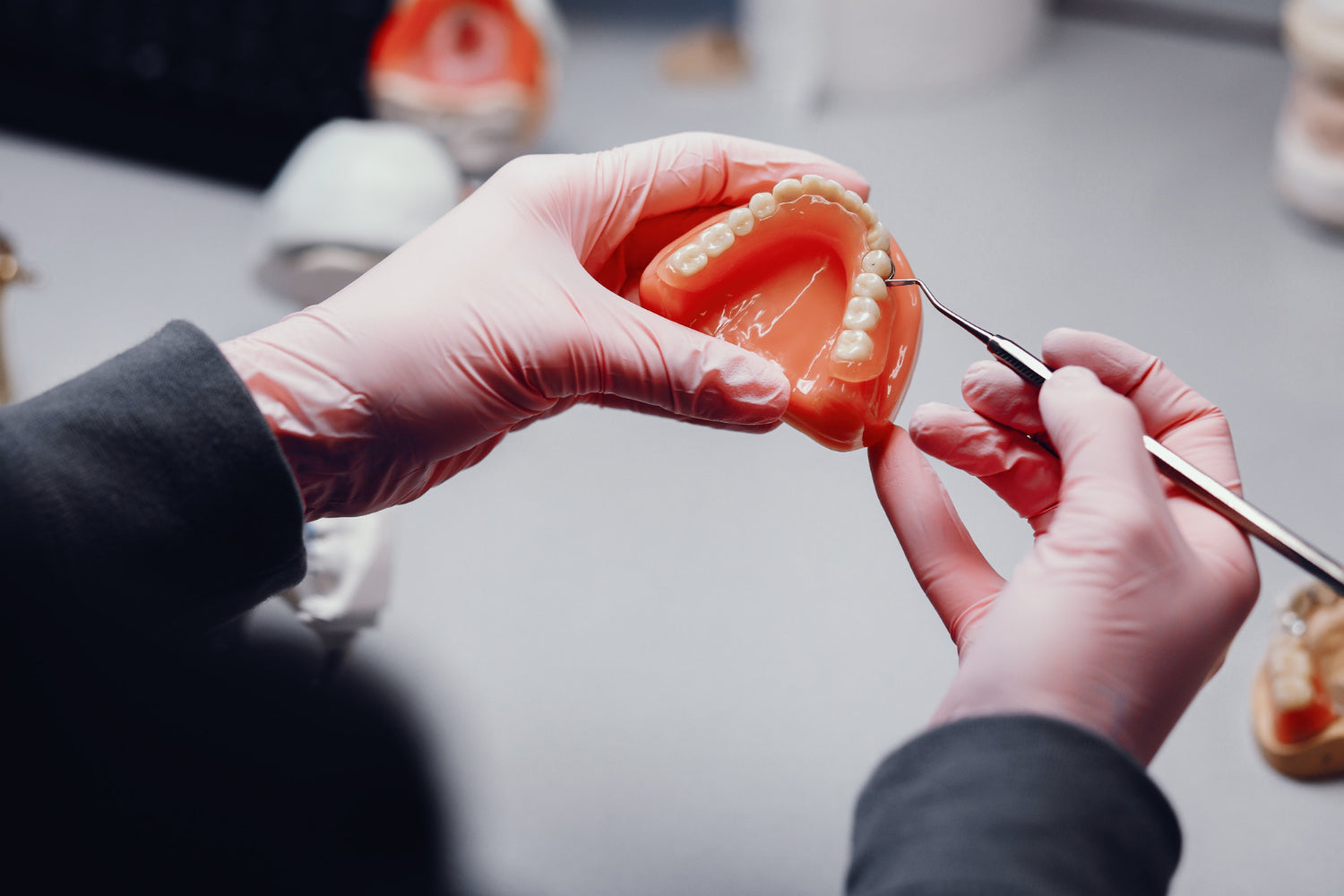

What Materials Are Used in Implant Restorations?
When a patient receives a dental implant, most people focus on the fixture — the titanium post that integrates with the jawbone. But the restoration that goes on top is what the dental lab is actually responsible for, and it carries a set of mechanical demands that standard crown work simply doesn't prepare you for. Natural teeth have a periodontal ligament, a thin band of connective tissue that cushions every bite. Implants don't. Load transfers directly through the restoration into the fixture and bone. That one difference changes everything about material selection — and it's why implant cases deserve a more deliberate approach than most labs give them. The four material categories dental labs use for implant restorations Most labs working on implant cases are choosing from four options: zirconia, lithium disilicate, porcelain-fused-to-metal, and PMMA for temporaries. None of them is universally right. Each covers a specific set of clinical conditions, and understanding where each one works — and where it fails — is the foundation of good material selection. Zirconia Zirconia has become the primary material for implant-supported restorations, and the reason is mechanical. Its flexural strength ranges from around 600 MPa in high-translucency grades up to 1,200 MPa in high-strength 3Y formulations — well above what posterior implant loading typically demands. It's biocompatible, chemically inert, and its smooth surface resists plaque accumulation better than metal alternatives. For posterior crowns and any bridge spanning more than one implant, most labs reach for zirconia first. When sourcing, the material comes in two physical forms: zirconia blocks for single-unit cases and larger zirconia discs for higher-volume milling runs — more on that distinction below. Lithium disilicate Lithium disilicate reaches around 400 MPa — excellent for natural tooth restorations, but borderline for implants where bite forces concentrate without a ligament to distribute them. What it offers instead is optical quality that zirconia can't fully match: genuine translucency, color depth, and light behavior that makes anterior restorations look tooth-like in a way that's difficult to achieve with any ceramic. Clinicians use it on single anterior implants in patients with light bites and high aesthetic expectations. Outside those conditions, the fracture risk is real and the clinical literature reflects that. It's the right material in a narrow band of cases, not a general-purpose implant ceramic. Porcelain-fused-to-metal PFM dominated restorative dentistry for decades, and there are still clinical situations where it makes sense. But its use on implants has been in steady decline. The metal substructure adds opacity that complicates anterior aesthetics — particularly if gingival recession exposes the margin over time — and the veneered porcelain layer is prone to chipping under the concentrated loading pattern implants create. Most labs now treat PFM as a legacy option for implant cases, not a default choice. PMMA PMMA isn't a final restoration material. It's what a patient wears while the implant integrates with bone — a process that typically takes three to six months. At 80–120 MPa, PMMA doesn't have the strength for permanent use, but that's not what it's being asked to do. It mills on the same CAD/CAM equipment used for zirconia, which makes same-day temporary fabrication realistic in a digital workflow. It also provides a degree of shock absorption during the healing phase, which is actually a clinical advantage rather than a limitation. Labs that aren't milling PMMA temporaries in-house are adding unnecessary steps and delays to their implant workflow. Choosing the right zirconia grade Not all zirconia dental blanks are the same material. The grade — determined by the mole percentage of yttria added during manufacturing — shifts the balance between strength and translucency, and choosing wrong creates clinical risk that no amount of good technique can fully compensate for. 3Y-TZP (3 mol% yttria) is the high-strength formulation: 900–1,200 MPa, low translucency, highly resistant to crack propagation through transformation toughening. This is the grade for posterior implant crowns, multi-unit bridges, and full-arch prostheses. When strength is the primary concern, 3Y is the answer. 4Y and 5Y formulations progressively trade strength for translucency. A 5Y blank in an anterior position looks genuinely lifelike — the incisal translucency and light diffusion are difficult to distinguish from natural enamel under good conditions. The same blank in a molar position under heavy occlusal load is a clinical risk. The strength reduction from 3Y to 5Y isn't trivial, and it matters in the context of direct implant loading. Multilayer zirconia discs resolve this tradeoff by building the gradient into the blank. The cervical third is formulated closer to 3Y for marginal strength; the incisal third moves toward 5Y for optical depth. A technician gets both properties in one disc without manual layering, and the reduction in post-sintering characterization time is meaningful on anterior work at volume. The upcera zirconia covers this spectrum directly. The Explore Functional is the workhorse posterior blank for high-strength implant applications. The Explore Esthetics handles the multilayer anterior side. The broader TT and ST lines — available in white, pre-shaded, and multilayer variants — let labs match material to case type without holding excessive SKU inventory. Zirconia blocks vs. discs: a workflow question, not a clinical one The zirconia itself is the same whether it comes as a compact rectangular block or a larger round disc. The difference is entirely about throughput and how your lab operates. Zirconia blocks work well for lower-volume labs or single-unit cases. You load one zirconia block, mill one restoration, and material waste is minimal. They're also useful when you need a specific shade or grade that isn't currently in stock in disc format. Many labs keep a small inventory of zirconia blocks for exactly this reason — flexibility for atypical cases. Zirconia discs (typically 95–98mm diameter) are the efficient choice for labs running multiple units per day. Nesting software can place several restorations in a single milling cycle, which reduces setup time, machine interruptions, and cost per unit. The efficiency advantage compounds significantly at volume — a lab running 10+ units a day on discs versus blocks is a meaningfully different operation in terms of output per hour. Most digital labs end up stocking both. Discs for the regular production flow, blocks for one-off cases or custom shade work. That combination handles most situations without overcomplicating inventory management. Pre-shaded vs. white blanks Pre-shaded blanks — zirconia dental blanks with the shade gradient built into the material before sintering — exit the furnace with natural color already established. For standard A2 and A3 prescriptions, which cover the large majority of cases, they significantly reduce or eliminate external staining time. On high-volume posterior work, that's a real and measurable efficiency gain across a week of production. White blanks put the characterization entirely in the technician's hands. They're the right choice for complex custom shading, unusual prescriptions, or labs where highly customized finishing is part of the service offering. The practical approach most labs settle on is stocking pre-shaded multilayer discs for standard production and keeping white blocks on hand for custom work. It balances speed and flexibility without requiring a large inventory. The aidite zirconia covers both approaches the HonorZir and Superfect Zir lines are available in both pre-shaded and white variants across different translucency levels, so labs can build a sensible material inventory from a single supplier relationship. What sintering does to your clinical outcomes? Material grade and blank format are the decisions labs focus on, but sintering accuracy is arguably more consequential for clinical outcomes than either of those choices. Every zirconia product — whether it's a 3Y block or a multilayer disc — has a manufacturer-specified sintering curve: a precise ramp rate, hold temperature, and cool-down profile. Deviating from that curve, even slightly, can reduce final flexural strength by 20–30% with no visible sign that anything went wrong. The restoration comes out looking fine. It passes fit inspection. And then it fails under load six months later. Batch-to-batch consistency in the blank material matters for the same reason. Variation in pre-sintered density causes uneven shrinkage, which produces marginal gaps. Shade instability between batches creates surprises at the furnace that pre-shaded blanks shouldn't have. These issues don't show up in a single test milling — they show up over months of production as unexplained remake rates. It's one of the strongest arguments for sourcing from suppliers who can provide technical documentation and batch traceability, not just competitive pricing. Putting it together for your lab For most implant cases, the decision tree is fairly straightforward. Posterior crowns and bridges: 3Y-TZP zirconia blocks or discs, sintered to spec, pre-shaded if volume warrants it. Anterior single-unit implants: multilayer disc or lithium disilicate depending on the bite load and the clinician's preference. Full-arch cases: high-strength 3Y throughout. Temporization at every stage: PMMA, milled same-day. What complicates things in practice is consistency — consistent material quality from your supplier, consistent sintering protocol in your lab, and consistent communication with the clinician about what the case actually demands. The material decisions themselves are the easy part once those three things are in place. Zirconia Guys supplies both the Aidite and UPCERA ranges to dental labs across North America — including zirconia blocks, zirconia discs, and PMMA materials for full implant workflows. If you want to talk through material selection for your milling system or case mix, get in touch with the team.
Learn more
Are Dental Crowns Permanent or Do They Need Replacement?
Dental crowns are one of the most common restorative treatments in dentistry and one of the most frequent questions patients ask is whether they are permanent. The simple answer is: crowns are long-lasting, but they are not permanent for life. Like any restoration, a crown can wear down, loosen, or develop problems over time. With the right material and proper care, however, a crown can protect your tooth for 15 years or more. Understanding what affects a crown's lifespan helps you take better care of it and know when it might need attention. What Is a Dental Crown? A dental crown is a custom-made cap that fits over a damaged or weakened tooth, restoring its shape, strength, and appearance. Your dentist will recommend a crown when: A tooth has too much decay to be saved by a filling A tooth is cracked or broken A tooth has had a root canal and needs protection A dental implant needs a visible tooth placed on top of it A tooth is severely worn down and needs rebuilding Once the dentist prepares your tooth, a scan or impression is sent to a dental laboratory. Skilled technicians there design your crown using computer software and mill it from a solid block of material typically a zirconia blank or zirconia block with a precision milling machine. The accuracy of this process is what gives your crown a proper fit and a long life. How Long Do Dental Crowns Last? There is no single answer it depends on the material the crown is made from, how well it was fabricated, and how you look after it. Here is how the most common crown materials compare: Material Avg. Lifespan 5-yr Survival What It Means for You Zirconia (monolithic) 15–20+ years 96–98% at 5 yrs Most durable all-ceramic option. Ideal for back teeth and patients who grind. Used in modern dental zirconia blocks. Multilayer zirconia 12–18 years 95–97% at 5 yrs Natural colour gradient. Best for front teeth. Fabricated from multilayer zirconia dental blanks. Porcelain-fused-to-metal (PFM) 10–15 years 90–93% at 5 yrs Traditional option. Porcelain layer can chip over time. Being phased out by many labs. Lithium disilicate (e.max) 10–15 years 94–96% at 5 yrs Beautiful, natural look. Better for front teeth. Not recommended for heavy biters. Full-cast metal 20–30 years >98% at 5 yrs Most durable overall. Rarely used today due to appearance. PMMA (temporary only) Weeks only N/A Temporary crown only protects the tooth while your permanent crown is being made. Zirconia crowns whether monolithic for back teeth or multilayer for front teeth consistently outperform older materials in clinical studies. A 2020 study published in the Journal of Dentistry (Guess et al.) followed 120 posterior zirconia crowns over five years and recorded a 97.5% survival rate with no fractures. That kind of durability is why most dental laboratories today fabricate crowns from zirconia blocks and zirconia dental blanks rather than older alternatives. Crown Materials and Their Impact on Longevity The material your crown is made from is the single biggest factor in how long it lasts. Here is what you need to know about the most common options: Zirconia crowns Zirconia is the material most dental labs use today for good reason it is exceptionally strong, biocompatible, and looks natural. Dental laboratories mill crowns from zirconia blocks or zirconia dental blanks using CAD/CAM technology. There are two main types: Monolithic zirconia is a single solid piece milled from a high-strength zirconia block. It is the most durable option and ideal for back teeth where chewing forces are highest. Products like TT White zirconia for crowns are widely used by labs across the U.S. for posterior restorations. Multilayer zirconia is milled from a zirconia blank that has built-in colour gradients darker at the root end, lighter at the tip mimicking the natural look of real teeth. This makes it the preferred choice for front teeth where appearance matters most. Porcelain-fused-to-metal (PFM) crowns PFM crowns were the standard for decades. They have a metal base for strength and a porcelain layer on top for appearance. While durable, the porcelain surface can chip over time, and the metal edge can become visible as gums recede. Most modern labs have shifted away from PFM in favour of full-zirconia crowns. Lithium disilicate crowns Lithium disilicate (commonly known as e.max) has a beautiful, glass-like appearance that closely mimics natural tooth enamel. It works well for front teeth and veneers. However, it is not as strong as zirconia, so it is not recommended for patients who grind their teeth or for heavily loaded back teeth. What About Temporary Crowns? Before your permanent crown is ready, your dentist will place a temporary crown over the prepared tooth. This protects the tooth and holds your bite in position while the dental lab fabricates your final restoration. Temporary crowns are made from PMMA a milled acrylic material that is comfortable and easy to adjust. At ZirconiaGuys, we supply aidite pmma multilayer to dental labs for exactly this purpose. These temporary crowns are smooth, well-fitting, and shade-accurate which matters particularly when a patient needs to wear the temporary for several weeks during implant healing. Temporary crowns are not designed to be permanent. Treat yours with care avoid sticky or hard foods, and contact your dentist if it feels loose or uncomfortable. Why Do Dental Crowns Sometimes Need Replacement? Even a well-made crown will eventually need attention. Dentists check your crowns at every routine visit catching problems early is always better than waiting. Here are the most common reasons a crown might need to be replaced: The crown is cracked or chipped. This is more common with older porcelain or PFM crowns than with modern zirconia. Monolithic zirconia crowns milled from solid zirconia blocks have an extremely low fracture rate. Decay has developed under the crown. The crown itself cannot decay, but the tooth underneath it can if plaque builds up at the margin. A gap that develops over time at the crown edge allows bacteria in. The gum line has receded. As gums recede with age, a gap can appear between the base of the crown and the gum. With older metal-based crowns, a dark line becomes visible. Zirconia crowns made from tooth-coloured zirconia dental blanks handle this more naturally. The crown has come loose. This is usually a cement failure rather than a problem with the crown itself. Your dentist can often re-cement the same crown if it is undamaged. The crown has worn down. All materials wear over time. Zirconia wears at a similar rate to natural tooth enamel making it one of the most compatible options for long-term use. Most of these issues take many years to develop. Regular check-ups every six months give your dentist the chance to catch them early. Why the Dental Laboratory Matters? The quality of your crown is not only down to your dentist the dental laboratory that makes it plays an equally important role. A crown that fits poorly even by a fraction of a millimeter allows bacteria to get under the margin and cause decay in the tooth below. A precisely milled crown, made from high-quality zirconia blocks dental labs trust, fits tightly and lasts longer. The raw materials matter too. Dental labs that source their zirconia blanks and zirconia blocks from ISO-certified manufacturers get consistent density across every disc which means predictable sintering, accurate fit, and reliable shade matching case after case. ZirconiaGuys supplies dental laboratories across the U.S. with Upcera zirconia blocks and dental blanks and Aidite zirconia dental blanks and PMMA all manufactured to ISO 13356 standards, with full technical data sheets available. When the lab uses quality materials, you get a crown that fits, looks natural, and lasts.
Learn more
Dental Crown vs Bridge: Everything You Need to Know
When a tooth is damaged or missing, the two most common restorative solutions a dentist will recommend are a dental crown or a dental bridge. Both restore function and appearance, but they work very differently, suit different clinical situations, and require different materials and fabrication approaches. This guide explains exactly what crowns and bridges are, how they differ, when each is the right choice, and what materials dental laboratories use to fabricate them. Whether you are a patient trying to understand your treatment options or a dental professional looking at material specifications, this page covers everything you need to know. What Is a Dental Crown? A dental crown is a custom-made cap that fits over and completely covers a damaged or weakened tooth above the gum line. It restores the tooth to its original shape, size, and function and protects it from further deterioration. Dentists recommend crowns in these situations: A tooth has severe decay that cannot be addressed with a filling alone A tooth is cracked, fractured, or structurally compromised A tooth has undergone root canal treatment and needs protection Significant wear has reduced the tooth structure A dental implant requires a visible restoration placed on top of it In a dental laboratory, every crown begins as a zirconia blank or milled zirconia block shaped using CAD/CAM technology. The technician designs the restoration digitally from a scan sent by the dentist, then mills it to precise tolerances before sintering and finishing. This process, when executed with quality materials and calibrated equipment produces restorations that can last 15 years or more. What Is a Dental Bridge? A dental bridge is a fixed restoration that replaces one or more missing teeth by spanning the gap between neighboring teeth. It consists of: Abutment crowns: Crowns placed over the teeth on either side of the gap, which serve as anchors for the bridge Pontic(s): The artificial tooth or teeth suspended in the gap, held in place by the abutment crowns Once placed, a bridge restores chewing ability, prevents neighboring teeth from drifting into the gap, and maintains proper bite alignment with all problems that develop when a missing tooth is left untreated. Bridge frameworks place significantly higher mechanical demands on materials than single crowns. A 3-unit bridge spanning a gap must resist flexural forces across its full span on every chew. This is why dental labs fabricate bridge frameworks from high-density zirconia blocks with flexural strength above 900 MPa lower-strength materials risk fracture at the connectors, the most common failure point in ceramic bridges. Dental Crown vs Bridge: What Is the Difference? The core distinction is simple: a crown restores a tooth that exists; a bridge replaces a tooth that does not. Everything else the number of units, the material requirements, the abutment preparation, and the cost follows from that single difference. The table below provides a full side-by-side comparison across all key factors. This is the most important section of this guide if you are deciding between the two treatments, the table below answers the question directly. Factor Dental Crown Dental Bridge Purpose Restores a damaged existing tooth Replaces one or more missing teeth Tooth present? Yes tooth is still in the mouth No gap exists where tooth was lost Number of units Single unit (1 crown per tooth) 3+ units (2 abutment crowns + 1–3 pontics) Abutment needed? No crown fits over the prepared natural tooth Yes adjacent teeth are prepared to anchor the bridge Material Monolithic zirconia block or zirconia blank Multi-unit zirconia framework milled from high-strength zirconia blocks Strength required 900–1,200 MPa (posterior); 700–900 MPa (anterior) Minimum 900 MPa higher span = higher load requirement Avg. lifespan 10–20+ years depending on material and care 10–15 years abutment teeth carry additional load Implant option? Crown can be implant-supported (no natural tooth needed) Implant-supported bridge avoids preparing healthy adjacent teeth Cost comparison Lower single unit fabrication Higher multi-unit framework with precise connector sizing From our experience supplying U.S. dental labs The most common material-related bridge failure we see reported by labs is connector fracture almost always traced to either under-dimensioned connectors in the CAD design or use of a zirconia block with flexural strength below 900 MPa for a posterior span. For any posterior bridge of 3 or more units, we recommend monolithic 3Y-TZP zirconia blocks with a minimum 1,000 MPa flexural strength rating. Upcera TT White and Explore Functional are the products most consistently specified by labs in our network for this case type. When Do Dentists Recommend a Crown? A crown is the appropriate treatment when the natural tooth is still present but needs structural reinforcement or protection. Common clinical indications include: Large cavity: When decay removes so much tooth structure that a filling would not provide adequate support Cracked or fractured tooth: A crown holds the tooth together and prevents the crack from propagating further Post root canal: Root canal-treated teeth become brittle over time a crown distributes bite forces and prevents fracture Severe wear: Teeth worn down by bruxism or acid erosion can be rebuilt to correct height and occlusion with a crown Implant restoration: A crown placed over a dental implant functions like a natural tooth without requiring preparation of adjacent teeth For posterior crowns particularly in bruxism cases dental labs typically specify monolithic zirconia blocks dental materials with flexural strength above 1,000 MPa. Explore Functional Zirconia from Upcera is a multilayer 4Y/5Y option that balances this strength requirement with natural shade depth one of the most specified products in our catalogue for crown cases where both durability and esthetics matter. When Is a Dental Bridge Recommended? A bridge is recommended when one or more teeth are missing and the teeth adjacent to the gap are healthy enough to serve as abutments. The absence of a tooth even a back molar creates a cascade of problems if not addressed: Adjacent teeth begin to tilt or drift into the gap within months The opposing tooth can over-erupt without contact from below Bite alignment changes, creating uneven pressure distribution Bone loss begins under the gap as the jaw resorbs without tooth root stimulation A bridge addresses the visible gap and prevents drift but it does not stop bone loss, which is one reason implant-supported restorations are increasingly preferred for single-tooth replacement when bone volume allows. Bridge frameworks require zirconia dental blanks with higher density and tighter lot consistency than single-unit crowns. Variable material density across a disc causes inconsistent sintering shrinkage this affects connector dimensions after firing, which directly impacts bridge fit and long-term fracture risk. TT Multilayer Zirconia for Crowns & Bridges from Upcera is manufactured to tight sintering tolerances and is ISO 13356-certified two of the most important specifications for labs fabricating multi-unit bridge frameworks. Crown and Bridge Materials: What Dental Labs Use Material Flex Strength Esthetics Best Use Case ZirconiaGuys SKU / Notes Monolithic 3Y zirconia 900–1,200 MPa Moderate–high Posterior crowns, molar bridges, bruxism cases Upcera TT White, HT White strongest all-ceramic option Multilayer 5Y zirconia 700–900 MPa Very high Anterior crowns, esthetic 3-unit bridges Upcera TT Multilayer, TT One Multilayer Explore Functional zirconia 900+ MPa High Crowns and bridges requiring high strength + good esthetics Upcera Explore Functional balanced 4Y/5Y multilayer PFM (legacy) ~400 MPa Moderate Being phased out porcelain chipping risk on bridges Not stocked by ZirconiaGuys Lithium disilicate ~400 MPa Very high Anterior veneers and single crowns only Not suitable for bridge frameworks PMMA 80–100 MPa High Temporary crowns and provisional bridges only Aidite Multilayer PMMA 12mm, 16mm, 20mm For the majority of crown and bridge cases in 2026, monolithic and multilayer zirconia milled from ISO-certified zirconia blocks and zirconia dental blanks delivers the optimal combination of strength, esthetics, and fabrication reliability. Browse the full range of Upcera zirconia blocks and dental blanks and Aidite zirconia blocks and PMMA materials available through ZirconiaGuys. How Long Do Crowns and Bridges Last? Zirconia crowns: 15–20+ years. Peer-reviewed 5-year survival rate of 96–98% for monolithic zirconia (Guess et al., Journal of Dentistry, 2020). The highest survival rate of any all-ceramic crown material. Zirconia bridges: 10–15 years typical; longer with correct connector design and high-strength zirconia blocks. The connector is the most common failure point undersized connectors fail earlier regardless of material quality. PFM crowns and bridges: 10–15 years. Lower survival due to porcelain chipping at the veneer layer a failure mode essentially eliminated by monolithic zirconia. PMMA temporaries: 2–6 weeks. Provisional use only never used as permanent restorations. For patients: regular dental check-ups, twice-daily brushing, flossing around bridge pontics with floss threaders, and wearing a night guard if you grind your teeth are the most impactful habits for extending crown and bridge lifespan. Crown and Bridge vs Dental Implants: When to Consider an Alternative A dental bridge requires preparing drilling down the healthy teeth on either side of the gap to serve as abutment crowns. For patients with otherwise intact neighbouring teeth, this is a permanent modification that many clinicians increasingly advise against when an implant is feasible. No abutment preparation: Adjacent healthy teeth are left untouched Bone preservation: The implant root stimulates the jawbone and prevents resorption Independent function: Each implant crown functions independently failure of one does not compromise the others The choice between a conventional bridge and an implant-supported restoration depends on bone volume, patient health, treatment timeline, and cost. This decision should always be made in consultation with the treating dentist and, where relevant, an oral surgeon. Dental crowns and dental bridges are both reliable, long-lasting restorations but they serve fundamentally different purposes. A crown protects a tooth that is still in the mouth. A bridge replaces a tooth that is gone. The materials that make both possible have advanced significantly. Today's monolithic and multilayer zirconia milled from ISO-certified zirconia blocks and zirconia dental blanks using precision CAD/CAM workflows deliver the strength, fit accuracy, and natural esthetics that modern restorative dentistry demands. Whether you are specifying a single posterior crown or a full-arch bridge framework, the material you choose and the supplier you source it from determines the outcome.
Learn more
Zirconia in Dentistry: Uses, Benefits, Types & Materials
Zirconia is the dominant material in modern crown and bridge fabrication - and for good reason. It combines exceptional fracture resistance, proven biocompatibility, and natural esthetics in a single CAD/CAM-compatible material. This guide covers what dental zirconia is, how the different grades compare, what physical forms labs work with, why it outperforms older materials, and what fabrication factors directly affect clinical outcomes. What Is Dental Zirconia? Dental zirconia is zirconium dioxide (ZrO2) stabilised with yttria and processed into a dense polycrystalline ceramic. Unlike glass-ceramics such as lithium disilicate, zirconia has a fully crystalline microstructure that gives it a unique mechanical property called transformation toughening when a crack begins to form, the crystal structure transforms at the crack tip and generates compressive stress that arrests further growth. This is why zirconia fracture rates in posterior cases are dramatically lower than any other all-ceramic material. In the dental laboratory, zirconia is supplied in three main forms: zirconia blocks (rectangular pucks for 5-axis milling), zirconia dental blanks (round disc-format pucks in a milling frame), and dental zirconia discs (larger diameter discs for high-volume disc-based milling systems). Always confirm format compatibility with your milling machine before ordering. Zirconia Grades: 3Y, 4Y, and 5Y - What the Numbers Mean The yttria content grade - 3Y, 4Y, or 5Y - is the most important classification in dental zirconia. More yttria means higher translucency but lower flexural strength. Less yttria means maximum strength but lower light transmission. Selecting the right grade for the clinical situation is the single most impactful material decision in the fabrication workflow. The table below maps each grade to ISO 6872 flexural strength, translucency, best use case, and the matching ZirconiaGuys products. Highlighted rows indicate stocked materials. Grade Flex Strength (ISO 6872) Translucency Best Use Case ZirconiaGuys Products 3Y-TZP 900-1,200 MPa Moderate Posterior crowns, long-span bridges, bruxism Upcera TT White, HT White 4Y-TZP 700-900 MPa High Anterior + posterior crowns, short bridges Upcera Explore Functional 5Y-TZP 600-800 MPa Very high Anterior crowns, esthetic zones only Upcera TT Multilayer, Aidite HonorZir SHT Multilayer 700-900 MPa Gradient Any case needing natural shade gradient Upcera ST Multilayer, TT One Pre Shaded Uses of Zirconia in Modern Dentistry Single-unit crowns: Posterior crowns are milled as monolithic full-contour restorations from high-strength zirconia blocks dental materials (3Y-TZP, 900-1,200 MPa). Anterior crowns use multilayer zirconia dental blanks for natural shade depth. Explore Functional Zirconia from Upcera serves both case types with its balanced 4Y/5Y multilayer formulation. Fixed bridges: Bridge frameworks require flexural strength above 900 MPa due to span loading. Connector cross-sections must meet a minimum of 16 mm2 for posterior spans - a design decision made in the CAD phase that directly determines bridge survival. Implant-supported restorations: Implant crowns bear occlusal load without a periodontal ligament. Monolithic 3Y zirconia is the standard specification for implant-supported posterior cases. Multilayer esthetic cases: Multilayer dental zirconia discs come with a built-in shade gradient, eliminating most manual staining. TT Multilayer Zirconia from Upcera is the most consistently specified multilayer product in the ZirconiaGuys catalogue. Why Zirconia Outperforms Other Crown Materials? The table below compares zirconia against the materials it has largely replaced. Survival rates are from peer-reviewed clinical literature (Guess et al., Journal of Dentistry, 2020). Material Flex Strength 5-yr Survival Key Consideration Monolithic zirconia (3Y) 900-1,200 MPa 96-98% at 5 yrs Best all-round - highest strength, good esthetics, longest clinical survival rate Feldspathic porcelain 60-100 MPa Lower Chips under load - replaced by zirconia for full-contour restorations Lithium disilicate ~400 MPa 94-96% at 5 yrs Excellent esthetics but not suitable for posterior or high-load cases PFM ~400 MPa veneer 90-93% at 5 yrs Metal margin shows over time as gums recede - being phased out in modern labs Monolithic zirconia's 96-98% five-year survival rate versus 90-93% for PFM reflects a meaningful reduction in remakes and patient callbacks. Multilayer 5Y formulations have progressively closed the esthetic gap with lithium disilicate, making zirconia the practical choice for both posterior and anterior cases in most labs today. Zirconia Fabrication: Two Variables That Determine Outcome Zirconia is milled in a pre-sintered state approximately 20-25% oversized, then fired in a sintering furnace at 1,450-1,600 degrees Celsius to reach its final dimensions and full strength. Two lab-side variables control quality at this stage: Sintering protocol: Each manufacturer publishes a specific temperature ramp curve per product. Deviating from it reduces the final flexural strength below the published ISO 6872 value - the most common cause of unexplained zirconia fractures in clinical use. ZirconiaGuys provides sintering profiles for every product on request. Shrinkage factor: CAD/CAM software compensates for sintering shrinkage using a product-specific decimal value. Using the wrong factor for your current lot of zirconia blocks or zirconia dental blanks produces crowns that are oversized or undersized after firing. Always verify the loaded shrinkage factor matches your current material lot. Zirconia is the foundational material of modern crown and bridge fabrication. Selecting the right grade - 3Y for maximum strength, 5Y for esthetics, multilayer for natural shade - and sourcing from a supplier who provides ISO certification and sintering documentation delivers the most predictable outcomes. ZirconiaGuys supplies Upcera zirconia blocks and Aidite zirconia blocks and CAD/CAM materials.
Learn more
Dental Lab Workflow: CAD/CAM, Milling & Materials
Modern dental laboratories are precision manufacturing environments. Every crown, bridge, veneer, and implant restoration that leaves a lab is the result of a structured digital workflow - from intraoral scan to sintered zirconia restoration - where each step has defined tolerances and material requirements. Understanding this workflow helps dentists, technicians, and lab managers identify where quality is created, where failures originate, and how material selection affects the final clinical result. What a Dental Laboratory Actually Produces? A dental laboratory is the manufacturing partner of the dental practice. The dentist diagnoses, prepares the tooth, and takes a scan or impression. Everything after that - the design, material selection, milling, sintering, and finishing - happens in the lab. The quality of the final restoration is determined there, not at the chair. Modern labs fabricate single crowns, multi-unit bridges, implant restorations, veneers, full-arch prosthetics, surgical guides, orthodontic models, and PMMA provisionals. Each restoration type has different material requirements, fabrication tolerances, and quality checkpoints - all managed through a structured CAD/CAM workflow. The CAD/CAM Dental Lab Workflow - Step by Step The CAD/CAM workflow has replaced most traditional lab processes for crown and bridge fabrication. It produces more consistent results, tighter marginal fit, and faster turnaround than wax-and-cast methods - but only when each step is executed correctly. The table below maps every stage from scan to delivery with the key technical parameter that controls quality at that step. Stage What Happens Key Technical Detail Digital scan / impression Intraoral scanner or physical impression sent to lab Scan accuracy: 10-20 microns for modern intraoral scanners CAD design Technician designs restoration in Exocad, 3Shape, or Dental Designer Margin line, occlusion, contacts, and material thickness set at this stage Material selection Lab selects the appropriate dental zirconia grade, PMMA, or resin 3Y for strength, 5Y for esthetics, PMMA for temporaries CAM milling Milling machine cuts the restoration from a zirconia block or dental zirconia disc 5-axis machines: 20-50 micron accuracy; 4-axis: 50-100 microns Sintering Zirconia fired at 1,450-1,600 degrees C following manufacturer ramp curve Deviating from ramp curve reduces final flexural strength below ISO 6872 value Finishing & QC Staining, glazing, polishing, margin verification, occlusion check Marginal gap must be under 120 microns for clinical acceptance Dental Lab Materials: What Labs Use and Why Material selection is the most consequential decision in the CAD/CAM workflow. The dental lab materials a technician chooses determine the restoration's strength, esthetics, longevity, and milling compatibility. Here is how the main material categories are used: Dental zirconia - the standard for crowns and bridges Dental zirconia (zirconium dioxide) is the dominant material for permanent crown and bridge fabrication. It is supplied as zirconium dental blocks or discs in different yttria-stabilised grades: 3Y-TZP for maximum strength (900-1,200 MPa), 4Y for balanced strength and esthetics, and 5Y multilayer for natural shade gradients in anterior cases. For labs evaluating supply options, zirconia blocks price varies significantly between budget and ISO-certified premium tiers - and that difference directly affects marginal fit consistency and remake rates. ZirconiaGuys stocks Aidite dental zirconia and Upcera dental zirconia - both ISO 13356-certified with published ISO 6872 flexural strength data. PMMA - the provisional standard PMMA (polymethylmethacrylate) is the standard material for temporary crowns and bridges during the provisionalization phase. It mills cleanly, polishes well, and holds shade accuracy for extended wearing periods. aidite pmma multilayer is available from ZirconiaGuys in 12mm, 16mm, and 20mm heights - the most common formats for single-unit and multi-unit temporary fabrication. 3D printing resins Photopolymer resins are used for diagnostic models, surgical guides, orthodontic models, and denture try-ins. They are not suitable for permanent crowns or bridges. Keystone and Whip Mix resin products available through ZirconiaGuys cover the full range of 3D printing applications in a modern dental lab. CAD/CAM Milling vs 3D Printing - Which Does Your Lab Need? Both milling and 3D printing have a place in a modern dental lab - but they serve different purposes and different material types. The table below compares the two technologies across the factors that matter most for lab decision-making. Factor CAD/CAM Milling 3D Printing Method Subtractive - cuts from a solid block Additive - builds layer by layer Accuracy 20-50 microns (5-axis); 50-100 microns (4-axis) 50-150 microns depending on resin and printer Materials Dental zirconia, PMMA, lithium disilicate, wax Photopolymer resins - models, guides, temporaries Best use case Permanent crowns, bridges, frameworks Models, surgical guides, try-ins, denture bases Zirconia blocks price factor Higher upfront material cost - lower remake rate Lower material cost - limited to resin materials only Turnaround 2-4 hours milling + 6-8 hours sintering 2-6 hours printing + post-cure time For permanent zirconia restorations, milling from ISO-certified dental zirconia blocks remains the only viable production method. 3D printing complements the milling workflow by handling models, guides, and provisionals - but it cannot replace milled dental zirconia for structural crown and bridge cases. Choosing a Reliable Dental Lab Material Supplier The quality of a lab's output is directly constrained by the quality of its raw materials. A reliable dental lab material supplier should provide: ISO 13356 certification for all dental zirconia products, published ISO 6872 flexural strength test results (not marketing figures), sintering profiles and shrinkage factor documentation, and consistent lot-to-lot material density for predictable milling and sintering outcomes. The dental lab workflow is a precision chain - and every link matters. Scan accuracy, CAD design tolerances, material grade selection, milling axis count, sintering protocol compliance, and final marginal fit verification each contribute to whether a restoration succeeds or fails clinically. Sourcing dental lab materials from an ISO-certified dental lab material supplier who provides technical documentation at every stage is the most reliable foundation for consistent quality.
Learn more
What Is a Dental Lab and What Does It Do?
Behind every crown, bridge, veneer, and implant restoration a patient receives is a dental laboratory. The dentist diagnoses and prepares the tooth. Everything else - the design, material selection, milling, sintering, and finishing - is decided and executed in the lab. The quality of that work determines whether the restoration fits precisely, lasts clinically, and satisfies the patient. This guide explains what a dental lab is, what it produces, what materials it works with, and why its role is central to the outcome of every restorative case. What Is a Dental Lab? A dental laboratory is a specialised manufacturing facility where dental restorations are designed and fabricated from prescriptions sent by dental clinicians. Unlike a dental practice - where patients are treated - a dental lab operates entirely as a production environment. Most patients never see it, but its output is in their mouth. Modern dental labs operate as precision digital manufacturing centres. They combine CAD design software (Exocad, 3Shape, Dental Designer), 5-axis CAM milling machines, sintering furnaces, and 3D printers into a workflow that produces restorations to tolerances measured in micrometres. The shift from traditional wax-and-cast methods to fully digital production has transformed both the accuracy and the speed of everything a dental lab makes. What Does a Dental Lab Produce? The range of work produced by a modern dental laboratory is broader than most patients and even many clinicians realise. The table below covers the primary restoration types, the materials used to fabricate them, typical turnaround times, and the key fabrication variable that controls quality for each. Highlighted rows are the most common crown and bridge cases using dental zirconia. Restoration Type Primary Material Typical Turnaround Key Fabrication Note Single crown Zirconia blocks or zirconia dental blanks (3Y-5Y grade) 1-3 days Most common lab output - posterior and anterior cases Multi-unit bridge High-strength zirconia blocks dental (3Y, min 900 MPa) 2-4 days Connector sizing critical - minimum 16 mm2 cross-section Implant restoration Dental zirconia (monolithic 3Y) or titanium abutment 3-5 days No PDL - highest strength material required Veneer Lithium disilicate or high-translucency 5Y zirconia 2-3 days Anterior esthetics priority - thin preparation required Temporary crown/bridge PMMA multilayer disc Same day Provisionalization - not for permanent use Surgical guide Photopolymer resin (biocompatible grade) 1 day Guide accuracy: must match implant diameter within 0.1 mm Diagnostic model 3D printing resin Same day Dimensional accuracy: 50-100 microns typical Full-arch prosthesis High-strength zirconia blocks (3Y monolithic framework) 5-10 days Most demanding case type - sintering protocol critical Materials That Power the Modern Dental Lab The materials a dental lab uses determine the strength, fit, esthetics, and longevity of every restoration it delivers. Here is how the main material categories are used in practice: Dental zirconia - crowns and bridges Dental zirconia is the dominant material for permanent fixed restorations. Labs work with it in three physical forms: zirconia blocks (rectangular pucks for 5-axis milling), zirconia dental blanks (disc-format pucks in a milling frame), and dental zirconia discs (large-diameter discs for high-volume disc-based systems). The grade selected - 3Y for posterior strength (900-1,200 MPa), 4Y for balanced cases, 5Y for anterior esthetics - determines both the mechanical properties and the shade characteristics of the final restoration. ZirconiaGuys stocks the full Upcera zirconia blocks and Aidite dental zirconia discs and blocks range - all ISO 13356-certified with published ISO 6872 flexural strength data. PMMA - temporary restorations PMMA (polymethylmethacrylate) is the standard material for temporary crowns and bridges. Aidite pmma multilayer mills cleanly, polishes to a high shine, and holds shade accuracy for extended provisionalization periods - available in 12mm, 16mm, and 20mm heights to cover single-unit and multi-unit temporary cases. 3D printing resins - models and guides Photopolymer resins are used for diagnostic models, surgical guides, orthodontic models, and denture try-ins. Key Model Ultra Resin from Keystone delivers dimensional accuracy of 50-100 microns and smooth surface detail - the two properties that matter most for diagnostic and planning models. Why the Dental Lab Determines the Clinical Outcome? The dentist prepares the tooth and places the restoration - but the lab determines whether it fits, functions, and lasts. Every measurable quality factor in a dental restoration is set during the fabrication process. The table below maps the key quality parameters, their clinical standards, and what happens when they are not met. Quality Factor Clinical Standard Impact When Missed Marginal fit Gap under 120 microns Larger gaps allow micro-leakage and secondary decay under the crown Occlusal accuracy Contacts within 20-30 microns Incorrect occlusion causes premature wear, TMJ strain, and patient discomfort Shade matching Delta E under 2.0 (CIELAB) Visible shade mismatch is the leading cause of anterior crown remakes Zirconia sintering Exact manufacturer ramp curve Deviating from ramp rate reduces flexural strength below ISO 6872 tested value Material certification ISO 13356 for dental zirconia Non-certified materials have inconsistent density - unpredictable shrinkage during sintering These quality factors are all controllable - but they depend on the lab using ISO-certified materials, calibrated equipment, and documented sintering protocols. A technician working with consistent, well-specified dental zirconia blocks and dental zirconia discs from a reliable supplier has the foundation for predictable results. One working with variable, undocumented material does not. The Shift to Fully Digital Dental Labs The majority of crown and bridge fabrication in modern labs is now fully digital. Intraoral scans replace physical impressions. CAD software replaces wax carving. CAM milling from zirconia blocks dental and dental zirconia discs replaces hand-building. Sintering furnaces with programmed ramp curves replace open casting. This shift has improved consistency and reduced remakes - but only when the digital chain is built on reliable materials. Zirconia blank materials optimised for digital milling, zirconia blocks dental with documented shrinkage factors, and dental zirconia discs with consistent lot density are the raw material foundation that the rest of the digital workflow depends on. A dental lab is the manufacturing backbone of restorative dentistry. Its output - crowns, bridges, implant restorations, models, and guides - determines the clinical success of every case it handles. The materials it sources are the foundation of that output. ZirconiaGuys has supplied dental labs across the U.S. with ISO-certified dental zirconia blocks, zirconia dental blanks, dental zirconia discs, PMMA, and resins for over a decade - with full technical support, sintering documentation, and same-week shipping from our New Jersey warehouse.
Learn more
How Dental Crowns Are Made in a Lab: Step-by-Step Process?
Every dental crown a patient receives has been through a precise, multi-stage fabrication process in a dental laboratory. Each step - from the initial scan to final quality control - has defined tolerances and material decisions that determine whether the crown fits accurately, lasts clinically, and matches the surrounding teeth. This guide walks through the complete step-by-step process, with the key technical parameter that controls quality at each stage. The 7-Step Crown Fabrication Process at a Glance The table below summarises all seven fabrication steps, the material and technical decision at each stage, and the quality checkpoint that controls the outcome. The full detail for each step follows below. # Step What Happens Material / Technical Decision 1 Case reception Scan or impression received from dentist Margin clarity, occlusion, contacts, material grade selection 2 CAD design Restoration designed in Exocad, 3Shape, or Dental Designer Margin line accuracy; minimum 1.5mm zirconia thickness posterior 3 Material selection Zirconia dental material grade chosen based on case type 3Y for posterior strength; 5Y multilayer for anterior esthetics 4 CAM milling Restoration milled from zirconium block or zirconia disc 5-axis: 20-50 micron accuracy; shrinkage oversize 20-25% 5 Sintering Furnace firing at 1,450-1,600 degrees C per manufacturer ramp curve Ramp rate deviation reduces strength below ISO 6872 value 6 Finishing Staining, glazing, polishing, and shade characterisation Pre-shaded zirconia blanks reduce staining time significantly 7 Quality control Margin, occlusion, shade, and surface polish verified before dispatch Marginal gap must be under 120 microns for clinical acceptance Step 1: Case Reception and Material Assessment The process begins when the lab receives either a digital STL file from an intraoral scanner or a physical impression from the dental practice, accompanied by a prescription specifying shade, material grade, margin design, and restoration type. At this stage, the technician's first decision is material grade. For posterior crowns under heavy occlusal load, monolithic 3Y-TZP zirconia dental material is the standard - flexural strength 900-1,200 MPa (ISO 6872). For anterior esthetic cases, a multilayer 5Y zirconia disc or pre-shaded zirconia blank reduces manual staining time while delivering natural shade depth. If a temporary crown is required during fabrication, Aidite Multilayer PMMA is specified at this stage as well. Step 2: CAD Design - Building the Digital Crown Once the scan is imported into CAD software (Exocad, 3Shape, or Dental Designer), the technician designs the full restoration digitally. This stage determines every structural and esthetic parameter of the final crown. Margin line: traced precisely along the prepared tooth boundary Occlusal anatomy: designed to match the patient's opposing dentition Proximal contacts: set to correct tightness for interproximal hygiene Material thickness: minimum 1.5mm for posterior zirconia; 0.8mm minimum for anterior Sprue placement: positioned away from contact areas to avoid fracture during separation For anterior esthetic cases, ST Pre Shaded Zirconia is selected at the design stage because its pre-built shade gradient is oriented cervical to incisal - the technician must align the milling axis in CAD to ensure the gradient falls correctly in the final restoration. Step 3: Material Selection - Choosing the Right Zirconia Grade Material selection is the decision that most directly determines clinical longevity. The wrong grade - or an inconsistent material lot - produces restorations that pass visual inspection but fail within 2-3 years. The three main zirconia dental material options in a crown workflow are: Monolithic 3Y-TZP (zirconium block): 900-1,200 MPa flexural strength. Maximum fracture resistance. The standard specification for posterior crowns, especially in bruxism patients and implant-supported cases. Available as Upcera TT White and HT White. Multilayer 4Y/5Y (zirconia disc): 700-900 MPa. Pre-built shade gradient from cervical to incisal. Reduces manual staining steps significantly. TT Multilayer Zirconia from Upcera covers both anterior and posterior cases requiring natural esthetic depth. Pre-shaded zirconia blanks: Available in both 3Y and 5Y formulations. Vita A-D shade range pre-applied. Minimal characterisation required post-sintering. Ideal for high-volume labs processing multiple anterior cases daily. Step 4: CAM Milling - Cutting the Crown from the Block Once the design file is sent to the milling unit, the CAM system positions the restoration within the selected zirconium block or zirconia disc to optimise material usage and strength orientation. The milling machine then executes the cutting sequence in two phases: rough cutting to remove bulk material, followed by fine detail carving to achieve precise anatomy and margin accuracy. Two milling machine types are used in modern labs: 5-axis milling: Accuracy 20-50 microns. Handles complex undercuts and full-contour anatomy. Preferred for anterior crowns and bridge connectors where precision is critical. 4-axis milling: Accuracy 50-100 microns. Lower cost per unit. Suitable for standard posterior full-contour crowns where anterior esthetic requirements are less demanding. Zirconia is milled approximately 20-25% oversized in its pre-sintered state to compensate for sintering shrinkage. The CAM software applies this compensation automatically using the shrinkage factor value specific to the zirconia dental material lot being used. Using an incorrect shrinkage factor - for example, loading a previous product's value when switching to a new zirconia disc supplier - produces crowns that are consistently oversized or undersized after sintering. Step 5: Sintering - Achieving Full Strength After milling, the crown is in its green state - oversized, chalk-like in texture, and fragile. It has no clinical strength at this point. Sintering transforms it into a fully dense, high-strength ceramic restoration. The crown is placed in a sintering furnace and fired at 1,450-1,600 degrees Celsius following the manufacturer's specific temperature ramp curve. Three parameters control the sintering outcome: Ramp rate: The speed at which temperature increases (degrees per minute). Too fast introduces residual thermal stress that reduces final flexural strength below the ISO 6872 tested value. Hold temperature: The peak temperature specific to the zirconia dental material product. Varies between manufacturers - always load the profile for your specific product, not a generic zirconia curve. Cooling rate: Cooling too rapidly causes thermal shock micro-cracks. Most sintering furnace programs automate this, but disrupting a cooling cycle by opening the furnace early is a common lab error. Step 6: Finishing and Characterisation After sintering, the crown is checked for fit on the model, then moves through finishing. The goal is to deliver a restoration that is both clinically strong and visually indistinguishable from a natural tooth. Pre-shaded zirconia blanks: Minimal staining required. The shade gradient is built into the material - technicians add only subtle surface characterisation to match specific tooth features. White monolithic zirconia: Full stain and glaze protocol required to achieve the correct shade. More time-intensive but allows maximum shade customisation for complex cases. Multilayer zirconia disc: The gradient structure produces natural translucency variation without layering. Glazing seals the surface and enhances light diffusion. Aidite Biomic Stain and Glaze products, available through ZirconiaGuys, are formulated specifically for zirconia dental material surface characterisation - compatible with all Aidite and Upcera zirconia grades. Step 7: Quality Control and Dispatch Before the crown leaves the lab, a final quality inspection verifies every critical parameter: Marginal gap: must be under 120 microns for clinical acceptance. Gaps above this allow micro-leakage and secondary decay under the crown. Occlusal contacts: verified with articulating paper on the model. Premature contacts must be adjusted before dispatch. Proximal contacts: correct tightness verified with floss. Too tight risks post-cementation pain; too loose allows food impaction. Shade: checked against the prescription shade tab under standardised light. Delta E under 2.0 (CIELAB standard) is the accepted threshold for shade match. Surface polish: inspected for smoothness. Unpolished zirconia is abrasive against opposing enamel - fully polished zirconia wears opposing dentition at a rate comparable to natural enamel. Consistency at this final stage depends on everything that came before it - most importantly the quality of the zirconia blanks, zirconia disc, or zirconium block used. Inconsistent raw material density produces inconsistent sintering shrinkage, which produces inconsistent margins - the single most controllable quality variable in crown fabrication. Every step in the crown fabrication process has a specific quality checkpoint - and every quality checkpoint depends on the material behind it. Sourcing ISO-certified zirconia dental material, consistent zirconia blanks and zirconia disc products, and reliable zirconium block formats from a single verified supplier is the foundation of predictable crown outcomes.
Learn more
How Strong Are Zirconia Crowns Compared to Other Dental Crowns?
When patients ask about dental crowns, one question almost always comes up: How strong is it? Strength matters. Crowns protect weakened teeth, restore chewing function, and withstand daily bite pressure. If the material isn’t durable, it can crack, chip, or fail over time. Among today’s restorative materials, zirconia has gained a strong reputation. But how does it truly compare to porcelain, metal, or porcelain-fused-to-metal (PFM) crowns? Let’s break it down in practical terms. What Determines the Strength of a Dental Crown? A crown’s strength depends on: The material used How it’s manufactured Its thickness and design Bite forces and placement area Molars, for example, handle much higher chewing pressure than front teeth. That’s why material choice plays a major role in long-term success. Modern digital dentistry has also changed the way crowns are produced. Instead of traditional casting, many labs now mill crowns from high-density zirconia blocks or precision-engineered zirconia blank systems using CAD/CAM technology. This improves structural consistency and reduces internal flaws. How Strong Are Zirconia Crowns? Zirconia crowns are widely considered one of the strongest all-ceramic options available today. They are made from zirconium dioxide, a material known for: High flexural strength Resistance to cracks and fractures Long-term durability under heavy bite forces In laboratory testing, zirconia often demonstrates flexural strength ranging from 900 to over 1200 MPa. By comparison, traditional porcelain crowns typically fall between 150–300 MPa. That’s a significant difference. Many labs fabricate restorations from dense zirconia blocks dental systems to ensure consistent performance. These industrially manufactured materials are engineered to maintain strength even after sintering and shading. Zirconia vs Porcelain Crowns Porcelain crowns are appreciated for their natural translucency, but they are more brittle than zirconia. Under high stress, they are more likely to chip. Zirconia, on the other hand, is designed to resist crack propagation. If a small crack begins to form, the material structure helps prevent it from spreading. Modern zirconia dental blanks are produced with controlled grain size and density, which enhances durability. For patients who grind their teeth or need crowns on back molars, zirconia is often a safer long-term choice. That said, porcelain may still be selected for certain front-tooth cases where maximum translucency is the primary goal. Zirconia vs Porcelain-Fused-to-Metal (PFM) PFM crowns were once considered the gold standard for strength. They combine a metal base with a porcelain outer layer. While durable, they have limitations: The metal margin may become visible over time Porcelain can chip from the metal base Esthetics are less natural compared to modern ceramic options Today’s zirconia crowns provide comparable or even superior strength without the metal substructure. Milled from high-density dental zirconia discs, they offer both structural integrity and improved aesthetics. Additionally, advanced materials such as tt white zirconia for crowns provide a strong base for customization, allowing technicians to achieve both durability and natural shading. Zirconia vs Lithium Disilicate (E.max) Lithium disilicate crowns are known for their excellent translucency and esthetics. They are strong compared to traditional porcelain but generally less strong than zirconia. Lithium disilicate works well for anterior teeth and cosmetic cases. However, for patients with heavy bite forces or posterior restorations, zirconia is often preferred due to its higher fracture resistance. Restorations milled from premium zirconia blocks maintain strength even under significant chewing stress. Some multilayer zirconia systems also provide improved esthetics while preserving structural performance. Does Manufacturing Affect Strength? Absolutely. Not all zirconia crowns are equal. The strength of a zirconia crown depends heavily on: The quality of the raw material The precision of milling The sintering process The shading and finishing techniques High-grade zirconia dental blanks and zirconia blank systems are manufactured under strict quality control to ensure uniform density. This reduces internal porosity and weak points. Materials like st pre shaded zirconia for crowns allow technicians to achieve natural color without excessive surface staining, which can sometimes compromise outer layers. Consistency in zirconia blocks dental production also ensures predictable results for clinicians and labs. Are Zirconia Crowns Too Hard? One common concern is whether zirconia is “too hard” and might wear down opposing teeth. Early generations of zirconia were more opaque and required significant polishing. Modern formulations are smoother and more refined. When properly finished and polished, zirconia crowns are gentle on opposing enamel. Using quality dental zirconia discs and advanced materials like tt white zirconia for crowns, dental labs can achieve both strength and surface smoothness. Proper adjustment and polishing are key factors in long-term performance. Clinical Longevity Strength directly influences longevity. A crown that resists fracture is less likely to require early replacement. Clinical studies have shown high survival rates for zirconia crowns over many years, particularly in posterior regions. When fabricated from reliable zirconia blocks and processed correctly, these restorations demonstrate impressive durability. For clinicians, working with a dependable zirconia crown supplier dentists trust ensures material consistency and long-term reliability. Material quality can significantly impact outcomes. When Might Another Material Be Better? While zirconia is exceptionally strong, material selection should always be case-specific. Situations where alternatives may be considered include: Highly esthetic anterior cases requiring maximum translucency Minimal tooth reduction scenarios Specific patient preferences However, even in cosmetic zones, modern multilayer zirconia systems are narrowing the gap between strength and natural appearance. When comparing crown materials purely on strength, zirconia stands out as one of the most durable options in modern dentistry. It outperforms traditional porcelain and rivals or exceeds PFM crowns in fracture resistance, all while offering improved aesthetics. The advancements in zirconia blocks dental, high-quality zirconia dental blanks, and precision-milled dental zirconia discs, zirconia crowns today deliver both structural reliability and natural-looking results. Materials such as st pre shaded zirconia for crowns and tt white zirconia for crowns further enhance performance and esthetics when sourced from a trusted zirconia crown supplier dentists rely on. In modern restorative dentistry, ZirconiaGuys continues to set the benchmark for strength, making it a dependable solution for long-lasting crown restorations.
Learn more
What Are the Different Types of Zirconia Dental Materials?
Zirconia has become one of the most important materials in modern restorative dentistry. From single crowns to full-arch bridges, it is now widely used in both clinical practice and dental laboratories. But not all zirconia is the same. If you work with restorative cases or manage a lab, understanding the different types of zirconia dental material is essential for choosing the right option for strength, esthetics, and long-term performance. In this guide, we break down the main types of zirconia used in dentistry and where each one fits best. Why Zirconia Is So Widely Used? Zirconia, often referred to as zirconium dental material in clinical settings, is a ceramic known for its strength, biocompatibility, and natural appearance. It has largely replaced traditional metal-based restorations in many cases. Compared to older restorative materials, zirconia offers: High fracture resistance Excellent biocompatibility Low plaque accumulation Improved esthetics Long-term durability Because of these properties, it has become a core component of modern dental lab materials across the world. 1. 3Y-TZP Zirconia (High Strength Zirconia) 3Y-TZP stands for 3 mol% yttria-stabilized tetragonal zirconia polycrystal. This is the traditional, high-strength form of zirconia that first gained popularity in dentistry. Key Features: Extremely high flexural strength Lower translucency Ideal for posterior crowns and long-span bridges This type of zirconia dental material is commonly used when strength is the top priority. It performs exceptionally well in molar restorations and implant-supported prosthetics. Many dental lab material supplier networks still recommend 3Y zirconia for heavy load-bearing cases. While it may not provide the highest esthetics, it remains one of the most reliable structural materials available. 2. 4Y Zirconia (Balanced Strength & Esthetics) 4Y zirconia offers a middle ground between strength and translucency. It contains slightly more yttria than 3Y zirconia, which increases translucency while maintaining good mechanical properties. Best Used For: Premolar crowns Short-span bridges Anterior restorations requiring moderate strength For labs looking to expand their restorative offerings, 4Y zirconia is becoming a staple among premium aidite dental materials and other high-quality brands. It is increasingly included in the core selection of dental lab materials due to its versatility. 3. 5Y Zirconia (High Translucency Zirconia) 5Y zirconia contains a higher yttria content, resulting in significantly improved translucency. This makes it highly suitable for anterior cases where esthetics matter most. Advantages: More natural light transmission Improved shade matching Ideal for front teeth However, increased translucency slightly reduces strength compared to 3Y zirconia. For this reason, 5Y zirconia is typically recommended for single crowns rather than long bridges. Modern multilayer options from leading dental lab material supplier brands have further enhanced the performance of high-translucency zirconia, making it a preferred choice in cosmetic dentistry. 4. Multilayer Zirconia Multilayer zirconia has changed the way labs approach esthetic restorations. Instead of manually layering porcelain, these discs come pre-designed with gradient shading and translucency. Why It’s Popular: Natural color transition from cervical to incisal Reduced manual staining time Consistent esthetic results This type of zirconia dental material is widely used for crowns and bridges that demand both strength and beauty. Many global dental lab materials manufacturers now focus on producing multilayer zirconia to meet rising cosmetic demands. 5. High-Translucent vs. Ultra-Translucent Zirconia Within the zirconia category, translucency levels vary significantly. High-translucent zirconia balances strength and appearance. Ultra-translucent zirconia prioritizes esthetics, often for veneers or anterior crowns. When selecting materials, labs must evaluate case requirements carefully. Working closely with a reliable dental lab material supplier ensures consistency in shade accuracy and mechanical reliability. How Zirconia Compares to Other Dental Materials? Although zirconia dominates modern restorations, it works alongside other essential dental lab materials. For example: PMMA denture base materials are often used for temporary restorations and trial prosthetics. Wax dental material remains fundamental for modeling and pattern fabrication. These materials support the restorative workflow, but zirconia stands out as the primary long-term solution for crowns and bridges. The evolution of zirconium dental applications has allowed laboratories to move away from metal-based frameworks while still maintaining durability. Choosing the Right Zirconia Type Selecting the right zirconia depends on several factors: Location of the restoration Bite force and occlusion Esthetic expectations Span length Implant or tooth-supported case Clinicians and labs should collaborate closely when selecting the appropriate zirconia dental material for each patient. Leading brands such as aidite dental materials provide multiple zirconia categories to meet different clinical requirements, from high-strength posterior solutions to ultra-translucent anterior options. Consistency from a trusted dental lab material supplier also ensures predictable results and reduces remakes. The Future of Zirconia Dentistry Zirconia technology continues to evolve. Improvements in sintering techniques, shade blending, and multilayer disc fabrication are pushing the boundaries of what zirconium dental restorations can achieve. Today, zirconia is not just a strong material—it is a highly customizable restorative solution that supports both function and esthetics. As digital dentistry advances, the demand for premium dental lab materials will only grow, with zirconia leading the way. Understanding the different types of zirconia allows clinicians and labs to deliver restorations that match both structural demands and esthetic expectations. Whether using high-strength 3Y zirconia, balanced 4Y systems, or advanced multilayer options, selecting the right zirconia dental material is essential for long-term success. Working with an experienced dental lab material supplier ensures access to consistent quality across zirconia, pmma denture base materials, and wax dental material needed for complete restorative workflows. Brands such as aidite dental materials continue to set benchmarks in performance and innovation. For professionals looking to explore trusted zirconia solutions and stay updated with the latest advancements, ZirconiaGuys remains a recognized name in the field.
Learn more