

Blogs
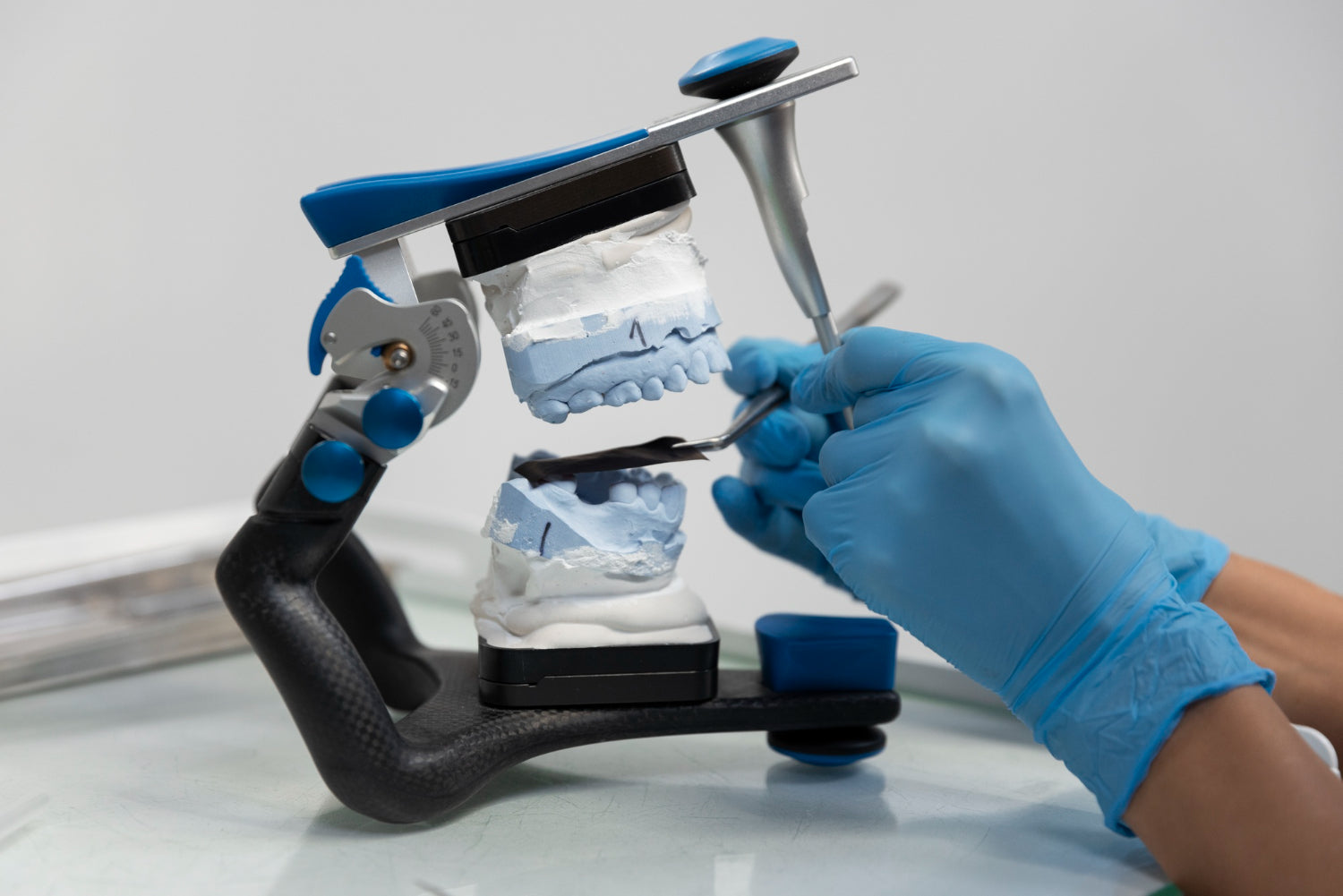

Aidite vs Formlabs Dental Resin: Which Is Better for Dentistry?
As 3D printing becomes a standard part of dental lab workflows, the resin choice matters more than most labs initially expect. Aidite and Formlabs are two of the most commonly evaluated brands Aidite because of its established presence in CAD/CAM dental materials, Formlabs because of its dominant position in professional 3D printing hardware. The comparison between them isn't straightforward, because they're built around different assumptions about how a dental lab operates. This guide covers both honestly what each does well, where each falls short, and which makes more sense depending on what your lab actually needs. What each brand is, and why the context matters? Aidite is a dental materials manufacturer that started in zirconia and CAD/CAM consumables, then expanded into 3D printing resins. Its dental resin range is designed to work across multiple printer brands open-system compatibility is part of the product proposition. Labs that already run Aidite zirconia dental material for milling and want to add a printing workflow without changing suppliers will find Aidite's resin range a natural extension of an existing relationship. Formlabs is a 3D printing hardware company that built a dental resin range specifically validated for its own printers the Form 3B and Form 3B+. Its ecosystem approach means the hardware, software, and resin are designed together, which produces reliable and predictable print outcomes within that closed system. The tradeoff is dependency: Formlabs resins work best on Formlabs printers, and moving to a different hardware platform means re-evaluating the entire resin relationship. That structural difference open system vs. closed ecosystem is the most important thing to understand before comparing individual products, because it shapes every other decision downstream. Dental resin types: what both brands cover Both Aidite and Formlabs offer resins across the core categories a dental lab needs for a complete 3D printing workflow. Resin Category Aidite Formlabs Dental models Model resin, thermoforming model resin Dental Model Resin, Model Resin V2 Temporary crowns / C&B C&B resin, PMMA-based temporaries Temporary CB Resin Surgical guides Surgical guide resin Surgical Guide Resin Denture base Denture base resin, multilayer PMMA Denture Base Resin Denture teeth Denture teeth resin Denture Teeth Resin Splints / night guards Splint resin Splint Resin Gingiva / soft tissue Gingiva resin Not offered The gingiva resin gap is worth noting. Formlabs does not offer a soft tissue simulation resin labs that need flexible gingiva models for implant planning or removable prosthetics workflows have to source that material elsewhere. Aidite covers it within the same product family, which simplifies ordering and support for labs running complex prosthetic workflows. Print accuracy and surface quality Both brands produce clinically acceptable accuracy when used correctly but the conditions matter. Formlabs' SLA printing technology (stereolithography) uses a laser point source to cure resin layer by layer, which produces very fine detail and smooth surfaces. The Form 3B achieves 25-micron XY resolution, which is competitive with the best dental-specific printers on the market. For diagnostic models, surgical guides, and clear aligner models where surface accuracy is the primary requirement, Formlabs' print quality is difficult to fault within its validated workflow. Aidite's resins are validated for DLP printers including Aidite's own CPD-100 platform, as well as third-party DLP systems. DLP cures an entire layer at once rather than tracing it with a point laser, which is faster but can introduce slight edge distortion at the boundary of the exposure area. On a well-calibrated DLP printer, this difference is minimal for most dental applications. For extremely fine marginal detail surgical guide holes, thin die spacers the SLA advantage is more clinically relevant. Published research on 3D-printed dental model accuracy consistently shows that printer calibration and resin handling protocol matter more than brand differences for most clinical applications. A well-run Aidite DLP workflow outperforms a poorly calibrated Formlabs SLA workflow, and vice versa. Denture base and PMMA: where Aidite has more range For labs running full-arch denture workflows, Aidite's material range offers more options than Formlabs. Beyond 3D-printed denture base resin, Aidite covers PMMA-based denture materials for milling workflows which matters for labs that haven't fully transitioned to 3D printing for all denture cases or that run hybrid milled/printed approaches. The Aidite Denture Base PMMA is a milled PMMA dental material designed for full denture bases a different product category from 3D-printed denture resin, but one that gives labs the flexibility to choose the fabrication method that best suits the clinical case and equipment available. Formlabs doesn't offer a milled PMMA equivalent. For temporary crown and bridge work, the Aidite PMMA multilayer disc covers CAD/CAM temporary fabrication with natural shade gradients built into the blank a workflow that produces temporaries with better aesthetic depth than most 3D-printed options at equivalent turnaround time. This is particularly relevant for implant temporization workflows where the temporary may be worn for three to six months. Ecosystem flexibility: open system vs. closed This is where the practical decision often lands for labs evaluating both brands seriously. Formlabs' closed ecosystem means consistent, validated outcomes when everything runs on Formlabs hardware. The resin profiles are pre-loaded in PreForm software, the wash and cure units are optimised for Formlabs resins, and the support from Formlabs is specific to that stack. For practices or labs that want to invest in one printing system and don't want to manage multi-vendor complexity, this is a genuine operational advantage. The downside is cost of entry Formlabs hardware carries a premium over comparable DLP platforms and limited portability of resin knowledge if the lab ever changes printer brands. Aidite's open-system approach means resins can be run on any compatible DLP or SLA printer with the appropriate exposure settings. Labs that already own a non-Formlabs printer don't need to replace their hardware to access Aidite's resin range. The tradeoff is that validation is more the lab's responsibility confirming the right exposure settings on your specific printer takes more initial setup work than loading a pre-validated Formlabs profile. For labs already running Aidite zirconia for milling and looking to add a printing workflow, the open-system approach means one supplier relationship covers both workflows. The full Aidite zirconia and PMMA range available through Zirconia Guys combined with Aidite's printing resins supports a complete digital lab workflow from milling through printing without managing multiple material vendors. Cost comparison Formlabs resins carry a notable price premium compared to Aidite equivalents for most resin categories. The Formlabs premium is partly justified by the validated hardware integration you're paying for certainty that the resin will perform as specified on their printer without additional calibration work. For labs that value that certainty over cost optimisation, it's a defensible trade. For labs running higher volumes, the per-unit resin cost difference becomes more significant across a month of production. Aidite's denture resin block competitive zirconia price point carries through to their resin range the materials are priced for labs that need to manage cost alongside quality rather than accept a premium for ecosystem convenience. The total cost comparison should also include hardware. Formlabs Form 3B carries a higher entry price than comparable DLP platforms. For labs investing in a new printer specifically to run dental resins, evaluating the full hardware plus consumables cost over a two-year period gives a clearer picture than comparing resin prices in isolation. Biocompatibility and regulatory status Both Aidite and Formlabs dental resins are produced to biocompatibility standards for intraoral and clinical use. Both brands hold CE marking for their dental resin products in European markets. For the US market, both maintain FDA compliance documentation for relevant product categories. For labs supplying restorations directly to clinicians in North America, verifying the specific regulatory status of each product particularly for temporary crown resins and surgical guide materials is the lab's responsibility. Both brands provide this documentation on request. Which is better and for whom? The honest answer is that neither brand is universally better. The right choice depends on how the lab is set up and what it's optimising for. Formlabs makes more sense when: the lab is investing in a new 3D printer specifically for dental applications and wants a validated, fully integrated workflow with minimal calibration complexity. The closed ecosystem is an advantage for labs that prefer to solve once and repeat, and the Form 3B's SLA accuracy is the right choice for applications where very fine marginal detail matters high-accuracy surgical guides and diagnostic models in particular. Aidite makes more sense when: the lab already owns a compatible DLP printer and wants to extend its dental resin range without hardware investment; or when it runs both milling and printing workflows and wants a single supplier relationship covering zirconia blocks, PMMA dental materials, and printing resins. Aidite's gingiva resin is also the only option if soft tissue simulation is part of the workflow Formlabs doesn't cover this category. For labs in North America sourcing either Aidite dental lab materials or evaluating which dental resin fits a specific workflow, working with a specialist dental lab material supplier who understands both product ranges is faster than researching specifications independently. Zirconia Guys carries the full Aidite range get in touch with the team to discuss which products suit your printer, workflow, and case mix.
Learn more
What Are Dental Zirconia Blocks? A Complete Guide
Dental zirconia blocks are the starting point for most crown and bridge restorations in a modern digital dental lab. Every monolithic zirconia crown a lab mills whether it's a simple posterior crown or a complex anterior aesthetic case begins as a pre-sintered blank that gets loaded into a milling machine and shaped into a restoration before being sintered to its final strength and dimensions. Despite how central zirconia blocks are to the daily workflow of most labs, there's genuine confusion about what distinguishes one block from another grades, formats, shade configurations, and how those choices connect to clinical outcomes. This guide covers everything a lab needs to know to make informed sourcing decisions. What a dental zirconia block actually is? A dental zirconia block also called a zirconia blank or zirconia dental blank is a pre-sintered compact of zirconium dioxide (ZrO₂) stabilised with yttria (Y₂O₃). The blank is manufactured by pressing zirconia powder under high pressure and partially sintering it at moderate temperatures to produce a firm but machinable solid. At this stage, the material has roughly 60–70% of its final density strong enough to hold its shape during milling, but not yet fully dense or mechanically optimised. The dental lab mills the crown or bridge from this pre-sintered blank at an oversized dimension typically 20–25% larger than the final restoration because the material shrinks to final size during the sintering step that follows. A CAD/CAM milling machine cuts the restoration geometry from the blank, the milled piece is placed in a sintering furnace at 1,450–1,550°C, and the final product emerges with full mechanical strength and accurate dimensions. This process scan, design, mill from a zirconia blank, sinter is now the standard workflow in most digital dental labs. The entire workflow runs on equipment most modern labs already operate, which is a large part of why dental zirconia displaced traditional casting and pressing techniques in posterior restorations over the past fifteen years. Why dental zirconia became the dominant restorative material? Three properties drove zirconia's adoption across dental labs worldwide: strength, biocompatibility, and workflow efficiency. Strength is the defining advantage. High-strength 3Y-TZP zirconia reaches 900–1,200 MPa flexural strength several times stronger than feldspathic porcelain and more than twice the strength of lithium disilicate. That mechanical performance is what makes dental zirconia the only ceramic suitable for posterior implant crowns, multi-unit bridges, and full-arch prostheses where other materials fracture at a clinically meaningful rate. Biocompatibility adds clinical and patient-facing advantages. Zirconia is chemically inert, doesn't corrode in the oral environment, and produces no tissue discolouration at the margin a real limitation of metal-ceramic restorations when gingival recession exposes the margin years after placement. Its smooth post-sintering surface also resists bacterial adhesion better than metal, which matters for periodontal health around the restoration long-term. Workflow efficiency is what made adoption practical at scale. A zirconia block mills on the same CAD/CAM equipment labs already use, sinters in a furnace already present in most labs, and delivers a complete restoration in one workflow without the casting, pressing, or manual layering steps that previous materials required. Zirconia grades: the most important specification Not all dental zirconia blocks are the same material. The grade determined by the mole percentage of yttria used in manufacturing controls the fundamental tradeoff between strength and translucency. Choosing the wrong grade for a clinical indication creates risk that no amount of skilled technique can compensate for. Grade Flexural Strength Translucency Best Indication 3Y-TZP 900–1,200 MPa Low (20–35%) Posterior implant crowns, bridges, full-arch 4Y-PSZ 700–900 MPa Moderate (35–45%) Premolar crowns, short-span bridges 5Y-PSZ 500–700 MPa High (45–57%) Anterior single-unit crowns, low-load cases Multilayer (3Y–5Y gradient) 700–1,050 MPa Graduated Anterior and premolar, aesthetic + structural The practical rule: use 3Y for anything posterior, load-bearing, or implant-supported. Use 4Y or 5Y for anterior single units where aesthetics matter and bite load is light. Use multilayer discs for the majority of anterior and premolar cases where both strength at the margin and translucency at the incisal edge are required in the same restoration. For high-strength posterior and implant applications, the Explore Functional dental zirconia blocks from UPCERA are a proven 3Y-TZP option engineered specifically for cases where flexural strength is the non-negotiable requirement and shade complexity is secondary. Blocks vs. dental zirconia discs: choosing the right format Dental zirconia comes in two physical formats compact rectangular blocks and larger round discs. The zirconia dental material inside them is identical. The choice is entirely about throughput and workflow. Zirconia blocks dental labs use for single-unit work are the more flexible format. One block, one restoration, minimal waste. They're practical for lower-volume labs, atypical shades that aren't worth stocking in disc format, or one-off cases outside the normal production run. Blocks are also the right format when trialling a new material committing to a box of blocks before moving to discs is a sensible evaluation sequence. Dental zirconia discs typically 95–98mm in diameter allow nesting software to place multiple restorations in a single milling cycle. The per-unit material cost drops significantly at volume, setup time is reduced, and throughput improves across a production day. Labs running 10 or more units daily will find disc format meaningfully more efficient than individual blocks for the same indication. Most digital labs stock both: discs for regular production flow, zirconia blocks dental labs keep on hand for custom cases or shades not available in the current disc inventory. The UPCERA dental zirconia blank range covers both formats across all grades TT, ST, and HT lines in white, pre-shaded, and multilayer configurations. Pre-shaded vs. white dental zirconia blanks Within both blocks and discs, dental zirconia blanks are available in two shade configurations that affect the post-sintering workflow significantly. Pre-shaded zirconia dental blanks have colour built into the material before sintering. The finished crown exits the furnace with a natural shade gradient already established reducing or eliminating external liquid staining time on standard prescriptions. A2 and A3 cover the majority of cases in most labs. For high-volume posterior work, pre-shaded blanks reduce bench time per unit without compromising shade accuracy, which compounds to significant time savings across a week of production. White dental lab materials in zirconia give technicians full control over characterisation through liquid shade systems and surface stains applied before sintering. These are the right choice for complex custom shading, unusual prescriptions, or cases where the finishing work is the differentiator in a lab's service offering. The Aidite zirconia blocks range including HonorZir SHT and Superfect Zir lines covers both pre-shaded and white options across multiple translucency grades, letting labs build a practical inventory from a single supplier relationship. Most labs settle on pre-shaded multilayer discs for standard production and white blocks for custom cases. That combination handles the large majority of prescriptions without overstocking. Sintering: where outcomes are actually determined Material grade and format are the decisions labs focus on but sintering accuracy determines whether the chosen material performs to specification in the clinic. Every zirconia block and disc has a manufacturer-specified sintering curve: a precise ramp rate, hold temperature, and cool-down profile. Deviating from that curve even modestly can reduce the restoration's final flexural strength by 20–30% with no visible sign that anything went wrong. The crown seats correctly, looks fine, and then fails under load months later in a way that's difficult to trace back to the sintering program. Following the specified sintering curve exactly for every product, every batch is the single most important quality control step in a zirconia milling workflow. It costs nothing and prevents a category of clinical failure that better material selection alone cannot address. Most major zirconia brands including UPCERA and Aidite provide both standard and fast-fire sintering programs. Fast-fire cycles complete in under two hours for single units and short bridges, enabling same-day crown delivery in fully digital workflows. What to look for when sourcing dental zirconia blocks? The specification on a datasheet describes potential performance. Batch-to-batch consistency determines whether that potential is reproducible in your lab across months of production. These are the factors that matter most when evaluating a zirconia supplier: Pre-sintered density uniformity inconsistent density across the blank produces uneven shrinkage during sintering, which causes marginal gaps and poor fit. This is the most common source of unexplained remake rates in labs that have switched to a cheaper zirconia source. Shade stability across batches pre-shaded zirconia should produce the same shade outcome after sintering on batch 50 as it did on batch 1. Shade drift between deliveries forces labs to reverify every new shipment, which eliminates most of the efficiency advantage of pre-shaded material. Open system compatibility dental zirconia blocks and discs should mill on any standard CAD/CAM platform without proprietary software keys or machine-specific restrictions. All UPCERA and Aidite products available through Zirconia Guys are open-system compatible with major milling platforms including Roland, vhf, Zirkonzahn, and Imes-icore. Technical support from the supplier sintering curves, milling parameters, and shade verification protocols are product-specific. A supplier who can answer technical questions about the materials they sell is worth more than a marginally cheaper source with no support capability. For dental labs in North America sourcing zirconia blocks, dental zirconia discs, and related dental lab materials, Zirconia Guys supplies both the UPCERA and Aidite ranges with full batch documentation and technical support. Get in touch with the team to discuss which grade, format, and shade configuration suits your milling system and case mix.
Learn more
Advantages of Aidite 3D Pro Zirconia for Modern Dental Restorations
Most dental labs now run zirconia as their primary restorative material but not all zirconia performs the same way. The Aidite 3D Pro Zir is one of the products that changed expectations for what a multilayer zirconia disc can deliver: a continuous strength-to-translucency gradient built into the blank itself, without the discrete layer demarcation lines that were a visible limitation of earlier multilayer technology. This guide covers the technical and clinical case for the 3D Pro Zir what it actually delivers in terms of specs, where it fits in a lab's workflow, which indications it handles best, and where its limits are. It's written for technicians and clinicians who want to make an informed purchasing decision, not read a product brochure. What the 3D Pro Zir is and what makes it different? The Aidite 3D Pro zirconia blocks and discs are built on what Aidite calls layerless gradient technology. Where conventional multilayer zirconia discs stack discrete layers of different yttria concentrations typically three to five layers with visible transitions between them the 3D Pro Zir uses a continuous gradient manufacturing process that distributes the yttria concentration across the blank without hard boundaries. In practical terms, this means two things. First, there's no risk of the milling position landing exactly on a layer boundary, which in conventional multilayer discs can produce a visible demarcation line in the final restoration. Second, the gradient is genuinely three-dimensional it responds to how the crown is positioned in the blank during nesting, not just to the vertical position within the disc. That gives technicians more flexibility in placing units within the zirconia disc without compromising the shade gradient. Technical specifications that matter clinically Understanding the 3D Pro Zir means looking past marketing language and into the numbers that determine clinical suitability. Flexural strength: The cervical region of the 3D Pro Zir reaches approximately 1,050 MPa sufficient for bridge connectors and implant crown margins where structural integrity is the priority. The incisal region reduces to approximately 700 MPa as translucency increases. Both figures are clinically adequate for the anterior and premolar indications the product is designed for. Translucency: The incisal layer of the 3D Pro Zir reaches 57% translucency competitive with high-translucency glass ceramics and meaningfully higher than conventional 3Y-TZP zirconia dental material, which typically ranges between 20–35% translucency. For anterior monolithic restorations, this is the figure that determines whether the crown will satisfy patients and clinicians who might otherwise request lithium disilicate. Shade range: 16 VITA classical shades plus bleach shades and master shades covering the full range of standard prescriptions. Available in both pre-shaded multilayer format and white for labs that prefer manual characterisation. Disc dimensions: Standard 98mm diameter, 12mm thickness compatible with most major open-system milling platforms including Roland, vhf, Zirkonzahn, and Imes-icore. Available in both disc and zirconium block format depending on the lab's volume and workflow preference. The multilayer gradient: why it matters for anterior work The central advantage of any zirconia multilayer disc is the ability to produce anterior restorations that don't require manual porcelain layering. Hand-built feldspathic veneering on a zirconia coping is the aesthetic gold standard, but it carries real clinical risk veneered porcelain chips at a rate of 5–15% over five years in published studies, and repairs rarely hold long-term. The translucent multilayer zirconia Aidite 3D Pro Zir addresses this by producing a monolithic anterior restoration with optical properties close enough to a layered crown that most patients and clinicians won't see the difference under normal conditions. The result is an anterior crown that has no interface to chip, no veneering porcelain to fracture, and the full mechanical integrity of a monolithic zirconia restoration with translucency that makes it clinically viable in the smile zone. For a lab's workflow, this matters beyond the individual case. A single zirconia blanks format the 3D Pro Zir disc can handle both posterior monolithic work and anterior aesthetic cases without switching to a different material, different sintering program, or different milling strategy. That simplification has real operational value in a busy production environment. Where the 3D Pro Zir is clinically indicated? The 3D Pro Zir is designed as a full-arch anterior and premolar material it covers the clinical range from second premolar forward on both arches. Specific indications include: Anterior single-unit crowns on natural teeth and implants with favourable occlusion Premolar crowns where both strength and aesthetics matter Anterior and premolar three-unit bridges on natural teeth Inlay and onlay restorations in anterior and premolar positions Veneers where zirconia is the preferred material over ceramic Where the 3D Pro Zir is not the right choice: high-load posterior molar implant crowns, full-arch prostheses, and bruxism cases in posterior positions. For those indications, a high-strength 3Y-TZP in white or pre-shaded format is the appropriate selection the 3D Pro Zir's translucency advantage is irrelevant there, and a higher-strength grade reduces clinical risk. Sintering: standard and fast-fire programs The 3D Pro Zir is validated for both conventional and fast-fire sintering programs. The standard program runs at approximately 1,500°C with a total cycle time of 6–8 hours depending on furnace brand and unit count. The fast-fire program reduces this to under two hours for single units and short bridges enabling same-day delivery workflows in practices with in-house milling capability. Importantly, these programs have been validated across major furnace brands not just proprietary Aidite equipment. Most labs already have a Zubler, Programat, or equivalent sintering furnace, and the 3D Pro Zir's sintering curves translate reliably across those platforms. Deviating from the specified curve even modestly can reduce final strength by 20–30%, so using the validated program consistently is the single most important quality control step in the workflow. Zirconia blocks price and format considerations The 3D Pro Zir is available in both disc and block format. For labs running multiple units per day, the disc format standard 98mm open-system zirconia disc provides the better per-unit economics through nesting software that places multiple restorations per milling cycle. The zirconia blocks price per unit is typically higher when running single blocks for individual crowns, but blocks remain the more practical option for atypical shades, one-off cases, or labs at lower production volume. The cost comparison between the 3D Pro Zir and a conventional 3Y-TZP zirconia dental material is straightforward: the 3D Pro Zir carries a modest price premium over standard high-strength white zirconia, but eliminates the need for a separate anterior aesthetic material. For labs currently running both a posterior zirconia and a lithium disilicate workflow, consolidating anterior cases onto the 3D Pro Zir reduces material inventory, SKU management, and the risk of using the wrong sintering program for the wrong material. Open system compatibility The 3D Pro Zir is manufactured as an open-system zirconia blanks and disc product compatible with any CAD/CAM milling platform that accepts standard 98mm disc or block dimensions. There are no proprietary software keys or machine-specific restrictions. Labs running Roland DWX, vhf R series, Zirkonzahn Zirkograph, or any comparable system can run the 3D Pro Zir without equipment modifications. This matters in practice because labs change milling equipment over time. An open-system material stays usable regardless of future equipment decisions, which is a real operational advantage over brand-locked alternatives. How the 3D Pro Zir fits alongside the rest of the Aidite range? The 3D Pro Zir occupies the middle of the Aidite zirconia range stronger than the super-high-translucency Aizir, more aesthetic than the HonorZir SHT high-strength grade. Understanding where each sits helps labs build a sensible inventory without overlapping indications. The full Aidite zirconia range covers high-strength posterior work through HonorZir SHT and Superfect Zir, the balanced anterior and premolar workflow through the 3D Pro Zir, and the maximum-translucency anterior indication through the Aizir. A lab stocking all three covers every clinical indication in a digital zirconia workflow without requiring any non-zirconia anterior material. Sourcing the 3D Pro Zir in North America For dental labs in the USA and Canada, sourcing through a domestic distributor means shorter lead times, local technical support, and no customs delays on production-critical materials. The 3D Pro Zir in both disc and block formats, across pre-shaded and white variants is available through Zirconia Guys. If you want to discuss which format and shade configuration suits your milling system and case mix, or get current zirconia blocks price information across the Aidite range, get in touch with the team directly.
Learn more
Aidite Aizir: 7 Essential Reasons to Elevate Dental Restorations
The Aidite Aizir is the most advanced zirconia disc in the Aidite lineup and for labs that have made the switch, it's become their default material for anterior restorations and high-aesthetic cases. The reason isn't marketing. It's that the Aizir combines several properties in a single disc that labs previously needed multiple materials or workflows to achieve. This guide breaks down exactly what the Aizir delivers technically and clinically across seven specific reasons that matter for labs running modern digital restoration workflows. Each reason is grounded in what the material actually does, not what the datasheet promises. What is the Aidite Aizir? The Aidite Aizir zirconia is a super-high-translucency (SHT) multilayer zirconia disc built on Aidite's patented 3D gradient sintering technology. It's designed as an open-system zirconia dental material compatible with all major CAD/CAM milling platforms and is manufactured using TOSOH zirconium dioxide powder, the same high-purity Japanese source used in several premium zirconia brands worldwide. The Aizir is available as a 98mm disc in both pre-shaded and white (unshaded) formats, in 10mm and 12mm thickness. It covers VITA classical shades and bleach shades. For labs evaluating zirconia blanks for anterior monolithic workflows, the Aizir sits at the top end of the Aidite range in terms of translucency the product designed for cases where aesthetics are the primary clinical requirement. Reason 1: Super-high translucency that competes with glass ceramics The most significant specification of the Aizir is its incisal translucency reaching levels that approach lithium disilicate in optimal conditions. Early-generation zirconia was opaque and unsuitable for anterior work. 5Y formulations improved on this significantly, but most still fell short of what lithium disilicate delivered optically. The Aizir closes that gap. In practical terms, this means a fully monolithic zirconia crown milled from an Aizir disc can satisfy anterior aesthetic cases that previously required either lithium disilicate or a layered ceramic workflow. That's not a minor incremental improvement it's a workflow simplification that reduces the number of material platforms a lab needs to run. The optical quality comes from the Aizir's formulation sitting in the 5Y zone at the incisal region high cubic phase content that transmits light more like a glass ceramic than conventional zirconia. The tradeoff in strength at that zone is managed by the gradient structure explained below. Reason 2: Three-dimensional gradient technology What distinguishes the Aizir from standard multilayer zirconia discs is the nature of its gradient. Most multilayer discs create a 2D gradient a colour and translucency transition from cervical to incisal in the vertical axis only. The Aizir's patented 3D gradient technology creates a transition that operates simultaneously in colour, translucency, and mechanical properties across the disc's depth dimension as well. The practical consequence is more natural-looking restorations without additional characterisation. When you mill a crown from a standard multilayer disc, the gradient corresponds to the cervical-to-incisal axis of the crown but only if the nesting orientation is correct. The Aizir's 3D gradient creates more consistent optical behaviour across different crown orientations and sizes, reducing the dependence on perfect nesting for acceptable shade results. For anterior cases in particular, this translates to fewer remakes due to shade inconsistency which is where much of the real cost saving comes from in high-aesthetic workflows. Reason 3: Broader sintering temperature range One of the less-discussed advantages of the Aizir is its validated sintering temperature range wider than most competing products. Most zirconia discs require sintering within a narrow window of approximately ±25°C to achieve specified mechanical properties. The Aizir is validated across a broader range, which has a practical implication: it's more forgiving of furnace variability. Not all sintering furnaces maintain temperature uniformly across every cycle. Older furnaces in particular may drift at the edges of their operating range. A zirconia disc that only achieves its rated strength within a tight temperature window will underperform in real lab conditions more often than the datasheet suggests. The Aizir's wider validated range reduces this risk delivering more consistent mechanical outcomes across the range of furnace conditions labs actually operate in. This matters most for labs that have been experiencing unexplained variation in fit or shade consistency, where the furnace is a likely contributing factor rather than the material itself. Reason 4: Adequate strength for anterior and premolar indications The Aizir is not marketed as a high-strength posterior material and it shouldn't be. Its strength profile sits in the 700–900 MPa range which places it above the threshold needed for anterior single-unit crowns and most premolar restorations, while accepting the strength reduction that comes with high translucency. Understanding this positioning is important for correct clinical application. The Aizir is not appropriate for posterior implant crowns, multi-unit bridges in high-load positions, or full-arch prostheses those indications require 3Y-TZP formulations in the 1,000–1,300 MPa range. What the Aizir provides is strength that is more than adequate for the cases it's designed for, without the over-engineering that would compromise the optical properties that make it clinically useful in those cases. The distinction matters for labs advising clinicians on material selection. A patient who needs a high-aesthetic anterior crown and a posterior implant crown in the same treatment plan needs two different zirconia dental materials and the Aizir is the right choice for the anterior case, not both. Reason 5: Open-system compatibility with all major milling platforms The Aizir is an open-system material. The 98mm disc format is compatible with Roland, vhf, Zirkonzahn, Imes-icore, Datron, and most other CAD/CAM milling platforms used in North American dental labs. There are no proprietary software keys, no machine-specific calibration requirements, and no restrictions on which CAD software can generate the milling files. For labs that have built their workflow around a specific milling platform, this means the Aizir integrates without modification. For labs evaluating equipment upgrades, it means material inventory doesn't need to change when the milling machine does. The zirconia disc and the milling platform are independent decisions which is how it should be. Reason 6: Pre-shaded and white options for different lab workflows The Aizir is available in both pre-shaded and white (unshaded) configurations, which covers the two main workflow approaches labs use for anterior work. Pre-shaded Aizir discs exit the sintering furnace with a natural shade gradient already established. For standard VITA A2 and A3 prescriptions which account for the majority of anterior cases pre-shaded blanks reduce or eliminate external staining time. The shade stability across batches, underpinned by TOSOH powder consistency, means labs can rely on the same shade result across consecutive deliveries without running verification tests on each new batch. White Aizir discs give technicians full control over shade characterisation through liquid shade systems applied before sintering. This is the right format for complex or unusual shade prescriptions, cases requiring precise matching to adjacent natural teeth, and labs where characterisation is part of the service offering rather than something to be minimised. The zirconia blocks price across both Aizir configurations is competitive with comparable super-high-translucency products from other premium brands. Given the consistency advantages from TOSOH raw material, the cost-per-reliable-unit is typically lower than the per-disc price suggests. Reason 7: Part of a complete Aidite digital workflow The Aizir doesn't exist in isolation. It's part of a complete Aidite material system that covers every stage of a digital restoration workflow from zirconia blanks for milling through to the Biomic stain and glaze system for surface finishing, and PMMA discs for temporisation. For labs that prefer to work within a single material ecosystem, this matters practically. The Biomic Glaze and Stain system is formulated to match Aidite zirconia's post-sintering optical properties which means the stain behaviour is predictable across the full Aidite range, including the Aizir. Labs that use mixed material brands often encounter shade matching difficulties at the staining stage; a matched system eliminates that variable. The full Aidite zirconia range Aizir, 3D Pro Zir, HonorZir, Superfect Zir, and the PMMA and stain lines is available through Zirconia Guys in North America, so labs can build a complete Aidite workflow from a single supplier relationship rather than managing multiple import and distribution contacts. Is the Aizir right for your lab? The Aizir is the right choice for labs running high-volume anterior and premolar work where aesthetics are the primary concern and the workflow needs to be fast, consistent, and fully monolithic. It's not the right choice for posterior implant crowns, multi-unit bridges in high-load positions, or full-arch cases those require the high-strength Aidite HonorZir SHT or Superfect Zir lines. If your current anterior workflow involves lithium disilicate, multiple firings, or hand-layering to achieve acceptable shade results, the Aizir is worth evaluating as a consolidation path onto a single zirconia disc that handles most of those cases without the additional steps. To discuss whether the Aizir suits your milling system and case mix, or to buy Aizir zirconia blocks for dental labs with technical support included, get in touch with the Zirconia Guys team directly.
Learn more
Key Advantages of Aidite Zirconia for Modern Dental Restorations
Aidite has been manufacturing dental zirconia since 2006 and is now one of the most widely used zirconia brands in digital dental labs across North America, Europe, and Asia. That adoption didn't happen because of marketing. It happened because Aidite's product range solved real problems that labs encounter daily: inconsistent shade matching, limited translucency in posterior-grade materials, and sintering programs that don't translate reliably across different furnace brands. This guide covers what actually distinguishes Aidite zirconia dental material from the field technically, clinically, and practically and which specific products in the range are best suited to each indication. It's written for dental lab technicians and clinicians who want a clear picture, not a brochure summary. What Aidite zirconia is built on: TOSOH powder The foundation of Aidite's zirconia products is TOSOH zirconia powder the same Japanese-manufactured zirconium dioxide used in several premium zirconia brands including Katana. This matters because raw material quality is the single largest determinant of batch-to-batch consistency. TOSOH powder is produced to tighter particle size and purity tolerances than most competing sources, which directly affects pre-sintered density uniformity and shade stability across production runs. For a dental lab, consistent raw material means consistent outcomes at the furnace. A zirconia blank that sinters predictably to the same dimensions and shade across 50 consecutive discs is operationally more valuable than a marginally cheaper material that requires shade adjustment every few batches. This is the first practical advantage Aidite carries into any lab environment. Strength across the range Aidite's zirconia dental material spans a full strength range, from high-strength 3Y-TZP formulations through to super-high-translucency 5Y grades. Understanding where each sits mechanically is essential for matching product to case. The high-strength end of the Aidite range reaches 1,200–1,300 MPa flexural strength sufficient for posterior implant crowns, multi-unit bridges, and fullarch prostheses. This is the grade that matters when clinicians ask whether a zirconia crown will survive in a bruxism patient or under the direct loading of an implant without a periodontal ligament to distribute force. The translucency end of the range accepts a strength reduction in exchange for optical properties that approach lithium disilicate usable for anterior single-unit restorations where the aesthetic benchmark is high. The practical question for any lab is not which end of the range is better, but which grade the specific case demands. Aidite covers both without requiring labs to work with multiple supplier relationships. The full Aidite zirconia blocks range including HonorZir, Superfect Zir, 3D Pro Zir, and Aizir is available through Zirconia Guys in both disc and block formats, covering every indication from high-strength posterior work to anterior aesthetic cases. Multilayer technology: the 3D Pro Zir The most technically significant product in the Aidite range for most digital labs is the 3D Pro Zir. It's built on what Aidite calls layerless gradient technology a manufacturing process that creates a continuous strength and colour transition through the blank rather than discrete layers with visible demarcation lines. In practical terms, the Aidite 3D Pro Zir delivers 1,050 MPa at the cervical region adequate for bridge connectors and implant margins transitioning to 700 MPa at the incisal edge where translucency is the priority. Translucency reaches 57% at the incisal layer, which is competitive with high-translucency glass ceramics. The result is a zirconia multilayer disc that genuinely covers anterior and premolar indications without requiring manual layering or a separate material for aesthetic cases. The 3D Pro Zir is available in 16 VITA shades plus bleach and master shades 98mm open-system disc compatible with most major milling platforms. For labs running high-volume anterior and premolar work, this is the product that eliminates the need for either a separate lithium disilicate workflow or manual veneering on zirconia substructures. The Aizir: when translucency is the primary requirement Where the 3D Pro Zir balances strength and translucency across the blank, the Aidite Aizir zirconia pushes translucency further into territory that was previously only achievable with lithium disilicate. The Aizir is a super-high-translucency formulation designed specifically for anterior single-unit crowns where the optical requirement is at the highest clinical level. The tradeoff is explicit: the Aizir's strength is lower than the 3D Pro Zir, which is why it's indicated for anterior work on natural teeth with light occlusal load, not for implant-supported restorations or posterior bridges. What it offers in that clinical context is an anterior crown in a fully monolithic zirconia workflow that satisfies patients and clinicians who would previously have required lithium disilicate. That's a meaningful operational advantage for labs that want to consolidate their anterior workflow onto a single material platform. Pre-shaded options: where Aidite saves bench time One of the most practical advantages of the Aidite range for high-volume labs is the quality and range of its pre-shaded products. Pre-shaded zirconia where the shade gradient is built into the blank before sintering exits the furnace with natural colour established, reducing or eliminating external staining time on standard prescriptions. The HonorZir SHT Pre Shaded and Superfect Zir SHT Pre Shaded lines both offer multilayer shaded options across the VITA shade range. The shade stability across batches a direct consequence of TOSOH powder consistency means labs can run pre-shaded Aidite blanks without needing to verify shade accuracy on every new batch delivery. That's not a given across all zirconia brands, and it's one of the reasons labs that switch to Aidite pre-shaded products typically don't switch back. For labs that prefer white blanks for custom characterisation work, the HonorZir SHT White and Superfect Zir SHT White provide the same base material in an unshaded format. The zirconia blocks price point across the Aidite white range is competitive with comparable grades from other premium brands the consistency advantage comes without a significant cost premium. Sintering compatibility and speed A zirconia blank's performance is only as good as the sintering process it goes through. Aidite provides validated sintering curves for all products standard programs for conventional furnaces, and fast-fire programs for high-speed sintering systems that complete a cycle in under two hours for single units and short-span bridges. The practical implication of fast-fire compatibility is same-day crown delivery in digital workflows. A case scanned in the morning can be milled, sintered, characterised, and delivered in the same clinical session. For practices running digital workflows without an in-house lab, this changes the economics of same-day restorations entirely. Importantly, Aidite's sintering curves have been validated across major furnace platforms not just proprietary Aidite equipment. This matters because most labs already have a furnace brand they're committed to, and a zirconia product that requires a proprietary sintering setup is a workflow problem rather than a solution. Open system compatibility All Aidite zirconia products both zirconium block and disc formats are manufactured as open-system materials. They mill on any 5-axis CAD/CAM system that accepts standard block or disc dimensions: Roland, vhf, Zirkonzahn, Imes-icore, and most other platforms used in North American digital labs. This is a meaningful practical point. Some premium zirconia brands restrict compatibility to proprietary milling systems or require software keys that tie the lab to a specific machine ecosystem. Aidite's open-system approach means labs can switch milling platforms, upgrade equipment, or run multiple machines without renegotiating their material supply relationship. What this means for labs sourcing Aidite in North America? The advantages of Aidite zirconia dental material are well established in the labs that run it regularly consistent raw material, a product range that genuinely covers all indications, multilayer technology that reduces workflow complexity, and sintering programs that translate reliably across furnace brands. The remaining variable is the supply relationship. Sourcing through a domestic distributor rather than importing directly gives labs shorter lead times, local technical support when sintering or milling issues arise, and a single point of contact for the full Aidite range plus complementary materials. As a North American dental lab material supplier, Zirconia Guys to discuss which Aidite products suit your milling system, furnace, and case mix and to get current pricing on discs and blocks across the range.
Learn more
Zirconia vs Ceramic Crowns: What’s the Difference?
"Zirconia vs ceramic" is one of the most searched comparisons in restorative dentistry and one of the most misleading, because the framing implies they're separate categories. They aren't. Zirconia is a ceramic. What the question is really asking is: what's the difference between zirconia and other dental ceramics, and which one is right for the case? That's a better question, and it has a clear answer. This guide breaks down how zirconia and other dental ceramics actually differ in composition, mechanical behaviour, aesthetics, cost, and clinical application so labs and clinicians can make the decision based on the case rather than habit or assumption. Why "ceramic crown" means different things The term ceramic crown covers several distinct materials that share a name but perform very differently. When a patient or clinician says "ceramic crown," they usually mean one of three things: a feldspathic porcelain restoration, a lithium disilicate crown, or a zirconia crown. Understanding the difference between them is the starting point for any meaningful comparison. Feldspathic porcelain is the original dental ceramic glass-based, highly aesthetic, and weak in structural terms. Flexural strength of 60–100 MPa makes it unsuitable as a standalone crown material for anything beyond low-stress veneers. It survives in modern dentistry primarily as a veneering material layered over stronger substructures. Lithium disilicate is a glass ceramic with flexural strength around 400 MPa strong enough for anterior single-unit crowns on natural teeth, with optical properties that closely mimic natural enamel. It's the material most people mean when they ask about a "ceramic crown" in the aesthetic sense. It handles light beautifully. It does not handle posterior implant loading safely. Zirconia is a polycrystalline ceramic structurally and chemically distinct from glass ceramics. High-strength 3Y-TZP zirconia reaches 900–1,200 MPa through transformation toughening, a crack-resistance mechanism that glass ceramics don't have. That single difference is what makes zirconia viable for posterior implants, bridges, and full-arch cases where other ceramics cannot be safely used. Strength: where the real difference lies The strength gap between zirconia and other dental ceramics isn't a minor margin it's an order of magnitude. 3Y-TZP zirconia at 900–1,200 MPa is three to twelve times stronger than feldspathic porcelain, and more than twice the strength of lithium disilicate. In practical terms, this means zirconia dental material can be used in clinical situations that would result in predictable fracture with any other ceramic. The mechanism behind this is transformation toughening. When a crack begins to propagate through a zirconia crown, the crystal structure at the crack tip undergoes a phase transformation that expands the material slightly effectively closing the crack rather than allowing it to travel. Glass ceramics like lithium disilicate don't have this mechanism. Once a crack starts, it progresses. For posterior implant cases specifically, this distinction matters enormously. Natural teeth have a periodontal ligament a thin layer of connective tissue that absorbs and distributes bite forces. Implants don't. All of that force goes directly into the restoration. Lithium disilicate at 400 MPa is borderline even for natural posterior crowns; on an implant, the fracture risk becomes clinically unacceptable in most cases. Zirconia doesn't have this problem. Aesthetics: where ceramic still has an edge For all of zirconia's mechanical advantages, glass ceramics particularly lithium disilicate still produce superior aesthetics in the hands of a skilled technician. The reason is optical. Glass ceramics transmit and diffuse light in a way that closely resembles natural enamel. The internal translucency, colour depth, and surface character of a well-executed lithium disilicate crown in an anterior position is genuinely difficult to distinguish from a natural tooth. Early zirconia was opaque and flat a significant aesthetic limitation that made it unsuitable for anterior work regardless of its strength. That limitation has been substantially reduced by newer 4Y and 5Y zirconia formulations with higher translucency, and most significantly by zirconia multilayer discs that build a translucency gradient into the blank itself. The cervical region retains 3Y-level strength; the incisal edge approaches 5Y optical quality. For most anterior cases, this is now good enough patients and clinicians who aren't directly comparing under ideal conditions won't see a meaningful difference. The exception is high-profile anterior cases where the aesthetic benchmark is exact. A skilled layered ceramic crown built over a lithium disilicate substructure, in the hands of an experienced technician, remains the clinical gold standard for anterior aesthetics. Zirconia approaches it but doesn't surpass it. Cost: zirconia blocks price vs ceramic materials Cost comparison between zirconia and ceramic crowns involves both the material cost and the lab time. Zirconia blocks price varies by brand, grade, and format, but the more important cost factor for a dental lab is throughput how many units can be produced per hour of bench time. A monolithic zirconia crown milled from a zirconium block is significantly faster to produce than a layered ceramic crown built over a substructure. Mill, sinter, stain, glaze, done. The layered ceramic workflow building up feldspathic porcelain by hand, multiple firings, risk of porcelain fracture during handling is labour-intensive and slower. At volume, that time difference is the larger cost factor, not the raw material price. Lithium disilicate pressed or milled crowns sit in between faster than fully layered work, but with more steps than monolithic zirconia. For a posterior crown where aesthetics aren't the primary concern, monolithic zirconia is almost always the most cost-efficient option in a digital lab. For labs evaluating zirconia blanks and disc formats, the multilayered zirconia options from UPCERA available in both disc and block format give labs a single material that covers most indications, reducing the number of SKUs needed to run a complete posterior and anterior workflow. Biocompatibility: a genuine advantage for zirconia Both zirconia and glass ceramics are biocompatible for intraoral use. Neither corrodes in the oral environment, and neither triggers an immune response in properly processed form. Where zirconia has a specific advantage is in soft tissue response around the restoration margin. Zirconia's smooth, non-porous surface after sintering and glazing accumulates less plaque than metal or glass ceramic surfaces. In the long term, this matters for the health of the gingival tissue around the margin less bacterial load means less inflammation and better tissue stability over years of use. For patients with a history of periodontal issues, or for restorations in positions where hygiene is difficult, this is a clinically meaningful advantage rather than a theoretical one. Zirconia also eliminates metal sensitivity concerns entirely. Patients who have reacted to metal restorations or who request fully metal-free treatment can receive zirconia from fixture to crown without compromise. Which to use a practical decision framework The choice between zirconia and other ceramics should follow the clinical demands of the case, not a default preference. A useful framework: Use zirconia when: the restoration is posterior, the patient has any history of bruxism or heavy occlusal load, implants are involved, it's a bridge spanning more than one unit, or it's a full-arch case. In all of these situations, the strength of zirconia is not a preference it's a clinical requirement that other ceramics can't safely meet. Use lithium disilicate or layered ceramic when: the case is a single anterior crown on a natural tooth, occlusal load is light, and the aesthetic benchmark is at the highest level. This is the narrower category, and the patient selection matters a bruxer with a high aesthetic requirement still needs zirconia, and the clinician conversation should reflect that. Use multilayer zirconia as your middle ground: for the large majority of cases that don't fall clearly into either extreme, a high-quality zirconia disc with built-in translucency gradient covers both strength and aesthetic requirements without the failure risk of veneered ceramics. This is where most modern digital labs are landing for the bulk of their production. Sourcing zirconia for your lab Once the clinical decision is made, the sourcing decision matters more than most labs give it credit for. The grade and format of zirconia blank you choose affects every outcome downstream fit, shade accuracy, sintering predictability, and remake rate. A zirconia disc for multi-unit production runs and zirconia blanks for single-unit or custom cases is the inventory approach most digital labs settle on. Within that, the choice between pre-shaded and white, and between 3Y, 4Y, 5Y, and multilayer formulations, should follow the case mix your lab actually runs rather than what's simplest to stock. For labs running standard shade prescriptions, the st pre shaded zirconia and ST Pre Shaded disc exits the furnace with the shade gradient already established reducing staining time significantly on high-volume posterior work. For anterior cases where translucency is the priority, the pre-shaded zirconia blocks aidite in the Aidite HonorZir line offer a multilayer shaded option built for natural-looking anterior restorations. Both ranges are available through Zirconia Guys get in touch to discuss which grade, format, and shade configuration suits your milling system and case mix.
Learn more
What Is Zirconia in Dentistry? A Complete Guide
Zirconia has gone from a niche material to the dominant restorative ceramic in most dental labs in under two decades. That shift didn't happen because of marketing. It happened because zirconia solved problems that had frustrated clinicians and lab technicians for years strength failures in posterior restorations, metal sensitivity in patients, and the aesthetic limitations of older ceramic systems. This guide covers what zirconia actually is as a dental material, how it's manufactured and processed, the grade differences that matter clinically, and how to choose the right format for the cases your lab runs. It's written for dental professionals who want a clear, practical understanding rather than a chemistry lecture. What zirconia is and where it comes from Zirconia is zirconium dioxide (ZrO₂) a ceramic compound derived from zirconium, a naturally occurring metal found in mineral deposits worldwide. In its pure form, zirconia is unstable at room temperature. It's stabilised for dental use by adding yttria (yttrium oxide, Y₂O₃), which locks the crystal structure into a form that remains mechanically stable across the temperature range it experiences in a sintering furnace and inside the mouth. The result is a zirconia dental material that is chemically inert, highly resistant to corrosion, biocompatible with soft tissue and bone, and mechanically strong enough for applications where no other ceramic was previously viable. Those properties are why it displaced metal-ceramic restorations in most posterior crown and bridge workflows over the past fifteen years. How dental zirconia is manufactured Dental zirconia starts as a fine powder. Manufacturers blend zirconium dioxide with stabilising compounds primarily yttria then press the powder into solid blanks under high pressure. These blanks are partially sintered at moderate temperatures to produce what the industry calls a "green" state: firm enough to mill, but not yet fully dense or strong. In this pre-sintered state, the blank is approximately 20–25% larger than the final restoration. The dental lab mills the crown or bridge from the blank at this oversized dimension, then sinters the milled restoration in a furnace at 1,450–1,550°C. Sintering burns off the remaining porosity, densifies the ceramic, and shrinks it to final dimensions developing the material's full mechanical strength in the process. The entire workflow scan, design, mill, sinter runs on CAD/CAM equipment that most modern digital labs already operate. That's one of the reasons zirconia adoption accelerated so quickly: it didn't require labs to invest in new equipment categories. Zirconia grades: what 3Y, 4Y, and 5Y actually mean The grade designation is the most important specification to understand when sourcing zirconia. The number refers to the mole percentage of yttria added during manufacturing, and it controls the fundamental tradeoff between strength and translucency. 3Y-TZP — high strength 3Y zirconia (3 mol% yttria) is the original dental formulation and still the strongest. Flexural strength of 900–1,200 MPa makes it the material of choice for posterior implant crowns, multi-unit bridges, and full-arch prostheses any case where bite force is the primary concern. Its translucency is limited, which made early monolithic 3Y restorations look flat in the anterior region. That's where 4Y and 5Y formulations step in. 4Y and 5Y — translucency at a strength cost Increasing yttria content shifts the crystal structure progressively toward a more cubic phase, which transmits light differently and produces higher translucency. 4Y zirconia reaches 700–900 MPa with moderate translucency a practical middle ground for premolar crowns and cases where aesthetics matter but load is still significant. 5Y reaches 500–700 MPa with high translucency, making it suitable for anterior single-unit crowns where the optical quality needs to approach lithium disilicate. The strength reduction from 3Y to 5Y is not trivial. A 5Y blank in a molar position under heavy occlusal load carries real clinical risk. Grade selection should follow the mechanical demands of the case, not the assumption that higher translucency is always better. The 3Y zirconia Explore Functional from UPCERA is a good example of how high-strength grade is applied in practice engineered specifically for posterior and implant applications where strength is the non-negotiable requirement. Multilayer zirconia the practical solution Multilayer zirconia discs address the grade tradeoff by building the gradient into the blank itself. The cervical third is formulated closer to 3Y for marginal strength; the incisal edge moves toward 5Y for optical depth. A single zirconia multilayer disc covers strength and aesthetics in one material, which simplifies inventory and reduces the decision a lab needs to make per case. For anterior and premolar work where both properties matter, multilayer is now the standard approach in most digital labs. Blocks vs. discs: choosing the right format Dental zirconia comes in two physical formats blocks and discs and the choice between them is a workflow decision, not a clinical one. The material itself is identical. Zirconia blocks A zirconium block is a compact, rectangular blank milled one unit at a time. It suits lower-volume labs, single-unit cases, and situations where a specific grade or shade needs to be stocked without committing to a large-format disc. Zirconia blanks in block format minimise material waste on individual crowns you use what you need and the rest of the block remains usable for the next unit. Labs often keep a selection of zirconia blocks across different grades as a flexible backup for atypical cases. Zirconia discs A zirconia disc typically 95–98mm in diameter allows multiple restorations to be nested and milled in a single production run using nesting software. The efficiency advantage is significant at volume: fewer machine setups, lower cost per unit, and better throughput across a busy production day. High-volume labs running ten or more units daily will find discs considerably more economical than single zirconia blanks for the same indication. Most digital labs stock both formats. Discs handle the regular production flow; zirconia blocks cover one-off cases, custom shades, or grades not currently available in disc format. Pre-shaded vs. white zirconia Within both blocks and discs, zirconia is available in two shade configurations: pre-shaded and white. Pre-shaded zirconia has colour built into the blank before sintering. The restoration exits the furnace with a natural shade gradient already established reducing or eliminating the need for external liquid staining. For standard prescriptions (A2 and A3 cover the majority of cases), pre-shaded blanks significantly reduce bench time per unit without sacrificing shade accuracy. This is where most of the efficiency gains in high-volume posterior workflows come from. White zirconia gives the technician full control over shade characterisation through liquid shade systems and surface stains applied before sintering. It's the right choice for complex or unusual shade prescriptions, custom anterior cases, and labs where highly characterised finishing is part of the service. The Aidite zirconia range offers both configurations across multiple translucency levels the HonorZir and Superfect Zir lines each come in pre-shaded and white variants, letting labs build a practical inventory without overstocking. Clinical applications: where zirconia is used Understanding where zirconia is the right choice and where it isn't prevents clinical problems that start at the material selection stage. Posterior crowns on natural teeth monolithic 3Y or 4Y zirconia is the standard. Strength is the priority, aesthetic demands are lower than anterior work, and the monolithic workflow is fast and predictable. Posterior implant crowns and bridges high-strength 3Y zirconia is the material of choice. The absence of a periodontal ligament means all bite force transfers directly to the restoration. Other ceramics that perform adequately on natural teeth fracture at a clinically meaningful rate under implant loading. Zirconia does not. Anterior crowns multilayer zirconia disc or 5Y zirconia for most cases. A well-selected multilayer disc now satisfies the aesthetic requirements of most anterior restorations. Where the benchmark is an unusually demanding aesthetic match, lithium disilicate or a layered approach may be more appropriate, but those cases are the exception rather than the rule. Full-arch prostheses high-strength 3Y zirconia throughout. No other ceramic material reliably handles full-arch loading. Full-arch cases are where the mechanical properties of zirconia matter most, and where using anything with lower flexural strength creates unacceptable clinical risk. The Upcera zirconia range covers all of these indications from the Explore Functional for high-strength posterior and implant work, through the full TT and ST multilayer lines for anterior and aesthetic applications. Why sintering accuracy matters as much as grade selection? A zirconia blank's grade determines its potential performance. Sintering accuracy determines whether that potential is actually achieved. Every zirconia product has a manufacturer-specified sintering curve a precise ramp rate, hold temperature, and cool-down profile. Deviating from that curve, even by a modest margin, can reduce the final flexural strength of the restoration by 20–30% [2] with no visible sign that anything went wrong. The crown looks fine. It seats well. And it fails under load months later in a way that's difficult to trace back to the sintering program. Following the specified sintering curve exactly for every product, every batch, every time is one of the highest-leverage quality controls in a dental lab. It costs nothing and prevents a category of clinical failure that material selection alone can't address. Choosing a zirconia supplier The specification on a zirconia datasheet MPa values, translucency ratings, shade range describes what the material can do under ideal conditions. Batch-to-batch consistency determines whether those numbers are reproducible in your lab across months of production. Pre-sintered density variation causes uneven shrinkage at the furnace. Shade instability creates surprises in pre-shaded products between batches. Hardness inconsistency accelerates milling tool wear in ways that compound quietly over time. None of these show up in a single order they accumulate as unexplained remake rates that are expensive and difficult to diagnose. As a pmma dental material focused specifically on zirconia and milling materials, Zirconia Guys stocks both Aidite and UPCERA ranges with batch documentation available for labs that need traceability. If you want to discuss which grade, format, and shade configuration suits your milling system and case mix, get in touch with the team.
Learn more
Monolithic vs Layered Dental Crowns: Which Is Better?
The monolithic vs. layered debate comes up constantly in dental labs and the answer is almost never as simple as one being better than the other. Each approach reflects a different set of priorities: monolithic crowns optimise for strength, efficiency, and predictability; layered crowns optimise for aesthetics. The case, the patient, and the clinical situation determine which of those priorities matters more. This guide covers how both crown types are built, where each genuinely outperforms the other, and how to make the call confidently for the cases that land on your bench. What monolithic and layered actually mean? A monolithic crown is milled or pressed from a single block of material — no separate veneering ceramic added on top. The restoration that exits the furnace is structurally complete. Characterisation happens through surface staining and glazing, which adds colour and depth without building a separate layer over the substructure. A layered crown starts with a stronger substructure typically a zirconia or metal coping and has feldspathic or other veneering porcelain built up over it by hand. The layering process is what gives the technician control over the final optical properties: translucency, colour gradients, surface texture, and the way the restoration interacts with light. It's more labour-intensive and requires a higher level of technical skill, but the aesthetic ceiling is substantially higher than monolithic work. The distinction matters clinically because both the strengths and the failure modes differ between them. Understanding why helps labs make the right call rather than defaulting to one approach for everything. The case for monolithic crowns Monolithic crowns have become the workhorse of the modern digital dental lab and for good reason. The workflow is faster, the material properties are more predictable, and the failure mode is fundamentally different from layered work in a way that matters for long-term clinical outcomes. Strength When a monolithic crown is milled from a high-strength zirconia blank, the entire restoration from margin to occlusal surface has the same flexural strength throughout. 3Y-TZP zirconia reaches 900–1,200 MPa. There is no weaker veneering layer to chip. There is no interface between two materials to debond. The restoration either fits or it doesn't there's very little middle ground where it looks fine and is structurally compromised. This is why monolithic zirconia is the standard choice for posterior implant crowns, high-load molar restorations, bruxism cases, and full-arch prostheses. The direct loading that implants create without the cushioning of a periodontal ligament makes the chip-resistance of a monolithic material clinically meaningful rather than just theoretically preferable. Efficiency From a lab perspective, the monolithic workflow is significantly faster. A zirconia blank is loaded into the milling machine, the crown is milled, sintered, stained, glazed, and done. No layering time, no multiple firings, no risk of porcelain fracture during handling or delivery. For a high-volume lab running posterior crowns, this difference in throughput is substantial. Zirconia dental blanks designed for monolithic work come in both pre-shaded and white formats. Pre-shaded zirconia blocks dental labs use for standard A2 and A3 prescriptions exit the furnace with the shade gradient already established, reducing staining time to a minimum. White zirconia blocks give technicians full control for custom shade cases. The Upcera multilayered zirconia range covers both including the TT and ST lines in pre-shaded, white, and multilayer variants suited to different volume and shade requirements. Predictability Monolithic restorations fail in ways that are visible and diagnosable. A fracture through a zirconia blank is a clear clinical event the restoration needs replacing. Layered crowns can experience microcracking at the ceramic interface, progressive delamination, or localised chipping that's difficult to monitor and inconsistent to repair. For a patient-facing product, the simpler failure mode of monolithic work is a genuine clinical advantage. The case for layered crowns Layered crowns exist because monolithic ceramics even the best multilayered zirconia discs cannot fully replicate what a skilled technician achieves with hand-built feldspathic porcelain. The optical complexity of a natural anterior tooth involves translucency variations, internal staining, enamel characterisation, and surface texture that a milled and stained block simply can't match at the same level. Aesthetics For high-profile anterior cases central incisors, lateral incisors, any case where the patient will scrutinise the result under varied lighting a well-executed layered crown is the clinical gold standard. The technician builds translucency into the incisal region manually, controls internal colour effects, and characterises the surface to match the wear patterns and texture of adjacent natural teeth. The result, done well, is effectively indistinguishable from a natural tooth. Lithium disilicate is frequently used as the substructure for anterior layered cases where a thinner preparation is needed — its strength (around 400 MPa) is adequate for low-load anterior work, and its own translucency avoids the need for an opaque base that would compromise the final aesthetics. Clinical situations where layered is the right call Layered crowns make clinical sense when the aesthetic outcome is the primary concern and the mechanical demands are manageable. That typically means: anterior single-unit restorations on natural teeth, cases where adjacent natural teeth have complex shade characteristics that need to be matched precisely, high-profile patients with low occlusal load, and any case where the clinician and patient have explicitly prioritised appearance over longevity considerations. They are not the right choice for posterior implants, bruxism cases, any full-arch work, or situations where the patient's history suggests the veneering ceramic is likely to be stressed beyond its tolerance. Where monolithic falls short? Monolithic zirconia has improved enormously in the past decade, but it has genuine limitations that labs and clinicians should understand rather than dismiss. Early-generation monolithic zirconia was opaque and flat — fine for posterior work where the restoration is rarely visible, but unacceptable for anything in the smile zone. Newer multilayer dental zirconia blanks and 5Y formulations have addressed this substantially. A well-chosen multilayer zirconia blank in an anterior position now produces aesthetics that satisfy most patients and clinicians. But it still falls short of a skilled layered crown in cases where the aesthetic benchmark is a natural, highly characterised incisor in a demanding patient. Surface staining and glazing the primary characterisation method for monolithic work operates at a different level of control than hand-layering. Depth, internal colour variation, and incisal translucency are harder to achieve and require experienced staining technique to approach acceptable anterior aesthetics. This is a skill gap in some labs, not just a material limitation. Where layered falls short? The failure mode of layered crowns is their most significant clinical liability. Veneering ceramic regardless of the substructure chips. Studies consistently report chipping rates of 5–15% over five years for porcelain-veneered zirconia, with higher rates in posterior positions and in patients with parafunctional habits. When chipping occurs, the restoration usually needs remaking rather than repairing, because chairside porcelain repairs rarely hold long-term. The labour cost is also real. Building a layered crown takes substantially more bench time than milling and staining a monolithic restoration. For a lab running volume, that cost difference compounds quickly across a month of production. Layered work is appropriate when the case demands it it's not efficient when a monolithic restoration would serve the clinical situation equally well. How to make the call? The decision between monolithic and layered isn't an aesthetic preference it should follow the clinical demands of the case. A useful framework: Default to monolithic when: the restoration is posterior, the patient has any history of bruxism or heavy occlusal load, the case involves implants, or it's a full-arch prosthesis. Monolithic zirconia handles all of these reliably, and the predictable failure mode means fewer remakes over the life of the restoration. Consider layered when: the case is anterior, the patient has complex shade matching requirements, occlusal load is light, and the clinician has specifically requested the highest possible aesthetic outcome. The conversation should include an honest discussion of the higher chipping risk compared to monolithic work. The middle ground: high-quality multilayer zirconia dental blanks now cover a large band of cases that previously required a layered approach. A well-chosen multilayer disc with 3Y at the cervical for strength and 5Y at the incisal for translucency delivers aesthetics that satisfy most anterior cases without the chipping liability of veneered porcelain. For many labs, expanding their multilayer zirconia inventory is a more practical answer than defaulting to fully layered work. The Aidite zirconia range covers this middle ground well the 3D Pro Zir and Aizir lines are specifically engineered for anterior monolithic work where translucency and shade accuracy need to approach the aesthetic level of layered restorations, without the chipping risk. Material sourcing and consistency Whichever approach a lab uses, the quality of the starting material determines the ceiling of the outcome. A monolithic crown is only as good as the zirconia blank it was milled from pre-sintered density variation, inconsistent shade stability, and poor sintering curve compliance all translate directly into clinical problems that no amount of skilled technique can compensate for. For labs running both monolithic and layered workflows, sourcing from a single reliable zirconia dental lab material supplier simplifies batch documentation, technical support, and material compatibility across your sintering program. Switching between suppliers to save a few dollars per disc is rarely worth the consistency trade-off at the furnace. If you want to discuss which zirconia blocks, multilayer discs, or layering ceramics suit your lab's case mix and milling system, get in touch with the team.
Learn more
What Is Dental Ceramic? Uses, Types, and Benefits
Dental ceramic is the material category most restorations now fall into — and yet it's one of the least understood by the people ordering it, using it, and in some cases fabricating it. The term covers everything from the feldspathic porcelain on a traditional PFM crown to the high-strength zirconia blocks a digital lab mills thirty units from every day. Those materials share a name and very little else. This guide breaks down what dental ceramic actually is, how each type performs clinically, and what the distinctions mean when you're choosing materials for a specific case. It's written for dental labs and clinicians who want to make informed decisions, not recite a textbook definition. What dental ceramic actually is? In simple terms, dental ceramic is an inorganic, non-metallic material processed at high temperature to produce a hard, stable structure suitable for long-term use inside the mouth. The common thread across all ceramic types is that heat — firing or sintering — is what develops their final mechanical properties. What varies enormously between types is composition. Change the crystalline structure, the firing temperature, or the stabilising compounds, and you get materials with completely different strength, translucency, and clinical range. A feldspathic porcelain and a 3Y-TZP zirconia block are both dental ceramics. They have almost nothing in common in how they behave under load. That distinction — same category, very different properties — is why understanding ceramic types matters practically. Selecting the wrong one for a case isn't a minor oversight. It affects longevity, aesthetics, and in some situations, whether the restoration survives at all. The main types of dental ceramic Feldspathic porcelain The original dental ceramic. Feldspathic porcelain has been used in restorations since the late 19th century and remains the standard for veneering — layering over a stronger substructure to build natural colour and translucency. Its aesthetic ceiling is genuinely high; skilled technicians can achieve optical properties that closely mimic natural enamel. The limitation is strength. Feldspathic porcelain has a flexural strength of 60–100 MPa — far too low to function as a structural material on its own. It exists in modern dentistry almost exclusively as a veneering ceramic or in low-stress veneer applications on natural teeth. For implants or any high-load posterior work, it isn't a viable standalone option. Lithium disilicate Lithium disilicate sits in the middle of the ceramic spectrum — stronger than feldspathic porcelain at approximately 400 MPa [1], and significantly more aesthetic than zirconia. It became the preferred material for anterior single-unit restorations in the early 2000s because of how it handles light — the translucency and colour depth are difficult to replicate with any other dental ceramic. The tradeoff is that 400 MPa, while adequate for anterior crowns on natural teeth, is borderline for implant-supported restorations and insufficient for posterior bridges under heavy occlusal load. Patient bite assessment and careful case selection matter significantly when specifying lithium disilicate. It's the right material in a specific band of cases — not a general-purpose ceramic. Zirconia Zirconia is now the dominant restorative ceramic across most dental lab workflows, and the reason is mechanical. High-strength 3Y-TZP zirconia reaches 900–1,200 MPa through transformation toughening — where the crystal structure actively resists crack propagation rather than fracturing through it. That makes it the only ceramic suitable for posterior implant crowns, multi-unit bridges, and full-arch prostheses where other ceramics fall short on strength. The aesthetic limitation of early zirconia — the opaque, chalky appearance of first-generation materials — has been substantially addressed by 4Y and 5Y formulations that increase translucency by adjusting yttria content. Multilayer dental zirconia discs now build a strength-to-translucency gradient directly into the blank, giving labs a single material that covers both structural and aesthetic requirements across most indications. The upcera zirconia covers this spectrum directly — from the high-strength Explore Functional for posterior and implant work, through to the multilayer Explore Esthetics for anterior cases where translucency is the priority. Glass ceramics Lithium disilicate sits within the broader glass ceramic family, which also includes leucite-reinforced ceramics. These materials share a partially crystalline structure that gives them better strength than pure glass while retaining high translucency. They can be etched with hydrofluoric acid for strong adhesive bonding — a genuine clinical advantage for veneers and inlays where conservative preparation is the goal. Where each type is actually used? The practical question isn't which ceramic is technically superior — it's which ceramic fits the clinical situation. Anterior veneers and conservative restorations — feldspathic porcelain or lithium disilicate, depending on preparation depth and the technician's preference for characterisation control. Both offer the aesthetic quality these cases need. Neither is appropriate for a posterior implant crown. Anterior single-unit crowns — lithium disilicate where aesthetics dominate and bite load is light. Multilayer zirconia where the patient has parafunctional habits or the clinician wants to reduce fracture risk without sacrificing aesthetics. Posterior crowns on natural teeth — monolithic zirconia handles this well. Strength is the priority, aesthetic demands are lower than anterior work, and zirconia delivers at a lower cost and with less lab time than layered ceramics. Implant-supported restorations — zirconia for anything posterior or multi-unit. Without a periodontal ligament, load transfers directly to the ceramic — which rules out lithium disilicate for most implant cases. The Aidite zirconia range covers this workflow comprehensively, from high-strength implant crowns through to multi-unit bridges, in both pre-shaded and white variants. Full-arch prostheses — high-strength 3Y-TZP zirconia only. Nothing else has the mechanical properties to handle full-arch loading reliably. Why the shift to ceramic matters clinically? The move away from metal-based restorations has accelerated for reasons that go beyond patient preference. Zirconia in particular is chemically inert, doesn't corrode in the oral environment, and doesn't cause the soft tissue discolouration that dark metal margins produce when gums recede over time. For anterior restorations, that matters enormously to patient satisfaction at five and ten years post-placement. Ceramic surfaces also accumulate less plaque than metal. A properly sintered and glazed zirconia surface is less hospitable to bacterial adhesion — relevant for both tissue health around the restoration and for long-term maintenance of the case. Full-ceramic workflows — from fixture to final crown — are now clinically viable for most cases, and labs that can support them are meaningfully more useful to the clinicians they work with. What this means for dental lab material selection? For a dental lab, the ceramic decision comes down to three questions: what does the case demand mechanically, what does the clinician and patient expect aesthetically, and what can your milling and sintering setup handle reliably? Most modern digital labs mill zirconia as their primary restorative ceramic, use PMMA for temporaries, and handle lithium disilicate either in-house on compatible equipment or outsourced. That covers the large majority of cases. Where labs differ — and where it actually affects clinical outcomes — is in which specific dental lab materials they stock and how consistent their sintering process is. Consistency matters as much as specification. Pre-sintered density variation causes uneven shrinkage. Shade instability creates furnace surprises. Hardness inconsistency wears milling tools faster than it should. These issues don't show up in a single test milling — they accumulate over months as unexplained remake rates. Sourcing from a reliable dental lab material supplier who provides batch documentation alongside the product is worth considerably more than saving a few dollars per disc. If you want to talk through which ceramic materials suit your milling system and case mix, get in touch with the team directly.
Learn more