

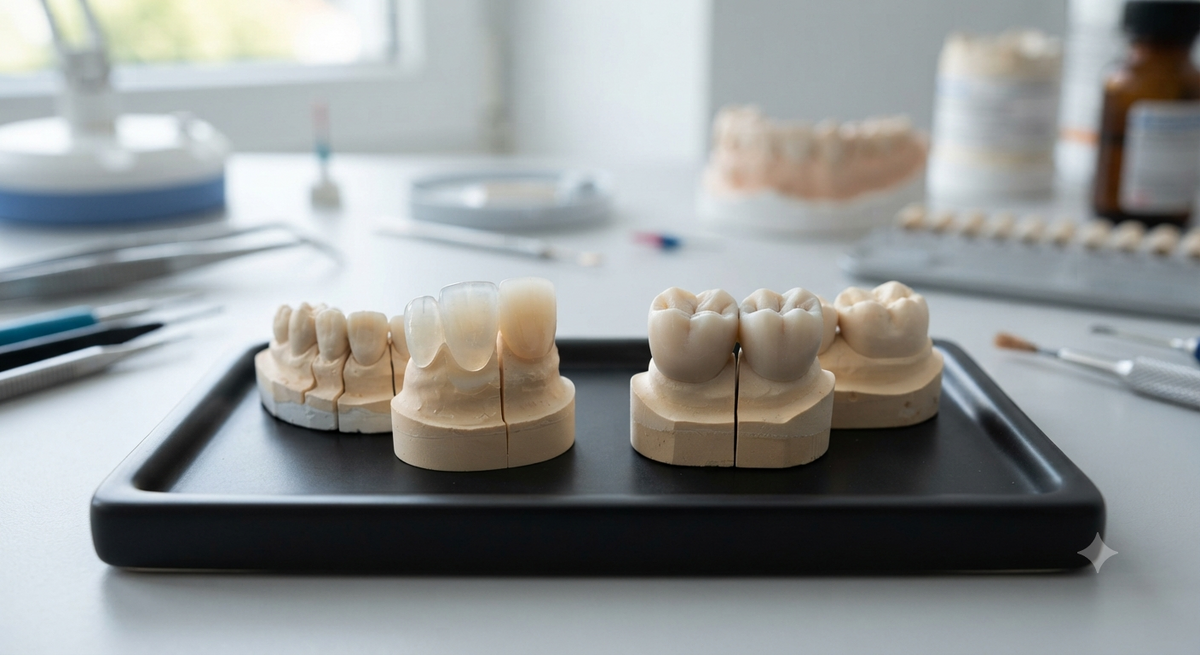
Choosing zirconia for a crown is not simply about selecting the strongest or most translucent material available. The position of the tooth, functional load, esthetic expectations, available space and restoration design all influence the right material. An anterior crown generally requires greater attention to shade and light transmission, while a posterior crown often needs a stronger focus on durability and functional performance.
For dental laboratories, understanding these differences can make material selection more predictable and help avoid unnecessary adjustments later in the workflow.
Start With the Tooth Position
The first question is whether the restoration is being fabricated for the anterior or posterior region. Front teeth are highly visible, so optical properties can have a major influence on the final result. Posterior teeth experience greater chewing forces, making strength and restoration design particularly important.
This does not mean that one zirconia formulation should automatically be used for every anterior or posterior case. Instead, the material should be selected based on the complete clinical and laboratory requirements.
What Matters When Fabricating Anterior Crowns
Anterior restorations generally require careful attention to translucency, shade and natural-looking light transmission. High translucency zirconia may be suitable when the preparation provides favorable conditions and the restoration requires a more lifelike appearance.
Multilayered zirconia can also be useful because the material incorporates different shade and translucency zones. When positioned correctly in the disc, these transitions can help reproduce the visual characteristics of a natural tooth.
For laboratories looking for a simpler shade workflow, pre shaded zirconia can reduce some of the manual coloring steps. However, final staining, glazing or characterization may still be required depending on the case.
When Strength Becomes the Priority
Posterior restorations are exposed to greater functional forces, particularly in patients with heavy occlusion or parafunctional habits. In these situations, strength becomes an important factor when selecting zirconia.
3Y zirconia is commonly associated with higher strength, while 4Y zirconia provides a balance between strength and improved optical properties. The exact performance depends on the formulation and manufacturer, so technicians should always review the specifications and indications for the selected product.
Understanding 3Y, 4Y and Multilayer Options
A practical way to compare zirconia materials is to consider the balance between mechanical performance and optical characteristics.
3Y zirconia is often considered when strength is the main requirement. 4Y zirconia can be considered when the laboratory needs a compromise between strength and translucency. Multilayer materials introduce an additional optical gradient that can support more natural-looking restorations.
Products designed for functional crown applications, such as explore functional zirconia for crowns, should still be evaluated according to the manufacturer's stated indications rather than selected purely by product category.
Do Not Forget Preparation and Thickness
Material selection cannot be separated from preparation design. Limited occlusal or axial space may affect whether a particular zirconia system is suitable.
Before beginning production, check the manufacturer's minimum thickness requirements, recommended indications and sintering instructions. A highly translucent material cannot compensate for insufficient space or an unfavorable underlying shade.
A Practical Selection Process for Dental Labs
A simple workflow can make zirconia selection easier. First, identify the tooth position and expected functional demand. Next, consider the desired esthetic result, available space, preparation shade and restoration design.
Then compare the strength, translucency, shade system and thickness requirements of the available materials.
For an anterior case, optical properties may carry more weight. For a posterior case, strength, thickness and functional loading may become more important.
Final Takeaway
The right zirconia depends on the complete case rather than one material specification. Anterior crowns often require greater attention to translucency and shade, while posterior restorations may place greater emphasis on strength and functional requirements.
By considering tooth position, material composition, restoration design and laboratory workflow together, technicians can make more informed zirconia selections.


