

Blogs
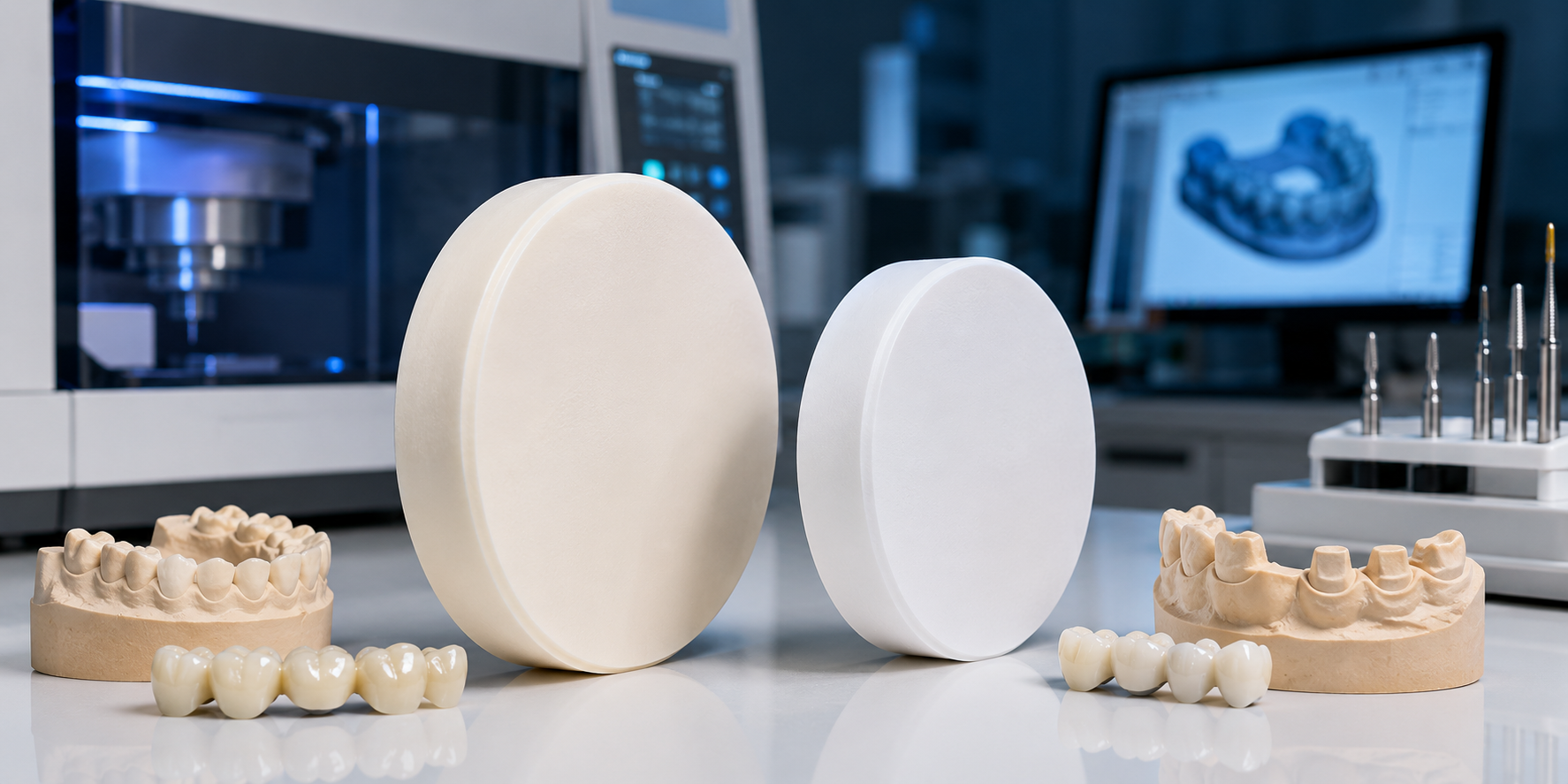

What Is the Shelf Life of a Zirconia Block?
When a dental lab invests in a stock of zirconia blocks, the assumption is that the material sitting in storage is ready to perform exactly as specified when it reaches the mill. That assumption is correct but only if the blocks have been stored correctly and used within a timeframe that keeps their material properties intact. Zirconia is a ceramic material with defined storage requirements, and ignoring those requirements creates production problems that are difficult to trace back to their source. This guide covers what shelf life actually means for dental zirconia discs and blocks, what degrades zirconia in storage, how to identify blocks that have been compromised, and the correct storage conditions that protect your material investment across every batch. Does Zirconia Actually Expire? The straightforward answer is: zirconia does not have an expiration date in the way a pharmaceutical product does, but it does have a manufacturer-recommended use-by period typically two years from the manufacturing date for most commercial zirconia blocks dental products and real degradation mechanisms that make that recommendation clinically meaningful rather than arbitrary. The degradation is not visible on the surface of the disc. A zirconia blank that has been stored incorrectly for three years looks identical to a fresh one. The changes happen at the microstructural level moisture absorption, surface hydrothermal degradation, and humidity-driven phase transformation that reduce the material's performance in ways that only become apparent during or after sintering. Understanding what degrades zirconia in storage and why the manufacturer's recommended storage period exists is the foundation of a reliable material management protocol in any dental lab. It is also directly relevant to the question labs most frequently ask: can we use a block that has been sitting in storage for longer than the recommended period? For a broader understanding of how zirconia material properties affect clinical performance, the Guide to Materials & Strengths of Zirconia Dental Restorations covers the full grade and strength framework useful context for evaluating whether a stored block meets the requirements of the specific case you are planning. The Three Degradation Mechanisms That Affect Stored Zirconia 1. Low-temperature degradation (LTD) — hydrothermal aging Low-temperature degradation is the most clinically significant degradation mechanism in dental zirconia and the primary reason storage conditions matter. LTD occurs when zirconia in its pre-sintered or sintered state is exposed to moisture at temperatures between 25°C and 300°C over extended periods. The mechanism: water molecules interact with the zirconia crystal lattice at the surface, catalyzing a gradual transformation of tetragonal phase crystals to monoclinic phase. Since the transformation toughening mechanism that gives 3Y zirconia its exceptional strength depends on the tetragonal phase being present and available to transform under stress, progressive monoclinic conversion in storage reduces the effective toughening capacity of the material before it ever reaches the mill. In pre-sintered zirconia blocks, the porous green body is more vulnerable to moisture penetration than sintered ceramic the open porosity of the pre-sintered disc allows moisture to reach deeper into the material than it can penetrate in a dense sintered form. This means that storage moisture exposure in pre-sintered discs is more damaging than equivalent exposure to sintered ceramic. 2. Humidity-driven binder degradation Pre-sintered zirconia blocks contain organic binders that hold the powder compact together before sintering. These binders are hygroscopic they absorb moisture from the surrounding environment. Excessive moisture absorption softens the binder system, which affects milling behavior: the disc becomes softer and more prone to chipping during milling, produces rougher milled surfaces, and may exhibit dimensional inconsistency as the binder-modified green body machines differently in different moisture zones within the disc. Labs that have noticed unexpected surface roughness or chipping on older stock without changing milling parameters are often experiencing binder degradation a storage problem presenting as a milling problem. 3. Contamination from ambient exposure Open or damaged packaging exposes zirconia dental blanks to particulate contamination airborne materials, dust, dental lab particulates from adjacent milling operations, and chemical vapors from adhesives, cleaning agents, or other lab materials. Zirconia's porous pre-sintered surface absorbs contaminants readily, and many of these contaminants do not volatilize during sintering at the rates that leave the material clean. The result is sintered discolorations, unexpected shade shifts, or surface inclusions in the final restoration. What the Manufacturer's Recommended Storage Period Means in Practice Most commercial zirconia blocks dental products carry a manufacturer recommendation of 24 months from the manufacturing date, stored in original sealed packaging under specified conditions. This is not a regulatory requirement in most markets it is a material performance guarantee. The manufacturer is stating that the product will meet its published mechanical and optical specifications when used within this period under correct conditions. Beyond the recommended period, the manufacturer does not guarantee that the material meets its published specifications. This does not mean every block beyond 24 months is defective it means the lab assumes responsibility for performance verification if it uses out-of-date stock. For clinical production, this distinction matters: a remake caused by out-of-date material is a lab-absorbed cost that the manufacturer will not cover. The 24-month standard covers aidite zirconia blocks, which carry full batch documentation including manufacturing date and recommended use period with every product shipped through ZirconiaGuys from US inventory allowing labs to track stock age accurately without relying on memory or informal records. Correct Storage Conditions for Zirconia Blocks The storage conditions that protect zirconia dental blanks from all three degradation mechanisms are straightforward and inexpensive to maintain. The challenge is not the cost of correct storage it is the discipline of maintaining it consistently across a busy production environment. Temperature Store at room temperature, 15–25°C. Avoid storage near sintering furnaces, window-facing surfaces with direct sun exposure, or areas adjacent to heated equipment. Thermal cycling repeated temperature fluctuations across wide ranges accelerates moisture ingress through condensation during cooling phases. Humidity Maintain relative humidity below 50%. Humid storage environments are the primary cause of binder degradation and the most common avoidable storage problem in dental labs. If your lab operates in a high-humidity climate or during summer months, consider humidity-controlled storage cabinets for zirconia inventory. Silica gel desiccant packets in storage containers are an effective low-cost solution for controlling micro-environment humidity around stored blocks. Packaging Integrity Keep blocks in their original sealed manufacturer packaging until use. The original packaging is designed to maintain the correct humidity micro-environment and protect the disc from physical damage and contamination. Do not transfer discs to secondary containers, plastic bags, or uncovered shelving before use. Once a disc is removed from original packaging and partially used, reseal it in an airtight container with desiccant for subsequent storage. Separation from Contamination Sources Store zirconia away from areas where PMMA milling, acrylic work, or stain and glaze applications are performed. Airborne acrylic particles and chemical vapors from staining materials are absorbed by exposed pre-sintered zirconia surfaces. Physical Orientation Store discs horizontally or in a purpose-made vertical rack that fully supports the disc without point-loading at the edge. Zirconia in its pre-sintered state has sufficient rigidity to resist breakage under its own weight, but unsupported discs stored leaning at angles can develop stress fractures at the edge particularly in larger diameter 98 mm discs. The upcera zirconia block range at ZirconiaGuys includes storage guidance documentation with each product, and US-stocked inventory means labs receive blocks with maximum remaining shelf life no time lost to international shipping. How to Identify a Degraded Zirconia Block Before It Reaches the Mill Since degraded zirconia looks identical to fresh material, visual inspection alone is insufficient for storage quality assessment. The following indicators are more reliable: Check the Manufacturing Date Every commercial zirconia blank carries a manufacturing date on the packaging. If the date is beyond the recommended use period and storage conditions cannot be verified, treat the block as a risk item not necessarily defective, but requiring performance verification before committing it to clinical production. Mill a Test Piece Before running a full case on a block of uncertain storage history, mill a test crown form and evaluate milling behavior, surface finish, and post-sintering translucency and shade against a known good reference. Degraded blocks often show subtle milling behavior differences more dust, slightly rougher surface, minor chipping at fine margins that a test piece will reveal before a clinical restoration is affected. Evaluate Post-Sintering Optical Properties LTD-affected zirconia typically shows reduced translucency after sintering and a slightly warmer, more opaque appearance than the product specification predicts. If a sintered test piece looks noticeably different from your established standard for the same product, storage-related degradation is a likely contributor. Check for Discoloration on the Disc Surface Yellow, brown, or grey patches on the surface of a zirconia blank that were not present when the disc was opened indicate either contamination from ambient exposure or binder degradation. These patches will cause localized shade anomalies in the sintered restoration. For labs looking to maintain consistent quality across their dental zirconia discs inventory, buy ht white zirconia online from ZirconiaGuys in quantities that align with your realistic 60–90 day consumption reducing the period any single disc sits in storage and eliminating the risk of working from aging stock. Stock Management: Buying Right to Avoid Shelf Life Problems The most reliable protection against shelf life issues is buying in quantities matched to production volume. Labs that overbuy during promotions or to hit free-shipping thresholds accumulate stock that ages in storage creating the exact problem that correct storage protocols are designed to prevent. A practical approach: calculate your average monthly consumption for each disc SKU across a rolling 90-day period. Maintain a maximum of 90 days of stock on hand for each product. Reorder when stock reaches a 30-day supply level. This rotation system ensures that no disc sits in storage for more than three months a small fraction of the 24-month recommended use period that eliminates shelf life as a production variable entirely. For labs standardizing their multilayer anterior disc stock, buy st multilayer zirconia online from ZirconiaGuys with same-day US shipping means you can maintain a lean 30-day stock level and reorder with confidence no need to carry excess inventory as a buffer against long lead times. Labs sourcing zirconia blocks and zirconia dental blanks from a domestic US inventory supplier benefit from this lean stocking strategy most directly: short lead times make just-in-time ordering practical in a way that overseas sourcing cannot support. Zirconia blocks dental labs rely on daily are precision materials with real storage requirements. The 24-month manufacturer recommendation is not a bureaucratic formality it reflects the hydrothermal degradation and binder sensitivity that make correct storage a clinical quality issue, not just an inventory management one. Labs that track manufacturing dates, maintain correct humidity and temperature conditions, rotate stock on a first-in-first-out basis, and buy in quantities matched to consumption will never encounter the production problems that come from degraded zirconia material. The investment in correct storage practice is minimal. The cost of a remake caused by undetected material degradation in time, materials, and customer confidence is not.
Learn more
Is HonorZir White Compatible with Biomic Stain and Glaze from Aidite?
When dental labs invest in a high-strength white zirconia disc, the staining and glazing protocol becomes the single most important finishing variable in the workflow. A disc that mills beautifully but produces unpredictable shade results after staining wastes every hour of upstream work. For labs running Aidite's HonorZir SHT White alongside Aidite's Biomic Stain and Glaze system, the compatibility question is not just theoretical it directly determines whether the finished restoration looks natural or requires a rework cycle. This guide answers the compatibility question directly and practically. It covers the material chemistry behind the pairing, what to expect at each stage of the staining workflow, the firing protocols that produce the best results, and the specific scenarios where this combination excels versus where a different approach is warranted. Understanding HonorZir SHT White: What the Material Is and Why It Matters for Staining Before assessing compatibility with any staining system, it is important to understand what HonorZir SHT White actually is at the material level because the composition of the zirconia disc determines how it interacts with colorants during and after sintering. HonorZir SHT (Super High Translucency) White is a high-translucency zirconia disc formulated with elevated yttria content placing it in the 4Y to 5Y range which produces a predominantly cubic-phase crystal microstructure after sintering. This cubic-dominant microstructure is responsible for the disc's high light transmission, but it also creates a more porous pre-sintered surface than standard 3Y-TZP material. That porosity is relevant: it means colorant penetration during liquid staining is deeper and more uniform on SHT white zirconia than on denser, lower-translucency grades. For staining, this is an advantage but it also means stain concentration management is more critical, because over-staining is easier to achieve on SHT grades than on standard strength zirconia. The aidite honorzir sht white disc is specifically designed for cases where the lab requires full manual shade control over a high-translucency starting material — anterior single crowns with complex shade requirements, cases adjacent to highly translucent natural dentition, or multi-unit cases where unit-by-unit characterization is needed. It is a white blank, meaning every shade element applied to the final restoration originates from the staining protocol, not from the manufacturing process. This is a critical distinction that shapes the staining workflow: unlike pre-shaded multilayer discs where the gradient is built in, HonorZir SHT White requires the technician to build the entire optical result from cervical chroma to incisal translucency through staining technique. The staining system compatibility therefore determines the ceiling of what is achievable. What Is Biomic Stain and Glaze and Is It Designed for Aidite Zirconia? Biomic Stain and Glaze is Aidite's own surface finishing system, formulated specifically for use with Aidite zirconia products. This within-brand compatibility is the most important single factor in answering the compatibility question. Unlike third-party staining systems which are developed against a range of zirconia grades and may or may not be optimized for Aidite's specific sintering chemistry and surface characteristics Biomic was developed alongside Aidite's zirconia product line, including the SHT white grade. The practical implication is that Biomic colorants are calibrated to the specific light refraction and absorption behavior of Aidite's sintered zirconia surface. The pigment particle size, the carrier vehicle, and the firing temperature range are all tuned for Aidite's material — which means shade results are more predictable on Aidite discs than any cross-brand staining system can deliver on the same material. For labs asking whether aidite zirconia for staining & coloring applications like HonorZir SHT White requires a specific staining system or whether any compatible zirconia stain will work the honest answer is that while other staining systems can be used on Aidite zirconia, Biomic provides the most reliable and documented shade outcomes on this specific material. The within-brand formulation alignment eliminates one significant variable from the finishing workflow. For a deeper understanding of how the material grade of your zirconia disc affects staining behavior and finishing decisions, the Guide to Materials and Strengths of Zirconia Dental Restorations covers SHT versus standard grade behavior in detail including how translucency level affects stain penetration depth and firing outcomes. Compatibility Assessment: How Biomic Stain Performs on HonorZir SHT White The answer to the compatibility question is straightforward: yes, Biomic Stain and Glaze is fully compatible with HonorZir SHT White, and it is the recommended staining system for this disc. The compatibility extends across all stages of the finishing workflow pre-sintering liquid shading, post-sintering surface staining, and final glaze application. The aidite stain and glaze Biomic system works on HonorZir SHT White through two distinct application modes, each suited to different lab workflows and case requirements: Pre-sintering liquid shading Is the application of Biomic shade liquids to the milled white blank before the sintering cycle. In this mode, the colorant penetrates the porous pre-sintered zirconia structure and becomes incorporated into the material during sintering. This produces shade gradients that are chemically stable within the material rather than sitting on the surface — the shade cannot chip, flake, or fade the way pure surface stain can. For HonorZir SHT White, pre-sintering liquid shading is the recommended approach for building primary cervical-to-incisal shade gradients. The SHT grade's higher porosity in the pre-sintered state means colorant penetration is excellent at standard immersion or painting concentrations. Post-sintering surface staining Is the application of Biomic stain and characterization pigments to the fully sintered restoration before the final glaze firing. This mode is used for characterization details incisal translucency enhancement, surface texture effects, craze line simulation, and final shade fine-tuning. Post-sintering stain sits on the surface rather than penetrating the material, which means the final glaze application is critical for locking these surface effects in place and protecting them from oral degradation. Key compatibility finding for SHT grades: Because HonorZir SHT White has higher translucency than standard 3Y white zirconia, the optical effect of Biomic colorants is more intense on this material. A stain concentration that produces a medium A2 result on standard high-translucency white zirconia will produce a stronger, more saturated result on SHT grade material. Labs transitioning from standard white zirconia to HonorZir SHT White using the same Biomic staining protocol should reduce initial stain concentration by 20–30% and evaluate results before applying full clinical cases. Firing Protocol: Getting the Best Results from the Biomic-HonorZir Combination Firing protocol adherence is where the majority of shade outcome failures originate when using Biomic with HonorZir SHT White. The combination performs predictably when the sintering and stain firing parameters are followed correctly. Deviations particularly accelerated cycles and temperature overshoots produce outcomes that are difficult to diagnose and impossible to correct without full resintering or remake. Sintering the HonorZir SHT White blank: The HonorZir SHT grade requires a controlled sintering ramp of no more than 5°C per minute up to the peak hold temperature of 1500–1530°C (confirm against the specific batch certificate). Hold time at peak is critical for developing the cubic-phase translucency most labs run a 15–20 minute hold at peak temperature. Rushing this phase produces a cloudier, less translucent result that fundamentally limits what the subsequent staining can achieve. The staining system cannot compensate for a suboptimal sintering outcome. Stain firing after post-sintering characterization: Biomic stain firing on SHT-grade zirconia should use the stain firing profile published in Aidite's Biomic documentation typically a fast ramp to 750–800°C with a 1–2 minute hold. Over-firing stain on SHT grades causes colorant burnout, particularly in lighter shades, producing washed-out or grayed results. Under-firing leaves surface colorants poorly bonded, which causes them to wipe off during glaze application. Glaze firing: The Biomic glaze layer should be fired at Aidite's published glaze temperature typically 750–780°C in a clean furnace with no contamination from previous ceramic firing cycles. The glaze firing locks in all post-sintering characterization and creates the final surface quality. SHT-grade zirconia achieves an excellent gloss level with Biomic glaze without over-accumulation a thin, even glaze application is sufficient. Practical Workflow: When to Use HonorZir SHT White with Biomic vs. Alternatives Understanding when this specific combination is the right choice and when a different format is more appropriate prevents the most common material selection errors in the staining workflow. Use HonorZir SHT White with Biomic when: The case requires full manual shade control over a high-translucency material. Single-unit anterior crowns adjacent to highly translucent natural teeth. Cases with unusual shade requests outside the standard VITA A-D range strong B or C chroma, significant characterization needs, or hypocalcification replication. Multi-unit anterior cases where unit-by-unit shade control is clinically required. Full-arch cases where a unified staining protocol produces consistent results across all units. Consider pre-shaded alternatives when: The case falls within standard A1–D4 VITA shades and shade flexibility is not a clinical priority. For these standard cases, white zirconia blocks aidite in white format with full staining labor may not be the most efficient workflow choice pre-shaded multilayer discs in the same Aidite range deliver comparable esthetic outcomes without the staining step, reducing bench time significantly on volume anterior cases. The white-plus-staining workflow earns its labor investment on complex cases; pre-shaded discs are more efficient for standard production. Queries labs frequently search when evaluating this workflow: aidite stain and glaze labs searching this are typically evaluating which Aidite finishing system to use with a specific disc type. The answer is Biomic for SHT white, applied through the pre-sintering and post-sintering protocol above. natural look zirconia aidite this query reflects labs looking for the most natural optical result from Aidite zirconia. The HonorZir SHT White plus Biomic combination is specifically engineered for this outcome the SHT grade's cubic-phase translucency combined with Biomic's calibrated pigment system produces a level of optical naturalness that is difficult to achieve with lower-translucency grades or third-party staining systems on Aidite material. Common Staining Mistakes on HonorZir SHT White Over-concentrating the cervical shade. SHT-grade zirconia absorbs Biomic colorants more intensely than standard grades. The most frequent outcome failure is a cervical zone that is too saturated dark, reddish-brown rather than warm dentin. Always reduce initial stain concentration by 20–30% from your standard protocol and evaluate after one stain cycle before adding additional color. Skipping the pre-sintering liquid shading step. Some labs attempt to build the entire shade through post-sintering surface staining alone. On SHT white zirconia, this produces a result that looks like a tinted surface rather than a shade that emerges from within the material. Pre-sintering liquid shading is what creates the depth and optical naturalness that the HonorZir SHT grade is designed to deliver. Running the sintering cycle too fast. Accelerated sintering profiles that compress the ramp rate above 5°C/min reduce the cubic phase development in SHT-grade material. The restoration exits sintering at lower translucency than the material is capable of and no amount of subsequent staining compensates for this. The sintering cycle is the foundation; every subsequent step builds on it. Using glaze concentration designed for feldspathic porcelain. Biomic glaze applied at porcelain concentrations over-accumulates on zirconia surfaces, producing a thick, unnatural-looking gloss that obscures surface texture. Apply Biomic glaze at the thin, consistent layer specified in Aidite's protocol—one even coat is sufficient for a natural surface quality on HonorZir SHT White. HonorZir SHT White and Biomic Stain and Glaze are a fully compatible, within-brand pairing designed to work together. The combination delivers the best optical results when the sintering protocol is followed correctly, stain concentration is adjusted for the SHT grade's higher absorption, and the pre-sintering liquid shading step is used to build primary shade gradients rather than relying entirely on post-sintering surface stain. For dental zirconia discs in the white SHT format, this pairing is the most predictable finishing pathway available in the Aidite product ecosystem. For US labs sourcing both zirconia blocks dental grade HonorZir SHT White and Biomic Stain and Glaze from a single domestic supplier, ZirconiaGuys stocks both products from US inventory—eliminating multi-vendor ordering complexity and ensuring consistent batch documentation across the full Aidite finishing workflow. Zirconia blank and zirconia dental blanks in the HonorZir SHT White format are available in multiple disc sizes with same-day shipping on in-stock items.
Learn more
What Is Key Ortho Model Resin and Why Is It Specifically Made for Orthodontic Cases?
Orthodontic model production has changed more in the past five years than in the previous fifty. Digital scanning, CAD software, and desktop 3D printers have replaced plaster and stone in the vast majority of modern orthodontic practices and labs. The workflow is faster, cleaner, and far more scalable. But the shift to digital has also introduced a material selection decision that many labs underestimate: not all resins are suitable for orthodontic models, and using a general-purpose 3D printing resin for orthodontic applications is one of the most common sources of avoidable accuracy and biocompatibility problems in digital orthodontic production. The reason orthodontic models demand a dedicated resin formulation rather than the same material used for surgical guides, splints, or diagnostic models comes down to the specific dimensional and surface requirements of orthodontic work. Aligner fabrication, indirect bonding trays, and bracket placement all depend on millimeter-level accuracy across the full arch. A diagnostic study model can tolerate minor surface imprecision that an aligner thermoforming model simply cannot. This guide explains what Key Ortho Model Resin is, why it is formulated specifically for orthodontic cases, and how it fits into a modern digital orthodontic lab workflow. What Is Key Ortho Model Resin? Key Ortho Model Resin is a photopolymer 3D printing resin from Keystone Industries formulated specifically for orthodontic model production. It is part of Keystone's KeyPrint product family a range of dental-specific resins each engineered for a distinct clinical application rather than adapted from general-purpose photopolymer chemistry. The material is designed for printing high-accuracy dental arch models used in orthodontic treatment planning, clear aligner fabrication, retainer fabrication, and orthodontic appliance construction. It is not a general model resin. The formulation prioritizes the specific properties that orthodontic applications demand: tight dimensional accuracy across the full arch, a smooth surface finish that supports clean thermoforming and accurate bracket placement, and the hardness to withstand the pressure of vacuum-formed aligner materials without deformation. Key Ortho Model Resin is compatible with 385 nm and 405 nm light-cure 3D printing systems the two wavelengths used by the majority of professional dental desktop printers including Carbon, Formlabs, Asiga, Envision TEC, and other open-system platforms. This broad compatibility means labs can adopt it without changing printer hardware. Why Orthodontic Models Require a Dedicated Resin? The dimensional accuracy requirement for orthodontic models is significantly more demanding than for other dental model applications. To understand why, consider what happens when an aligner is thermoformed over a printed model. The thermoforming process applies heat and vacuum pressure to a thermoplastic sheet over the printed model. If the model surface has micro-irregularities from under-cured resin, insufficient layer adhesion, or surface porosity, those imperfections transfer directly to the internal surface of the aligner. The patient then wears an appliance with internal surface artifacts that cause discomfort, affect seating accuracy, and can compromise tooth movement vectors in precision cases. For key ortho model resin for braces and aligner workflows, the resin must deliver three specific properties that general photopolymers do not reliably provide: Surface smoothness at the post-cure stage. Orthodontic models need a surface smooth enough that thermoforming produces a clean internal aligner surface without requiring additional manual finishing of the model. General model resins produce adequate surface finish for diagnostic viewing but not consistently enough for aligner thermoforming in a production environment. Dimensional stability under thermoforming heat. The heat deflection temperature of the resin must be high enough that the model does not deform during the thermoforming cycle. A model that softens under vacuum-forming heat will change shape mid-cycle, producing an aligner that does not accurately represent the designed tooth movement. Key Ortho Model Resin is formulated with a heat deflection temperature above the operating range of standard thermoforming equipment. Consistent accuracy across the full arch. A single orthodontic model spans 14 teeth from molar to molar a distance that amplifies any dimensional drift in the printing process. Resin formulations with inconsistent polymerization shrinkage cause cumulative error across the arch that shows up as aligner misfit at the posterior segments even when the anterior region looks correct. The tight shrinkage control in Key Ortho Model Resin keeps cumulative arch error within clinical tolerance across the full dental span. How Key Ortho Model Resin Fits into the Digital Orthodontic Workflow? Understanding where resin selection matters requires mapping it to the actual production steps in a digital orthodontic lab. For labs new to 3D printing resin selection, the broader guide to Resin for Dental 3D Printing: Uses, Types, and Tips covers the full application landscape but for orthodontic-specific workflows, the steps below show where Key Ortho Model Resin directly impacts output quality. As a reliable key ortho model resin supplier in the US market, ZirconiaGuys stocks Key Ortho Model Resin from domestic inventory which matters in orthodontic lab environments where consistent supply and predictable lead times are part of maintaining treatment schedule commitments to patients. Step 1 — Digital scan and model preparation. The orthodontic treatment workflow begins with an intraoral scan or digital model from a CBCT. The scan data is processed in orthodontic planning software (Invisalign ClinCheck, uLab, 3Shape Ortho, or others) to produce individual stage models representing tooth positions at each aligner step. These models are exported as STL files ready for printing. Step 2 — Print orientation and support placement. Orthodontic models are printed at an angle typically 45° to minimize suction cup forces on the flat base during layer separation and to distribute layer lines across the arch in a way that avoids vertical striations on critical tooth surfaces. to minimize suction cup forces on the flat base during layer separation and to distribute layer lines across the arch in a way that avoids vertical striations on critical tooth surfaces. Supports are placed on the model base, never on the tooth surfaces or gingival anatomy. Incorrect orientation is one of the most common sources of surface quality problems in orthodontic model printing. Step 3 — Printing. Key Ortho Model Resin is printed at the exposure settings specified by Keystone for the specific printer being used. These settings are validated to produce the layer-to-layer adhesion and cure depth that deliver the required dimensional accuracy. Running the resin at default general-purpose settings rather than the validated orthodontic settings is a common cause of under-cure and reduced surface quality. Step 4 — Post-processing. After printing, models are washed in isopropyl alcohol (IPA) at 90–99% concentration to remove uncured resin from surfaces and cavities. This step is critical residual uncured resin on the model surface will prevent proper aligner seating and transfer surface artifacts to the thermoformed appliance. After washing, models are post-cured under UV light at the validated time and intensity. Key Ortho Model Resin achieves its specified mechanical properties — including the heat deflection temperature needed for thermoforming only when the post-cure protocol is followed exactly. Step 5 — Thermoforming. The post-cured model is used directly for aligner thermoforming. No additional treatment or coating is required. The resin surface provides the release characteristics needed for clean aligner removal after thermoforming without adhesion or tearing. Key Ortho Model Resin vs. General Dental Model Resins Not all orthodontic labs run dedicated orthodontic resin. Many start with a general dental model resin and discover the limitations through production problems. The comparison below clarifies the specific differences that matter in orthodontic production. The available orthodontic model resin options from ZirconiaGuys span multiple validated formats for different printer systems and production volumes. For labs evaluating which format to standardize on, the key differentiator is whether the resin has been validated specifically for aligner thermoforming — not just for model printing in general. Property Key Ortho Model Resin General Dental Model Resin Surface smoothness Optimized for thermoforming Adequate for viewing only Heat deflection temp Above thermoforming range Variable often insufficient Dimensional accuracy Full-arch validated Single-tooth validated Polymerization shrinkage Tight control Standard may drift Aligner release Clean separation May require manual release Post-cure requirement Defined protocol Generic protocol Application validation Orthodontic-specific General dental The practical difference shows up most clearly in full-arch aligner series. A lab producing single-stage models for diagnostic purposes can use general model resin without significant clinical consequence. A lab producing a 20-stage aligner series needs every model to be dimensionally consistent so that the aligner series produces the designed tooth movement and that consistency requires a resin validated for the full-arch accuracy demand of orthodontic production. Indirect Bonding Trays and the IBT Resin Distinction One additional application closely related to orthodontic model production is indirect bonding trays the transfer trays used to position brackets precisely on tooth surfaces in a single chairside step. IBT production involves a different set of material requirements than model printing and requires a distinct resin formulation. The key ortho ibt dental resin is engineered specifically for this application with the flexibility, dimensional accuracy, and surface properties needed for bracket transfer rather than the hardness and thermoforming compatibility required for aligner model production. Labs running both aligner and bracket workflows need both resins in inventory: Key Ortho Model Resin for aligner models and Key Ortho IBT Resin for indirect bonding trays. Using the model resin for IBT production or vice versa produces results that the application-specific formulations outperform. Sourcing Key Ortho Model Resin in the US For US dental and orthodontic labs, sourcing from domestic inventory eliminates the lead time variability of international supply. ZirconiaGuys stocks the full Keystone orthodontic resin range including Key Ortho Model Resin and Key Ortho IBT Resin from US inventory with same-day or next-day shipping on in-stock items. Labs that run mixed material workflows combining 3D printed orthodontic models with milled zirconia blocks dental restorations, dental zirconia discs for permanent crown and bridge cases, or zirconia blank stock for posterior work can consolidate resin and zirconia dental blanks procurement through a single US supplier. The same zirconia blocks volume pricing that makes ZirconiaGuys a cost-effective source for fixed restoration materials applies to the Keystone resin range as well, simplifying ordering and reducing the administrative overhead of managing multiple dental material vendors. Key Ortho Model Resin is not a premium version of a general model resin. It is a distinct formulation engineered for the specific surface, dimensional, and thermal demands of orthodontic aligner and appliance production. For labs that have been using general-purpose resins for orthodontic models and experiencing aligner fit inconsistency, posterior arch inaccuracy, or thermoforming surface transfer artifacts, switching to an orthodontic-specific resin is the highest-leverage material change available. The workflow stays identical. The results are measurably more consistent from the first production run.
Learn more
When Should a Lab Choose TT White Zirconia Discs Over TT Pre-Shaded Discs?
Total-translucency zirconia has become the go-to material for anterior esthetic cases in modern dental labs and for good reason.TT-grade zirconia delivers the highest light transmission of any zirconia classification, producing incisal translucency that closely approximates natural enamel. But within the TT product range, labs face a recurring decision that does not always have an obvious answer: white disc or pre-shaded disc? The question matters more than it appears to on the surface. The format decision white versus pre-shaded determines where shade control lives in your workflow, how much bench time each case requires, and whether the clinical outcome is driven by the material or by the technician. Getting this decision right for each case type reduces remakes, recovers bench time, and produces more predictable anterior esthetic results at any production volume. This guide lays out the complete decision framework for TT white versus TT pre-shaded, with clear criteria for when each format is the correct tool. Understanding What TT Grade Actually Means TT stands for total translucency a formulation descriptor that indicates a zirconia disc engineered for maximum light transmission through elevated yttria content, typically in the 5Y range. Compared to standard 3Y-TZP and even 4Y multilayer grades, TT zirconia transmits significantly more light through the material, particularly in the incisal zone where natural enamel is most optically delicate. This elevated translucency is precisely what makes TT zirconia the right choice for demanding anterior esthetic cases and also what makes the white versus pre-shaded decision more consequential than it would be with lower-translucency grades. Because TT material transmits more light, any shade variation whether from staining or from the pre-shaded gradient is more visible in the final restoration. The optical stakes are higher with TT than with any other zirconia classification. The TT product line from Upcera covers both format options across the standard dental zirconia discs range. Understanding when each format delivers a better clinical outcome is the foundation of efficient TT disc inventory management. The Case for TT White: When Manual Shade Control Is Worth the Labor TT white zirconia starts as a clean, unpigmented blank. Every shade value in the final restoration comes from the lab applied through shade liquid immersion, brush-on staining, or both after milling and before sintering. This gives the technician complete and unlimited control over the shade outcome. TT white zirconia is the correct format choice in four specific clinical scenarios where that manual control justifies the additional staining labor. Unusual or Strong-Chroma Shade Requests Cases requiring B3, C3, D2, or any shade outside the core A1–A3.5 VITA range are where white discs earn their place. Pre-shaded TT discs are calibrated to cover the standard shade range reliably; they are not designed for outlier requests. When a case demands a shade that doesn't fall cleanly within the standard range, a white disc with targeted stain application gives the technician the flexibility to match it precisely rather than approximating with the nearest pre-shaded option. Cases Requiring Surface Characterization Craze lines, white spot lesions, incisal halo effects, hypocalcification simulation any case where the esthetic outcome requires surface character beyond a uniform shade gradient needs a white disc. The pre-shaded gradient is a fixed internal feature; surface characterization requires a clean white starting point that doesn't compete with an existing internal color. Multi-unit Cases Adjacent to Highly Characterized Natural Teeth When a restoration must match natural dentition that has strong individual character deep developmental grooves, hypomineralization, strong mamelons each unit in the case may need individual shade calibration that a fixed pre-shaded gradient cannot provide unit by unit. Labs That Stain Every Case as Standard Practice Some high-end cosmetic labs treat every case as a custom esthetic challenge and build staining protocols into every single workflow unit. For these labs, white discs are the natural default. The additional labor per unit is an expected part of their production standard, not a cost to minimize. The Case for TT Pre-Shaded: When the Material Does the Work Pre-shaded TT One pre-shaded zirconia discs are manufactured with VITA-compatible shade gradients built directly into the material—cervical zone warm and chromatic, incisal zone translucent and cool, the natural tooth gradient reproduced before the disc ever reaches the mill. For the majority of anterior cases in standard A-shade ranges, the sintered restoration already has the correct shade outcome without any external staining application. For labs producing standard A1–D4 anterior cases at volume, this pre-shaded architecture is not a convenience it is a production efficiency advantage that compounds across every case. The staining step that a white disc requires on every unit takes 15–25 minutes per case including stain application and fire cycle. Across 20 anterior cases per week, that is 5–8 hours of recoverable technician time that pre-shaded discs return to the production floor. The same format decision applies across the full white-versus-pre-shaded range, not just TT grade and our guide to choosing between HT white and pre-shaded zirconia discs covers the broader decision framework across Upcera's full esthetic disc range. The TT-specific decision follows the same logic with higher optical stakes. Pre-shaded TT is the correct default for: Standard anterior single crowns in A1, A2, A3, A3.5, B1, B2 the core volume cases in most labs. Multi-unit anterior cases where shade uniformity across units matters more than individual unit customization. High-volume production environments where consistent, repeatable outcomes are more valuable than manual flexibility. Labs transitioning away from PFM workflows where reducing post-processing labor is a production priority. Monolithic vs Layered Architecture: How It Intersects the White/Pre-Shaded Decision The monolithic vs layered zirconia debate adds a relevant dimension to the TT white versus pre-shaded decision. TT white discs are most commonly used in monolithic full-contour restorations where the single-grade, single-composition disc is milled to final contour and stained externally. TT pre-shaded discs in multilayer format add a gradient architecture on top of the pre-shaded pigmentation creating a disc that delivers both internal shade variation and internal optical zonation within the same blank. For labs wondering about the TT multilayer zirconia format: this is the option that combines the efficiency of pre-shaded discs with the gradient architecture of multilayer manufacturing. The result is a disc where the translucency increases continuously from cervical to incisal not as a discrete layer transition, but as a smooth gradient that produces a more natural incisal appearance than flat single-zone discs of either shade format. The practical implication: for anterior cases in the upper esthetic zone where the incisal one-third is directly visible and compared to adjacent natural teeth, TT multilayer pre-shaded is the format that delivers the most natural optical outcome with the least post-sintering finishing work. For posterior cases or for labs that require maximum manual shade flexibility, TT white monolithic is the simpler and more controllable option. Matching the Format to the Case: A Decision Framework The most efficient dental labs do not choose one format and apply it to every case they stock both TT white and TT pre-shaded, use clear criteria for which format each case requires, and apply pre-shaded as the default for the volume that falls within the standard range. TT One white zirconia handles all the custom, unusual shade, and characterization cases. Pre-shaded handles the standard A-shade volume cases. The division of labor between the two formats is what makes a high-throughput anterior workflow function without sacrificing esthetic quality on the cases that need individual attention. Use this decision matrix for every TT anterior case: Case Type Correct Format Reason Standard A1–A3.5, B1–B2 shade TT pre-shaded Shade delivered by material; no staining step. B3, C, D shade range TT white Outside standard pre-shaded calibration range. Heavy characterization required TT white Clean starting point needed for surface effects. Multi-unit, shade-uniform TT pre-shaded multilayer Batch consistency eliminates unit-to-unit variation. Adjacent to e.max veneers TT pre-shaded or white Assess translucency match; may need white for control. Young patient, high natural translucency TT pre-shaded multilayer Gradient architecture delivers incisal opalescence. Full characterization protocol lab TT white Staining is standard workflow; manual control preferred. What to Check When Evaluating TT Discs for the First Time? Labs evaluating TT-grade dental zirconia discs for the first time whether switching from standard 4Y grades or upgrading from a competitor's TT product should validate three specific properties before committing to clinical production. Shade Consistency Edge-to-Center TT discs with inconsistent pre-polymerized pigmentation show visible shade drift between blanks milled from the center of the disc versus the outer edge. This batch consistency issue is the most common quality problem in the TT pre-shaded category. Run a test sintering from both the center and edge of a new disc batch and compare shade outcomes before committing the product to anterior production cases. Sintering Profile Compliance TT-grade zirconia requires strict sintering protocol adherence typically ≤5°C/min ramp rate with a 1480–1550°C peak hold. The optical properties of TT material are a product of controlled grain growth during sintering. Any deviation from the recommended profile produces measurably cloudier, less translucent results. This is particularly important when introducing a new TT product alongside existing grades in the same furnace; verify that the TT sintering profile is compatible with your existing furnace programming. Surface Polish Response The best white zirconia for anterior esthetic work is not just about shade it is about how the material polishes after sintering. TT white discs vary in polishing behavior: some reach high gloss in a single polishing step, others require multiple sequences. Evaluate polishing behavior on a test piece before applying to a clinical case with a specific surface texture requirement. Stocking Both Formats: The Practical Inventory Approach The correct approach for most full-service dental labs is not choosing between TT white and TT pre-shaded it is stocking both and deploying each in its correct application. Zirconia blocks dental labs use for standard anterior volume should be pre-shaded TT as the primary stock. Zirconia blank inventory for custom characterization cases should be TT white. The acquisition cost difference between white and pre-shaded zirconia dental blanks is modest. The real cost difference is in the staining labor that white discs require on every unit labor that pre-shaded eliminates on the 70–80% of anterior cases that fall within the standard shade range. Zirconia blocks in both formats from US inventory are available at ZirconiaGuys across the full Upcera TT product line white, pre-shaded, and multilayer—with same-day shipping on in-stock items. The TT white versus TT pre-shaded decision is not a question of which format is superior—it is a question of which format is correct for the specific case in front of you. TT white delivers unlimited shade flexibility at the cost of staining labor on every unit. TT pre-shaded delivers consistent, efficient results on standard cases without that labor cost. The labs that produce the best anterior esthetic outcomes at the lowest real cost per case are the ones who have both formats in inventory, apply clear criteria to the format selection decision on every case, and source from a consistent US supplier with reliable batch quality across both disc formats.
Learn more
Which Materials Best Balance Esthetics and Durability for Anterior Cases?
Anterior restorations are where dental labs face their most demanding material selection decisions. The anterior zone is the most visible area of the mouth every shade mismatch, translucency gap, or surface texture inconsistency is immediately apparent under clinical and social lighting conditions. At the same time, anterior teeth are not load-free. Canines bear significant lateral guidance forces. Upper centrals in edge-to-edge function take direct occlusal load. The material that looks perfect but fractures in six months is no more acceptable than the material that survives indefinitely but looks artificial next to natural dentition. The question labs need to answer for every anterior case is not simply "which material looks best?" it is which material delivers the right combination of optical properties, mechanical performance, and clinical longevity for this specific patient, this specific shade requirement, and this specific occlusal scenario. This guide provides a clear, practical framework for making that decision across the three main material categories used in anterior restoration production today. The Two Demands Every Anterior Material Must Meet Before comparing materials, it is worth being precise about what "esthetics" and "durability" actually mean in the anterior context because both terms cover multiple distinct properties that materials address differently. Esthetics in anterior restorations requires: Translucency that approximates natural enamel particularly in the incisal third, where light transmission determines whether a restoration looks alive or flat. Shade accuracy that matches adjacent natural teeth under multiple light sources, not just the dental operatory light. Surface texture that reflects light in the same way as natural enamel not mirror-smooth like over-glazed ceramic, and not rough like under-polished acrylic. Long-term color stability the material must not stain, yellow, or grey over the years of clinical service. Durability in anterior restorations requires: Flexural strength sufficient to survive the specific occlusal loads of the anterior region typically 400–900 MPa depending on the case. Fracture toughness resistance to crack propagation under repeated functional stress. Wear resistance that protects both the restoration and opposing dentition over time. Chemical stability in oral fluids resistance to degradation, dissolution, or surface breakdown. No single material is perfect on all of these dimensions simultaneously. The correct material for each anterior case is the one that best satisfies the specific combination of esthetic and mechanical requirements that case presents. Material Option 1: High-Translucency Zirconia (4Y and 5Y Grades) High-translucency zirconia has become the default anterior restoration material in modern dental labs for a straightforward reason: it delivers the best combination of esthetic performance and mechanical reliability of any single material currently available for anterior fixed restorations. The key to understanding why lies in the yttria content classification system the difference between 3Y, 4Y, and 5Y zirconia is the most important material science concept in anterior case planning. 4Y and 5Y grades shift the crystal microstructure toward a higher cubic phase fraction, which increases light transmission dramatically compared to standard 3Y-TZP. The result is a material that transmits light in a way that closely approximates natural enamel particularly in multilayer disc formats where the gradient architecture builds the dentin-to-incisal optical transition into the material itself. For anterior single crowns in the esthetic zone, explore esthetics zirconia by Upcera delivers four distinct chromatic layers calibrated to VITA Classic and 3D-Master shade guides — the cervical zone warm and saturated, the incisal zone translucent and opalescent. Labs producing standard A-shade anterior cases on this material report minimal staining requirements and consistently natural-looking results that pass shade matching under mixed lighting. The pre-shaded multilayer format eliminates the staining step on the majority of standard cases, reducing bench time without sacrificing esthetic quality. For cases requiring maximum incisal translucency younger patients with highly translucent natural dentition, cases adjacent to e.max veneers, or lateral incisors where optical delicacy is most visible the tt one multilayer zirconia disc format pushes the incisal zone to total-translucency formulation, delivering the opalescent quality of natural enamel that standard 4Y discs cannot always replicate in direct comparison under natural light. Mechanical performance of 4Y/5Y zirconia for anterior cases: Grade Flexural Strength Best Anterior Indication 4Y multilayer 600–800 MPa Anterior single crowns, short-span bridges, premolars 5Y high-translucency 500–650 MPa Anterior single crowns, maximum esthetic priority 3Y-TZP 900–1200 MPa Not recommended for anterior esthetics too opaque The mechanical performance of 4Y and 5Y zirconia is more than adequate for anterior single crowns under normal occlusal conditions. The strength range of 500–800 MPa significantly exceeds the functional load requirements of most anterior cases. Where caution is needed is in anterior bridges particularly 3-unit spans where connector cross-section dimensions must be verified against the specific disc's published flexural strength data before committing the design. Material Option 2: Lithium Disilicate Lithium disilicate remains a clinically relevant option for anterior single crowns and veneers, and understanding where it genuinely outperforms zirconia and where it doesn't is important for labs advising clinicians on material selection. Where lithium disilicate has an advantage: Lithium disilicate at approximately 400 MPa flexural strength is weaker than any zirconia grade, but it offers bonding characteristics that zirconia does not. In minimally prepared anterior cases thin veneers, conservative overlays, or preparations where retention form is limited lithium disilicate's ability to bond reliably to tooth structure through adhesive cementation can be clinically superior to a zirconia crown that relies on conventional cementation on a short or tapered preparation. The optical character of pressed or CAD/CAM-milled lithium disilicate is also excellent highly translucent, with a natural crystalline appearance that some clinicians consider the closest approximation to natural enamel currently available in a restorative material. Where zirconia outperforms lithium disilicate: For anterior 3-unit bridges, lithium disilicate is not appropriate connector strength is insufficient for bridge span loads. multilayered zirconia handles this indication correctly, delivering the esthetic gradient of a multilayer disc with the structural reserve that anterior bridge connectors require. The practical selection rule: specify lithium disilicate for minimally prepared veneers and conservative overlays where adhesive bonding is the primary retention mechanism. Specify high-translucency zirconia for full-coverage crowns where preparation retention is standard and mechanical performance requirements exceed what lithium disilicate safely delivers. Material Option 3: PMMA for Anterior Provisionals PMMA does not compete with zirconia or lithium disilicate for permanent anterior restorations it is the provisional phase material that precedes them. But its role in the anterior esthetic workflow is more clinically significant than its temporary status suggests. A well-fabricated PMMA anterior provisional does three things that directly affect the quality of the final restoration: it protects the prepared tooth during the treatment period, it establishes the occlusal scheme and vertical dimension that the permanent restoration will inherit, and it gives the patient and clinician an opportunity to evaluate shade, shape, and function before the permanent material is committed. For aidite zirconia bridges and other multi-unit anterior fixed cases, the quality of the PMMA provisional phase is not a minor consideration it is the esthetic and functional template from which the final restoration is designed and approved. Labs that produce provisional phases carelessly on anterior bridge cases create downstream problems that the best zirconia disc cannot fully correct. Key PMMA requirements for anterior provisionals: Multilayer format for accurate shade preview the provisional's gradient should approximate the intended final restoration shade. Low residual monomer for biocompatibility during extended wear periods. Surface hardness sufficient to resist staining over the provisional period. Dimensional accuracy that allows the clinician to evaluate emergence profile and contact relationships accurately. Making the Selection Decision: A Practical Framework The correct material for any anterior case follows from three clinical questions: 1. What is the preparation type? Full coverage crown → high-translucency zirconia (4Y or 5Y multilayer). Minimal preparation veneer or overlay → lithium disilicate with adhesive cementation. Temporary → PMMA multilayer. 2. What is the esthetic priority level? Standard A-shade case, moderately translucent adjacent teeth → 4Y multilayer pre-shaded disc. High-translucency adjacent dentition, young patient, adjacent to e.max veneers → 5Y total-translucency multilayer disc. Complex characterization, unusual shade, hypocalcification → white zirconia blank with manual staining protocol. 3. What is the span length? Single unit → 4Y or 5Y zirconia, lithium disilicate both acceptable. 3-unit anterior bridge → 4Y multilayer zirconia only — verify connector dimensions. 4+ unit span → consult manufacturer strength data; 4Y may require connector reinforcement. Sourcing Anterior Zirconia Materials in the US For US dental labs building anterior material inventory, dental zirconia discs in both 4Y multilayer and 5Y high-translucency formats are the core stock. Zirconia blocks dental labs also use for single-unit anterior work offer the same material in smaller quantities for low-volume or trial evaluation before committing to full disc stock. As a zirconia materials distributor usa with US inventory, ZirconiaGuys stocks the full Upcera and Aidite anterior zirconia range zirconia dental blanks in white and pre-shaded multilayer formats, multiple thicknesses, open-system compatible with same-day shipping on in-stock items. Zirconia blocks in individual unit quantities are also available for labs evaluating new products before moving to disc-format volume purchasing. The anterior zone does not reward compromise. Selecting a material that performs adequately on esthetics but falls short on durability or vice versa produces outcomes that reflect poorly on the lab regardless of the technician's skill. The material selection framework is straightforward: high-translucency multilayer zirconia for the majority of full-coverage anterior cases, lithium disilicate for minimal preparation adhesive cases, and high-quality PMMA multilayer for the provisional phase that sets up the final result. The difference between a natural-looking anterior restoration and a remake often traces back to the material selection decision made before the case entered the mill not to what happened after.
Learn more
Can You Use Explore Esthetic Zirconia for Posterior Crowns or Only Anterior Cases?
Upcera's Explore Esthetics disc is one of the most specified multilayer zirconia products in US dental labs particularly for anterior esthetic production. But a question comes up regularly in lab workflows: can it handle posterior crowns, or is it strictly an anterior material? It is a fair question, and the answer requires more than a yes or no. It requires understanding what the disc was designed to do, where its material properties sit relative to posterior demands, and where the clinical risk line falls. This guide gives dental labs a clear, evidence-based answer covering the flexural strength of Explore Esthetics, the specific posterior scenarios where it performs acceptably, the scenarios where it does not, and how to make the right material selection decision without guesswork on every case. What Explore Esthetics Is Designed to Do? Before addressing the posterior question, it helps to be precise about what Explore Esthetics is engineered for. It is a multilayer high-translucency zirconia disc built on a 4Y–5Y gradient formulation. Upcera's TT-GT (Transparency Gradient Technology) produces four distinct chromatic zones across the disc from a warmer, more opaque dentin zone at the cervical end to a cooler, highly translucent incisal zone. The disc is calibrated to VITA Classic and 3D-Master shade guides and is available in standard 98 mm diameter in multiple thicknesses. The design priority of the disc is optical performance in the anterior zone. The gradient architecture, the 4Y–5Y yttria formulation, and the VITA shade calibration are all optimized for anterior single crowns and short-span anterior bridges where natural translucency and shade accuracy are the overriding clinical requirements. The explore esthetics zirconia discs are among the most widely used anterior esthetic formats in US lab production precisely because they deliver consistent, predictable anterior results with minimal finishing labor. The Strength Question: What the Numbers Actually Say The reason the posterior suitability question matters is strength. Explore Esthetics is a high-translucency multilayer formulation, which means its yttria content is elevated relative to standard 3Y-TZP. That elevation in yttria content increases the cubic phase fraction delivering better translucency while reducing the tetragonal phase fraction responsible for transformation toughening and peak flexural strength. Explore Esthetics delivers flexural strength in the 600–750 MPa range depending on sintering conditions and measurement protocol. This is meaningfully lower than 3Y-TZP at 900–1200 MPa, but it is not a weak material by any clinical standard. The question is whether 600–750 MPa is adequate for the specific mechanical demands of the posterior case being considered. For context on where this sits in the broader zirconia landscape, the guide to the difference between 3Y, 4Y, and 5Y zirconia covers the full grade classification system, strength ranges, and clinical indication mapping in detail useful background for any lab making systematic grade selection decisions. The short version: 600–750 MPa is above the clinical failure threshold for posterior single crowns in most occlusal scenarios. It is not adequate for posterior bridges of 3 or more units where connector cross-section requirements demand 700–900+ MPa to prevent connector fracture under functional load. Where Explore Esthetics Works for Posterior Cases? Based on the strength data and the disc's material architecture, there are specific posterior scenarios where Explore Esthetics is clinically appropriate: Posterior single crowns in standard occlusal load cases.For first and second premolar single crowns, and for first molar single crowns in patients with normal occlusal function, 600–750 MPa is within clinical safety margins. The disc's 14 mm thickness option provides adequate material volume for full-contour posterior single crown milling without thinning the occlusal surface below safe dimensions. Labs producing posterior single premolar crowns on Explore Esthetics and sintering correctly consistently report acceptable clinical outcomes. Second premolar single crowns.Second premolars sit in the transitional zone between anterior esthetic priority and posterior structural priority. For these cases, the esthetic benefit of the Explore Esthetics gradient particularly on patients with a high smile line where premolars are visible may justify the slightly reduced strength reserve compared to a 3Y disc, provided the occlusal load is normal. Posterior single crowns with documented low occlusal load.For patients with reduced dentition, geriatric patients with reduced bite force, or cases where the opposing arch is fully removable, the occlusal demand on a posterior single crown is significantly lower than in a full-arch natural dentition scenario. In these cases, the strength reserve in Explore Esthetics is more than adequate. Where the disc performs poorly for posterior work: Posterior bridges of any span.This is the clearest clinical boundary. The flexural strength of Explore Esthetics is insufficient for posterior bridge connectors under functional occlusal load. A 3-unit posterior bridge connector requires a minimum cross-section of approximately 9 mm² at a flexural strength of 700+ MPa to survive long-term function. Explore Esthetics at 600–750 MPa does not safely meet this requirement. Labs that attempt to use Explore Esthetics for posterior bridge spans either because of esthetic requests from the prescribing dentist or material availability issues are creating fracture risk at the connector. Patients with documented bruxism.In bruxing patients, occlusal forces on posterior crowns can exceed normal functional loads by a factor of 2–4. A material with 600–750 MPa flexural strength that is adequate under normal function becomes marginal under parafunctional force. For bruxing patients, specify a 3Y-TZP disc for any posterior restoration regardless of esthetic preference. Full-arch posterior rehabilitation cases.When all posterior units in a quadrant are being restored simultaneously, the total occlusal load is redistributed across the restored arch. For these cases, the structural reserve of 3Y-TZP is the safer choice across all posterior units. The Bridge Indication Boundary One of the most common misapplication scenarios for Explore Esthetics involves anterior-to-posterior bridge cases where the prescribing dentist wants maximum translucency across a 3-unit bridge that spans from a premolar to a first molar. The esthetic motivation is understandable, but the structural risk is real. For any bridge that includes a posterior connector regardless of whether the anterior unit is being matched to natural anterior dentition the connector cross-section is at risk under Explore Esthetics' flexural strength range. Labs in this situation have two options: use a stronger 4Y grade that balances esthetic performance with adequate connector strength, or use Explore Esthetics for the anterior units and a different disc for the posterior pontic and retainer with a split-design approach in cases where the workflow allows it. The explore esthetics zirconia for bridges product specification page at ZirconiaGuys includes the manufacturer's published connector dimension minimums always verify these against your specific case design before committing to the disc for any bridge indication. When to Switch to Explore Functional? When a posterior case exceeds what Explore Esthetics safely covers posterior bridges, bruxing patients, high-load molar single crowns — the correct material switch within the Upcera range is to Explore Functional. The explore functional zirconia for crowns disc is engineered as Upcera's strength-priority multilayer format, delivering 700–900 MPa flexural strength with a multilayer architecture that still produces better esthetic results than flat monolithic 3Y-TZP. Explore Functional covers the posterior bridge indication that Explore Esthetics does not. For 3-unit posterior bridges, 4-unit cases, full-arch posterior rehabilitation, and bruxing patients, Explore Functional delivers the structural reserve required while maintaining the gradient architecture that makes multilayer discs superior to flat white discs for any case with esthetic requirements. The practical stocking strategy for labs running both esthetic and functional cases: stock Explore Esthetics as the default for anterior single crowns and anterior short-span bridges, and stock Explore Functional as the default for posterior bridges, high-load posterior cases, and any mixed anterior-posterior case where a connector falls in the posterior zone. Using GSC Data to Understand What Labs Are Actually Searching Two search queries that appear consistently in dental lab GSC data are directly relevant to this topic. Labs searching for types of zirconia in dentistry are looking for exactly this kind of indication guidance which grade for which case, what the differences mean clinically, and how to apply that to daily production decisions. Labs searching explore esthetics zirconia for bridges are already in the specific decision moment this blog addresses they are holding a disc and asking whether it is safe for the bridge case on their bench. Both of these searches signal the same underlying need: labs want clear, product-specific clinical guidance that goes beyond generic material descriptions. The answer to "can I use Explore Esthetics for this posterior case?" should not require a phone call to a sales rep it should be answerable from reliable, authoritative content. Practical Decision Framework for Every Case Apply this framework before selecting Explore Esthetics for any posterior case: Step 1 — Is it a single unit or a bridge? Single unit → proceed to Step 2. Bridge with any posterior connector → switch to Explore Functional or 3Y-TZP. Step 2 — What is the occlusal load status? Normal function → Explore Esthetics is clinically appropriate for premolar and first molar single crowns. Documented bruxism or parafunctional loading → switch to 3Y-TZP. Step 3 — Is esthetics the overriding clinical priority for this posterior unit? High smile line, visible posterior zone, esthetic-priority case → Explore Esthetics appropriate for single units in normal function. Standard posterior case where esthetics is secondary to structural performance → Explore Functional or 3Y-TZP. Sourcing Both Formats for Your Lab For US dental labs stocking the Upcera range, upcera zirconia at ZirconiaGuys covers both Explore Esthetics and Explore Functional in multiple thicknesses from US inventory enabling labs to stock the correct disc for each indication without multi-vendor ordering. Both formats are open-system compatible and ship from domestic stock with standard lead times. dental zirconia discs selection at the product level not just at the brand level is what determines whether your lab consistently produces safe, accurate posterior restorations alongside high-quality anterior esthetic work. Explore Esthetics is an excellent disc in its correct indication. The posterior single crown is within its range. The posterior bridge is not. Explore Esthetics zirconia is not limited to anterior cases but it is not unlimited for posterior ones either. Posterior single crowns in normal occlusal function fall within its clinical performance envelope. Posterior bridges, bruxing patients, and high-load molar cases fall outside it. Understanding that boundary is what allows labs to use dental zirconia discs like Explore Esthetics confidently where they perform correctly and to reach for the right zirconia blank or zirconia blocks dental format when the case demands more structural reserve than the esthetic grade can safely deliver. The material selection decision is not about which disc looks best in a brochure. It is about which zirconia dental blanks and zirconia blocks format correctly matches the mechanical and esthetic requirements of the specific case every time.
Learn more
How Is Superfect Zir Multilayer Different from a Standard Pre-Shaded Disc?
Dental labs working with pre-shaded zirconia discs have more options today than at any point in the material's clinical history.Every major manufacturer offers some version of a pre-shaded format, and the category label "pre-shaded multilayer" gets applied to products with meaningfully different performance profiles. That inconsistency creates real selection problems. When one disc is described the same way as another but delivers noticeably different esthetic outcomes, the label stops being useful. Aidite's Superfect Zir SHT is one of those products that gets grouped under a broad category label but performs differently enough to warrant a specific explanation. Understanding what distinguishes it from standard pre-shaded discs and where that distinction matters clinically is what this guide is for. What a Standard Pre-Shaded Disc Actually Delivers? To understand what makes Superfect Zir different, it helps to be precise about what a standard pre-shaded disc does and does not deliver. A standard pre-shaded disc is manufactured with a fixed shade pigmentation typically corresponding to a single VITA Classic value distributed through the disc at the time of pressing. The shade is present throughout the material rather than applied to the surface afterward. For labs, this eliminates the external staining step on standard A-shade cases and delivers reasonably consistent shade outcomes without technician-dependent variability. The limitation of most standard pre-shaded discs is that they do not have a true internal gradient. The shade pigmentation is uniform or nearly uniform from the cervical end to the incisal end of the disc. The restoration exits the sintering furnace in the specified shade, but without the optical zonation warm, saturated dentin character at the cervical transitioning to cooler, more translucent enamel at the incisal that characterizes natural tooth anatomy. The result is a restoration that matches the shade target in flat lighting but reads as slightly flat compared to natural teeth under mixed light sources, particularly in the anterior zone. This is the gap that multilayer pre-shaded architecture addresses. And it is where Superfect Zir SHT's formulation makes a specific, measurable clinical difference. What Makes Superfect Zir SHT a True Multilayer Product? The SHT designation in Superfect Zir SHT stands for super-high translucency and this classification is the starting point for understanding why the disc performs differently from standard pre-shaded alternatives. The aidite superfect zir pre-shaded disc is manufactured with a genuine multilayer gradient built into the disc structure during the pressing and pre-sintering process. This is not a marketing description of uniform pre-shading — it is a physical architecture where distinct compositional zones are stacked through the disc's depth, each formulated to a different yttria content, chroma level, and translucency target. The cervical zone is formulated with higher chroma and lower translucency. The body zone provides the balanced mid-tooth character. The incisal zone is formulated with the highest translucency and the coolest, most opalescent optical quality. When the CAD/CAM toolpath aligns correctly with these zones cervical margin of the crown sitting in the cervical zone, incisal edge reaching into the incisal zone the milled restoration already contains the optical gradient of a natural tooth before any stain is applied. The gradient is in the material structure, not on the surface. This is the fundamental difference from a standard pre-shaded disc. Standard pre-shaded gives you the right shade in flat light. Superfect Zir SHT gives you the right shade with the right optical zonation the gradient behavior that makes a restoration look natural under the varied lighting conditions patients encounter in daily life. For a full understanding of why yttria content variation across the disc produces these optical differences, the guide to the difference between 3Y, 4Y, and 5Y zirconia explains the crystal phase mechanism that drives translucency gradients in multilayer disc manufacturing. The SHT Grade: Translucency Performance in Context The superfect sht multilayer zirconia disc's super-high translucency grade positions it at the high end of the translucency spectrum within the Aidite zirconia range. The SHT formulation increases the cubic phase fraction in the incisal zone, producing light transmission characteristics that approach natural enamel more closely than standard HT (high-translucency) grades. In practical clinical terms, this matters most in two scenarios: Anterior cases adjacent to natural teeth with high natural translucency. Younger patients, patients with thin enamel, and cases where the adjacent natural teeth show significant light transmission at the incisal third are the cases where standard pre-shaded discs most consistently disappoint. The flat optical character of a uniform pre-shaded disc is visible under mixed lighting in exactly these cases. The Superfect Zir SHT incisal zone formulated for maximum translucency matches the optical behavior of high-translucency natural enamel in a way that standard pre-shaded formats cannot. Multi-unit anterior cases where shade consistency across units is critical. In a 4-unit or 6-unit anterior case, the gradient consistency of multilayer pre-shaded discs matters as much as the shade accuracy. Standard pre-shaded discs from batches with slight manufacturing variation can produce visible shade differences between units milled from the same disc at different positions. Superfect Zir SHT's gradient architecture is consistent across the full disc surface the optical zones maintain their specification from center to edge which means multi-unit cases produce matching gradient character across every unit regardless of position in the disc. Flexural strength in clinical context: The SHT grade delivers flexural strength in the 600–750 MPa range adequate for anterior single crowns and anterior 3-unit bridges, with connector cross-section verification required for bridge spans. For posterior bridge cases requiring maximum structural performance, a 3Y high-strength grade remains the appropriate choice. White vs. Pre-Shaded: When to Use Each Superfect Zir Format Superfect Zir SHT is available in both pre-shaded and white formats. The pre-shaded format is the right choice for the majority of standard anterior cases A1 through D4 shade range, cases where the built-in gradient eliminates the staining step and delivers consistent results. The aidite superfect zirconia blocks white format exists for cases where manual staining control is required unusual shade requests outside the VITA standard range, complex characterization requirements, or cases where the referring dentist has specified a shade that requires custom pigmentation layering. The practical stocking decision for most labs: pre-shaded Superfect Zir SHT as the default anterior production disc, white Superfect Zir SHT as the secondary stock for custom and complex cases. This mirrors the general stocking logic for any pre-shaded/white disc pair use the format that eliminates labor on the majority of cases while maintaining the white option for the minority of cases where shade flexibility is genuinely required. Format Best for Post-sinter staining Pre-shaded SHT multilayer Standard A–D shade anterior cases Glaze only White SHT Custom shades, complex characterization Required full staining Clinical Indication Summary: Where Superfect Zir SHT Outperforms Standard Options For aidite zirconia bridges and crown cases across the anterior zone, Superfect Zir SHT is specifically suited to four clinical scenarios where standard pre-shaded discs under-deliver: High esthetic demand anterior single crowns — particularly in the maxillary central and lateral incisor positions where optical quality under direct lighting is most visible. The SHT incisal zone delivers the opalescent quality that standard pre-shaded formats lack. Cases adjacent to e.max restorations or feldspathic veneers — where the natural-looking translucency gradient of Superfect Zir SHT is needed to blend with adjacent ceramic work that has its own intrinsic gradient character. Young patients with high natural enamel translucency — where the flat optical character of standard pre-shaded discs is most apparent to trained clinical observers and, increasingly, to patients themselves under smartphone camera lighting. High-volume anterior production where staining elimination is a workflow priority — the pre-shaded multilayer format means standard A-shade cases go directly from sintering to glazing, with no staining cycle required. At production volume, this time saving is significant. Comparing Superfect Zir SHT Against Standard Pre-Shaded Alternatives Property Standard pre-shaded disc Superfect Zir SHT pre-shaded Shade format Fixed single shade, uniform Built-in cervical-to-incisal gradient Translucency HT (standard high) SHT (super-high) higher incisal translucency Incisal optical quality Adequate Approaches natural enamel opalescence Post-sinter staining Not required for standard cases Not required for standard cases Multi-unit gradient consistency Varies by product Consistent center to disc edge Custom characterization Limited fixed shade Use white SHT format Flexural strength Varies typically 600–800 MPa 600–750 MPa verified per Aidite data Best indication General anterior production High esthetic demand anterior cases Sourcing Superfect Zir SHT in the US For US dental labs evaluating superfect zirconia pre-shaded multilayer blocks usa, ZirconiaGuys stocks both the pre-shaded and white Superfect Zir SHT formats from US inventory. Both are available in standard 98 mm diameter, compatible with all major open-system mills, and ship same-day on in-stock orders. Full batch documentation and sintering profile guidance are available on request. Labs building their anterior dental zirconia discs inventory around a premium multilayer disc for high esthetic demand cases alongside a production-volume standard disc for everyday anterior work can use Superfect Zir SHT for the high-end tier it delivers the gradient performance and SHT translucency that justify stocking a dedicated product for esthetic priority cases. The difference between Superfect Zir SHT and a standard pre-shaded disc is not a difference of degree it is a difference of architecture. Standard pre-shaded zirconia dental blanks give you the right shade. Superfect Zir SHT gives you the right shade with the right optical gradient built into the material structure. For everyday posterior cases and moderate anterior work, a standard pre-shaded zirconia blank is the efficient choice. For the anterior cases where patients and clinicians notice the difference between natural-looking and nearly-natural the SHT multilayer architecture is the material that closes that gap. For zirconia blocks dental labs evaluating Superfect Zir SHT alongside other zirconia blocks in the Aidite range, the full Aidite collection at ZirconiaGuys covers the complete spectrum from high-strength posterior grades to SHT anterior esthetic formats all from US inventory with consistent batch documentation across the range.
Learn more
How to Choose a Dental Zirconia Distributor in the USA: The Six Questions Every Lab Should Ask
The material supplier relationship is one of the most consequential operational decisions a dental lab makes and one of the least systematically evaluated. Most labs end up with their current zirconia distributor through a combination of habit, convenience, and whoever called first with a competitive price on a slow week. That is not a procurement strategy. It is how labs end up with inconsistent batch quality, missing documentation, and a phone that goes unanswered when a sintering problem needs. Choosing the right dental zirconia distributor usa is a structured decision with clear evaluation criteria. The six questions in this guide give labs a repeatable framework for evaluating any distributor whether you are setting up your first zirconia workflow, replacing an unreliable supplier, or auditing your current supply chain. Answer these six questions honestly for any distributor you are considering and the right choice becomes straightforward. Question 1: Do They Stock the Full Material Range You Actually Need? The first and most disqualifying evaluation criterion is product range. A distributor that stocks three SKUs from one brand is not a material partner it is a limited reseller. A full-service dental lab running both anterior esthetic cases and posterior bridge production needs access to at minimum: high-strength 3Y grades for posterior structural work, 4Y and 5Y multilayer pre-shaded discs for anterior esthetic production, white zirconia blank stock for custom characterization cases, and pre-shaded formats across the standard VITA shade range. If a distributor cannot supply that full range from a single order, you are managing multiple supplier relationships by default with the inventory complexity, minimum order fragmentation, and documentation inconsistency that entails. Labs that have standardized on a single distributor with genuine range report meaningfully lower procurement overhead than labs piecing together their material inventory from three or four sources. For the Aidite product line specifically one of the most widely specified brands in US dental lab production aidite zirconia discs for dental labs at ZirconiaGuys covers the full range: multilayer, pre-shaded, white, HT, and SHT grades across multiple thicknesses from US inventory. Before evaluating any distributor on price, confirm they can cover your full material list from a single order. For a deeper look at what distinguishes zirconia grades and formats, the guide to What Are Dental Zirconia Blocks covers the grade, format, and disc vs. block decision in full detail useful context before any distributor conversation about product specifications. Question 2: Is Inventory Actually in the US or Just Shipped From Overseas? This question exposes one of the most common misrepresentations in dental material supply. A distributor can have a US business address, a US phone number, and a US-facing website while shipping product directly from an overseas warehouse with 3–6 week lead times. That is not US inventory. It is drop-shipping with domestic branding. The distinction matters operationally. Zirconia blocks dental labs rely on for production need to arrive predictably not subject to customs delays, international freight variability, or minimum order quantities set by overseas warehousing economics. When a lab runs low mid-production-week, the ability to place a same-day order and receive stock the next day is a production continuity issue, not a convenience preference. Ask any distributor you are evaluating two specific questions: Where is the inventory physically located? What is the standard lead time from order placement to delivery at my lab? A distributor with genuine US inventory should be able to answer both immediately and specifically. Vague answers about "domestic fulfillment partnerships" and "typical transit of 5–10 business days" are red flags. For labs evaluating specific products before committing to full stock, buy aizir zirconia blocks for dental labs in single-unit quantities from ZirconiaGuys US inventory, standard shipping timelines, no minimum order requirement that forces unnecessary stock accumulation. Question 3: Can They Provide Batch Documentation and Certificates of Conformance? Batch documentation is the single most undervalued criterion in dental material procurement and the one that most clearly separates professional material suppliers from commodity resellers. Every dental zirconia discs batch should be traceable to a specific production run with documented mechanical properties, shade specification compliance, and biocompatibility certification. This documentation is what allows labs to: Track quality across orders and identify batch drift before it affects clinical production. Respond to remake requests with data rather than guesswork confirming whether the issue traces to the material batch or the workflow. Demonstrate material compliance to customers or regulatory reviewers who ask about the source and specification of materials used in restorations. A distributor that cannot provide batch certificates on request or that provides generic documentation not tied to the specific batch you received is not a compliant supply chain partner. This is a non-negotiable requirement for any lab that takes its quality management seriously. For upcera dental zirconia, ZirconiaGuys provides full batch documentation including shade certificates, mechanical property data, and ISO compliance documentation for every product in the Upcera range. This documentation is available on request for any order not as an add-on service, but as a standard part of the supply relationship. Question 4: Do They Understand the Material or Just Sell It? There is a meaningful difference between a distributor that stocks zirconia dental blanks and one that can tell you why a specific sintering profile is producing translucency loss on your 5Y discs, or why your milled margins are chipping on a particular 4Y product, or which grade to specify for a 4-unit anterior bridge when the referring dentist is asking for maximum translucency. Technical support is not a luxury service it is what a distributor relationship should provide when the material behaves unexpectedly. Labs troubleshoot sintering furnace issues, milling parameter questions, and shade outcome problems regularly. A supplier whose support response is "contact the manufacturer directly" is not providing a supplier relationship it is providing a transaction. Evaluate any potential distributor on two technical support criteria: Can they answer specific product questions about the materials they sell sintering profiles, milling parameters, grade selection for clinical indications? And do they respond during production hours, not just by email with a 48-hour reply window? The distributor that saves you one remake per month through accurate technical guidance is worth more than the distributor offering a 5% lower price per disc with no support capability. Question 5: Is Their Pricing Transparent and Consistent? Pricing opacity is a red flag in any supply relationship but particularly in dental material supply, where zirconia blocks pricing varies significantly across grades, formats, and brands and where price comparisons between products are only valid when the products being compared are actually equivalent. Two pricing problems are common in the dental zirconia distributor usa market: Introductory pricing that resets after the first order. Labs are quoted a competitive price, place a first order, and discover that the second order is priced 15–20% higher with an explanation about "promotional pricing expiration." A reliable distributor has stable, consistent pricing that does not require renegotiation on every order. Price comparisons that aren't apples-to-apples. A 3Y white disc at a lower price than a 4Y multilayer pre-shaded disc is not a better deal it is a different product that requires more staining labor per case and covers fewer clinical indications. When evaluating zirconia blocks dental pricing, always compare total case cost (disc price + finishing labor + remake rate) not disc acquisition price alone. The right question is not "which distributor has the lowest price?" It is "which distributor delivers the lowest real cost per case including material quality, batch consistency, and support?" As a zirconia crown supplier dentists and dental labs across the US rely on, ZirconiaGuys publishes consistent pricing across the full product range with no introductory pricing games and no minimum order thresholds that force overstock. Question 6: What Does the Relationship Look Like After the First Order? The first order with any new distributor is the easy part everyone is attentive, shipping is on time, and follow-up is prompt. The question that actually matters is what the relationship looks like on order 15, when you have a batch quality question, when you need a product that is temporarily out of stock, and when you need technical guidance on a case that is not behaving as expected. Evaluate this by asking for references from labs that have been ordering from the distributor for more than 12 months. Ask specifically: Has order accuracy and shipping reliability been consistent? How are quality issues handled when they arise? Is technical support available during production hours? A distributor that cannot provide references from established customers — or that deflects the question — is one that does not have confident long-term customers to point to. Building Your Evaluation Checklist Before approaching any dental zirconia distributor usa, run through these six questions as a structured checklist: Do they stock the full range I need — 3Y, 4Y, 5Y, white, pre-shaded, multilayer from a single order? Is inventory physically in the US with next-day shipping capability? Can they provide batch certificates and conformance documentation on request? Can their team answer specific technical questions about sintering, milling, and grade selection? Is their pricing stable, transparent, and comparable on a real cost-per-case basis? Do they have verifiable long-term customer relationships that demonstrate consistent performance? Any distributor that clears all six criteria is worth a trial order. Any distributor that cannot answer one or more of these questions clearly and specifically is telling you something important about what the relationship will look like when production pressure is high and you need your supplier to perform. The dental zirconia distributor in usa market has no shortage of options. What it does have a shortage of is distributors that combine genuine US inventory, full product range, reliable batch documentation, real technical support, and pricing transparency in a single supply relationship. Those six criteria are not an unreasonably high bar they are the baseline of what a professional material supply relationship should deliver. Sourcing dental zirconia discs, zirconia dental blanks, and zirconia blocks from a distributor that meets all six criteria is not just a procurement improvement it is a production quality decision that compounds across every case your lab runs from the day you make the switch.
Learn more
Resin for Dental 3D Printing: Uses, Types, and Tips
Dental 3D printing has shifted from a niche technology to a core production tool in modern dental labs. The hardware has matured, the workflows are established, and the clinical applications have expanded well beyond study models into splints, surgical guides, denture bases, orthodontic appliances, and temporary restorations. What drives the quality of every single one of those outputs is the resin its formulation, its biocompatibility, its compatibility with the printer and the application, and how consistently it performs across production batches. Most content on dental 3D printing resin stays generic. It explains what photopolymerization is and lists application categories without giving dental labs the practical guidance they need to select the right resin for each use case, troubleshoot output quality, and build a reliable production workflow. This guide goes further — covering the material science, the application-specific selection criteria, and the production tips that separate consistent high-quality output from the variable results that plague labs working without clear resin protocols. How Dental 3D Printing Resin Works? Dental 3D printing resins are photopolymer materials liquid formulations that cure into solid form when exposed to UV or visible light at specific wavelengths, typically 385 nm or 405 nm depending on the printer system. The curing process is layer-by-layer: the printer projects or traces a light pattern onto a thin layer of liquid resin, solidifying it, then moves to the next layer. The accumulation of cured layers builds the three-dimensional restoration or appliance. The clinical performance of the final part depends on three variables in the resin formulation: monomer chemistry, photoinitiator system, and filler content. The monomer chemistry determines mechanical properties hardness, flexibility, fracture resistance. The photoinitiator system determines how the resin responds to the printer's light source and exposure settings. Filler content (typically glass or silica micro-particles) increases strength, reduces polymerization shrinkage, and improves wear resistance in clinical applications. What separates dental lab materials grade photopolymer resin from generic 3D printing resin is not just biocompatibility certification it is the precision of formulation for specific clinical applications. A resin designed for dental diagnostic models is formulated for dimensional accuracy and surface detail resolution. A resin designed for occlusal splints is formulated for hardness and polishability. A resin designed for surgical guides is formulated for sterilizability and dimensional stability under autoclave conditions. These are not the same material with a different label they are distinct formulations with distinct clinical performance requirements. The Seven Main Application Categories and What Each Requires Understanding resin selection requires understanding the specific demands of each clinical application. The following seven categories represent the complete range of dental 3D printing applications, each with distinct material requirements. Diagnostic and study models The primary requirement is dimensional accuracy the model must faithfully reproduce the anatomy captured in the digital scan, with fine detail resolution in margin areas and contact points. The resin formulation needs high rigidity after curing (to prevent distortion during articulation and crown try-in), consistent layer adhesion, and a surface that accepts die spacer without absorption. Color matters too: most labs prefer tooth-colored or stone-colored models that read clearly under direct lighting. The dental 3d printing key mak resin from Keystone is a proven format for this application formulated specifically for dental model accuracy with the surface hardness and detail resolution that diagnostic workflows require. For labs running high volumes of diagnostic models, the dental key model 3d printing resin delivers the same accuracy with optimized throughput characteristics — faster cure times and more predictable layer adhesion across large print beds, making it the right choice for production-volume model printing. Surgical guides Implant surgical guides have the most demanding biocompatibility and dimensional stability requirements of any 3D printed dental application. The guide contacts oral tissue during surgery, so it must meet ISO 10993 biocompatibility standards for short-term mucosal contact. It must be dimensionally stable enough to maintain sleeve positioning accuracy after sterilization most surgical protocols require autoclave sterilization at 121–134°C, and many resins warp or soften under these conditions. Guide resin must also be optically translucent to allow visual confirmation of guide seating against the tissue. Occlusal splints and night guards Splint resin must be hard enough to resist wear under occlusal forces, smooth enough to polish to a friction-reducing surface finish, and biocompatible for nightly mucosal contact. The mechanical requirement differs significantly from model resin splints need flexibility that prevents brittle fracture under clenching forces while maintaining enough hardness to resist surface abrasion. The key splint hard resin from Keystone is formulated specifically for this balance delivering the hardness and surface polishability that CAD/CAM occlusal splint production requires, with ISO-compliant biocompatibility for extended oral contact. Labs that have switched from milled PMMA splints to printed splints using application-specific resin like Key Splint Hard report equivalent clinical outcomes with faster per-unit production times. Denture bases Printed denture bases require tissue-shade pigmentation, low residual monomer for long-term mucosal biocompatibility, and the dimensional accuracy to produce a base that seats correctly on the patient model without adjustment. The resin must also accept denture teeth bonding with conventional adhesive protocols and support the same repair and reline procedures used with milled PMMA bases. The key denture base resin for dental labs is formulated for this application gingival shade pigmentation, biocompatibility documentation for long-term tissue contact, and mechanical properties that meet ISO 20795-1 requirements for denture base materials. For labs running both milled PMMA and printed denture workflows, it is worth reading our guide to the Role of Dental PMMA in Temporary and Long-Term Restorations which covers where printed resin and milled PMMA overlap and where each is the correct production choice. Temporary crowns and bridges Printed temporary resins must match tooth shades in the VITA range, resist the staining and surface degradation of the oral environment for the duration of the provisional period (typically 2–8 weeks), and be biocompatible for direct mucosal and occlusal contact. Unlike milled PMMA temporaries which have defined mechanical performance derived from industrial pre-polymerization printed temporaries are only as good as the post-cure protocol used. Under-cured printed temporaries have poor mechanical properties and elevated residual monomer. Orthodontic models and appliances Clear aligner workflows require models with exceptional surface accuracy aligner fit depends directly on model dimensional fidelity. Clear aligner and retainer applications also require transparent or translucent resin that does not discolor under oral conditions. Indirect bonding tray (IBT) resin is a separate subcategory with its own requirements: dimensional stability under bracket bonding pressure and adequate flexibility for removal without distortion. Custom impression trays Printed custom trays are replacing vacuum-formed trays in digital labs for final impression workflows. The resin must have adequate rigidity to resist distortion under impression material loading, sufficient edge strength to withstand removal from the mouth, and surface energy properties that allow impression material adhesive to bond reliably. Biocompatibility: The Non-Negotiable Requirement Every resin used for intraoral applications whether it contacts tissue directly or is in the oral cavity during function must meet ISO 10993 biocompatibility requirements for the specific contact duration and tissue type. This is not optional and it is not covered by generic 3D printing safety data sheets. The critical distinction is between dental lab materials marketed for dental use and resins formulated for other industries that labs attempt to adapt for dental applications. A resin compliant for short-term mucosal contact (surgical guides, impression trays) may not be compliant for long-term mucosal contact (denture bases, splints). The contact category determines the required test protocols, and the resin supplier must be able to provide the specific ISO 10993 test data for the intended application. For US dental labs, working with a domestic dental lab material supplier that stocks resins with full ISO documentation and US inventory eliminates the documentation uncertainty that comes with direct overseas sourcing. Biocompatibility certificates from offshore manufacturers are not always in a format that supports regulatory compliance in US clinical practice. Residual monomer is the most clinically significant biocompatibility variable in printed resins. Unlike industrially pre-polymerized PMMA discs where residual monomer is driven below 0.5% during manufacturing printed resins depend entirely on the post-cure protocol to complete polymerization. An under-cured part has significantly higher residual monomer than a properly post-cured one. This is why post-cure protocol adherence is a biocompatibility issue, not just a mechanical performance issue. Five Production Tips for Consistent Resin Output 1. Match the resin wavelength to your printer exactly. Most dental 3D printing resins are formulated for either 385 nm or 405 nm light sources. Using a 405 nm resin in a 385 nm printer — or vice versa produces under-cure, over-cure, or inconsistent layer adhesion. Confirm wavelength compatibility before purchasing any new resin for an existing printer. 2. Post-cure to the full manufacturer specification. Post-cure time and intensity directly determine mechanical properties and residual monomer content. Running a shortened post-cure cycle to save time produces parts with inferior properties that may not meet biocompatibility thresholds. Use a calibrated post-cure unit and follow the manufacturer's time-intensity protocol without shortcuts. 3. Control resin temperature during printing. Photopolymer viscosity is temperature-dependent. Cold resin (below 20°C) is more viscous, which affects layer adhesion and print accuracy. Most dental resins perform best at 22–26°C. If your lab runs cold in winter months, allow resins to reach room temperature before printing and consider a temperature-controlled resin storage solution. 4. Filter and store resin correctly between uses. Partially cured micro-particles accumulate in resin vats during printing. These particles interfere with subsequent print accuracy and can cause print failures. Filter resin back into its container through a mesh filter after every print session, seal the container against light, and store at room temperature away from UV exposure. Properly stored, opened resin maintains its properties for the manufacturer's stated shelf life. 5. Validate new batches before committing to clinical production. Batch-to-batch variation in photopolymer resins can affect color, cure kinetics, and mechanical properties. When a new batch arrives, print a validation piece typically a standard test model or a splint form before running it for clinical cases. Compare dimensional accuracy, surface finish, and post-cure hardness against your established standard. Flag any deviation before it reaches patient-facing production. Where Resin Fits in the Full Dental Lab Material Ecosystem? Dental 3D printing resin and milled materials are not competing technologies they are complementary production methods with different optimal applications. Resin printing excels in applications requiring complex geometry, fast turnaround on low-strength parts, or fine surface detail on non-load-bearing restorations. Milled materials dental zirconia discs, PMMA, and lithium disilicate handle applications requiring high strength, long-term wear resistance, and definitive permanent restorations. The practical division: print models, splints, surgical guides, custom trays, and temporaries where geometry complexity or speed favors additive manufacturing. Mill permanent crowns, bridges, and denture bases from zirconia blocks dental stock and PMMA discs where long-term mechanical performance is the clinical requirement. For labs evaluating zirconia blank stock alongside their resin inventory or for zirconia materials distributor usa sourcing across both material categories ZirconiaGuys carries Keystone dental resins alongside a full range of dental zirconia discs, zirconia dental blanks, and zirconia blocks from Upcera and Aidite, all from US inventory. Consolidating resin and zirconia supply through a single domestic source simplifies ordering, ensures consistent documentation, and eliminates the lead time variability of multi-vendor procurement. Selecting the right resin for each dental application is not a minor procurement detail it is a clinical quality decision that affects biocompatibility, dimensional accuracy, mechanical performance, and patient outcomes on every case your lab produces from a 3D printer. The application-specific formulation principle is the core principle: there is no single dental resin that performs optimally across all applications, just as there is no single grade of dental zirconia that covers every restoration indication. Build your resin inventory around application categories, validate each new product and batch before clinical production, and source from suppliers who provide the documentation that US dental labs need to maintain regulatory compliance.
Learn more