

Composite resin has been used in dentistry since the 1960s and is now the most widely placed restorative material in clinical practice worldwide. Its dominance isn't accidental composite resin offers a combination of properties that no single alternative matches across the full range of direct restorative applications. Understanding those properties, and equally understanding the limitations, is what allows clinicians and dental labs to use composite resin correctly rather than reflexively.
This guide covers composite resin from a clinician and lab perspective what it's made of, what its genuine benefits are, where its limits lie, the different types available, and how it fits alongside indirect restorative materials like zirconia and ceramic in a complete practice workflow.
What composite resin is made of?
Understanding the composition of composite resin for teeth explains most of its clinical behaviour. Modern dental composite resin is a three-component system:
Resin matrix — the organic binder that holds the restoration together. Most modern composites use bisphenol A-glycidyl methacrylate (Bis-GMA) or urethane dimethacrylate (UDMA) as the primary matrix monomer, combined with lower-viscosity diluent monomers (TEGDMA, HEMA) that improve handling and reduce stiffness. The matrix polymerises under blue light at approximately 470nm from a curing lamp, converting from a viscous paste to a solid polymer network.
Inorganic filler — glass, quartz, or ceramic particles that reinforce the resin matrix and provide the mechanical properties needed for restorative function. Filler particle size, shape, and loading percentage vary between composite types and determine the final mechanical performance and surface finish characteristics. Higher filler loading generally produces better wear resistance and lower polymerisation shrinkage.
Silane coupling agent — a chemical bridge that bonds the filler particles to the resin matrix. Without adequate silane coupling, the filler particles debond from the matrix under mechanical loading, accelerating wear and reducing fracture resistance. The quality of silane coupling is one of the less visible but more clinically significant differences between composite formulations.
The genuine benefits of composite resin
Aesthetics the primary clinical advantage
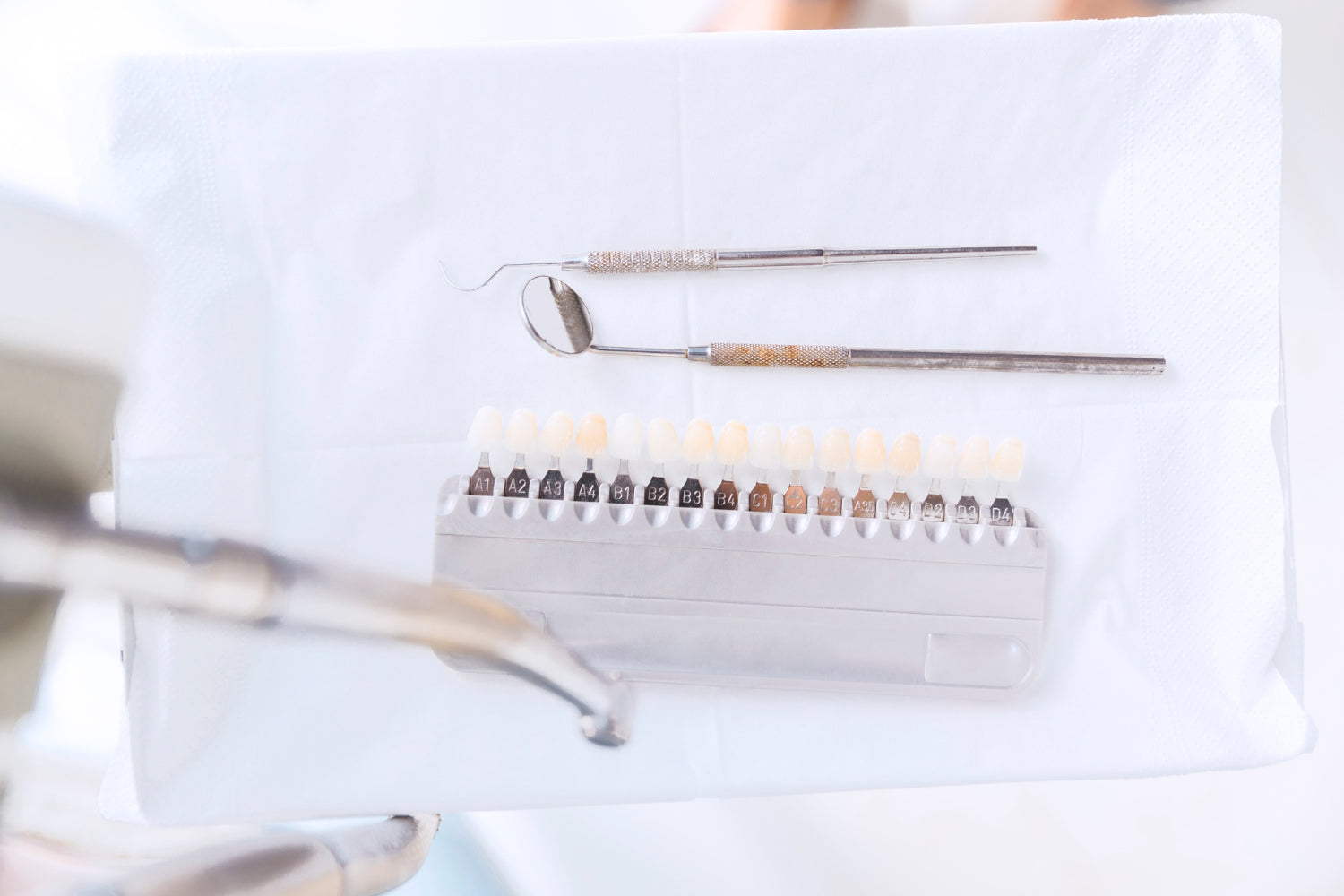
Composite resin's most immediately apparent benefit is aesthetic. It can be formulated and shaded to match any natural tooth colour, and its translucency can be adjusted to mimic the optical behaviour of enamel versus dentine. A skilled clinician with good composite technique can produce restorations in anterior positions that are genuinely difficult to distinguish from surrounding natural tooth structure.
This replaced the functional but visually unacceptable amalgam filling as the standard for anterior restorations decades ago, and has since expanded into posterior direct restorations where aesthetic expectations have risen among patients. The ability to shade-match precisely, layer different translucencies, and characterise the surface is what makes composite the material of choice for direct aesthetic work.
Tooth conservation less preparation required
Composite resin bonds micromechanically to etched enamel and chemically to dentine through adhesive bonding systems. This bonding mechanism means that retentive preparation geometry the undercuts and box forms required to mechanically retain amalgam is not necessary for composite. The restoration retains itself through adhesion rather than mechanical lock.
The practical result is more conservative cavity preparation. For small to medium cavities, a composite restoration removes less healthy tooth structure than an equivalent amalgam. Over a patient's lifetime through successive replacement cycles as restorations wear this cumulative conservation matters. Preserving more tooth structure at each intervention improves the long-term prognosis of the restored tooth.
Versatility across indications
Very few dental materials are clinically useful across as wide a range of indications as composite resin. A single material handles direct posterior fillings, anterior fillings, composite bonding for chipped or fractured teeth, composite veneers, diastema closure, surface characterisation of indirect restorations, core buildups under crowns, and cementation of some indirect restorations. This versatility reduces the number of materials a practice needs to maintain and master.
Direct placement single appointment delivery
Because composite is placed directly in the mouth and light-cured in situ, it produces a complete restoration in a single appointment without laboratory involvement. For patients who need a functional, aesthetic restoration delivered quickly and for practices that want to offer single-appointment restorative care composite's direct placement capability is a genuine clinical and commercial advantage.
Repairability
When a composite restoration is damaged by fracture, wear, or marginal breakdown it can usually be repaired by adding fresh composite to the affected area after re-roughening and re-bonding the surface. This is possible because the same adhesive chemistry that bonds composite to tooth enamel also bonds fresh composite to existing composite. A ceramic or zirconia crown that fractures requires complete replacement. A composite filling that chips can often be repaired chairside in minutes.
Reduced post-operative sensitivity compared to amalgam
Metal amalgam restorations conduct thermal changes from hot and cold foods directly to the pulp through the metallic substructure. Composite resin is a thermal insulator it doesn't conduct temperature in the same way, which reduces sensitivity to thermal stimuli after restoration placement. For patients with existing dentinal sensitivity, this is a clinically meaningful advantage.
The limitations clinicians should communicate honestly
Composite resin's benefits are real, but presenting them without the limitations does patients a disservice. A clinician who understands both sides can help patients make genuinely informed decisions.
Longevity is lower than indirect restorations.
Published data consistently shows that composite restorations in posterior positions last an average of 5–7 years before requiring replacement or repair. Indirect ceramic or zirconia crowns in appropriate indications last 10–15 years. For a young patient with decades of dental treatment ahead, the cumulative number of replacement cycles on a composite restoration and the tooth structure lost with each one is a clinically relevant consideration.
Technique sensitivity.
The success of a composite restoration depends substantially on operator technique. Moisture contamination during placement degrades adhesive bonding. Inadequate curing depth leaves unreacted monomer in the deeper layers. Insufficient incremental placement produces internal voids and inadequate polymerisation throughout the restoration. These are controllable with good technique, but they represent a significant variable that doesn't affect equally technique-insensitive materials like amalgam.
Polymerisation shrinkage.
All light-cured composite resins shrink during polymerisation — typically 1–5% volumetrically depending on the formulation. This shrinkage creates stress at the tooth-restoration interface and can contribute to marginal gap formation and post-operative sensitivity if not managed with proper incremental technique and appropriate matrix systems.
Staining over time.
The resin matrix of composite is more susceptible to staining from pigmented foods, beverages, and tobacco than ceramic or zirconia surfaces. Modern composites have improved substantially in stain resistance compared to earlier formulations, but the surface still requires polishing maintenance and shows more colour change over time than a glazed ceramic restoration.
Types of dental composite resin
Not all composite resins are the same product. The clinical application determines which formulation is appropriate.
Hybrid composites - combine large and small filler particles providing a balance of strength and aesthetic quality that makes them suitable for both anterior and posterior restorations. Most modern universal composites are hybrid formulations.
Microhybrid composites - use smaller average filler particle sizes than traditional hybrids, producing a smoother surface finish while maintaining adequate strength for posterior use. These are among the most widely used formulations in general practice.
Nanofilled and nanohybrid composites - incorporate nanoparticle fillers (40–50 nm) that produce very smooth, highly polishable surfaces with good aesthetic longevity. Suitable for anterior restorations where surface finish is the priority, and in nanohybrid formulation for posterior use as well.
Bulk-fill composites - are formulated with modified photoinitiator systems and filler geometries that allow deeper light penetration enabling placement in increments up to 4–5mm rather than the 2mm increments required for conventional composite. This reduces placement time in posterior restorations where deep cavities are common.
Flowable composites - have reduced filler loading and lower viscosity they flow into complex cavity geometries and undercuts that packed composites can't reach. Used as liner materials, in small Class III cavities, and for repair work rather than as primary restorative materials in load-bearing positions.
Where composite ends and indirect restorations begin?
Understanding composite resin's limits is inseparable from understanding when indirect restorations crowns, onlays, inlays are the more appropriate specification. The distinction isn't always obvious to patients, and it's worth clarifying in clinical communication.
When a tooth has lost more than 50% of its coronal structure, composite restoration alone typically produces inadequate results the remaining tooth structure can't adequately support or retain the restoration, and fracture risk is high. An indirect restoration that envelopes the remaining tooth structure a ceramic or zirconia crown provides superior protection and longevity.
For posterior implant-supported restorations, composite resin has no role as a permanent material. Implants transfer bite forces directly to the restoration without the cushioning of a periodontal ligament, and composite's mechanical properties are inadequate for sustained loading in this context. Zirconia is the clinical standard whether as a zirconium dental material milled from zirconia blanks or dental zirconia discs for multi-unit production runs, its 900–1,200 MPa strength is what the clinical situation demands.
For labs supplying practices that run both composite direct restorations and indirect ceramic or zirconia restorations, having a reliable source for both types of dental lab materials is operationally valuable. The dental zirconia discs and zirconia block range from UPCERA covers the indirect zirconia workflow from high-strength 3Y posterior work through zirconia multilayer anterior aesthetics while the Aidite zirconia range adds further breadth for labs needing pre-shaded, high-translucency, and full-arch material options.
Zirconia blocks price varies by grade and format but is consistently appropriate for permanent indirect restorations with 10–15 year expected lifespan a different economic and clinical calculation from composite direct restorations at lower upfront cost but shorter replacement cycles. Both have their place; the key is using each in the right indication.
As a North American dental lab material supplier covering both zirconia and complementary dental lab materials, get in touch with the Zirconia Guys team to discuss which products suit your lab's or practice's restorative workflow.


