

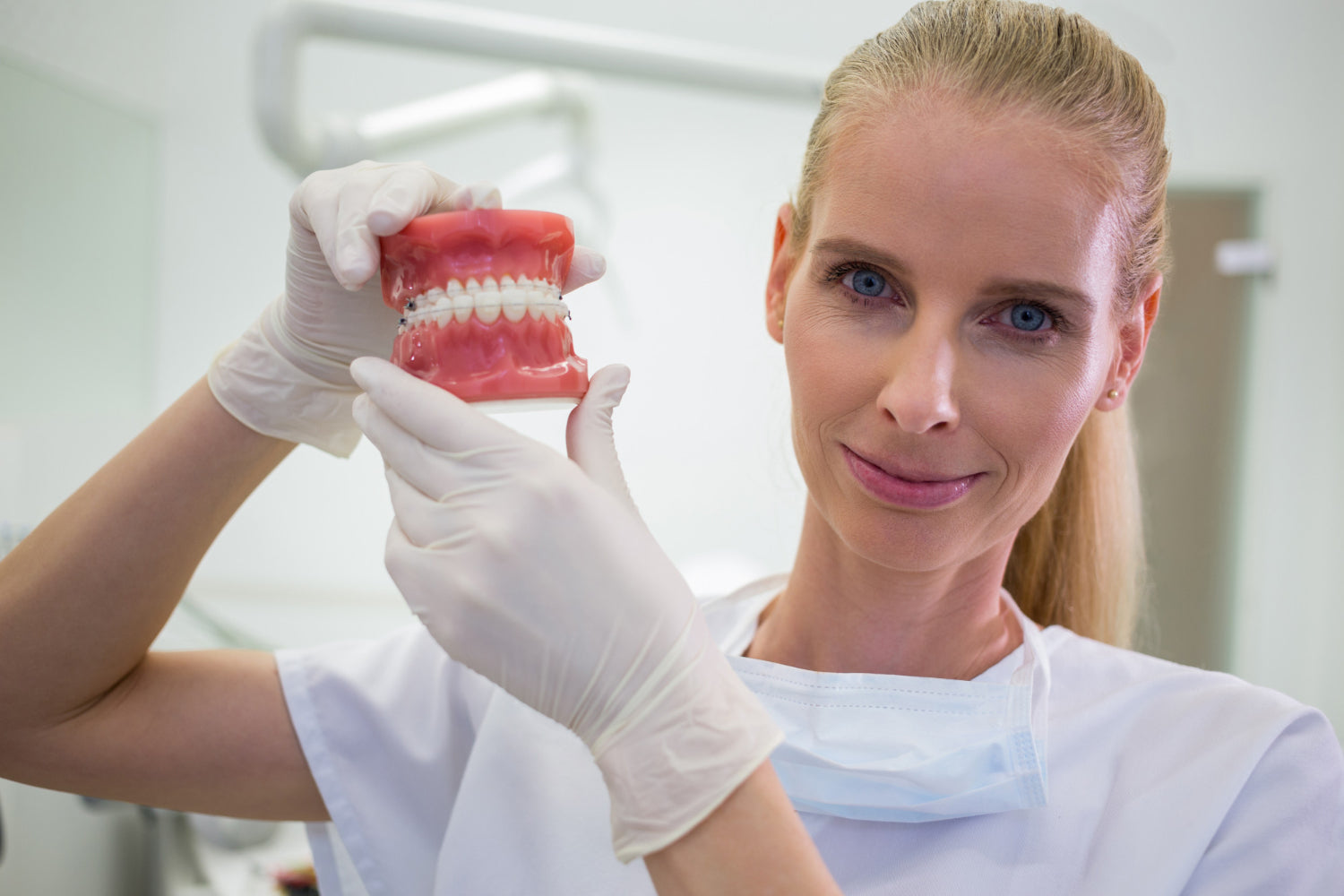
Dental zirconia has fundamentally changed what is possible in crown and bridge dentistry. In the span of two decades, it has moved from a niche high-strength alternative to porcelain-fused-to-metal to the dominant material for both anterior and posterior fixed restorations in modern digital dental labs. Yet despite how widely zirconia is used, a significant number of clinicians and lab technicians still lack a clear understanding of why it performs the way it does, which grades exist, how discs are selected for specific cases, and where zirconia fits and doesn’t fit in a comprehensive restorative material strategy.
This guide covers everything a dental lab or practicing clinician needs to know about zirconia crown and bridge restorations: the material science behind it, the full range of available grades, clinical indication guidelines, disc selection, workflow best practices, and how to evaluate dental lab materials suppliers when building or upgrading your zirconia supply chain. Whether you are new to zirconia or refining a workflow you have been running for years, the information here is designed to support better, faster, more consistent clinical decisions.
What Is Zirconia and Why Is It Used for Crowns and Bridges?
Zirconium dental ceramic properly called yttria-stabilized zirconia polycrystal (Y-TZP) is a high-performance oxide ceramic produced from zirconium dioxide (ZrO₂) stabilized with yttrium oxide (Y₂O₃). Before stabilization, pure zirconia undergoes a destructive phase transformation during cooling from high temperatures that would cause the material to crack and fail in service. Yttria stabilization prevents this transformation, locking the crystal structure in a state that delivers exceptional mechanical properties at room temperature.
What makes zirconia uniquely suited to crown and bridge applications is the combination of properties it delivers simultaneously: high flexural strength, excellent fracture toughness, good biocompatibility, a coefficient of thermal expansion compatible with dental luting cements, and in modern esthetic grades optical translucency approaching that of natural tooth structure. No other single material class in restorative dentistry combines these properties in the same way.
The shift from porcelain-fused-to-metal (PFM) to dental zirconia as the standard crown and bridge material was driven by three clinical realities: PFM restorations require metal substructures that are both expensive and biologically suboptimal for some patients; ceramic veneering on PFM frameworks is prone to chipping and delamination over time; and full-contour zirconia crowns milled in a single piece from a pre-polymerized disc eliminate the veneer layer entirely, removing the chipping failure mode from the equation. Modern full-contour zirconia restorations are stronger, more biocompatible, more esthetically consistent, and more efficiently produced than PFM which is why adoption has been near-universal in modern dental labs.
Zirconia Grades Explained: 3Y, 4Y, 5Y and What They Mean for Crown & Bridge
Types of Zirconia Crowns and Bridges 3Y, 4Y, 5Y refers to the mole percentage of yttria (yttrium oxide) incorporated into the crystal structure. This single variable controls the ratio of tetragonal to cubic crystal phases in the sintered material, which in turn determines the balance between flexural strength and optical translucency. Understanding this tradeoff is the foundation of correct material selection for every crown and bridge case.
| Property | 3Y Zirconia | 4Y Zirconia | 5Y Zirconia |
|---|---|---|---|
| Yttria content | ~3 mol% | ~4 mol% | ~5 mol% |
| Dominant crystal phase | Tetragonal | Mixed tetragonal + cubic | Predominantly cubic |
| Flexural strength | 900–1200+ MPa | 600–800 MPa | 500–650 MPa |
| Translucency | Moderate | High | Very high |
| Crown application | Posterior crowns, bridges | Anterior + posterior crowns | Anterior esthetic priority |
| Bridge application | 3–6 unit posterior bridges | 1–3 unit anterior bridges | Anterior single span only |
| Staining required | Yes, for anterior cases | Minimal / optional | Rarely needed |
| Best format | White or pre-shaded | Multilayer pre-shaded | Flat pre-shaded or white |
Choosing the Right Zirconia Disc Format for Crown & Bridge Cases
Dental zirconia discs come in several formats that matter as much as the grade itself: white (unshaded) flat discs, pre-shaded flat discs, and multilayer gradient discs. Each format serves a different clinical and workflow purpose, and selecting the wrong format for a case type is one of the most common sources of avoidable finishing labor and shade correction remakes.
For multi-unit bridge cases in particular, st multilayer zirconia for bridges represents one of the most practical disc selections available to labs producing high-volume posterior and premolar bridge work. The ST (standard translucency) multilayer format delivers the high-strength 3Y-range material properties needed for bridge connectors while incorporating a pre-built shade gradient that reduces post-sintering staining requirements even on multi-unit cases — a combination that is difficult to achieve with flat white 3Y discs without significant additional bench time.
Disc format comparison:
| Disc Format | Best Grade | Best Application | Staining Needed? | Key Advantage |
|---|---|---|---|---|
| White flat | 3Y | Posterior bridges, custom cases | Yes — full staining | Maximum strength, full shade control |
| Pre-shaded flat | 3Y or 4Y | Standard posterior crowns | Minimal | Faster than white, predictable shade |
| ST multilayer | 3Y range | Posterior bridges, full-arch | Rarely | Strength + built-in gradient |
| TT/HT multilayer | 4Y | Anterior & premolar crowns | Rarely | Best daily esthetic production disc |
| 5Y flat | 5Y | Anterior single esthetic units | No | Maximum translucency |
Zirconia for Bridges Specifically: What the Evidence Says
Bridge cases present the most demanding structural requirements in crown and bridge dentistry, and material selection errors in bridge design are among the most clinically consequential. st multilayer zirconia discs in the ST grade range are formulated specifically to meet the connector cross-section strength requirements that multi-unit bridges impose — requirements that 4Y and 5Y esthetic-grade materials cannot reliably meet for posterior 3–6 unit spans.
Critical bridge design parameters for zirconia:
- Minimum connector height: 4 mm for posterior bridges, 3 mm for anterior bridges (ISO 6872 guidance)
- Minimum connector width: 3 mm for posterior bridges, 2.5 mm for anterior bridges
- Minimum connector cross-section area: 9 mm² for posterior 3Y-TZP; 7 mm² for anterior 4Y
- Preparation design: Shoulder or deep chamfer preparation. Knife-edge margins are not appropriate for zirconia bridge abutments
- Occlusal clearance: Minimum 1.5 mm for full-contour posterior zirconia bridges. Less than 1.5 mm increases fracture risk regardless of material grade
- Connector shape: Rounded connectors with generous radius. Sharp internal line angles at connectors concentrate stress and dramatically increase fracture risk
Clinical longevity data: Long-term clinical studies on 3Y-TZP zirconia bridges consistently report 5-year survival rates above 93% for 3-unit posterior bridges when fabricated within manufacturer specifications. Connector fracture the primary failure mode is associated almost exclusively with connector cross-sections below minimum recommended dimensions, not with material failure within specification. This means that bridge failures in zirconia are predominantly design errors, not material failures.
How to Select the Right Zirconia Disc for Every Case Type?
Selecting the right dental zirconia discs for a given case requires matching three variables simultaneously: grade (3Y/4Y/5Y), format (white/pre-shaded/multilayer), and disc dimensions (diameter and thickness). Getting all three right determines whether the case mills correctly, shades predictably, and delivers the expected clinical outcome without rework.
Case-by-case selection guide:
| Case Type | Recommended Grade | Recommended Format | Disc Thickness | Notes |
|---|---|---|---|---|
| Anterior single crown | 5Y or 4Y | Multilayer pre-shaded | 12–14 mm | Shade matching to natural adjacent teeth is primary priority |
| Anterior 3-unit bridge | 4Y | Multilayer pre-shaded | 14 mm | Verify connector cross-section ≥7 mm² |
| Premolar single crown | 4Y | Multilayer pre-shaded | 12 mm | Body zone of disc provides best esthetics/strength balance |
| Posterior single crown (molar) | 3Y or 4Y | Pre-shaded or white | 14 mm | Functional demand — strength over esthetics |
| Posterior 3-unit bridge | 3Y (ST grade) | ST multilayer or white | 14–16 mm | Connector area ≥9 mm² mandatory |
Zirconia Multilayer Technology: Why It Changed Crown & Bridge Production
Zirconia multilayer disc technology represents the most significant production workflow advancement in dental lab zirconia since the introduction of CAD/CAM milling itself. Before multilayer discs, producing a natural-looking full-contour zirconia crown required significant post-sintering characterization: external staining of the cervical zone, application of translucency enhancers in the body, and incisal effects at the gingival edge all fired individually or in combined stain-glaze passes. For a busy production lab, this added 20–40 minutes of skilled bench time per anterior unit.
The introduction of tt multilayer zirconia for crowns & bridges and similar multilayer disc formats solved this problem by engineering the shade gradient directly into the disc manufacturing process. A multilayer disc transitions continuously from a higher-chroma, lower-translucency zone at the cervical end to a lower-chroma, higher-translucency zone at the incisal end using controlled yttria variation across the disc depth to produce this gradient. When the CAD/CAM design is properly aligned with these internal zones, the milled crown exits the furnace with a natural shade gradient already present.
How multilayer discs work in practice:
- Cervical zone: Higher chroma, moderate translucency, warm undertone — matches the dentin-heavy root-third appearance of natural teeth
- Body zone: Balanced chroma and translucency the primary functional zone for most of the crown’s visible surface
- Incisal zone: Lower chroma, maximum translucency, cooler tone approximates natural enamel opalescence at the incisal edge
Workflow impact: Labs that have transitioned to multilayer pre-shaded discs for standard anterior and premolar cases consistently report a 60–70% reduction in post-sintering bench time for shade finishing. On a production schedule of 30–50 anterior crowns per week, this translates into several hours of recovered bench time time that can be redirected to quality control, complex customization cases, or additional production volume.
Multilayer limitations: Multilayer discs require correct CAD/CAM alignment of the design to the disc’s internal gradient zones. A misaligned design where the incisal portion of the crown is positioned in the cervical zone of the disc produces a reversed gradient that looks worse than a flat white disc after staining. Most modern CAM software (exocad, 3Shape) includes built-in blank orientation tools that prevent this error when used correctly. Always verify blank orientation before milling the first unit from a new disc batch.
Zirconia Crown & Bridge Workflow: From Design to Delivery
Understanding the complete workflow for zirconia crown and bridge production helps labs identify where material quality matters most and where workflow efficiency gains are achievable.
Case receipt and prescription review: Verify the prescription specifies the correct material grade for the indication. Flag any case where the clinician has requested a 5Y esthetic grade for a posterior bridge this is a clinically inappropriate material selection that should be confirmed before production begins.
Model scanning and digital design: Scan the working model and opposing arch. Design the restoration in your CAM software with correct reduction guidelines: minimum 1.5 mm occlusal reduction for posterior full-contour crowns, minimum 1 mm for anterior crowns. For bridges, verify connector cross-sections in the design software before generating toolpaths.
Disc selection and blank orientation: Select the disc grade and format appropriate for the case using the indication guide above. Mount the disc with correct directional orientation gingival-to-incisal axis verified against the disc manufacturer’s marking before milling.
Milling: Mill at parameters recommended by the disc manufacturer. For multilayer discs, reduce feed rate by 10–15% at layer transitions to prevent micro-chipping. Standard bur life guidelines apply replace burs at recommended intervals regardless of visible wear, as a worn bur produces worse surface quality and increased chipping risk before any visual deterioration is apparent.
Pre-sintering adjustment: Confirm fit on the model in the green (pre-sintered) state. Minor occlusal and proximal adjustments can be made with a carbide bur in the pre-sintered state much more efficiently than post-sintering grinding, which risks surface damage and requires re-polishing.
Sintering: Load the furnace per the disc manufacturer’s sintering profile. Do not deviate from the prescribed ramp rate or peak temperature. For multilayer discs, accelerated sintering damages the optical gradient and produces a less translucent result at the incisal zone. Sintering furnace calibration should be verified every 6 months against a certified reference material.
Post-sintering assessment: Check fit on the model after sintering. Verify occlusal contacts under articulating paper. Check marginal integrity with a probe no visible gaps at the margin should be present for a well-fitting restoration.
Staining, glazing, and characterization: For pre-shaded multilayer discs in standard A–D shade cases, a clear glaze fired to the manufacturer’s recommended temperature is typically sufficient. For white discs, apply the full stain protocol. For complex characterization cases crack lines, hypocalcification, fluorosis apply characterization stains before the glaze layer.
Final polish and delivery: High-gloss polish from the glaze fire. Inspect restoration under three light sources fluorescent, natural daylight, incandescent before delivery. Shade transitions on multilayer restorations should be imperceptible under all three light sources.
Zirconia vs. Other Crown & Bridge Materials: When to Use What
Understanding where dental zirconia fits relative to other crown and bridge materials is essential for labs that produce mixed-material cases and for clinicians who specify materials based on case requirements.
| Material | Strength (MPa) | Translucency | Best Indication | Key Limitation |
|---|---|---|---|---|
| 3Y Zirconia | 900–1200+ | Moderate | Posterior bridges, high-load crowns | Requires staining for anterior esthetics |
| 4Y Zirconia multilayer | 600–800 | High | Anterior + posterior single crowns | Not for long-span posterior bridges |
| 5Y Zirconia | 500–650 | Very high | Anterior esthetic single units | Insufficient for posterior bridges |
| Lithium disilicate (e.max) | ~400 | Excellent | Anterior veneers, single crowns | Limited to 3-unit anterior bridges max |
| PFM | Metal ~700+ | Low — metal show-through | Long-span bridges, implant cases | Chipping, metal allergy, esthetic limitations |
| Full-cast metal | Very high | None | Posterior crowns under extreme load | Esthetic failure — visible metal |
| Composite resin (indirect) | ~100–250 | Good | Temporary / provisional only | Not suitable for permanent restorations |
What Dental Labs Should Look for in a Zirconia Material Supplier?
Choosing a dental lab material supplier for zirconia is not purely a zirconia blocks price decision. The lowest per-disc cost rarely translates into the lowest total case cost when batch consistency, documentation quality, and technical support are factored in. These are the criteria that separate reliable zirconia suppliers from commodity vendors.
Batch consistency documentation: Every disc batch should come with a batch certificate documenting material composition, flexural strength test results, and shade specification compliance. Without this documentation, you cannot verify that the material you are milling meets the properties you are designing to.
ISO certification: Confirm ISO 6872 compliance for the specific grade and format. This is the international standard for dental ceramic materials and covers flexural strength, chemical solubility, and translucency requirements. Not all PMMA and zirconia products sold in the US market carry legitimate ISO certification.
US domestic stock: International lead times introduce production uncertainty. A US-based supplier stocking domestic inventory ensures that stock-outs or delayed orders do not interrupt lab production schedules.
Technical support: Sintering profile documentation, milling parameter guidelines, and troubleshooting support should be available from the supplier. A supplier who cannot provide these is selling a commodity, not a clinical material.
Consistent shade formulation: Pre-shaded and multilayer discs should produce the same shade result from batch to batch. Shade drift between batches forces re-shade matching on every case rather than trusting a calibrated standard eliminating a core efficiency advantage of pre-shaded formats.
ZirconiaGuys sources dental lab materials exclusively from manufacturers who meet all five criteria above. All Upcera and Aidite products stocked at ZirconiaGuys come with full batch documentation, ISO certification records, and technical support from a team that works with dental labs daily.
Zirconia has earned its place as the dominant crown and bridge material in modern dental labs not through marketing but through clinical performance. Its combination of strength, biocompatibility, CAD/CAM machinability, and in modern esthetic grades natural optical properties makes it the most versatile fixed restoration material available. The knowledge gap that still exists around grade selection, disc format, and bridge design parameters is the primary source of avoidable clinical failures and production inefficiencies in zirconia crown and bridge work.
The framework in this guide match the grade to the structural requirement, match the disc format to the esthetic requirement, and verify bridge connector dimensions before milling is the practical foundation of a consistent, high-quality zirconia production workflow. Apply it to every case and the material will consistently deliver what it is designed to deliver. The right dental lab materials, selected correctly for each indication, are what separate labs with strong clinical reputations from those that spend their time correcting avoidable material selection errors.


