

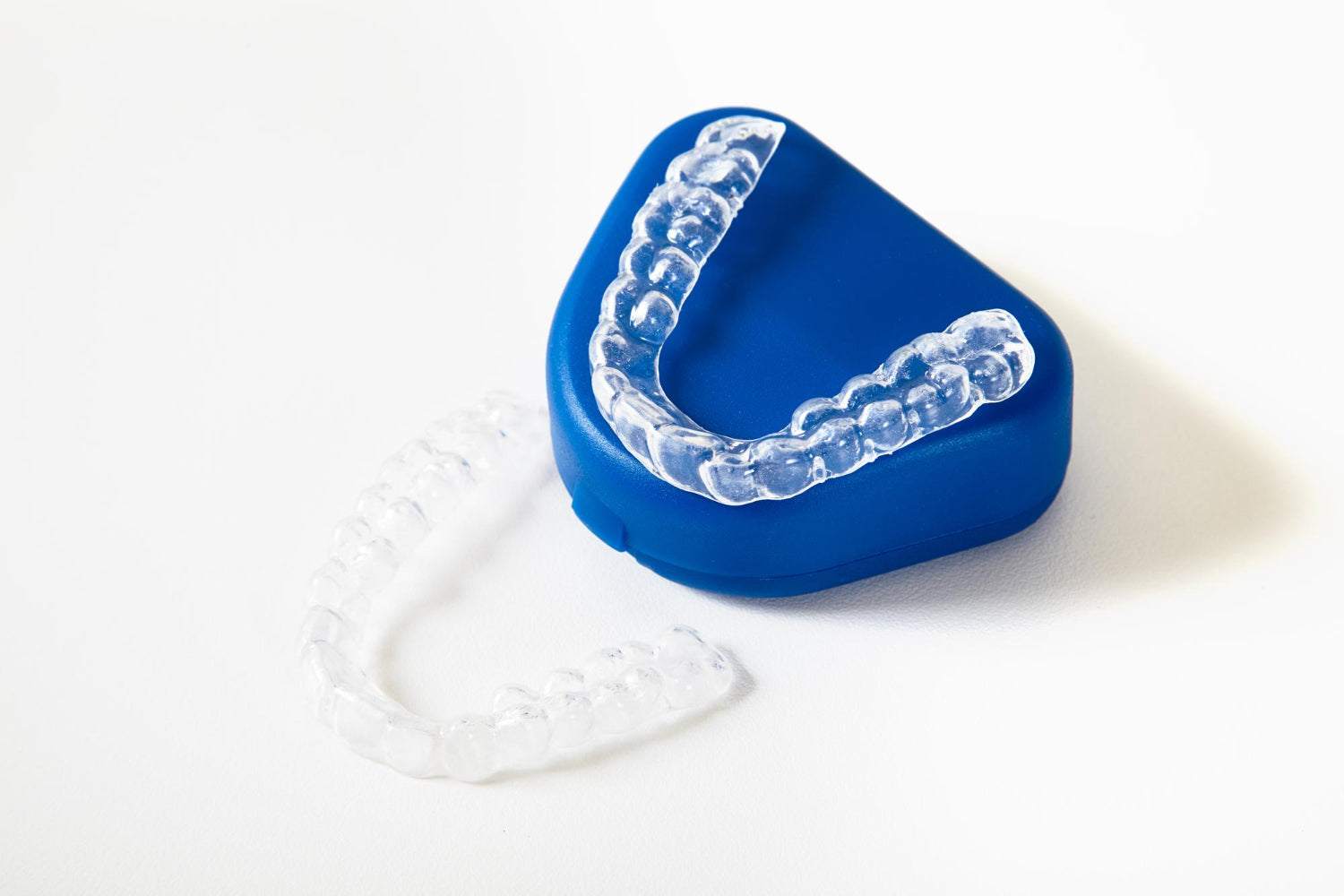
The range of photopolymer resins available for dental 3D printing has expanded rapidly, and with that expansion has come a legitimate source of confusion for dental labs and clinicians: which resin classification is right for which application? Splint hard resin occupies a specific and important position in that landscape it is the material of choice for a family of intraoral appliances that require rigidity, dimensional accuracy, biocompatibility, and the mechanical durability to withstand repeated occlusal loading over months of nightly wear. Understanding what makes this material class distinct from soft splint resins, model resins, and composite resin materials is the starting point for making correct material selections in a 3D printing workflow.
This guide covers the material science behind splint hard resin, the specific dental applications it is designed for, the properties that separate clinical-grade formulations from lower-quality options, and how to integrate it effectively into a modern dental 3D printing workflow. Whether you are a dental lab material supplier evaluating what to stock, a lab technician selecting materials for a new printer, or a clinician setting up an in-office printing workflow, the information here will help you make the right call.
What Is Splint Hard Resin? Material Science Explained
Splint hard resin is a class of photopolymer resin formulated specifically for 3D printing rigid dental splints, night guards, occlusal appliances, and bruxism devices. Unlike general-purpose 3D printing resins, dental splint hard resins are engineered to meet the specific mechanical, biocompatibility, and optical requirements of intraoral appliances that sit against oral tissue for extended periods and must withstand significant occlusal forces without fracturing, deforming, or discoloring.
At the chemistry level, splint hard resins are acrylate or methacrylate-based photopolymers the same polymer backbone as most dental photopolymers but formulated with a higher cross-link density than soft splint resins or flexible appliance materials. Cross-link density is the key variable that controls rigidity: higher cross-linking between polymer chains produces a harder, stiffer, more fracture-resistant cured material. The specific cross-link density of a splint hard resin is calibrated to produce a material hard enough to resist deformation under occlusal load while remaining impact-resistant enough not to fracture under the sudden forces of bruxism events.
This distinction from composite resin is worth clarifying directly. Dental composite resin is a direct or indirect restorative material filled resin designed for tooth-colored fillings, inlays, onlays, and veneers. It is optimized for wear resistance, optical properties, and bond strength to tooth structure. Splint hard resin is an appliance material optimized for flexural strength, impact resistance, dimensional accuracy after printing, and long-term biocompatibility against soft tissue. These are different material categories with different formulation priorities and different clinical applications. Substituting one for the other produces predictably poor clinical results.
Key Properties of Clinical-Grade Splint Hard Resin
The dental lab materials market contains a wide range of products labeled as “splint resin” or “night guard resin.” The performance gap between clinical-grade splint hard resins and lower-quality alternatives is significant and directly impacts patient outcomes. Here are the properties that define clinical-grade formulations:
Flexural Strength
Flexural strength is the resistance to bending and fracture under load — the most clinically relevant mechanical property for an occlusal splint. Clinical-grade splint hard resins deliver flexural strength in the 80–120 MPa range. This is sufficient to resist fracture under the high cyclic loads generated by bruxism patients, who can produce bite forces of 400–800 N during parafunction. Resins with flexural strength below 70 MPa are at measurable fracture risk in heavy bruxers and should not be used for full-arch night guards in this patient population.
Shore D Hardness
Shore D hardness measures surface resistance to indentation — the property that determines whether an occlusal surface will scratch, pit, or wear under repeated tooth contact. Clinical-grade splint hard resins target Shore D values of 78–88, which produces a surface hard enough to resist indentation from tooth cusps while remaining below the hardness level that would cause excessive wear to opposing dentition. This balance is clinically important: a splint that is too soft wears through quickly; a splint harder than natural enamel can cause enamel loss on opposing teeth.
Biocompatibility
Intraoral appliances contact oral mucosal tissue for 6–8 hours per night over months or years of use. Clinical-grade splint hard resins must meet ISO 10993 biocompatibility standards and Class IIa medical device requirements in regulated markets. Residual monomer uncured photopolymer left in the print after the initial cure cycle is the primary biocompatibility risk factor. A thorough post-cure protocol using appropriate UV intensity and duration is essential to minimize residual monomer to within acceptable limits. This is a workflow requirement, not just a dental lab materials specification: the best resin in the world will have unacceptable residual monomer if the post-cure is inadequate.
Dimensional Accuracy
A splint that fits poorly at delivery requires chairside adjustment, which wastes clinical time and risks patient dissatisfaction. Clinical-grade splint hard resins are formulated with controlled shrinkage during photopolymerization typically below 2% volumetric shrinkage and are tested for dimensional stability across the print volume of standard dental 3D printers. Formulations with high shrinkage produce appliances that warp away from the printed model shape, resulting in poor intraoral fit.
Color Stability
Patients wear night guards long-term, and visible yellowing or staining of the appliance material within weeks of delivery creates a perception of poor quality that reflects on the lab and the prescribing dentist. Clinical-grade splint hard resins use colorfast pigment systems that resist yellowing under UV exposure and resist staining from common patient behaviors including coffee and tea consumption. Cheaper resins with poor color stability yellow noticeably within 4–6 weeks of regular use.
Primary Applications of Splint Hard Resin in Dental 3D Printing
The key splint hard resin product line from Keystone Industries represents one of the most widely used clinical-grade splint hard formulations in US dental labs, validated across a broad range of intraoral appliance applications. The following are the primary clinical indications for splint hard resin in dental 3D printing workflows.
1. Occlusal Night Guards for Bruxism
The most common application for splint hard resin is the fabrication of occlusal night guards for patients with bruxism involuntary teeth grinding during sleep. These appliances typically cover the full upper or lower arch, provide a flat occlusal platform that redirects jaw muscle forces, and must withstand nightly parafunction without fracturing or deforming.
3D-printed night guards in splint hard resin outperform conventionally fabricated thermoplastic guards in fit accuracy, material consistency, and repeatability. A scanned model and digital design can be reprinted identically when a patient loses or damages their appliance a major advantage over vacuum-formed guards that require a new physical model for each fabrication.
2. Michigan Splints and Anterior Repositioning Appliances
Michigan splints are full-arch maxillary occlusal splints with a flat bite plane and canine guidance ramps used in the management of temporomandibular disorders (TMD). They require precise occlusal surface geometry to produce the correct muscle deprogramming effect a requirement that 3D printing meets more reliably than hand-fabrication. The rigidity of splint hard resin is essential here: a soft or semi-rigid material would deform under occlusal contact and fail to produce the flat bite plane geometry required for therapeutic effect.
3. Clenching Suppression Splints (NTI-Style)
Anterior-only clenching suppression devices are small, rigid appliances that cover only the front teeth to reduce masseter muscle activity. Their small size and precise geometry make them ideal for 3D printing — and their clinical function depends entirely on maintaining rigid occlusal contacts at the incisors, making splint hard resin the only appropriate material class.
4. Repositioning Splints for TMD
Mandibular repositioning appliances guide the jaw into a therapeutic position during sleep to reduce condylar loading and relieve TMD symptoms. The dimensional accuracy requirements are stringent — even 0.1–0.2 mm of fit error can significantly alter the jaw position achieved. 3D printing in clinical-grade splint hard resin is currently the most accurate fabrication method available for these appliances.
5. Athletic Mouthguards (Hard Component)
Dual-layer sports mouthguards that combine a hard outer shell with a soft inner liner use splint hard resin for the outer structural component. The hard shell provides impact distribution and structural integrity while the soft liner provides shock absorption and patient comfort. 3D printing the hard component allows custom geometry per patient anatomy rather than the generic sizing of stock mouthguards.
Splint Hard Resin vs. Soft Splint Resin: Choosing the Right Material
The choice between hard and soft splint resin is one of the most frequent material selection questions in dental 3D printing. The answer depends on the specific appliance function, the patient’s clinical presentation, and the prescribing dentist’s treatment protocol. Neither material is universally superior they serve different clinical functions.
When evaluating dental splint printing resin options, the starting point is always the clinical indication not personal preference or material availability. The following comparison provides a decision framework for the most common appliance types.
| Appliance Type | Recommended Material | Reason |
|---|---|---|
| Michigan splint / full-arch occlusal guard | Splint hard resin | Flat bite plane requires rigid surface geometry |
| Heavy bruxism night guard | Splint hard resin | High occlusal force demands fracture resistance |
| Sleep apnea MAD device | Splint hard resin | Dimensional accuracy critical for repositioning |
| TMD repositioning splint | Splint hard resin | Precise jaw position requires rigid, non-deforming material |
| Mild-moderate bruxism guard | Soft splint resin | Comfort priority; lower force levels tolerated |
| Sports mouthguard (single layer) | Soft splint resin | Impact absorption is primary requirement |
| Pediatric night guard | Soft splint resin | Comfort and compliance in pediatric patients |
| Dual-layer sports guard (outer shell) | Splint hard resin | Structural outer layer; soft resin used for inner liner |
Keystone KeySplint Hard: The Industry Standard for 3D Printed Splints
keysplint hard from Keystone Industries has established itself as the benchmark formulation for 3D printed occlusal splints in US dental labs. It is an MSLA/DLP-compatible biocompatible rigid photopolymer resin cleared for use as an intraoral dental device material, validated across the most common desktop dental 3D printers in use today.
The formulation delivers a Shore D hardness of approximately 84 and flexural strength in the 90–100 MPa range well within the clinical requirement zone for full-arch bruxism guards in heavy parafunction patients. It is available in both clear and tooth-colored variants, with color stability that meets clinical expectations for long-term patient use. For dental lab material supplier operations and in-office printing workflows alike, KeySplint Hard provides the documentation, batch consistency, and performance data needed to integrate it confidently into regulated dental device production.
Key specifications of KeySplint Hard:
- Printer compatibility: MSLA (385/405 nm), DLP compatible with Formlabs Form series, SprintRay Pro, Asiga Max, Phrozen Sonic series, and most open-system dental 3D printers
- Shore D hardness: ~84 within optimal range for occlusal splint applications
- Flexural strength: ~90–100 MPa suitable for full-arch heavy bruxism guards
- Biocompatibility: ISO 10993 tested, Class IIa medical device material
- Post-cure requirement: Standard UV post-cure station, 385/405 nm, per Keystone’s published protocol
- Available variants: Clear and tooth-colored color-stable formulations
- Shelf life: 12 months from manufacture date in sealed packaging at recommended storage conditions
3D Printing Workflow for Splint Hard Resin: Step-by-Step
Producing a clinically acceptable 3D-printed hard splint requires attention to each stage of the printing and post-processing workflow. Errors at any stage print orientation, support placement, exposure settings, or post-cure directly affect fit accuracy, surface quality, and biocompatibility. The following workflow applies to the majority of open-system dental 3D printers used in the US market.
ZirconiaGuys stocks the full Keystone dental resin 3d printing range from US inventory including KeySplint Hard, KeySplint Soft, KeyModel, KeyGuard, and the complete Keystone dental photopolymer lineup. All products ship from domestic stock with same-day or next-day availability.
Digital design and file preparation
Design the splint in your CAD software (exocad, 3Shape, or specialized splint design software). Export as STL or OBJ. Ensure the occlusal surface geometry is correct at this stage post-print corrections to occlusal geometry are labor-intensive and reduce the workflow efficiency advantage of digital fabrication.
Slice and support generation
Import into your printer’s slicing software. Orient the splint at 45–60 degrees to the print platform to minimize peel forces and reduce suction cup effect on large flat surfaces. Generate supports on the tissue surface rather than the occlusal surface wherever possible support removal marks on the occlusal surface require additional polishing.
Resin preparation
Shake or gently agitate the resin bottle before use to ensure pigment and photoinitiator are evenly distributed. Bring resin to room temperature (18–25°C) before printing — cold resin has higher viscosity, which can cause print failures and surface irregularities. Fill the resin vat to the minimum required level.
Run the print using Keystone’s published exposure settings for your specific printer model. Do not use generic PMMA or model resin profiles for splint hard resin the exposure requirements differ and using incorrect settings produces under-cured or over-cured parts with poor mechanical properties.
Isopropyl alcohol wash
Remove the printed splint from the platform and wash in fresh IPA (isopropyl alcohol) for 3–5 minutes. Use two-stage washing a dirty wash stage followed by a clean wash stage to avoid redepositing partially dissolved resin on the print surface. Compressed air can be used to clean internal features.
Post-cure
This step is non-negotiable for biocompatibility. Post-cure in a UV curing station at 385/405 nm for the duration specified in Keystone’s published protocol for the specific resin variant. Under-curing leaves residual monomer at levels that may cause tissue irritation. Over-curing can cause surface brittleness and color yellowing.
Support removal and finishing
Remove supports carefully with flush cutters. Sand support marks smooth with 320–600 grit sandpaper. Polish the occlusal surface to a high gloss using a sequence of pumice slurry and acrylic polishing compound. A polished surface is significantly more resistant to staining and biofilm accumulation than a matte surface.
Fit check and delivery
Check fit on the patient model before delivery. Minor fit adjustments can be made with an acrylic bur and polishing. Verify that the occlusal contacts are as designed 3D printing at correct parameters should require minimal occlusal adjustment at delivery if the digital design was accurate.
Splint Hard Resin vs. Milled PMMA Splints: Which Is Right for Your Lab?
Dental labs that produce occlusal splints have two primary fabrication methods available: 3D printing in splint hard resin and milling from PMMA discs. Both methods are clinically acceptable, and the right choice depends on the lab’s existing equipment, production volume, and case mix. Understanding this comparison also helps contextualize splint hard resin relative to the broader range of dental lab materials a lab stocks.
| Factor | 3D Printed (Splint Hard Resin) | Milled PMMA |
|---|---|---|
| Equipment required | 3D printer + post-cure station | CAD/CAM mill + PMMA discs |
| Material cost per unit | Lower — resin per volume used | Moderate — disc waste from milling |
| Production time | Faster for batch production | Faster for single units |
| Fit accuracy | Excellent — digitally controlled | Excellent — digitally controlled |
| Surface finish (as-produced) | Requires polishing | Smooth from mill — less polishing |
| Color options | Clear, tooth-colored | Wide range of shade options |
| Batch production | Multiple units per print | One at a time typically |
| Biocompatibility | Post-cure dependent | Pre-polymerized — inherently lower monomer |
| Reprintability | Exact reprint from file | Re-mill from same design file |
How Splint Hard Resin Fits Into a Full Dental 3D Printing Material Strategy?
For dental labs and clinicians building a comprehensive 3D printing material inventory, splint hard resin is one of several specialized resin categories that each address a distinct clinical application. Understanding the full material ecosystem helps labs stock intelligently without overpaying for redundant material categories. This also contextualizes splint hard resin relative to the broader dental lab materials landscape that includes CAD/CAM milling materials like dental zirconia discs, PMMA, and wax.
| Resin Category | Primary Application | Key Property |
|---|---|---|
| Splint hard resin | Night guards, occlusal splints, TMD appliances | Rigidity, flexural strength, biocompatibility |
| Splint soft resin | Sports guards, comfort-priority night guards | Flexibility, impact absorption, patient comfort |
| Model resin | Diagnostic study models, working models | Dimensional accuracy, surface detail resolution |
| Surgical guide resin | Implant surgical guides | Rigidity, translucency, sterilizability |
| Try-in resin | Try-in restorations, provisionals | Tooth color, machinability, removability |
| Denture base resin | 3D-printed denture bases | Tissue color, biocompatibility, fit accuracy |
| Castable resin | Burnout patterns for metal casting | Complete burnout, ash residue <0.1% |
| Ortho model resin | Orthodontic model series | High accuracy, rapid printing speed |
For labs that also run CAD/CAM milling workflows, the material strategy extends beyond 3D printing resins to include dental zirconia discs for fixed restorations, PMMA for denture bases and temporaries, and wax discs for casting patterns. The distinction between 3D printing materials and milling materials is workflow-based, not quality-based: both platforms can produce clinically excellent outcomes when matched to the right material for each application. Labs that stock zirconia multilayer discs for fixed restorations and splint hard resin for removable appliances are operating a complete, materials-optimized digital production workflow.


