

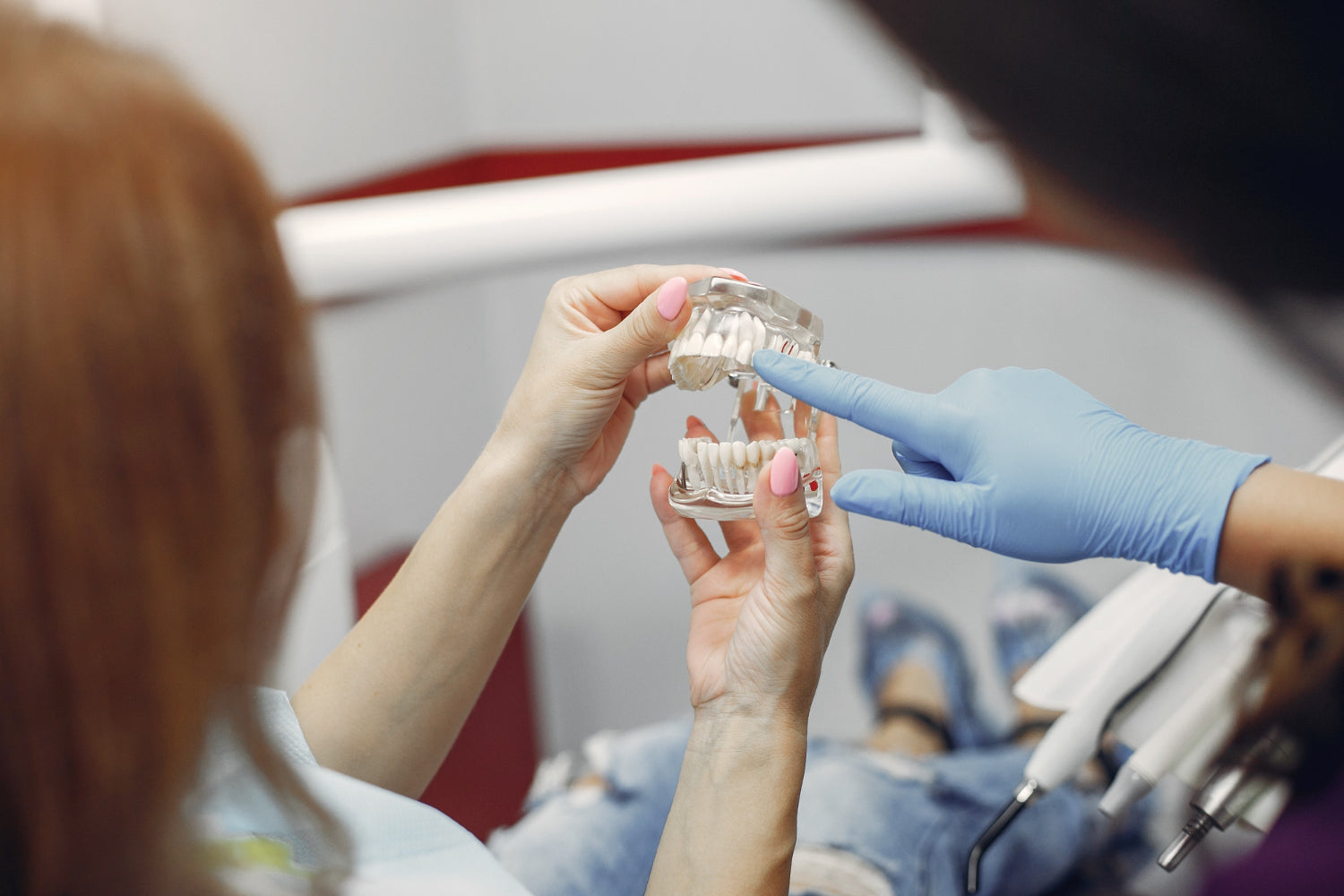
Zirconia is the dominant material in modern crown and bridge fabrication - and for good reason. It combines exceptional fracture resistance, proven biocompatibility, and natural esthetics in a single CAD/CAM-compatible material. This guide covers what dental zirconia is, how the different grades compare, what physical forms labs work with, why it outperforms older materials, and what fabrication factors directly affect clinical outcomes.
What Is Dental Zirconia?
Dental zirconia is zirconium dioxide (ZrO2) stabilised with yttria and processed into a dense polycrystalline ceramic. Unlike glass-ceramics such as lithium disilicate, zirconia has a fully crystalline microstructure that gives it a unique mechanical property called transformation toughening when a crack begins to form, the crystal structure transforms at the crack tip and generates compressive stress that arrests further growth. This is why zirconia fracture rates in posterior cases are dramatically lower than any other all-ceramic material.
In the dental laboratory, zirconia is supplied in three main forms: zirconia blocks (rectangular pucks for 5-axis milling), zirconia dental blanks (round disc-format pucks in a milling frame), and dental zirconia discs (larger diameter discs for high-volume disc-based milling systems). Always confirm format compatibility with your milling machine before ordering.
Zirconia Grades: 3Y, 4Y, and 5Y - What the Numbers Mean
The yttria content grade - 3Y, 4Y, or 5Y - is the most important classification in dental zirconia. More yttria means higher translucency but lower flexural strength. Less yttria means maximum strength but lower light transmission. Selecting the right grade for the clinical situation is the single most impactful material decision in the fabrication workflow.
The table below maps each grade to ISO 6872 flexural strength, translucency, best use case, and the matching ZirconiaGuys products. Highlighted rows indicate stocked materials.
| Grade | Flex Strength (ISO 6872) | Translucency | Best Use Case | ZirconiaGuys Products |
|---|---|---|---|---|
| 3Y-TZP | 900-1,200 MPa | Moderate | Posterior crowns, long-span bridges, bruxism | Upcera TT White, HT White |
| 4Y-TZP | 700-900 MPa | High | Anterior + posterior crowns, short bridges | Upcera Explore Functional |
| 5Y-TZP | 600-800 MPa | Very high | Anterior crowns, esthetic zones only | Upcera TT Multilayer, Aidite HonorZir SHT |
| Multilayer | 700-900 MPa | Gradient | Any case needing natural shade gradient | Upcera ST Multilayer, TT One Pre Shaded |
Uses of Zirconia in Modern Dentistry
Single-unit crowns: Posterior crowns are milled as monolithic full-contour restorations from high-strength zirconia blocks dental materials (3Y-TZP, 900-1,200 MPa). Anterior crowns use multilayer zirconia dental blanks for natural shade depth. Explore Functional Zirconia from Upcera serves both case types with its balanced 4Y/5Y multilayer formulation.
Fixed bridges: Bridge frameworks require flexural strength above 900 MPa due to span loading. Connector cross-sections must meet a minimum of 16 mm2 for posterior spans - a design decision made in the CAD phase that directly determines bridge survival.
Implant-supported restorations: Implant crowns bear occlusal load without a periodontal ligament. Monolithic 3Y zirconia is the standard specification for implant-supported posterior cases.
Multilayer esthetic cases: Multilayer dental zirconia discs come with a built-in shade gradient, eliminating most manual staining. TT Multilayer Zirconia from Upcera is the most consistently specified multilayer product in the ZirconiaGuys catalogue.
Why Zirconia Outperforms Other Crown Materials?
The table below compares zirconia against the materials it has largely replaced. Survival rates are from peer-reviewed clinical literature (Guess et al., Journal of Dentistry, 2020).
| Material | Flex Strength | 5-yr Survival | Key Consideration |
|---|---|---|---|
| Monolithic zirconia (3Y) | 900-1,200 MPa | 96-98% at 5 yrs | Best all-round - highest strength, good esthetics, longest clinical survival rate |
| Feldspathic porcelain | 60-100 MPa | Lower | Chips under load - replaced by zirconia for full-contour restorations |
| Lithium disilicate | ~400 MPa | 94-96% at 5 yrs | Excellent esthetics but not suitable for posterior or high-load cases |
| PFM | ~400 MPa veneer | 90-93% at 5 yrs | Metal margin shows over time as gums recede - being phased out in modern labs |
Monolithic zirconia's 96-98% five-year survival rate versus 90-93% for PFM reflects a meaningful reduction in remakes and patient callbacks. Multilayer 5Y formulations have progressively closed the esthetic gap with lithium disilicate, making zirconia the practical choice for both posterior and anterior cases in most labs today.
Zirconia Fabrication: Two Variables That Determine Outcome
Zirconia is milled in a pre-sintered state approximately 20-25% oversized, then fired in a sintering furnace at 1,450-1,600 degrees Celsius to reach its final dimensions and full strength. Two lab-side variables control quality at this stage:
Sintering protocol: Each manufacturer publishes a specific temperature ramp curve per product. Deviating from it reduces the final flexural strength below the published ISO 6872 value - the most common cause of unexplained zirconia fractures in clinical use. ZirconiaGuys provides sintering profiles for every product on request.
Shrinkage factor: CAD/CAM software compensates for sintering shrinkage using a product-specific decimal value. Using the wrong factor for your current lot of zirconia blocks or zirconia dental blanks produces crowns that are oversized or undersized after firing. Always verify the loaded shrinkage factor matches your current material lot.
Zirconia is the foundational material of modern crown and bridge fabrication. Selecting the right grade - 3Y for maximum strength, 5Y for esthetics, multilayer for natural shade - and sourcing from a supplier who provides ISO certification and sintering documentation delivers the most predictable outcomes. ZirconiaGuys supplies Upcera zirconia blocks and Aidite zirconia blocks and CAD/CAM materials.


