

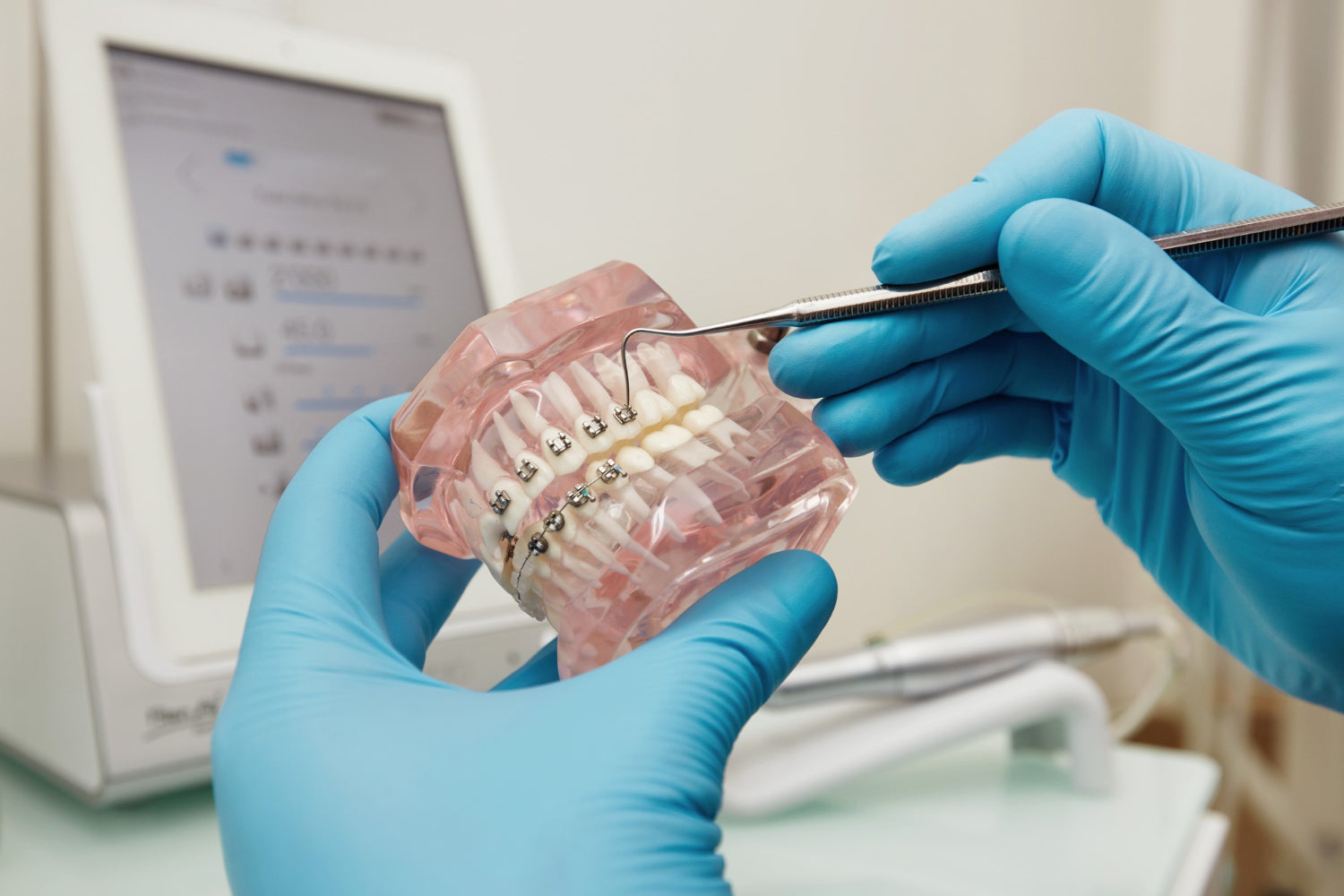
As 3D printing becomes a standard part of dental lab workflows, the resin choice matters more than most labs initially expect. Aidite and Formlabs are two of the most commonly evaluated brands Aidite because of its established presence in CAD/CAM dental materials, Formlabs because of its dominant position in professional 3D printing hardware.
The comparison between them isn't straightforward, because they're built around different assumptions about how a dental lab operates. This guide covers both honestly what each does well, where each falls short, and which makes more sense depending on what your lab actually needs.
What each brand is, and why the context matters?
Aidite is a dental materials manufacturer that started in zirconia and CAD/CAM consumables, then expanded into 3D printing resins. Its dental resin range is designed to work across multiple printer brands open-system compatibility is part of the product proposition. Labs that already run Aidite zirconia dental material for milling and want to add a printing workflow without changing suppliers will find Aidite's resin range a natural extension of an existing relationship.
Formlabs is a 3D printing hardware company that built a dental resin range specifically validated for its own printers the Form 3B and Form 3B+. Its ecosystem approach means the hardware, software, and resin are designed together, which produces reliable and predictable print outcomes within that closed system. The tradeoff is dependency: Formlabs resins work best on Formlabs printers, and moving to a different hardware platform means re-evaluating the entire resin relationship.
That structural difference open system vs. closed ecosystem is the most important thing to understand before comparing individual products, because it shapes every other decision downstream.
Dental resin types: what both brands cover
Both Aidite and Formlabs offer resins across the core categories a dental lab needs for a complete 3D printing workflow.
| Resin Category | Aidite | Formlabs |
|---|---|---|
| Dental models | Model resin, thermoforming model resin | Dental Model Resin, Model Resin V2 |
| Temporary crowns / C&B | C&B resin, PMMA-based temporaries | Temporary CB Resin |
| Surgical guides | Surgical guide resin | Surgical Guide Resin |
| Denture base | Denture base resin, multilayer PMMA | Denture Base Resin |
| Denture teeth | Denture teeth resin | Denture Teeth Resin |
| Splints / night guards | Splint resin | Splint Resin |
| Gingiva / soft tissue | Gingiva resin | Not offered |
The gingiva resin gap is worth noting. Formlabs does not offer a soft tissue simulation resin labs that need flexible gingiva models for implant planning or removable prosthetics workflows have to source that material elsewhere. Aidite covers it within the same product family, which simplifies ordering and support for labs running complex prosthetic workflows.
Print accuracy and surface quality
Both brands produce clinically acceptable accuracy when used correctly but the conditions matter.
Formlabs' SLA printing technology (stereolithography) uses a laser point source to cure resin layer by layer, which produces very fine detail and smooth surfaces. The Form 3B achieves 25-micron XY resolution, which is competitive with the best dental-specific printers on the market. For diagnostic models, surgical guides, and clear aligner models where surface accuracy is the primary requirement, Formlabs' print quality is difficult to fault within its validated workflow.
Aidite's resins are validated for DLP printers including Aidite's own CPD-100 platform, as well as third-party DLP systems. DLP cures an entire layer at once rather than tracing it with a point laser, which is faster but can introduce slight edge distortion at the boundary of the exposure area. On a well-calibrated DLP printer, this difference is minimal for most dental applications. For extremely fine marginal detail surgical guide holes, thin die spacers the SLA advantage is more clinically relevant.
Published research on 3D-printed dental model accuracy consistently shows that printer calibration and resin handling protocol matter more than brand differences for most clinical applications. A well-run Aidite DLP workflow outperforms a poorly calibrated Formlabs SLA workflow, and vice versa.
Denture base and PMMA: where Aidite has more range
For labs running full-arch denture workflows, Aidite's material range offers more options than Formlabs. Beyond 3D-printed denture base resin, Aidite covers PMMA-based denture materials for milling workflows which matters for labs that haven't fully transitioned to 3D printing for all denture cases or that run hybrid milled/printed approaches.
The Aidite Denture Base PMMA is a milled PMMA dental material designed for full denture bases a different product category from 3D-printed denture resin, but one that gives labs the flexibility to choose the fabrication method that best suits the clinical case and equipment available. Formlabs doesn't offer a milled PMMA equivalent.
For temporary crown and bridge work, the Aidite PMMA multilayer disc covers CAD/CAM temporary fabrication with natural shade gradients built into the blank a workflow that produces temporaries with better aesthetic depth than most 3D-printed options at equivalent turnaround time. This is particularly relevant for implant temporization workflows where the temporary may be worn for three to six months.
Ecosystem flexibility: open system vs. closed
This is where the practical decision often lands for labs evaluating both brands seriously.
Formlabs' closed ecosystem means consistent, validated outcomes when everything runs on Formlabs hardware. The resin profiles are pre-loaded in PreForm software, the wash and cure units are optimised for Formlabs resins, and the support from Formlabs is specific to that stack. For practices or labs that want to invest in one printing system and don't want to manage multi-vendor complexity, this is a genuine operational advantage. The downside is cost of entry Formlabs hardware carries a premium over comparable DLP platforms and limited portability of resin knowledge if the lab ever changes printer brands.
Aidite's open-system approach means resins can be run on any compatible DLP or SLA printer with the appropriate exposure settings. Labs that already own a non-Formlabs printer don't need to replace their hardware to access Aidite's resin range. The tradeoff is that validation is more the lab's responsibility confirming the right exposure settings on your specific printer takes more initial setup work than loading a pre-validated Formlabs profile.
For labs already running Aidite zirconia for milling and looking to add a printing workflow, the open-system approach means one supplier relationship covers both workflows. The full Aidite zirconia and PMMA range available through Zirconia Guys combined with Aidite's printing resins supports a complete digital lab workflow from milling through printing without managing multiple material vendors.
Cost comparison
Formlabs resins carry a notable price premium compared to Aidite equivalents for most resin categories. The Formlabs premium is partly justified by the validated hardware integration you're paying for certainty that the resin will perform as specified on their printer without additional calibration work. For labs that value that certainty over cost optimisation, it's a defensible trade.
For labs running higher volumes, the per-unit resin cost difference becomes more significant across a month of production. Aidite's denture resin block competitive zirconia price point carries through to their resin range the materials are priced for labs that need to manage cost alongside quality rather than accept a premium for ecosystem convenience.
The total cost comparison should also include hardware. Formlabs Form 3B carries a higher entry price than comparable DLP platforms. For labs investing in a new printer specifically to run dental resins, evaluating the full hardware plus consumables cost over a two-year period gives a clearer picture than comparing resin prices in isolation.
Biocompatibility and regulatory status
Both Aidite and Formlabs dental resins are produced to biocompatibility standards for intraoral and clinical use. Both brands hold CE marking for their dental resin products in European markets. For the US market, both maintain FDA compliance documentation for relevant product categories.
For labs supplying restorations directly to clinicians in North America, verifying the specific regulatory status of each product particularly for temporary crown resins and surgical guide materials is the lab's responsibility. Both brands provide this documentation on request.
Which is better and for whom?
The honest answer is that neither brand is universally better. The right choice depends on how the lab is set up and what it's optimising for.
Formlabs makes more sense when: the lab is investing in a new 3D printer specifically for dental applications and wants a validated, fully integrated workflow with minimal calibration complexity. The closed ecosystem is an advantage for labs that prefer to solve once and repeat, and the Form 3B's SLA accuracy is the right choice for applications where very fine marginal detail matters high-accuracy surgical guides and diagnostic models in particular.
Aidite makes more sense when: the lab already owns a compatible DLP printer and wants to extend its dental resin range without hardware investment; or when it runs both milling and printing workflows and wants a single supplier relationship covering zirconia blocks, PMMA dental materials, and printing resins. Aidite's gingiva resin is also the only option if soft tissue simulation is part of the workflow Formlabs doesn't cover this category.
For labs in North America sourcing either Aidite dental lab materials or evaluating which dental resin fits a specific workflow, working with a specialist dental lab material supplier who understands both product ranges is faster than researching specifications independently. Zirconia Guys carries the full Aidite range get in touch with the team to discuss which products suit your printer, workflow, and case mix.


