

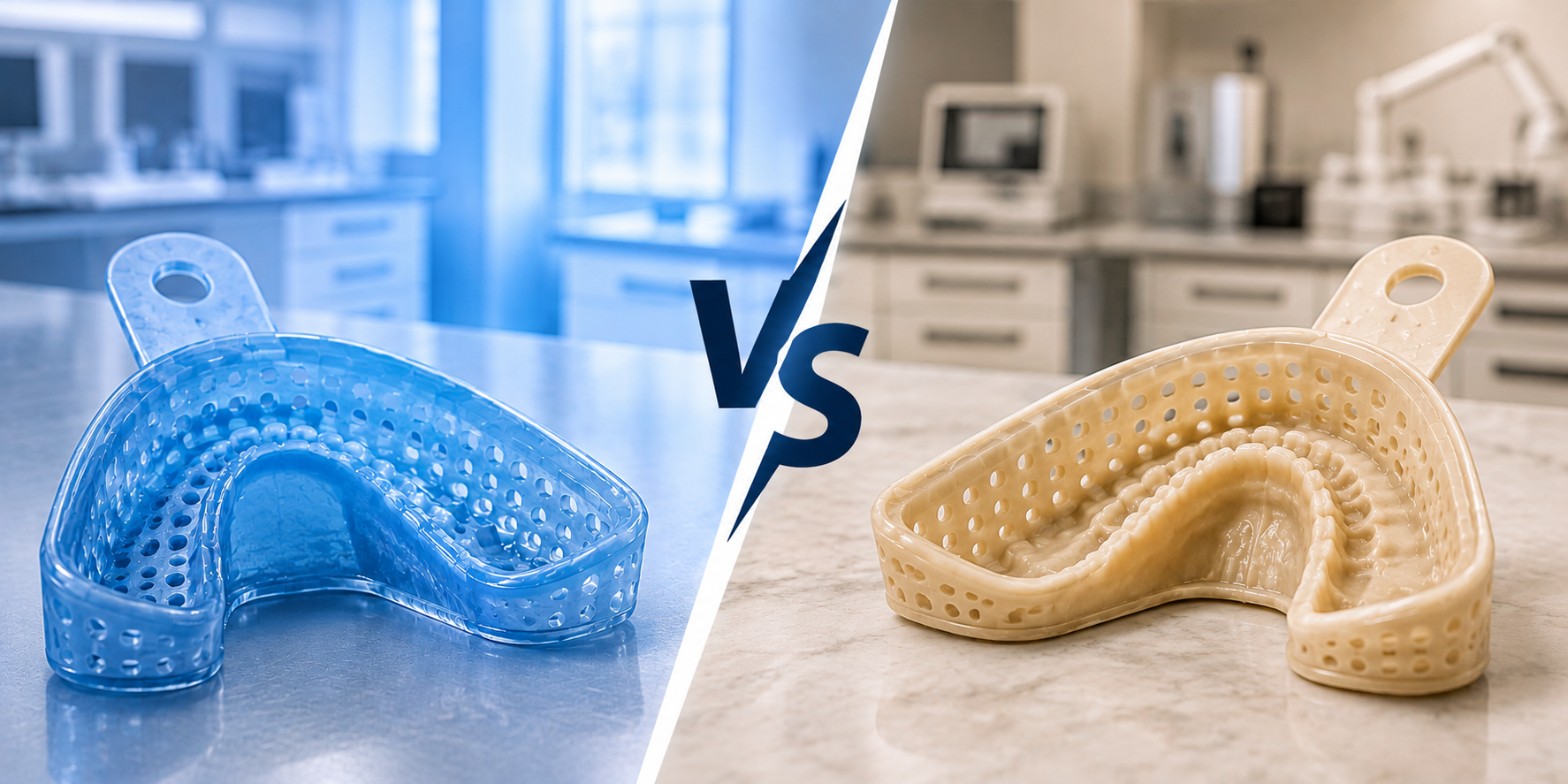
Choosing the right dental impression tray resin is important for laboratories to move custom tray fabrication into a digital workflow. The material must produce a rigid, accurate tray that supports the impression procedure without unnecessary adjustments.
Whip Mix VeriTRAY and Key Tray Resin are two options designed for custom impression tray production. Comparing their intended use, printer compatibility, workflow requirements, and material characteristics can help laboratories make a more informed choice.
Zirconia Guys is a dental lab material supplier serving dental professionals and laboratories with dental lab materials for modern digital workflows. Its product range includes impression tray resins and other CAD/CAM materials used in modern dental workflows.
What Is Dental Impression Tray Resin?
A dental impression tray resin is a 3D printing material designed to produce custom impression trays. Instead of manually fabricating a tray, technicians can design it digitally and print it with a compatible 3D printer.
A good dental impression tray resin should provide:
- Adequate rigidity
- Dimensional stability
- Reliable print quality
- Suitable surface characteristics
- Compatibility with the laboratory's printer
- A manageable washing and curing process
The resin should also be selected according to the intended impression procedure and the manufacturer's validated instructions. This differs from restorative materials such as zirconia multilayer, which are selected according to the requirements of the final restoration.
Whip Mix VeriTRAY: Key Features
Whip Mix VeriTRAY is a rigid, durable, biocompatible Class I medical device resin designed for 3D printing custom dental impression trays. It is listed for use with DLP and LCD printers operating at 385 nm and 405 nm wavelengths.
The manufacturer also highlights print speed and precision as important features. Under specified conditions, VeriTRAY can be printed at a layer thickness of 500 microns, with a reported print time of approximately 25 minutes. Actual results can vary depending on the printer, design, and validated settings.
For laboratories, notable considerations include:
- Rigid tray production
- Compatibility with selected DLP and LCD systems
- 385/405 nm wavelength support
- High-speed printing capability
- Transparent turquoise color
- Validated printer profiles
A laboratory should always follow the manufacturer's current printer settings rather than transferring parameters from another resin.
Key Tray Resin: What Does It Offer?
Key Tray Resin is a 3D printing resin intended for producing customized individual impression trays. Product information describes it as a strong, biocompatible material designed to withstand the forces associated with taking and removing impressions.
For laboratories searching specifically for key tray resin for dental labs, the material's intended application is an important starting point. Key Tray Resin is available in 500 g and 1 kg sizes, offering laboratories options based on their expected production volume.
When evaluating key tray resin for dental labs, technicians should consider:
- Printer compatibility
- Required print settings
- Tray design
- Post-processing requirements
- Production volume
- Impression material compatibility
- Manufacturer instructions
These factors can have a greater impact on workflow efficiency than the resin name alone.
VeriTRAY vs Key Tray Resin: At a Glance
Both products are intended for custom impression tray production, but their published specifications and workflow considerations differ.
| Feature | Whip Mix VeriTRAY | Key Tray Resin |
|---|---|---|
| Primary application | Custom dental impression trays | Custom individual impression trays |
| Material type | Dedicated tray printing resin | Dedicated tray printing resin |
| Biocompatibility | Class I medical device | Biocompatible |
| Printer requirements | DLP/LCD, 385/405 nm | Follow validated manufacturer settings |
| Color | Transparent turquoise | Product-specific |
| Available quantity | 1 kg | 500 g and 1 kg |
| Key consideration | Printing speed and precision | Strength and custom tray production |
This comparison does not mean one dental impression tray resin is universally better.
The right option depends on the laboratory's equipment, production volume, workflow, and material requirements.
Which Resin May Suit a High-Volume Lab?
Production speed can become important when a laboratory prints a large number of custom trays. Whip Mix highlights fast printing for VeriTRAY, including a reported 25-minute print time under specified conditions.
This can make VeriTRAY worth considering laboratories that prioritize printing efficiency.
However, speed should not be the only consideration. A dental impression tray resin still needs to produce trays that meet the requirements of the intended impression procedure.
For a high-volume laboratory, compare:
- Print time
- Number of trays per print
- Printer capacity
- Resin consumption
- Post-processing time
- Failed-print frequency
- Material availability
This type of production planning is different from restorative workflows involving materials such as zirconia multilayer, where milling and sintering requirements also need to be considered.
Why Printer Compatibility Matters?
A resin performance depends on the processing method using the 3D printer. Factors such as exposure settings, layer thickness, support structures, washing, and post-curing affect the final tray. Whip Mix provides printer qualification details for VeriTRAY on specific systems and wavelengths.
The same principle applies when choosing key tray resin for dental labs. Laboratories should confirm the manufacturer's recommended printer settings before production. This is the same validation process labs go through when comparing other Keystone and Whip Mix resins see Key Ortho Model vs VeriModel Ortho White: How to Choose the Right Ortho Model Resin for a similar side-by-side breakdown.
Before adopting a new dental impression tray resin, check:
- Printer model
- Supported wavelength
- Validated layer thickness
- Exposure settings
- Washing procedure
- Post-curing requirements
- Recommended storage conditions
Using validated settings can help reduce inconsistent prints and unnecessary material waste. Similar attention to processing parameters is required when a laboratory works with a zirconium block for restorative production.
How Do Restorative Materials Differ from Tray Resins?
Impression of tray resins and restorative materials serve different purposes in a dental laboratory. Tray resin is designed for custom impression tray fabrication, while zirconia dental material is used for producing dental restorations.
When evaluating restorative materials, laboratories may consider:
- Strength and fracture resistance
- Translucency and shade
- Restoration indications
- Milling requirements
- Sintering protocols
- Overall material consistency
Cost can also influence purchasing decisions. When comparing different products, zirconia blocks price may be considered alongside material properties, expected yield, and the types of restorations the laboratory produces.
A zirconium block follows a different production process from a printed impression tray. Laboratories working with zirconium dental materials should also follow the recommended milling and sintering parameters for the selected product.
For cases requiring a gradual change in shade and translucency, zirconia multilayer materials can offer a useful option. Their layered structure allows technicians to work with different optical characteristics across the restoration.
Laboratories may also compare zirconia blanks based on:
- Strength
- Translucency
- Shade availability
- Restoration indications
- Milling compatibility
- Sintering requirements
These considerations are separate from those used to select a dental impression tray resin. A dental lab material supplier can also help laboratories compare restorative and digital fabrication materials according to their intended applications. Keeping the two applications distinct helps technicians choose materials according to the requirements of each laboratory process.
How Should Labs Choose Between VeriTRAY and Key Tray Resin?
There is no one-size-fits-all answer for every laboratory. The optimal choice depends on the lab's current equipment and production needs.
The same principle applies to other products, including zirconia dental material, where the intended restoration and processing requirements should guide selection.
Before selecting a dental impression tray resin, consider:
- Printer compatibility: Is the resin validated for the laboratory printer?
- Production volume: How many trays does the lab produce?
- Print speed: Is faster production important?
- Post-processing: How much washing and curing does the workflow require?
- Package size: Does the available quantity suit the lab's usage?
- Tray requirements: Does the material provide the desired rigidity and handling characteristics?
- Workflow consistency: Can technicians easily maintain the same validated process?
These factors can also help laboratories maintain consistency when selecting other CAD/CAM materials, including zirconia blanks, for restorative workflows.
These same workflow considerations are important when laboratories handle zirconium dental products alongside printed materials.
For labs seeking key tray resin, evaluate Key Tray Resin for strength, package sizes, printer needs, and use. Final choice should rely on product info and lab workflow.
Finding the Right Fit for Your Lab
VeriTRAY and Key Tray Resin are both designed for custom impression tray production, but the better choice depends on the laboratory printer, production volume, processing workflow, and specific requirements.
A laboratory should compare printer compatibility, print performance, post-processing, material consumption, and manufacturer guidance before deciding. Similar checks can help technicians evaluate zirconia blanks according to their intended restoration and processing requirements. This approach can help technicians choose a dental impression tray resin that fits their workflow rather than selecting a material based on a single feature.
Purchasing considerations can vary across materials, so factors such as zirconia blocks price should be evaluated according to the restoration type and overall laboratory workflow.
Zirconia Guys is a dental lab material supplier offering dental lab materials, including digital impression tray resins and CAD/CAM products, to support different stages of modern dental production.


