

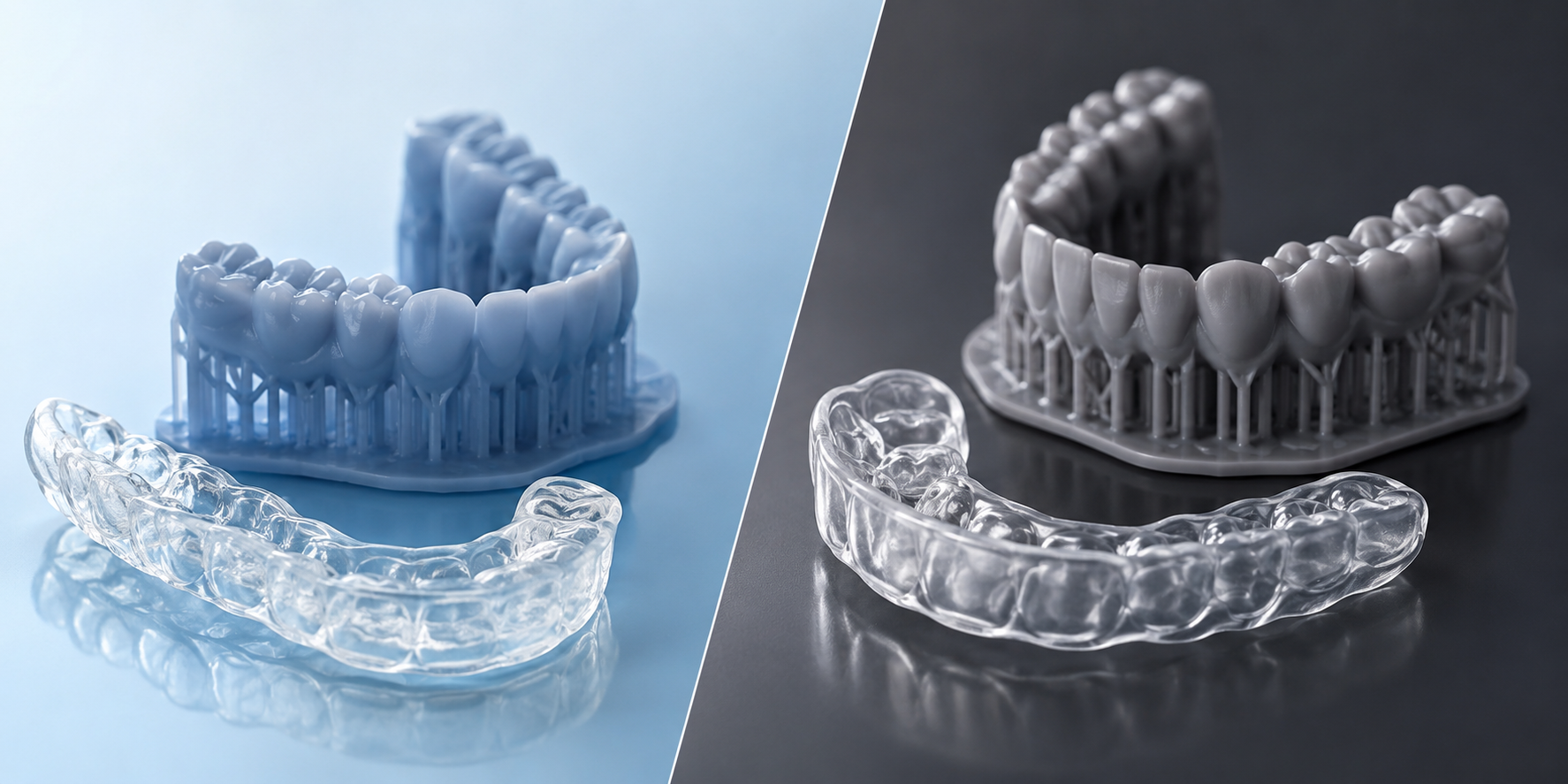
Choosing the right resin for a 3D-printed dental splint involves more than looking at color or clarity. The material needs to match the appliance indication, printer, post-processing workflow, mechanical requirements, and expected clinical use. For dental laboratories producing rigid night guards and splints, these factors can affect production consistency and the final appliance.
Whip Mix VeriSPLINT Clear and KeySplint Hard Clear are both designed for rigid dental appliances, but they come from different material platforms and have different documented characteristics. Comparing their intended applications, workflow requirements, and material properties can help laboratories make a more informed choice.
Zirconia Guys supplies dental lab materials, including Whip Mix VeriSPLINT Clear, for laboratories working with digital dental production. As a dental lab material supplier, Zirconia Guys also offers materials across other CAD/CAM categories for different laboratory applications.
What Are VeriSPLINT Clear and KeySplint Hard Clear?
Whip Mix VeriSPLINT Clear is a biocompatible 3D printing resin developed for bite guards, dental splints, and occlusal night guards. The product page lists it as an FDA 510(k)-cleared medical-device resin and specifies compatibility with DLP printers using 385 nm technology.
KeySplint Hard Clear is the clear version of KeySplint Hard from Keystone Industries. It is intended for rigid dental splints and night guards. The manufacturer lists applications including retainers and post-trauma tooth immobilization, along with characteristics such as strength, abrasion resistance, stain resistance, and ease of polishing.
Both are therefore purpose-specific dental resins rather than general-purpose printing materials. That distinction matters when choosing a dental splint printing resin for an intraoral appliance.
VeriSPLINT Clear vs KeySplint Hard Clear: Key Differences
| Feature | VeriSPLINT Clear | KeySplint Hard Clear |
|---|---|---|
| Material type | Biocompatible 3D printing resin | Biocompatible 3D printing resin |
| Main applications | Bite guards, dental splints and occlusal night guards | Rigid splints, night guards, retainers and tooth immobilization |
| Appearance | Clear | Clear |
| Regulatory information | FDA 510(k)-cleared | FDA 510(k)-cleared |
| Printer information | DLP printers featuring 385 nm, according to the product listing | Validated printer workflows should be followed |
| Flexural strength | Refer to current manufacturer specifications for the validated workflow | 60–65 MPa under ISO 20795-2 |
| Flexural modulus | Refer to current manufacturer specifications | 1510–1600 MPa under ISO 20795-2 |
| Key characteristics | Rapid printing, rigidity and clear appearance | Rigidity, abrasion resistance and polish ability |
KeySplint Hard's manufacturer-published specifications report a flexural strength of 60–65 MPa and flexural modulus of 1510–1600 MPa under ISO 20795-2.
For either clear night guard resin, laboratories should follow the manufacturer's current instructions for printing, washing, curing, and finishing rather than assuming settings can be transferred between materials.
Where Does VeriSPLINT Clear Fit in a Dental Lab Workflow?
VeriSPLINT Clear is designed specifically for rigid intraoral appliances. Its product information identifies bite guards, dental splints, and occlusal night guards as intended applications. The product listing also highlights rapid printing, with up to four splints on a full build platform within an hour under the stated workflow.
For a laboratory looking for a whip mix verisplint clear option, the main advantages are its dedicated splint application, clear appearance, and integration into a digital printing workflow.
It can be considered when a laboratory needs:
- A rigid material for occlusal appliances
- A clear finish for discreet appliances
- A purpose-formulated intraoral resin
- A material compatible with the laboratory's validated printer setup
- A streamlined printing and finishing workflow
The whip mix verisplint clear formulation is therefore different from a model resin that might otherwise be used for temporary experimentation. A dedicated dental splint printing resin is formulated around the requirements of the finished appliance.
What Makes KeySplint Hard Clear Different?
KeySplint Hard Clear is also intended for rigid dental appliances, but its published specifications place particular emphasis on rigidity, durability, and abrasion resistance. Keystone lists rigid dental splints and night guards and identifies retainers and post-trauma tooth immobilization among its applications.
The manufacturer reports:
- Flexural strength of 60–65 MPa
- Flexural modulus of 1510–1600 MPa
- 18 μg/mm³ water sorption
- 9% elongation at break
- Passing biocompatibility results under ISO 10993-1
These specifications can be useful when a laboratory evaluates a dental splint printing resin based on more than just appearance.
KeySplint Hard is also described by the manufacturer as abrasion-resistant, stain-resistant, and easy to polish.
Which Resin Is Better for Clear Night Guards?
Neither material should automatically be considered the better choice for every laboratory. The appropriate clear night guard resin depends on the appliance, printer, validated workflow, and production priorities.
VeriSPLINT Clear may be worth considering when:
- The laboratory already uses a compatible Whip Mix workflow
- Clear rigid night guards and occlusal splints are regularly produced
- Rapid production is important
- The laboratory wants a dedicated splint resin
KeySplint Hard Clear may be worth considering when:
- Rigid appliances are the main application
- Abrasion resistance is an important consideration
- The laboratory values detailed published mechanical specifications
- The existing printer workflow supports the material
The key point is that a clear night guard resin should be evaluated according to its complete production and clinical workflow rather than transparency alone.
What Should Labs Check Before Selecting a Splint Resin?
Before purchasing a dental splint printing resin, laboratories should review several practical factors.
1. Intended indication
Confirm that the material is specifically indicated for the appliance being fabricated. A model resin should not automatically be treated as an intraoral splint material.
2. Printer compatibility
Check the manufacturer's validated printer list, wavelength requirements, exposure settings, and recommended layer thickness.
3. Post-processing
Washing and post-curing are part of the material workflow. For intraoral applications, following the specified curing protocol is especially important.
4. Mechanical properties
Compare available data for strength, modulus, wear, and other relevant characteristics based on the intended appliance.
5. Finishing requirements
A material that can be polished efficiently may help reduce finishing time while supporting a smoother appliance surface.
6. Supply and consistency
The dental lab material supplier should provide genuine material with appropriate storage, documentation, and batch information.
7. Total production cost
Consider material consumption, printing time, post-processing, finishing, and potential remakes rather than focusing solely on the bottle price.
This approach also applies when evaluating other dental lab materials. The lowest purchase price does not necessarily provide the lowest overall production cost.
How Is Splint Resin Different from Zirconia Materials?
Splint resins and zirconia products belong to different material categories and should not be selected for the same purpose.
A zirconia dental material is a ceramic CAD/CAM material commonly used for dental restorations. A zirconium block or zirconia blank is processed through a milling and sintering workflow rather than a resin 3D printing process.
Similarly, zirconia multilayer products are designed with graded optical properties for applications where shade and translucency transitions are important. Laboratories may also research zirconia blocks price when comparing the cost of different restorative CAD/CAM materials. For a closer look at how labs compare multilayer zirconia options by strength and translucency, see How Does TT One Multilayer Compare to Explore Esthetic for Esthetic Zone Cases?
These materials have different indications from printed splint resin. For example:
- Dental splint printing resin: Used to fabricate suitable 3D printed intraoral appliances.
- Zirconia blank: Used as the starting form for milled zirconia restorations.
- Zirconium block: Used in specific CAD/CAM milling workflows.
- Zirconia multilayer: Designed to provide graded color and optical characteristics.
- Zirconia dental material: A broader category covering zirconia materials used in restorative dentistry.
Understanding the difference prevents laboratories from comparing materials solely because they are all used in digital dentistry. A search for zirconium dental products can lead to restorative materials, while a search for a dental splint printing resin points toward additive manufacturing materials.
How Do Material Costs Fit into the Decision?
Cost is relevant, but it should be considered alongside workflow performance. The price of a dental splint printing resin is only one part of the final cost of producing an appliance.
Laboratories can evaluate:
- Resin cost per appliance
- Printing capacity
- Failed-print rate
- Post-processing time
- Finishing requirements
- Printer compatibility
- Appliance consistency
The same principle applies when comparing zirconia blocks price. A lower-cost zirconium block may not necessarily deliver better value if it requires a different workflow, additional finishing, or produces more waste.
For laboratories managing multiple types of dental lab materials, calculating the cost per finished appliance or restoration provides a more useful comparison than looking at material price alone.
Which One Should Your Laboratory Choose?
The choice between VeriSPLINT Clear and KeySplint Hard Clear should begin with the appliance and then move to the laboratory workflow.
| Laboratory priority | Material to consider |
|---|---|
| Clear rigid occlusal splints | VeriSPLINT Clear |
| Dedicated Whip Mix splint workflow | VeriSPLINT Clear |
| Rigid splints with published mechanical specifications | KeySplint Hard Clear |
| Strong focus on abrasion resistance | KeySplint Hard Clear |
| Existing validated printer workflow | Follow the compatible manufacturer's material |
| Multiple digital dental applications | Evaluate each resin according to its indication |
For a laboratory already using Whip Mix products, Whip Mix Verisplint Clear can be a practical addition for rigid splint production. For a laboratory already working within the KeyPrint ecosystem, KeySplint Hard Clear may fit more naturally into its existing workflow.
The important point is to avoid selecting a dental splint printing resin based on a single specification. Printer compatibility, intended use, post-processing, mechanical performance, and finishing should all be considered.
Making the Right Choice for Your Digital Dental Workflow
VeriSPLINT Clear and KeySplint Hard Clear are both designed for rigid dental appliances, but the better choice depends on the laboratory equipment, production needs, and intended applications. VeriSPLINT Clear is positioned for bite guards, dental splints, and occlusal night guards, while KeySplint Hard Clear offers a rigid option with published mechanical specifications.
For laboratories, the decision should focus on printer compatibility, equipment requirements, post-processing and finishing, and the consistency of the overall workflow. Reviewing these factors before purchasing can help reduce workflow issues and support predictable appliance production.
Zirconia Guys supplies dental lab materials, including VeriSPLINT Clear, for dental laboratories working with digital appliance production. Its range can help laboratories find materials suited to different CAD/CAM requirements while keeping the focus on application-specific material selection.


