

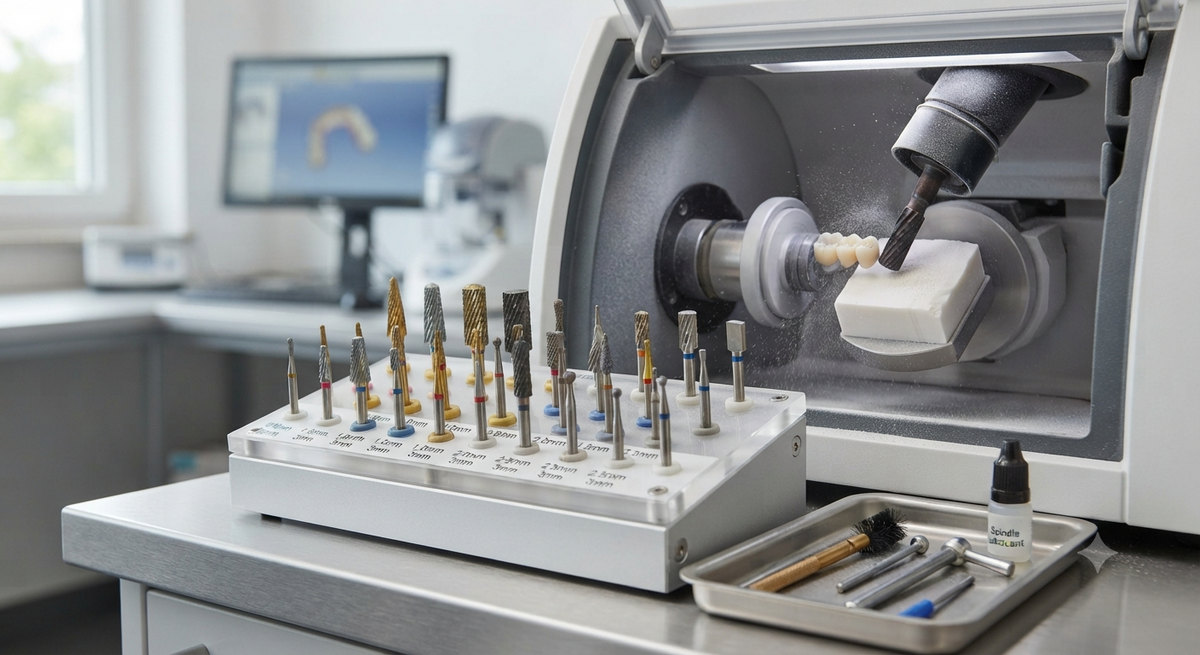
If your zirconia restorations are coming off the mill with rough margins or inconsistent fit, the cutting tool is one of the first things to look at. Dental milling burs are small, but they do the actual work, and choosing and caring for them well can improve quality and lower your running costs. This guide explains the types, how to choose, and how to look after them.
What a Milling Bur Actually Does
A milling bur removes material from the disc in controlled passes. Roughing passes remove bulk quickly, while finishing passes refine the surface, margins and fine anatomy. Most mills use several bur sizes in one job, swapping between them automatically. The sharper and truer the tip, the cleaner the cut, which is why quality dental milling burs matter.
Flat, Ball and Torus: Picking the Right Shape
• Flat end burs remove material quickly and leave flat surfaces, so they suit roughing and flatter areas.
• Ball end burs have a rounded tip that follows curves, making them the choice for fine anatomy, fissures and detailed surfaces.
• Torus burs have a slightly rounded corner and balance speed with detail, working well for margins and transitions.
Many machines pair these shapes by default, so check which combination your milling strategy actually calls for before ordering.
Diameter and Coating Choices Explained
Thicker burs are stronger and cut faster. Thinner ones reach into tight spaces and capture detail, but they wear and break more easily. Smaller diameters also limit how sharp an internal corner can be, which is why designs need rounded internal angles.
Coatings protect the cutting edge. Tungsten carbide burs with a hard coating are common for pre-sintered zirconia, while other materials such as glass ceramics may call for diamond-coated tools. Always match the coating to the material, since the wrong pairing wears out burs quickly.
Matching Burs to Your Machine and Material
Not every bur fits every mill. Shank size, length and tolerance vary between systems, and a poorly fitting bur can run out of true, which shows up as rough surfaces and chipped edges. Start with the burs your machine maker validates, then test alternatives on non-critical cases.
Also remember that dry and wet milling use different tools. Most zirconia is milled dry, but some machines are built for wet milling, so follow your machine's guidance.
Safe Handling During Tool Changes
Most bur damage happens away from the mill. Dropping a bur on a hard surface can chip the tip invisibly, and touching the cutting edge with fingers or tools can dull it. Use tweezers or a holder when changing tools, keep the work area uncluttered, and make sure the collet is fully tightened before you start a job. If a bur falls, treat it as suspect and inspect it before use.
Daily and Weekly Care That Extends Bur Life
• Remove dust from the tool changer and collets after each run.
• Inspect bur tips under magnification for chips or rounding.
• Store spare burs in their holders so tips do not knock together.
• Keep a usage log so replacement is based on hours, not guesses.
Knowing When to Retire a Bur
Warning signs include rough or streaky surfaces, margins that need extra hand finishing, unusual noise, and visible wear on the tip. When you see two or more together, replace the bur. A used bur left in service can cost more in remakes than a new one costs to buy.
Spotting a Quality Bur Before You Buy
Look for consistent, clean cutting edges, accurate shank dimensions and clear labeling that states the diameter, shape and intended material. Poor-quality burs may have uneven coatings or tips that sit slightly off center, and you will only notice once they are mounted and running. Buy a small quantity of any new type first, run it on a model case, and compare the result with your standard bur before ordering in bulk.
Buying Burs Without the Guesswork
Ordering is easier when your bur supply, blocks and finishing materials come from one place. Working with a reliable zirconia dental products distributor saves time, keeps spares in stock and gives you someone to ask when a setting does not behave. Keep a small reserve of your most-used sizes, and review your tool log every month so you reorder before you run out.
Good dental milling burs are an investment in consistency, and a few minutes of weekly care keeps that investment working.


