

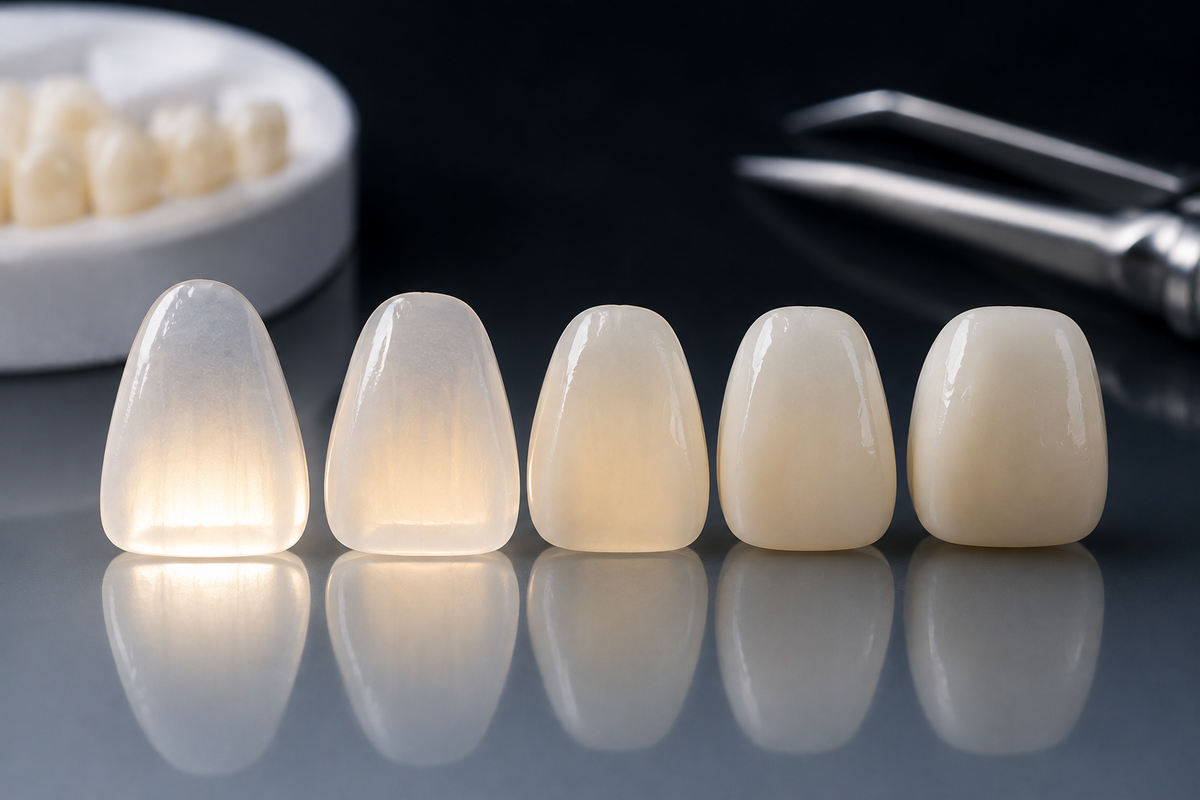
Crown thickness plays an important role in how zirconia interacts with light and how the finished restoration appears. Even when the selected material has the desired shade and translucency, changes in crown thickness can affect brightness, masking, depth, and overall color perception.
For technicians, understanding this relationship is important when planning restorations with pre-shaded zirconia. Material selection should consider not only the shade built into the zirconia but also the preparation, restoration design, thickness, and finishing process.
Zirconia Guys offers zirconia solutions for dental laboratories and professionals, including materials designed for different CAD/CAM workflows. Its range can help laboratories explore suitable options based on restoration requirements.
Why Crown Thickness Matters for Zirconia Translucency
Translucency describes how much light passes through a material and how much is scattered within it. In zirconia restorations, this optical behavior influences how the crown appears under different lighting conditions.
Crown thickness can influence this effect because a thicker layer of zirconia gives light more material to travel through.
In practical terms:
- Thinner areas may allow more light to pass through.
- Thicker areas may appear opaquer or masking.
- Increased thickness can influence perceived brightness and color.
- The preparation underneath can become less visible as thickness increases.
- Different areas of the same crown may show different optical effects.
This means technicians cannot evaluate dental zirconia based only on the material's stated translucency. The thickness of the final restoration also needs to be considered. Translucency is only one part of zirconia selection. Our guide to the different types of zirconia explains how strength, translucency, and indications can vary between materials.
How Thickness Changes the Appearance of Pre-Shaded Zirconia
A crown is rarely the same thickness throughout its entire structure. Cusp areas, axial walls, margins, and incisal regions can vary in thickness depending on the preparation of design and restoration requirements.
With pre-shaded zirconia, the built-in shade provides a consistent starting point, but thickness still influences how that shade is perceived.
For example, a relatively thin restoration may allow more influence from the underlying preparation. A thicker area may provide greater masking and make the material appear more saturated or less translucent.
This is particularly important in visible restorations where small optical differences can affect the final result.
Technicians should therefore assess:
- Where the restoration will be thinnest
- Where additional masking may be required
- How much space is available for the restoration
- Whether the preparation color could influence the final appearance
- How staining and glazing will affect the finished crown
The goal is not simply to achieve a specific thickness. It is to achieve an appropriate thickness while maintaining the required strength and optical results.
The Relationship Between Preparation Shade and Crown Thickness
The color of the underlying preparation can influence the final appearance of a zirconia crown, especially when the restoration is relatively thin.
Darker preparation may reveal more through a translucent restoration. Thicker material offers more masking but can cause issues with design, occlusion, or contours. This is why shade and thickness should be considered together.
Before milling zirconia dental blanks, technicians should review the preparation and determine whether the selected material provides enough masking for the case.
Factors to consider include:
- Preparation color
- Cement or luting material
- Required final shade
- Available restorative space
- Desired translucency
- Location of the restoration
For highly visible cases, this assessment can help prevent unexpected changes in the final appearance.
What Is the Role of Pre-Shaded Zirconia in Shade Management?
Pre-shaded zirconia has color incorporated into the material before milling. This can simplify shade management because the technician starts with a material that already has a base shade rather than coloring completely white zirconia from the beginning.
The main advantages can include:
- A more consistent starting shade
- Reduced manual coloring
- A simpler production workflow
- More predictable routine shade development
- Less dependence on extensive coloring steps
St pre-shaded zirconia can be considered when a laboratory wants to streamline its workflow while maintaining control over the final appearance through finishing.
However, pre-shading does not eliminate the need to evaluate crown thickness. The incorporated color and the thickness of the restoration work together to influence how the final crown appears.
A technician should therefore avoid selecting ST pre-shaded zirconia based only on its available shade. The material should also be suitable for the restoration's thickness, indication, preparation shade, and functional requirements.
How Should Technicians Evaluate Crown Thickness Before Milling?
Thickness should be considered during case planning rather than only after milling. The technician can review the digital design and determine whether the planned restoration provides sufficient material to achieve the intended result.
Before selecting a zirconia blank, consider:
- Planned thickness: Identify areas where the restoration may become very thin.
- Preparation shade: Determine whether additional masking is necessary.
- Required translucency: Decide how much light transmission is desirable.
- Final shade: Check whether the available material shade matches the case.
- Restoration location: Anterior cases may require greater optical control.
- Functional demands: Ensure the selected material suits the expected load.
- Finishing process: Consider the effect of staining, glazing, and polishing.
These considerations are also useful when choosing zirconia dental blanks for different CAD/CAM cases.
Choosing Zirconia Blocks for Different Crown Thicknesses
Not every zirconia material responds to thickness in exactly the same way. Differences in formulation, composition, strength, translucency, and shade can influence optical performance.
When comparing zirconia blocks, technicians should look beyond a single translucency or strength value.
The selection should account for:
- Restoration indication
- Required thickness
- Desired translucency
- Masking requirements
- Preparation shade
- Final shade
- Milling and sintering workflow
This is particularly relevant when comparing zirconia blocks dental laboratories to use for different types of crowns and bridges.
A highly translucent material suits some cases but may lack masking, while a highly masking material might not achieve the desired optical effect for a thin anterior restoration.
The right choice depends on how the material properties work with the actual restoration design.
Can Different Zirconia Materials Behave Differently at the Same Thickness?
Yes. Two zirconia materials with similar thicknesses can produce different visual results because their formulations and optical properties may differ.
Some materials place greater emphasis on translucency, while others focus on strength and masking. There can also be differences in how shades are incorporated and how the material responds to sintering and finishing.
For example, explore functional zirconia may be considered as part of a broader materials comparison when technicians evaluate functional and optical requirements.
The important point is that thickness should not be viewed independently from the material itself.
When comparing dental zirconia, technicians should review:
- Strength
- Translucency
- Shade system
- Masking ability
- Indications
- Recommended thickness
- Sintering requirements
- Finishing recommendations
This provides a more complete basis for material selection.
Practical Tips for Managing Translucency in Dental Zirconia
Managing translucency starts with consistent planning and continues through milling, sintering, and finishing.
Technicians can consider the following practices:
- Maintain an appropriate and consistent preparation design.
- Check restoration thickness before milling.
- Evaluate the preparation shade before selecting the material.
- Position restorations correctly within the material when using graded or multilayer options.
- Follow the manufacturer's recommended sintering cycle.
- Avoid excessive or uncontrolled staining.
- Apply glazing and polishing consistently.
- Evaluate the finished restoration under suitable lighting.
When working with dental zirconia discs, technicians should also understand the disc shade distribution and material characteristics before positioning the restoration for milling.
Proper planning helps laboratories make better use of their dental zirconia discs and reduces unnecessary adjustments after sintering.
Making Crown Thickness Work with Zirconia Selection
Crown thickness influences how translucent or masking a zirconia restoration appears, but it doesn't determine the final look alone. Preparation shade, zirconia formulation, restoration location, shade, and finishing also contribute.
For technicians handling pre-shaded zirconia, the built-in shade eases color management, but careful thickness planning is vital. Thin restorations reveal more of the preparation, while thicker ones offer better masking, affecting color and translucency.
Selecting the right zirconia blank therefore requires consideration of the complete case rather than a single material specification. The same principle applies when evaluating zirconia dental blanks, dental zirconia discs, and other CAD/CAM materials.
Zirconia Guys supplies zirconia products for dental labs and professionals, including pre-shaded zirconia for CAD/CAM. Its range lets labs choose materials based on their restoration and production needs.
For suitable zirconia options for your laboratory workflow, explore the available materials from Zirconia Guys.


