

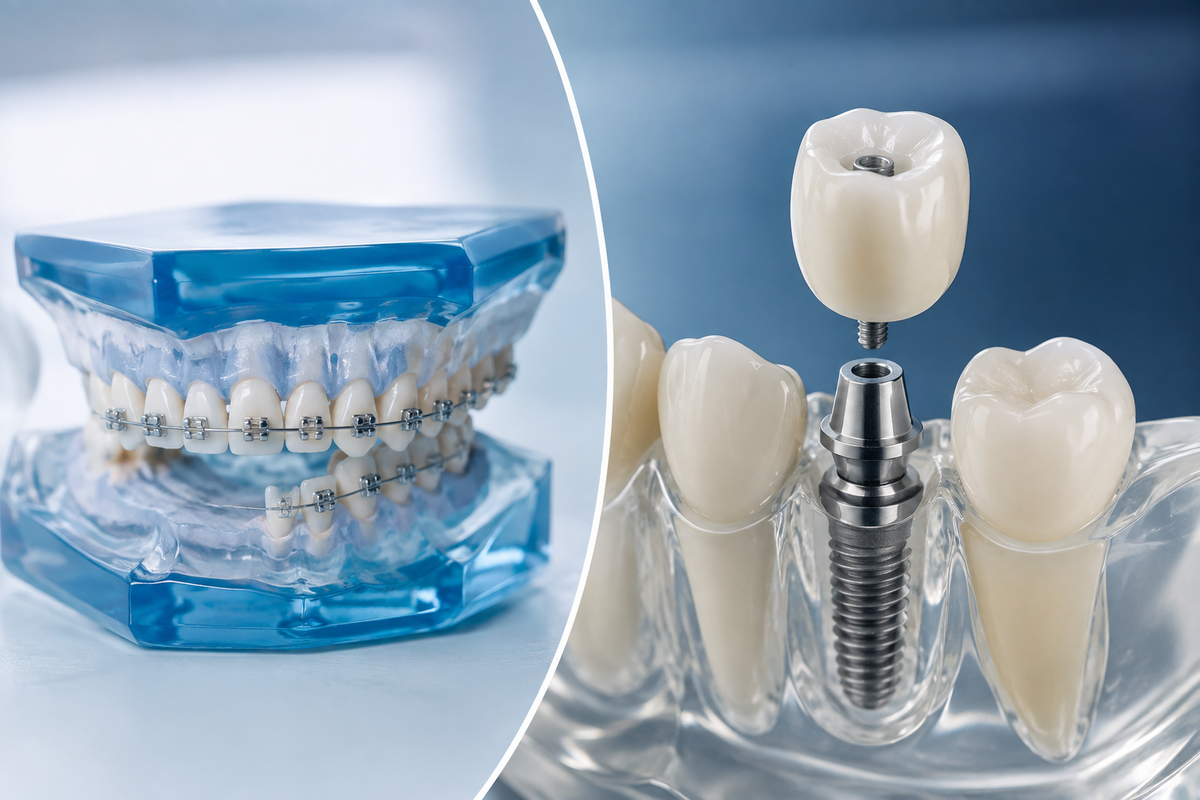
Screw-retained implant crowns require careful material selection because the restoration must meet both functional and esthetic requirements. The zirconia needs to work with the restoration design, implant connection, available space, and expected functional load.
HT White zirconia can be considered for certain implant crown applications, but suitability should not be determined solely by translucency or strength. The restoration design, material indication, thickness, milling process, and sintering protocol all need to be evaluated before fabrication.
Zirconia Guys supplies HT white dental zirconia blocks and other CAD/CAM materials for dental laboratories and professionals. Its range gives laboratories options to consider when selecting dental zirconia for different restoration workflows.
What Is a Screw-Retained Implant Crown?
A screw-retained implant crown is attached to an implant with a screw rather than cemented onto an abutment.
The restoration includes a screw access channel that allows the clinician to secure and, when necessary, remove the crown.
This design makes several factors particularly important:
- Accurate implant connection
- Correct screw-channel positioning
- Adequate material thickness
- Proper crown contour
- Resistance to functional forces
- Appropriate occlusal design
Because the restoration is directly connected to the implant system, both the material and the CAD/CAM design need to be suitable for the intended application.
What Should Zirconia Provide for a Screw-Retained Implant Crown?
The zirconia selected for an implant crown should offer an appropriate combination of mechanical and optical properties.
Key considerations include:
- Strength: The material should be suitable for the expected functional load.
- Fracture resistance: Adequate material thickness and proper design help reduce the risk of complications.
- Optical properties: Translucency and shade should match the esthetic requirements of the case.
- Fit: Accurate milling and appropriate sintering are essential for achieving a well-fitting restoration.
- Machinability: The material should be compatible with the laboratory's CAD/CAM system.
- Finishing: Staining, glazing, and polishing should follow the material manufacturer's recommendations.
Not all zirconia blocks have the same combination of strength and translucency. Therefore, laboratories should review the material's technical specifications and indications before using it for an implant-supported restoration.
Is HT White Dental Zirconia Suitable for This Application?
HT White zirconia is a higher-translucency zirconia option that may be considered when the restoration requires a balance between mechanical performance and improved light transmission.
For a screw-retained implant crown, HT white dental zirconia blocks may be appropriate when their specified indications match the clinical and laboratory requirements of the case.
However, the term "HT" should not be treated as sufficient evidence that a material is suitable for every implant application.
Before milling, technicians should confirm:
- The manufacturer's approved indications
- Flexural strength and other relevant material specifications
- Recommended restoration thickness
- Sintering requirements
- CAD/CAM compatibility
- Recommended finishing procedures
The final suitability of dental zirconia depends on the complete restoration design and clinical situation.
HT White vs ST White Zirconia for Implant Crowns
Different types of zirconia can offer different optical and mechanical characteristics. The choice should depend on the requirements of the individual restoration rather than simply selecting the more translucent material.
| Consideration | HT White Zirconia | ST White Zirconia |
|---|---|---|
| Optical profile | Higher-translucency option | Different balance of translucency and strength |
| Esthetic priority | Useful when greater light transmission is desired | Useful when a different optical balance is required |
| Masking | May provide less masking than more opaque materials | Depends on the material formulation and thickness |
| Potential application | Esthetic-focused restorations where indicated | Cases requiring a different balance of properties |
| Selection factors | Shade, thickness, design and functional load | Shade, thickness, design and functional load |
ST white dental zirconia blocks may be considered when their material characteristics better match the restoration requirements.
The choice between HT white dental zirconia blocks and ST white dental zirconia blocks should always be based on the manufacturer's technical information, restoration design, and clinical indication.
How to Evaluate Zirconia Blocks for Screw-Retained Crowns
Choosing suitable zirconia blocks involves more than comparing strength values. Laboratories should review the following factors before production:
Material Strength
The expected functional load should be compatible with the material's strength. This is particularly important for implant-supported restorations exposed to repeated occlusal forces.
Restoration Design
The crown design must provide sufficient material around the screw access channel and other areas where geometry may create stress concentrations.
Material Thickness
Available restorative space can influence the choice of material. Excessive reduction in thickness may affect both strength and optical performance.
Implant Connection
The CAD design and milling process must account for the specific implant connection and screw-channel geometry.
Sintering
Following the recommended sintering cycle helps the restoration achieve the intended material properties and dimensional accuracy.
These factors should be considered when comparing different zirconia blocks dental laboratories may use for implant-supported restorations.
How Do Zirconia Blank and Disc Selection Affect Implant Crowns?
The choice of zirconia blank affects the milling workflow, the available dimensions, the shade, and the material characteristics of the final restoration.
A laboratory should check the following before selecting a blank:
- Disc diameter and thickness
- Available shades
- Translucency level
- Strength specifications
- CAD/CAM compatibility
- Sintering requirements
- Recommended indications
Different zirconia dental blanks can be designed for different restoration requirements. Selecting a blank that matches the restoration dimensions can also help reduce unnecessary material waste during milling.
Similarly, dental zirconia discs should be selected according to the laboratory's milling equipment and the manufacturer's processing recommendations.
A technician should also consider whether the selected zirconia blank provides the required combination of strength, translucency, and shade for the implant crown.
When Should You Consider a Different Zirconia?
HT White may not be the ideal choice for every screw-retained implant crown. A different zirconia formulation may deserve consideration when:
- The case has particularly high functional demands.
- Greater masking is required.
- The available restorative space is limited.
- A different strength-translucency balance is needed.
- The restoration falls outside the material's recommended indications.
- The required shade cannot be achieved effectively with the selected material.
The goal is not to select the most translucent or strongest material available. Instead, the laboratory should identify the material that best matches the clinical indication and restoration design.
This is especially important when comparing dental zirconia materials intended for different applications.
Final Checklist Before Milling a Screw-Retained Implant Crown
Before milling, laboratories can review these key points:
- Confirm the material's recommended indication.
- Verify the implant system and connection design.
- Check minimum material thickness requirements.
- Assess the expected functional load.
- Review shade and translucency requirements.
- Confirm milling compatibility.
- Follow the manufacturer's sintering parameters.
- Use the recommended staining, glazing, or polishing process.
- Check the final restoration for proper fit and design.
This process helps ensure that the selected zirconia dental blanks are appropriate for the planned restoration, rather than being chosen solely based on a single material specification.
Choosing the Right Zirconia for Implant Crown Work
HT White zirconia can be considered for a screw-retained implant crown when its material properties and the manufacturer's recommended indications align with the case requirements. Its higher-translucency profile may be useful when optical performance is important, but strength, thickness, restoration design, and functional load also need to be evaluated.
A suitable zirconia blank should support the complete CAD/CAM workflow, from milling and sintering to final finishing. Comparing zirconia blocks, zirconia blocks dental options, and different dental zirconia discs based on their intended indications can help laboratories make a more informed selection.
Zirconia Guys offers HT white dental zirconia blocks, along with other dental zirconia options for dental laboratories and professionals. Its selection of zirconia dental blanks can support laboratories looking for CAD/CAM materials suited to different restoration requirements and workflows.
Contact Zirconia Guys to explore suitable zirconia options for your screw-retained implant crown workflow and discuss the material specifications for your next case.


