

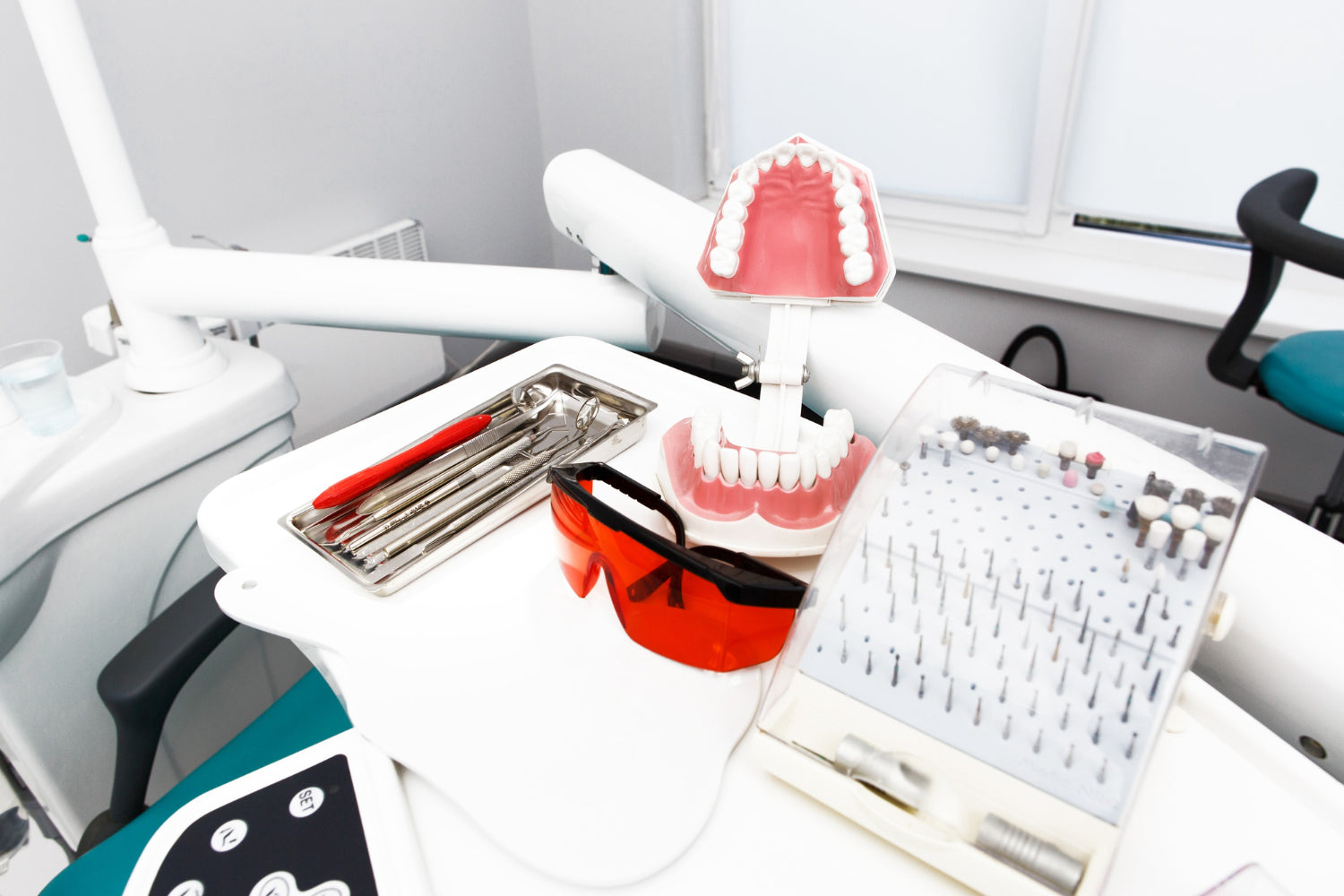
Zirconia and PMMA are both staples of the modern digital dental lab but they're staples in entirely different clinical roles. The question "which should you choose?" is rarely a binary one. In most workflows, both materials are used: PMMA for the temporary phase, zirconia for the permanent restoration. The real decisions are about which cases call for each, and whether a lab is specifying them correctly.
This guide cuts through the surface-level comparison to give dental labs and clinicians a clear, technically grounded framework. It covers what each material is, what the mechanical differences mean in practice, where each genuinely outperforms the other, and how to think about cost honestly, not just at the material sourcing level.
What the mechanical difference actually means?
The gap between dental zirconia and PMMA in raw mechanical terms is not marginal it's fundamental, and understanding it is the starting point for every material decision.
High-strength 3Y-TZP dental zirconia reaches 900–1,200 MPa flexural strength through transformation toughening a crack-arrest mechanism where the crystal structure resists crack propagation under load. It's chemically inert, non-porous, biocompatible with bone and soft tissue, and its smooth sintered surface resists bacterial adhesion better than acrylic. These properties make it the definitive material for permanent restorations under sustained occlusal loading.
PMMA (polymethyl methacrylate) reaches 80-120 MPa approximately ten times weaker than high-strength zirconia.. It machines quickly on the same CAD/CAM equipment used for zirconia, can be adjusted and repaired chairside without specialist equipment, and costs substantially less per unit. These properties make it the definitive material for temporary restorations, denture bases, and diagnostic provisionals where adjustability and speed matter more than long-term fracture resistance.
The clinical implication is straightforward: these two materials occupy different positions in the treatment timeline, not competing positions in the same clinical role. Specifying zirconia where PMMA belongs wastes cost. Specifying PMMA where zirconia belongs creates clinical risk. Getting the sequence right is the foundation of good digital lab practice.
Where zirconia is the right choice?
Permanent posterior crowns on natural teeth
Monolithic zirconia milled from a high-strength zirconium dental blank and sintered to final strength is the standard specification for permanent posterior crowns. Posterior bite forces regularly exceed 400 MPa. PMMA at 80–120 MPa fractures in this environment. Zirconia at 900–1,200 MPa does not. The workflow is efficient: mill, sinter, characterise, deliver. For high-volume posterior work, dental zirconia discs in pre-shaded format reduce per-unit bench time significantly.
Implant-supported crowns and bridges
Implants transfer bite force directly to the restoration without the cushioning of a periodontal ligament. Every ceramic material that works on natural teeth has a wider safety margin than the same material on implants. For posterior implant crowns, multi-unit implant bridges, and full-arch implant prostheses, high-strength 3Y-TZP zirconia is the clinical standard without exception. PMMA is the correct temporary material during osseointegration; the permanent restoration should be zirconia.
Multi-unit bridges
Bridge connectors need the flexural strength and fracture resistance to handle the concentrated loading at the connector cross-section. Zirconia handles this; PMMA does not. For bridges spanning two or more pontics in any arch position, zirconia is the appropriate permanent specification.
Full-arch prostheses
Full-arch cases All-on-4, All-on-X, full-arch implant prostheses require high-strength 3Y-TZP zirconia for the permanent prosthesis. The mechanical demands of full-arch loading under direct implant loading are the highest in restorative dentistry. Dental lab materials for these cases should be specified accordingly.
For labs building a zirconia inventory for these indications, the dental zirconia discs from UPCERA including the Explore Functional for high-strength posterior and implant work, and the full TT and ST multilayer range for anterior aesthetic cases cover the complete spectrum from a single supplier relationship.
Where PMMA is the right choice?
Implant temporaries during osseointegration
Every implant workflow requires a temporary prosthesis worn during the three to six months of osseointegration. PMMA is the correct material for this role because it can be adjusted and relined chairside as tissue heals something sintered zirconia cannot do. The temporary also shapes the soft tissue emergence profile that the permanent restoration will inherit, so getting the PMMA temporary right is a prerequisite for getting the final zirconia result right.
For anterior implant temporaries worn for several months in a visible position, single-shade PMMA looks flat next to natural teeth. Multilayer PMMA discs with a shade gradient built into the blank produce significantly better anterior aesthetics from the same milling workflow, without additional characterisation time.
Same-day temporaries in standard crown workflows
For temporary crowns and bridges produced in a conventional crown and bridge workflow worn while the permanent restoration is being fabricated PMMA is the efficient and correct choice. It mills on the same equipment used for zirconia, requires no sintering step, and can be delivered at the same appointment as the impression or scan. The economics of a temporary material should match the temporary clinical role.
Full and partial denture bases
PMMA is the long-established material for full and partial denture bases not as a temporary, but as a permanent prosthetic platform. Its light weight is a genuine clinical advantage over alternatives in prosthetic applications, and milled PMMA denture bases from high-density blanks produce lower porosity than conventionally processed acrylic. Lower porosity means less bacterial infiltration into the base material over years of use a tissue health advantage that accumulates over the prosthesis lifetime.
The pmma denture base materials from Aidite specifically the Denture Base PMMA disc covers this indication in tissue-matching gingival shades, producing dimensionally accurate bases with good surface finish for full and partial denture workflows.
Diagnostic and trial restorations
Before committing a complex case to a final zirconia restoration, some clinicians request a diagnostic PMMA trial a full-contour provisional that allows the patient to evaluate aesthetics and occlusion in situ before the permanent material is committed. PMMA's low cost relative to zirconia blocks price makes this trial step economically practical, and the ability to adjust the trial restoration chairside provides clinical information that a definitive restoration at first delivery cannot.
The cost comparison: what the real numbers look like
The material cost comparison between zirconia and PMMA is straightforward PMMA discs cost substantially less than zirconia dental discs per unit. Zirconia blocks price reflects the higher-grade raw material, more complex sintering requirements, and longer production time.
The clinical cost comparison is more nuanced. For permanent restorations, zirconia's ten-to-fifteen year expected lifespan with no maintenance, no chipping, no colour degradation makes it less expensive in total cost terms than a PMMA-based provisional that would need replacing. Specifying PMMA as a permanent crown material to save upfront cost is a false economy: the material will fail under sustained loading and the remake cost exceeds any material saving at sourcing.
The correct framing is that each material should be costed for its actual clinical role. A temporary worn for three to six months during osseointegration should cost as a temporary. A permanent restoration designed to last a decade should be specified and priced as a permanent restoration. Mixing those two frames produces either unnecessary cost (permanent zirconia for a temporary indication) or clinical failure (PMMA in a permanent indication).
Worflow comparison: how each material fits a digital lab
| Factor | Zirconia | PMMA |
|---|---|---|
| Flexural strength | 900–1,200 MPa (3Y-TZP) | 80–120 MPa |
| Milling equipment | CAD/CAM with diamond burs | Same CAD/CAM with carbide burs |
| Sintering required | Yes 1,450–1,550°C, 4–8 hours | No sintering step |
| Chairside adjustment | Limited grinding only | Yes trim, reline, repair |
| Same-day delivery | With fast-fire sintering only | Yes standard workflow |
| Permanent use | Yes 10–15 year expected lifespan | No (crowns/bridges); Yes (denture bases) |
| Plaque resistance | High smooth non-porous surface | Moderate higher porosity than zirconia |
| Pre-shaded options | Yes , multilayer and pre-shaded discs | Yes , multilayer PMMA discs available |
The practical decision framework
For dental labs making material decisions case by case, a clear framework covers the large majority of situations:
- Permanent posterior crowns and bridges on natural teeth or implants: zirconia. Grade selection follows the indication 3Y-TZP for high-strength posterior and implant cases, multilayer for anterior and premolar aesthetic work.
- Full-arch permanent prostheses: high-strength 3Y-TZP zirconia throughout. Not PMMA hybrid, not multilayer zirconia strength is the primary requirement and the correct grade should reflect that.
- Implant temporaries during osseointegration: PMMA. Multilayer PMMA for anterior visible positions; standard PMMA for posterior. Duration of the temporary phase (three to six months typical) doesn't change this PMMA remains the correct specification.
- Same-day temporaries in standard crown workflows: PMMA. Fast and economically proportionate to the temporary clinical role.
- Full and partial denture bases: PMMA as a permanent prosthetic material in this specific application. Milled PMMA denture bases from high-density blanks outperform conventionally processed acrylic in fit accuracy and porosity.
- Diagnostic trials before complex permanent restorations: PMMA. The cost of a trial restoration in PMMA is proportionate to its diagnostic role and the clinical information it provides before committing to a permanent material.
Sourcing both materials from a single supplier
For dental labs running both zirconia and PMMA workflows which describes most complete digital labs sourcing from a single dental lab material supplier simplifies ordering, technical support, and material compatibility management across milling platforms and sintering programs.
As a North American dental lab material supplier, Zirconia Guys carries the complete Aidite PMMA range multilayer, denture base, and clear variants alongside Aidite and UPCERA zirconium dental and ceramic materials, covering the full workflow from temporary through to permanent restoration from a single source. Get in touch with the team to discuss which zirconia grades, PMMA formats, and disc configurations suit your lab's case mix and milling system.


