

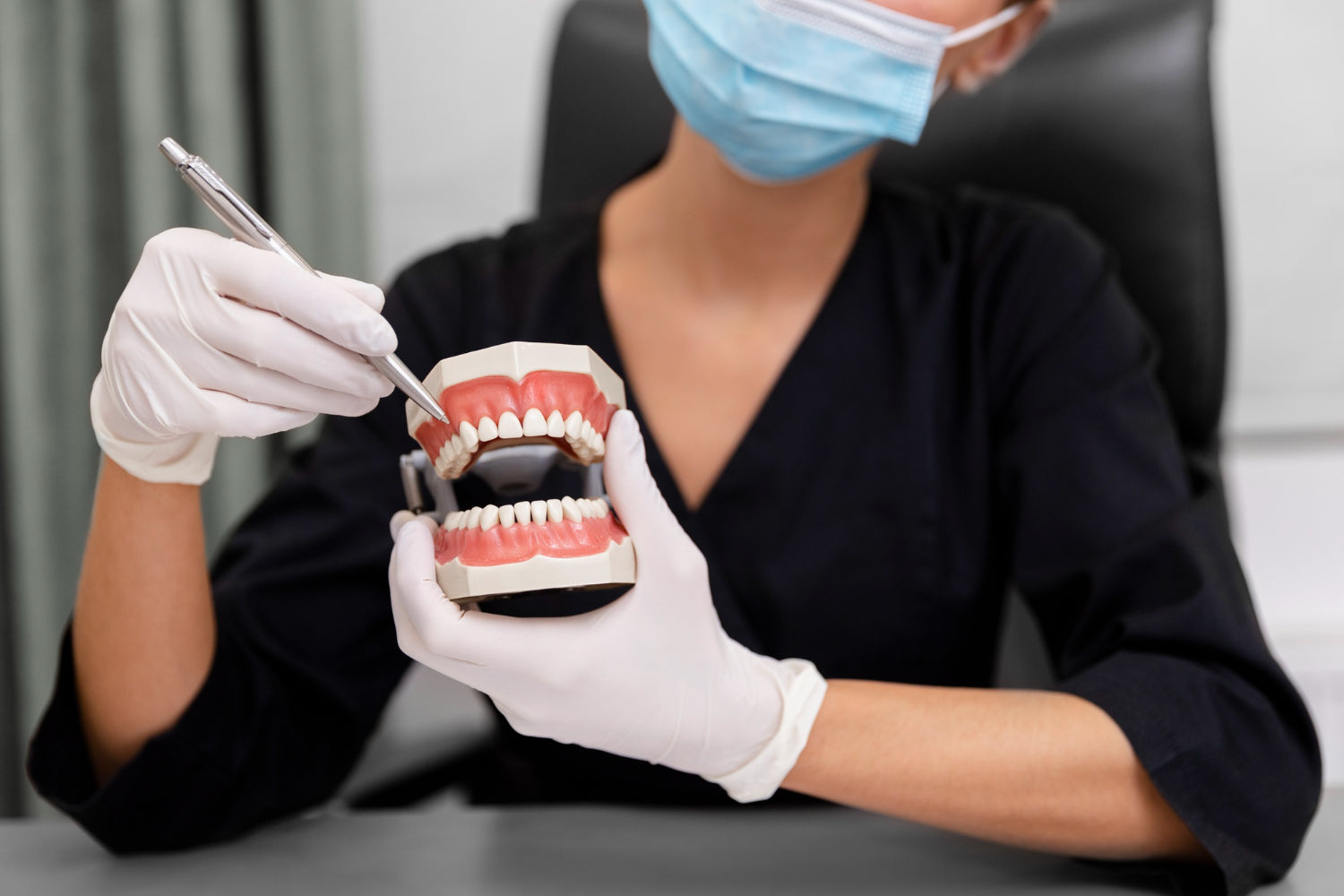
Missing teeth does more than affect your smile. They can change the way you chew, speak, and even how your remaining teeth align over time. One of the most reliable solutions for replacing missing teeth is a dental bridge.
If you’ve been advised to get a bridge, understanding how it works can help you make a confident and informed decision.
What Is a Dental Bridge?
A dental bridge is a fixed restoration used to replace one or more missing teeth. It literally “bridges” the gap created by missing teeth by anchoring an artificial tooth (or teeth) to the natural teeth or implants on either side of the space.
Unlike removable dentures, a dental bridge is cemented in place and functions like natural teeth. Once placed, it restores chewing ability, maintains facial structure, and prevents neighboring teeth from shifting out of position.
Modern bridges are fabricated using advanced dental lab materials that ensure strength, durability, and natural appearance.
How Does a Dental Bridge Work?
A traditional dental bridge consists of three main parts:
- The artificial tooth (called a pontic) that fills the gap
- Two supporting crowns are placed on adjacent teeth (called abutments)
The supporting teeth are prepared and shaped to hold crowns. These crowns anchor the artificial tooth in between, creating a stable structure.
Today, most bridges are designed digitally and fabricated using CAD/CAM systems. High-quality restorations are milled from durable materials such as zirconia, using precision-engineered zirconia blocks.
Dental laboratories rely on premium zirconia block dental systems to produce bridges that can withstand chewing forces while maintaining aesthetics. Each bridge framework is carved from a carefully manufactured zirconia blank, which determines its final strength and translucency.
Types of Dental Bridges
There are several types of dental bridges, depending on the patient’s needs.
Traditional bridges are supported by crowns on both sides of the gap. Cantilever bridges are used when there is only one supporting tooth. Implant-supported bridges are anchored to dental implants rather than to natural teeth.
In modern restorative dentistry, zirconia-based bridges have become increasingly popular. High-performance zirconium dental materials offer excellent fracture resistance, making them ideal for multi-unit bridges.
Specialized materials such as explore esthetics zirconia for bridges are designed to enhance translucency in anterior cases, where appearance is especially important. For posterior bridges that require higher strength, options such as st multilayer zirconia for bridges provide layered shading and superior durability.
Many laboratories today also fabricate aidite zirconia bridges because of their consistent quality and reliable sintering behavior. Additionally, materials such as tt multilayer zirconia for crowns & bridges are widely used for cases that require a balance between strength and natural gradient aesthetics.
All of these systems are manufactured using advanced dental lab materials supplied by trusted partners to ensure long-term performance.
Why Zirconia Is Commonly Used for Bridges?
Bridges must handle significant bite pressure, especially in the molar region. That is why material selection plays a critical role in long-term success.
Zirconia has become one of the most preferred materials because it offers:
- High fracture resistance
- Biocompatibility
- Natural tooth-like appearance
- Resistance to wear
Dental labs fabricate zirconia bridges from strong zirconia blocks, ensuring structural stability even in multi-unit cases. Premium zirconia blocks dental solutions provide consistent density and minimal shrinkage during sintering, improving fit accuracy.
Behind every well-fabricated bridge is a dependable supplier of dental lab materials. A professional Dental lab material supplier ensures uniform material quality, which directly impacts strength, shade consistency, and long-term durability.
When laboratories source materials from reliable suppliers, the final zirconium dental restoration becomes more predictable and clinically successful.
The Process of Getting a Dental Bridge
The procedure usually takes two appointments.
During the first visit, the supporting teeth are prepared. Impressions or digital scans are taken and sent to the dental laboratory. A temporary bridge may be placed to protect the area while the permanent restoration is fabricated.
The lab then designs the bridge digitally and mills it from a solid zirconia blank or other selected material. Advanced dental lab materials allow for precise margins and proper occlusion.
On the second visit, the final bridge is checked for fit, bite alignment, and aesthetics before being permanently cemented.
Benefits of a Dental Bridge
A dental bridge does more than fill a gap. It restores chewing efficiency, improves speech clarity, and helps maintain facial symmetry. It also prevents adjacent teeth from tilting into the empty space, which could otherwise lead to bite problems.
When fabricated from high-quality zirconia blocks dental systems, zirconia bridges provide long-lasting stability with minimal maintenance.
Modern options like explore esthetics zirconia for bridges and st multilayer zirconia for bridges allow dentists to deliver restorations that are both strong and visually appealing.
How Long Does a Dental Bridge Last?
With proper oral hygiene and regular dental check-ups, a dental bridge can last 10–15 years or even longer. Longevity depends on oral habits, bite forces, and the quality of materials used.
High-grade aidite zirconia bridges and restorations fabricated using tt multilayer zirconia for crowns & bridges are designed for enhanced structural integrity, especially in high-load areas.
The durability of the bridge ultimately depends on precision fabrication and consistent raw materials sourced from a reputable dental lab material supplier.
Is a Dental Bridge Right for You?
A dental bridge is an excellent option if you have one or more missing teeth and healthy adjacent teeth to support the restoration. However, implant-supported bridges may be recommended when natural support is insufficient.
The best way to determine suitability is through a detailed consultation with your dentist. They will evaluate bone support, bite alignment, and aesthetic expectations before recommending the appropriate solution.
A dental bridge is a reliable and time-tested solution for replacing missing teeth. It works by anchoring an artificial tooth to neighboring teeth or implants, restoring both function and appearance.
Thanks to advancements in dental lab materials, especially high-performance zirconia blocks, modern bridges are stronger, more aesthetic, and more precise than ever before. Materials such as explore esthetics zirconia for bridges, st multilayer zirconia for bridges, aidite zirconia bridges, and tt multilayer zirconia for crowns & bridges continue to improve restorative outcomes.
When fabricated from premium zirconia blocks, dental systems, and sourced through a reliable Dental lab material supplier, zirconium-based bridges offer long-term performance and natural aesthetics. At ZirconiaGuys, we understand the importance of material consistency and provide zirconia solutions that help laboratories maintain quality across every bridge restoration.
If you’re considering replacing missing teeth, a dental bridge may be the solution that restores not just your smile, but your confidence as well.


